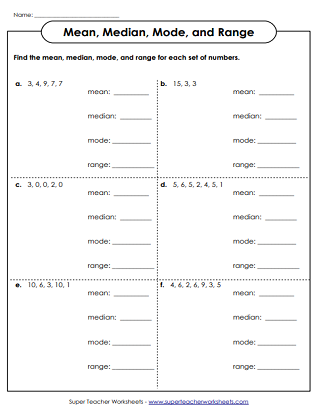
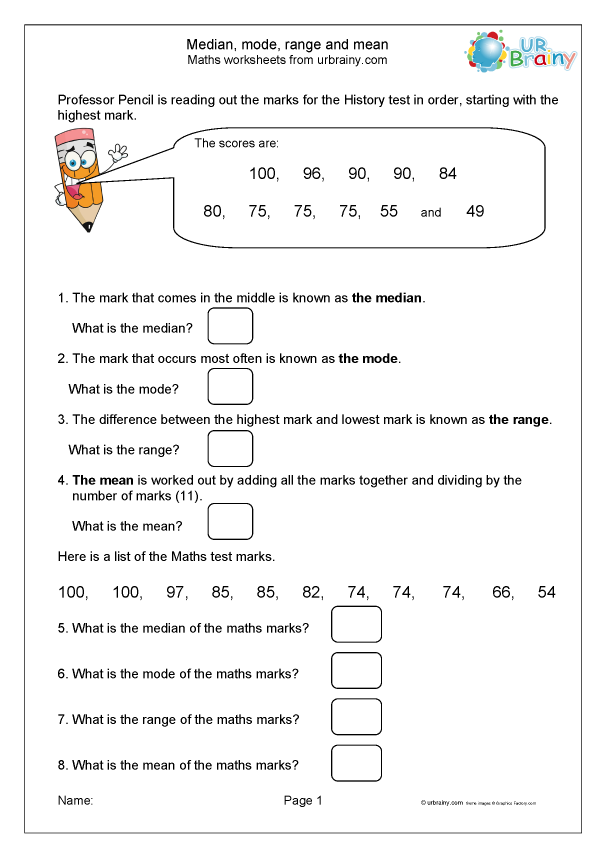
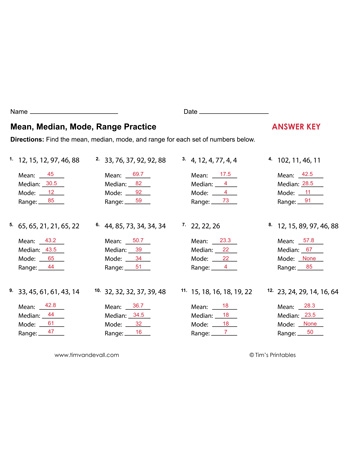
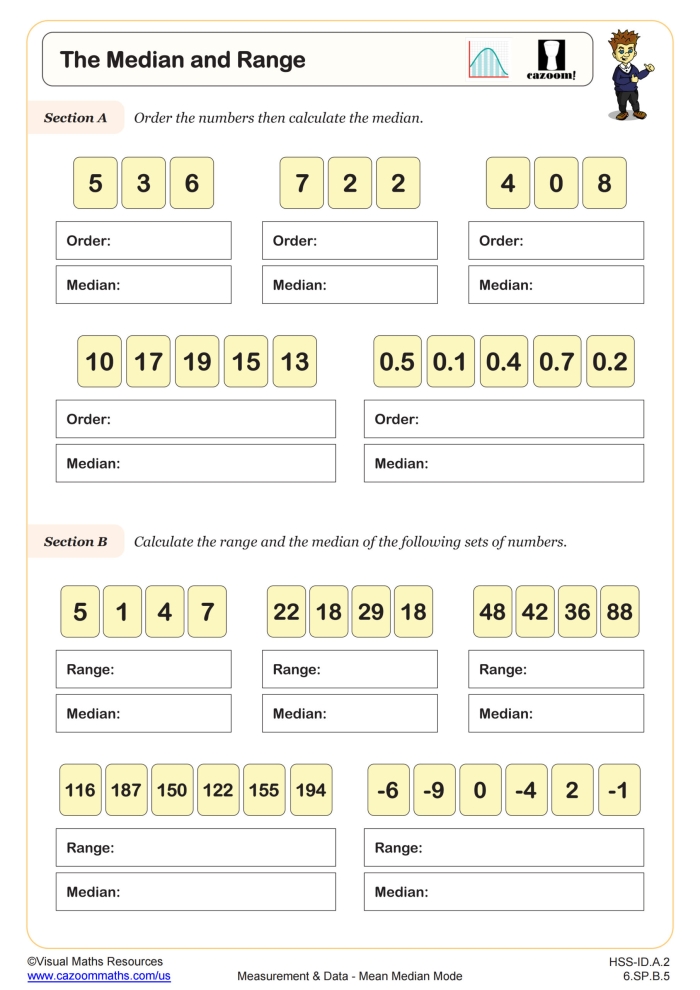
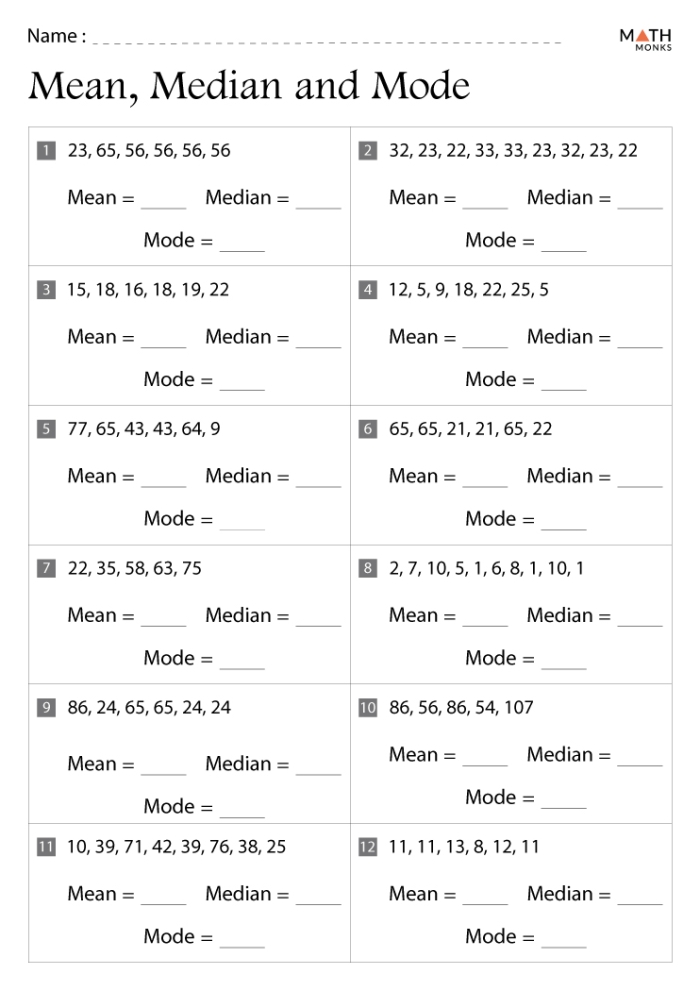
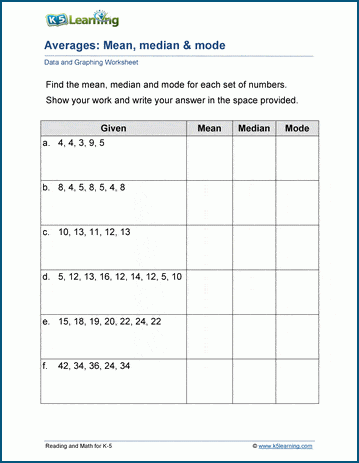
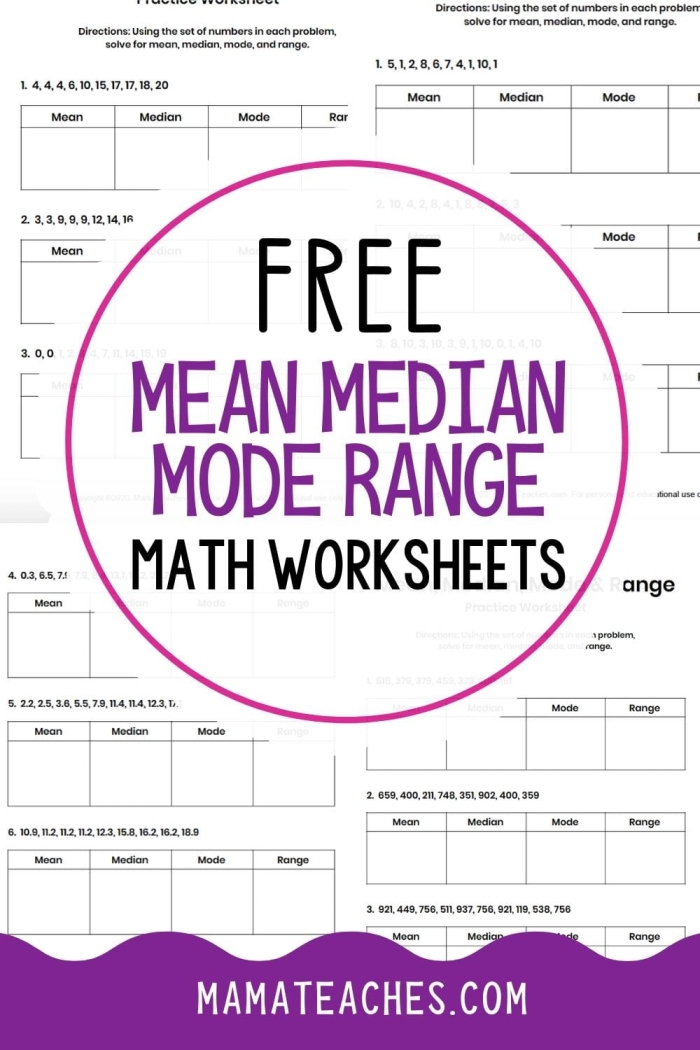
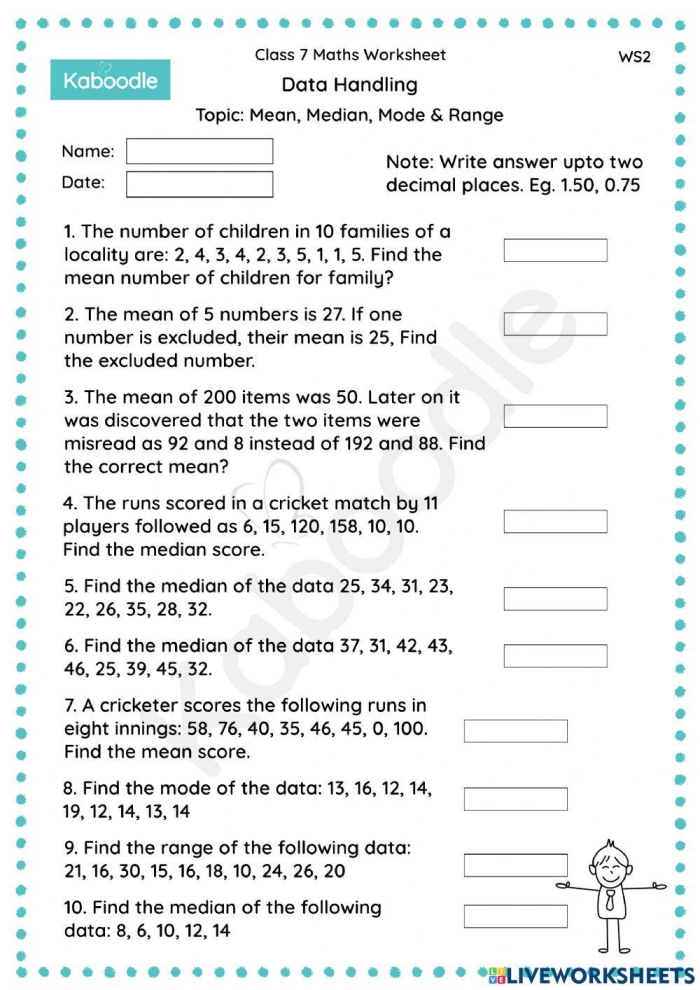
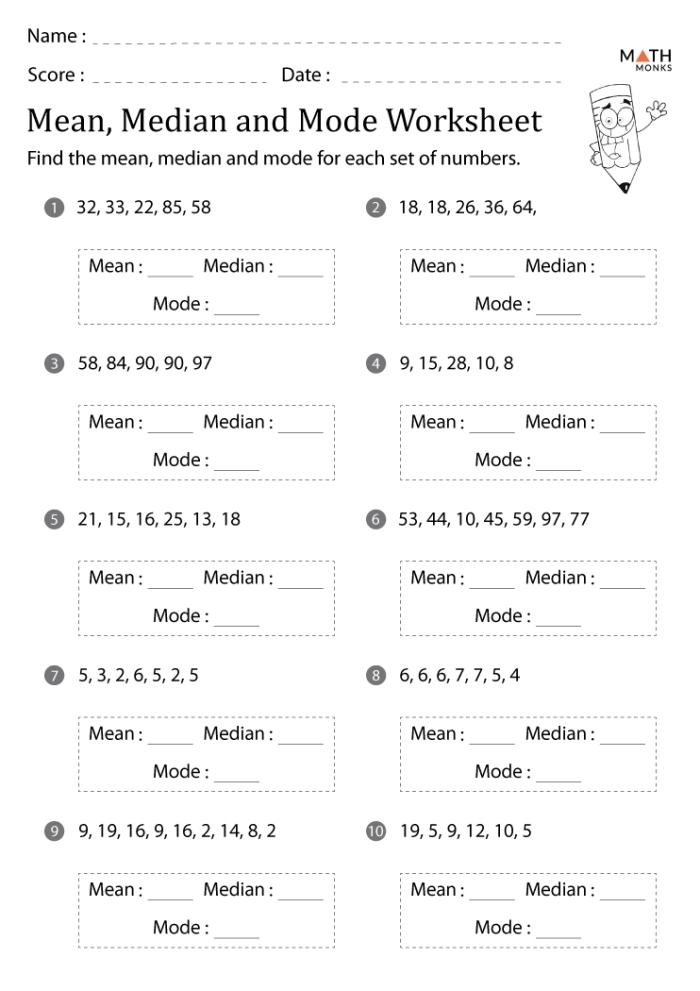
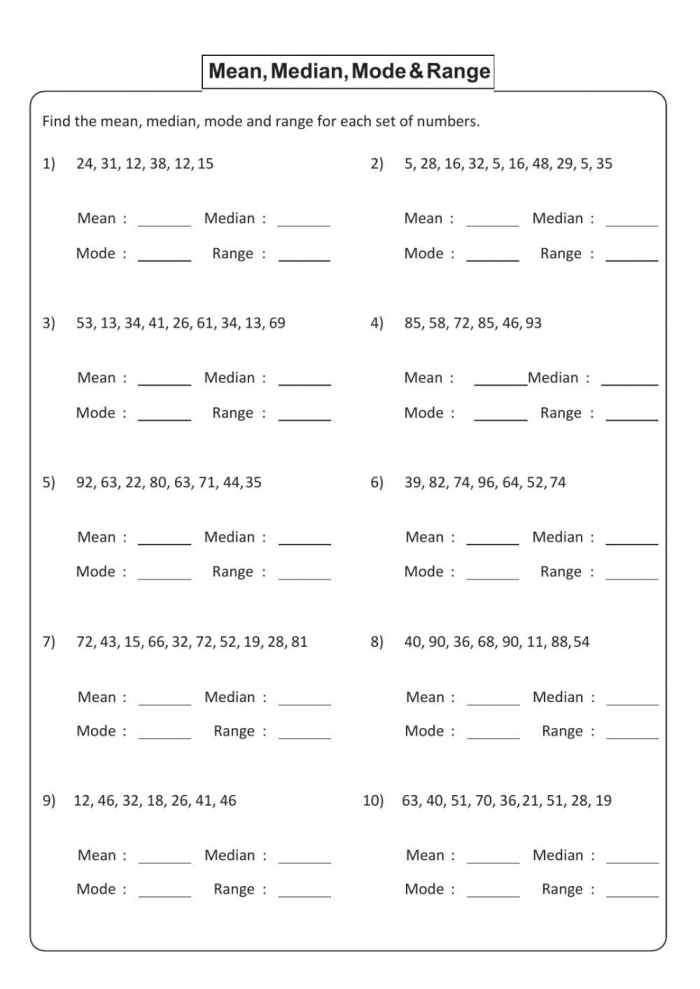
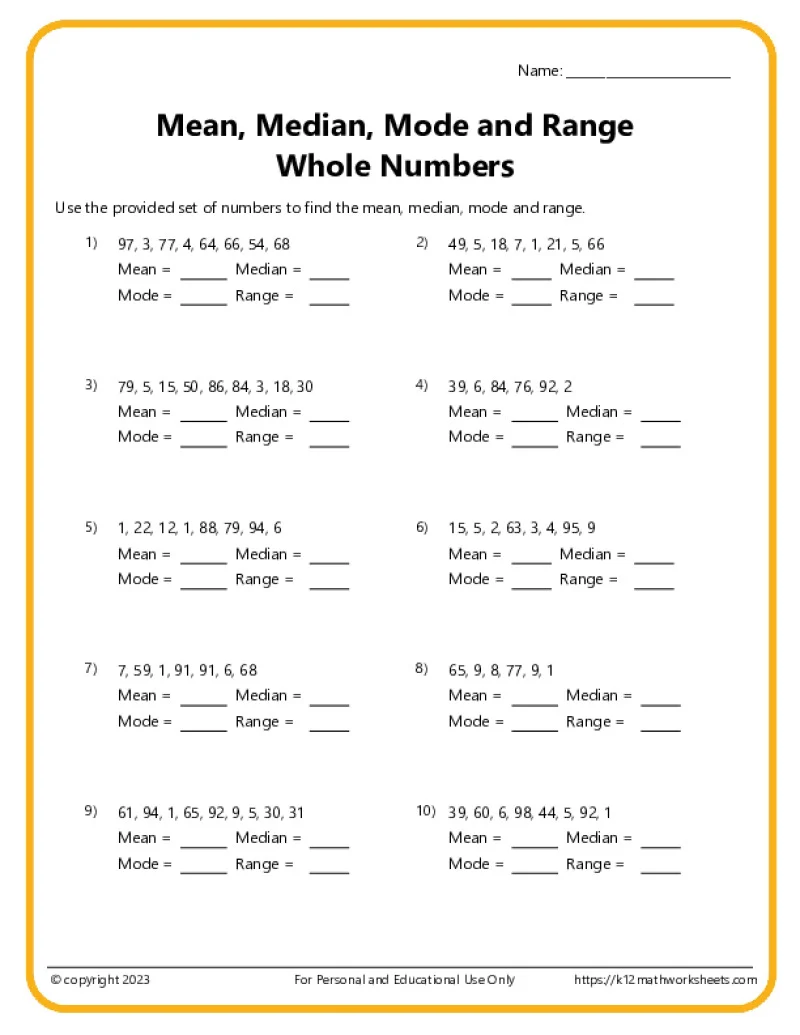
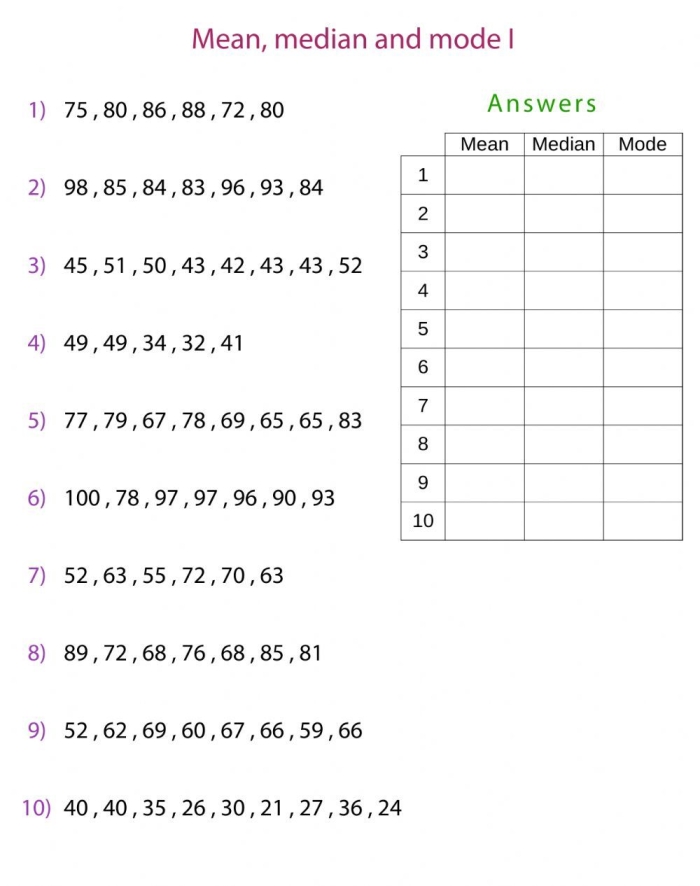
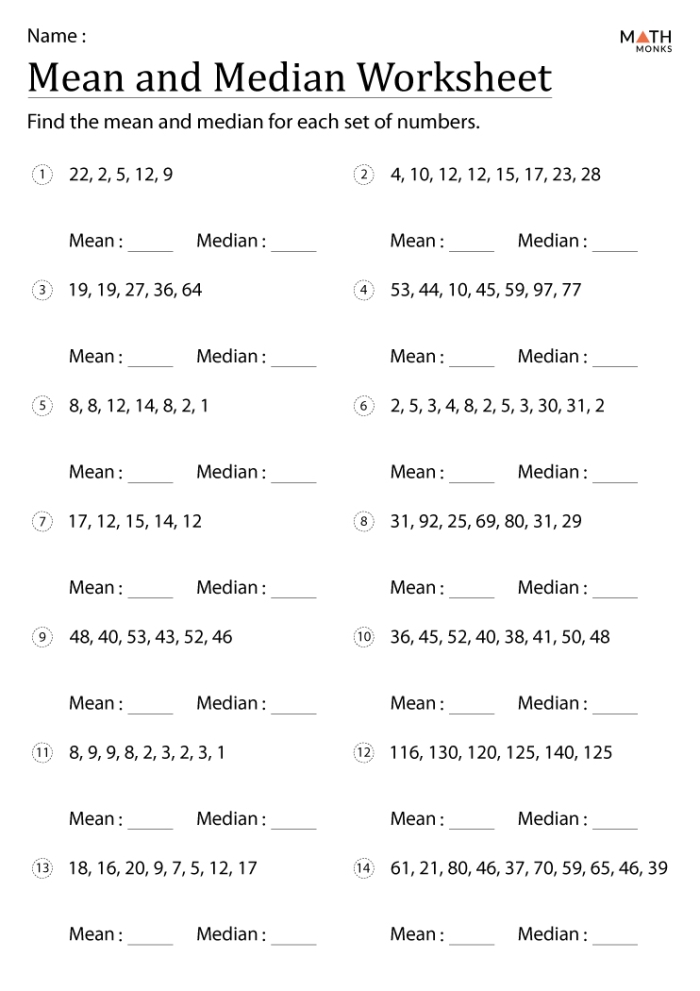
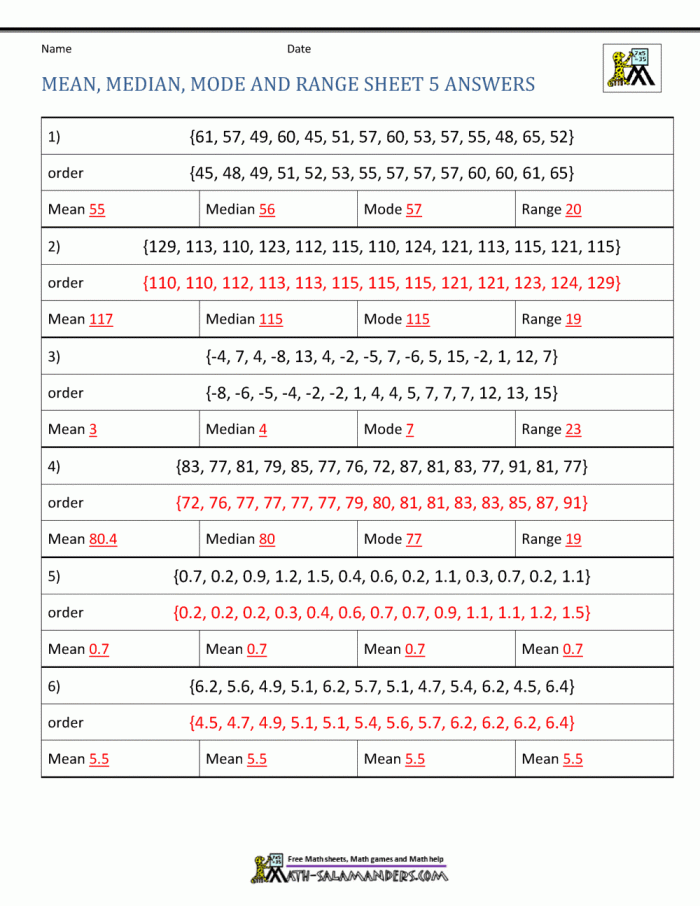
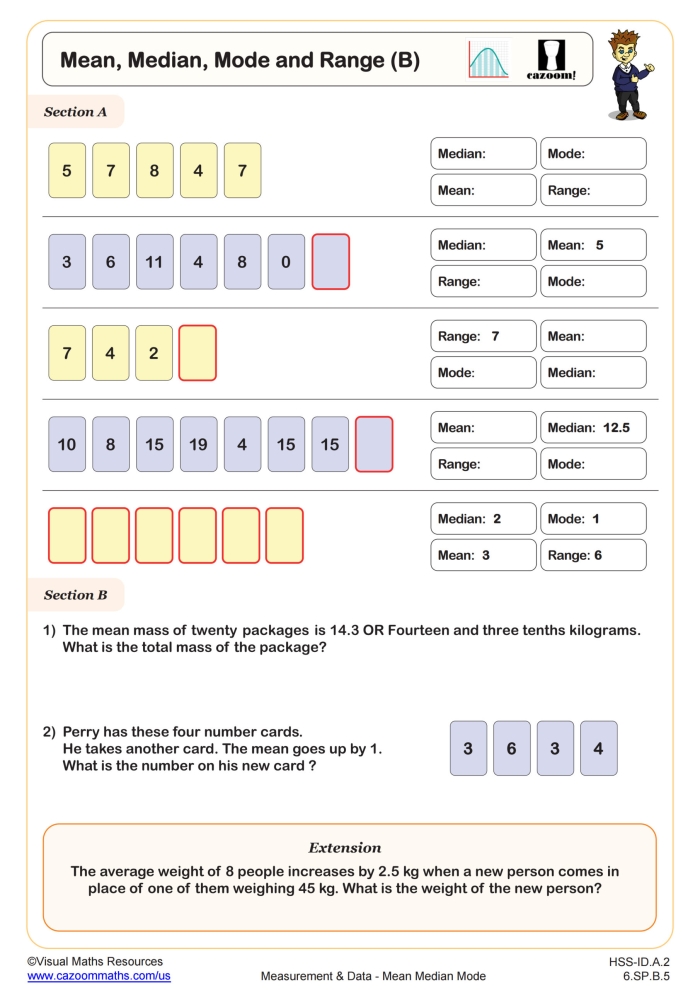
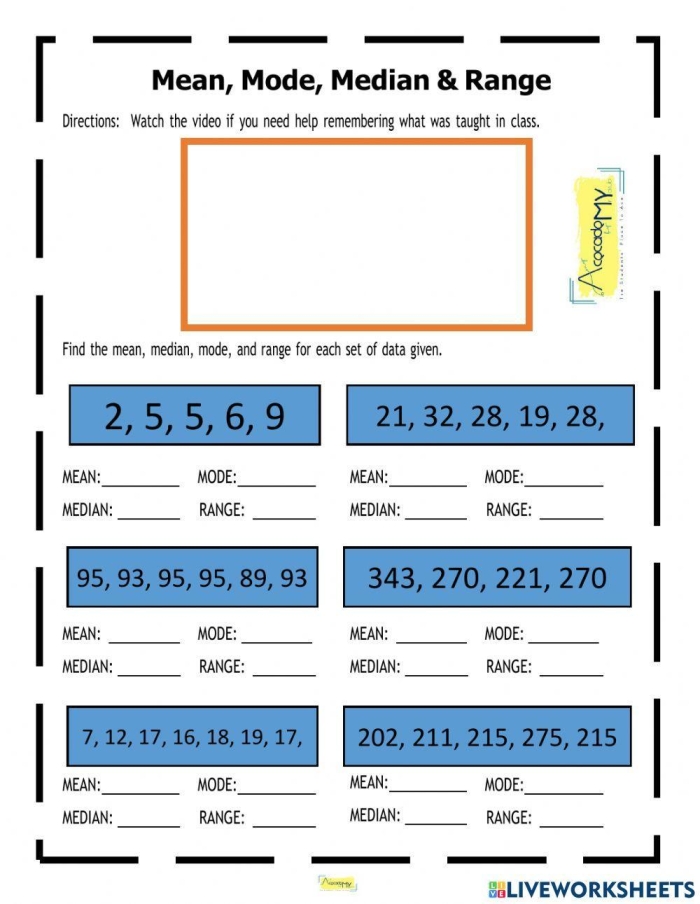
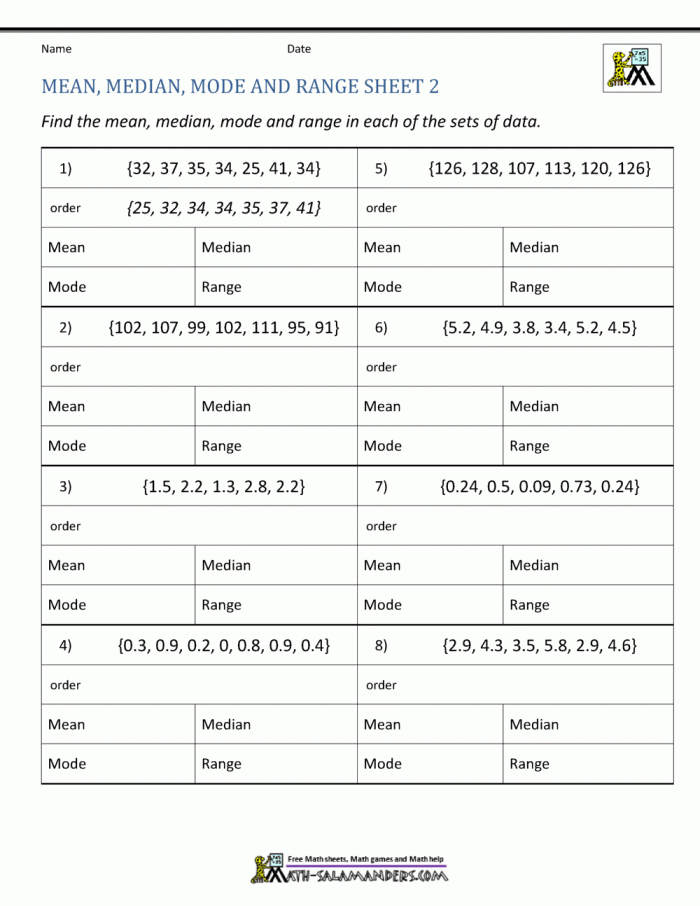
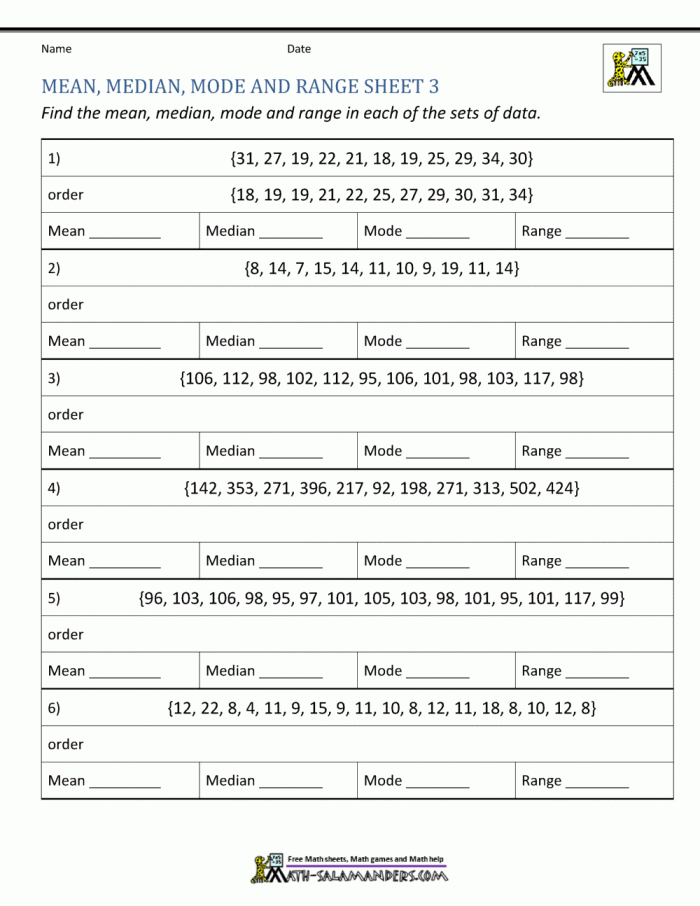
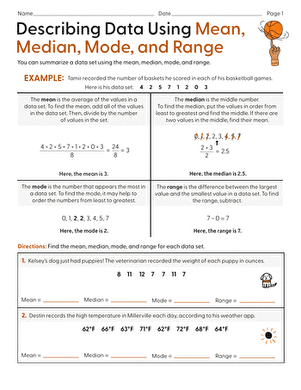
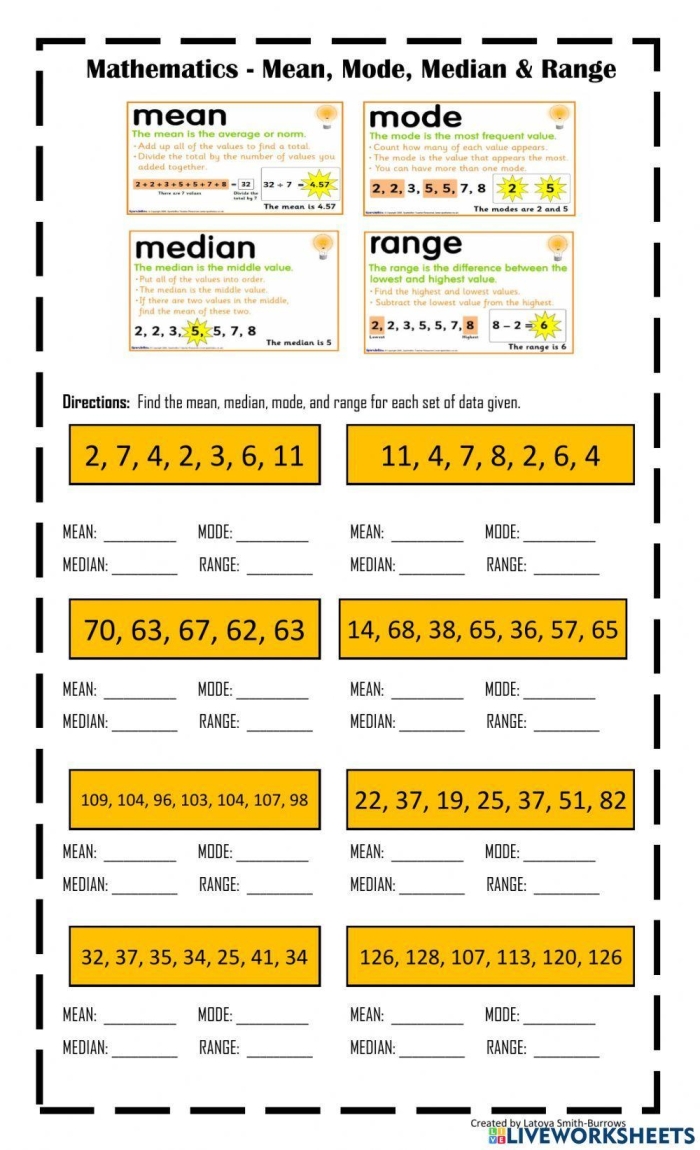
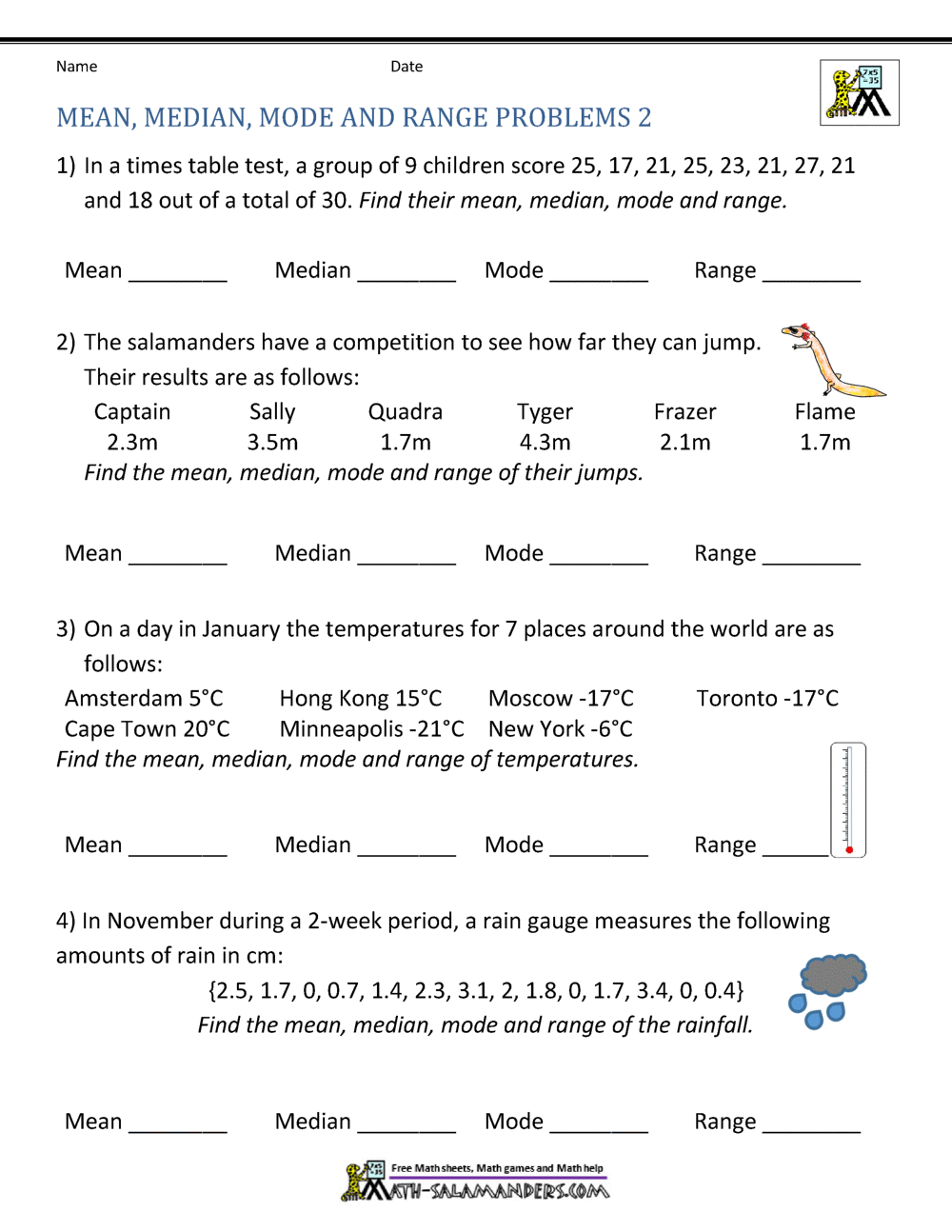
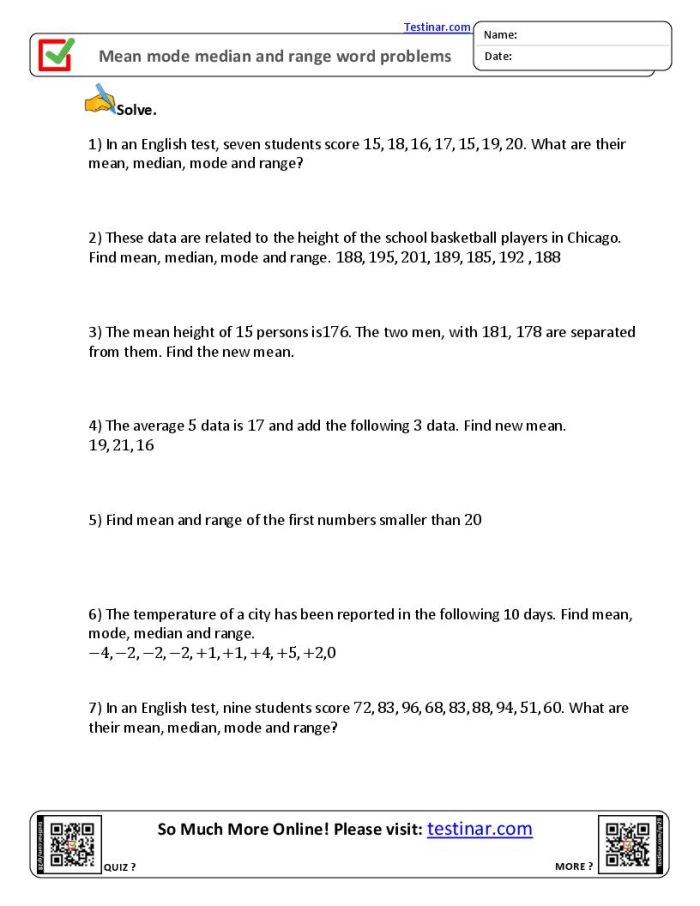
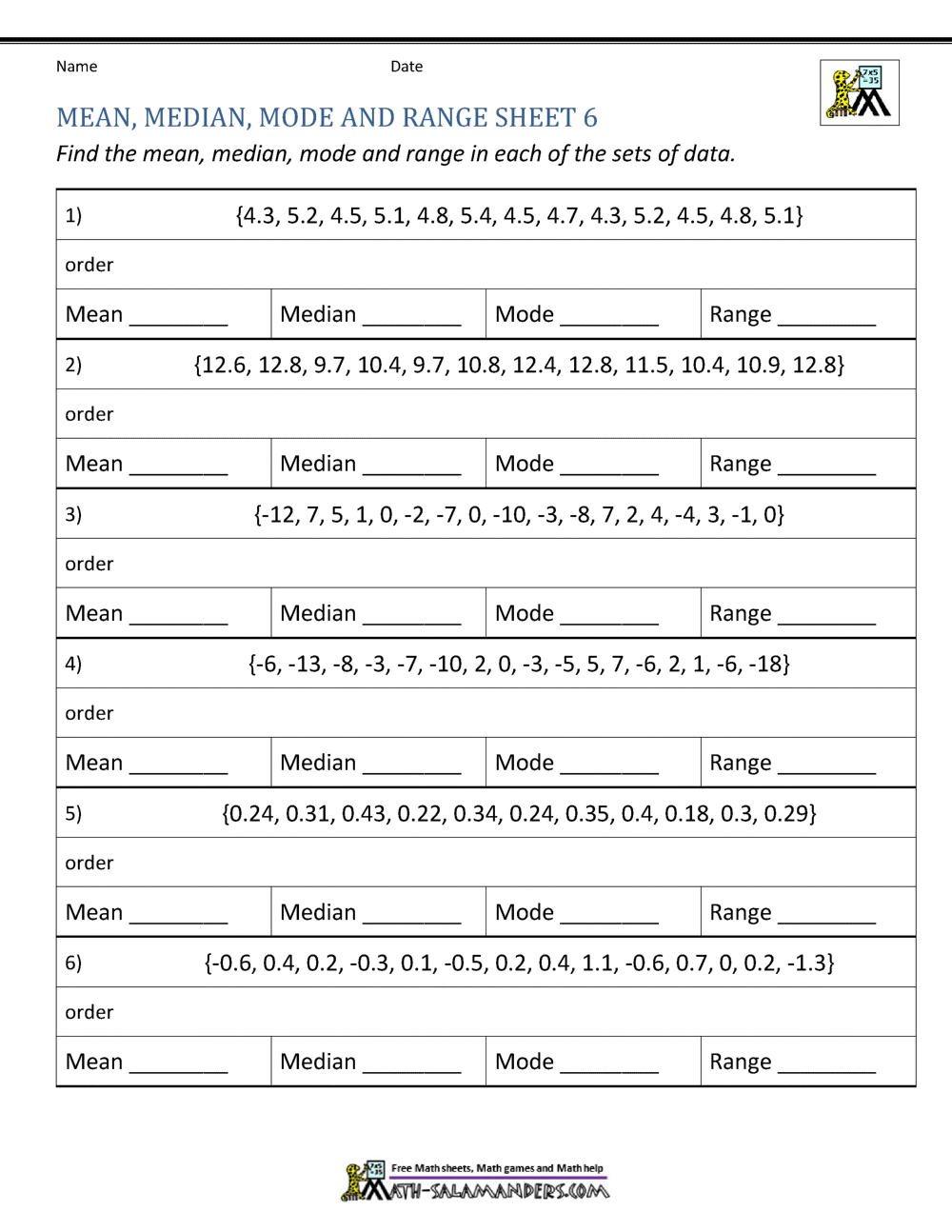
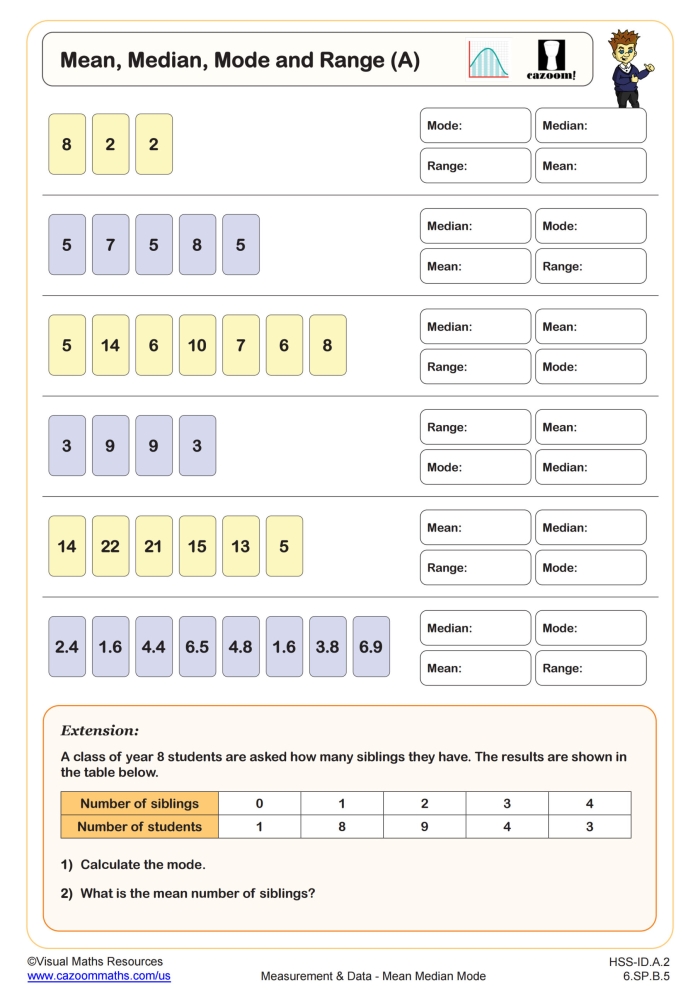
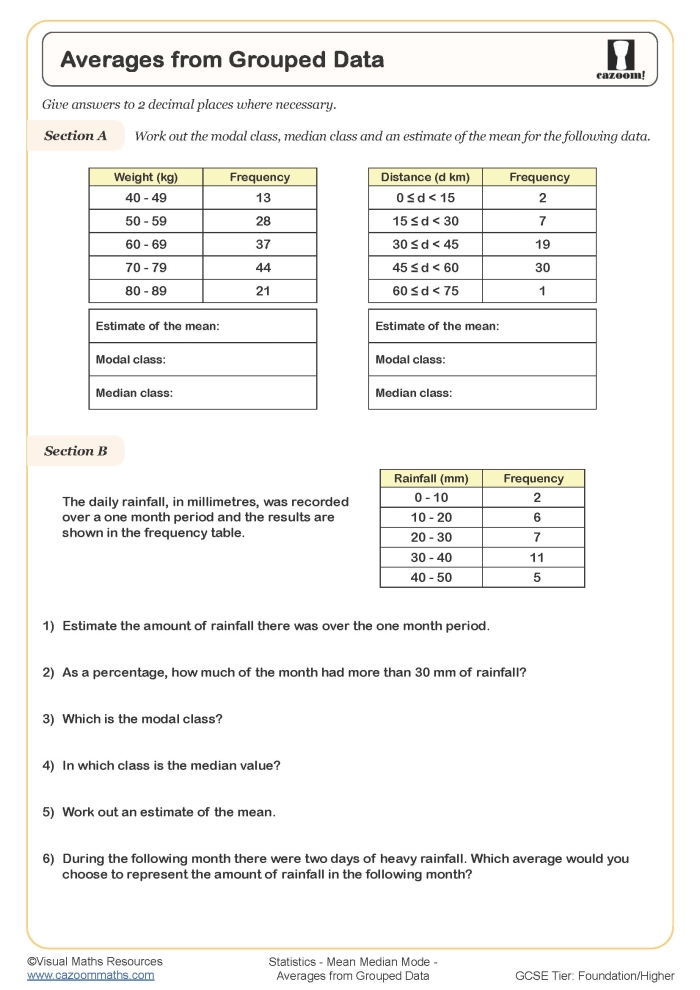
When sixth grade students first encounter statistics, they often struggle to make sense of raw numbers scattered across a page. Teaching them to describe data using measures of center and variability transforms that confusion into understanding. This statistics worksheet approach gives students concrete tools to summarize and compare datasets in meaningful ways.
Measures of center, mean, median, and mode, answer a fundamental question: what does a typical value in this dataset look like? The mean gives students the average by adding all values and dividing by how many there are. The median shows the middle value when data is arranged in order, which proves especially useful when outliers skew the results. Mode simply identifies the most frequently occurring value. Each measure tells a slightly different story about the same dataset, and sixth graders benefit from learning when to apply each one.
Variability, or spread, matters just as much. Range, the simplest measure of variability, shows the difference between the highest and lowest values. This single number helps students recognize whether data clusters tightly together or stretches across a wide spectrum. When working through problems about describing data using mean, median, mode, and range, students develop the habit of asking themselves what these numbers reveal about real situations.
The strength of this worksheet approach lies in its practicality. Students analyze actual datasets from contexts they recognize, whether sports statistics, classroom survey results, or weather patterns. This hands-on practice builds confidence with numbers and prepares them for more advanced statistics work in later grades. By the time they finish these exercises, sixth graders understand that data tells stories, and the right measures help them read those stories accurately.
Use These Worksheets Today