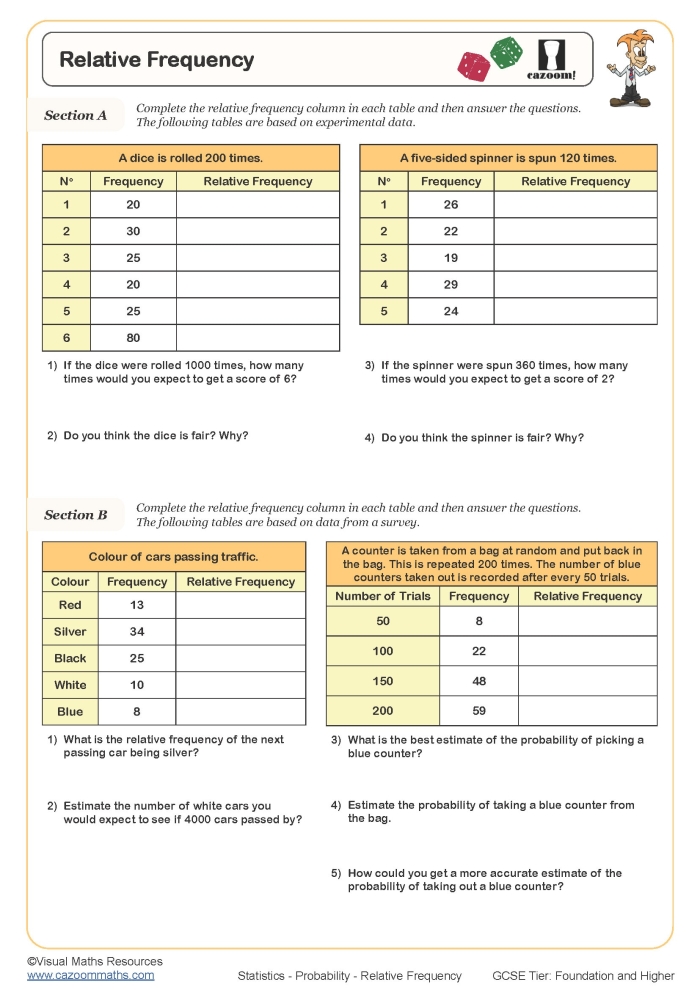
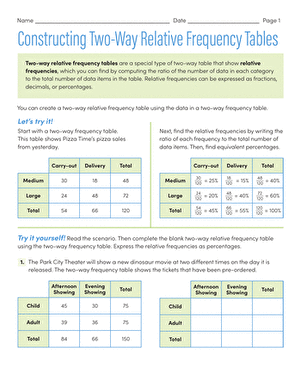
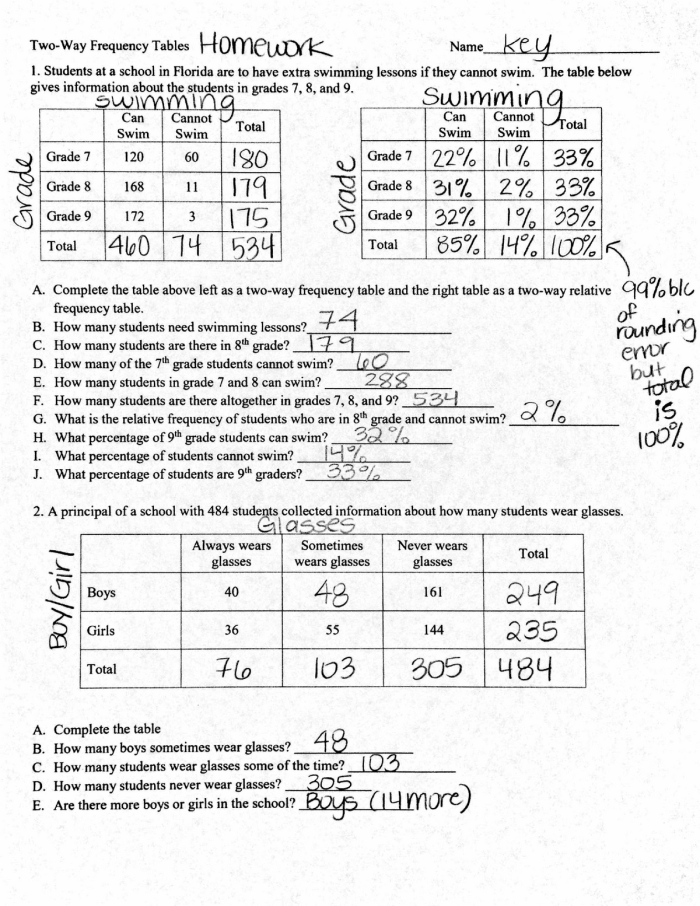
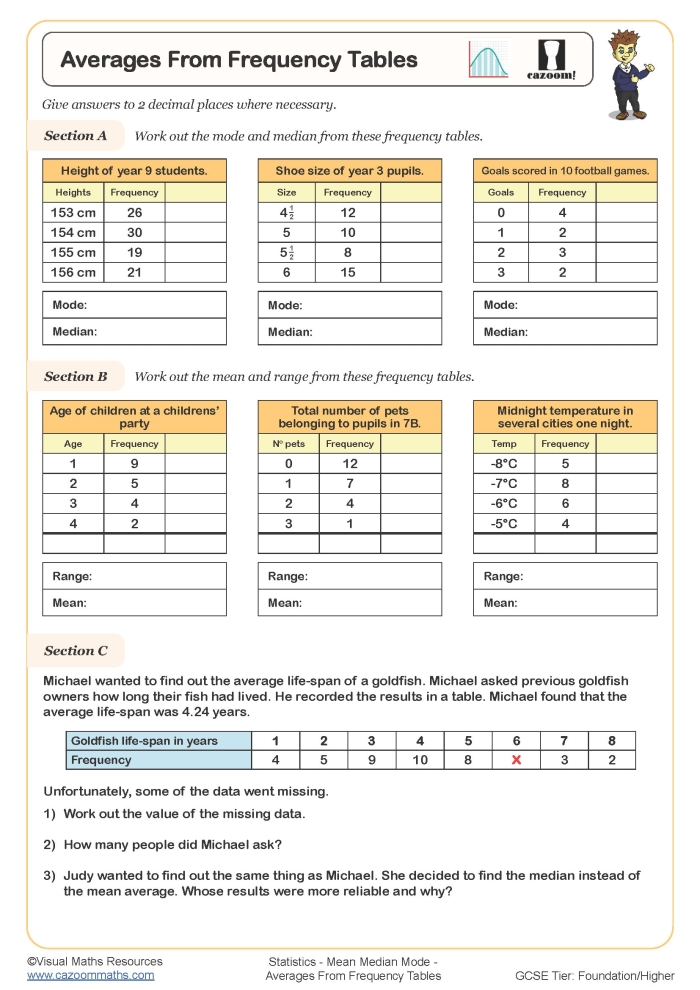
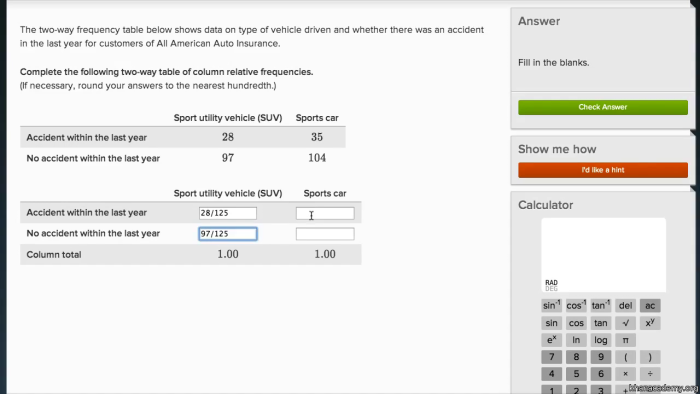
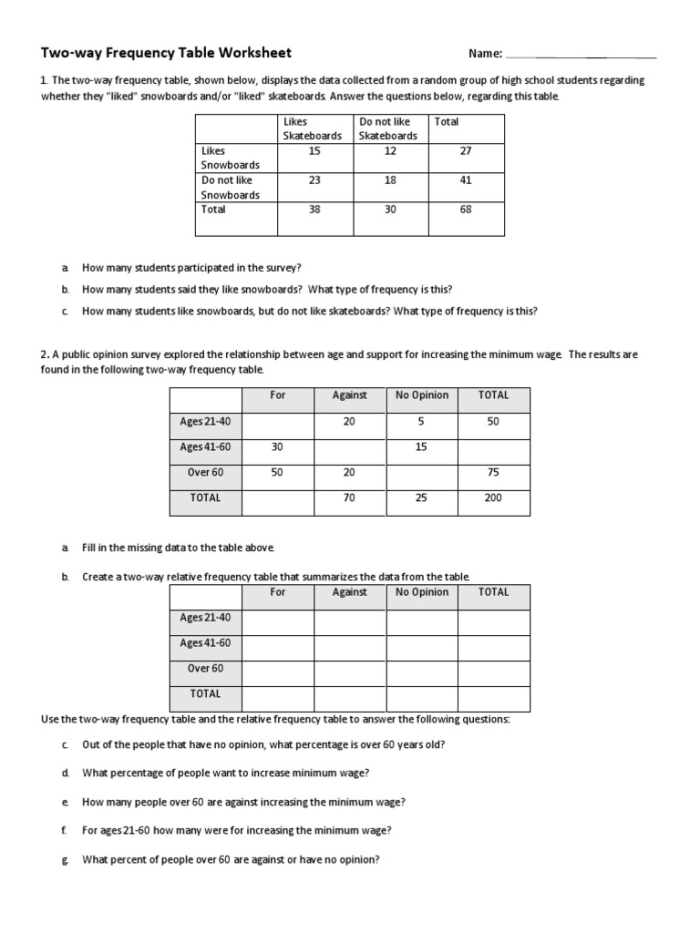
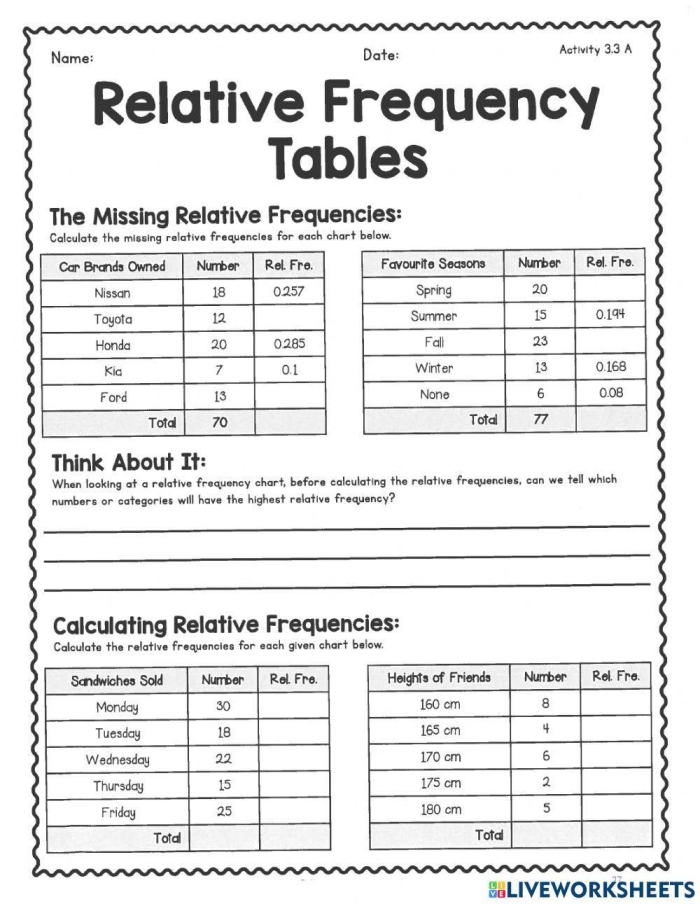
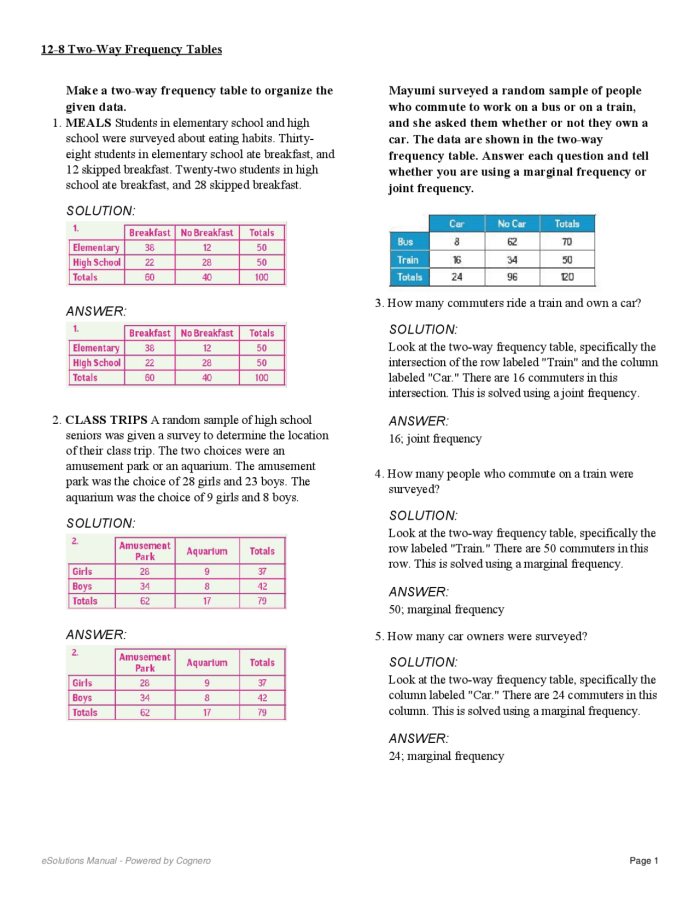
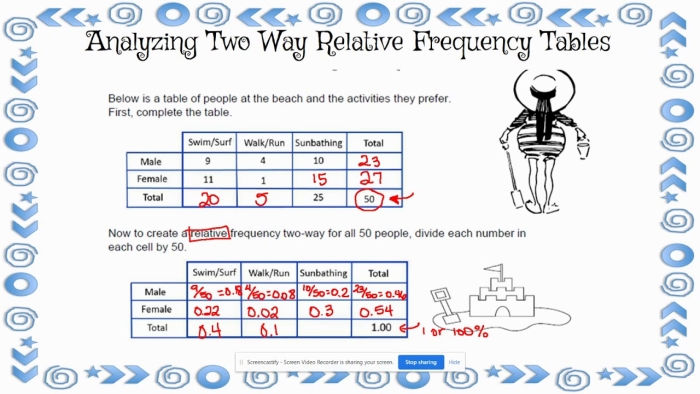
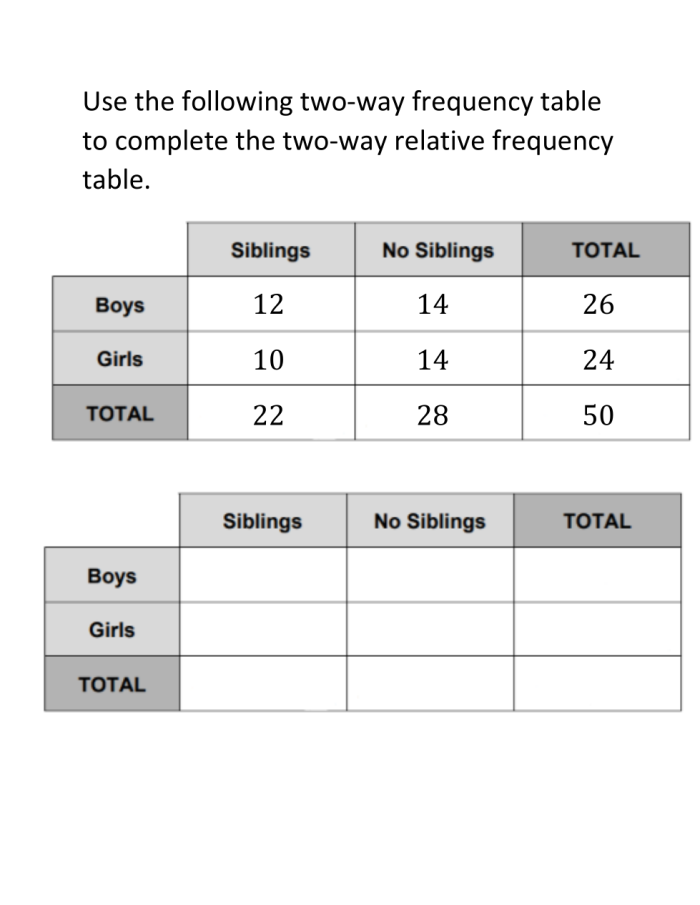
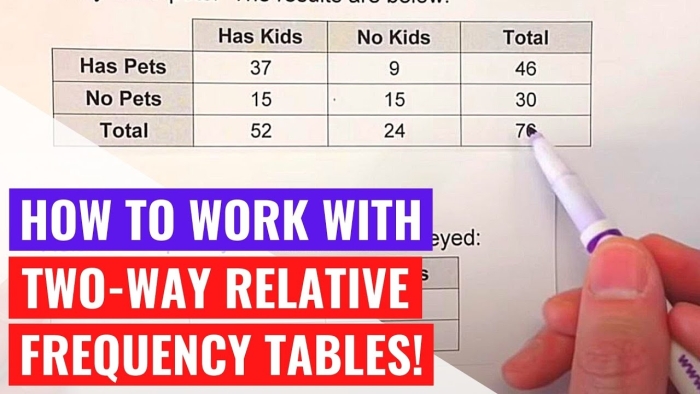
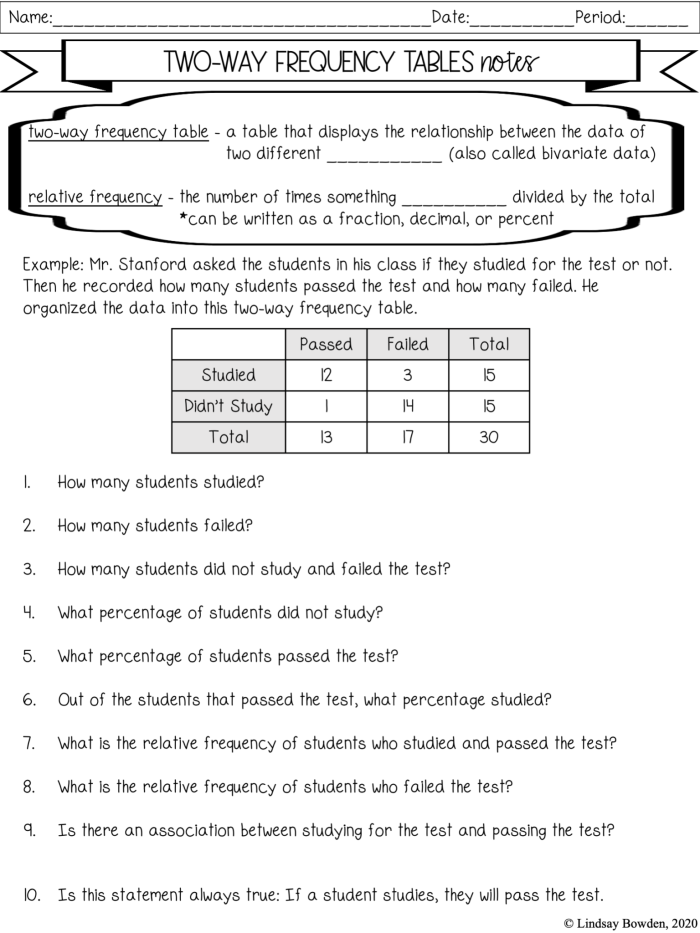
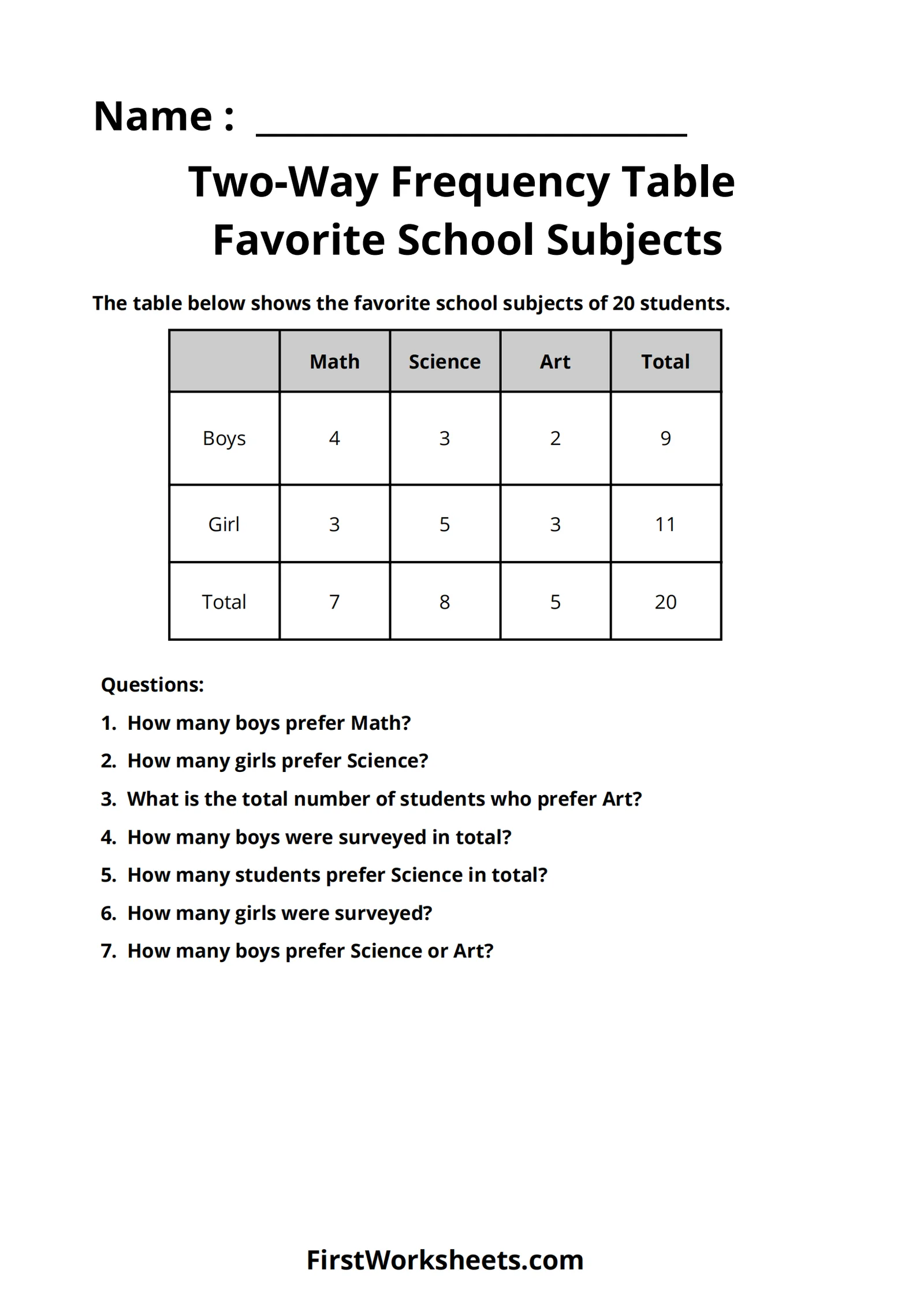
Learning to create two-way relative frequency tables is a vital skill for eighth graders, especially as they dive deeper into math concepts like exponents and roots. These tables not only help students organize data but also allow them to analyze relationships between two categorical variables. Engaging with real-world scenarios makes this practice more meaningful and enjoyable.
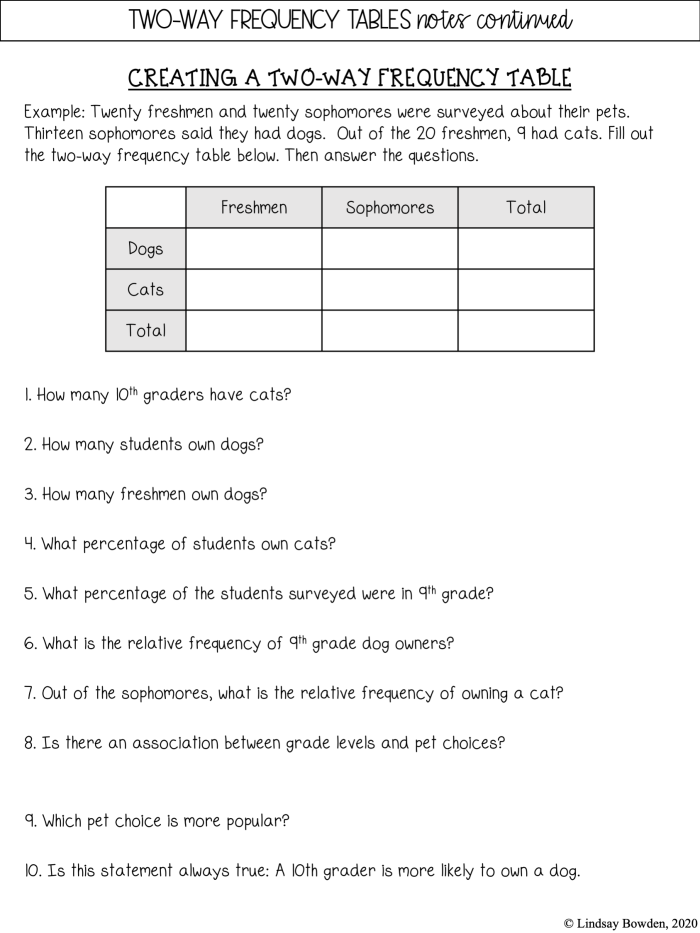
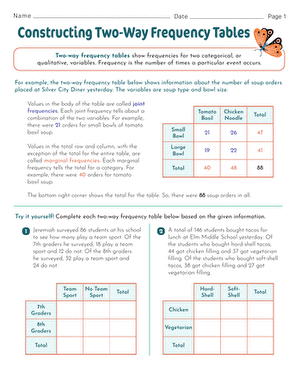
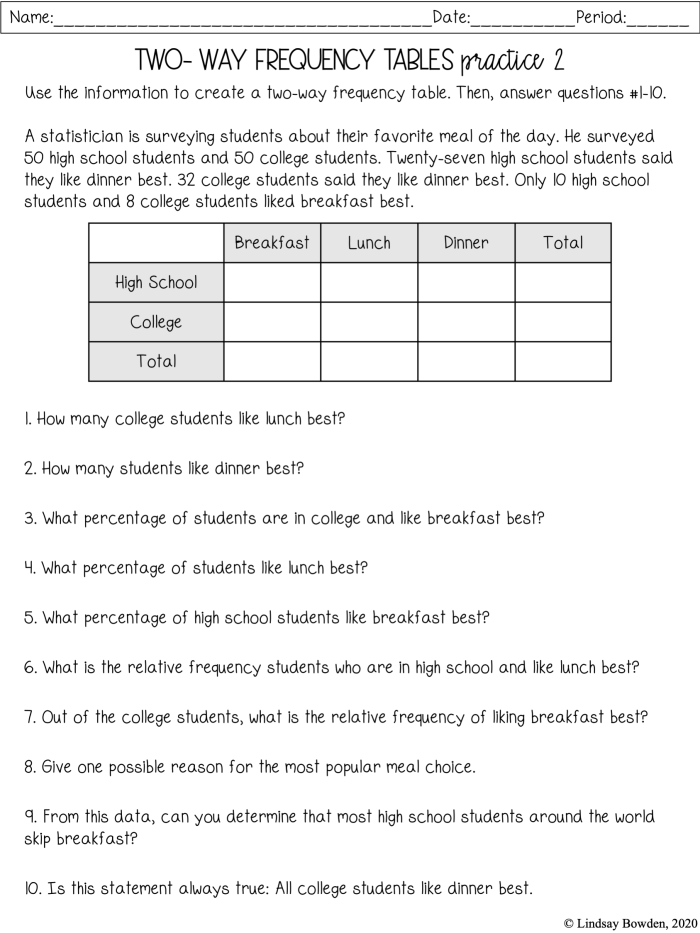
Consider a simple example: a school conducted a survey to find out students’ favorite subjects and whether they prefer online or in-person classes. By organizing this information into a two-way relative frequency table, students can quickly see patterns and make comparisons. For instance, they might discover that a higher percentage of students who prefer math classes also favor online learning. This kind of analysis fosters critical thinking and enhances their understanding of data representation.
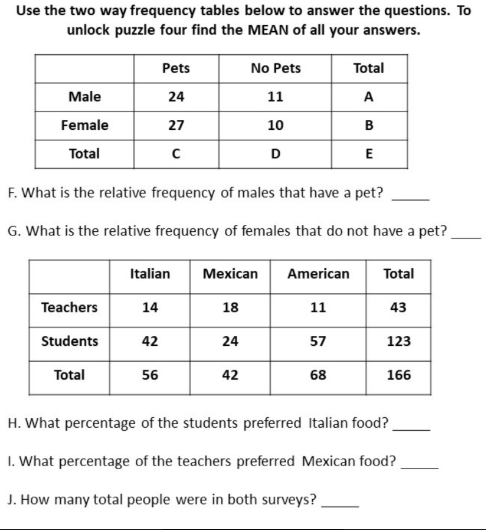
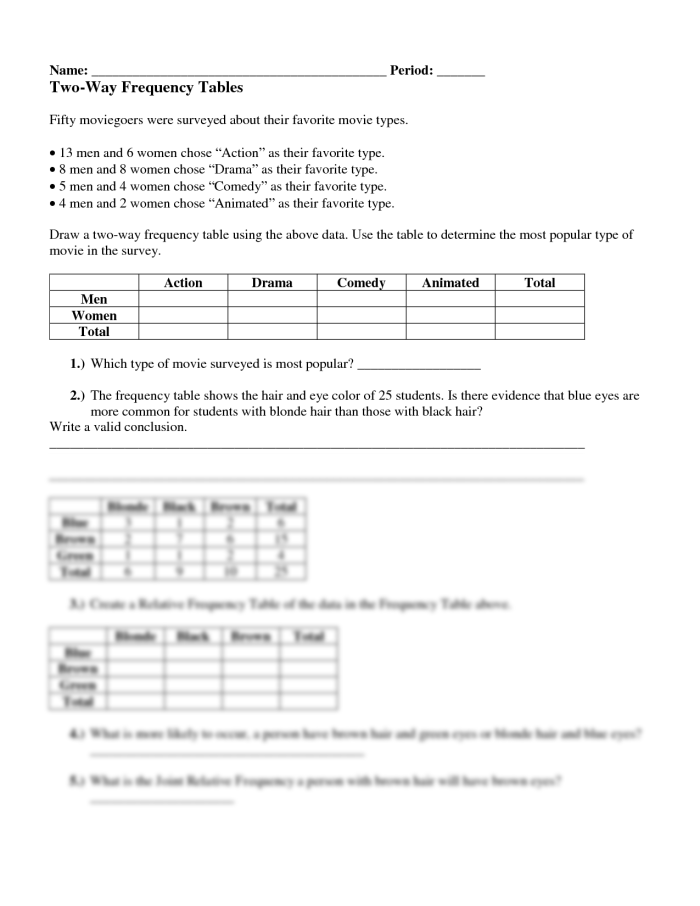
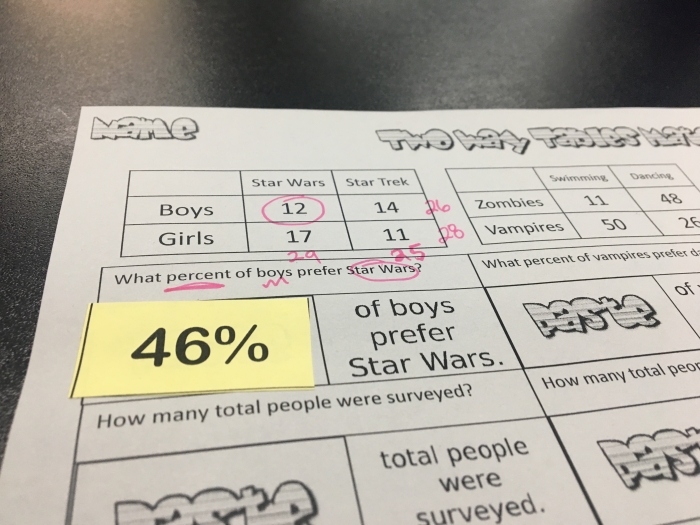
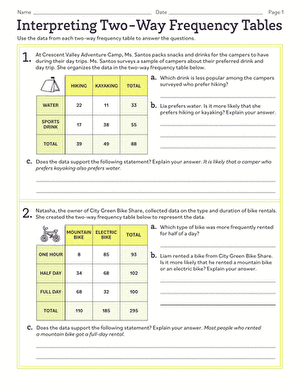
Using a worksheet designed specifically for eighth graders can significantly enhance this learning process. These worksheets typically present relatable scenarios that encourage students to construct their own tables. This hands-on approach not only reinforces their mathematical skills but also builds confidence as they learn to interpret and present data effectively.
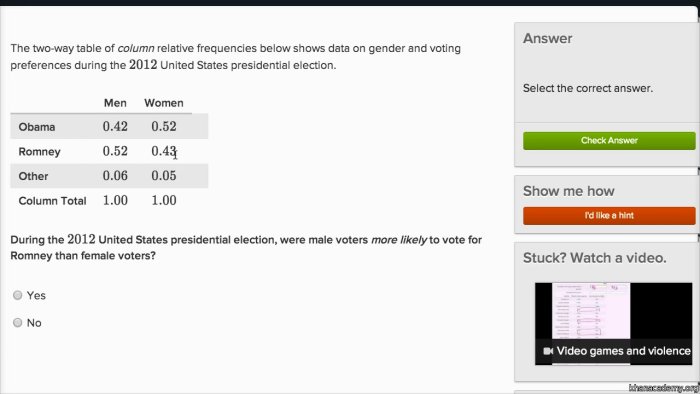
Moreover, introducing students to two-way relative frequency tables prepares them for more advanced topics in statistics. Understanding how to analyze data sets will prove beneficial in various future math courses and even in real-life situations, such as interpreting survey results or making informed decisions based on data.
By practicing with these printable worksheets, students will not only grasp the concept of constructing two-way relative frequency tables but also develop a deeper appreciation for how math applies to everyday life. This skill set is invaluable, paving the way for their success in both academic and real-world contexts.
Printable Worksheets for Practice