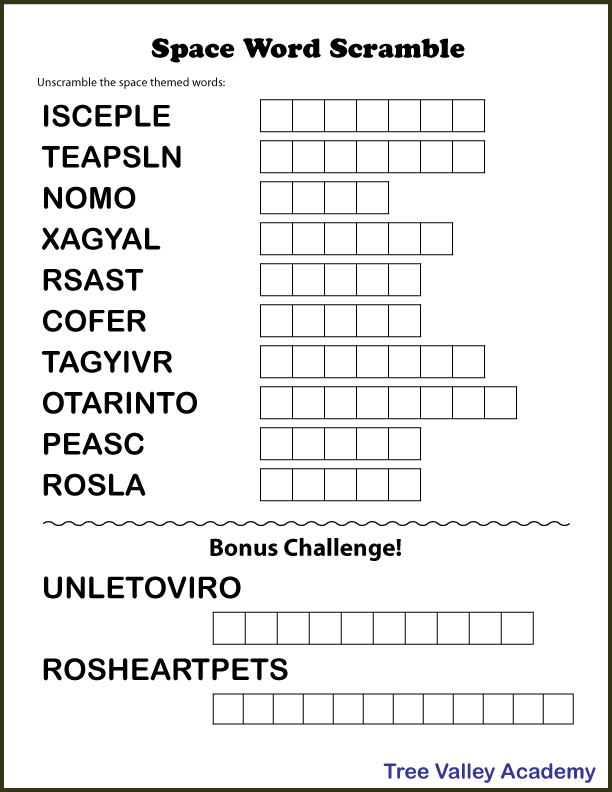
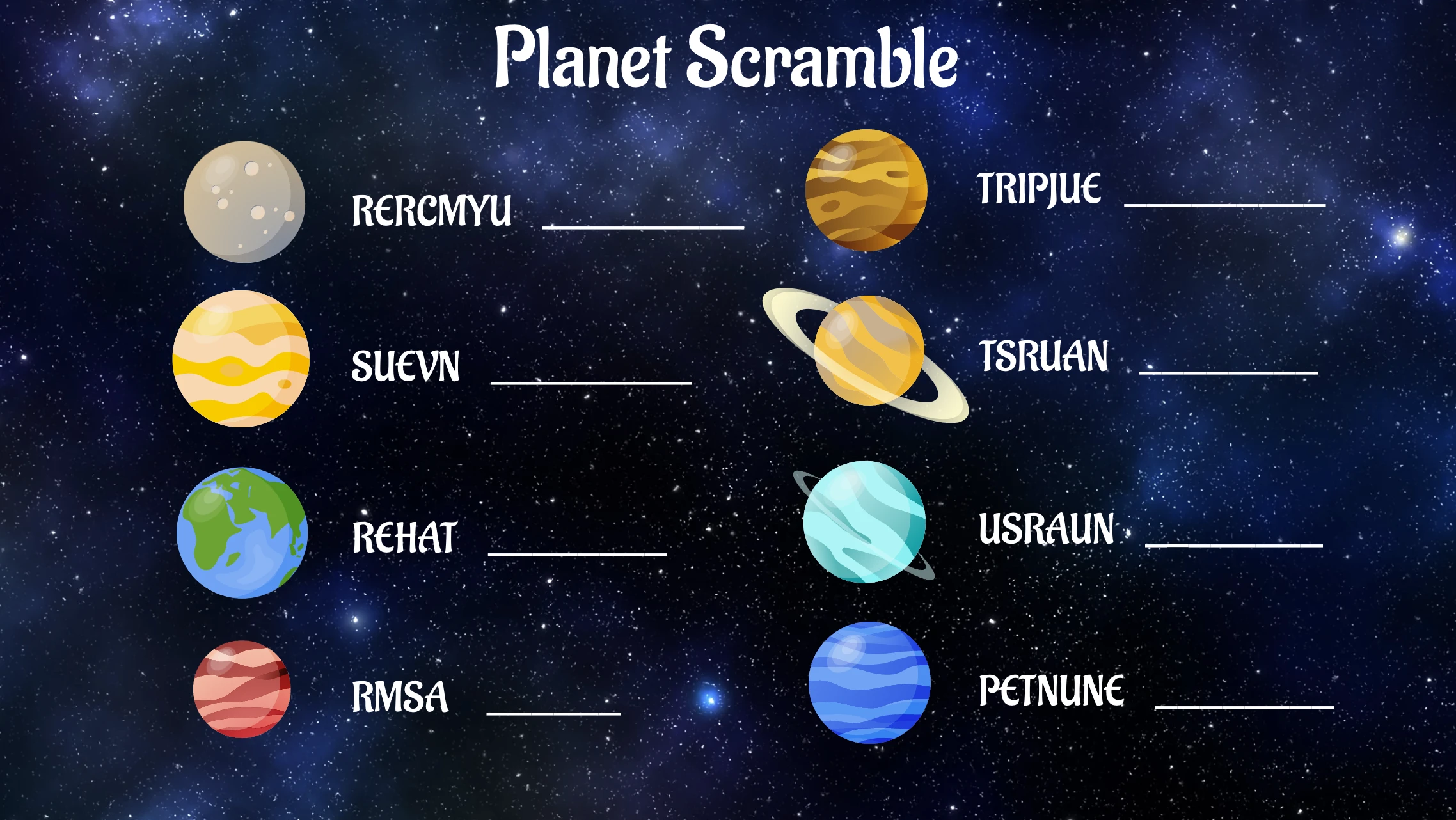
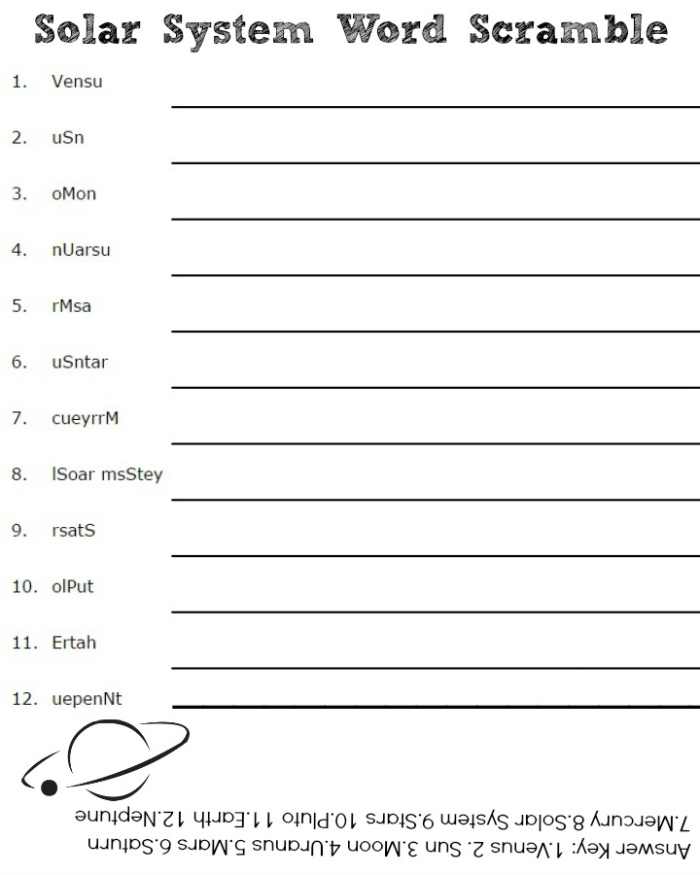
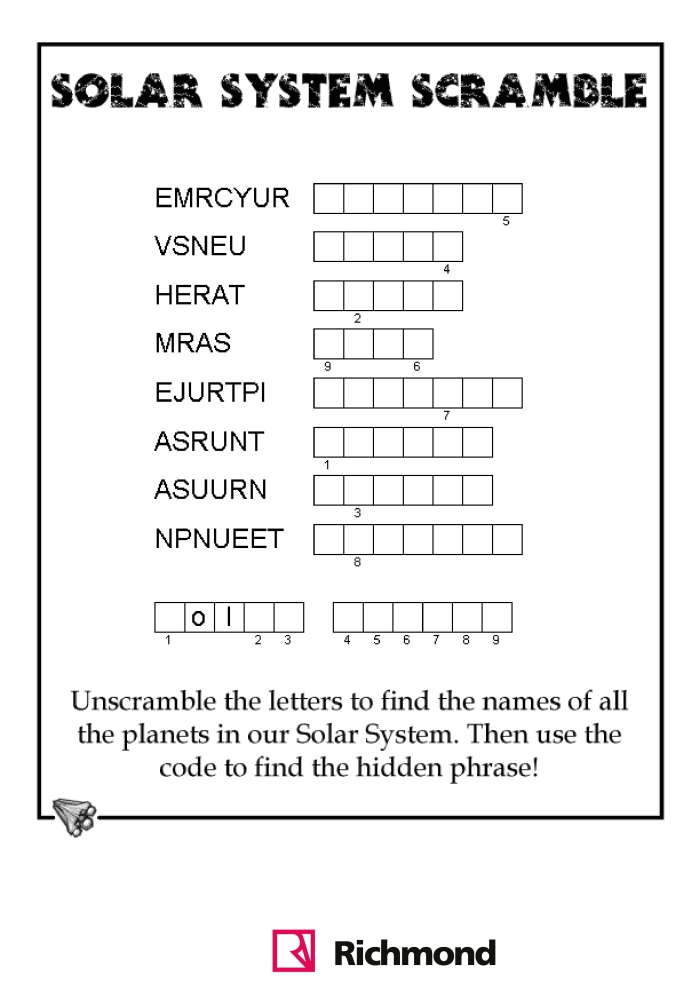
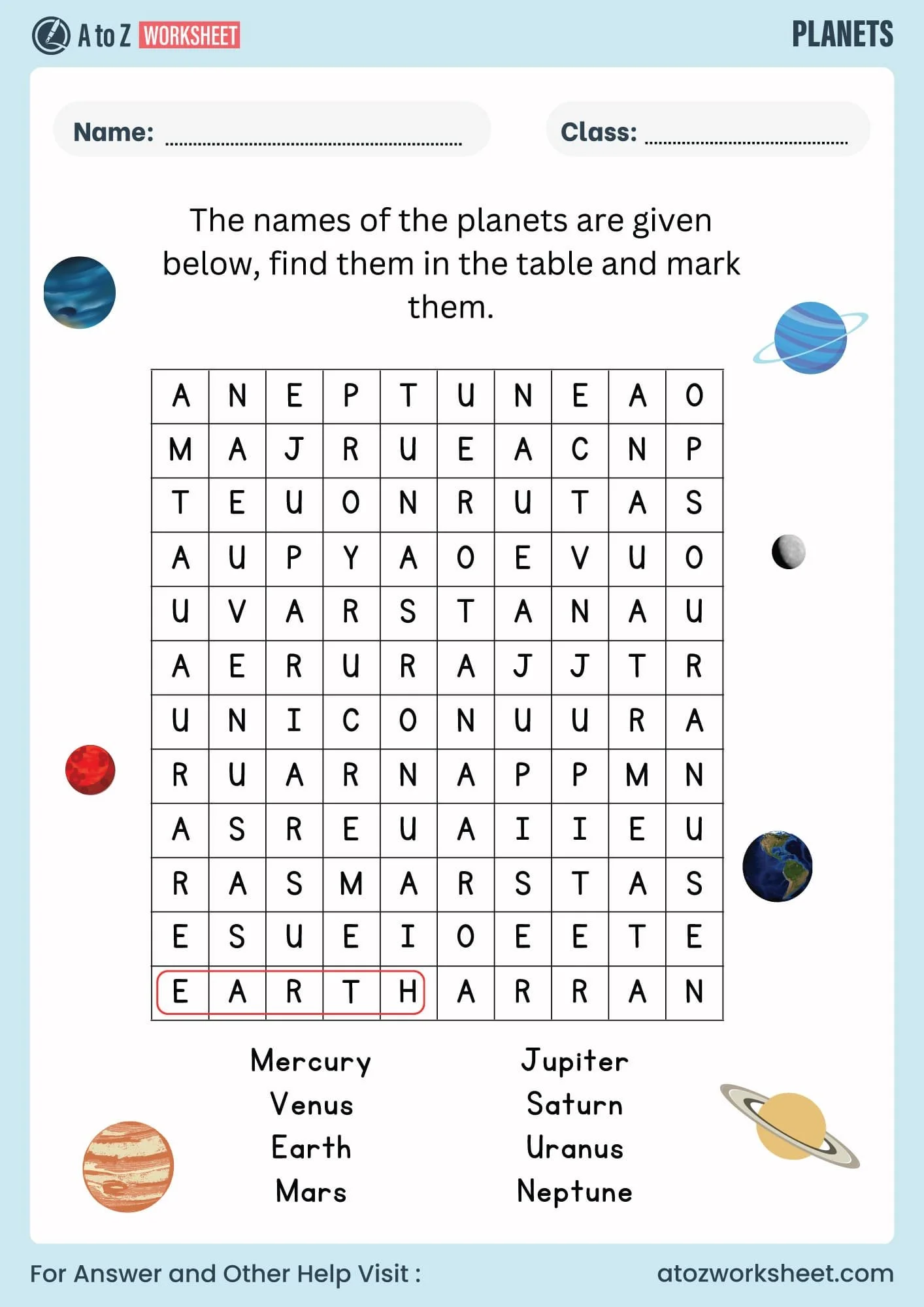
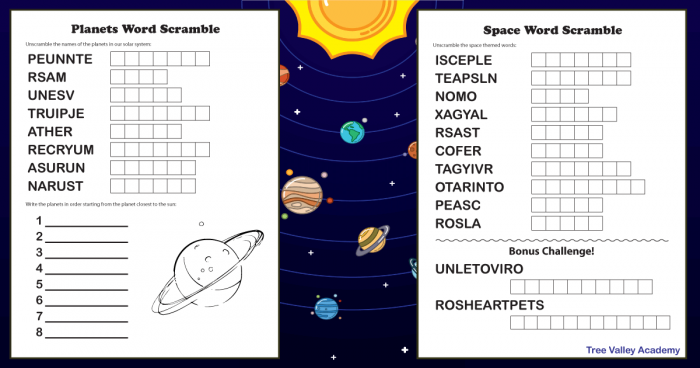
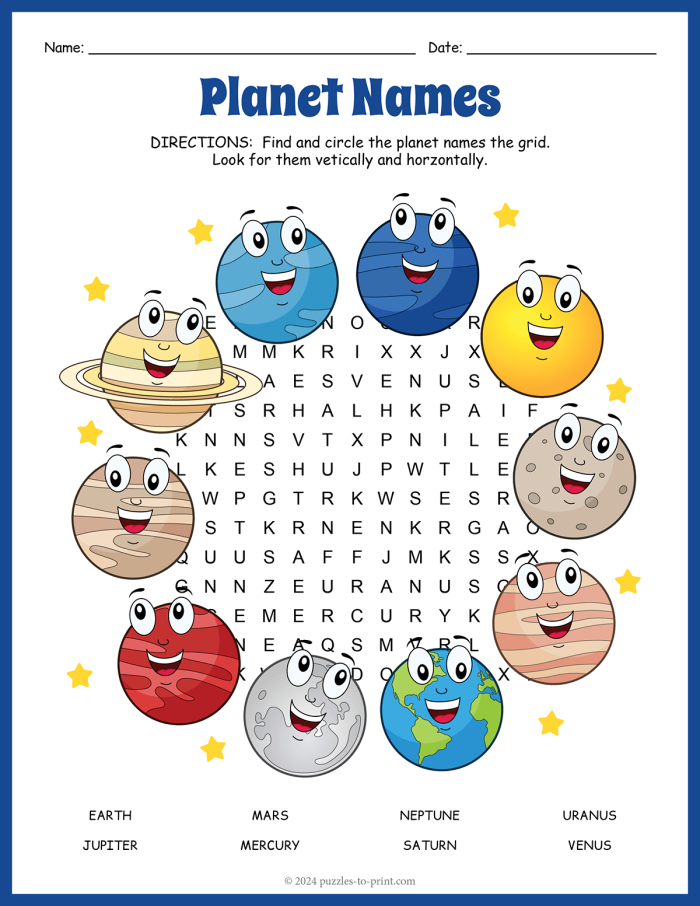
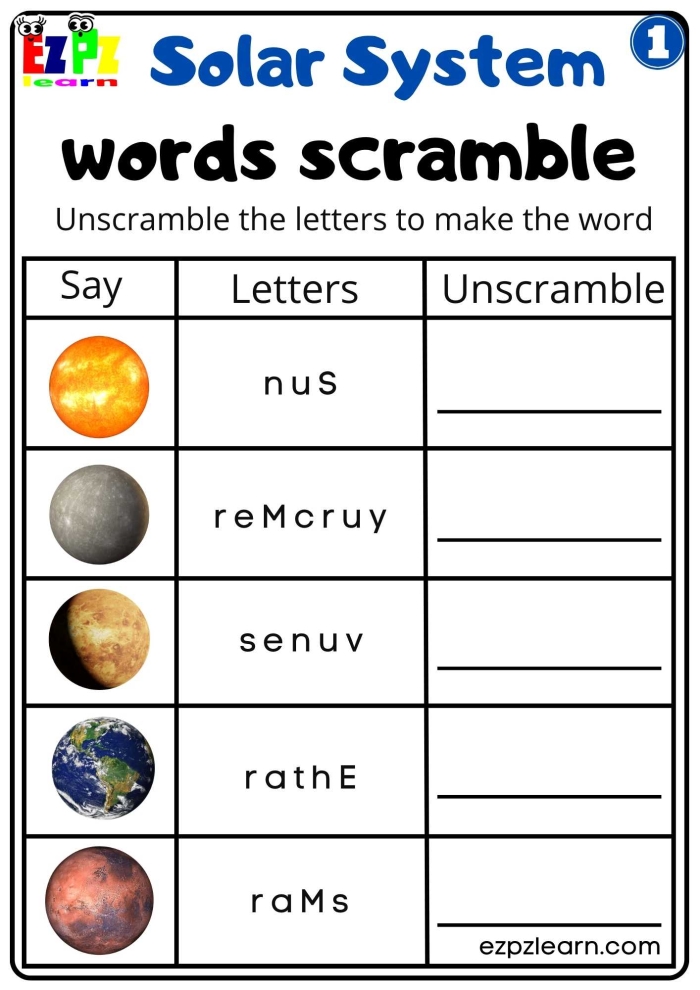
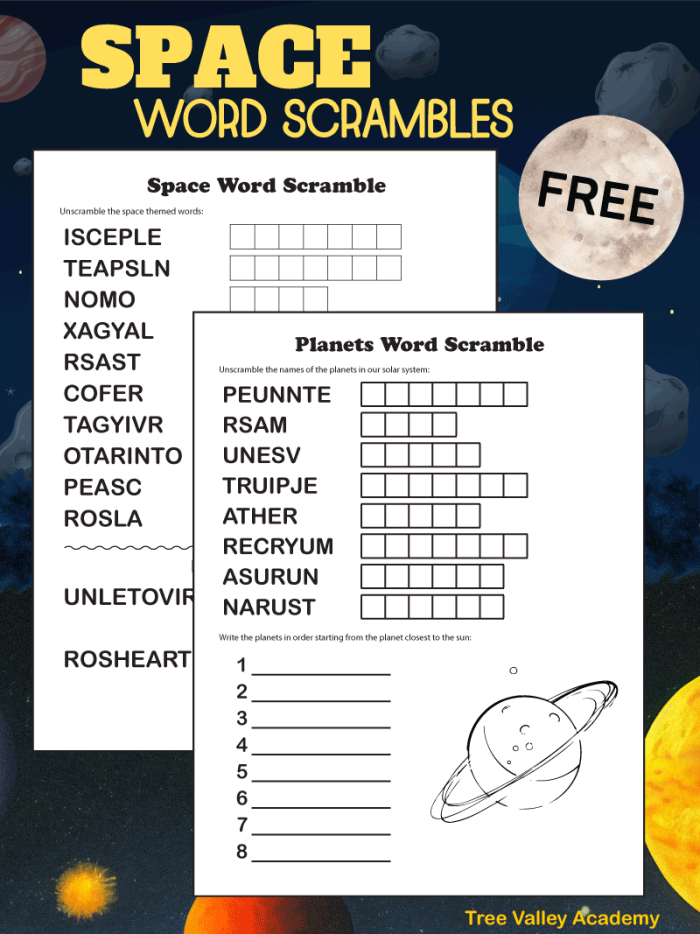
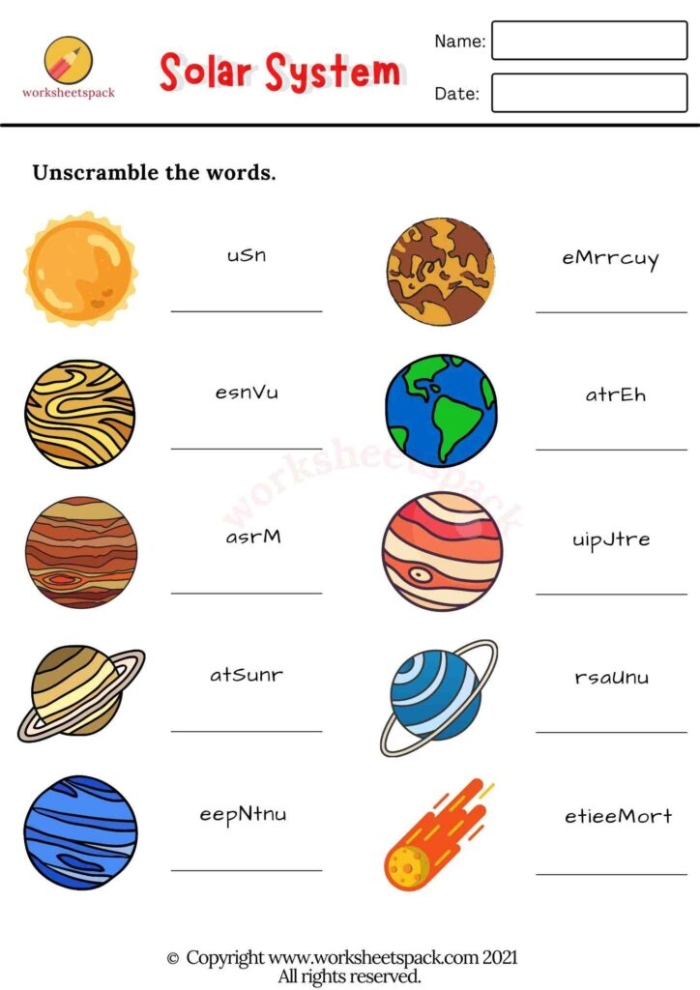
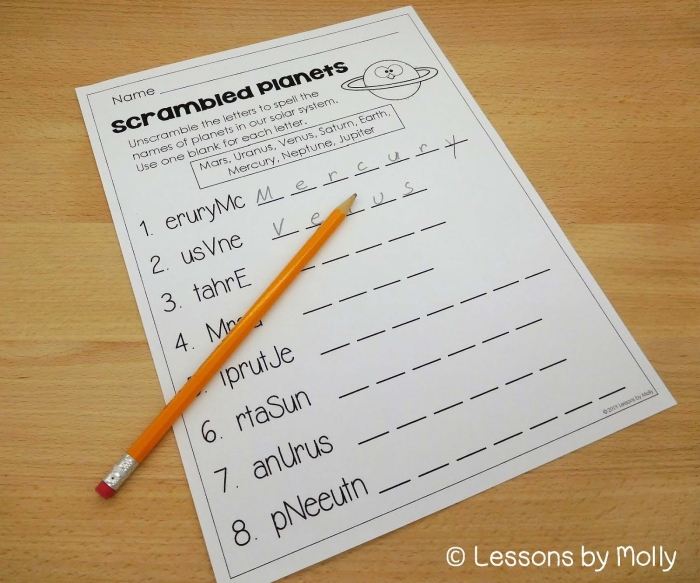
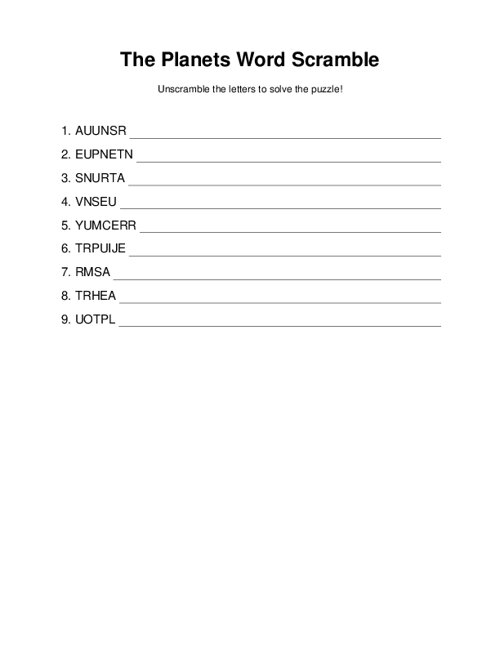
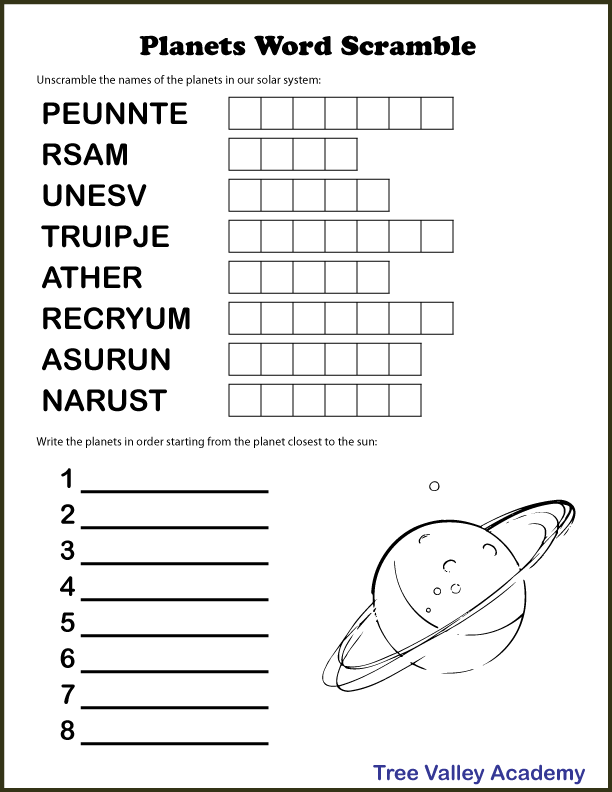
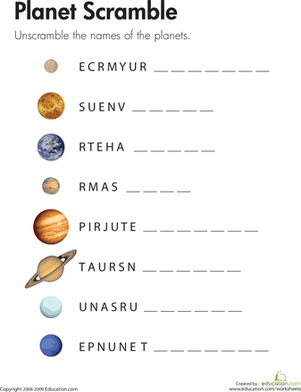
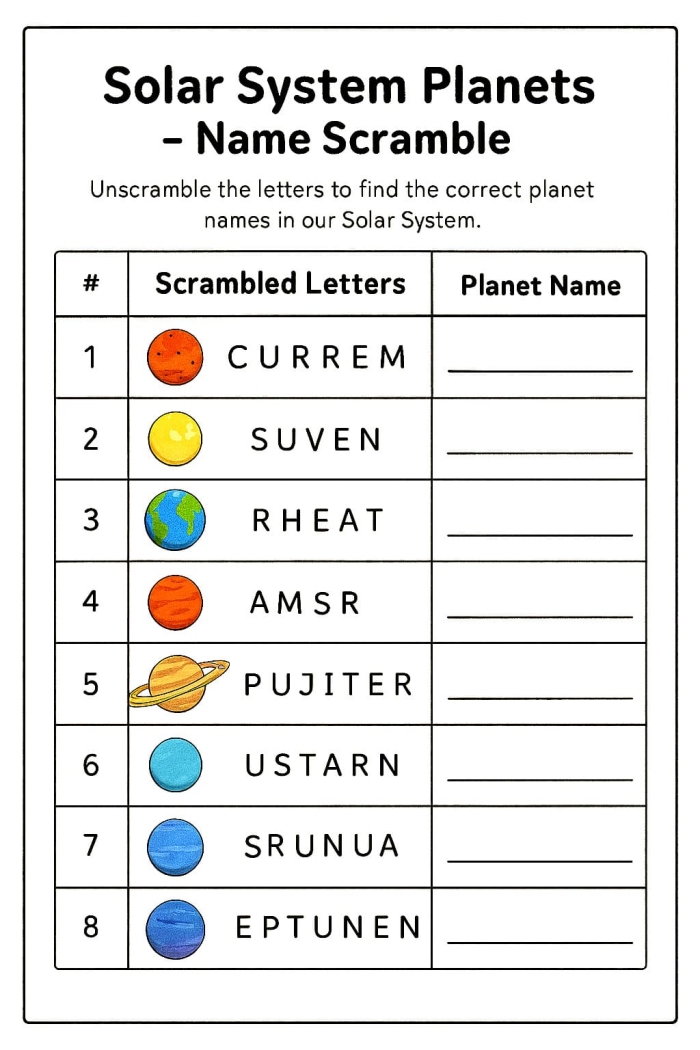
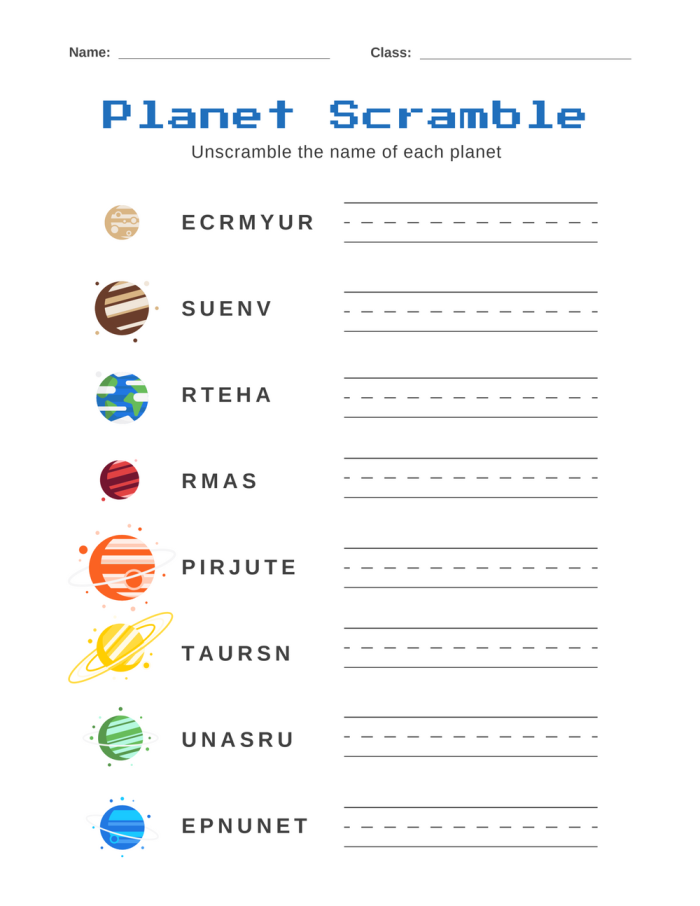
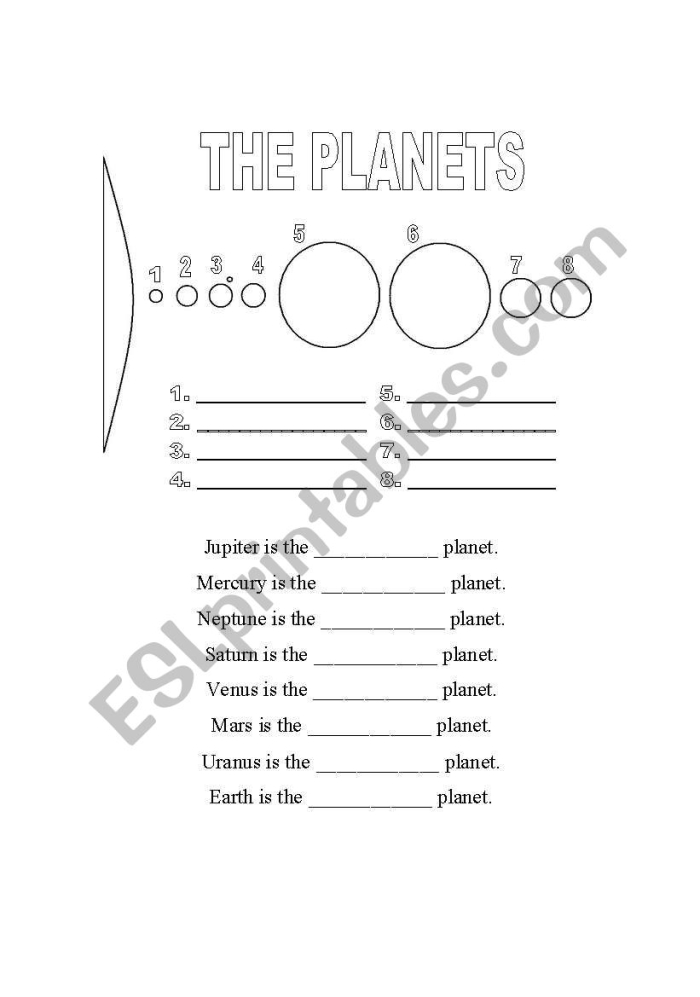
Never heard of the planet Pirjute? That’s because it’s actually Jupiter with its letters all mixed up. This kind of word play makes learning about the planets fun and interactive for third graders, especially when paired with a numbers and counting approach in their science lessons. Scrambled planet names worksheets challenge students to recognize familiar words even when the letters are out of order, reinforcing spelling, memory, and planetary knowledge at the same time.
Using printable scrambled planet names worksheets is a great way to engage kids in third grade. They aren’t just rearranging letters for the sake of it; they’re practicing careful observation and critical thinking. For instance, when children see “Pirjute,” they might sound it out and recall facts about Jupiter, like how it’s the largest planet in our solar system and famous for its Great Red Spot, a giant storm that’s been raging for centuries. That kind of detail helps make the exercise more memorable and meaningful.
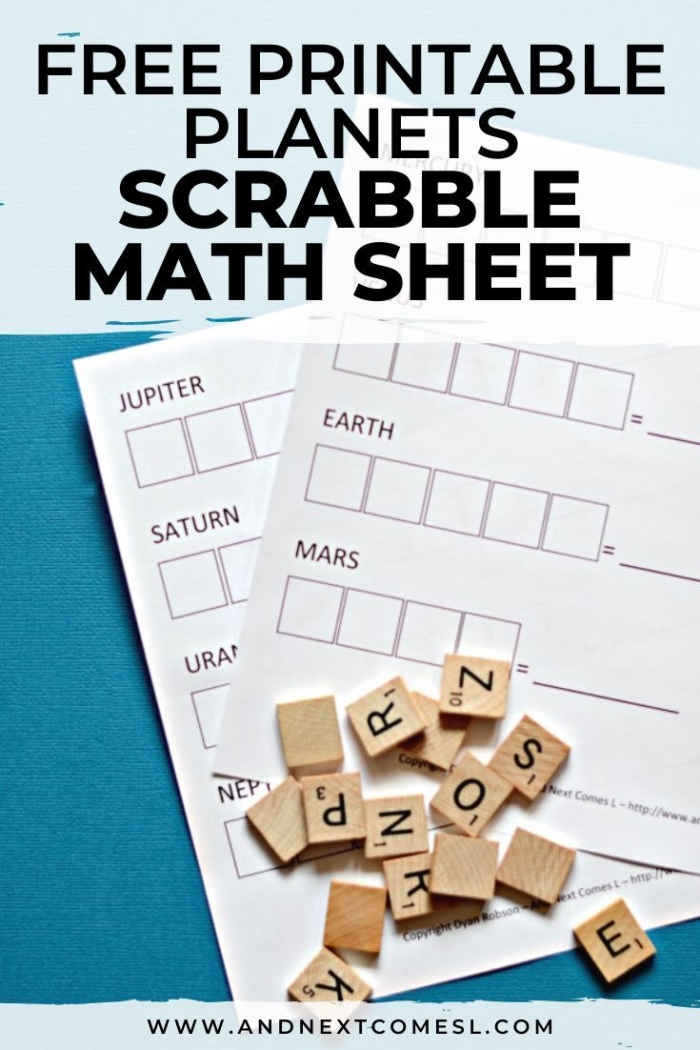
These worksheets fit nicely within a numbers and counting curriculum since they often include counting letters, comparing word lengths, or even timing how long it takes to solve each scramble. This cross-subject approach helps third graders strengthen multiple skills at once. While working on scrambled planets, they might also practice counting the letters in each planet’s name or comparing which planet’s name is the longest, which ties into other math-related third grade topics.
If you’re looking for more ways to combine science with numbers and counting, there are other helpful resources available. For example, activities that focus on elapsed time or rounding numbers can complement the puzzle-solving experience by building students’ overall confidence in handling numbers alongside their science knowledge. You can explore worksheets that focus on elapsed time or try out exercises that encourage rounding numbers as part of broader learning goals.
Scrambled planet names aren’t just a simple word game—they’re a practical classroom tool that connects literacy, science, and math in a way that feels like play. For third graders, that mix is exactly what helps information stick while keeping lessons engaging and varied.
Start Practicing with These Worksheets