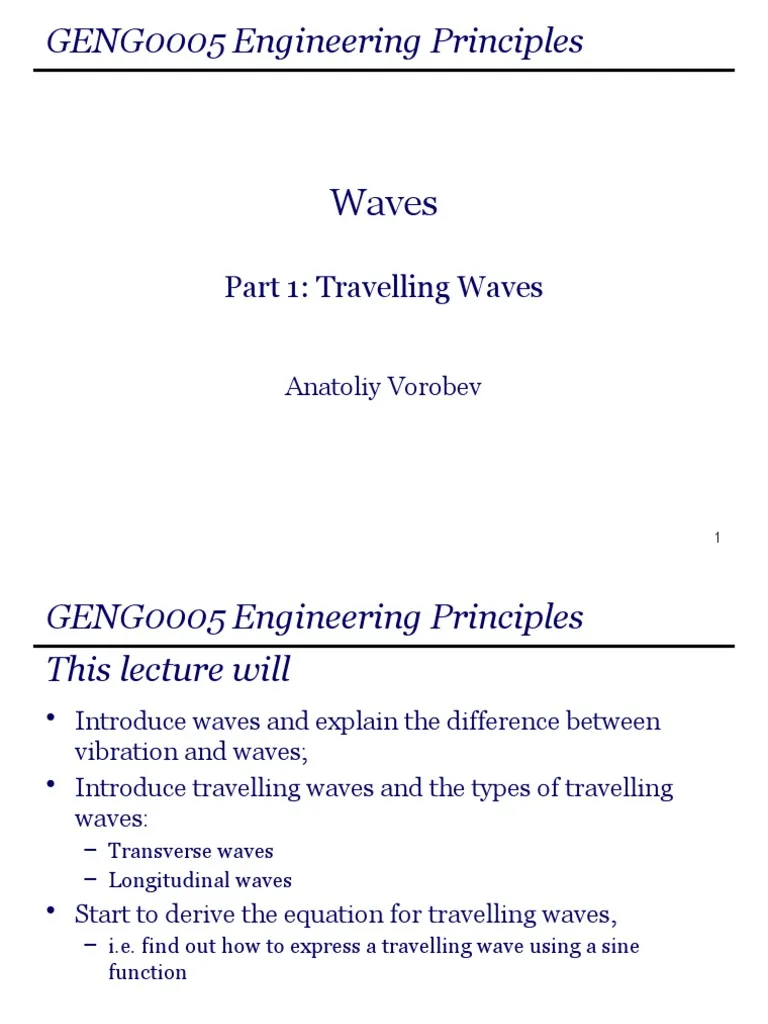
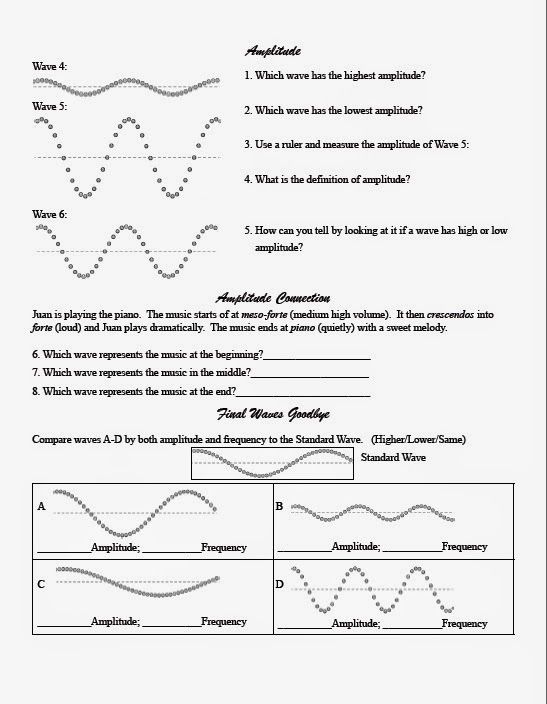
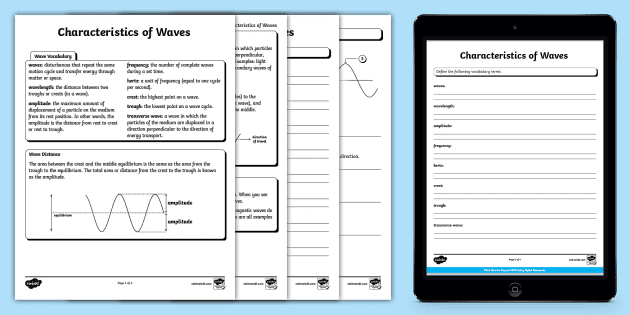
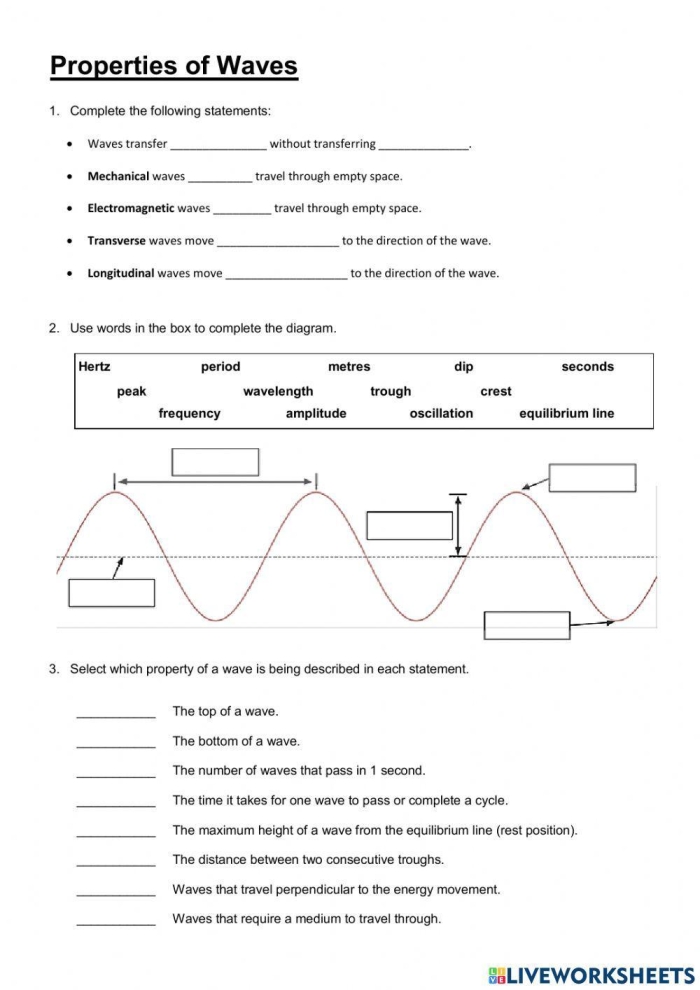
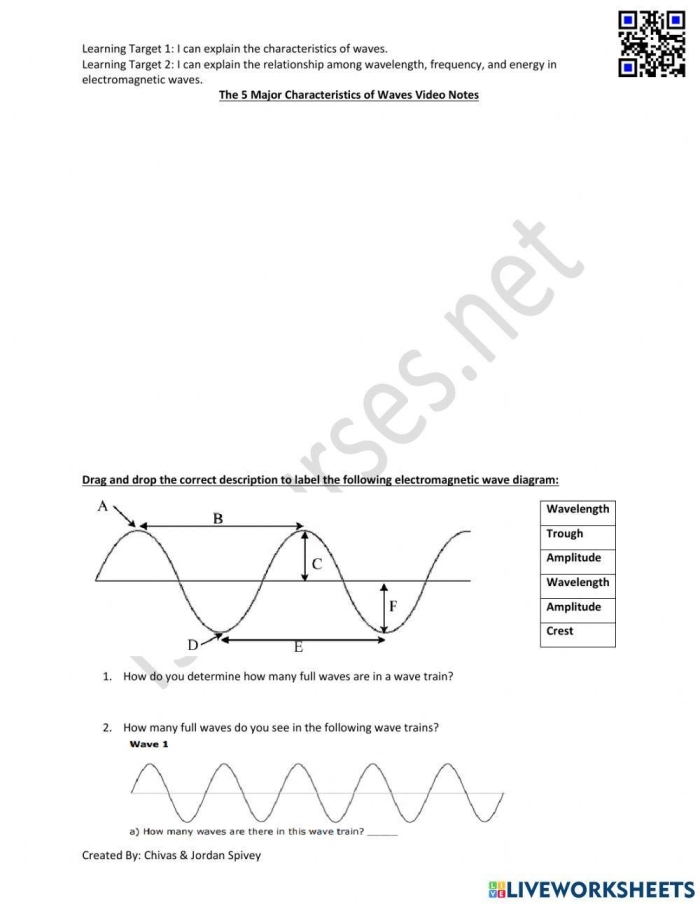
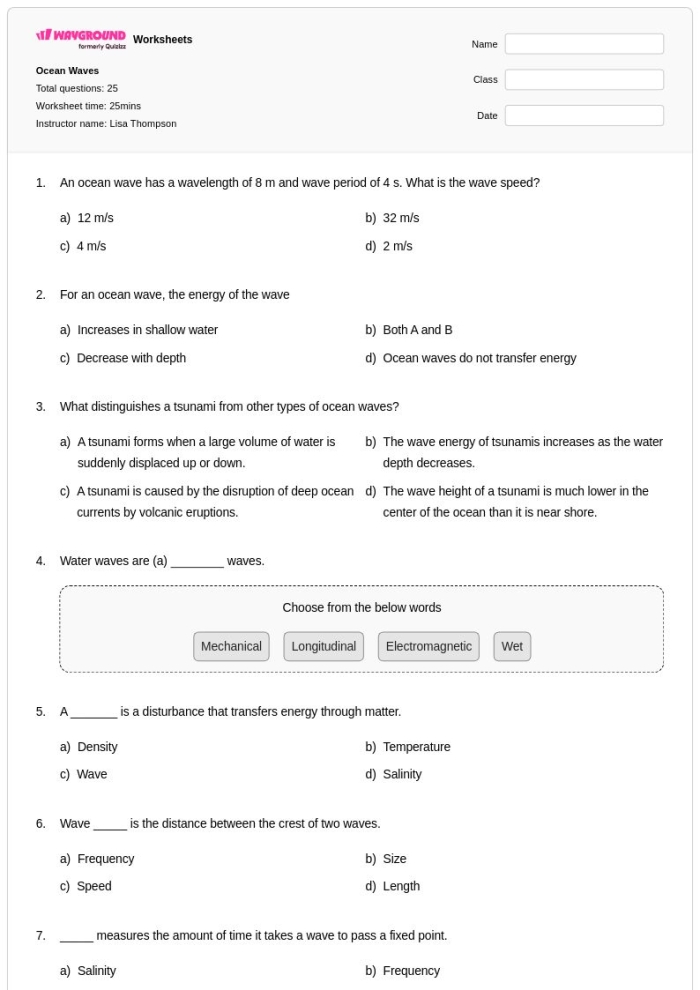
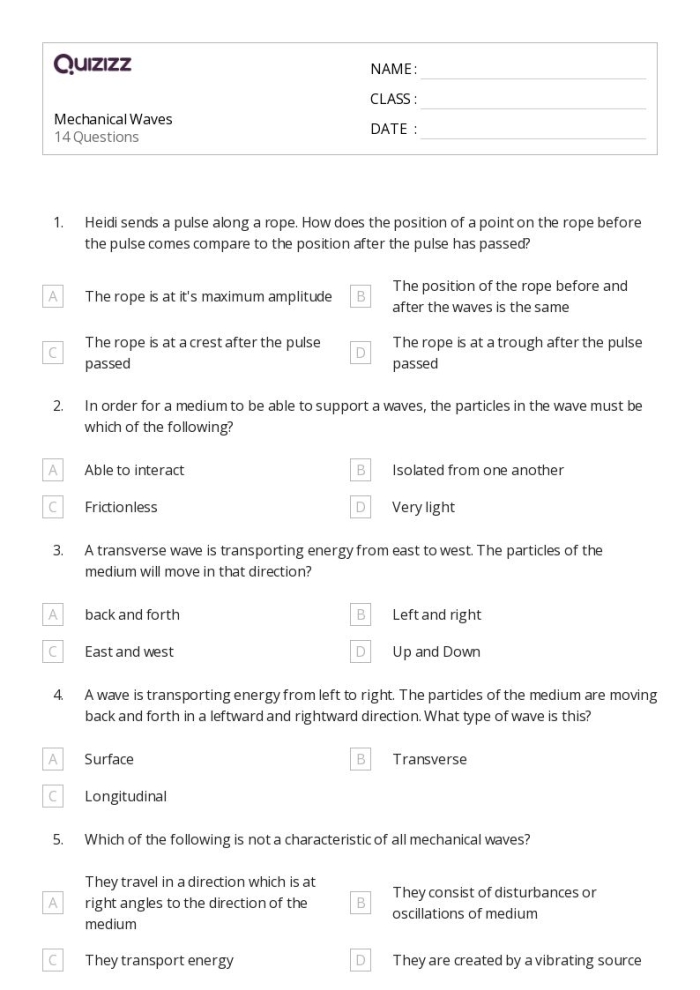
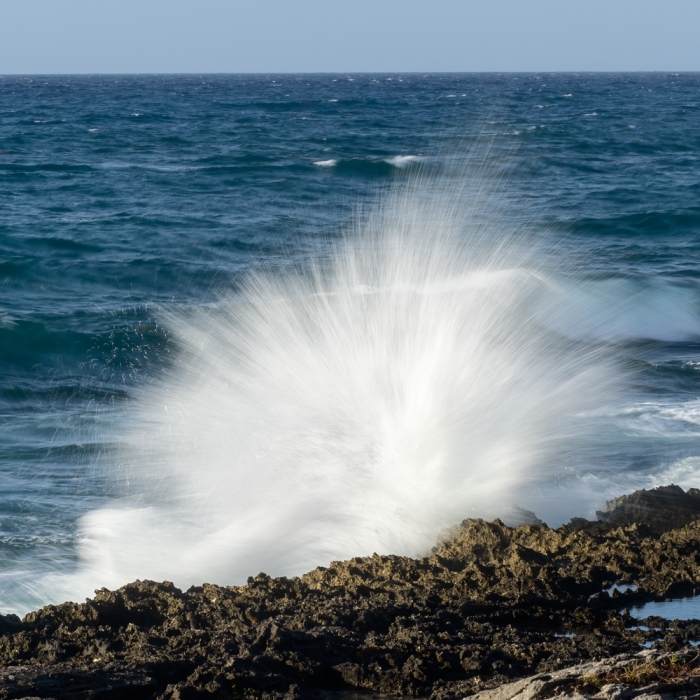
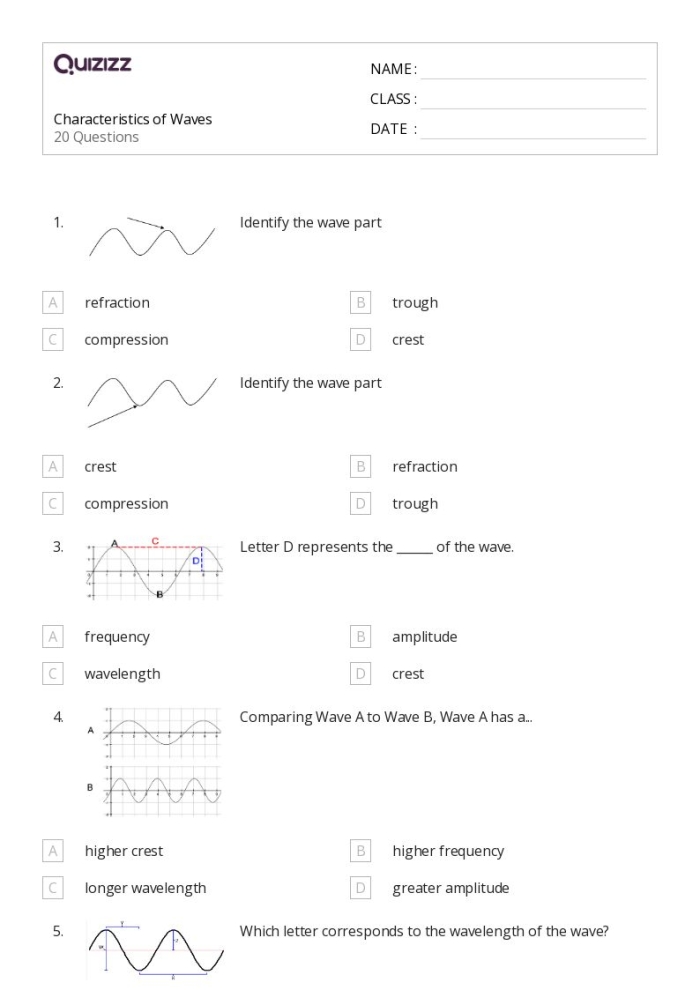
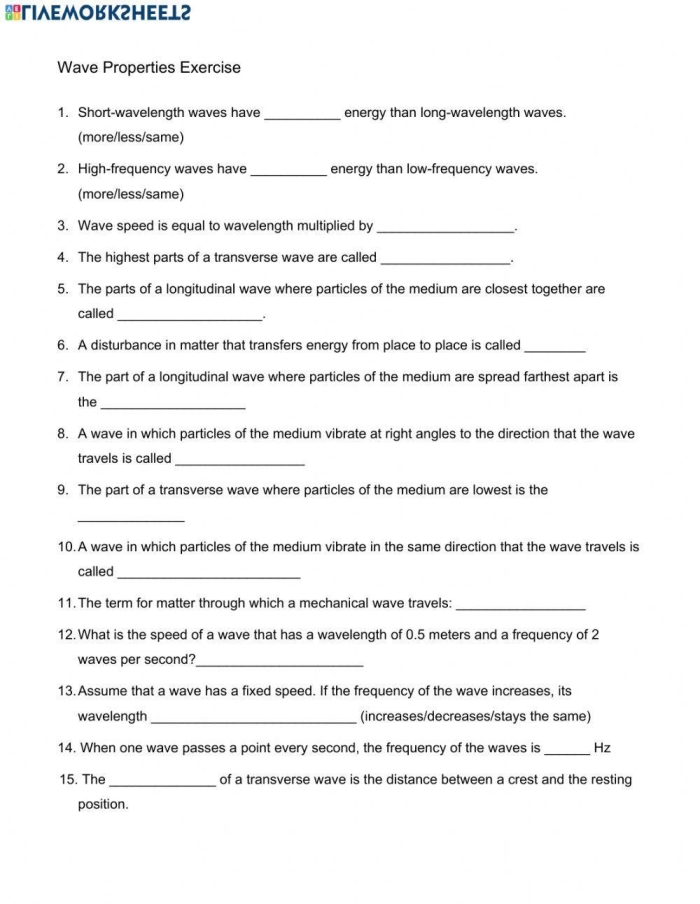
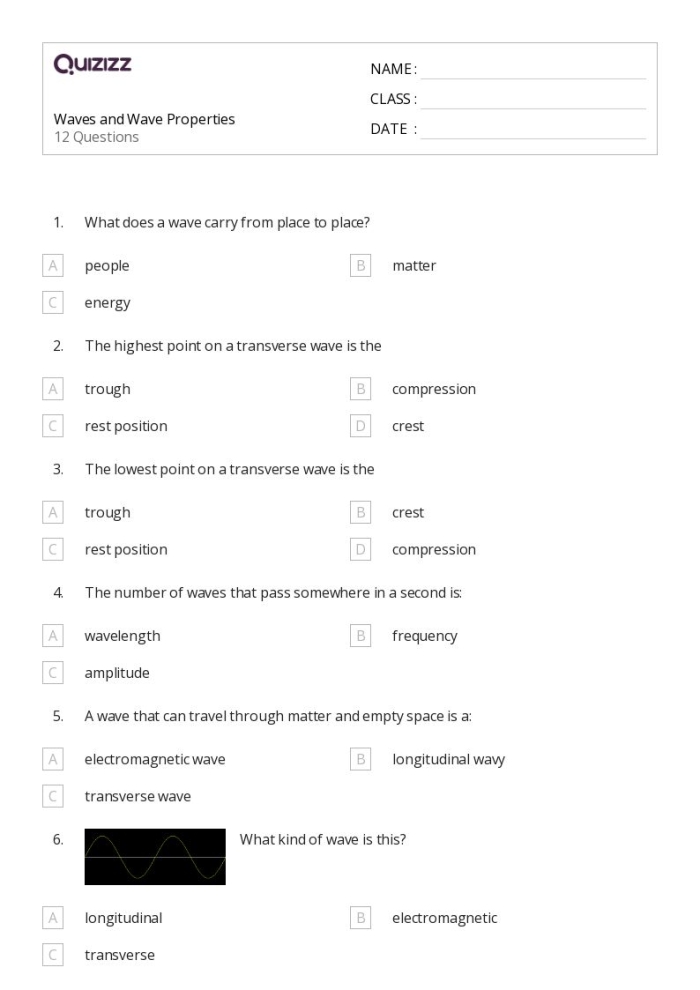
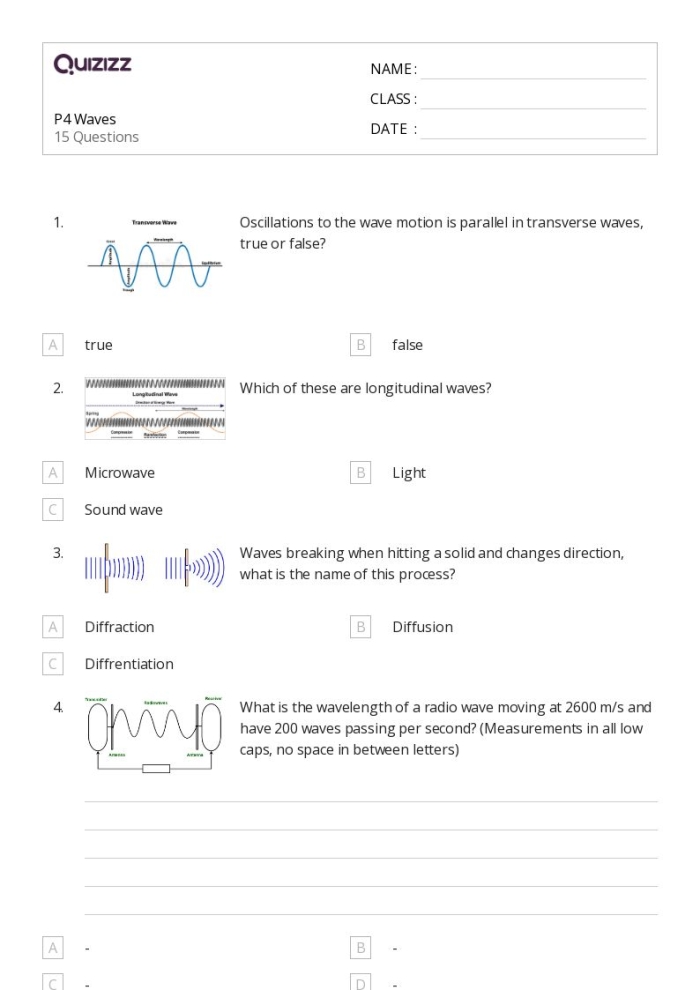
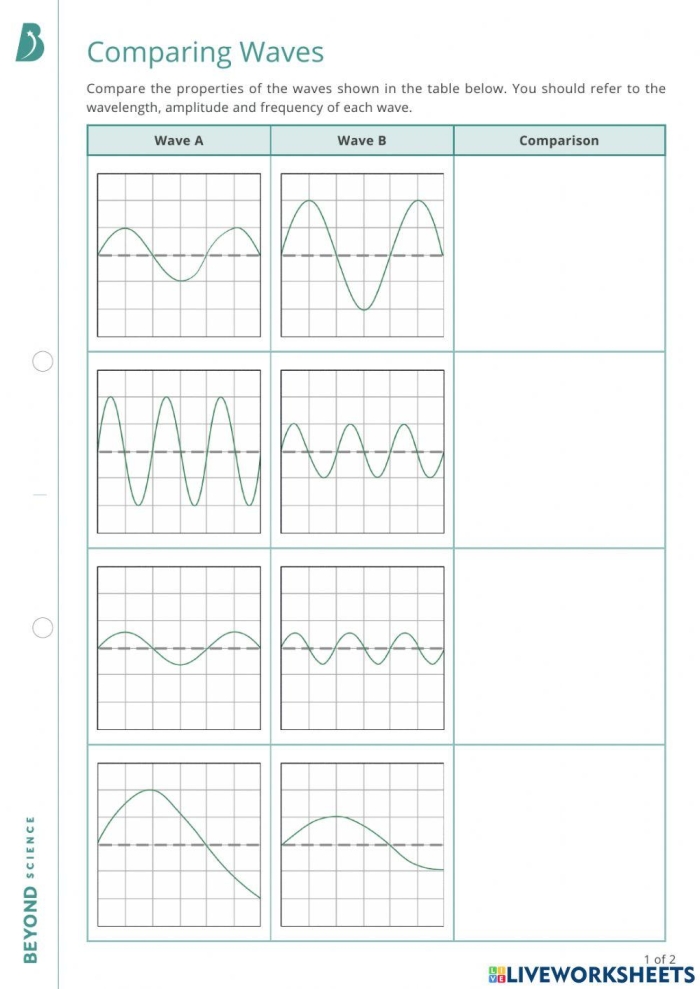
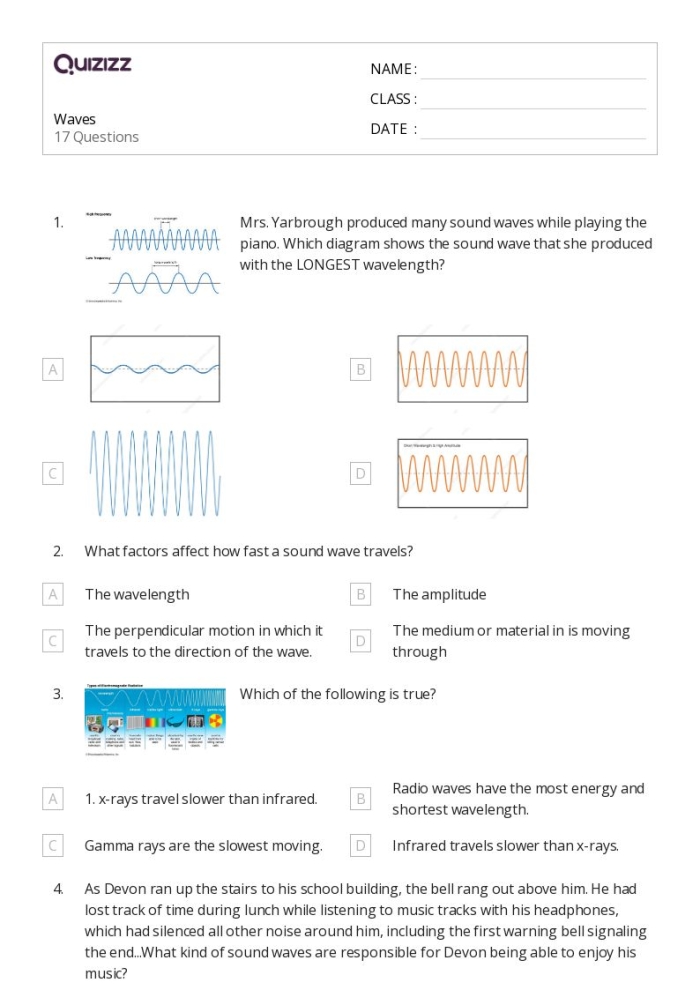
When sixth grade students first encounter waves in physical science, many imagine only ocean swells or ripples in water. A two-page worksheet designed around the characteristics of waves opens up a much broader view of how waves behave, travel, and interact with their environment. This hands-on resource pushes students beyond memorizing definitions and instead guides them to actively observe, measure, and compare different wave properties.
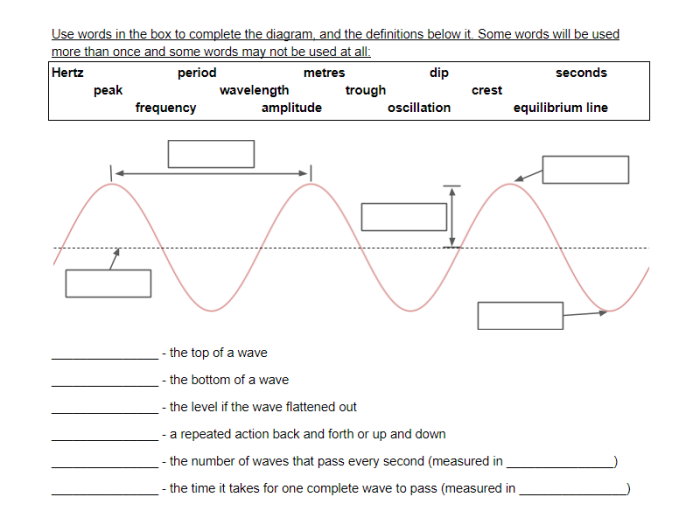
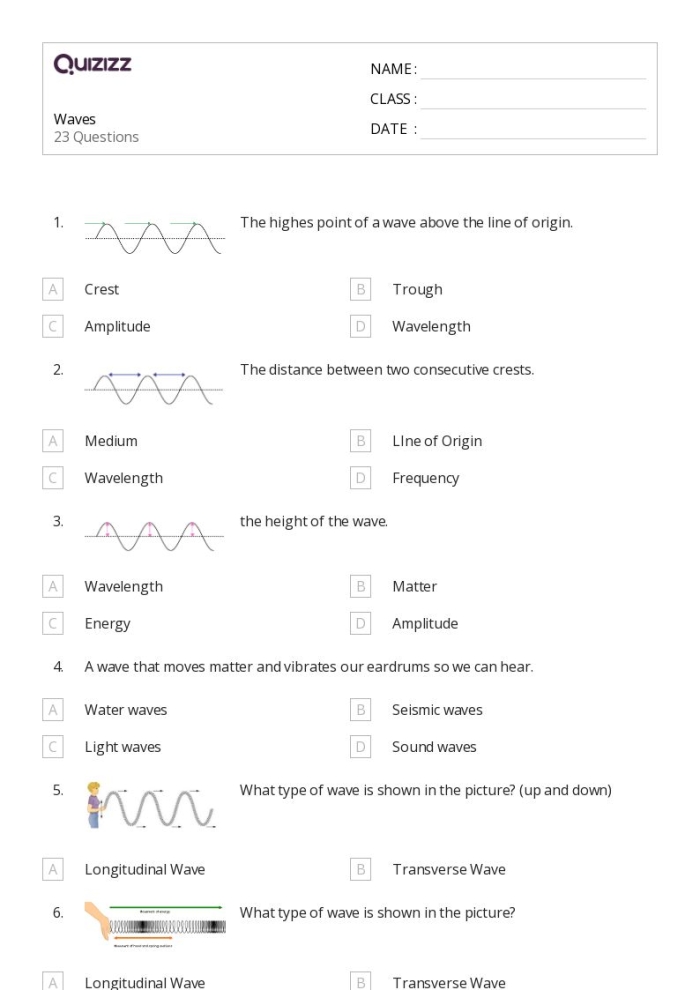
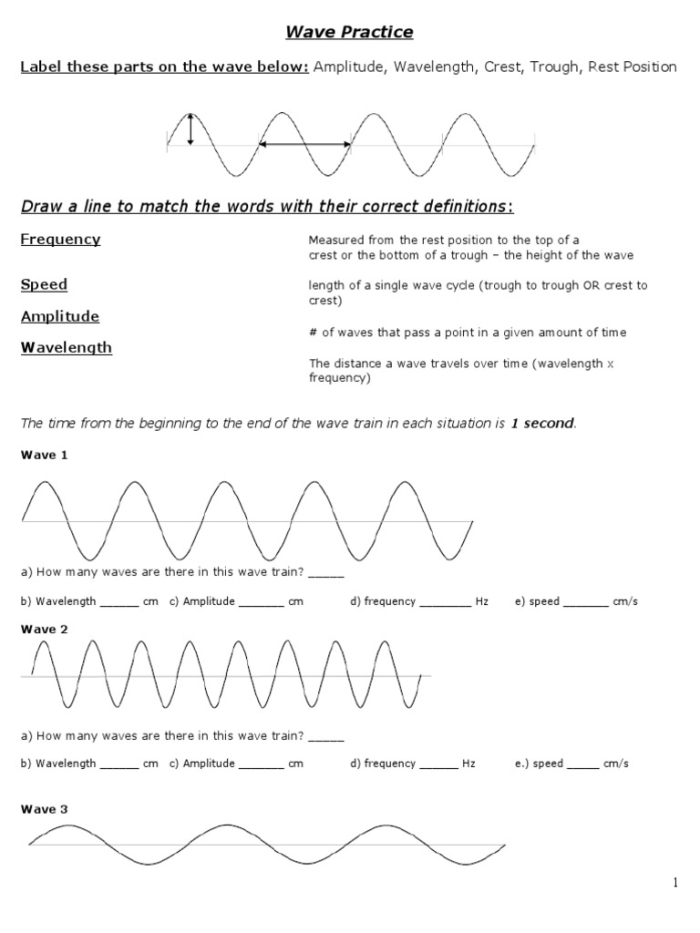
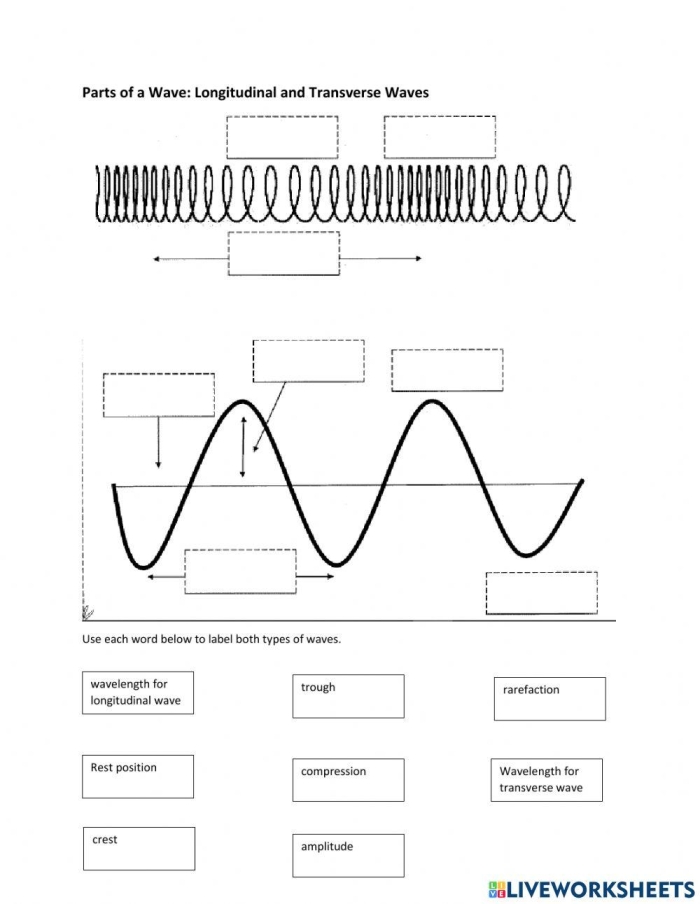
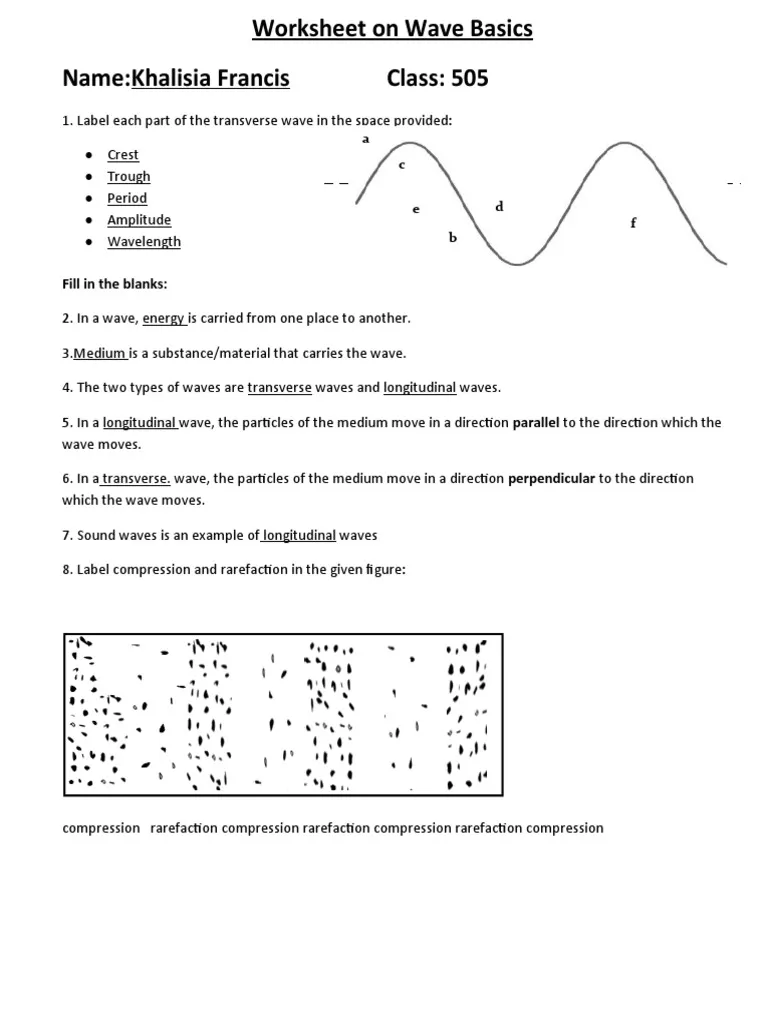
The worksheet structure works because it moves students through concrete observations before abstract concepts. Rather than lecturing about amplitude or wavelength, students measure these properties themselves using diagrams and simple data. They compare transverse waves, where particles move perpendicular to the direction of energy travel, with longitudinal waves, where particles move parallel to that direction. This side-by-side comparison reveals why sound waves behave differently than light waves, a distinction that often confuses beginners.
What makes this resource particularly effective for sixth graders is its pacing. Two pages allow enough space for exploration without overwhelming students who are still developing their scientific reasoning skills. The format accommodates different learning speeds, letting faster students dig deeper into wave calculations while others solidify their understanding of basic terminology. Students encounter frequency, wavelength, and wave speed not as isolated facts but as interconnected properties that explain real phenomena.
Using worksheets like this one fits naturally into a balanced sixth grade curriculum. When paired with other assignments like a narrative writing graphic organizer or argument writing practice, students build literacy skills alongside their science knowledge. The printable format means students can work through the material at their own pace, returning to sections that need clarification without losing their place in the lesson sequence.
Try These Printable Worksheets