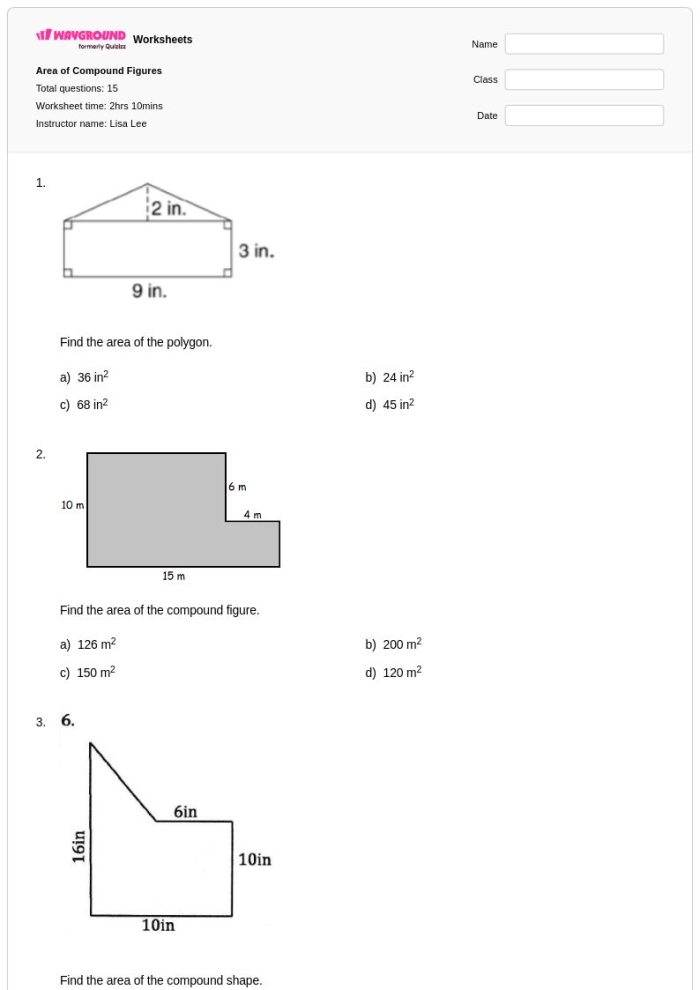
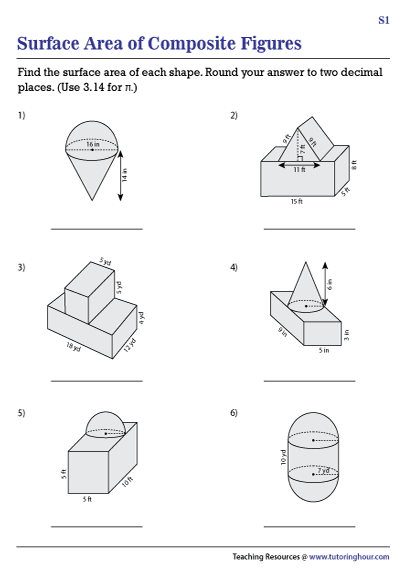
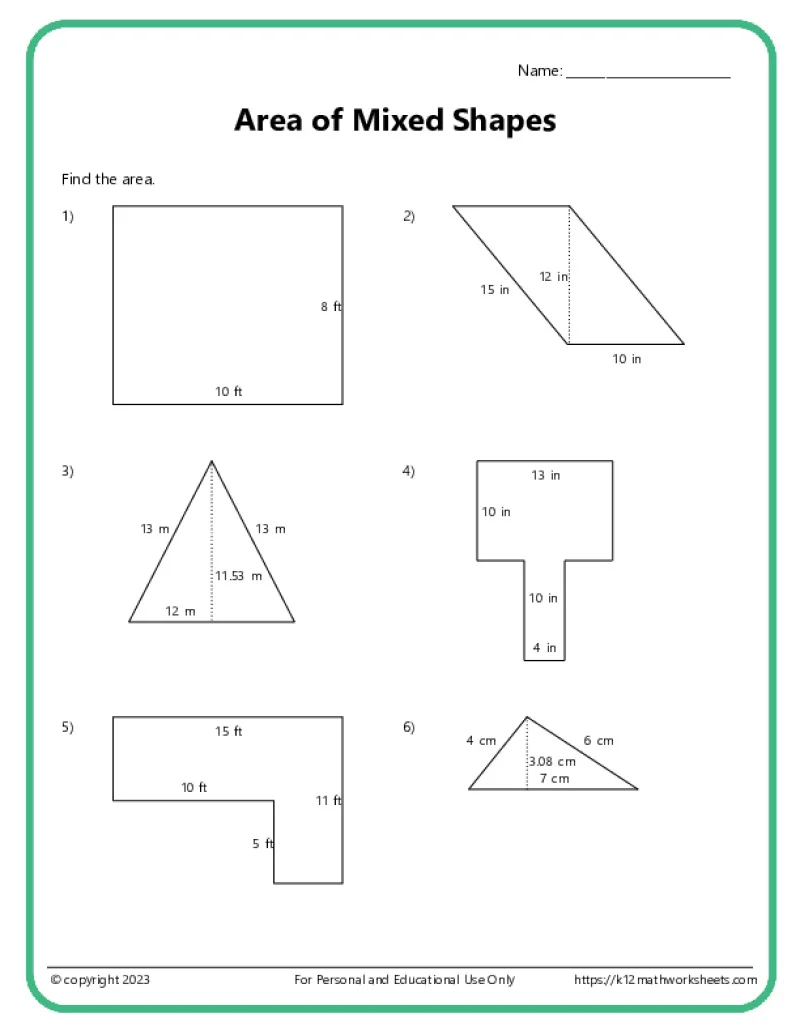
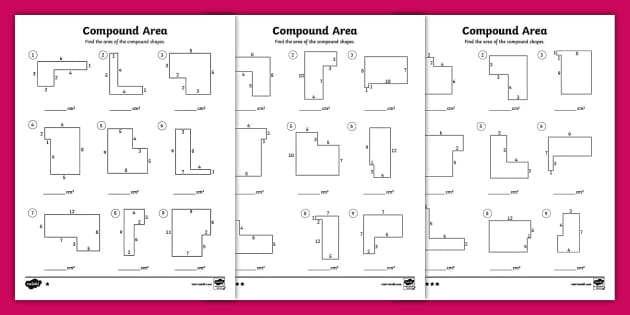
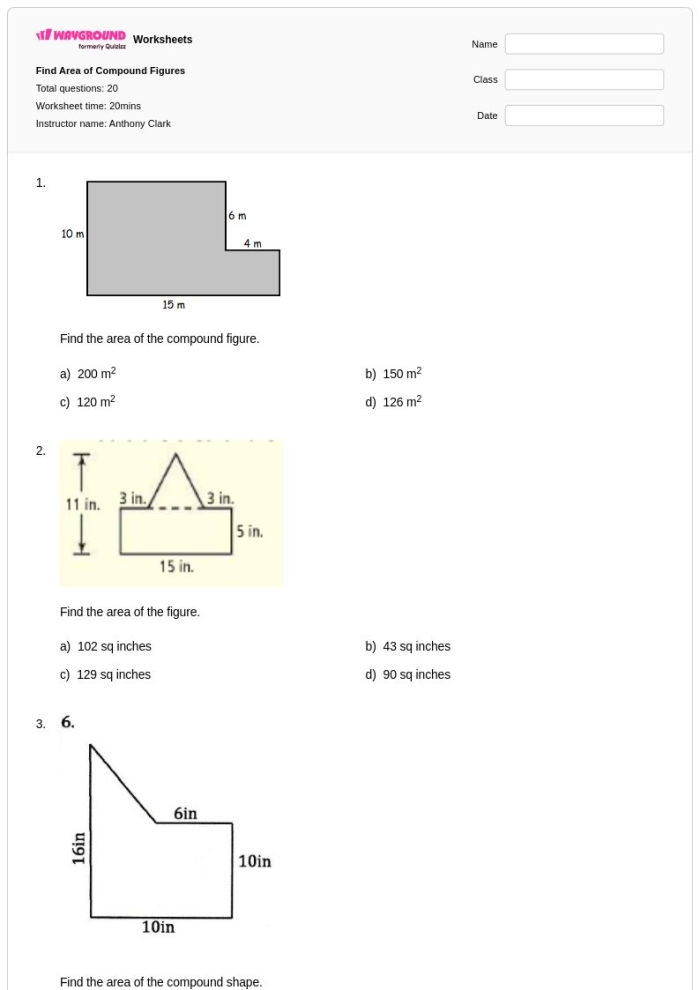
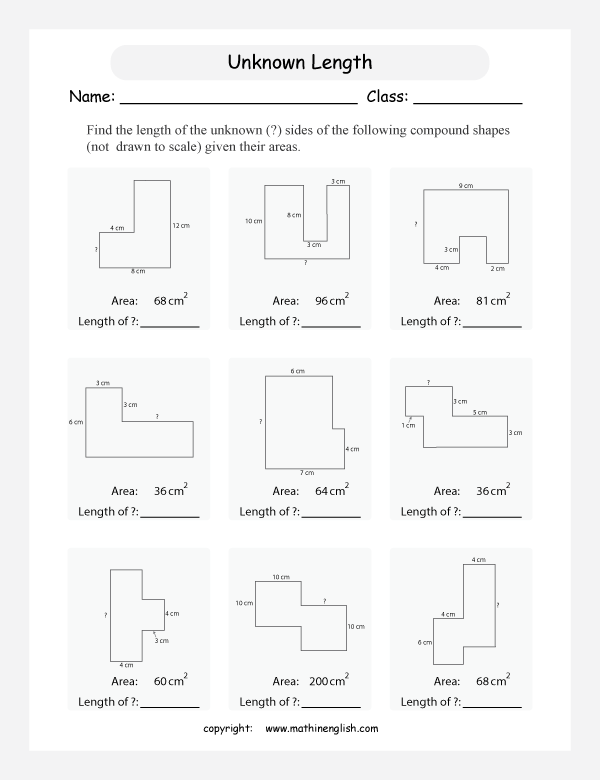
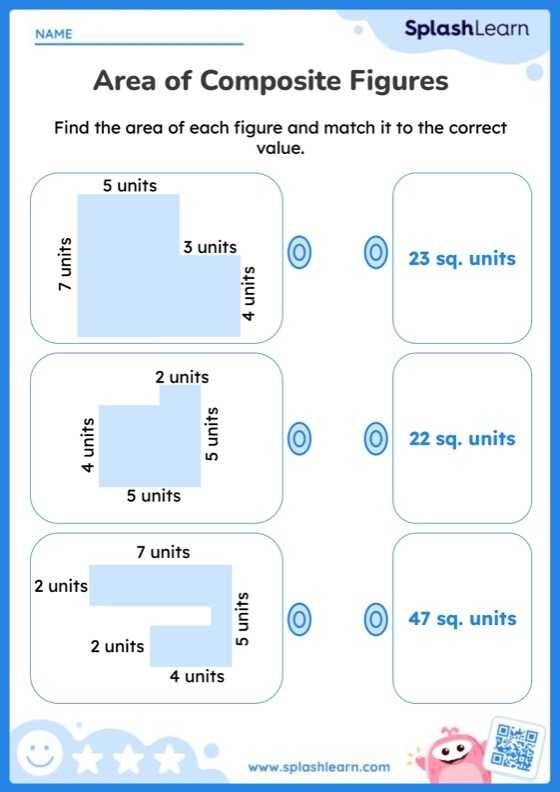
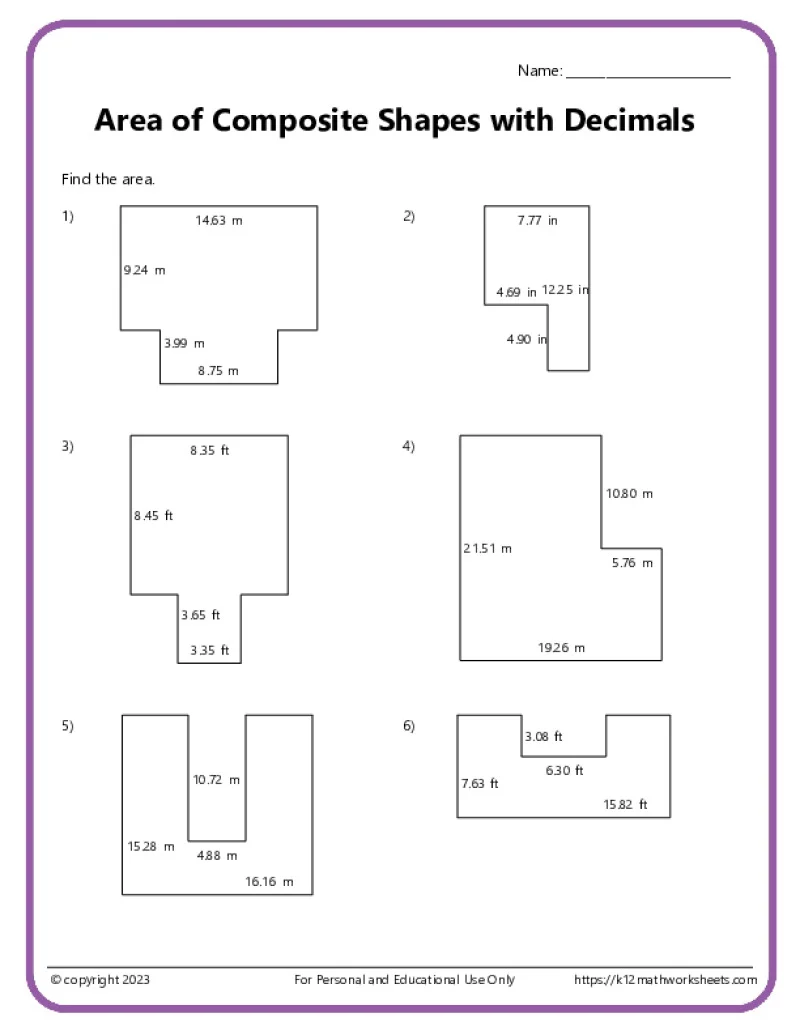
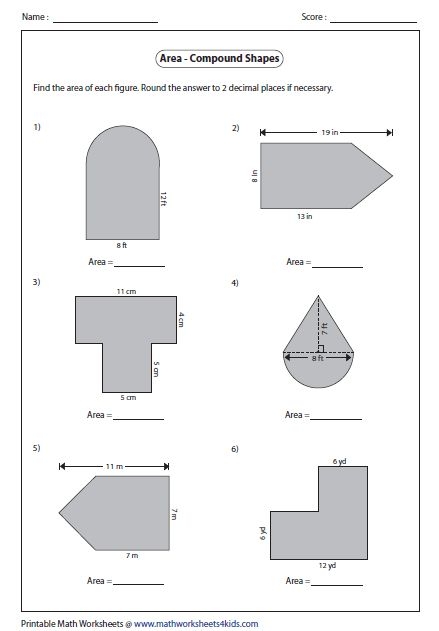
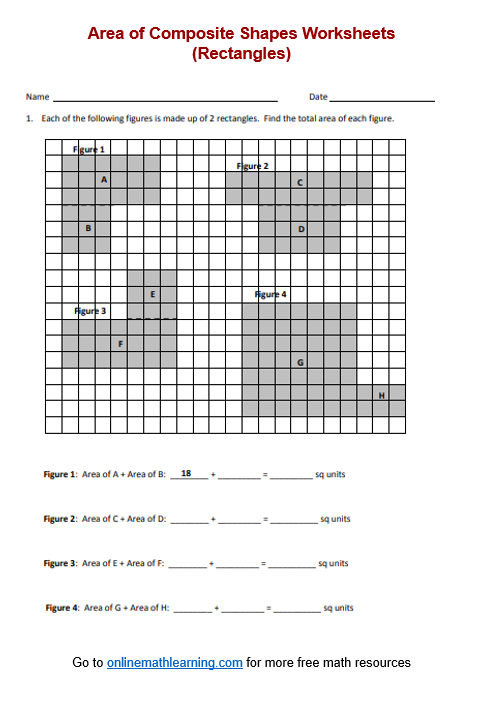
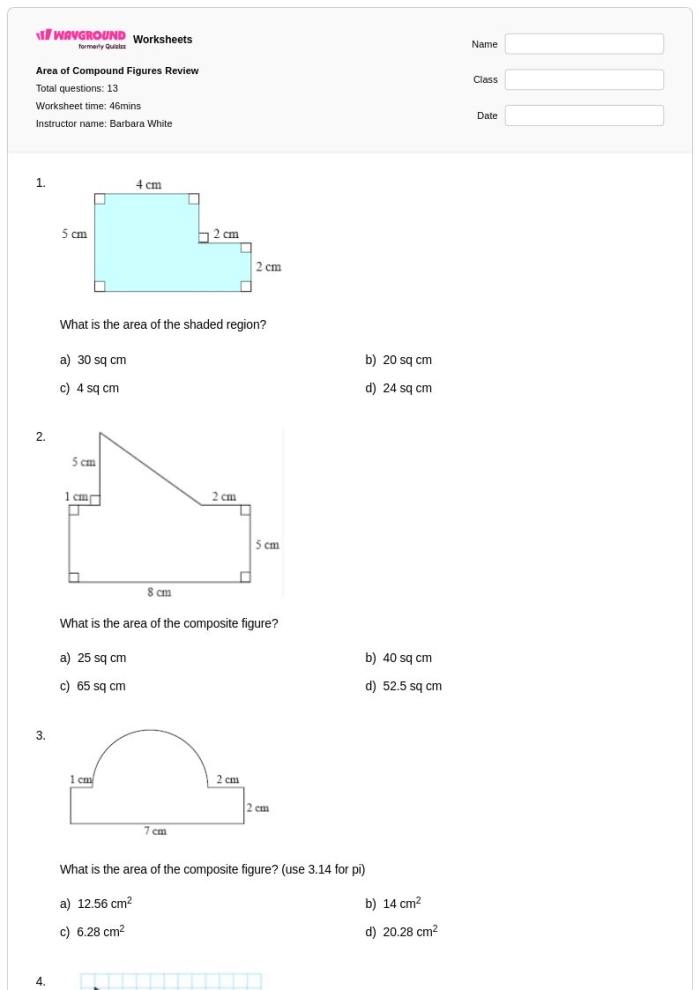
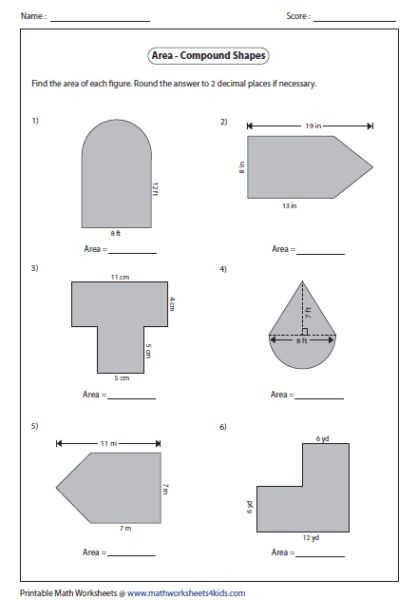
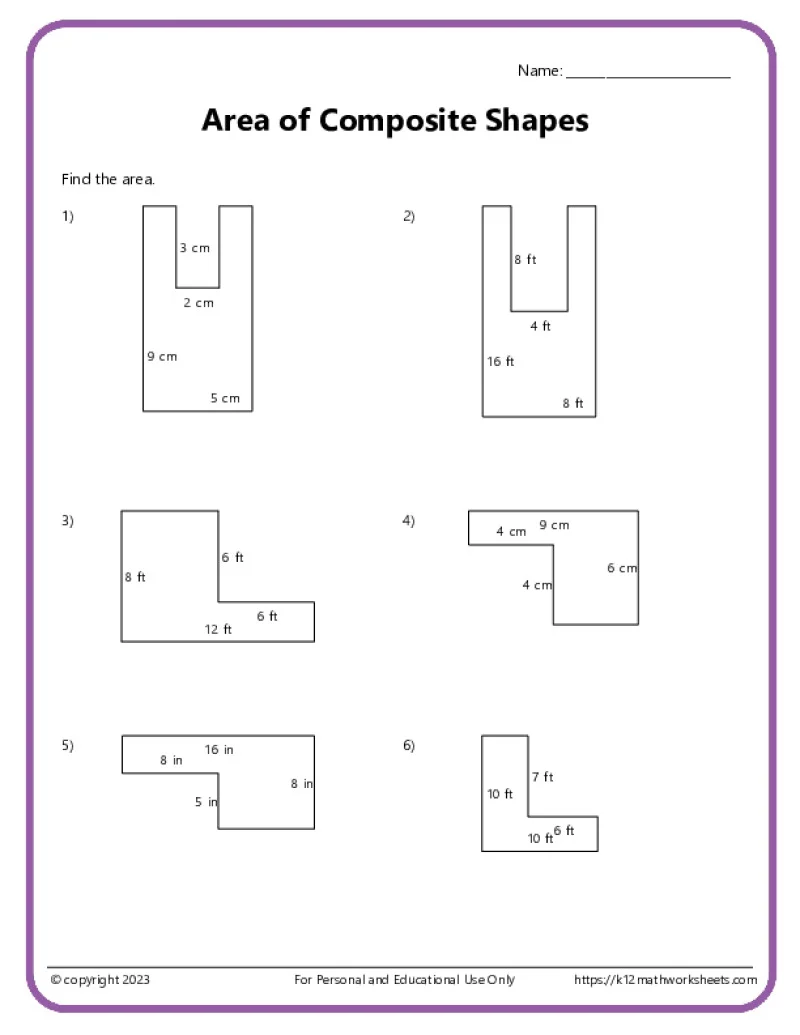
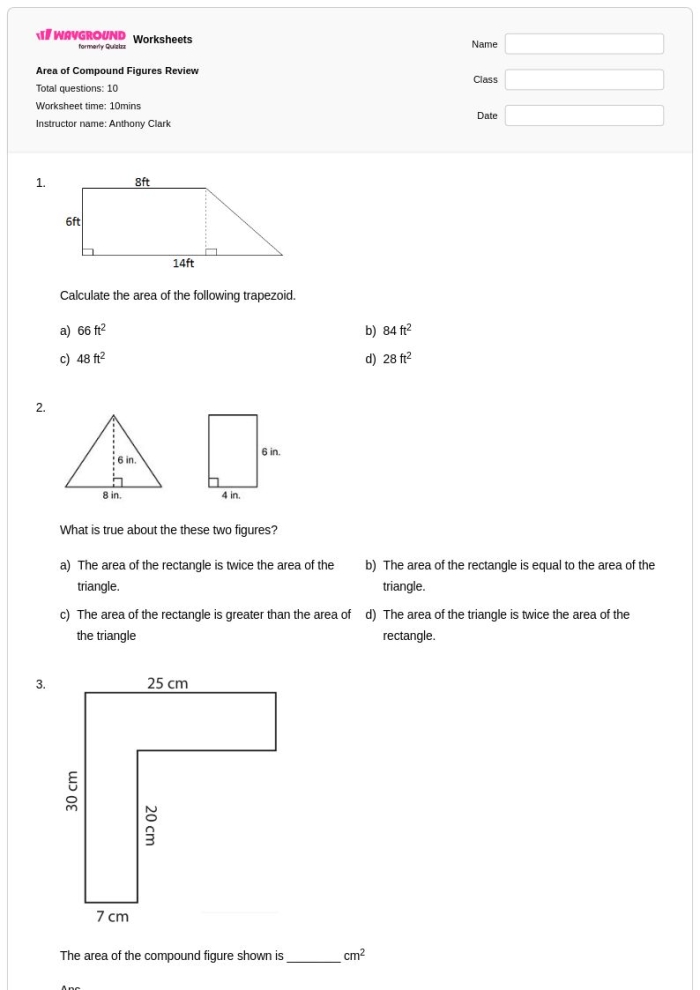
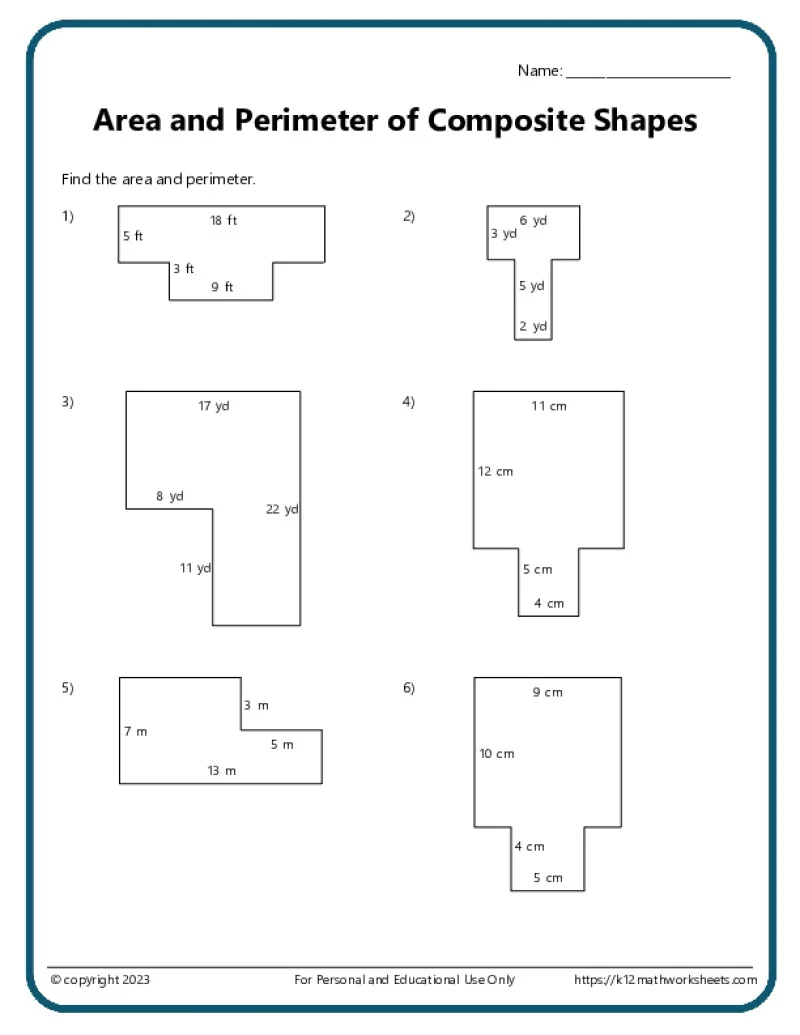
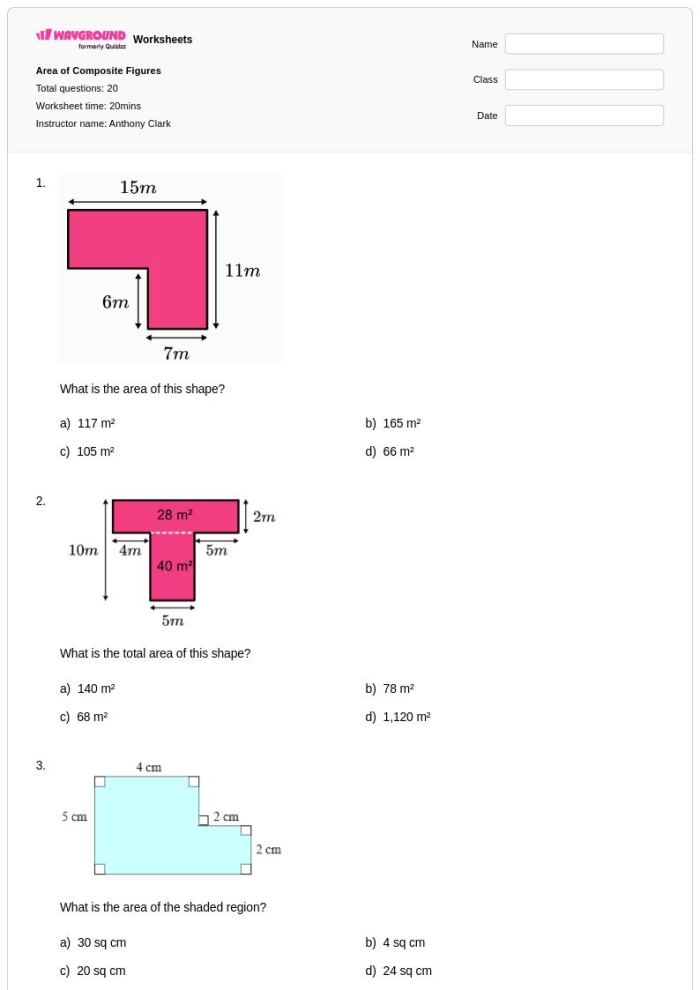
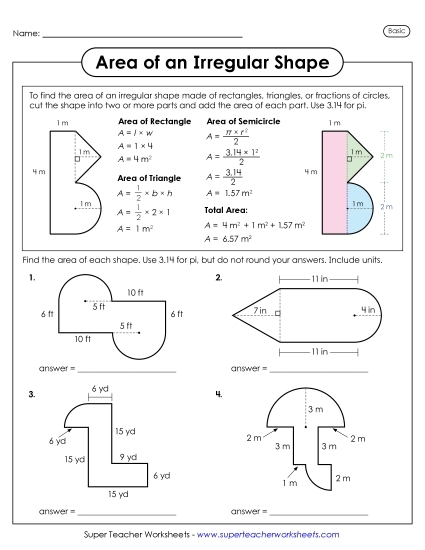
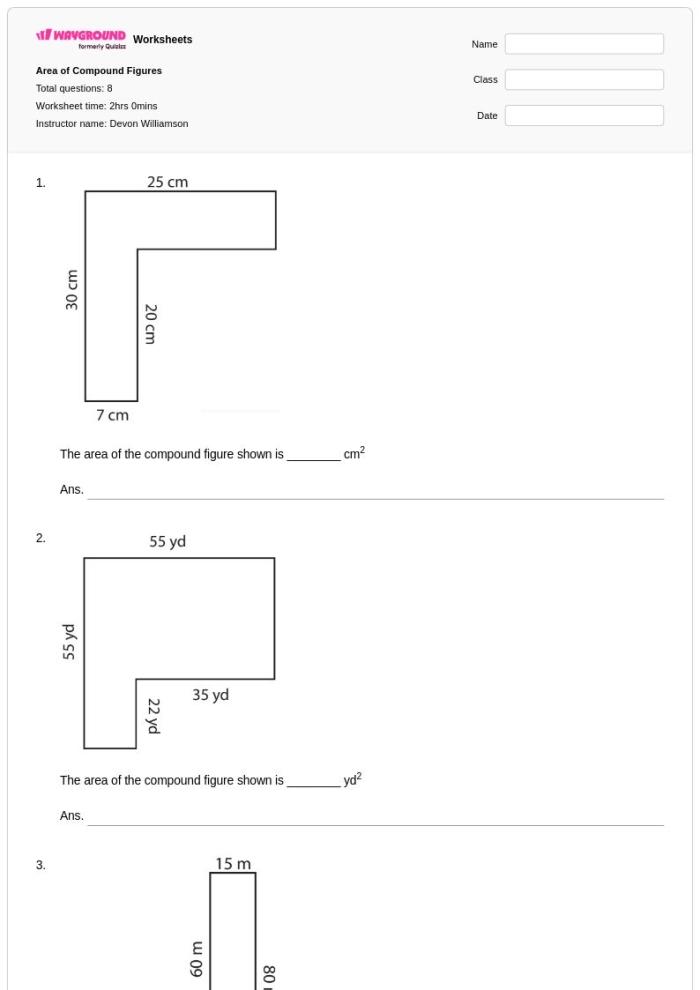
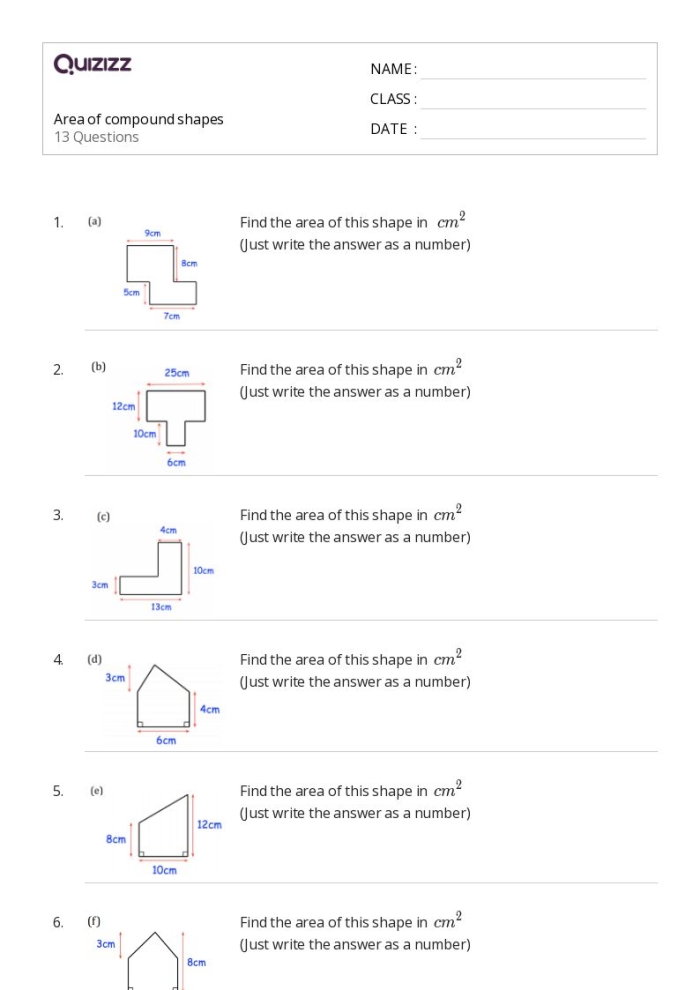
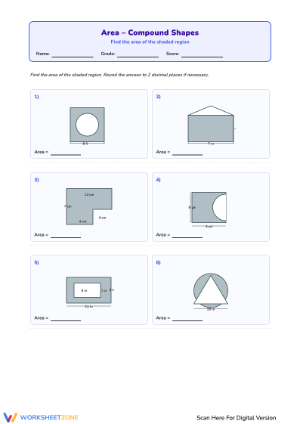
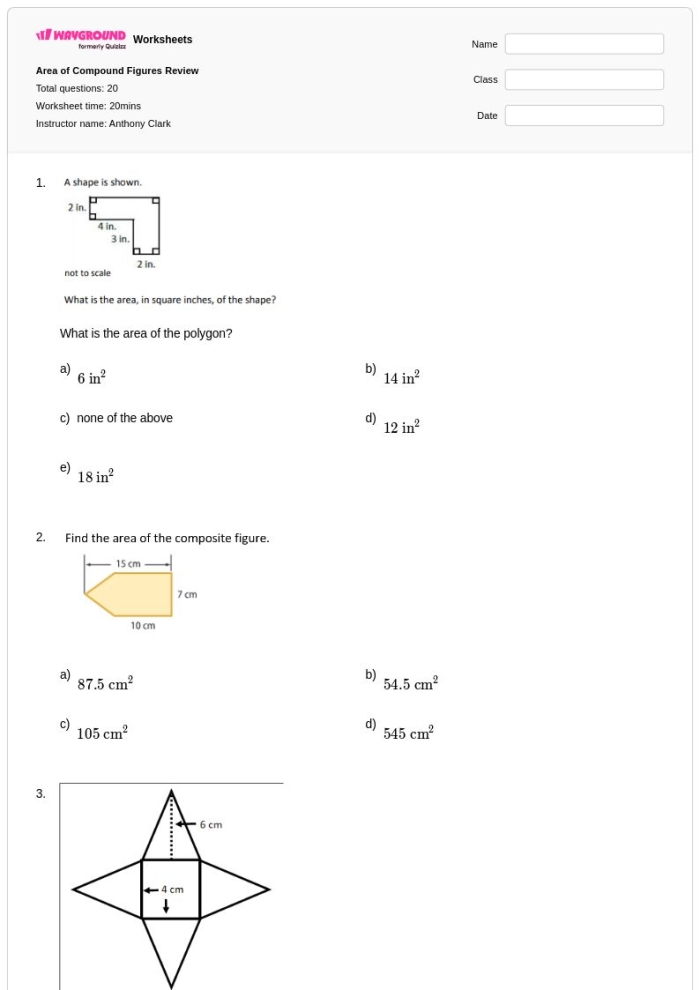
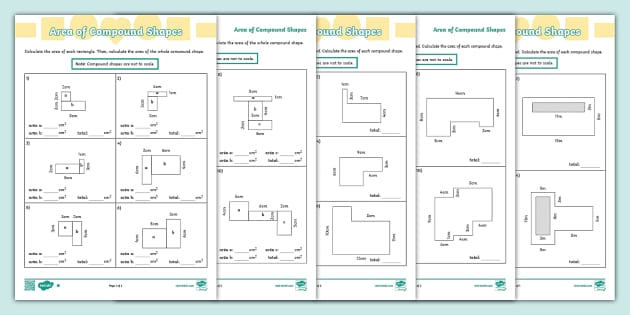
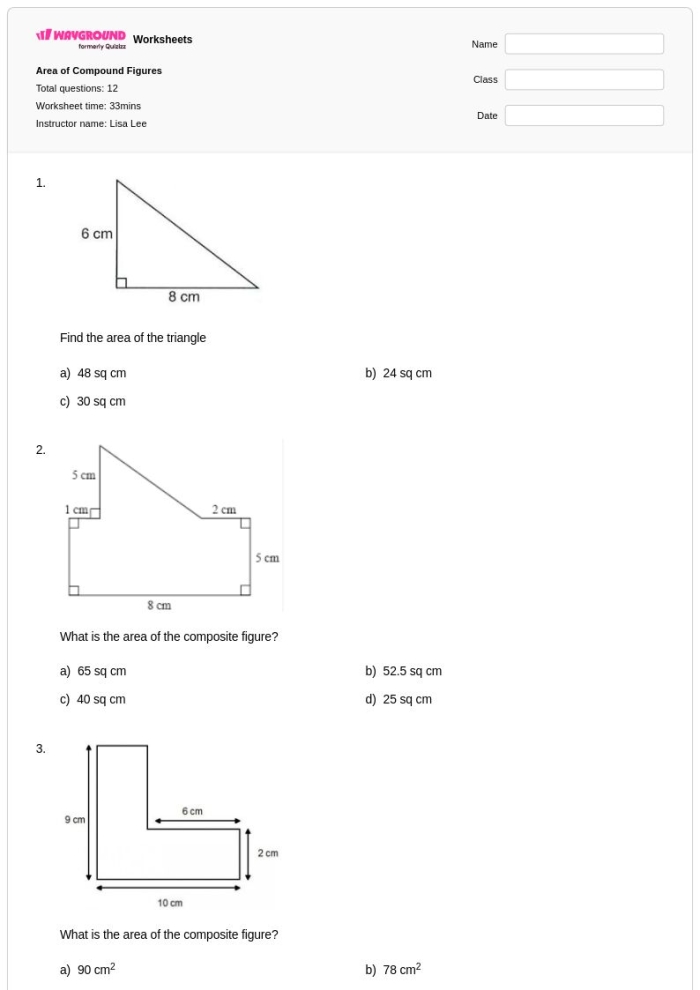
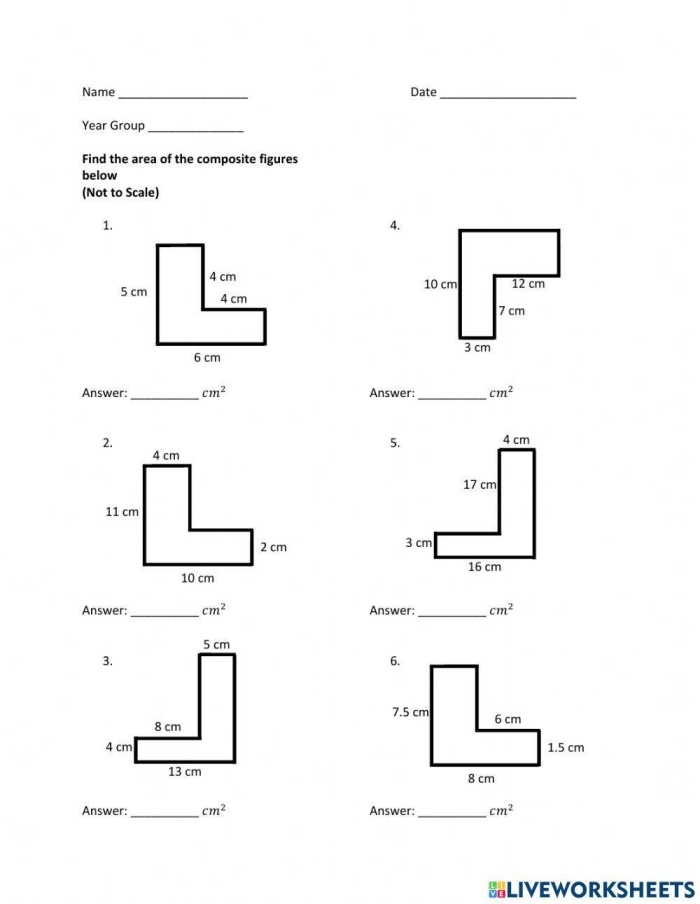
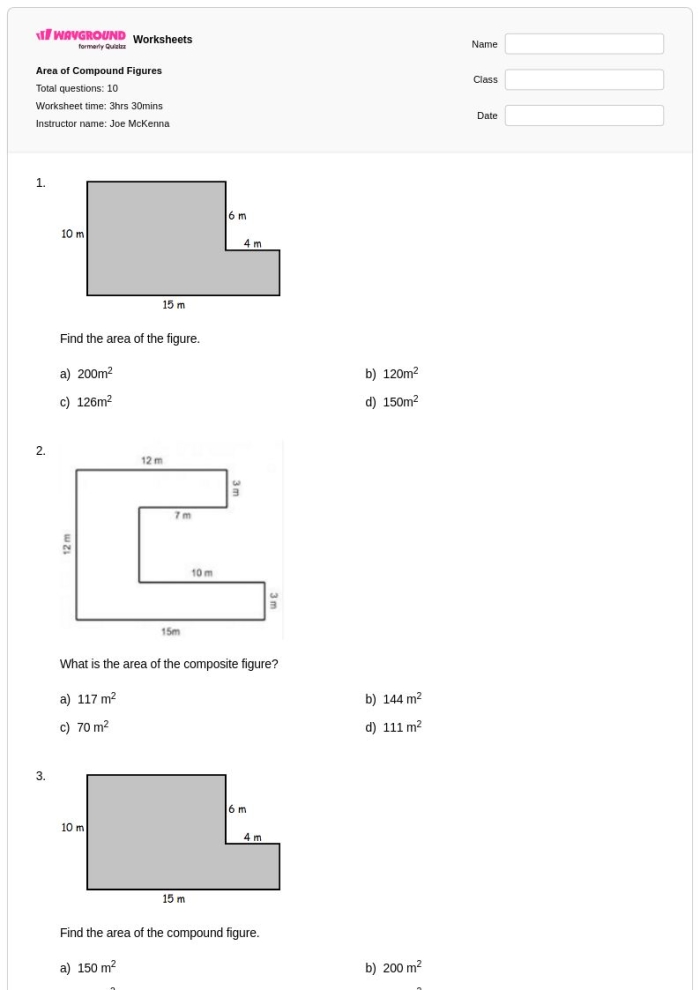
Breaking down irregular shapes into manageable pieces is one of the most practical skills sixth graders learn in geometry. When students encounter compound figures, they’re looking at shapes made from two or more simple geometric forms joined together, like an L-shaped room or a rectangle with a triangle on top. This worksheet gives learners hands-on practice tackling these problems by decomposing complex shapes and calculating their total area.
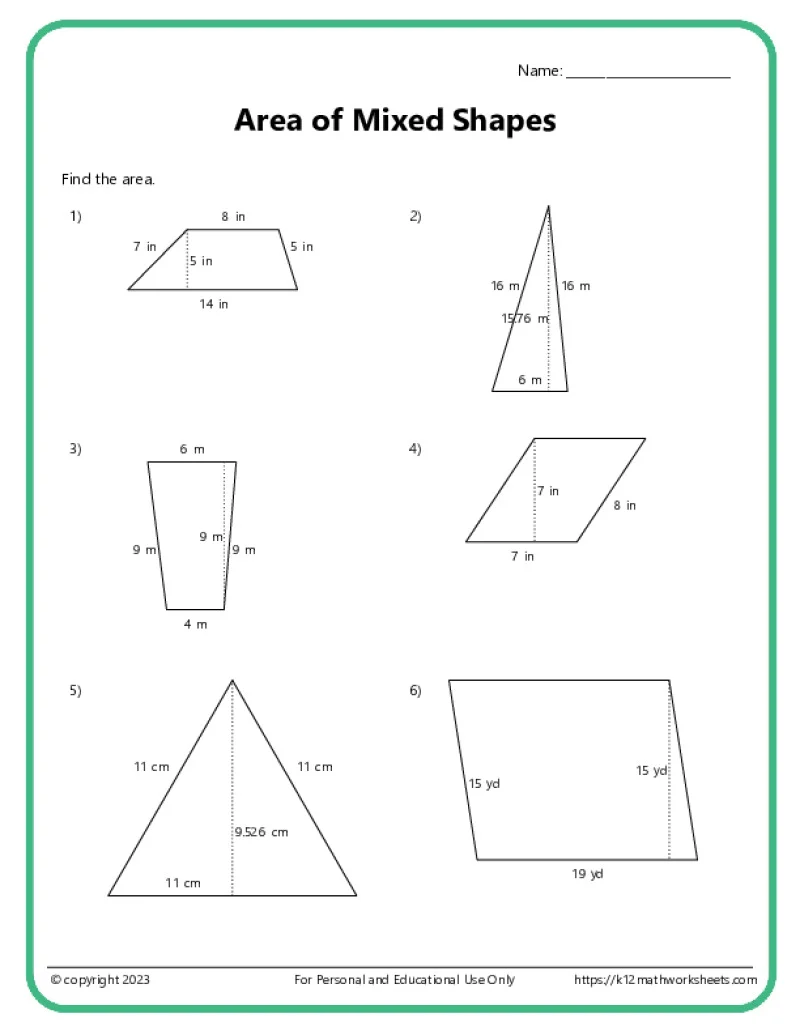
The core strategy involves recognizing which basic shapes make up the compound figure. Students might see a rectangle attached to a triangle, or two rectangles arranged in an L pattern. Once they identify these component shapes, they apply familiar area formulas for rectangles, triangles, and other polygons, then add the individual areas together. This approach transforms what looks like a difficult problem into a series of simpler calculations.
Working through these problems builds spatial reasoning that extends beyond the math classroom. Students start seeing how real-world objects break down into geometric components. A sixth grader completing this geometry worksheet develops confidence in their ability to analyze unfamiliar shapes rather than freezing when something doesn’t fit a standard formula.
The practice also reinforces unit measurement and precision. Students must track whether they’re working with square inches, square centimeters, or other area units throughout their calculations. This attention to detail connects directly to broader sixth-grade math standards around measurement and computation.
These worksheets pair well with related skill-building activities. Students strengthening their geometry foundation might also benefit from practice with surface area of rectangular prisms or work on converting between customary and metric units. Those looking to strengthen coordinate skills can explore coordinate plane activities that build spatial understanding from another angle.
Worksheet Practice Section