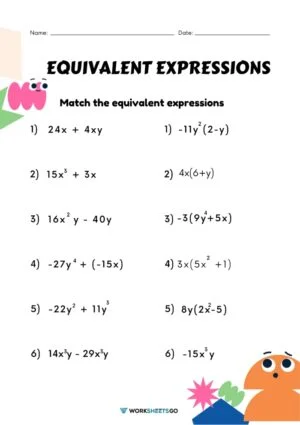
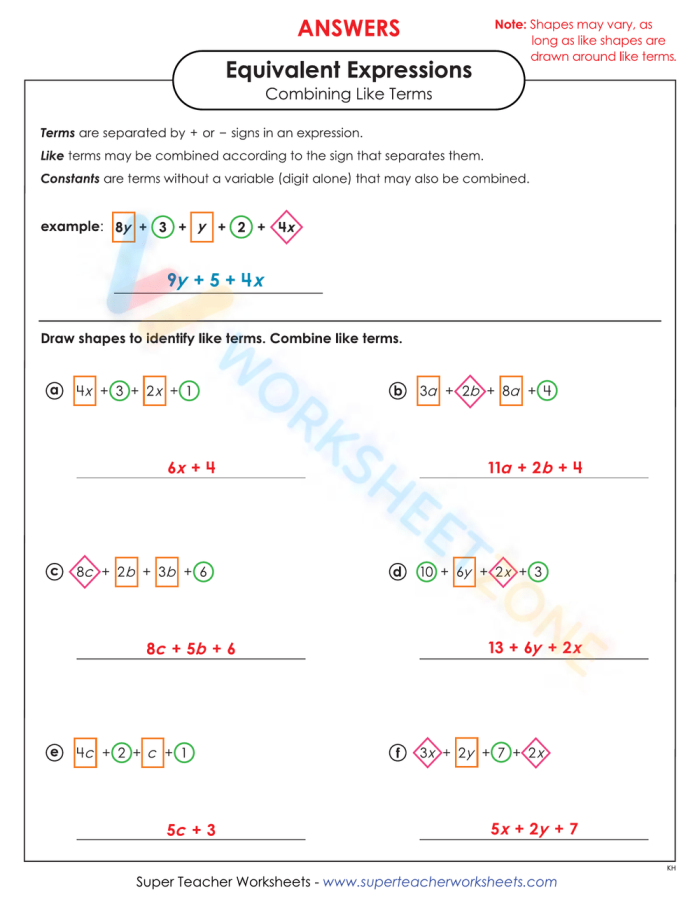
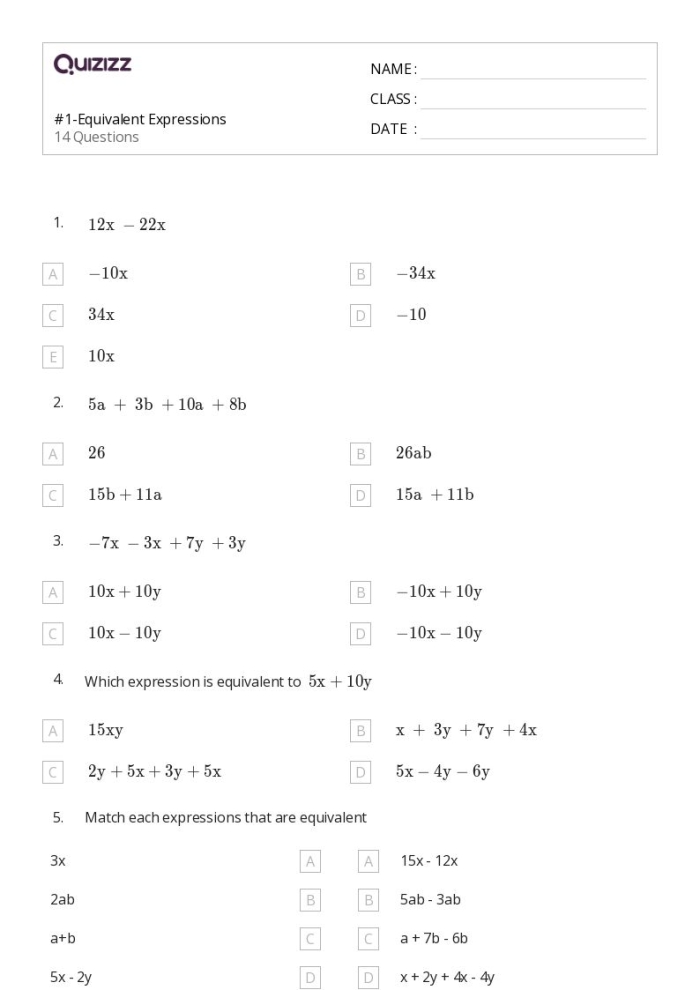
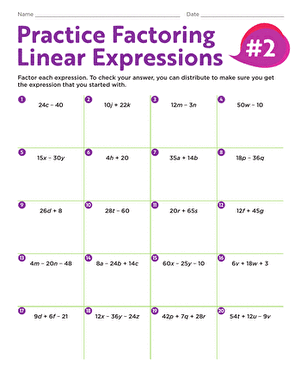
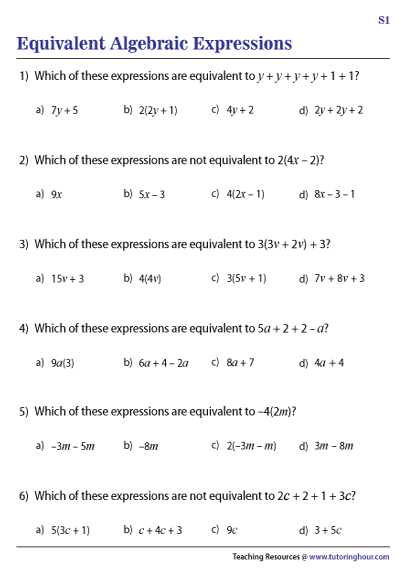
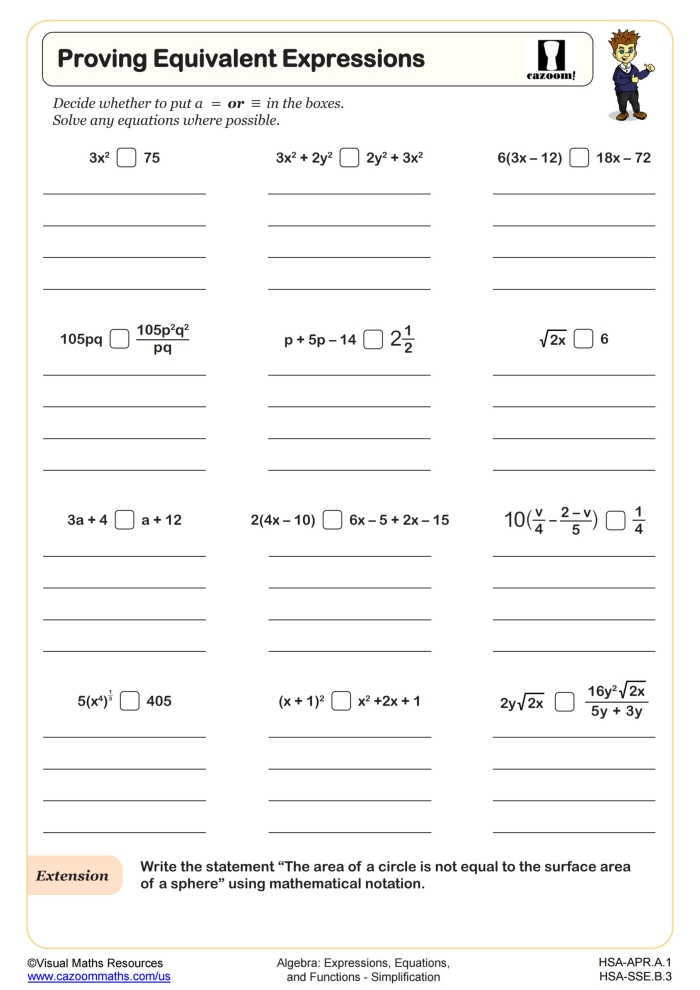
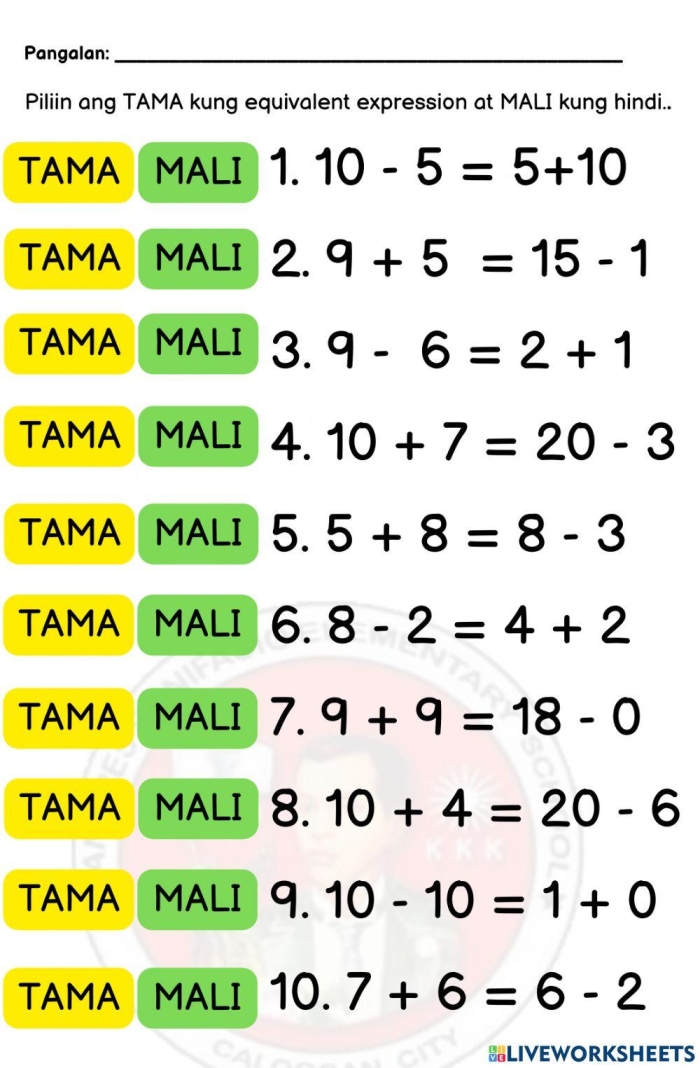
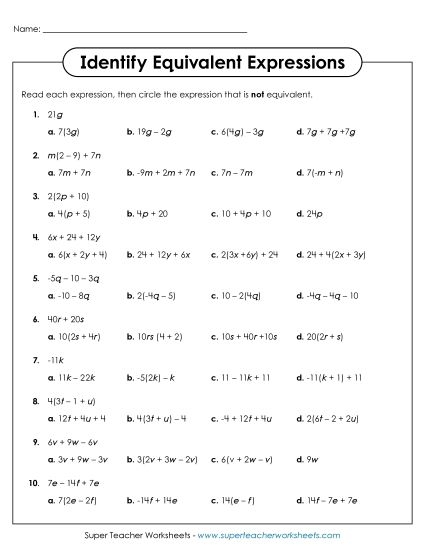
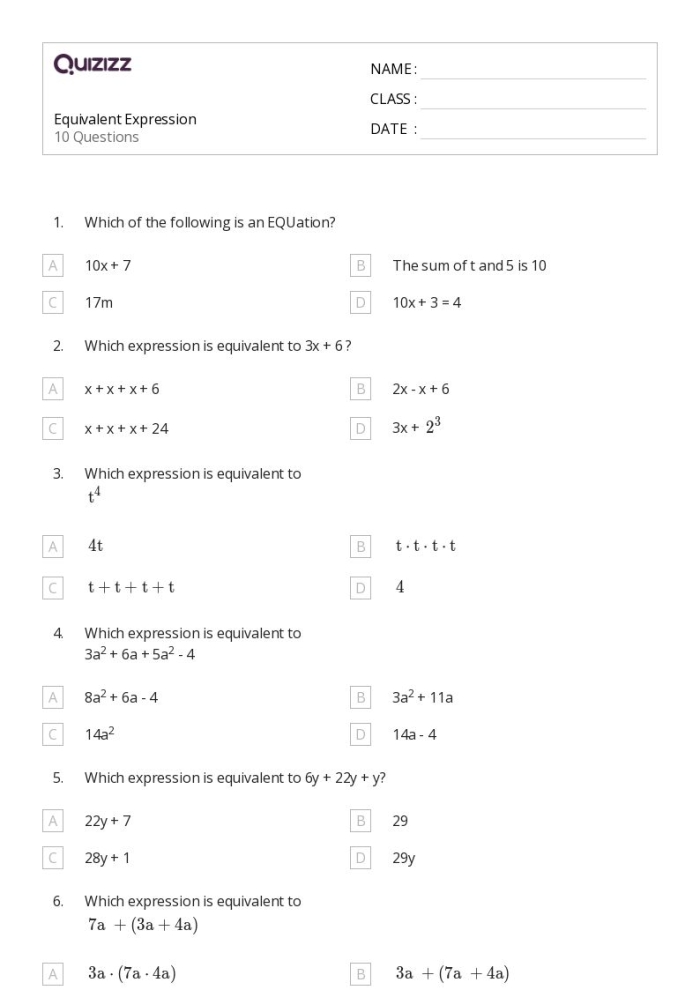
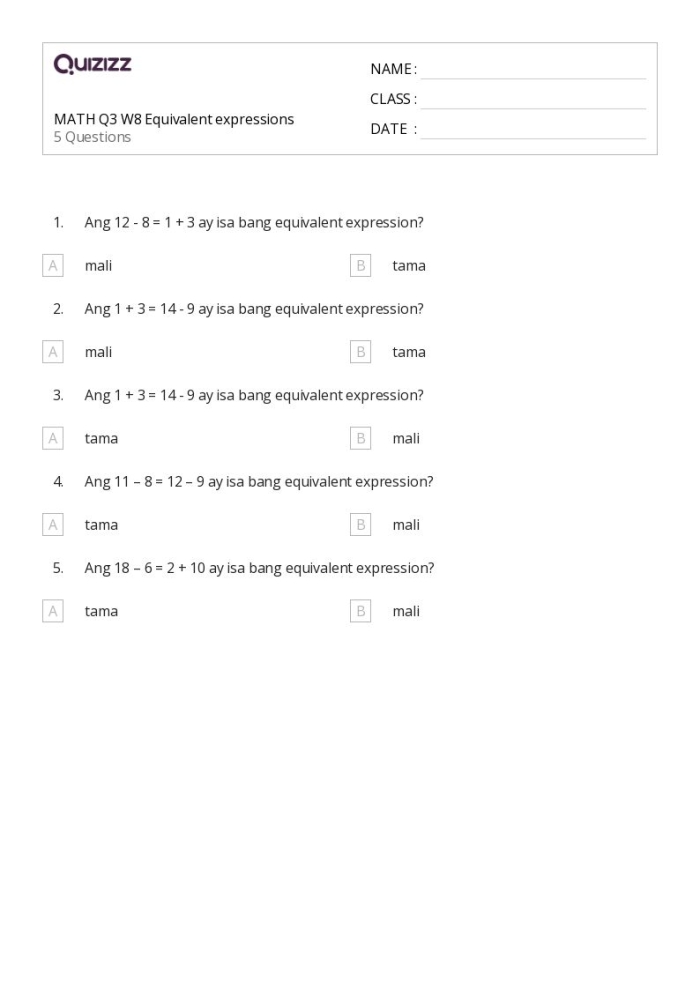
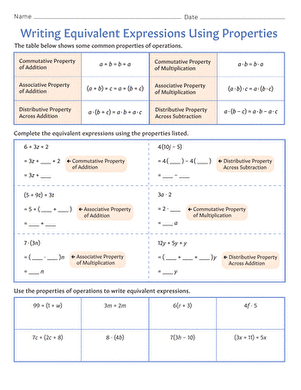
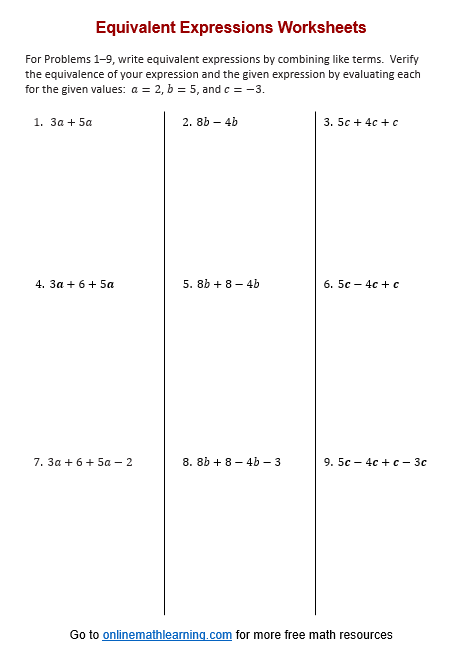
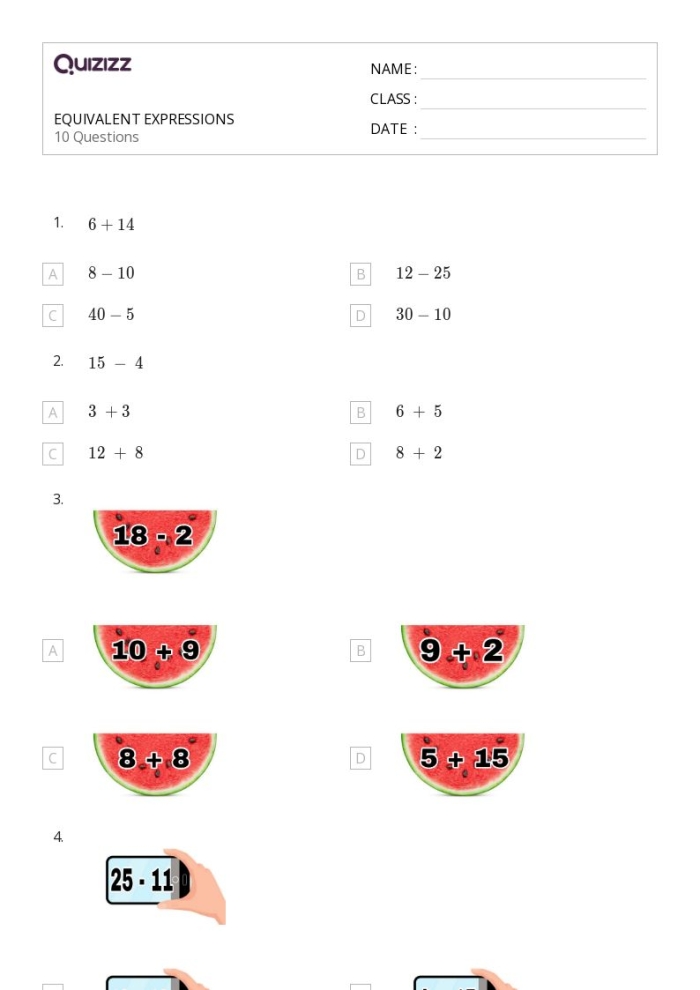
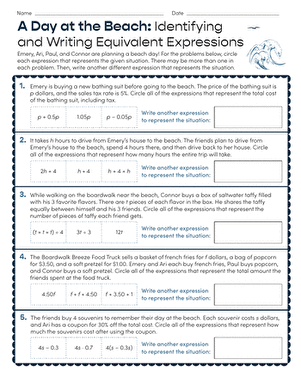
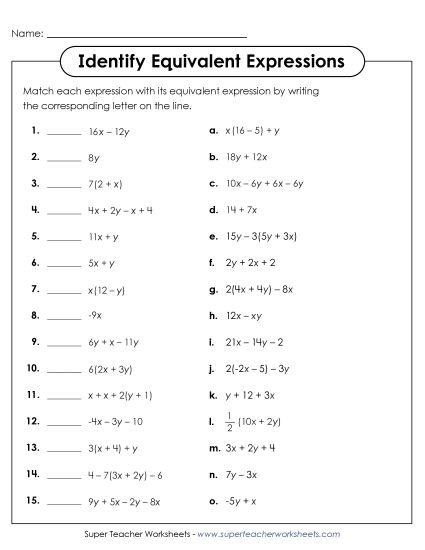
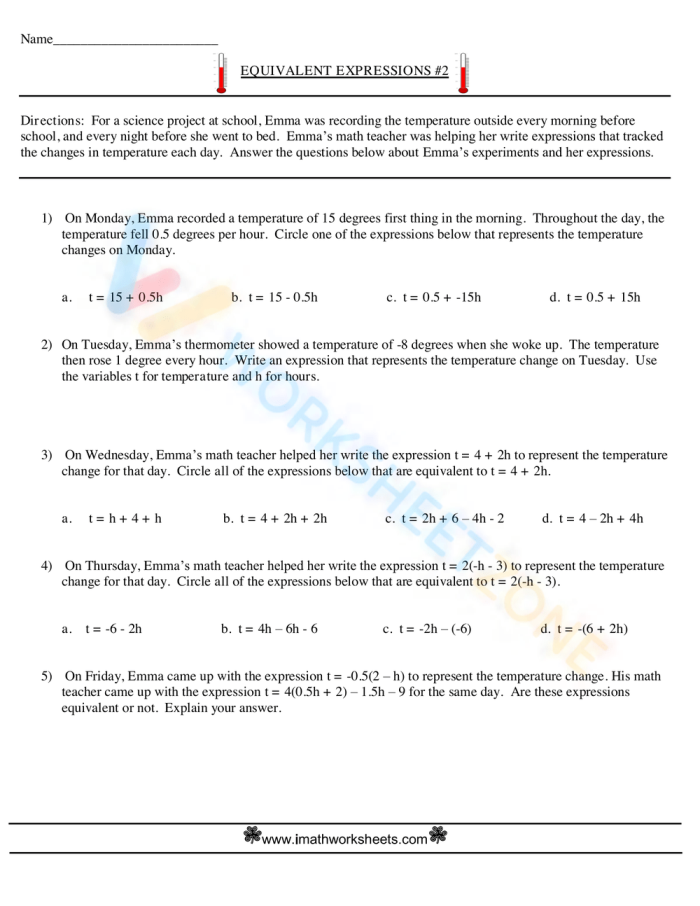
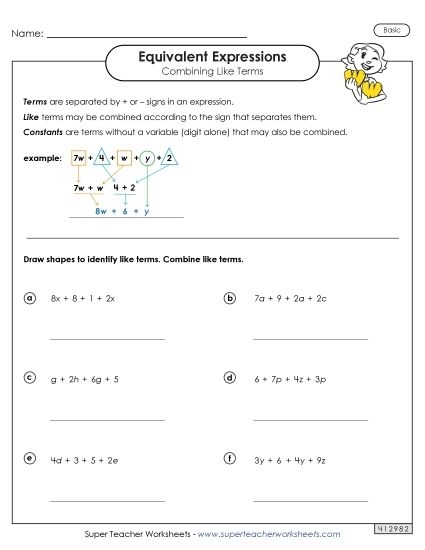
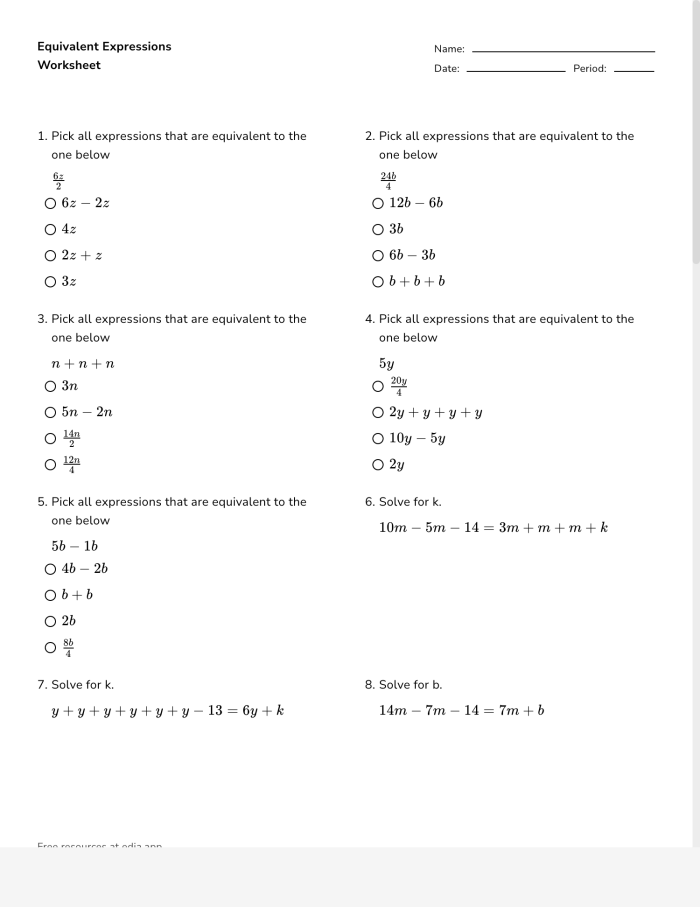
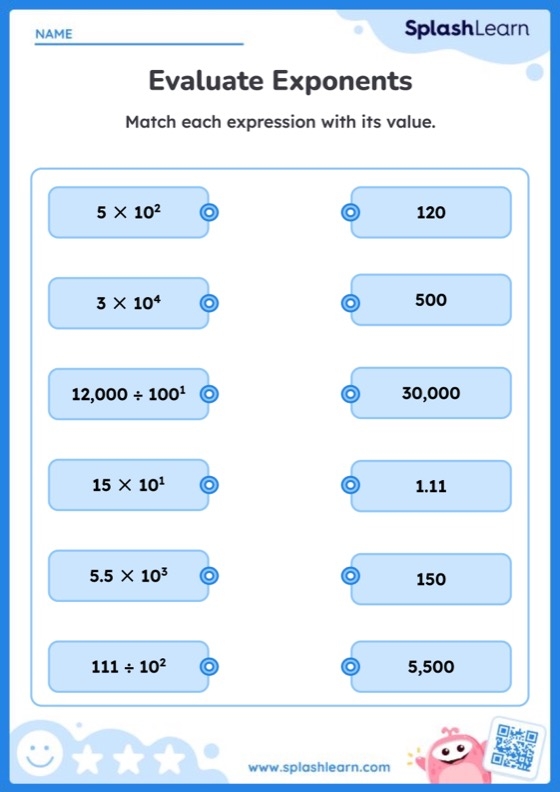
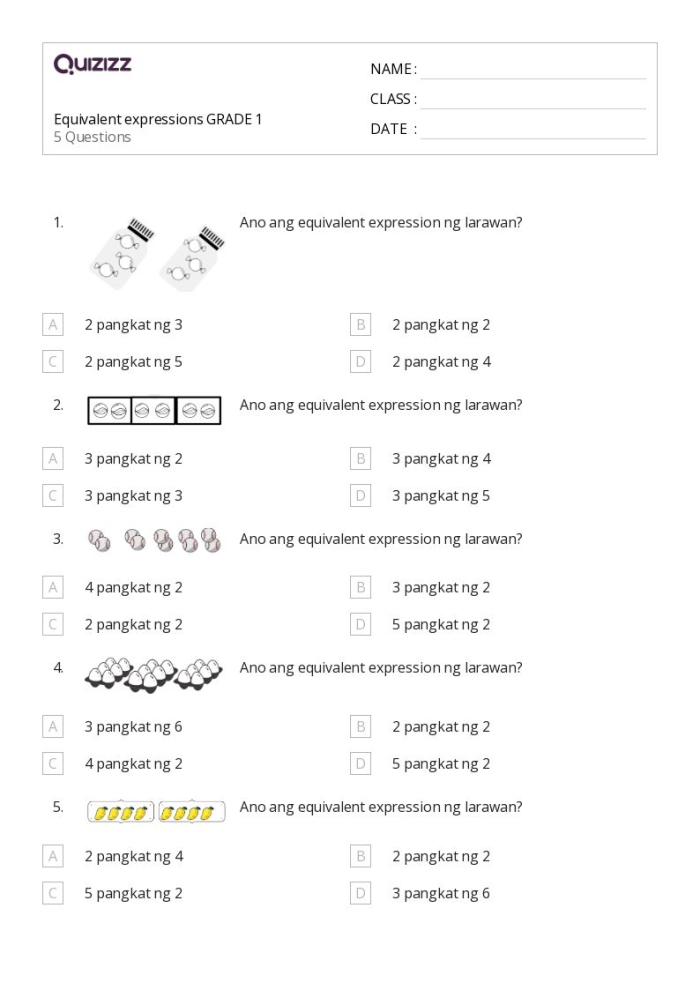
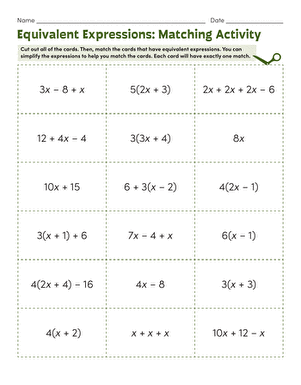
Grasping the concept of equivalent expressions is a crucial skill for seventh-grade students. In the context of an algebra worksheet, such as the one found in the A Day at the Beach: Identifying and Writing Equivalent Expressions, students engage with this topic in a fun and relatable way.
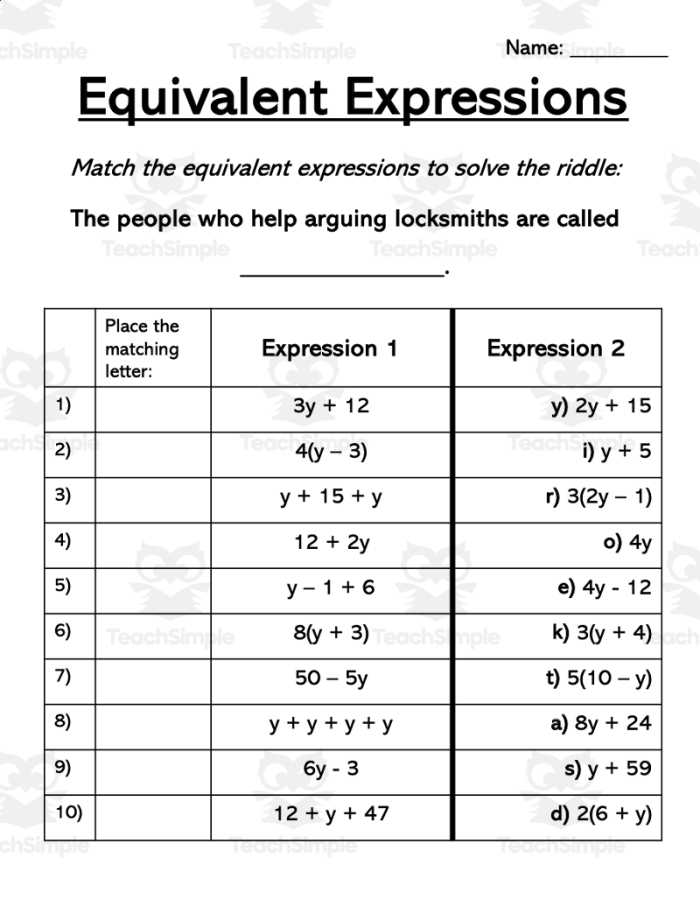
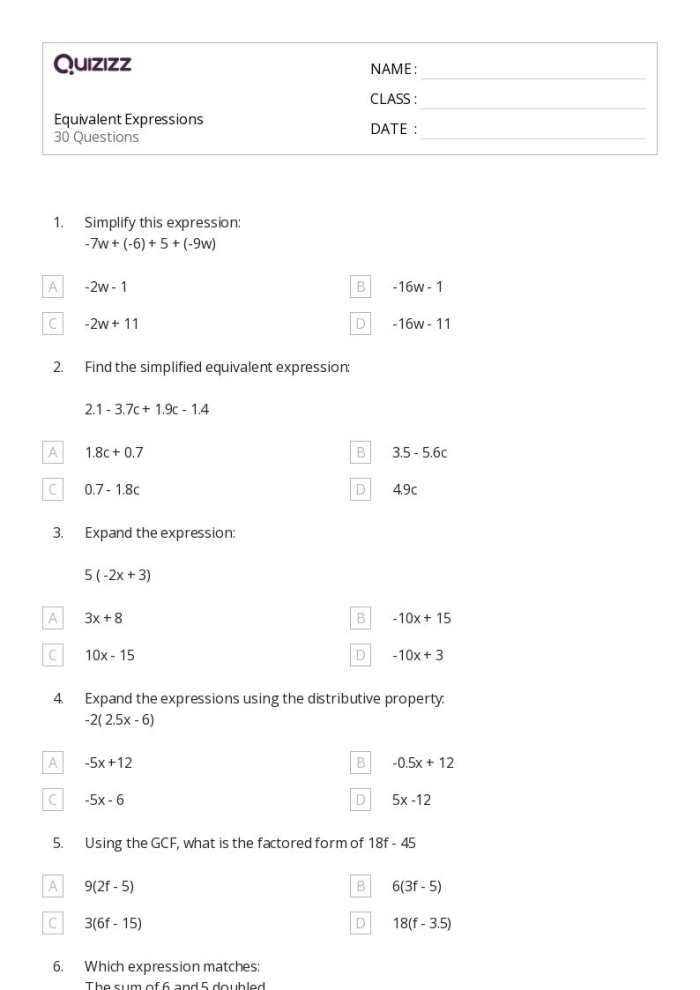
Understanding equivalent expressions means recognizing that different algebraic expressions can represent the same value. For instance, the expressions 2(x + 3) and 2x + 6 are equivalent. By learning to identify and write these expressions, students build a strong foundation for solving equations and simplifying algebraic problems.
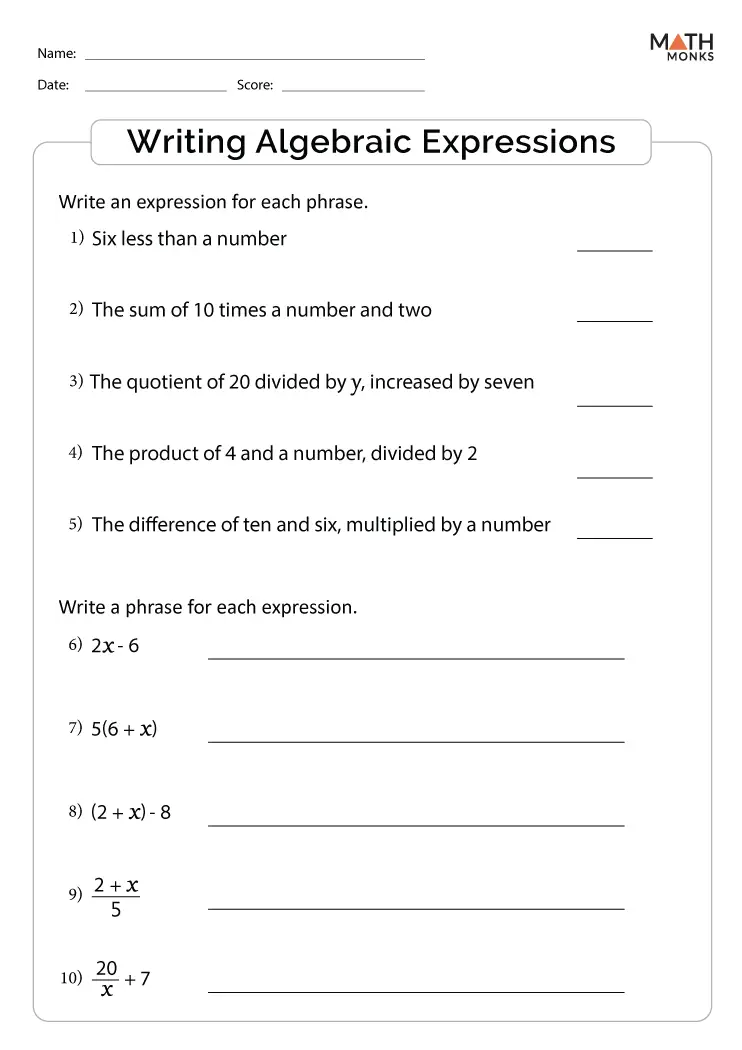
Worksheets designed for seventh graders often include various problems that challenge students to rewrite expressions in different forms. For example, a problem might present 4(3 + y) and ask students to distribute the 4 to express it as 12 + 4y. This active engagement not only reinforces their understanding of the distributive property but also enhances their overall problem-solving skills.
One specific advantage of using a themed worksheet, like the beach scenario, is that it makes abstract concepts more tangible. Students can relate math to real-life situations, which promotes better retention of the material. When they see expressions tied to a fun context, such as calculating the total number of beach balls for a party, they are likely to remain more engaged and motivated.
Furthermore, these worksheets can serve as a valuable resource for teachers, providing structured practice that aligns with curriculum standards. As seventh-grade students progress in their algebra studies, mastering equivalent expressions becomes essential, preparing them for more complex mathematical concepts in the future.
Worksheet Practice Section