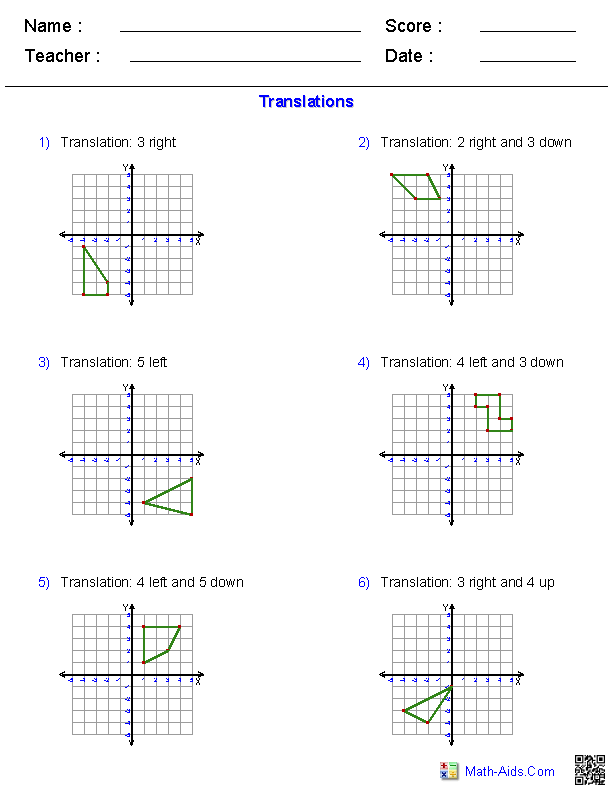
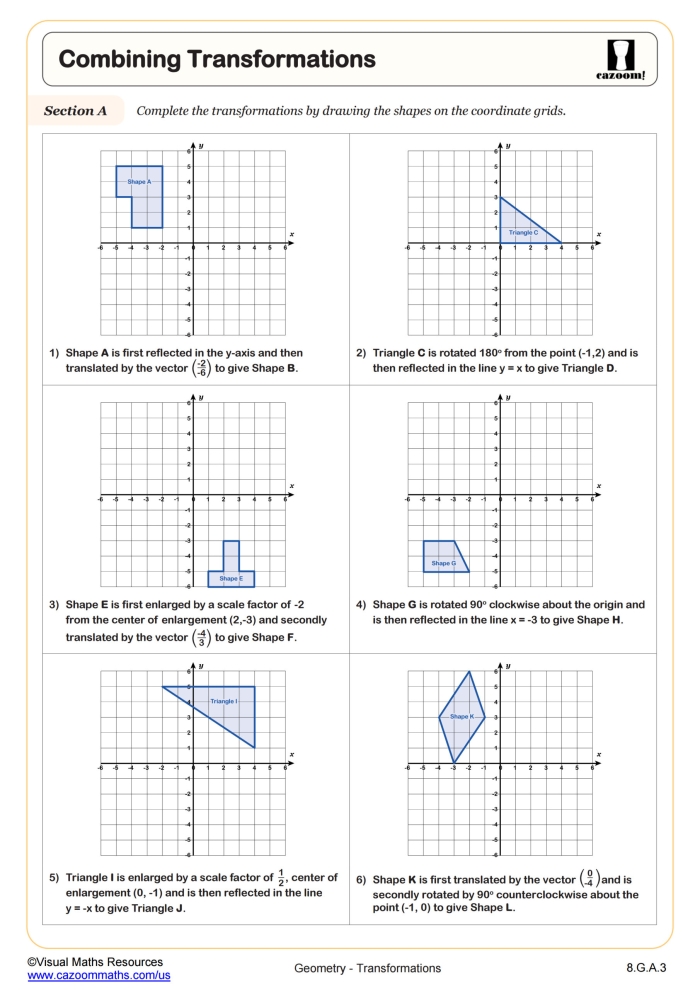
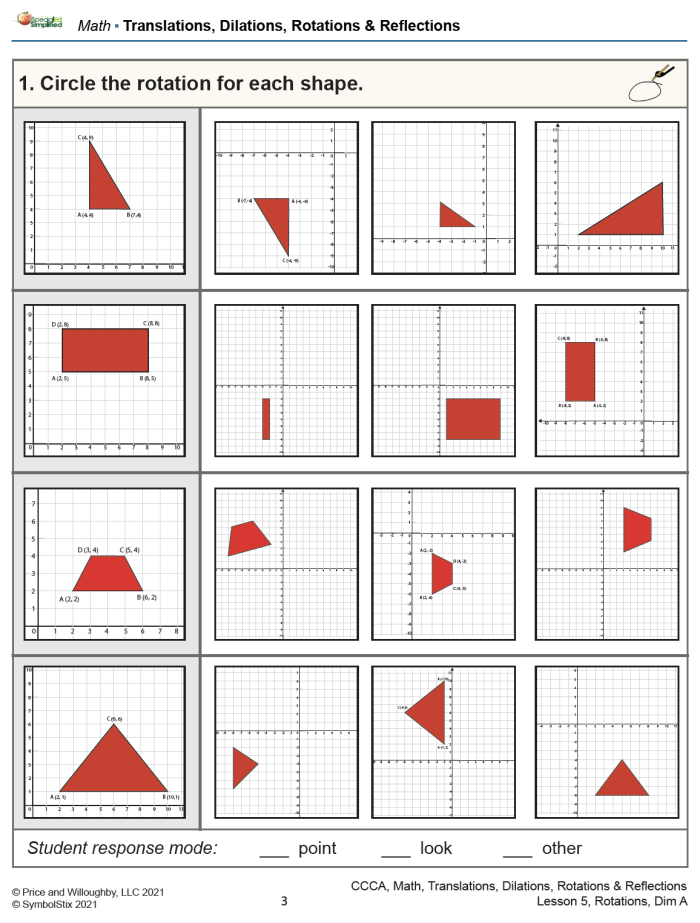
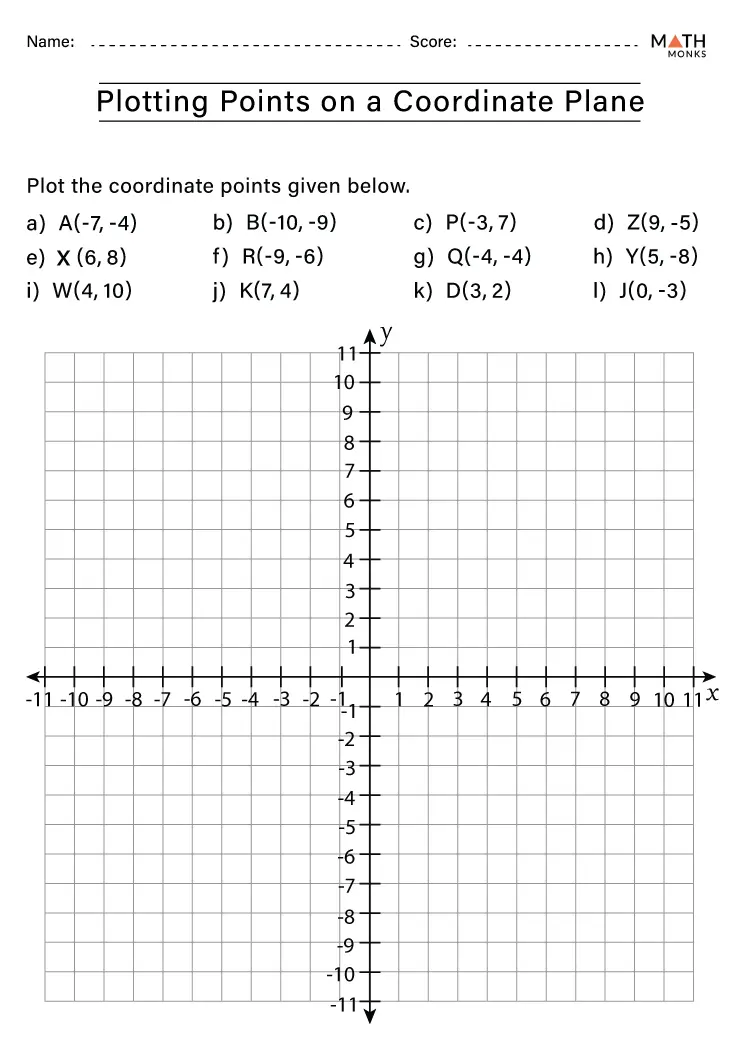
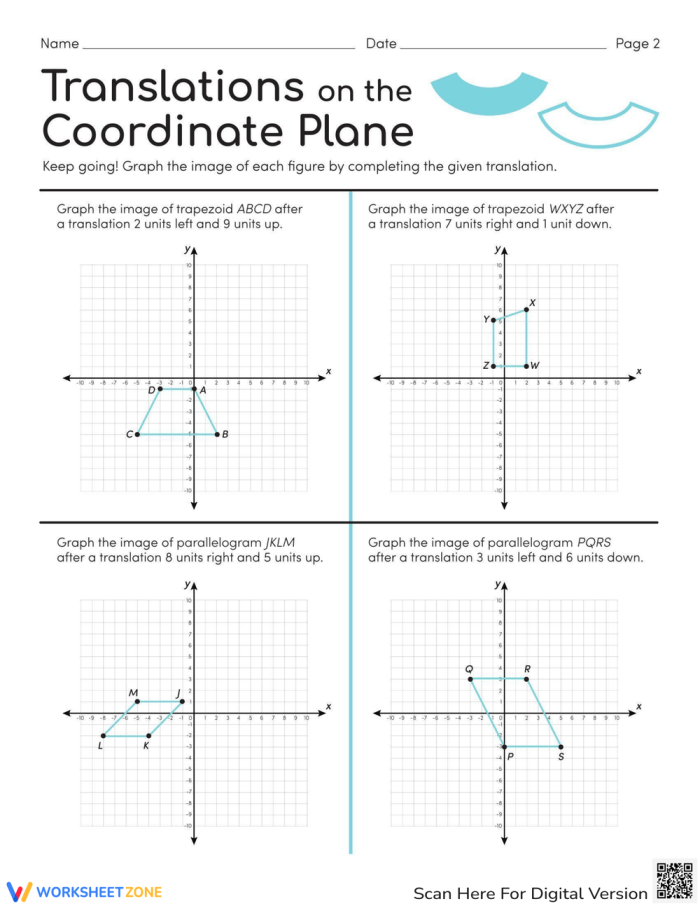
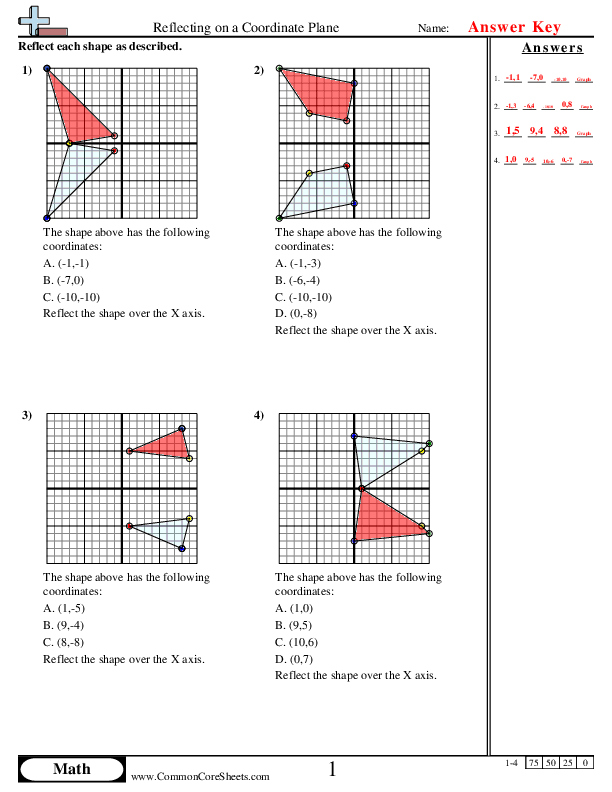
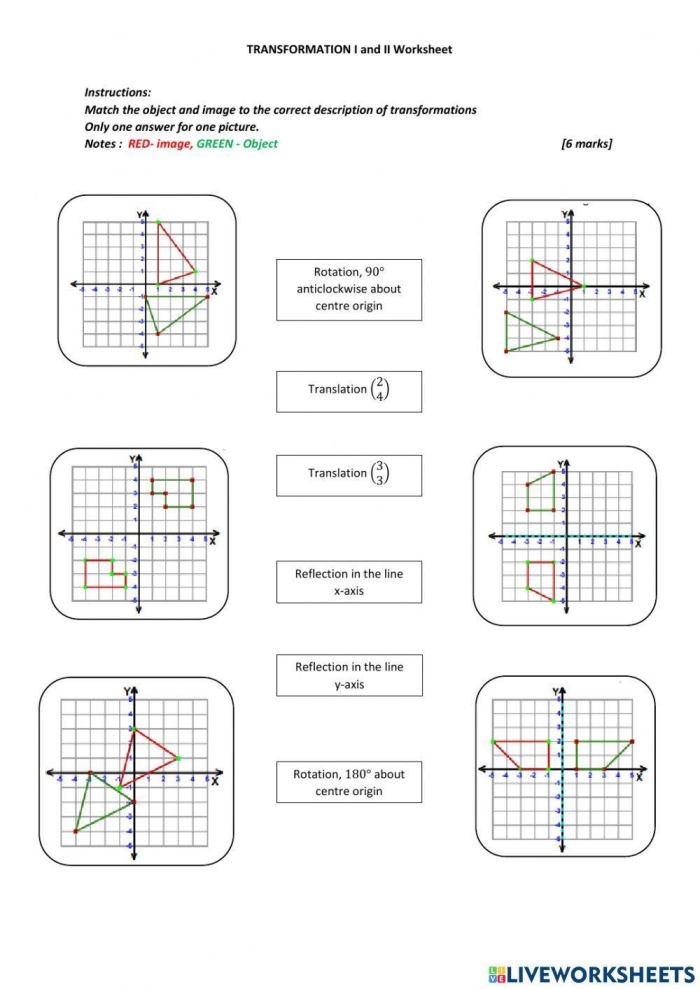
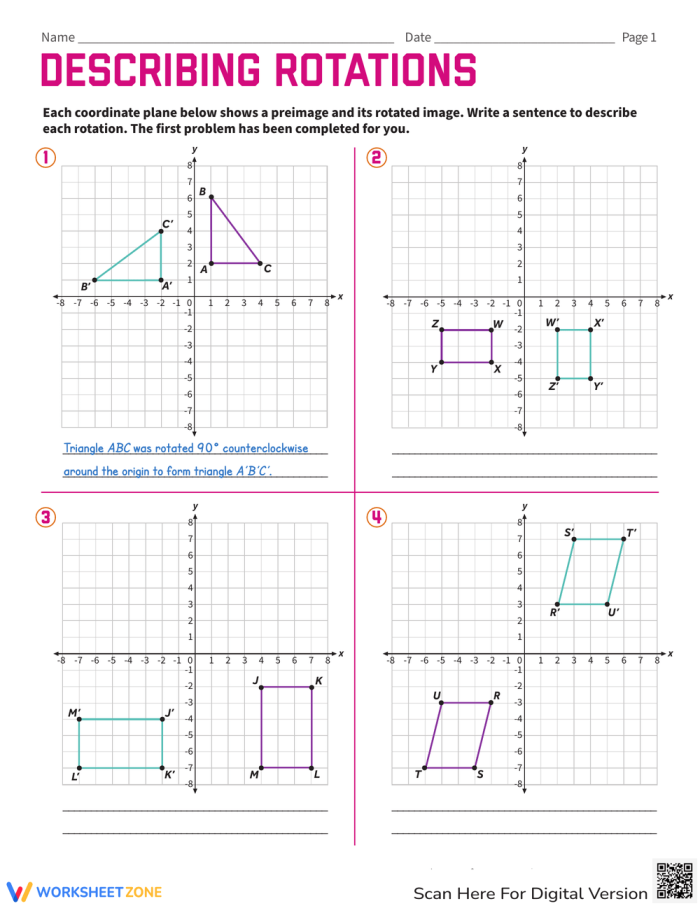
When eighth grade geometry students first encounter translations on the coordinate plane, many find the concept straightforward but easy to mess up in practice. A one-page reference sheet becomes invaluable at this stage, serving as a quick lookup tool that keeps students from second-guessing themselves during problem-solving.
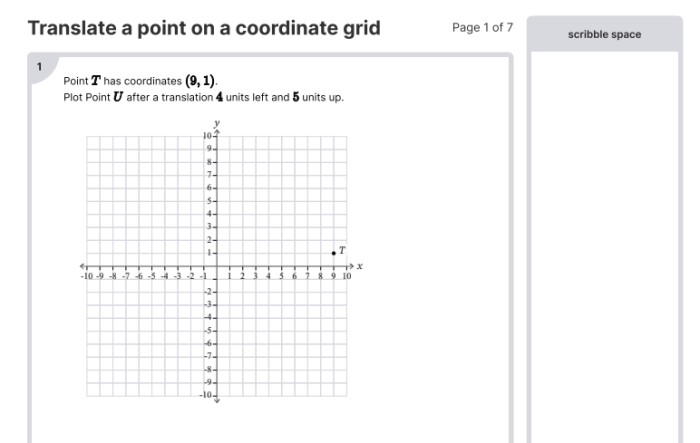
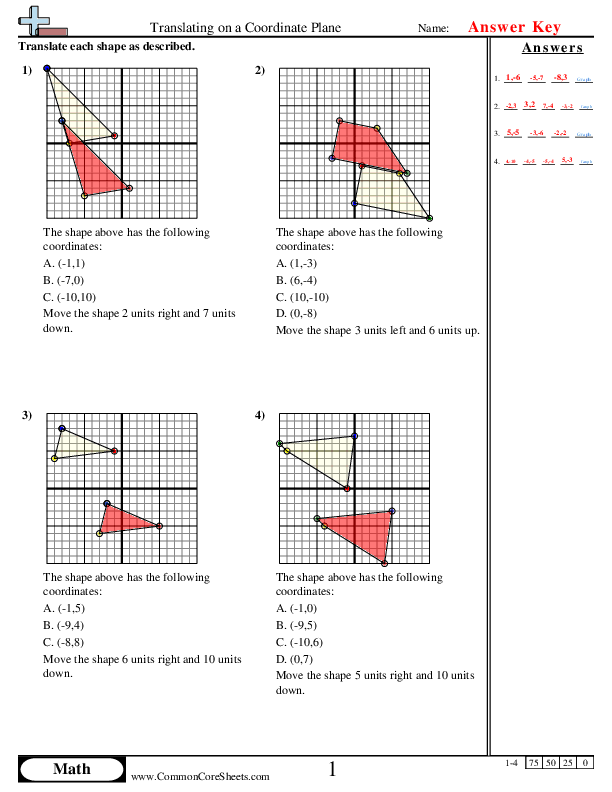
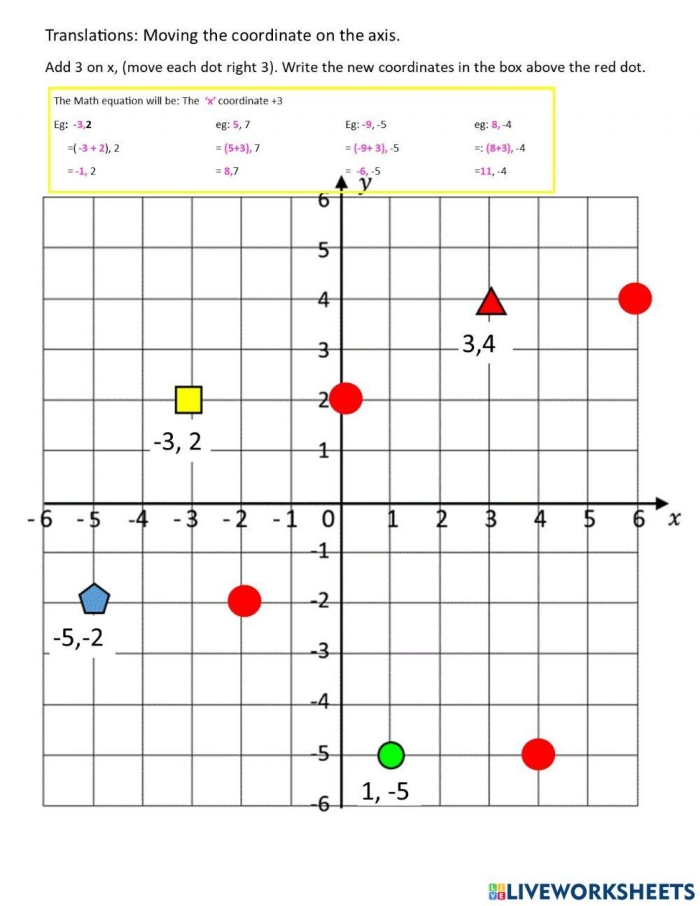
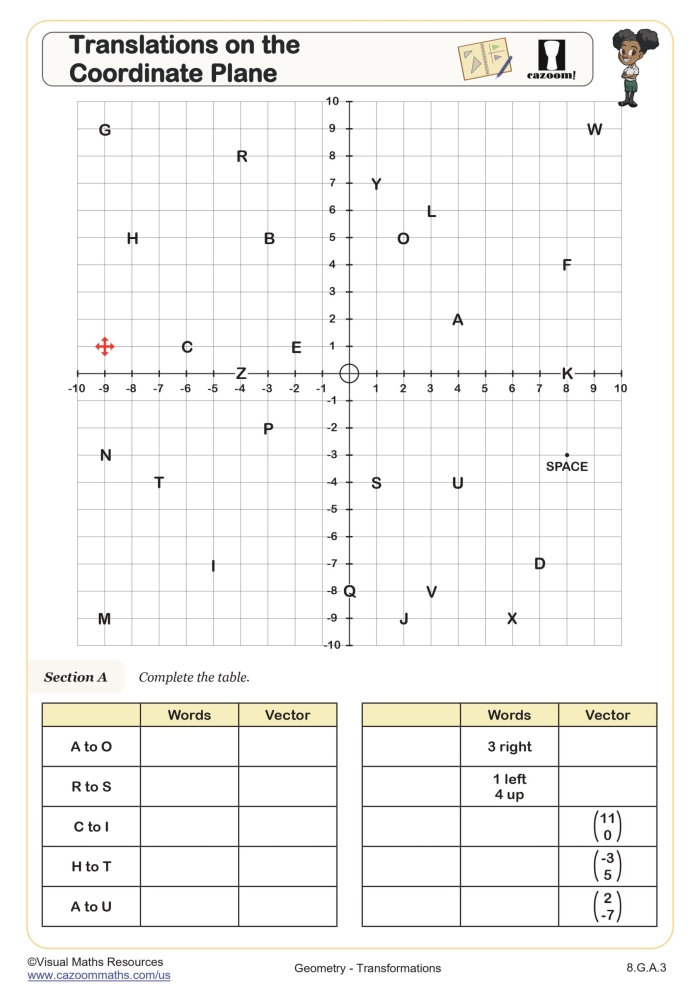
Translations are among the most intuitive transformations students learn. Unlike rotations or reflections, a translation simply slides a figure from one location to another without changing its size, shape, or orientation. On the coordinate plane, this means every point of a figure moves the same distance in the same direction. If a point starts at (3, 5) and the translation rule is (x + 2, y – 3), that point ends up at (5, 2). Every vertex of the original figure follows the same rule.
A solid reference sheet should clearly display the notation students will encounter. The format (x + a, y + b) shows how to read and apply translation rules, where a represents horizontal movement and b represents vertical movement. Positive values move right and up, while negative values move left and down. This simple framework applies consistently across every problem.
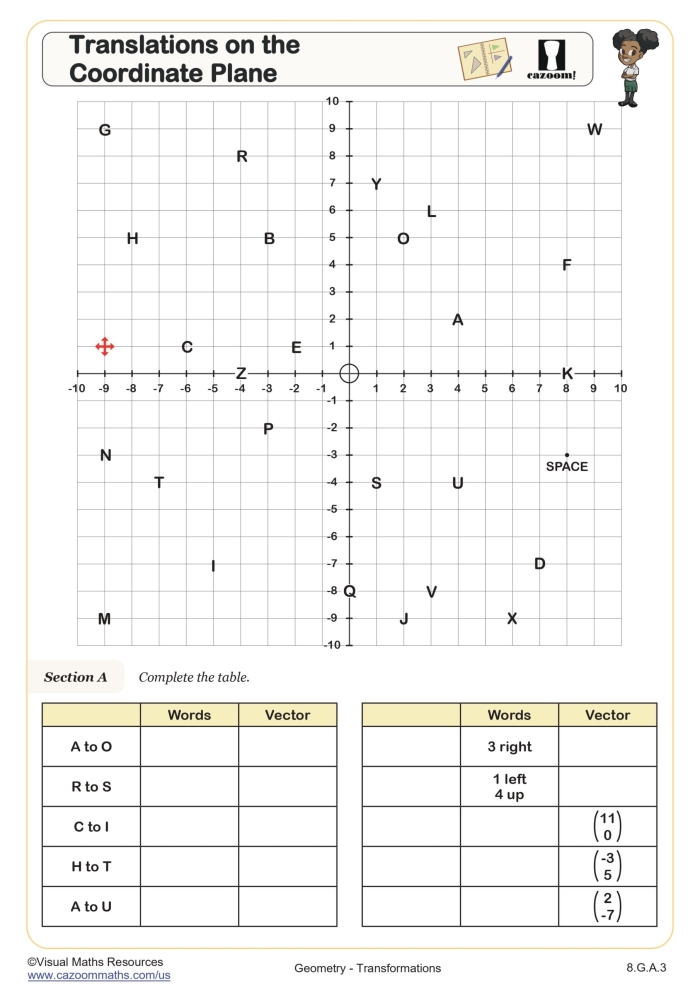
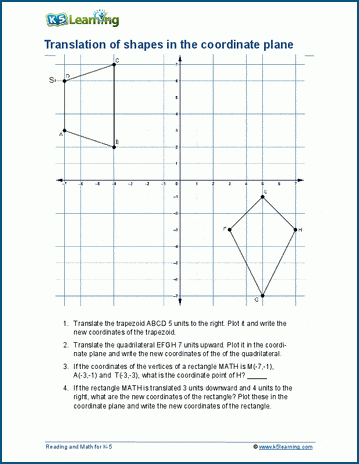
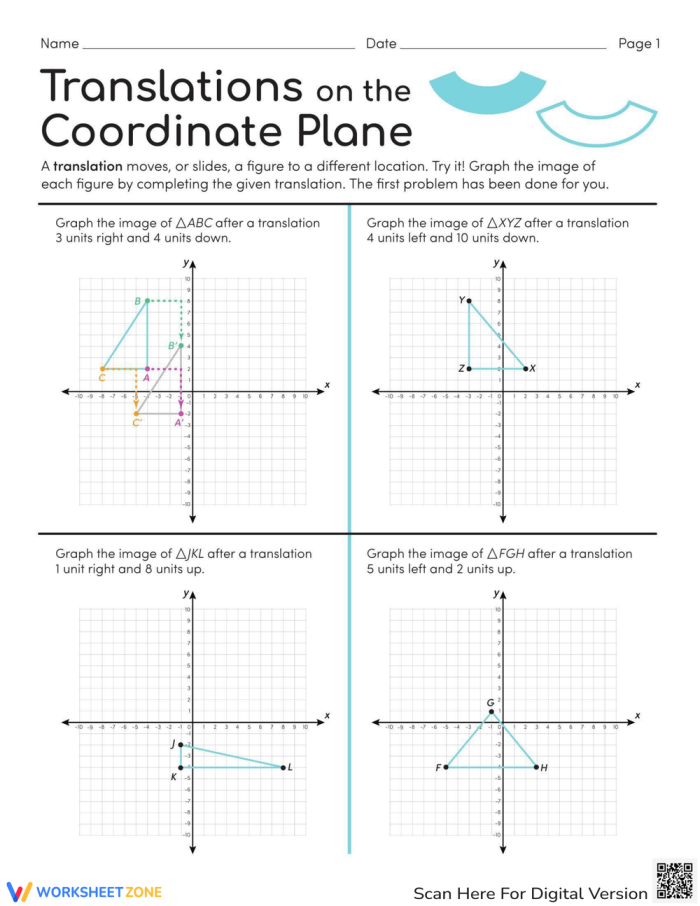
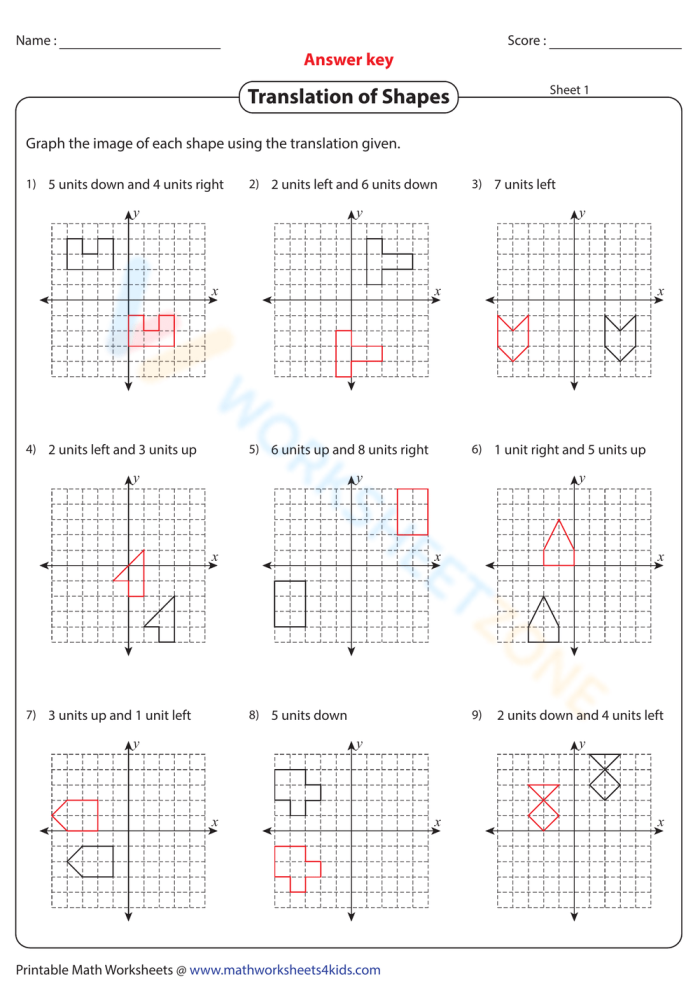
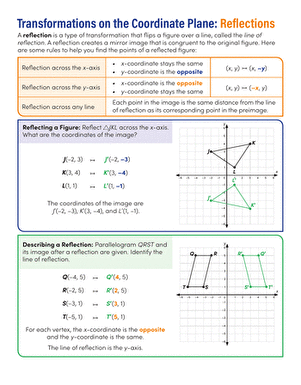
The sheet works best when it includes worked examples showing before-and-after coordinates. Visual representations help too, since students can see the figure’s position shift while maintaining its exact shape and size. This connects to broader geometry concepts, including how to identify similar figures using transformations.
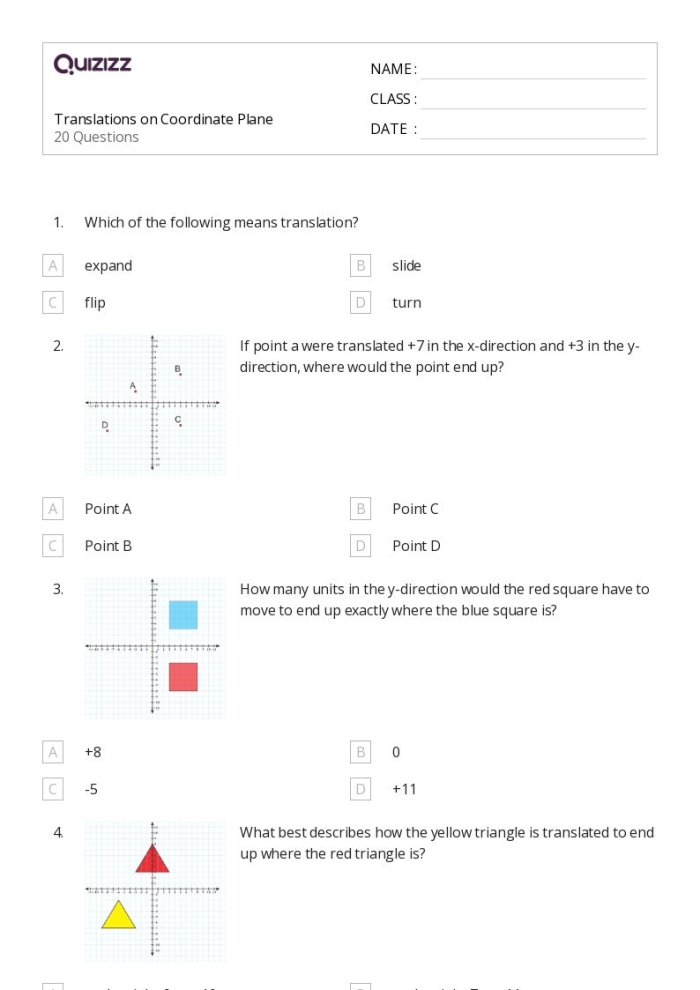
Having this reference available during practice prevents frustration and builds confidence. Students can focus on applying the rule rather than remembering notation. When paired with worksheets that progress from simple single-point translations to multi-vertex figures, a reference sheet transforms what could feel overwhelming into manageable, repeatable steps.
Download These Worksheets for Practice