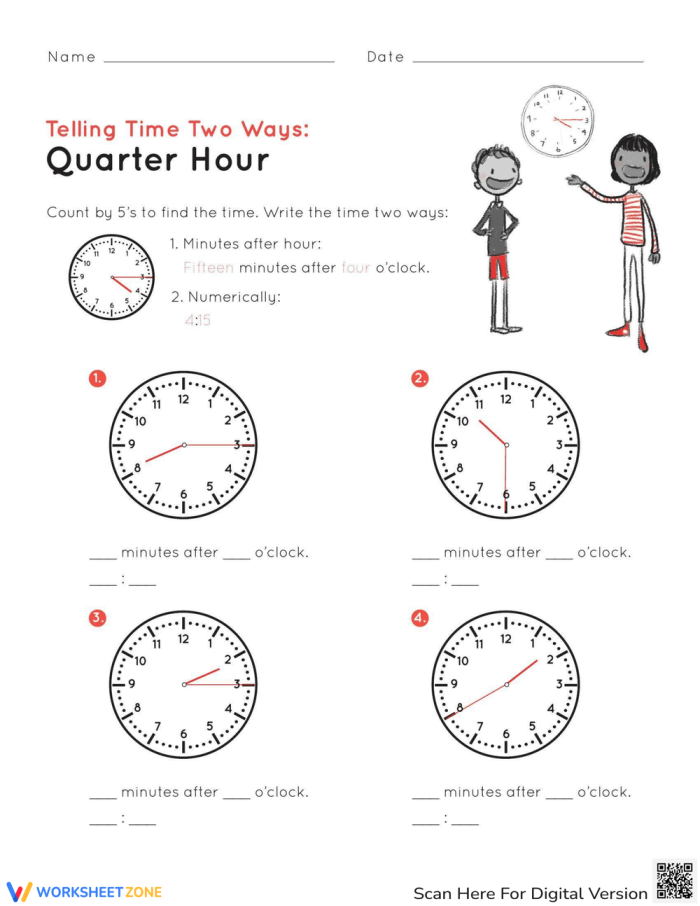
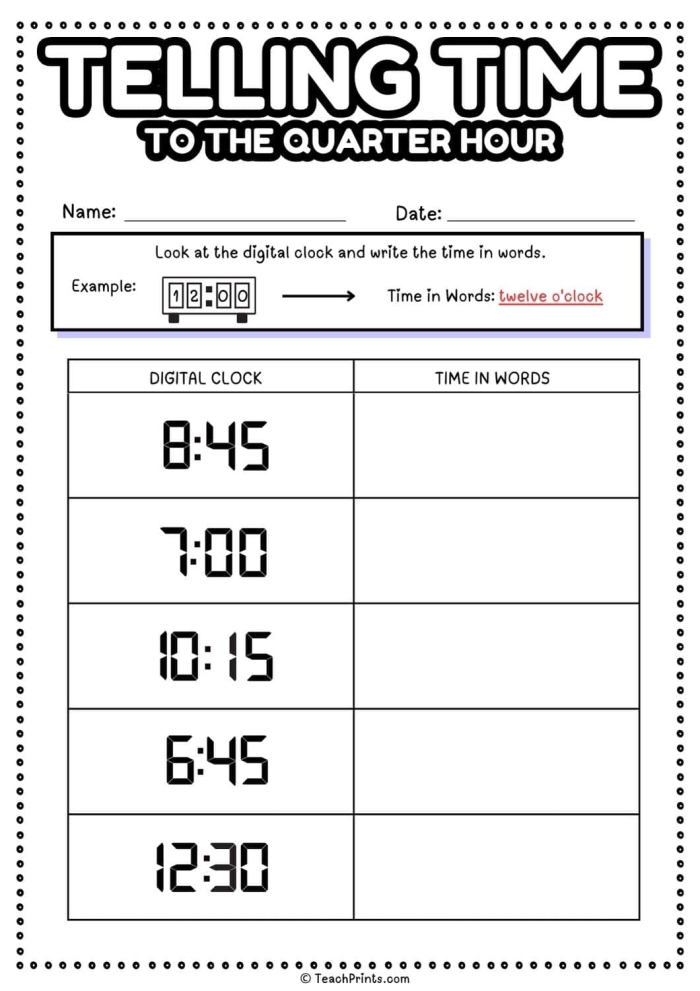
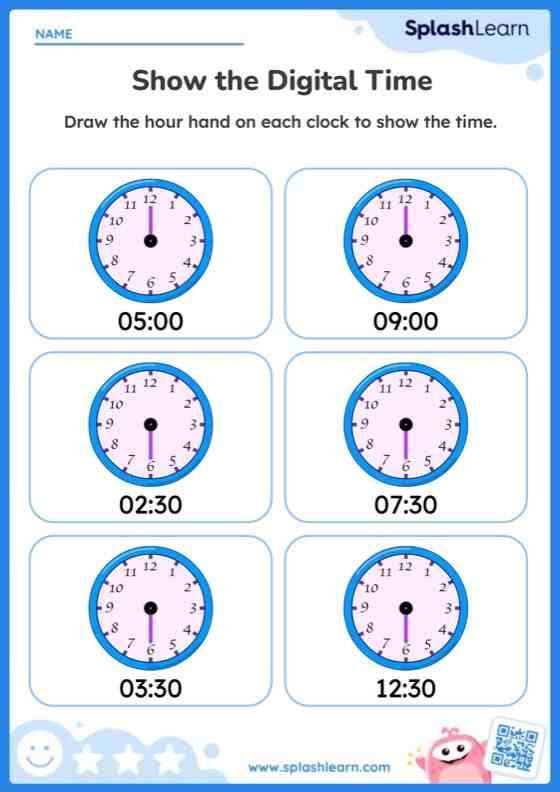
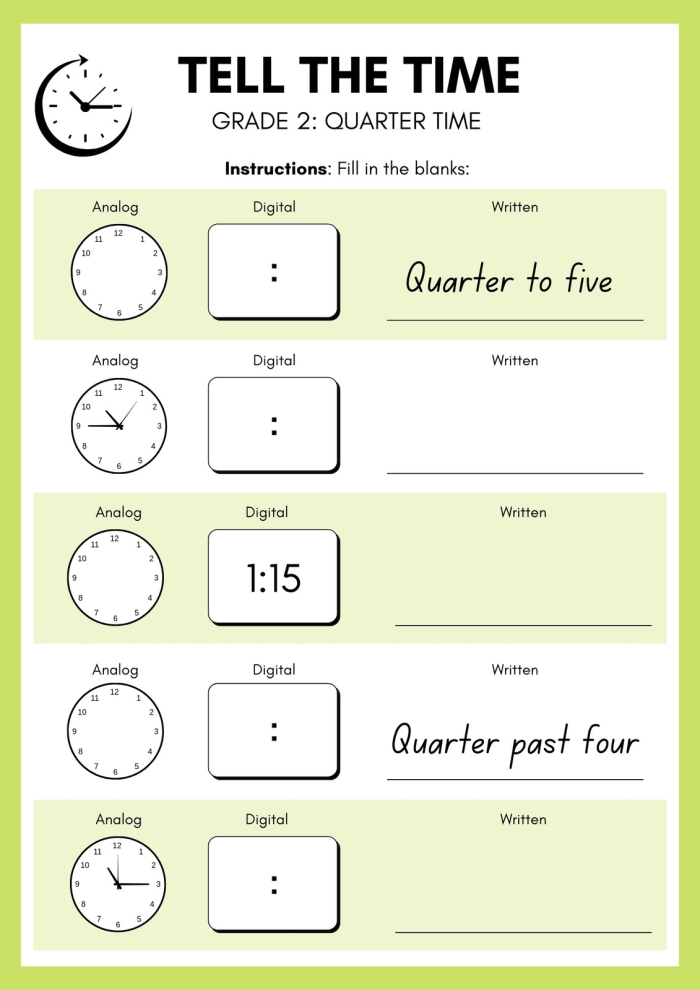
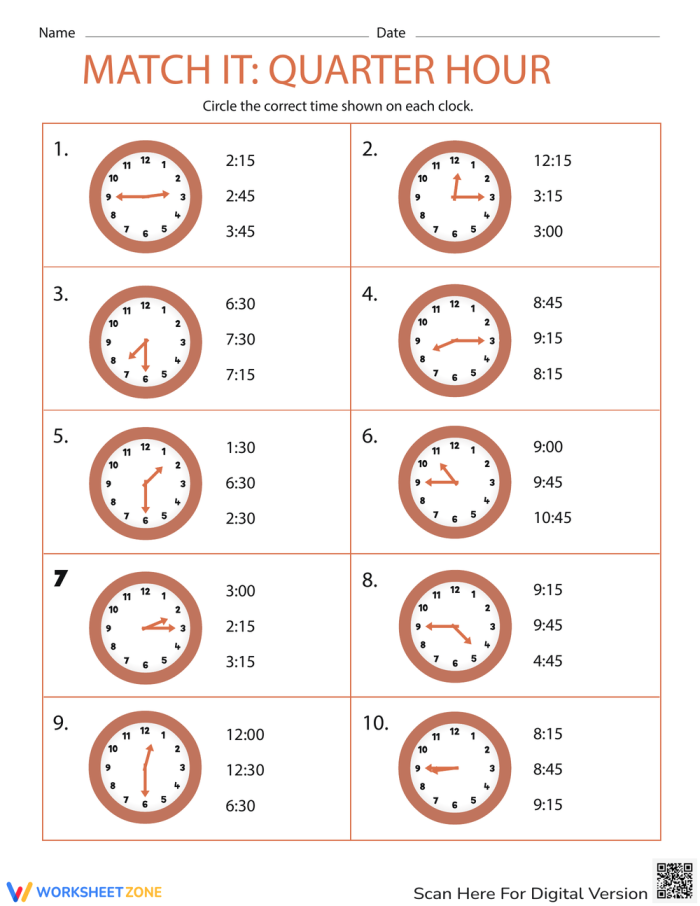
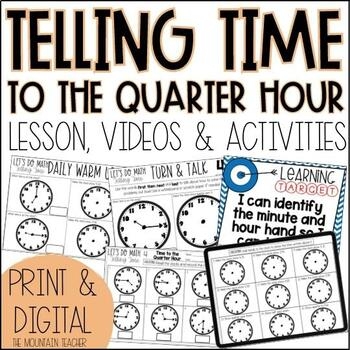
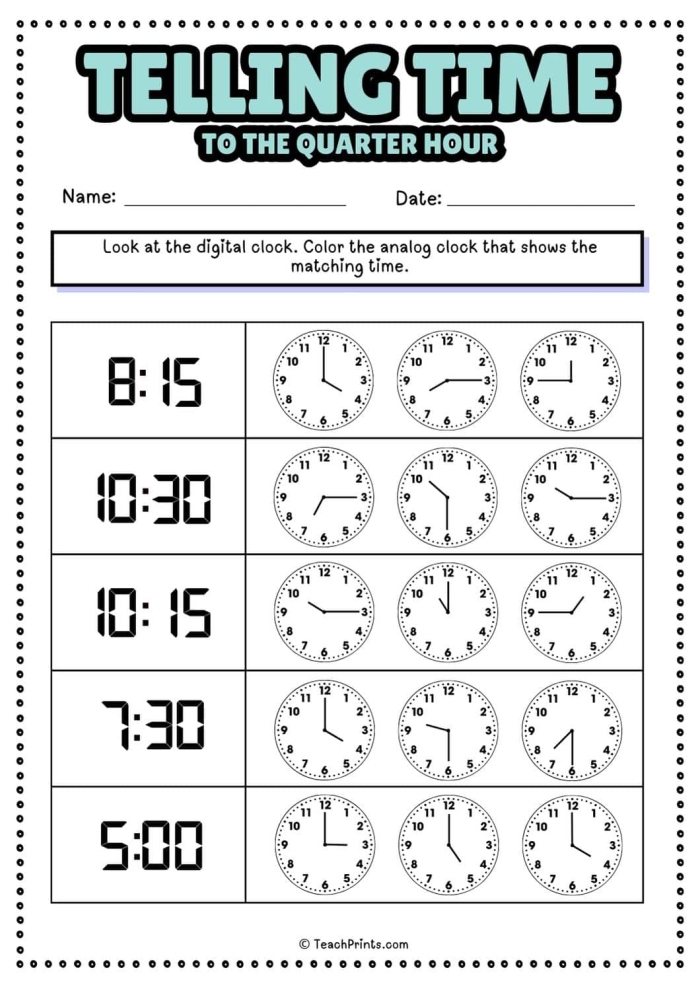
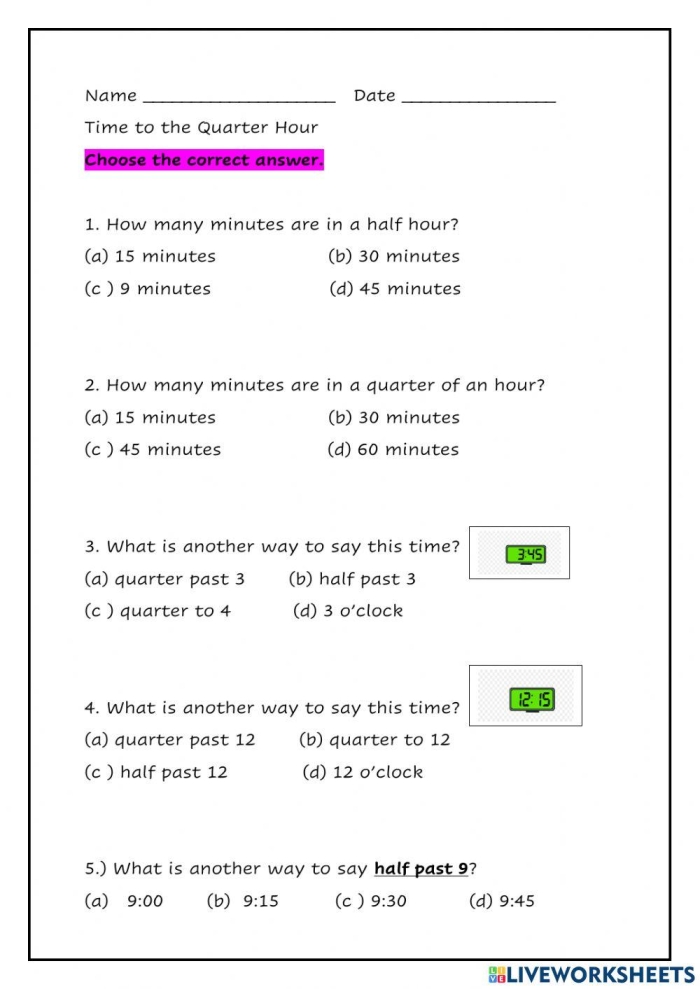
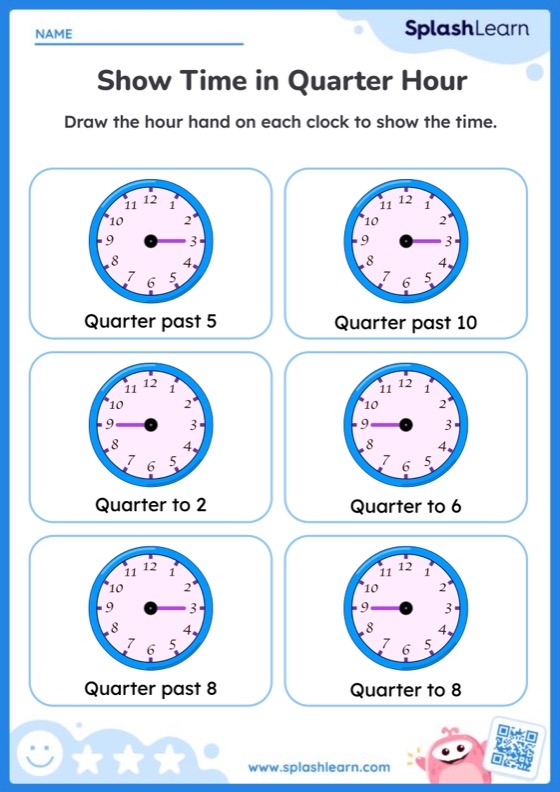
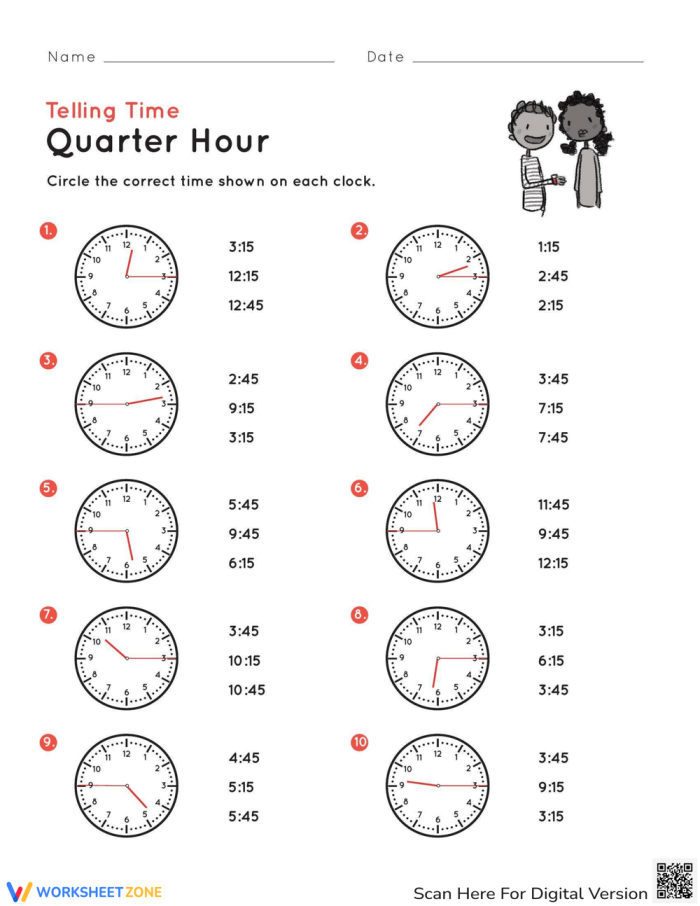
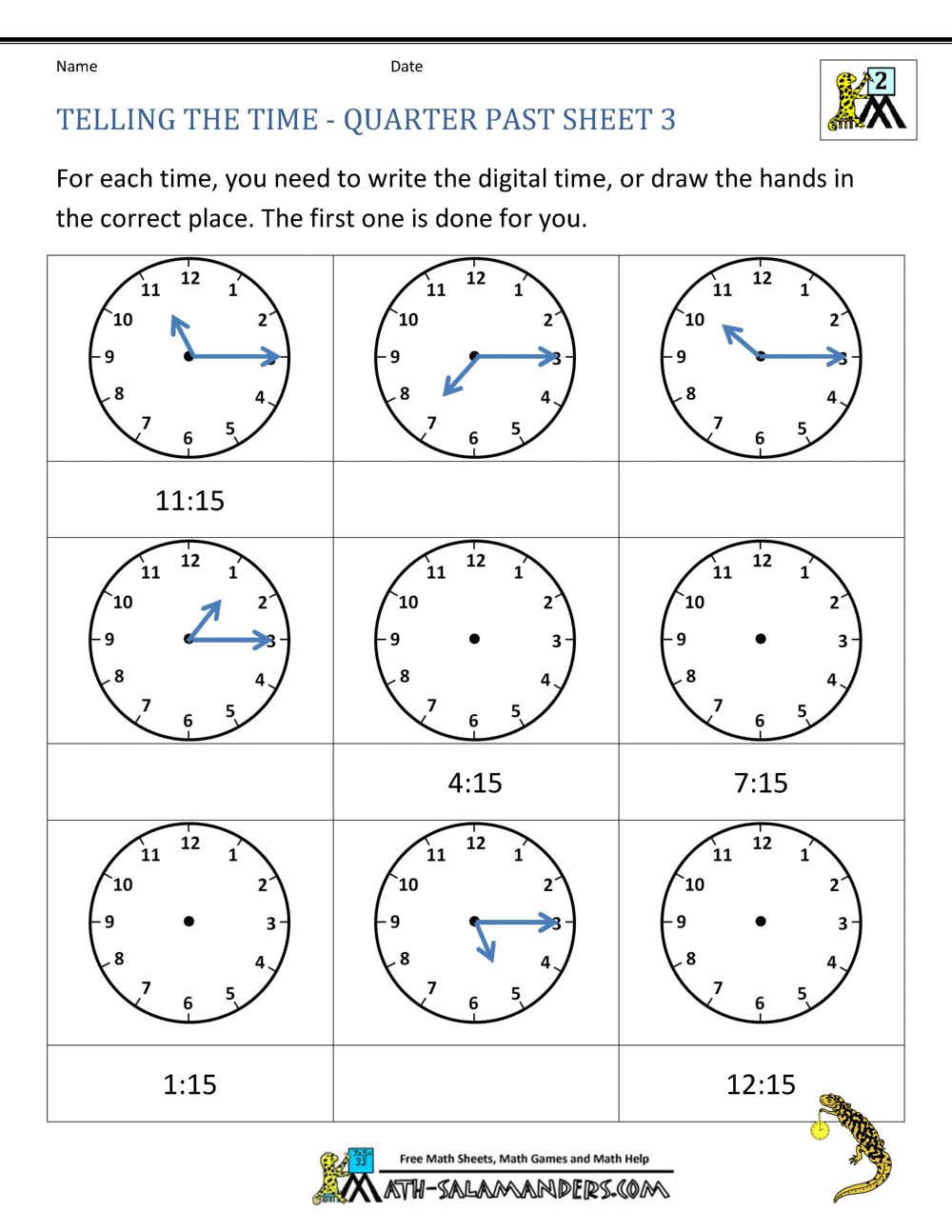
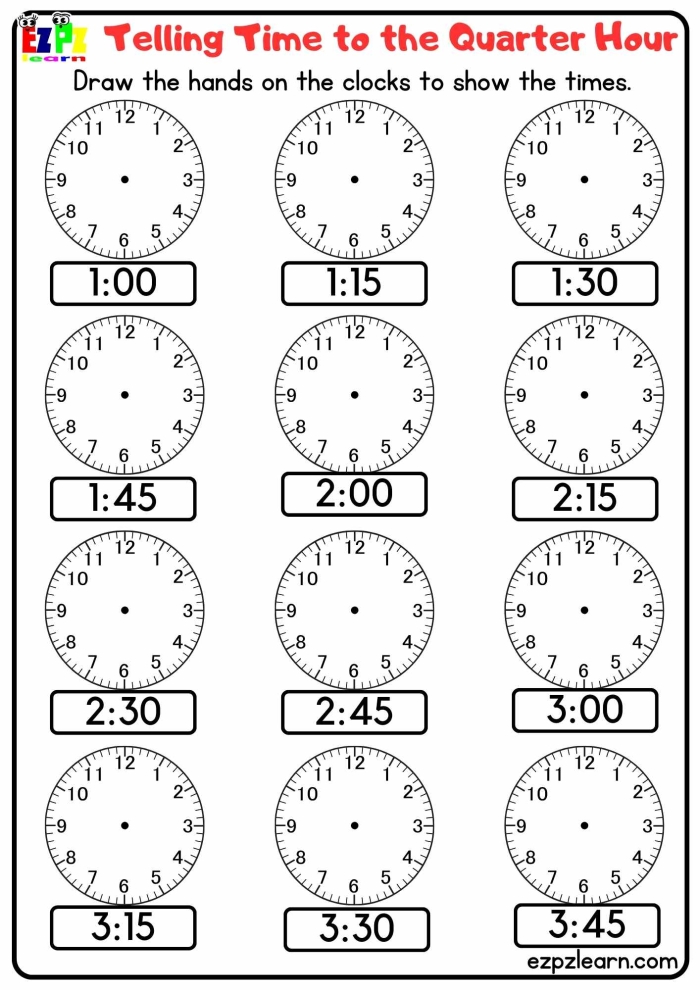
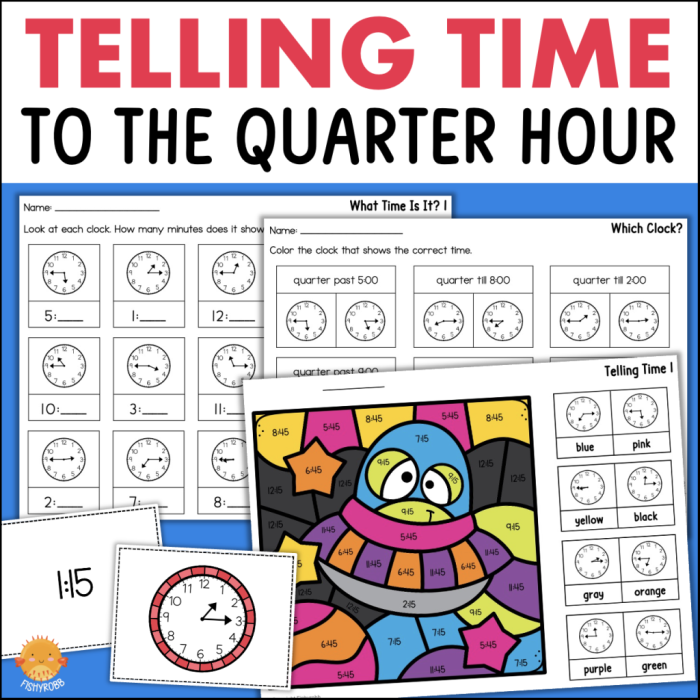
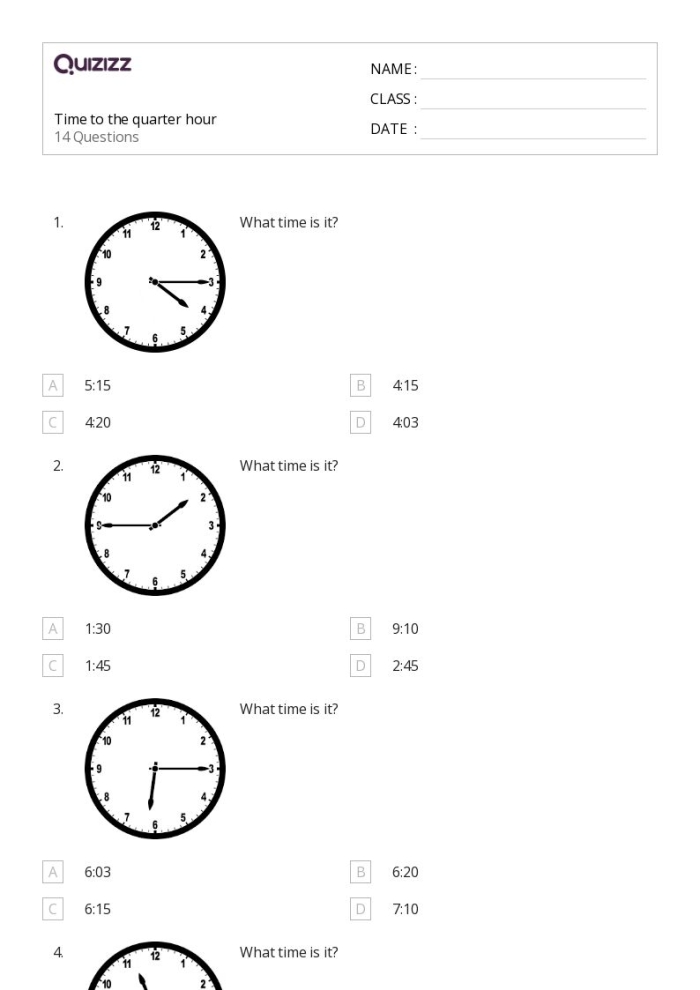
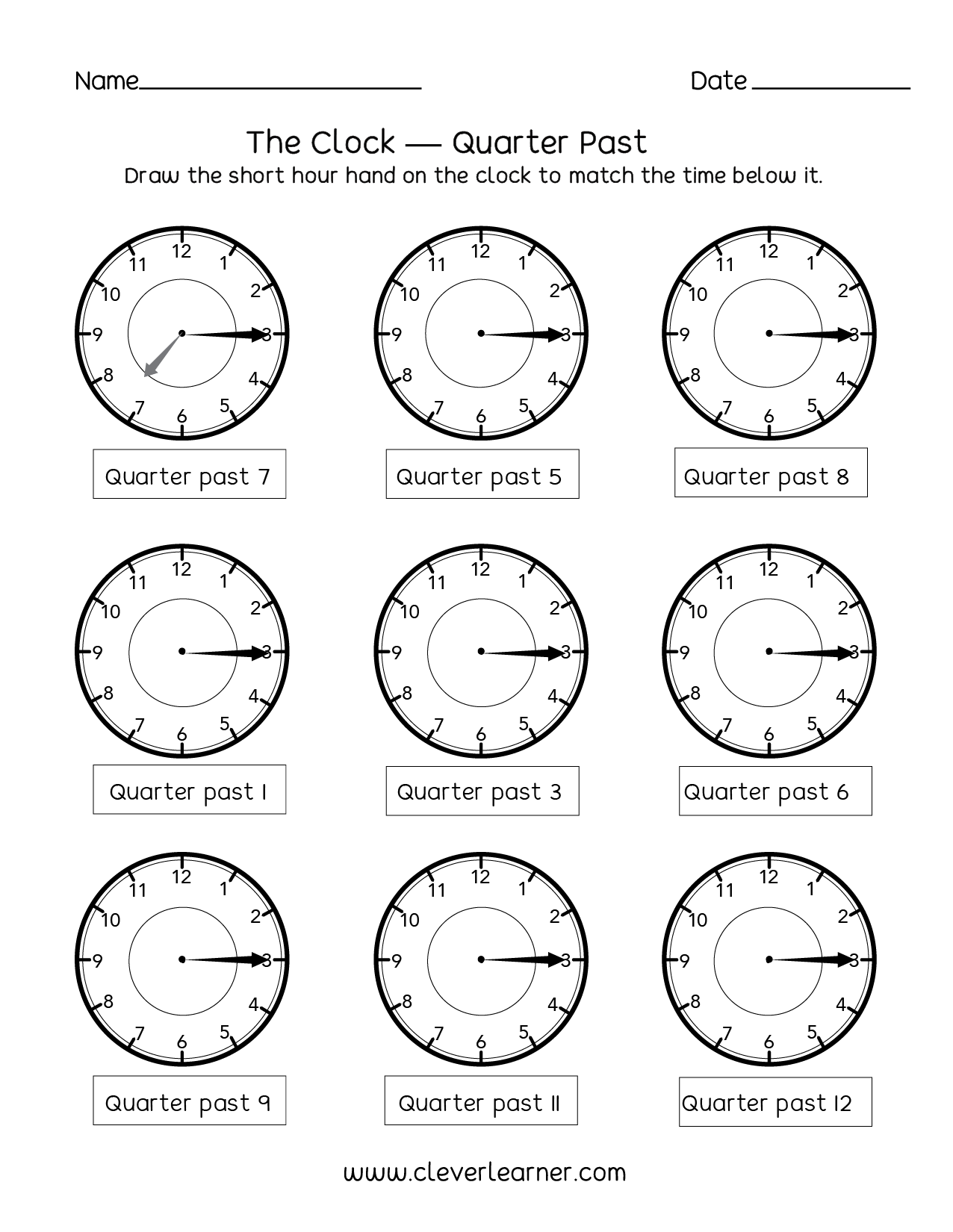
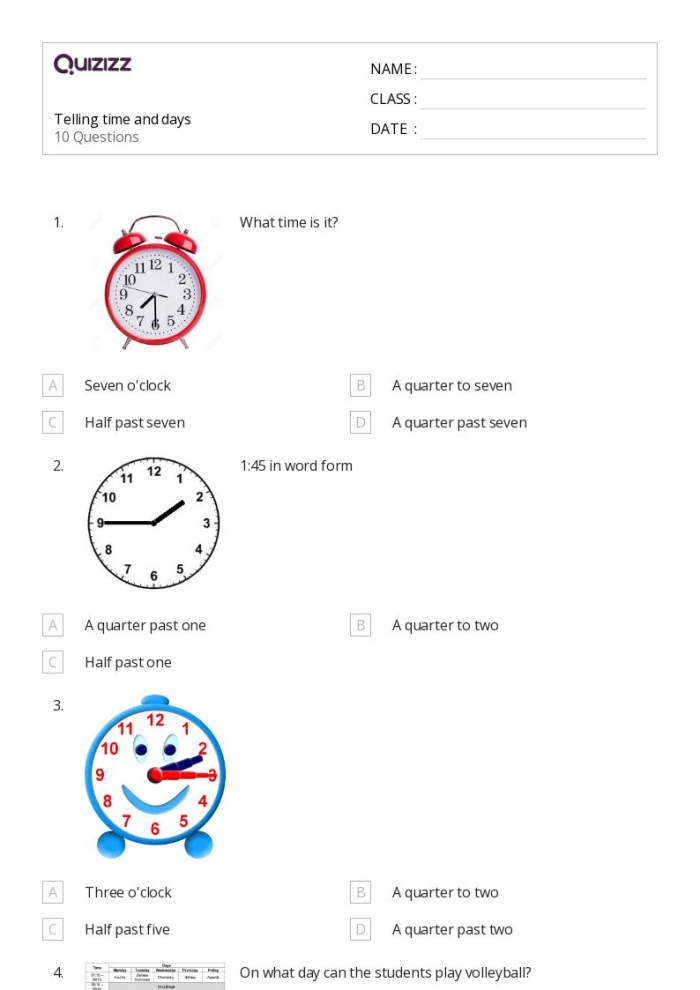
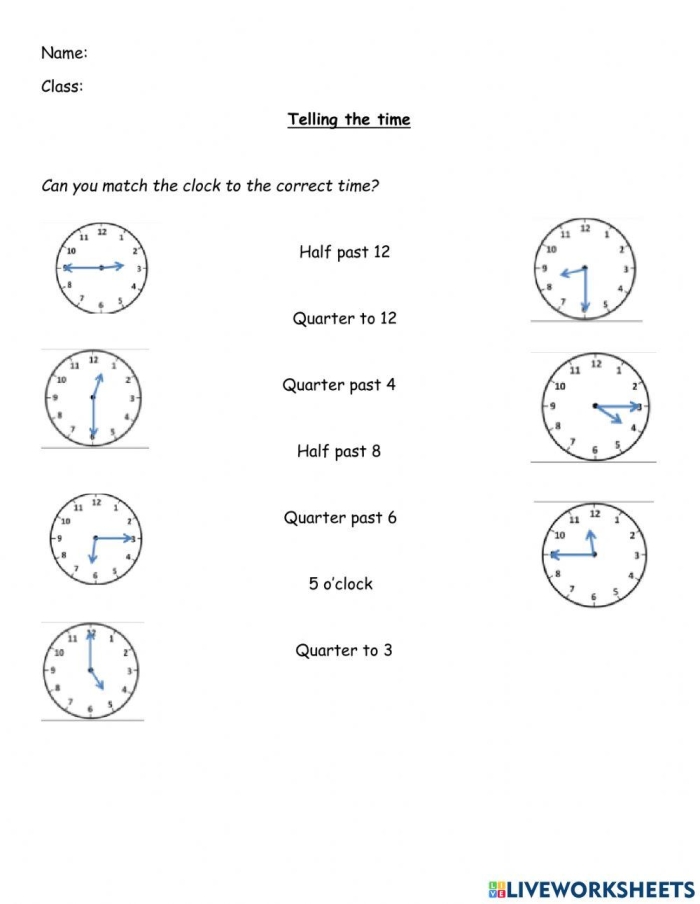
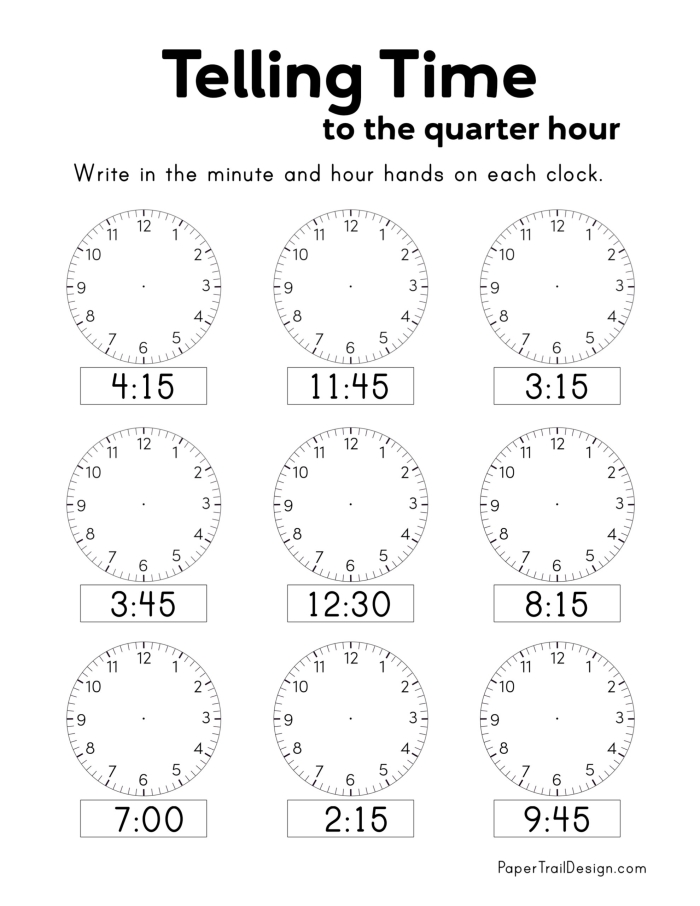
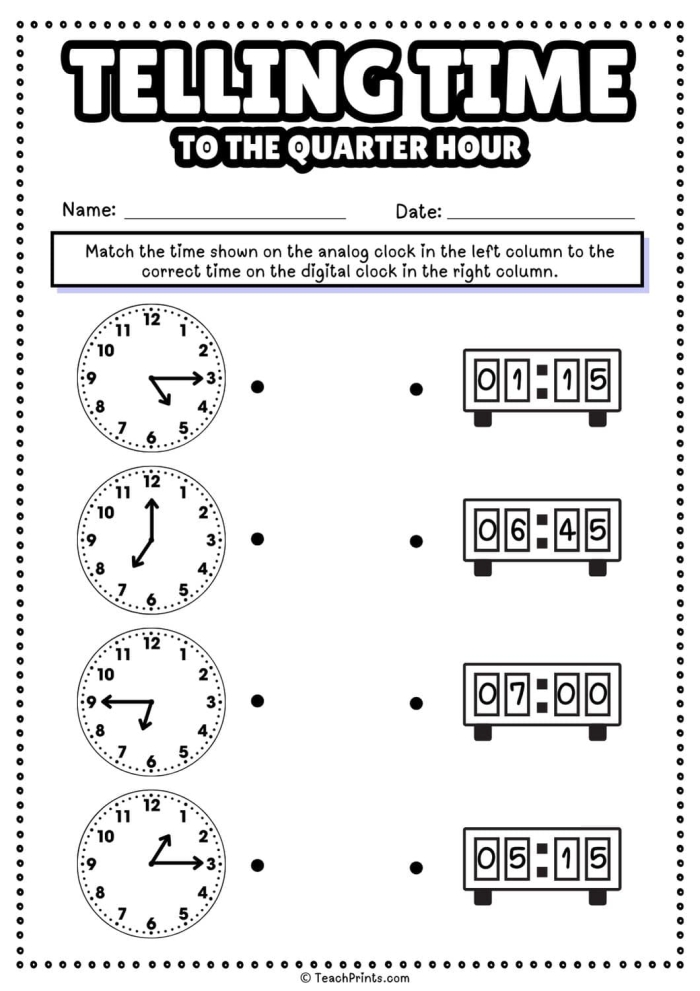
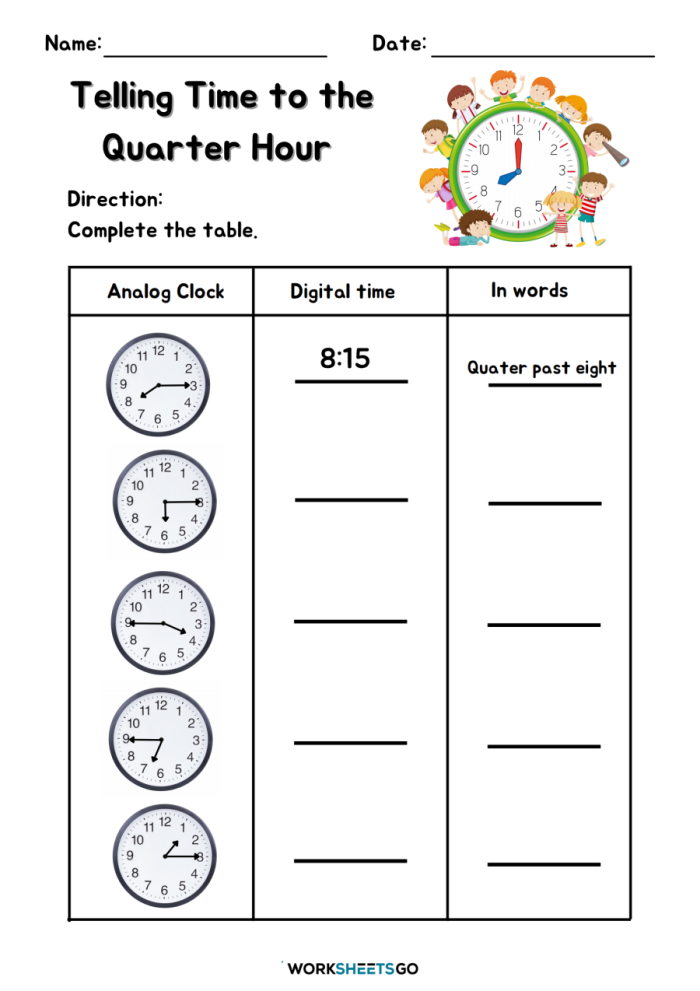
Telling time on an analog clock requires a specific skill set that second grade students need to master before moving on to more complex time concepts. This math time worksheet focuses on one particular challenge: reading clocks to the quarter hour, which represents 15-minute intervals rather than exact minutes.
The quarter hour system breaks the clock face into four equal sections. When the minute hand points to the 3, that’s a quarter past the hour. When it reaches the 6, that’s half past. The 9 represents three-quarters past, and the 12 brings us to the top of the next hour. Second grade learners benefit from worksheets that isolate this concept because it removes the confusion of reading every single minute marking on the clock.
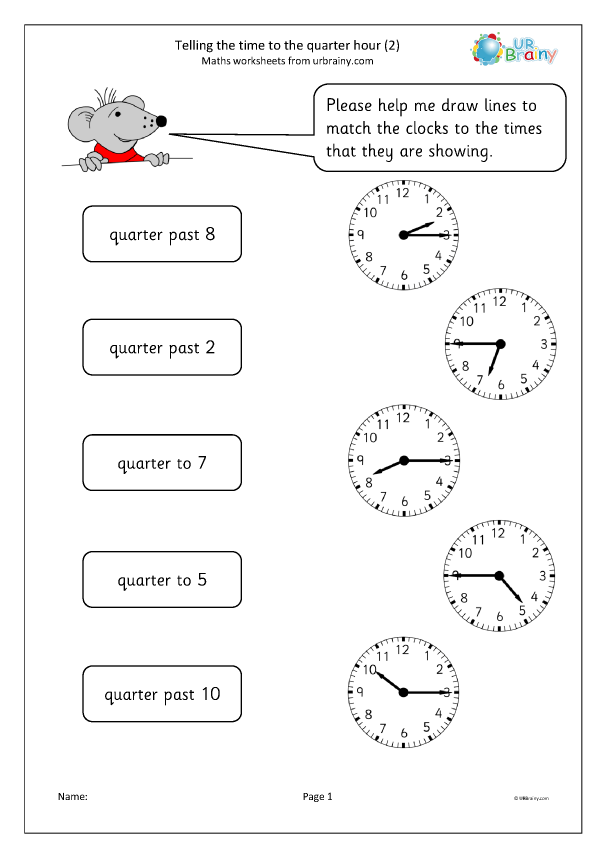
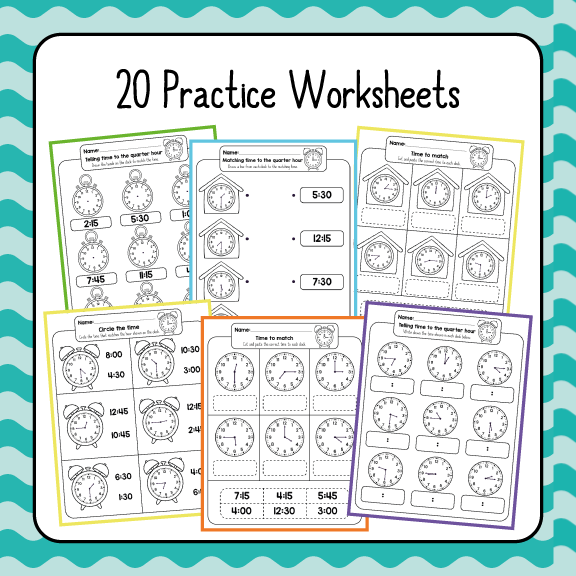
What makes this worksheet particularly useful is how it combines visual recognition with language development. Students see an analog clock displaying a specific time, then match it to written descriptions like “quarter past two” or “three o’clock.” This dual approach helps reinforce both the visual and verbal representations of time.
The matching format works well for this age group because it reduces pressure compared to free-response questions. Rather than writing answers, students simply draw lines connecting clocks to their corresponding times. This structure allows teachers to quickly assess whether students grasp the concept or need additional practice.
Second grade geography and math often overlap when teaching time, since understanding time zones and schedules connects to spatial concepts. As students progress, they’ll apply these quarter-hour skills to reading schedules and understanding how time functions across different locations.
Teachers can extend this worksheet by having students create their own matching sets or by pairing it with other practice materials like fraction practice comparing fractions, since quarters connect to both time and mathematical fractions. For variety in skill-building, combining time worksheets with activities like word hunts keeps learning engaging across different subject areas.
Boost Skills with These Worksheets