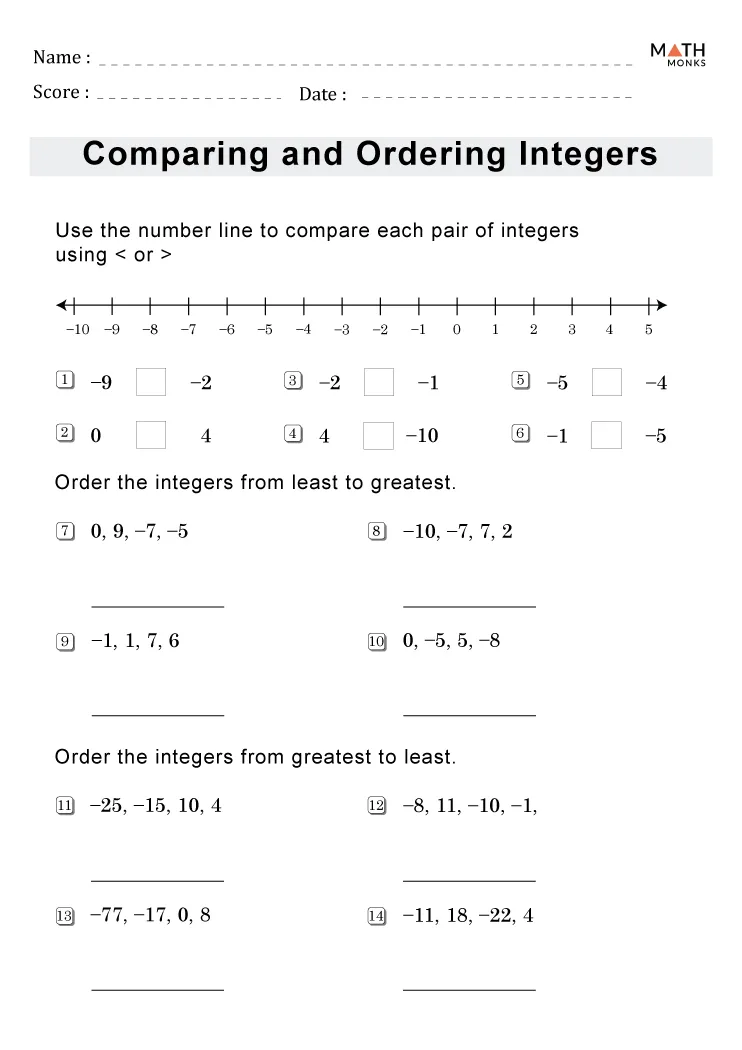
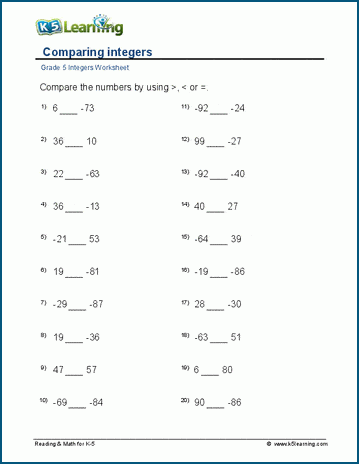
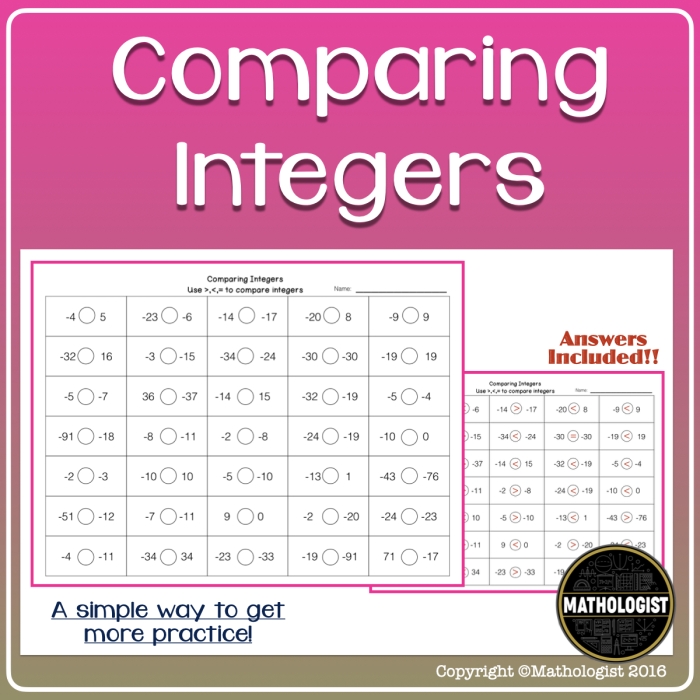
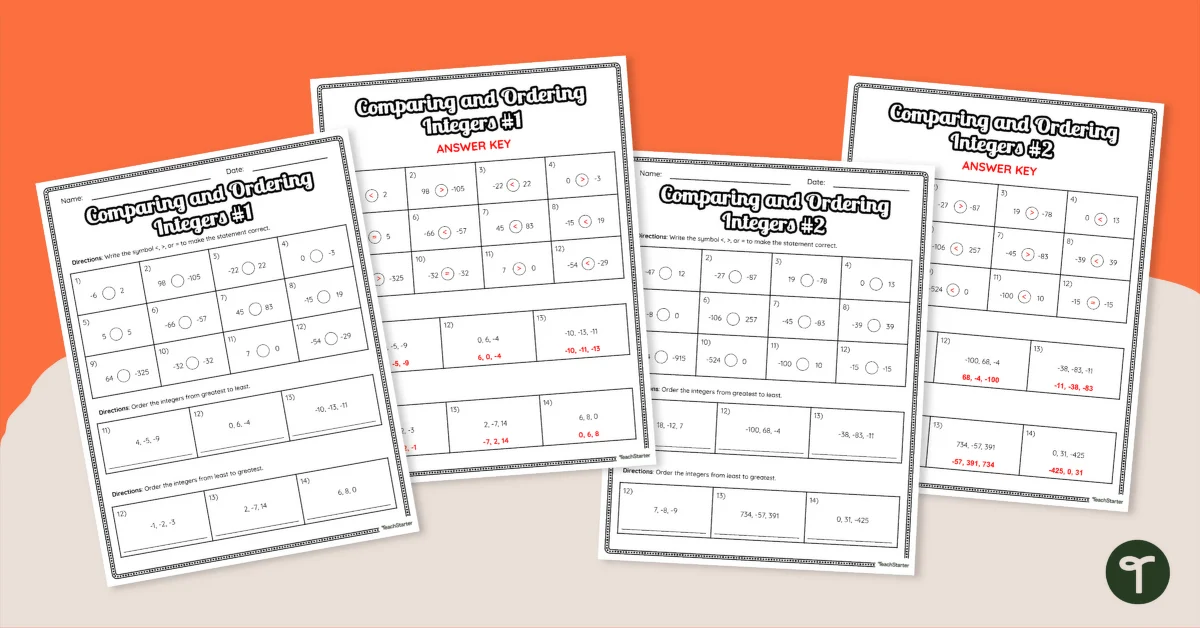
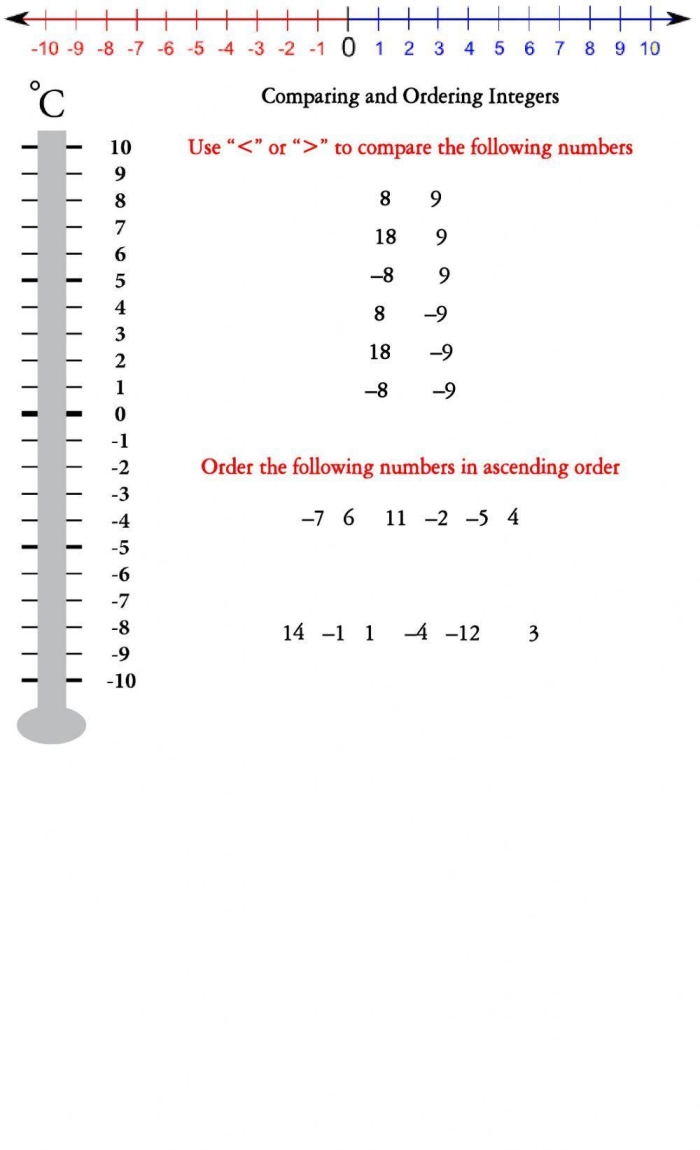
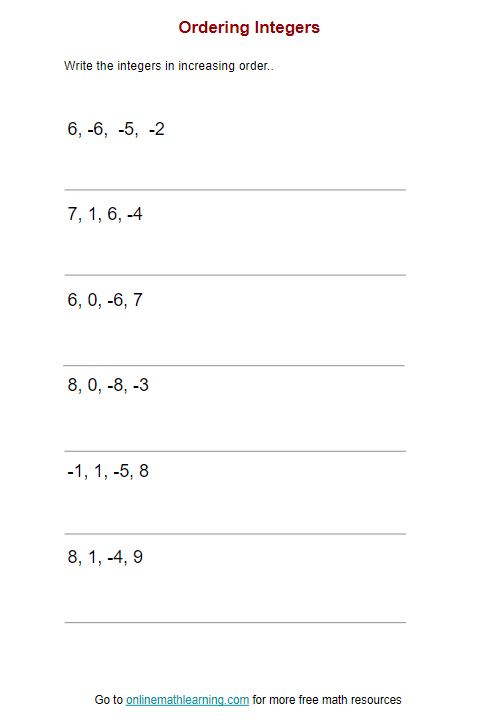
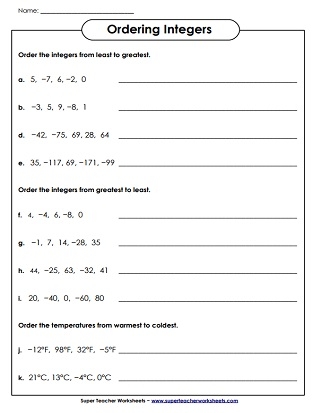
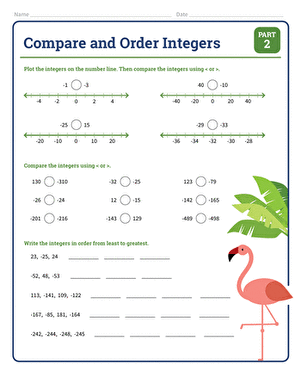
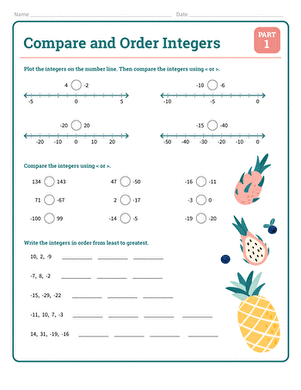
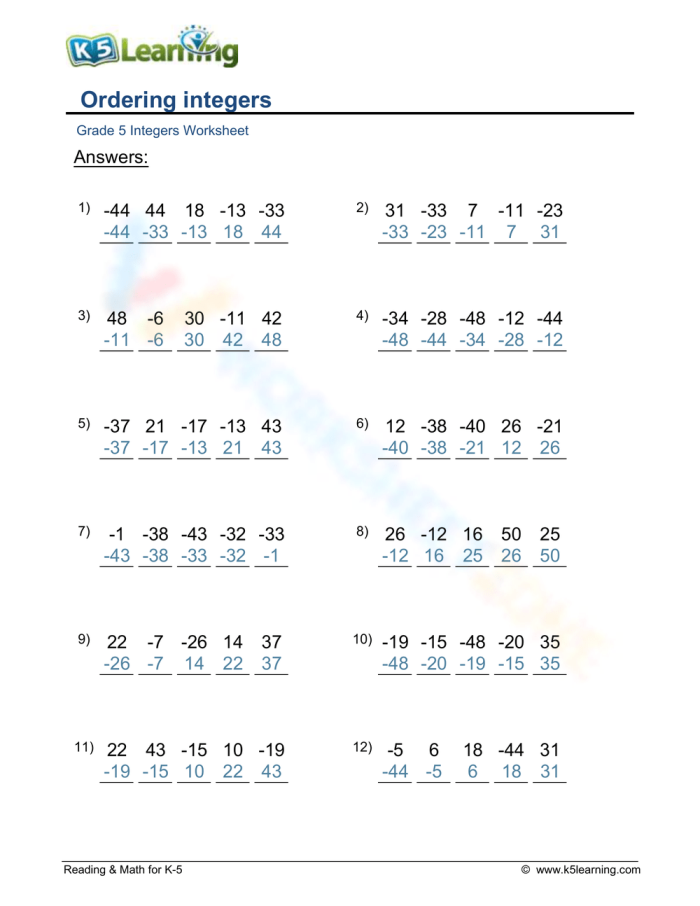
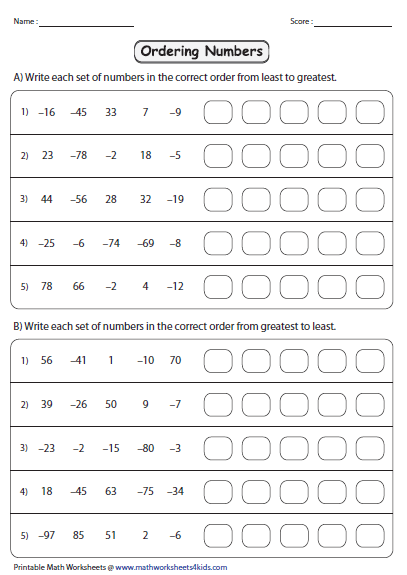
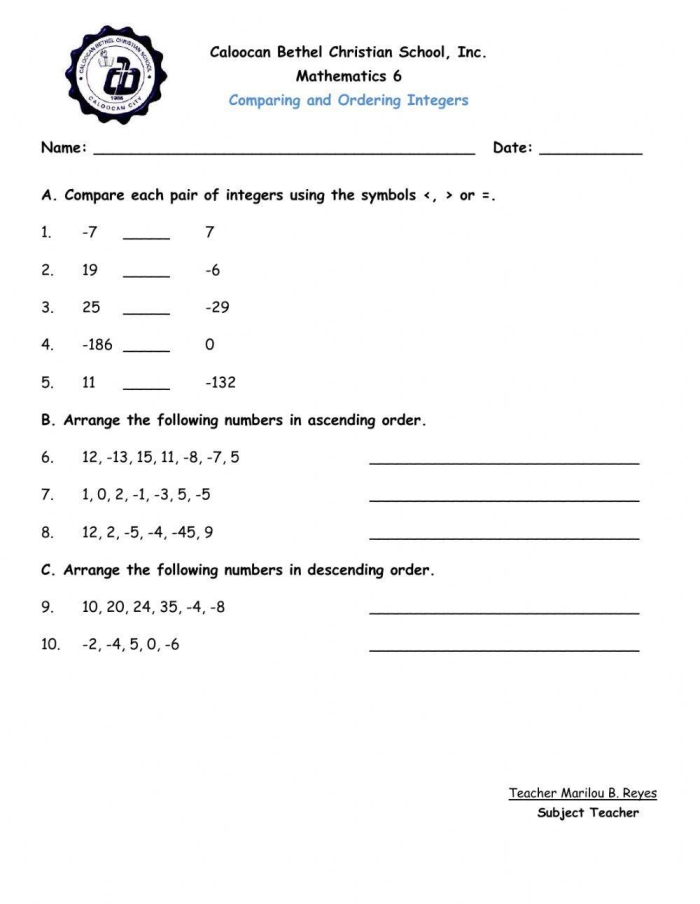
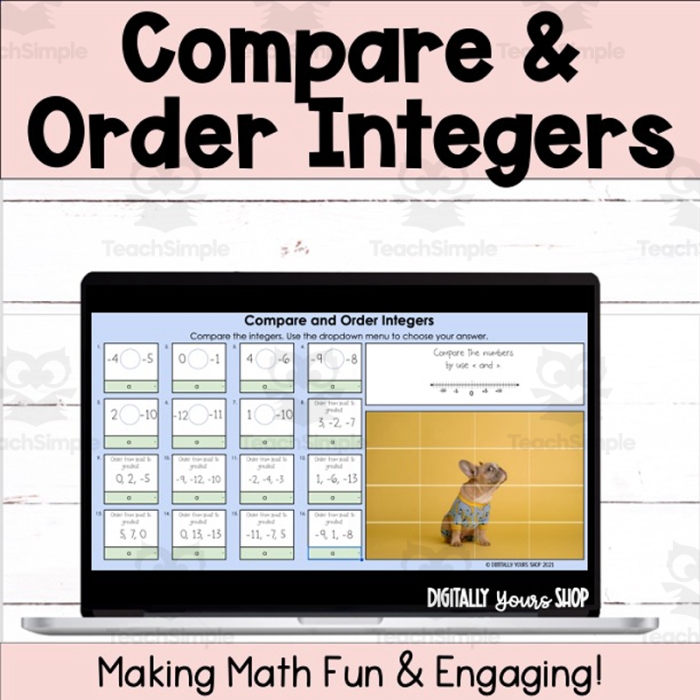
Understanding how to compare and order integers is one of those foundational skills that either clicks early or becomes a source of frustration for sixth grade students. When kids grasp the relationship between positive and negative numbers on a number line, everything else in number theory becomes easier to approach.
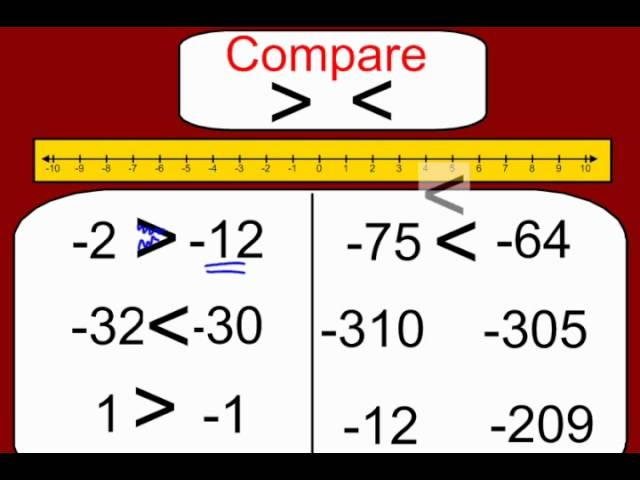
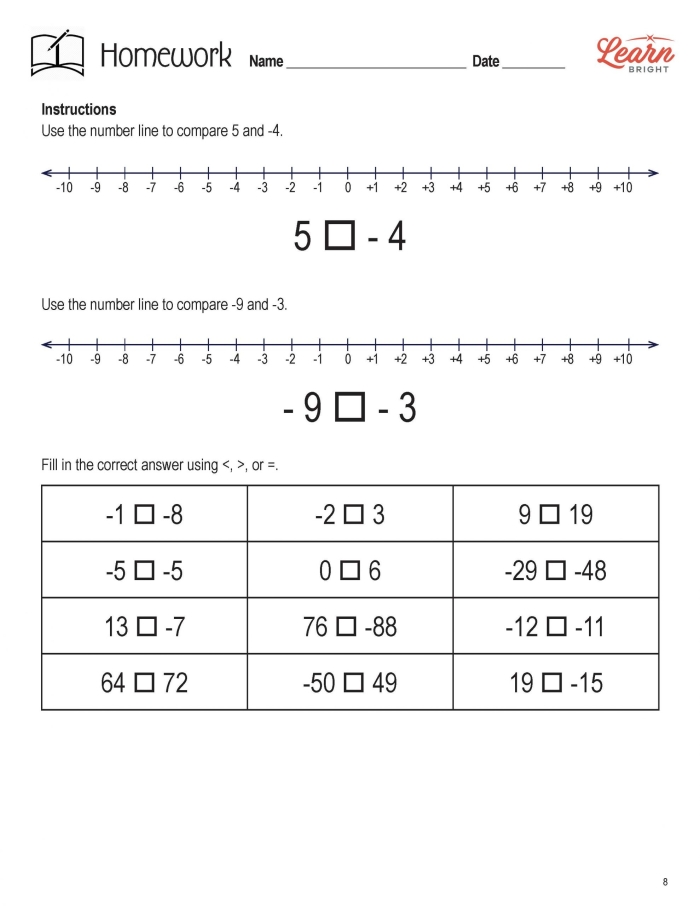
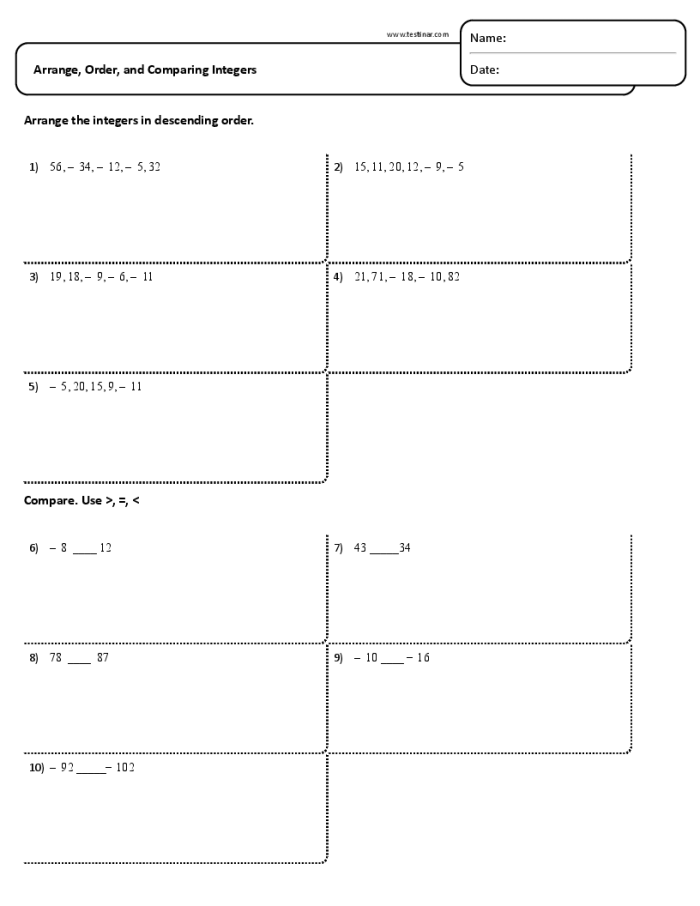
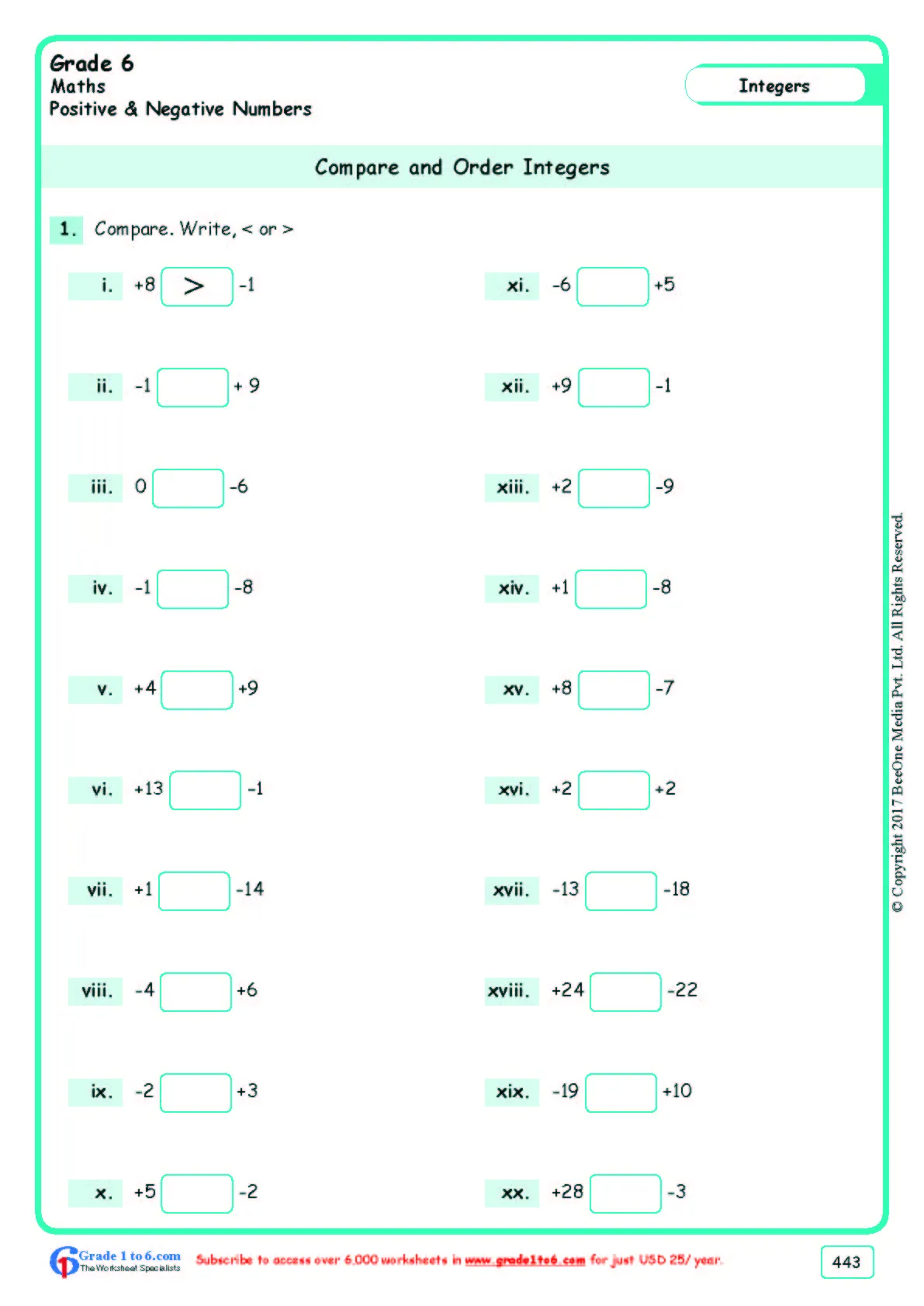
The challenge many teachers face is that integers feel abstract to students who have only worked with whole numbers. A student might understand that 5 is greater than 3, but then struggle when asked whether -2 or -5 is larger. The mental shift required—understanding that numbers further left on a number line are smaller, even when the absolute value is larger—needs practice and the right tools to reinforce it.
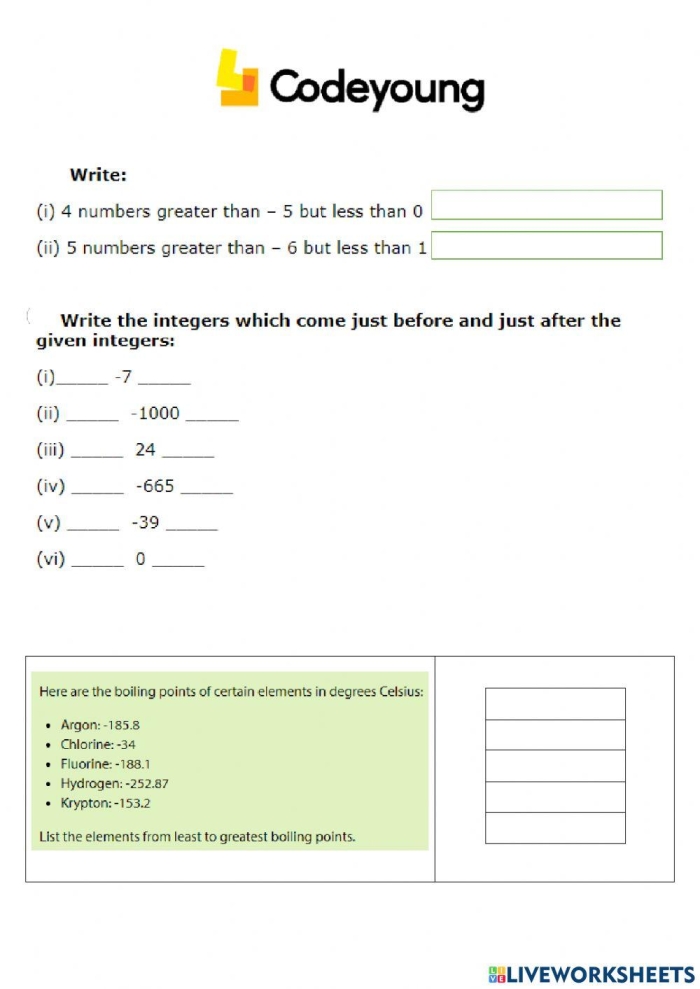
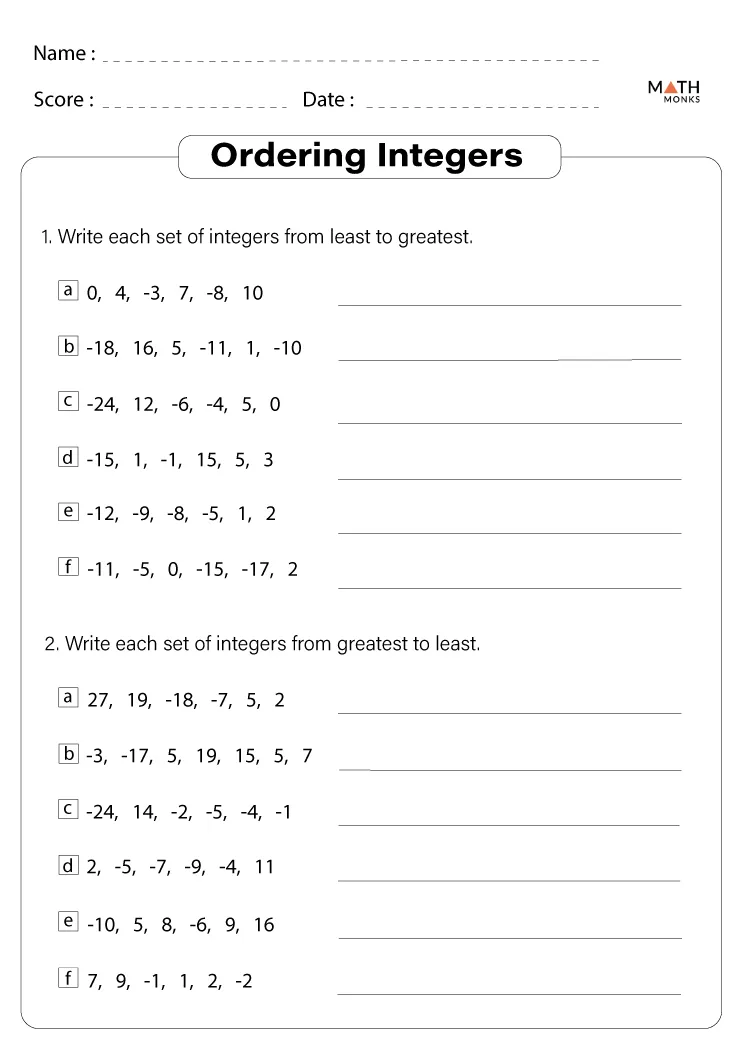
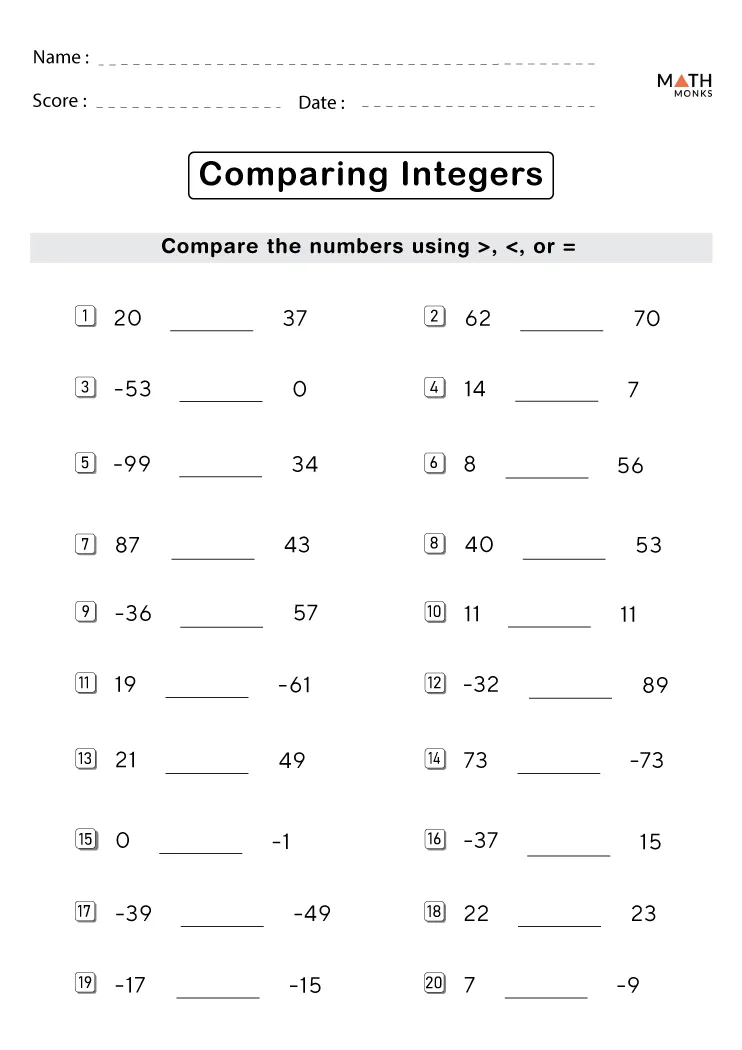
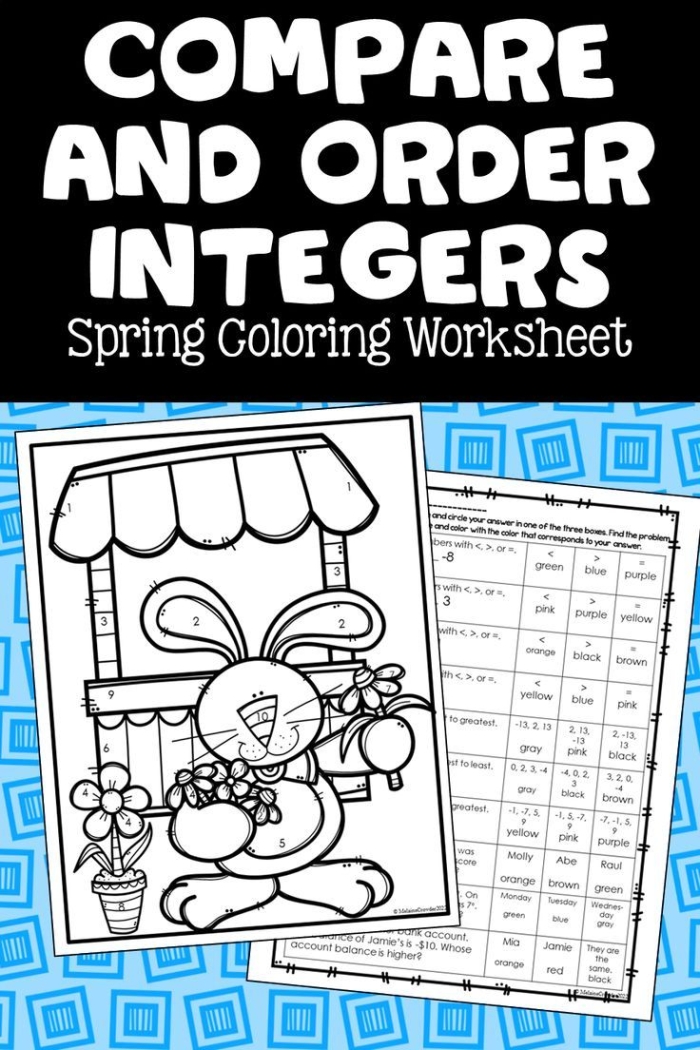
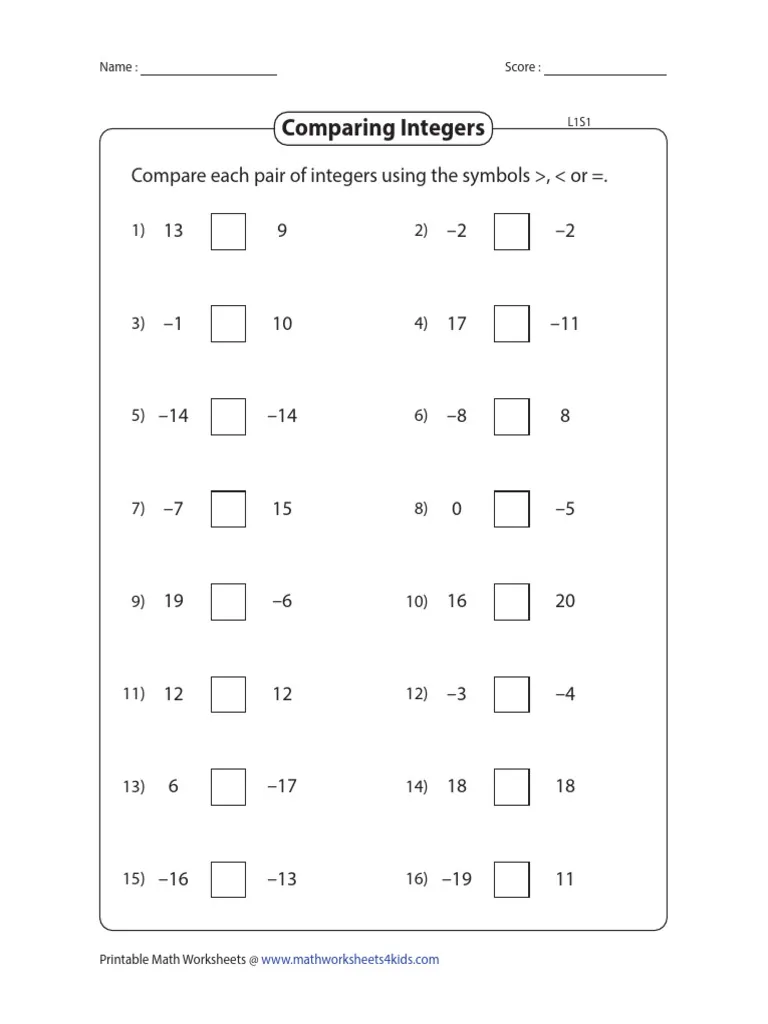
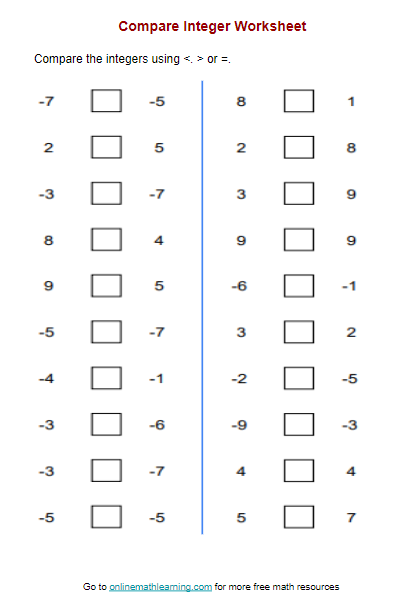
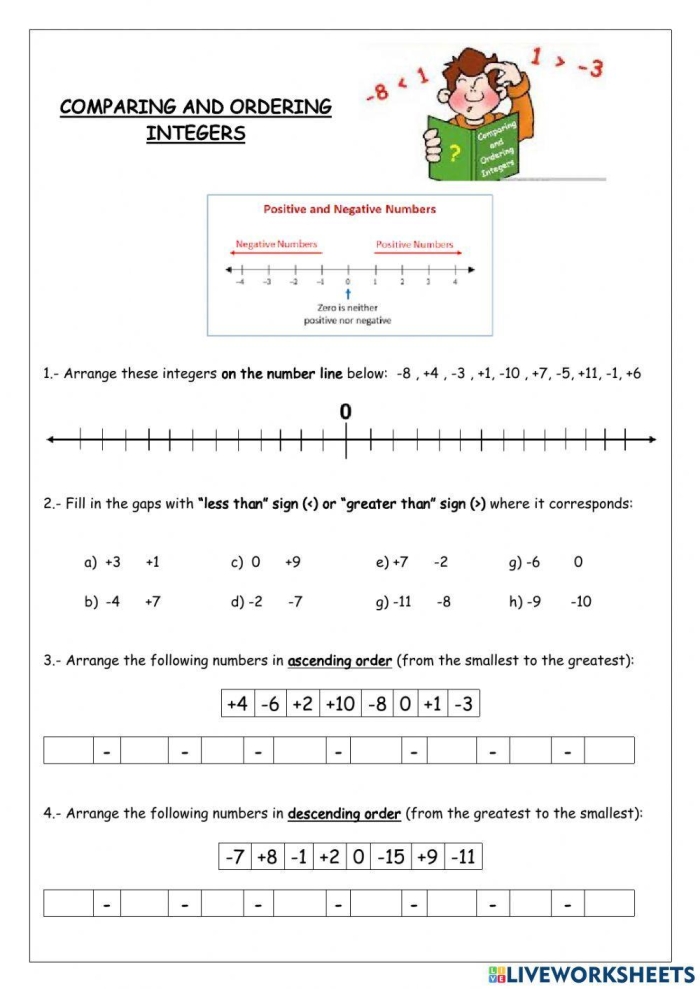
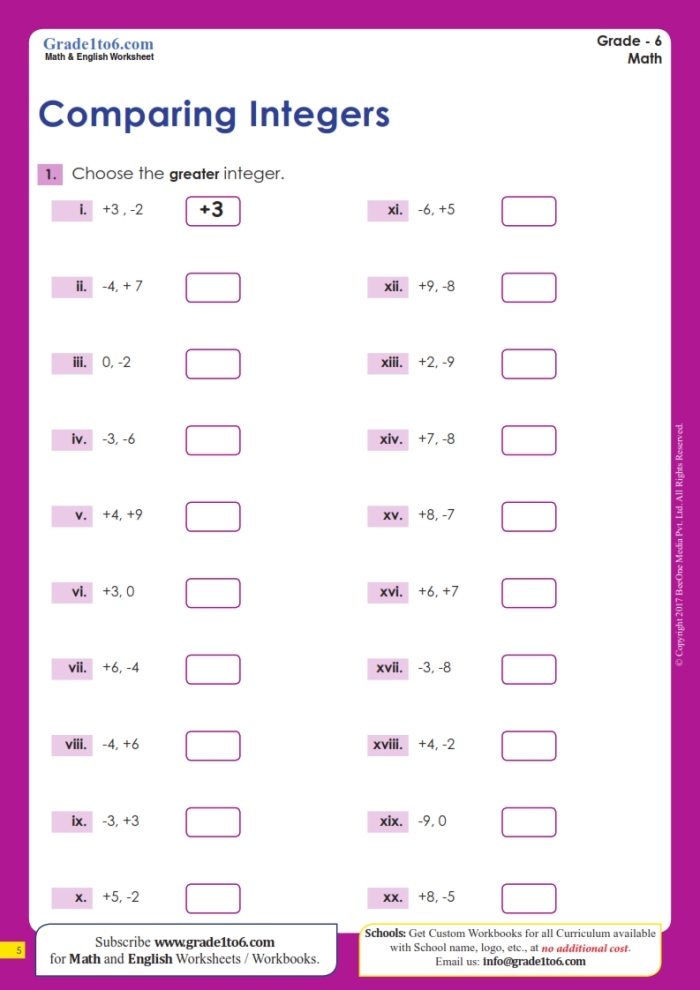
A solid worksheet on comparing and ordering integers addresses this directly. When students work through problems that mix positive numbers, negative numbers, and zero, they build intuition about how these values relate to each other. The repetition helps cement the concept that -10 is less than -3, and that -3 is less than 2. These aren’t arbitrary rules; they’re logical once the number line becomes real to a student.
Sixth grade is the ideal time to introduce this work because students have the cognitive development to handle abstract thinking, but they still benefit from concrete visual representations. Pairing worksheets with number line diagrams makes the invisible visible.
Beyond integer comparison, sixth graders benefit from worksheets that build related skills. Work on collecting data and graphing helps students see how numbers are used in real contexts. Similarly, practice with division and equal groups strengthens overall number sense.
The goal isn’t just to get answers right. It’s to develop the confidence and fluency that makes higher mathematics feel manageable rather than overwhelming.
Boost Skills with These Worksheets