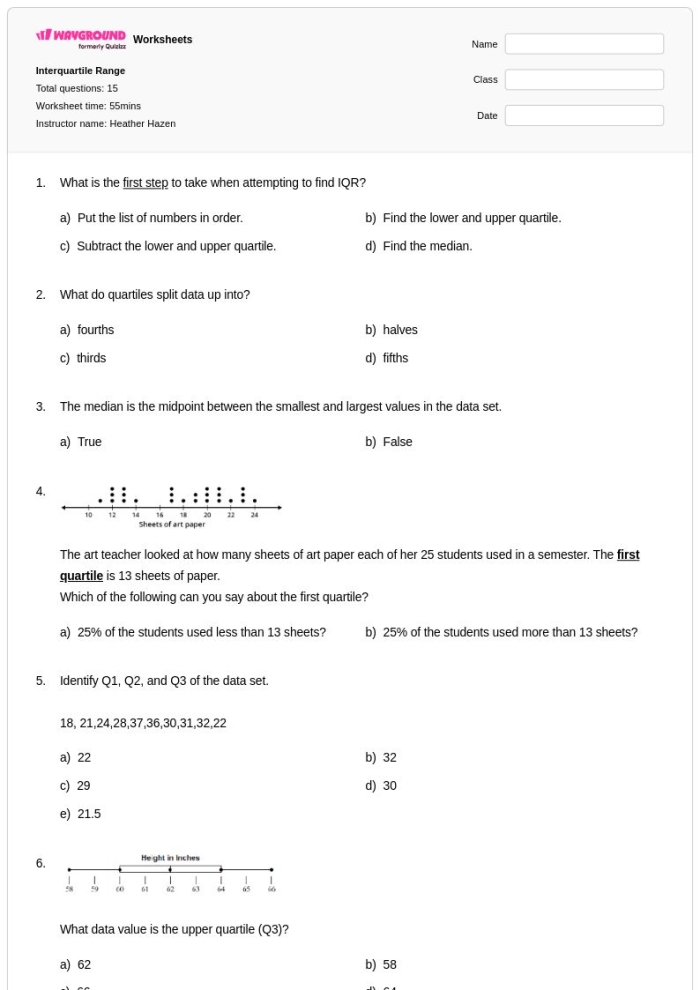
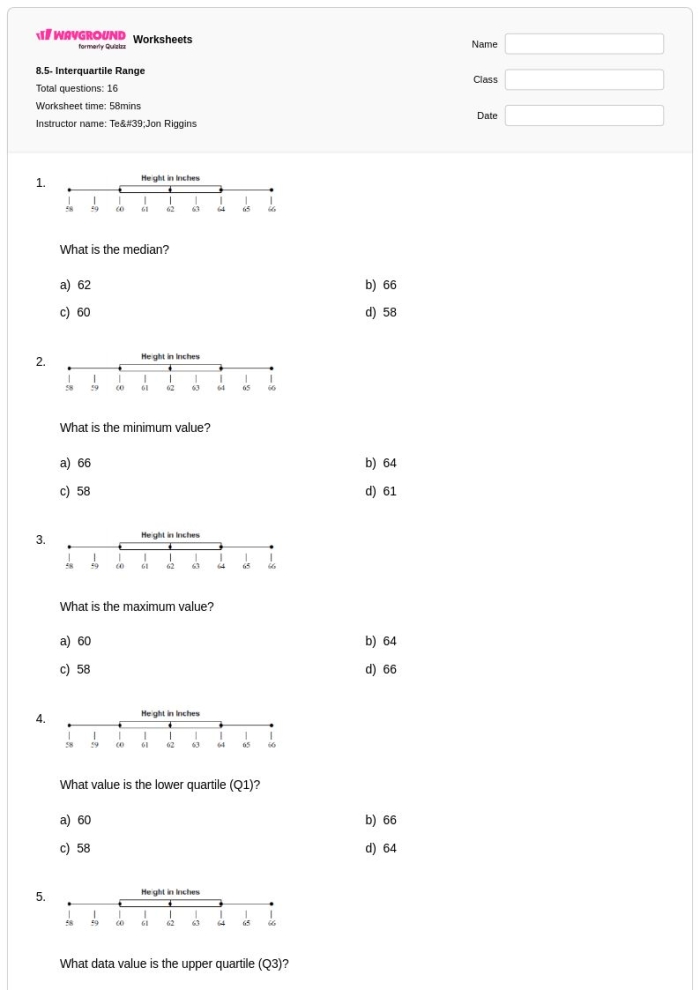
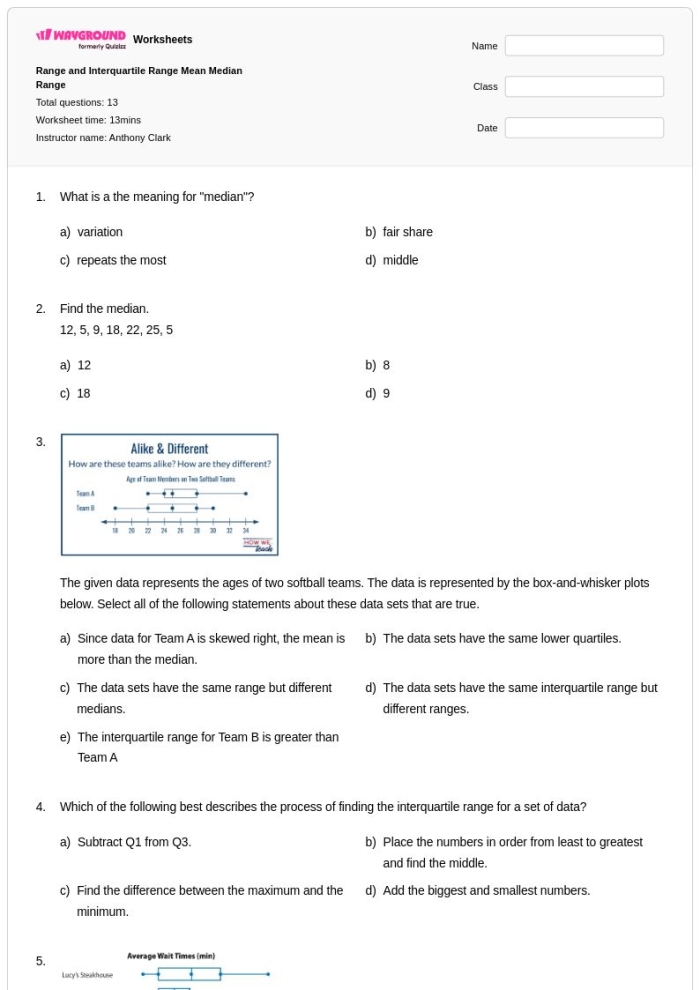
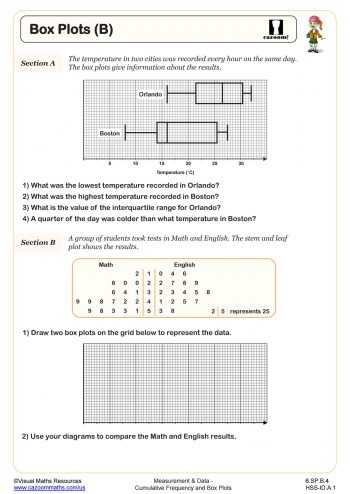
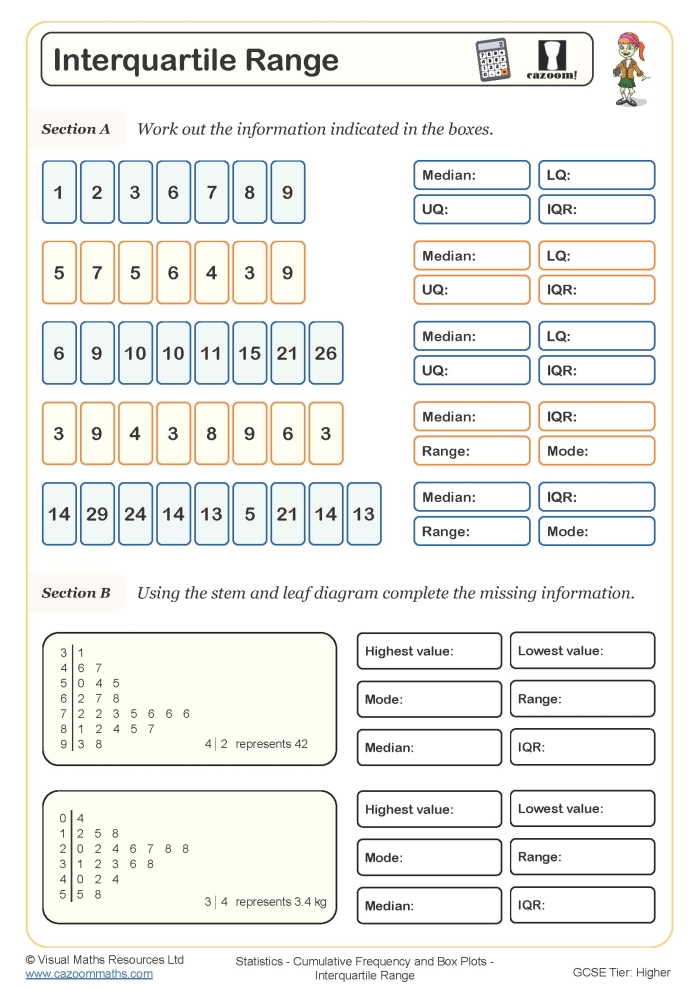
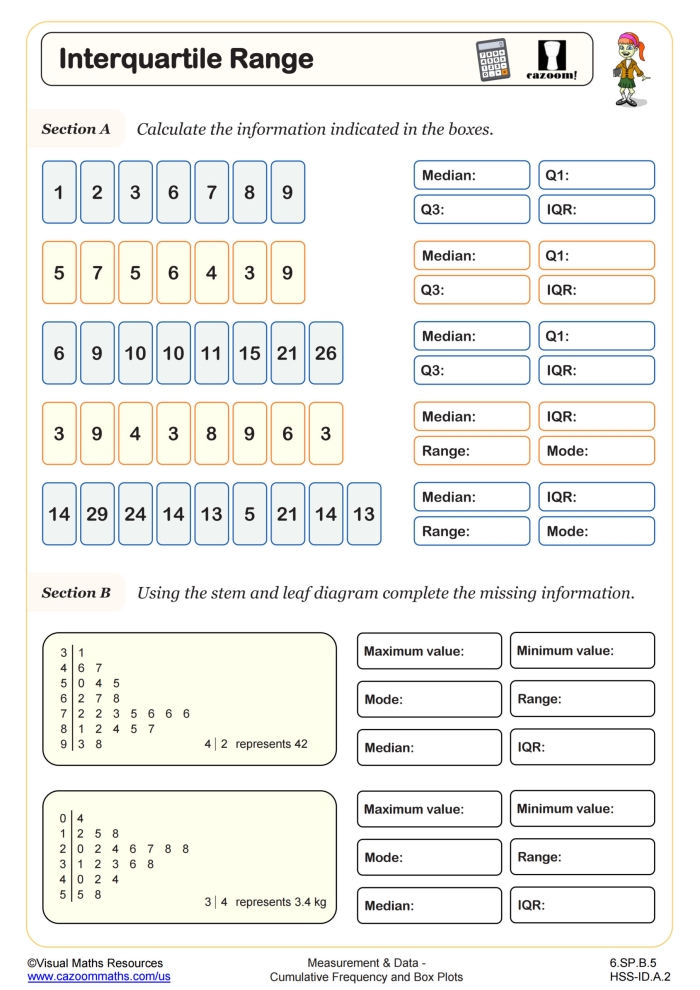
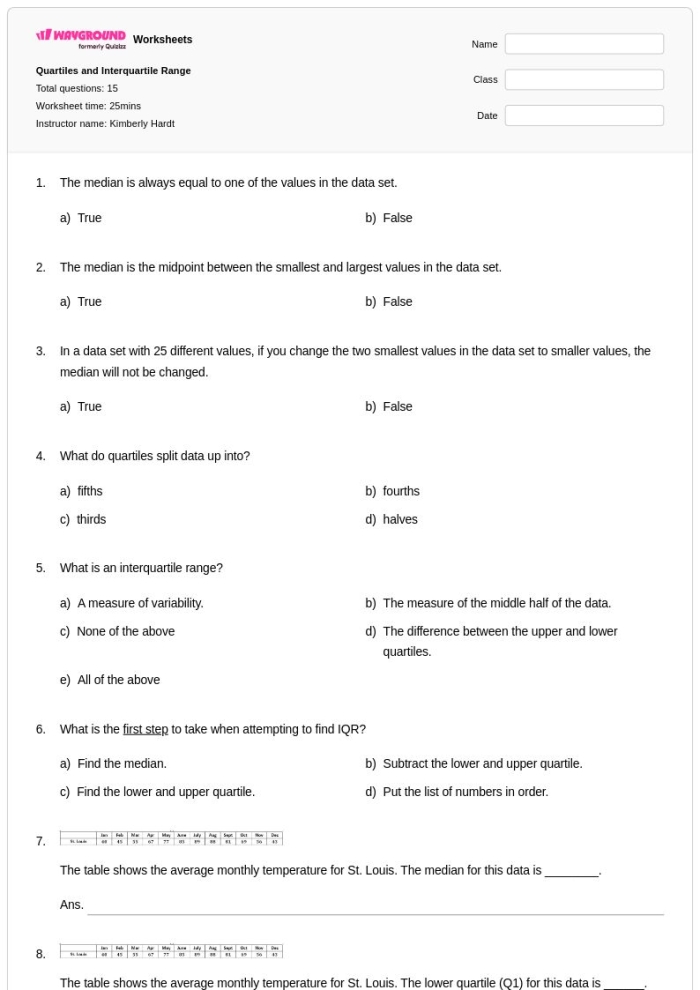
Understanding the interquartile range (IQR) is essential for sixth-grade students as they learn to analyze data sets. The IQR measures the spread of the middle 50% of a data set, helping students grasp the concept of variability in statistics. This concept not only enhances their analytical skills but also prepares them for more advanced mathematical topics in the future.
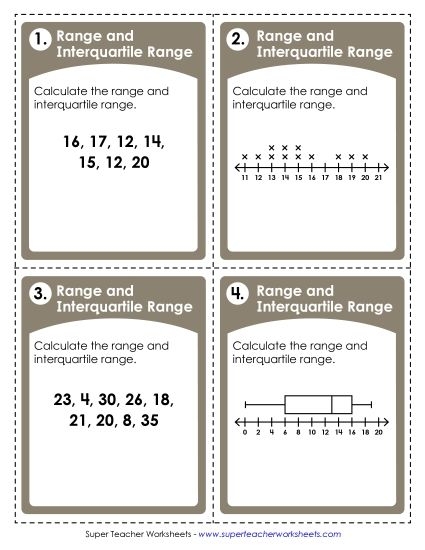
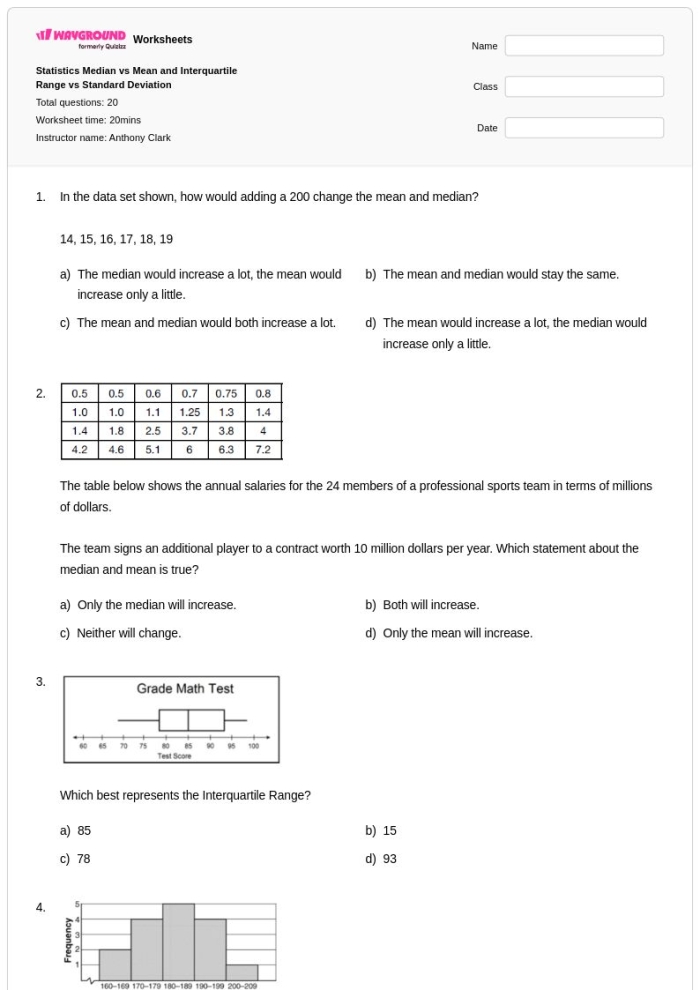
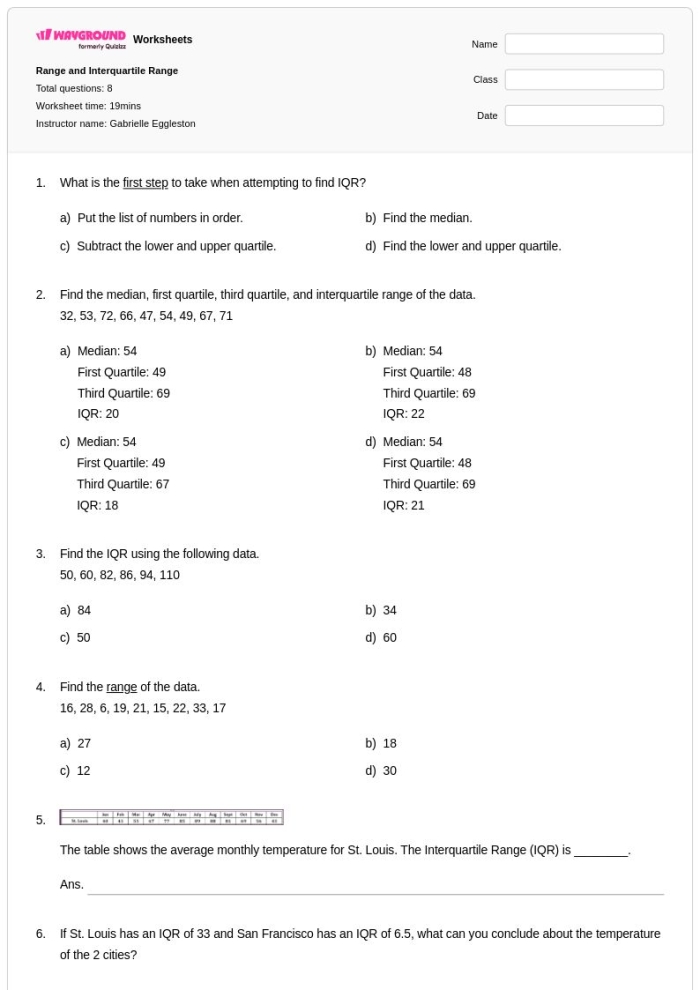
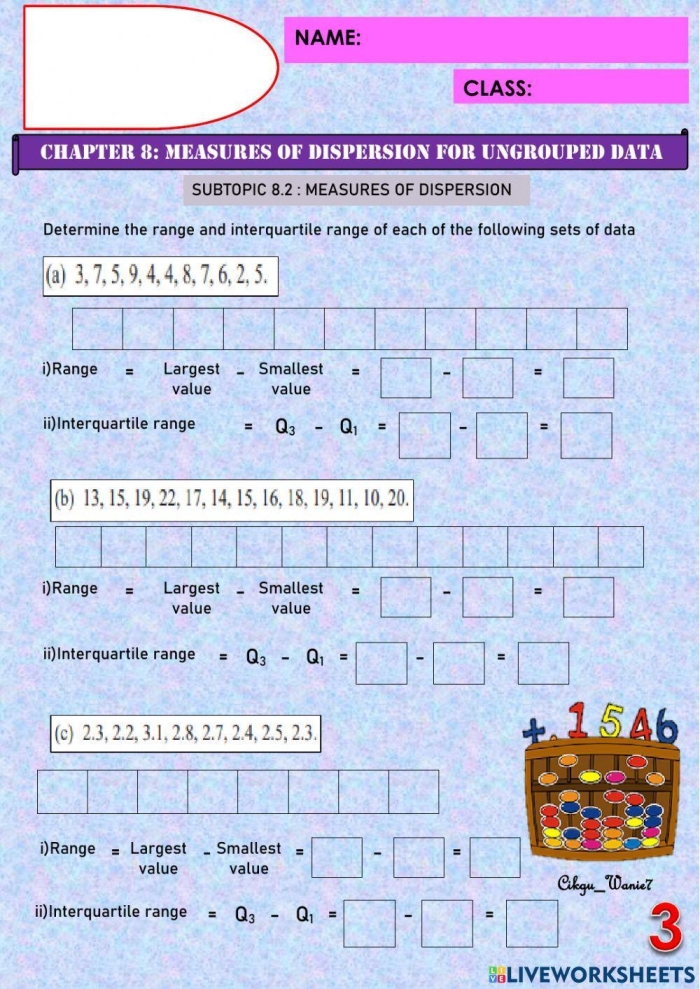
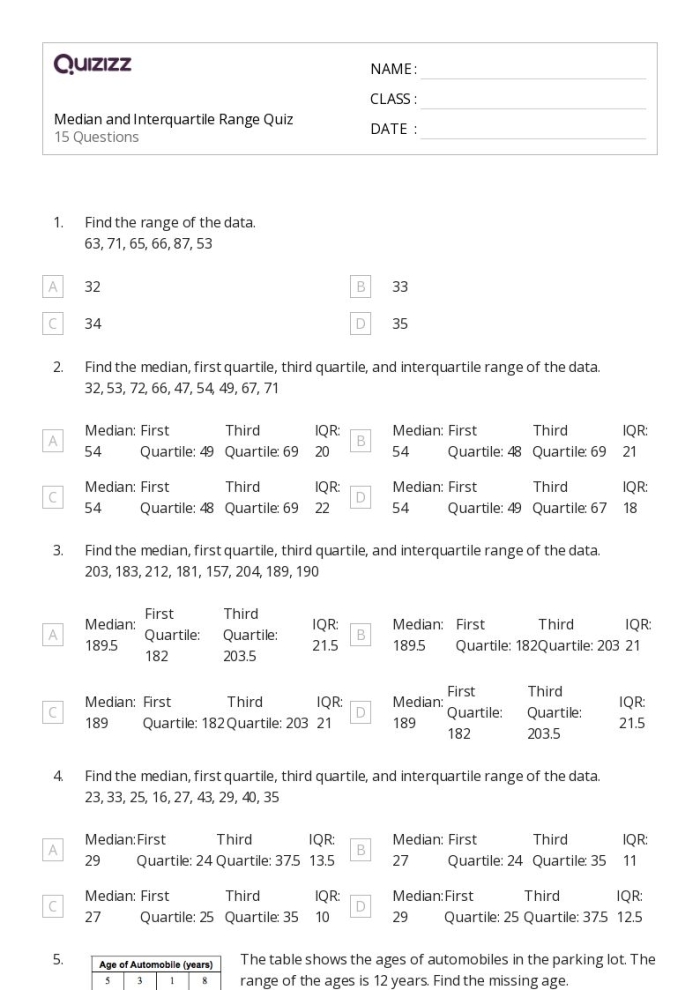
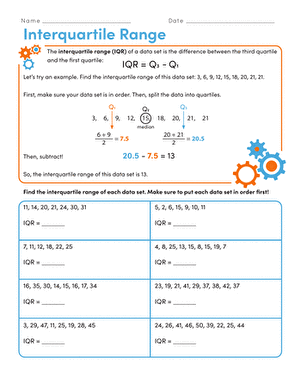
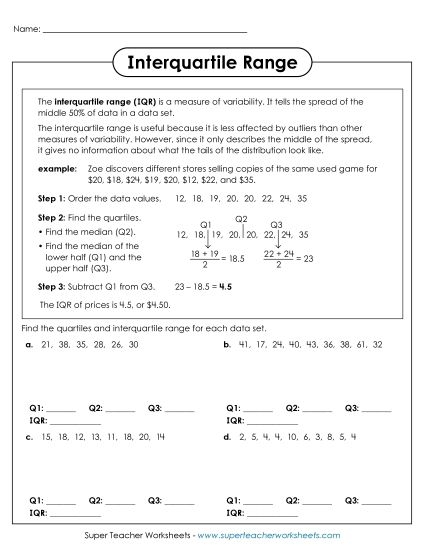
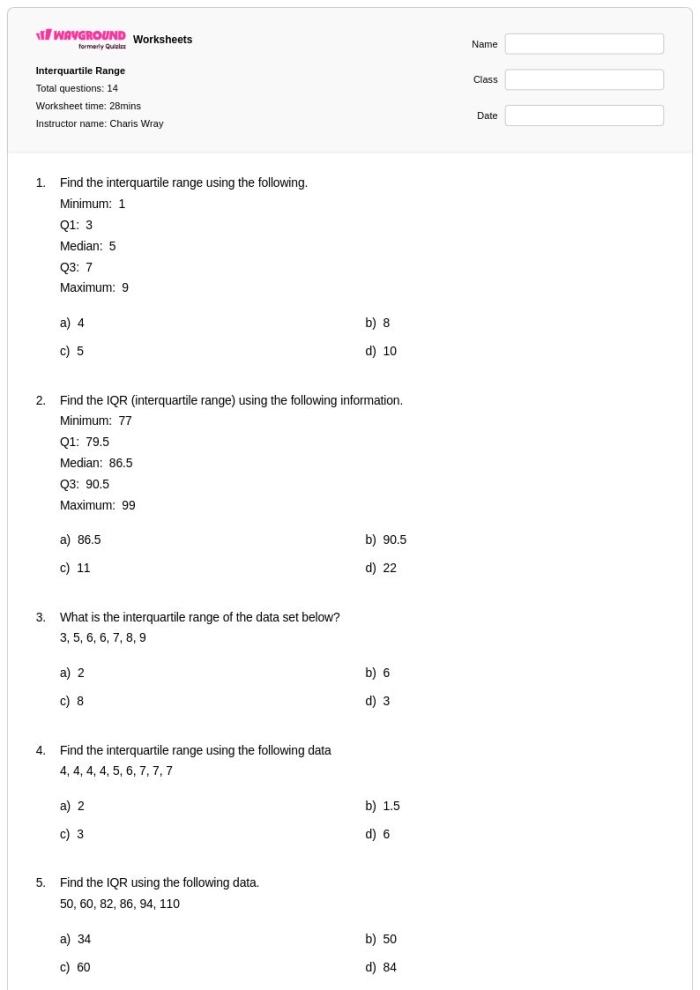
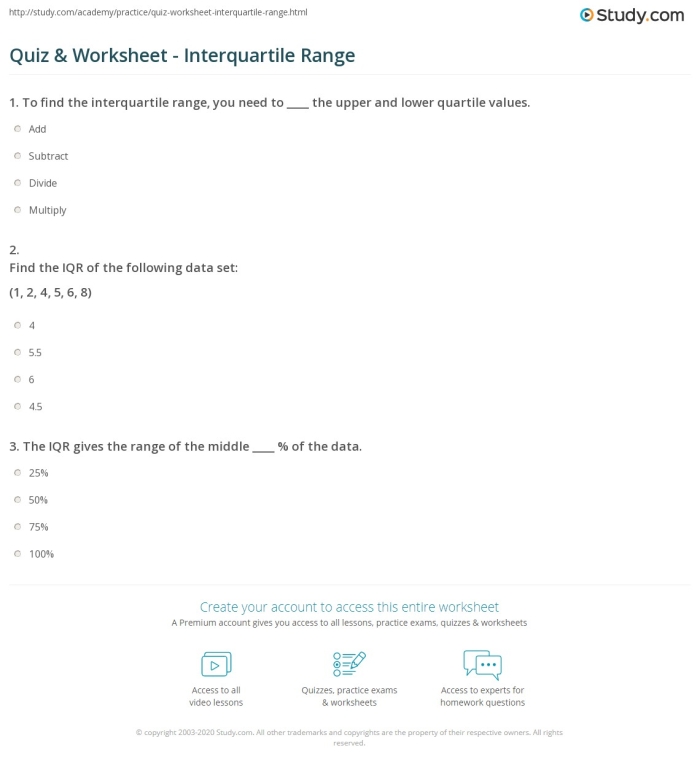
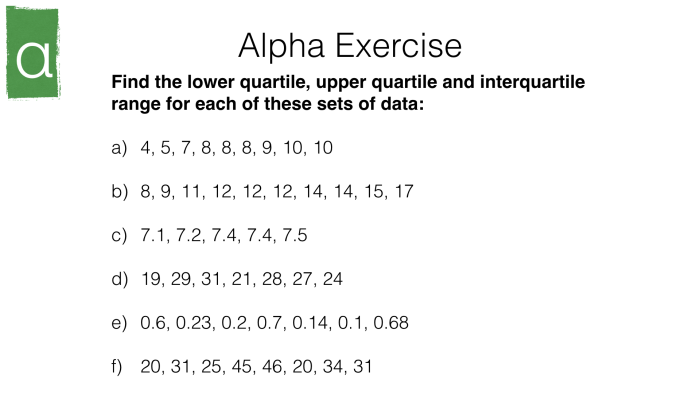
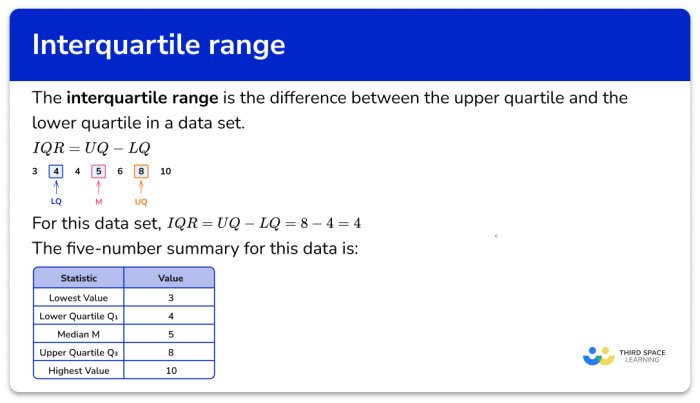
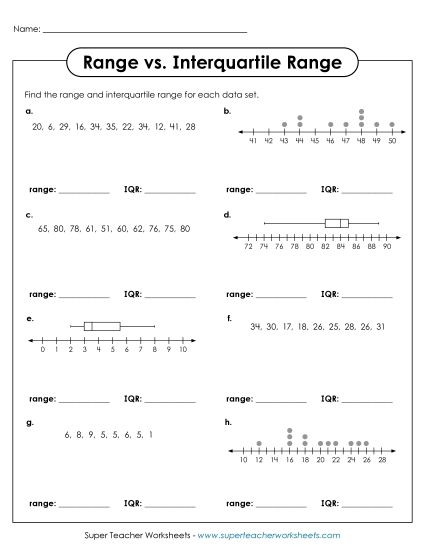
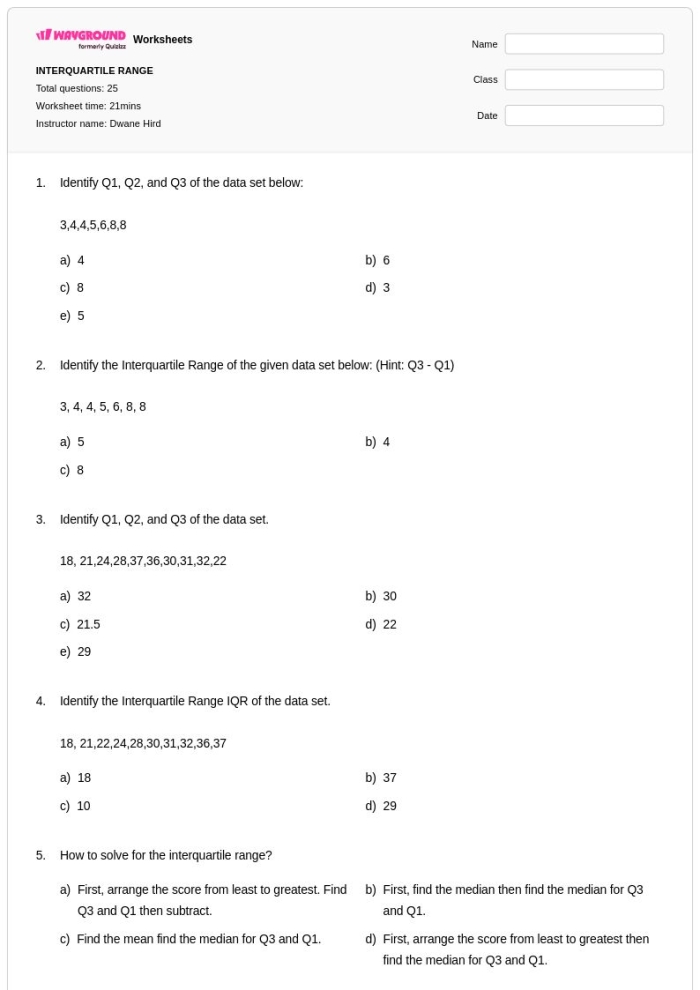
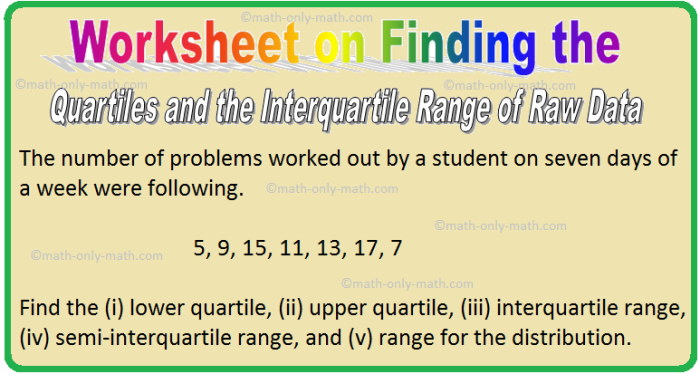
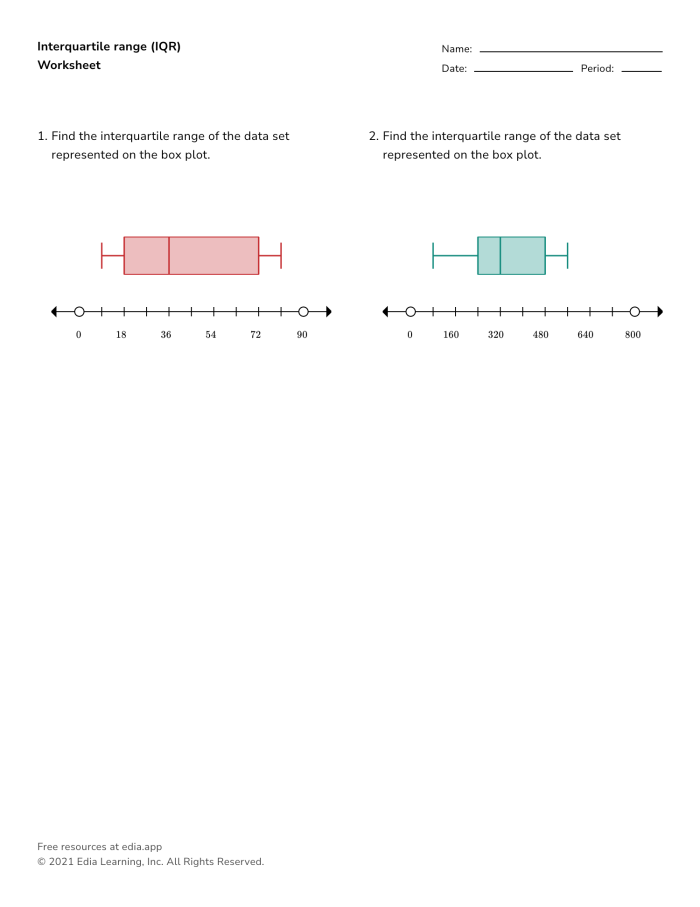
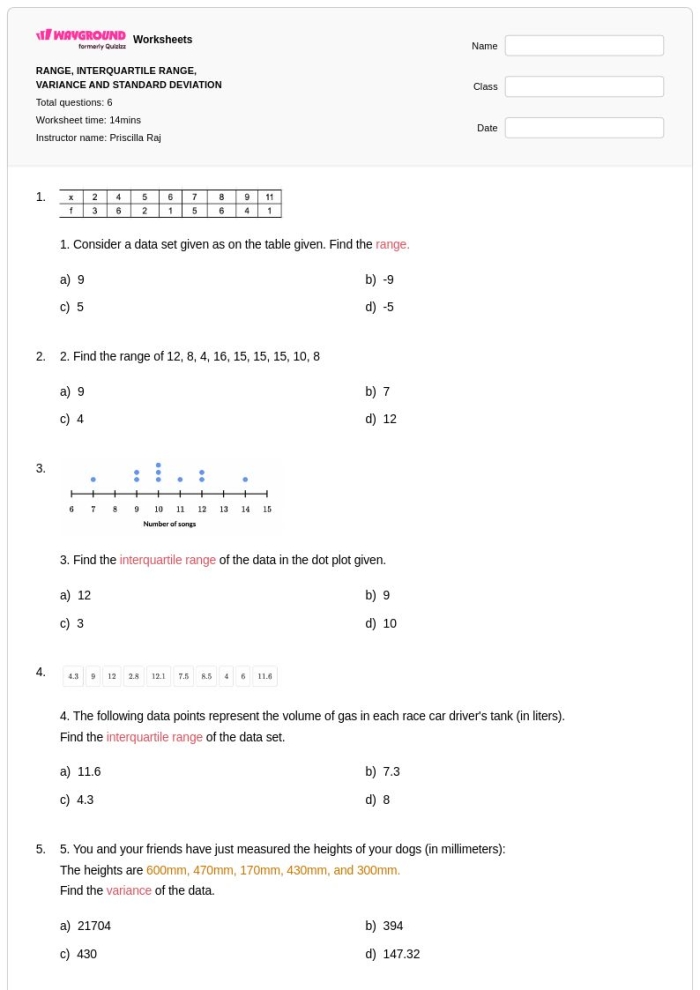
In this sixth-grade statistics worksheet, students will practice finding the interquartile range of various data sets. The process involves identifying the first quartile (Q1), the median (Q2), and the third quartile (Q3). The IQR is then calculated by subtracting Q1 from Q3. This exercise encourages students to engage with the data actively and reinforces their understanding of how to interpret statistical information.
For example, consider a data set of test scores: 70, 75, 80, 85, 90, 95, 100. To find the IQR, students would first arrange the scores in increasing order, which they already have. Next, they determine Q1 (the median of the first half of the data), Q2 (the median), and Q3 (the median of the second half). In this case, the IQR helps students see that the interquartile range is a better measure of spread than simply looking at the highest and lowest scores, as it minimizes the influence of outliers.
These statistics worksheets not only help students practice their math skills but also enhance their reading comprehension as they interpret data-related problems. Engaging with real-world data sets prepares them for practical applications in future academic endeavors. For further reading and practice, students can explore resources like the writing inequalities worksheet and other related materials that build their understanding of mathematical concepts.
By incorporating these lessons into their curriculum, educators can strengthen students’ data literacy, which is a vital skill in today’s data-driven world.
Hands-On Worksheet Activities