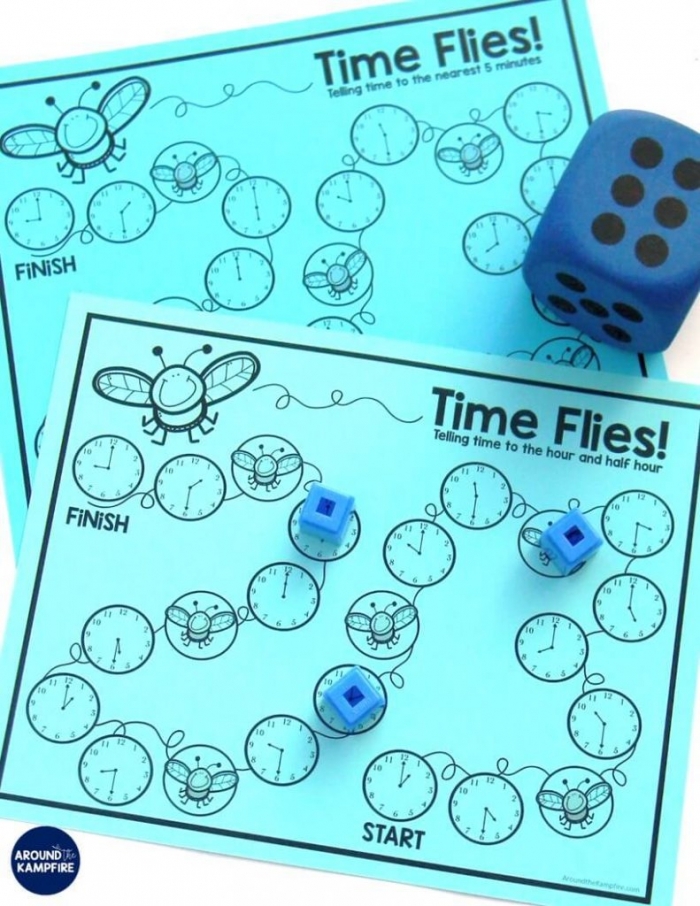
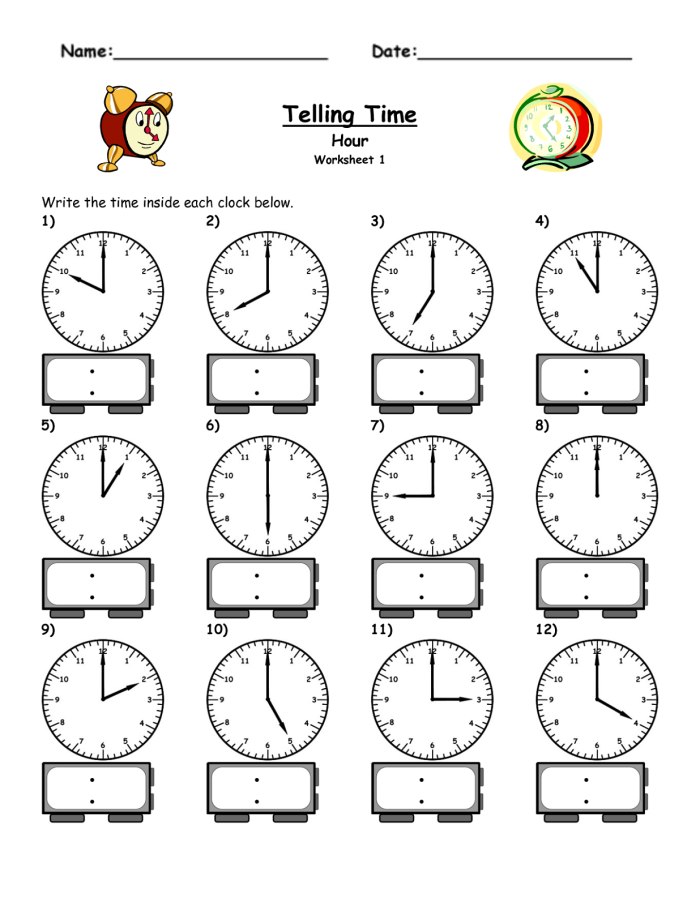
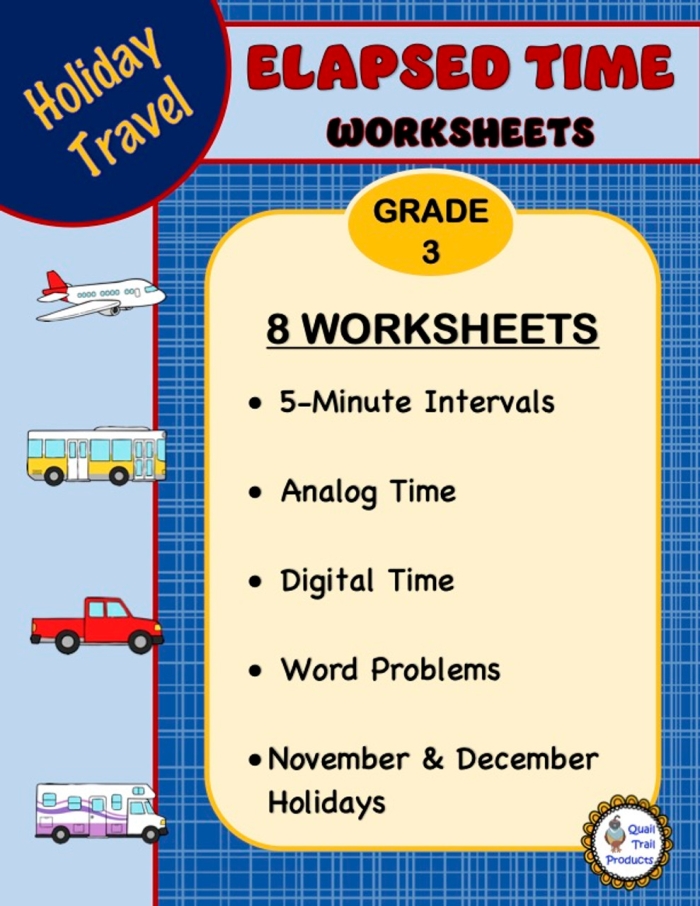
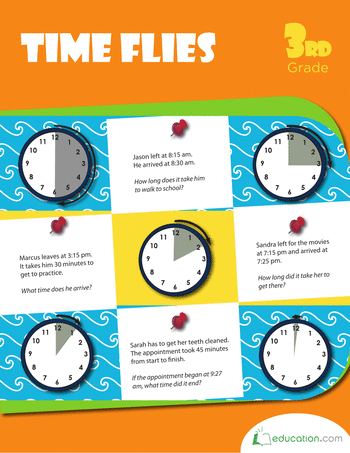
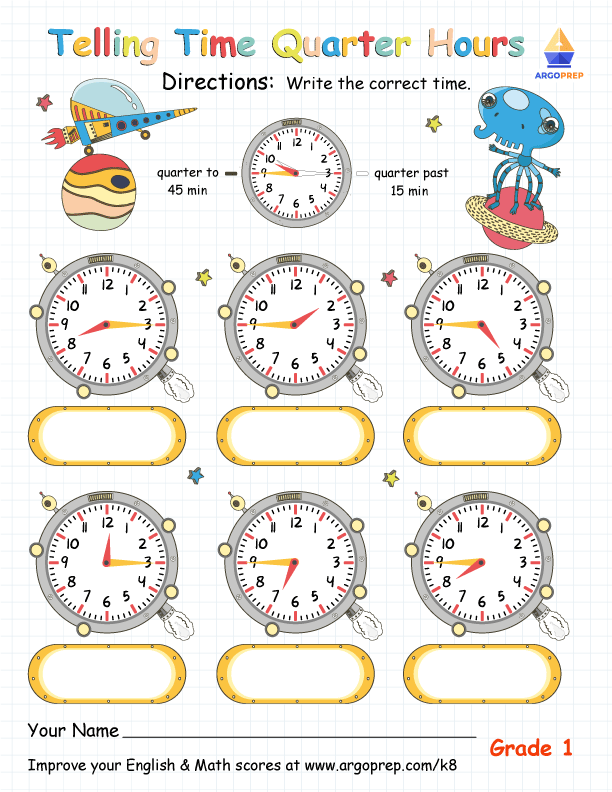
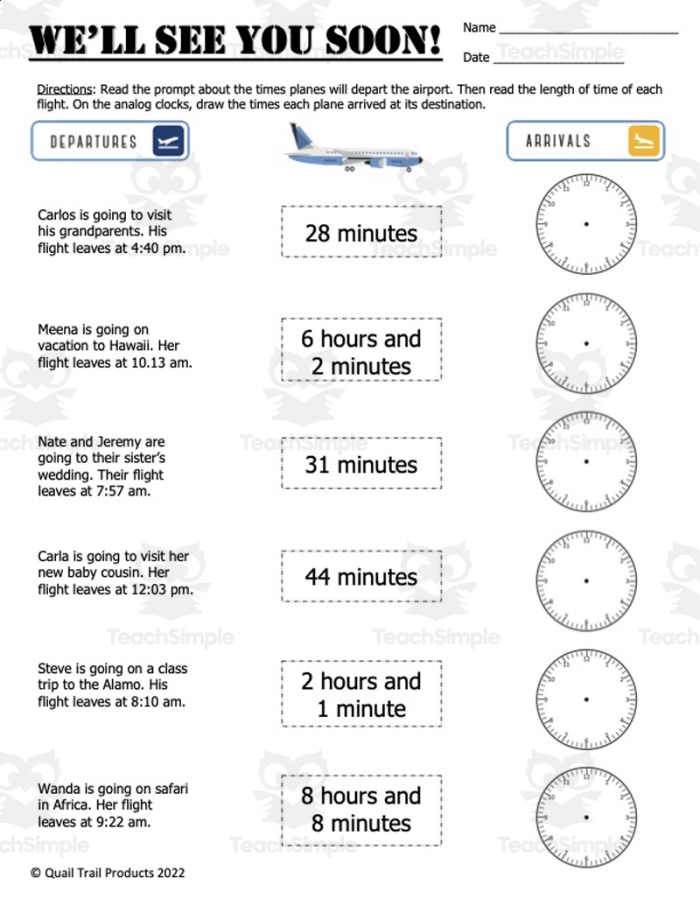
Telling time becomes concrete and manageable when third graders work through the Time Flies! worksheet. This activity strips away the confusion by giving kids a visual reference point, then asking them to figure out how much time has actually passed between two clock positions. It’s the kind of practice that transforms clock-reading from an abstract skill into something they can calculate themselves.
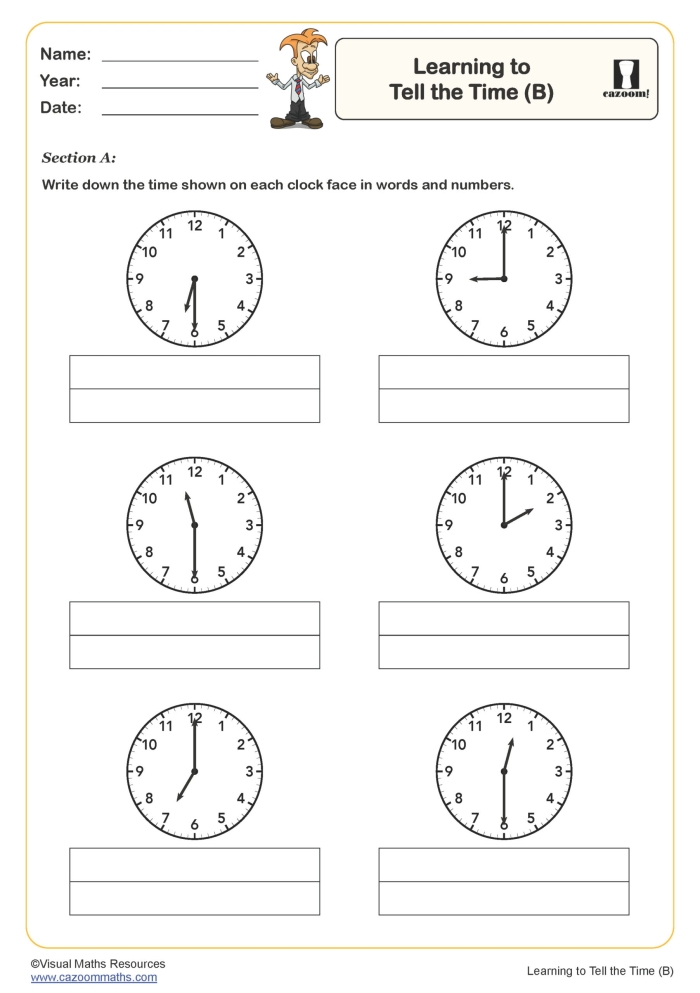
The worksheet works by presenting two clocks. One shows a starting time, the other shows an ending time. Your child looks at both, then writes down the elapsed time. The pictured clock serves as a constant reference, so they can check their understanding without getting lost in the mechanics of reading the hands. This approach builds confidence because kids see the problem clearly laid out rather than having to imagine time passing in their heads.
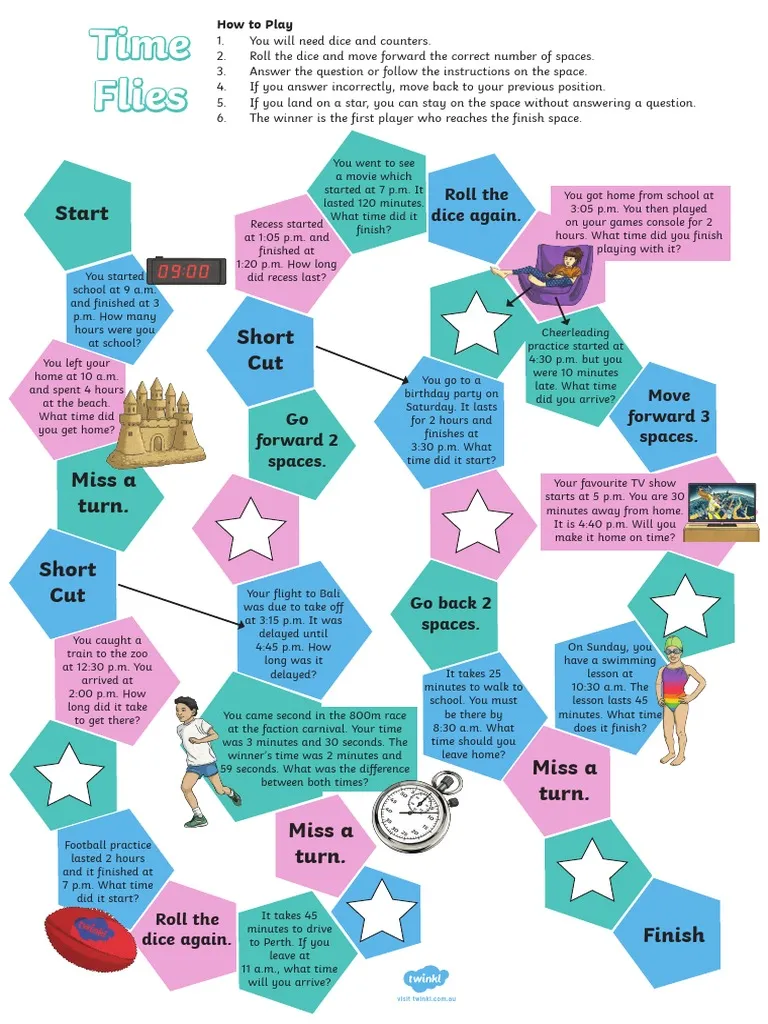
What makes this tool effective for third grade time and money instruction is that it avoids jumping straight to word problems. Instead, it isolates the skill of calculating elapsed time, which is foundational before kids tackle more complex scenarios. Once they’re comfortable here, they can move into real-world applications like figuring out how long recess lasts or how much time remains before lunch.
The repetition matters too. Working through multiple elapsed time problems in one session helps the pattern stick. Kids start recognizing that they’re counting forward from one time to another, whether that’s by five-minute intervals or by the hour. This same systematic thinking applies when they work on other math skills, like three-digit subtraction with regrouping, where breaking down the problem into manageable pieces is equally important.
Pairing this worksheet with clock-based activities throughout the day reinforces the learning. When your child notices actual time passing during their routine, they’re connecting the worksheet practice to real life. That connection is what makes the skill stick long-term.
Boost Skills with These Worksheets