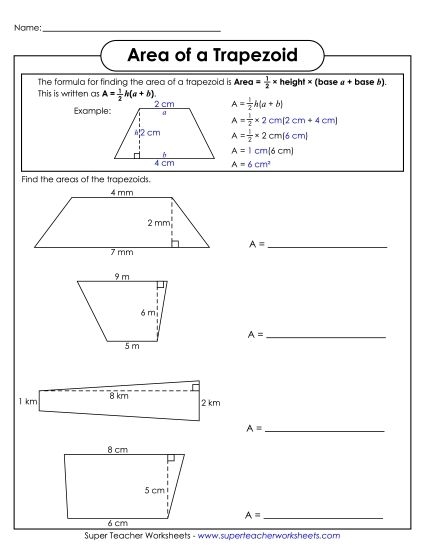
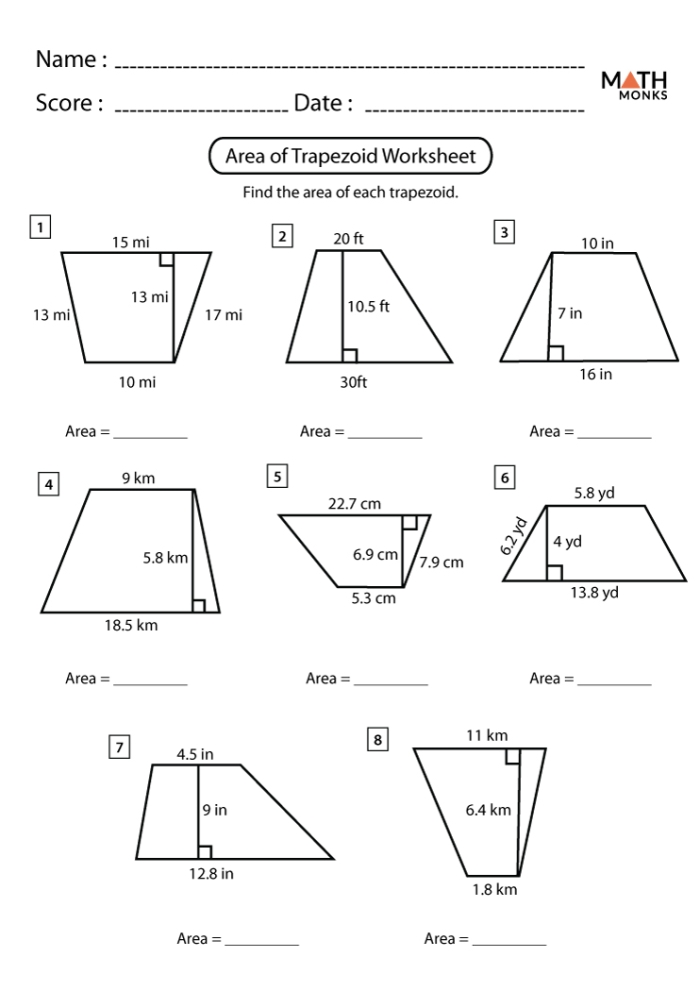
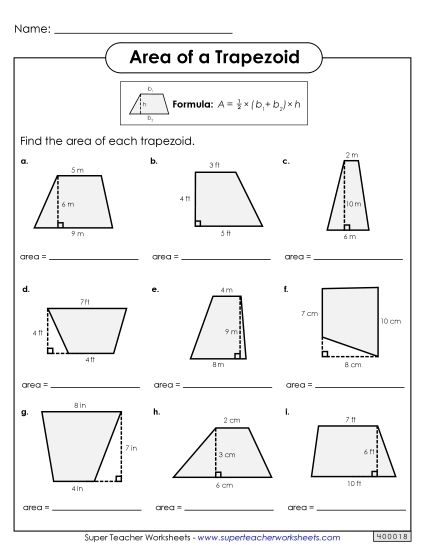
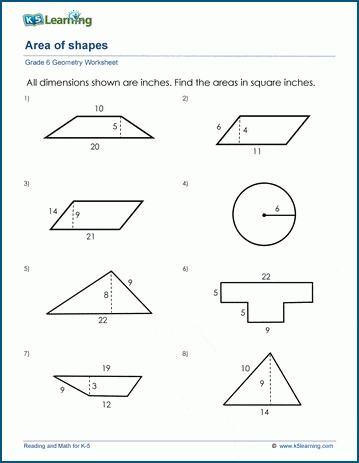
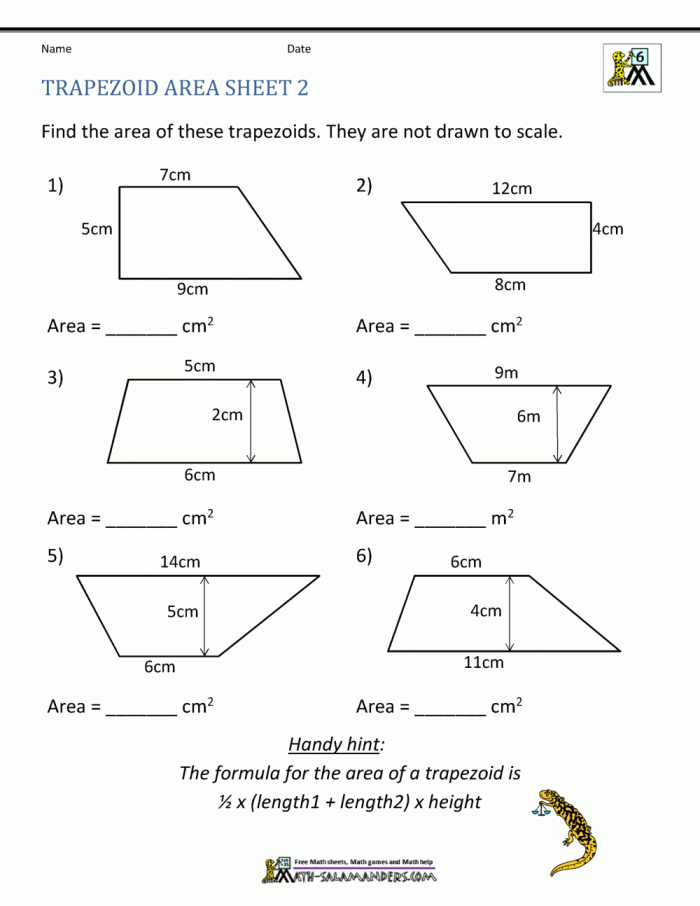
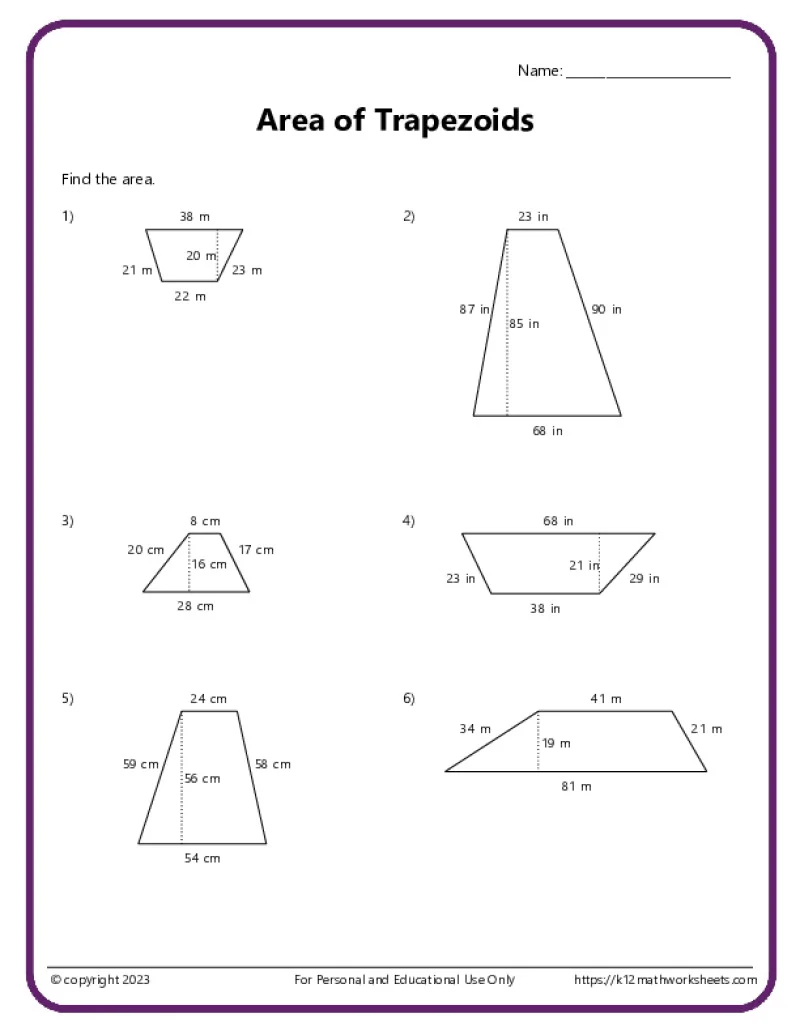
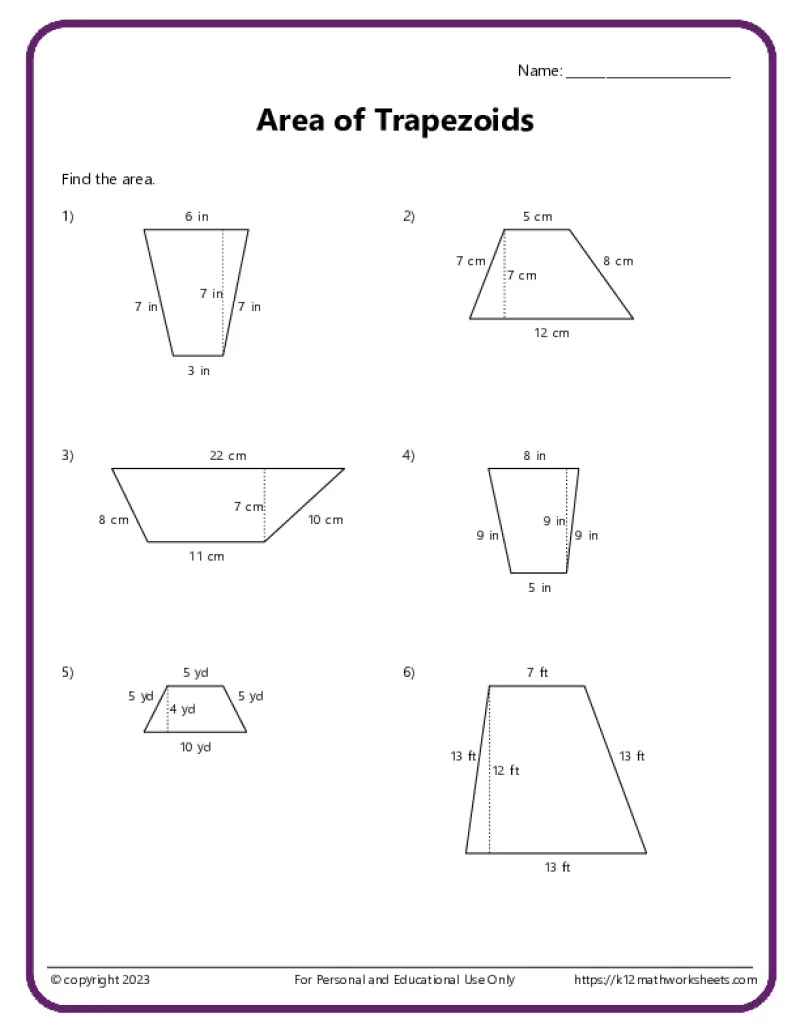
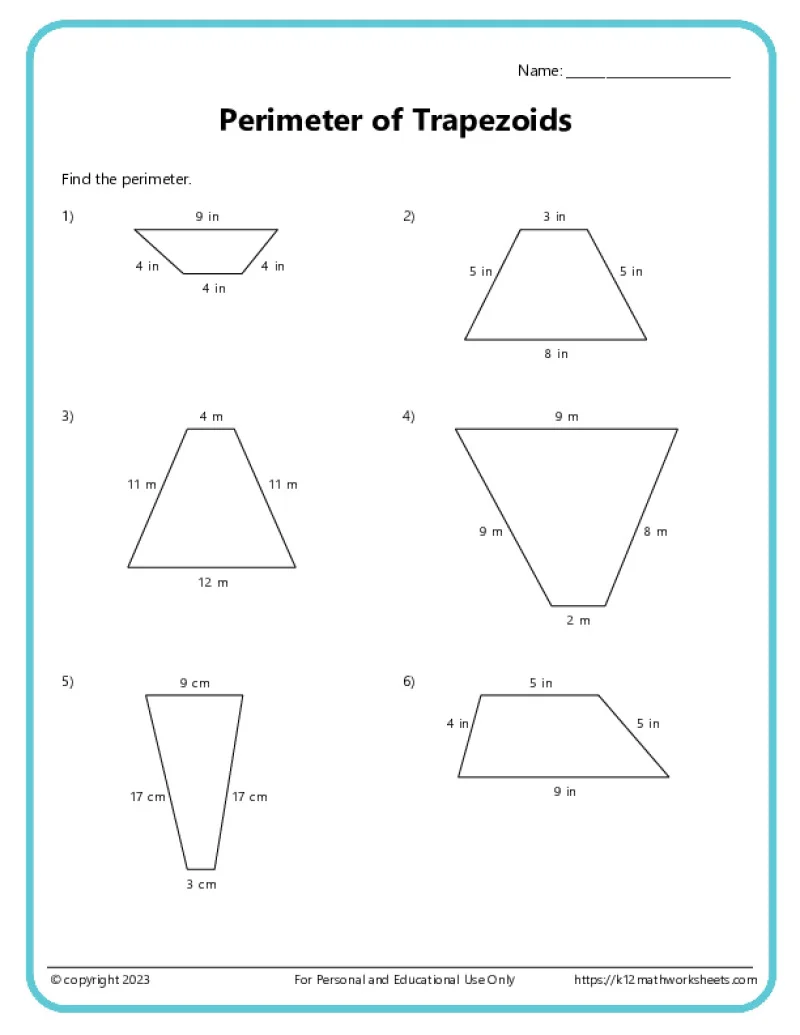
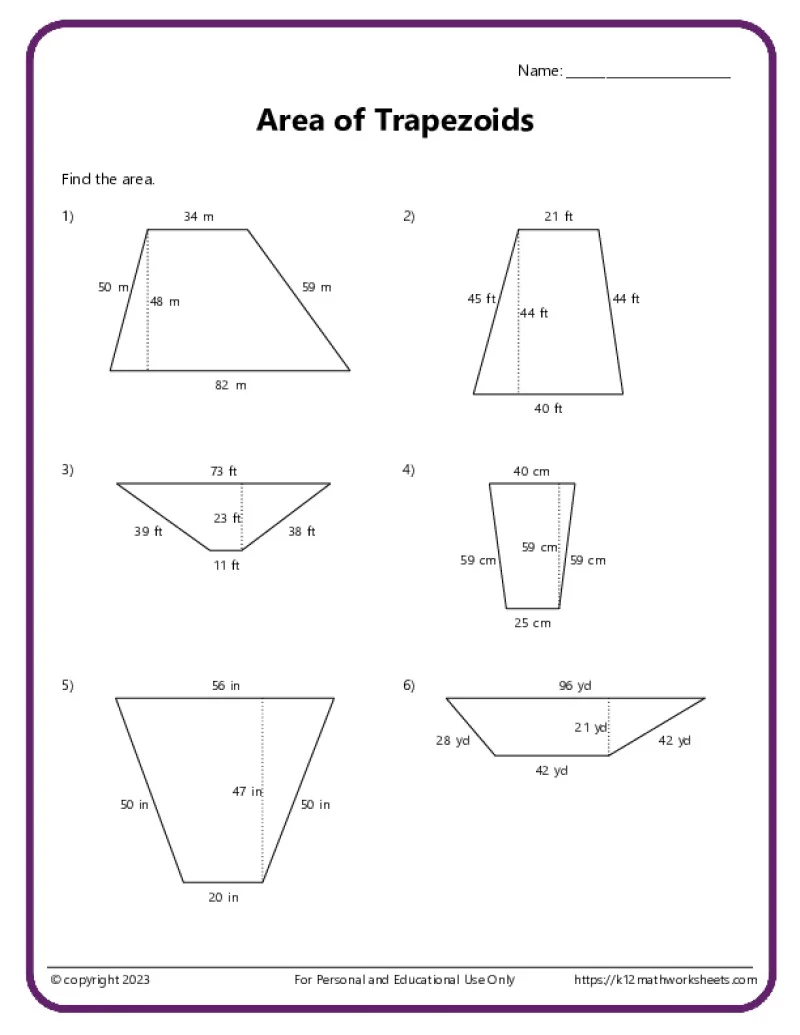
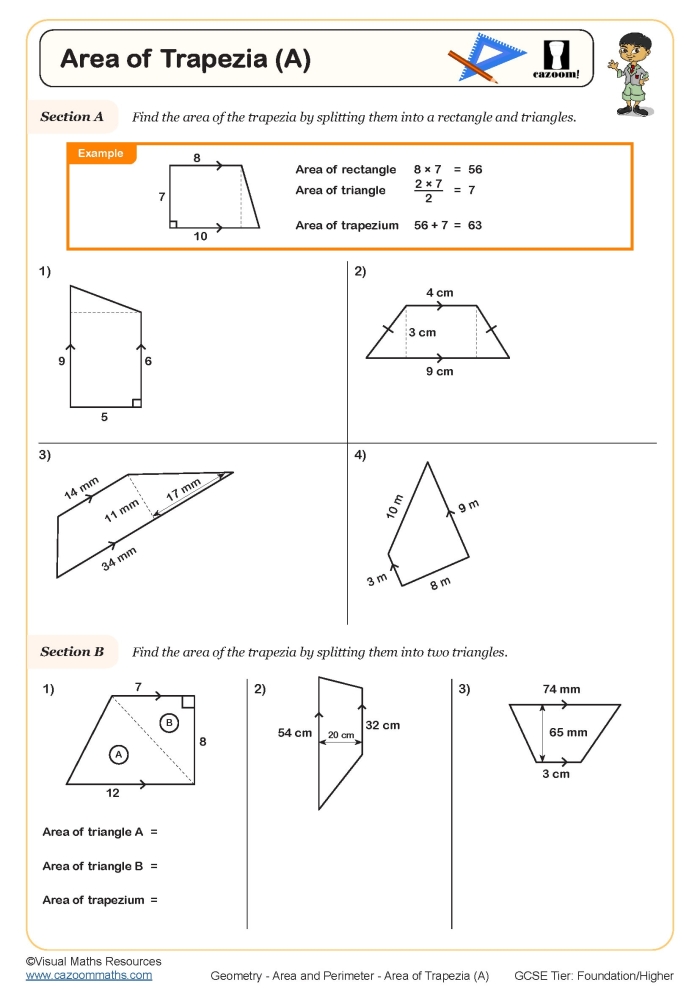
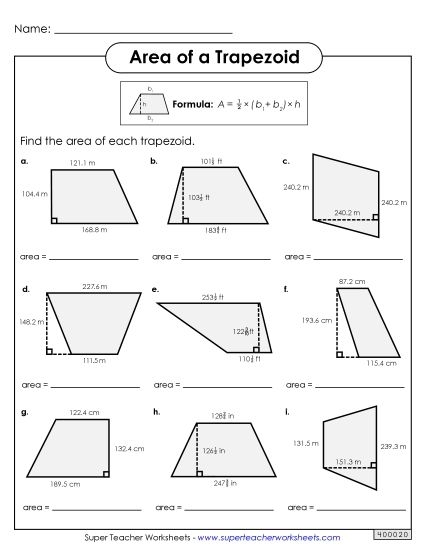
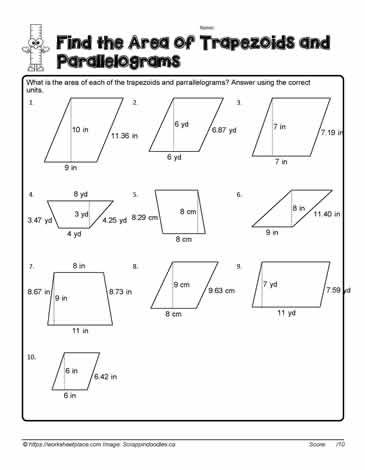
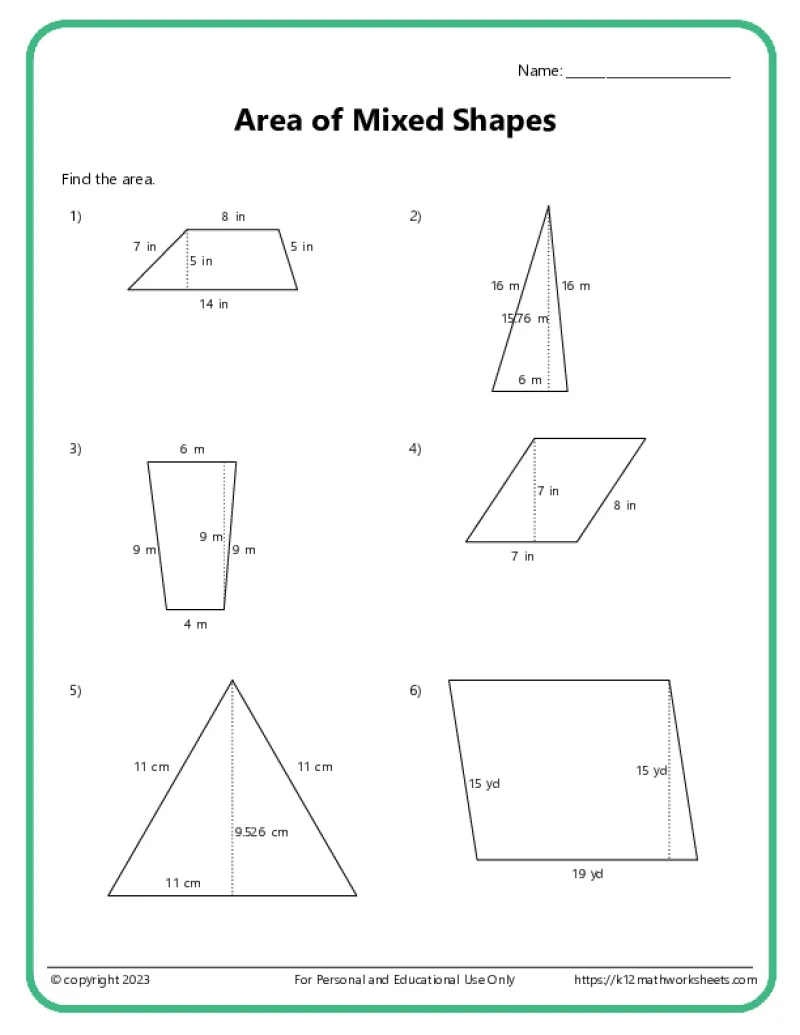
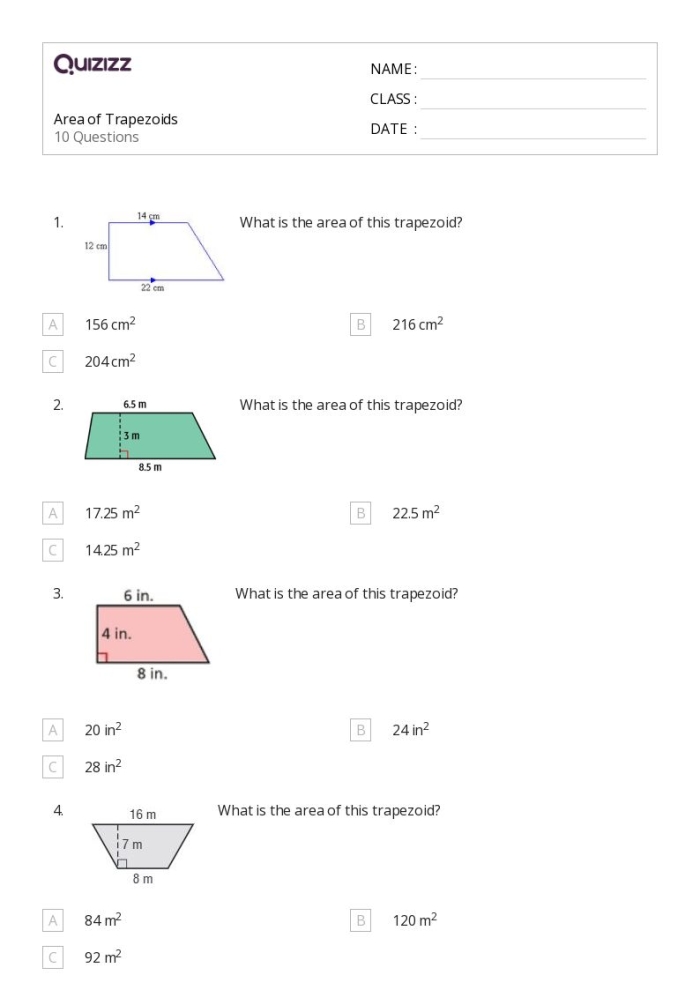
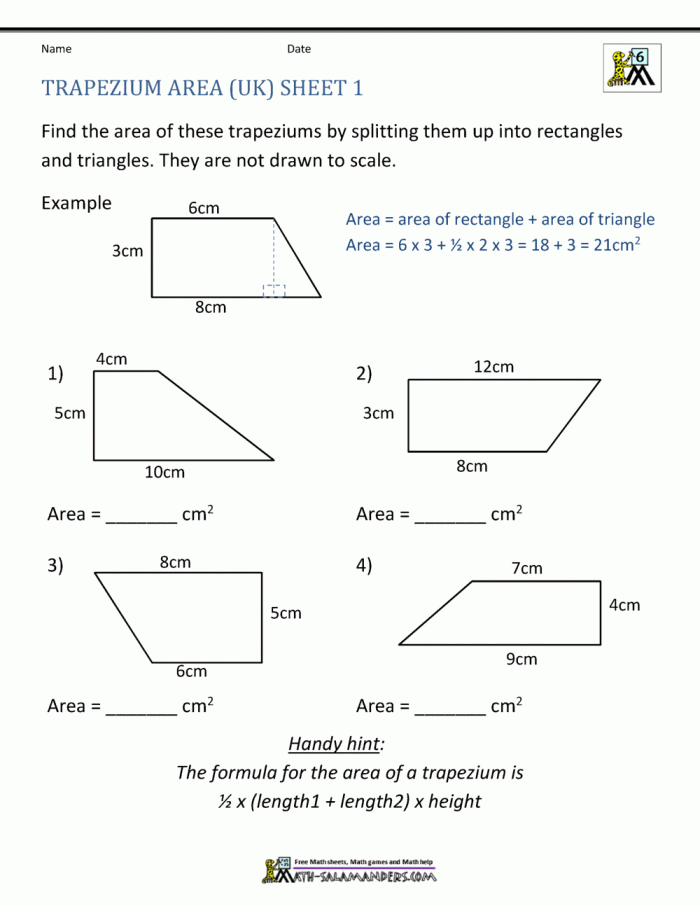
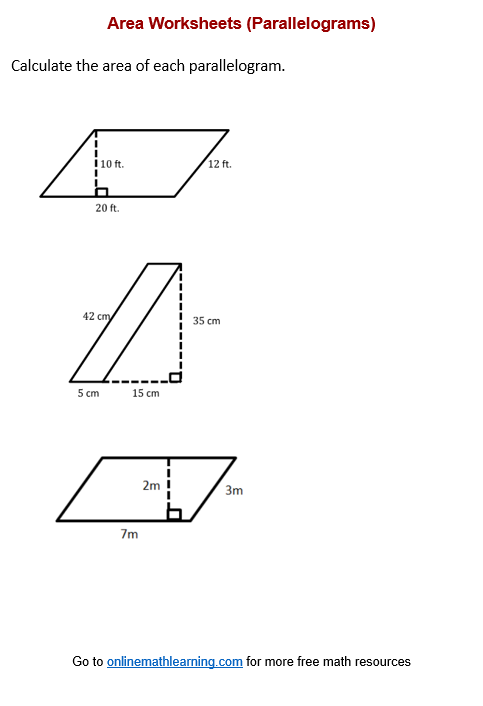
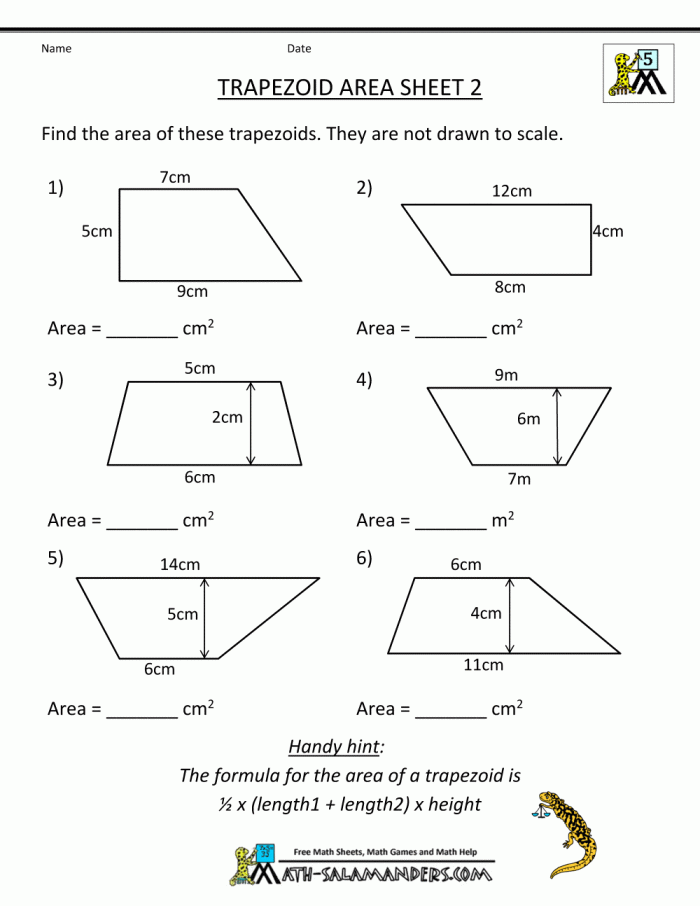
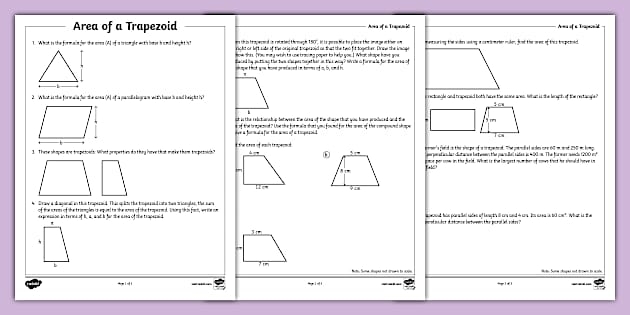
Trapezoids trip up a lot of sixth grade students, mostly because the shape looks irregular compared to rectangles and triangles. The formula itself isn’t complicated, but applying it requires understanding why we multiply the sum of parallel bases by the height and divide by two. When students practice with a focused worksheet, they move past confusion and start recognizing the pattern in different trapezoid orientations.
A simple geometry worksheet dedicated to trapezoid area builds confidence through repetition and immediate feedback. Each problem reinforces the same core steps: identify the two parallel bases, measure the height (the perpendicular distance between them), apply the formula A = (b₁ + b₂) × h ÷ 2, and solve. By working through multiple examples, learners internalize the process rather than memorizing it blindly.
The worksheet format works well because it isolates this single concept. Unlike a mixed-review page where students jump between different shapes and formulas, a dedicated trapezoid worksheet lets them build momentum. They see their own progress as they complete each problem correctly, which directly strengthens their confidence.
Sixth grade is the right time to introduce this skill. Students have already mastered basic area calculations and understand coordinate systems. They’re also developing the spatial reasoning needed to visualize height as distinct from the slanted sides of a trapezoid. When grammar and mechanics practice gets tedious, switching to geometry worksheets like this one keeps learning balanced across subjects.
Teachers often pair trapezoid practice with related skills. Some students benefit from working on algebraic expressions to understand how formulas translate into variables. Others strengthen their foundation by reviewing comparing and ordering numbers before tackling multi-step calculations.
A well-designed trapezoid worksheet removes barriers to success. Clear diagrams, reasonable problem difficulty, and space for showing work all contribute to an experience where students feel capable rather than overwhelmed. That shift from uncertainty to confidence marks real learning.
Try These Printable Worksheets