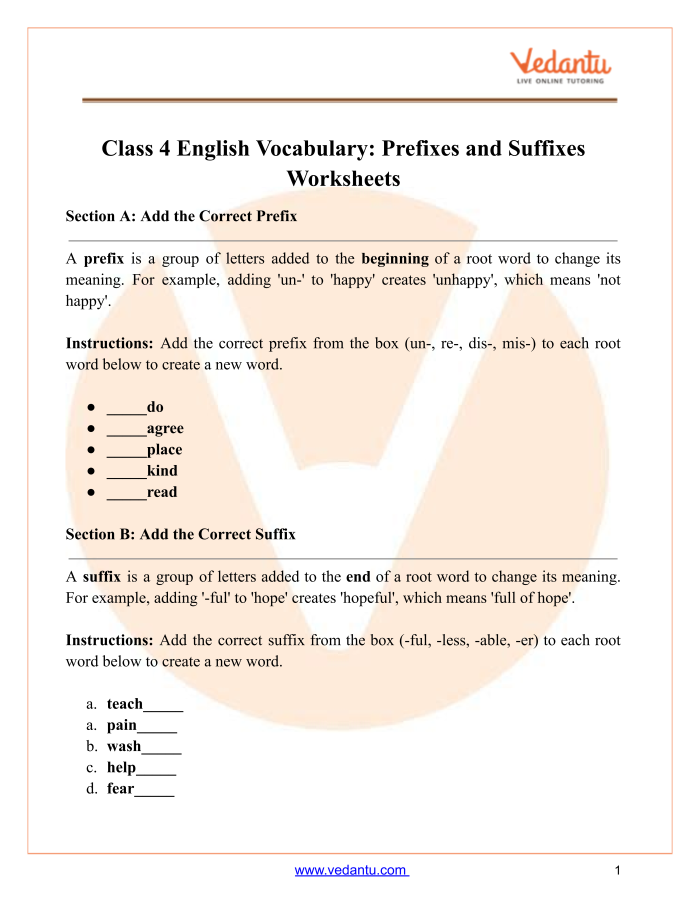
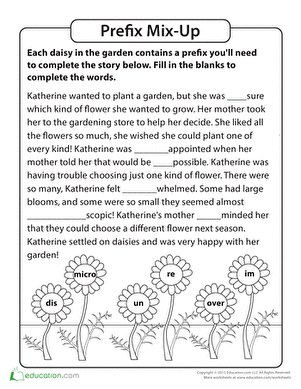
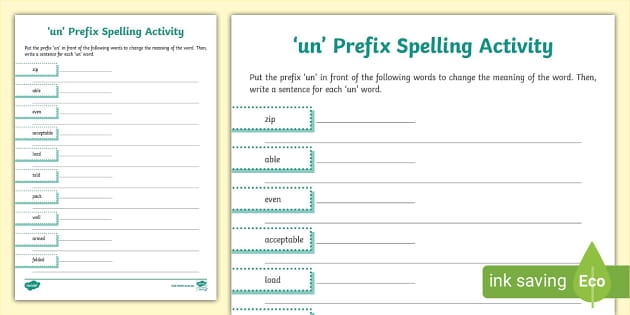
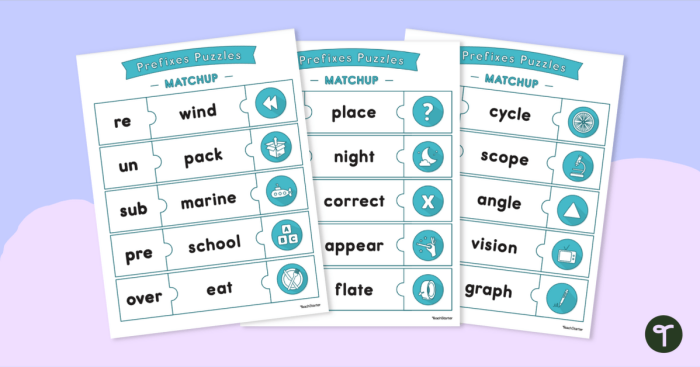
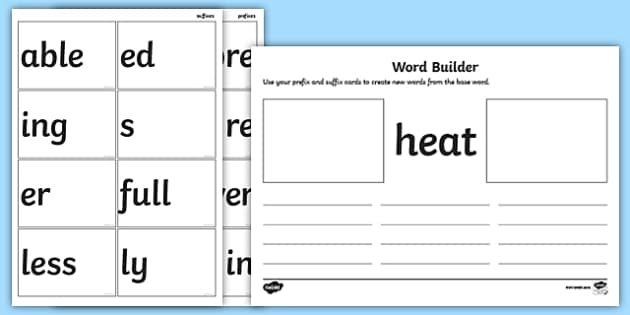
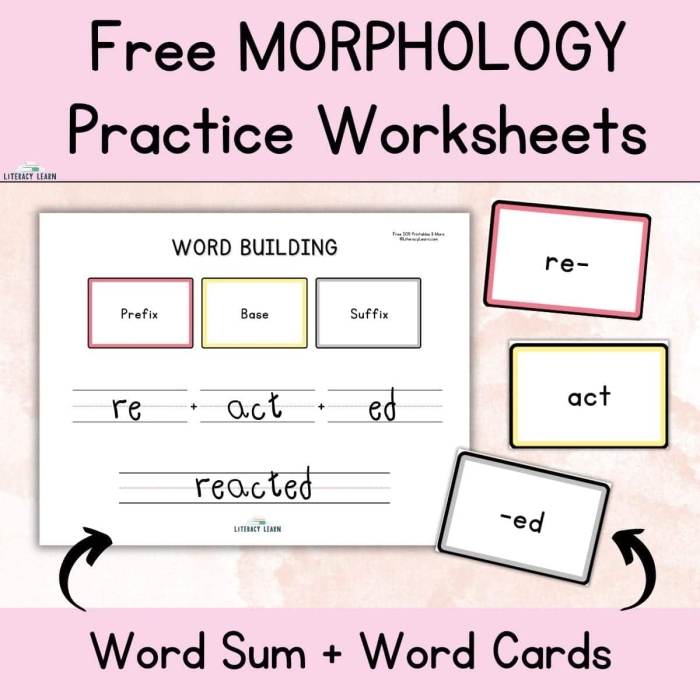
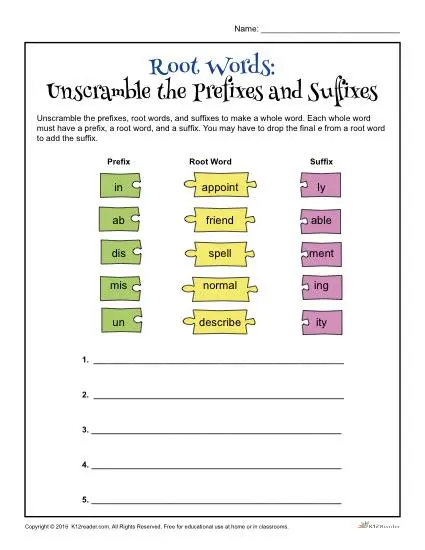
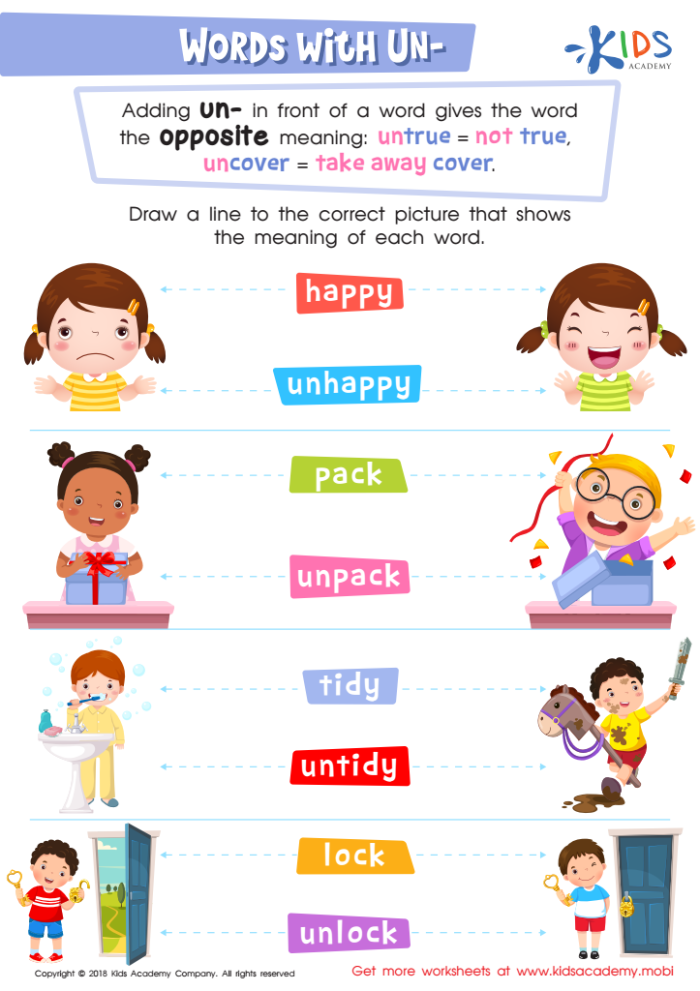
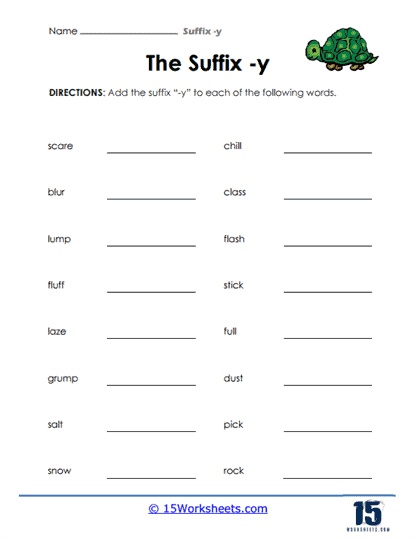
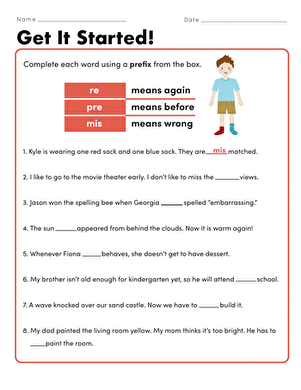
Third grade vocabulary work gets more interesting when students realize they can transform familiar words into completely new meanings. This prefix practice worksheet does exactly that, asking learners to take 20 base words and rebuild them using three common prefixes: dis-, re-, and un-.
The power of prefixes lies in their consistency. Once a student understands that un- typically means “not” or “opposite,” they can apply that knowledge across dozens of words. The prefix re- signals repetition or doing something again, while dis- often conveys reversal or negation. Rather than memorizing isolated vocabulary, learners start recognizing patterns that help them decode unfamiliar words they encounter in their reading.
What makes this worksheet effective is the constraint of working with exactly three prefixes. Third grade students aren’t overwhelmed with dozens of options. Instead, they practice making deliberate choices about which prefix transforms each word in a way that makes sense. Does “appear” become disappear, reappear, or unappear? Only one choice works, and that reasoning process builds stronger word understanding than simple fill-in-the-blank exercises.
The 20-word structure gives enough practice for genuine skill development without creating fatigue. Students work through real words they’ve likely encountered before, which makes the exercise feel achievable rather than abstract. When they write “undo” instead of “do,” or “rebuild” instead of “build,” they’re not just adding letters—they’re actively changing meaning and expanding their expressive vocabulary.
This type of targeted practice pairs well with other third grade literacy work. As students develop stronger vocabulary skills through prefix practice, they can apply these insights to reading comprehension tasks and their own writing. Like other structured learning activities, this worksheet builds foundational skills that support broader language development throughout the school year.
Grab These Worksheets Now