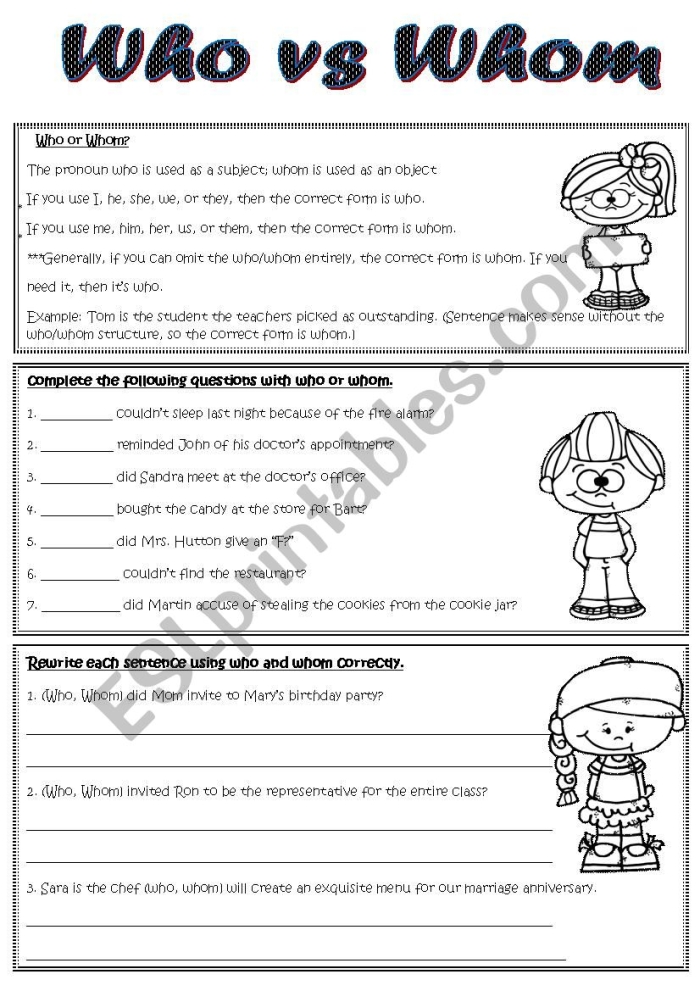
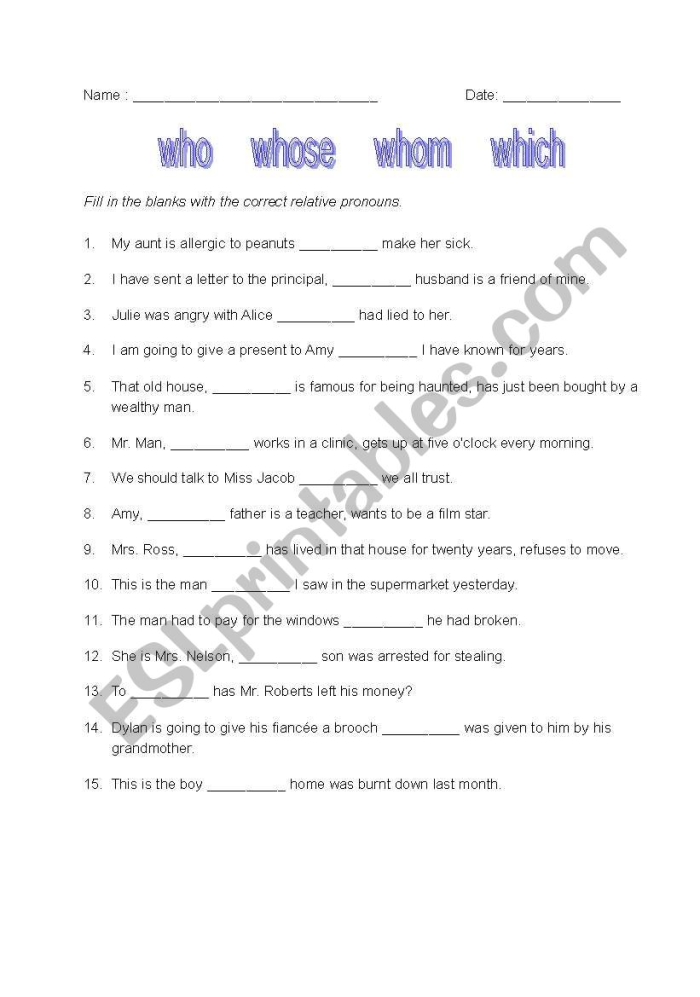
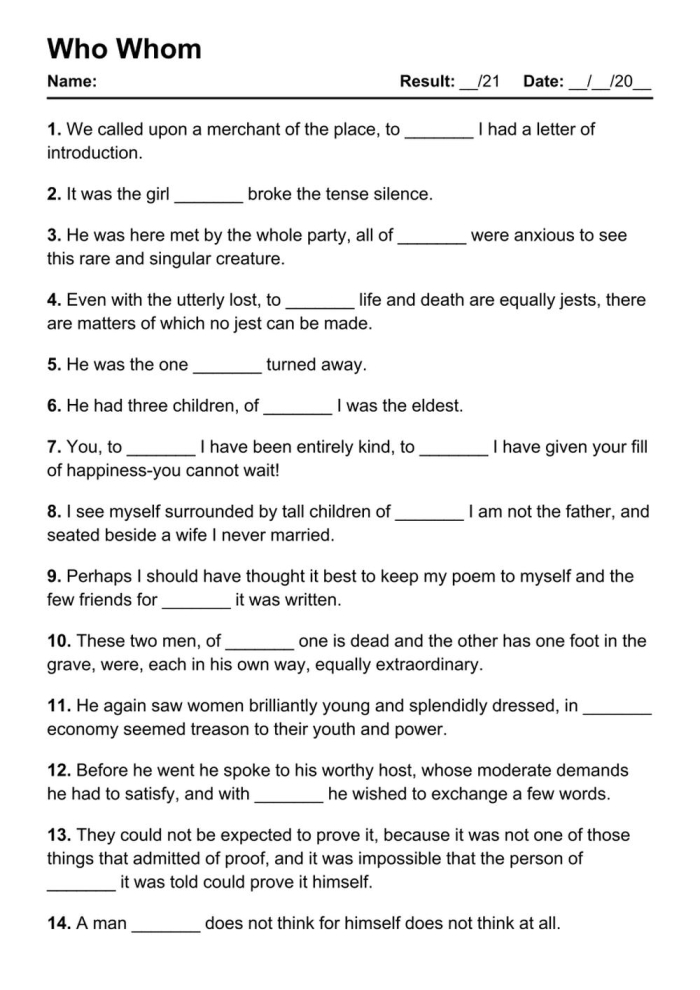
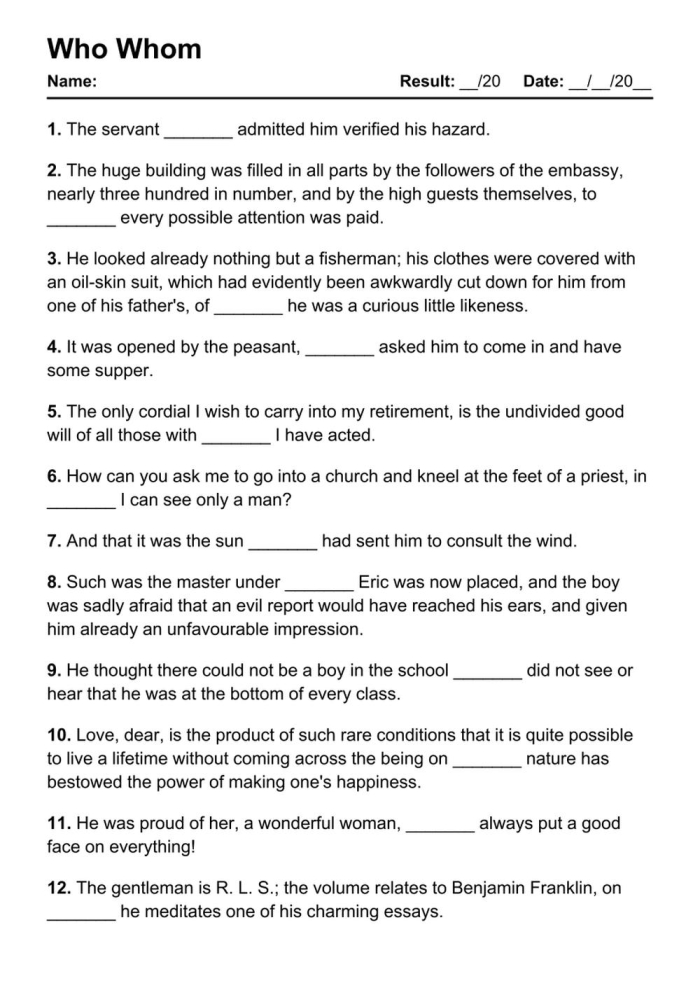
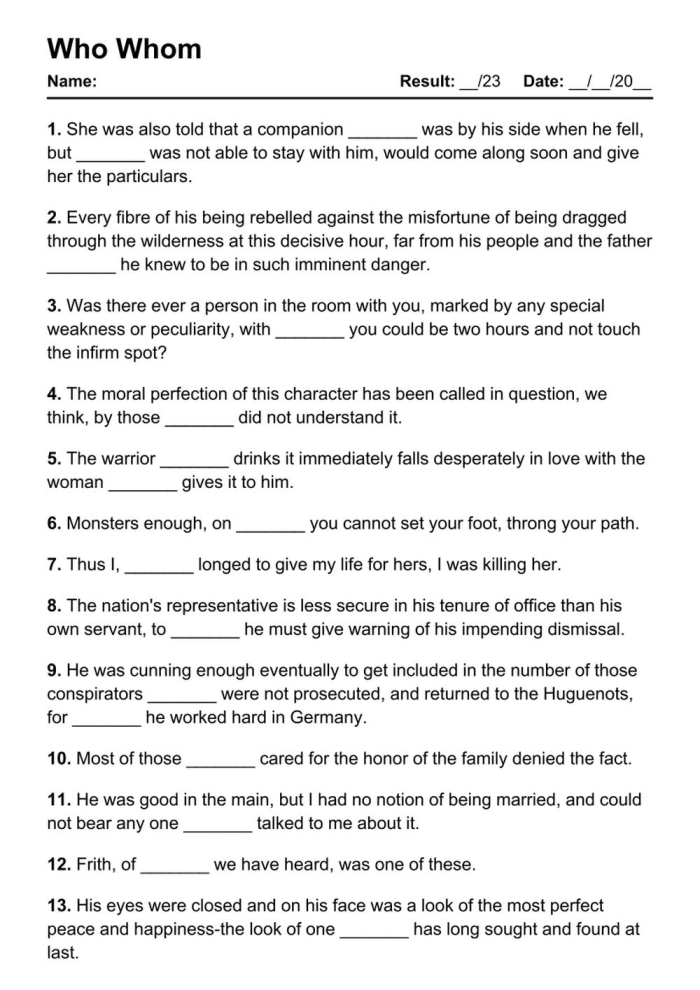
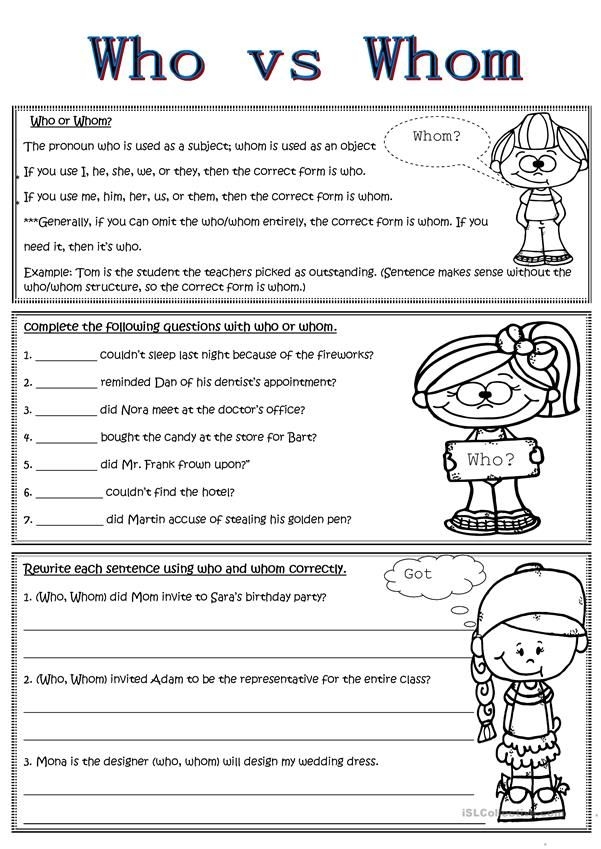
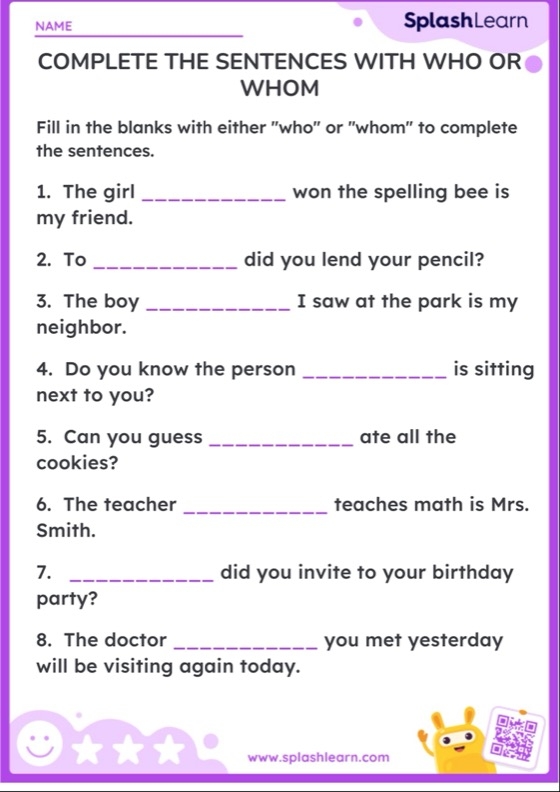
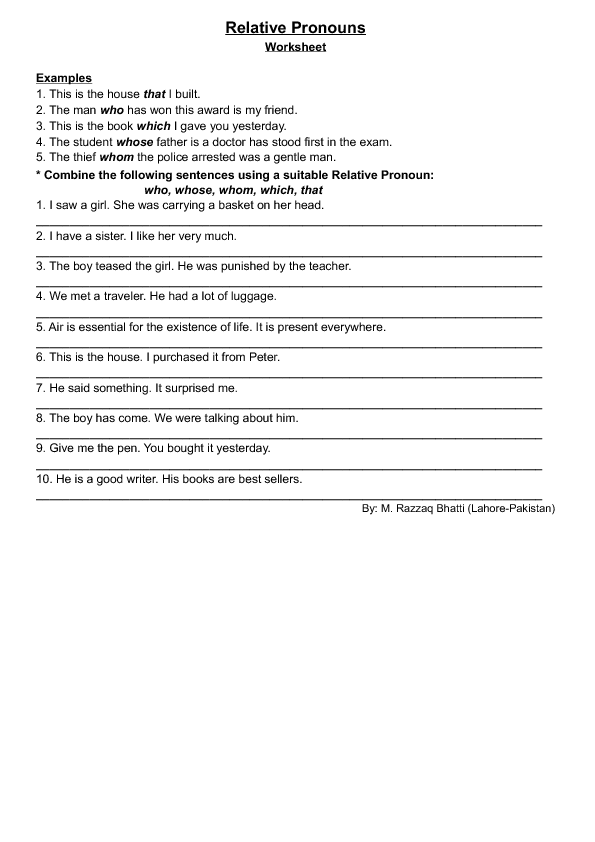
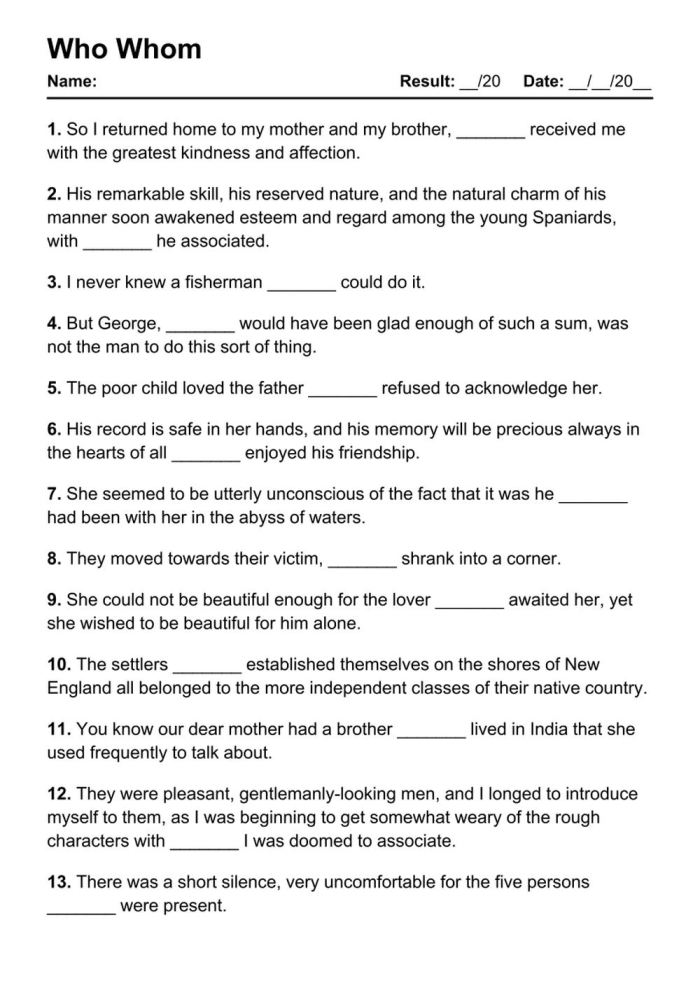
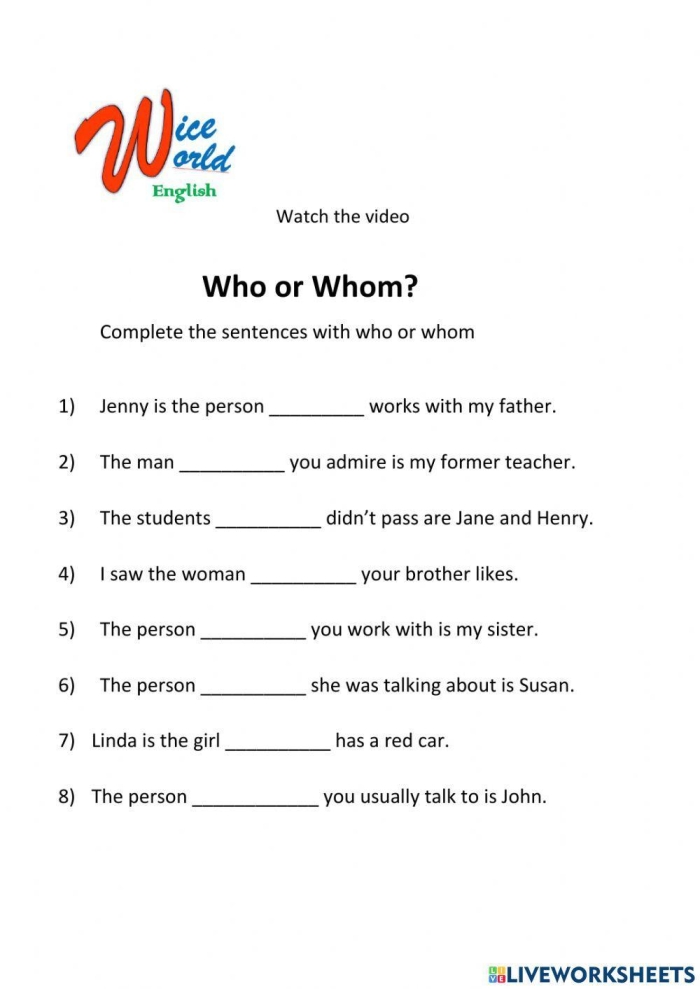
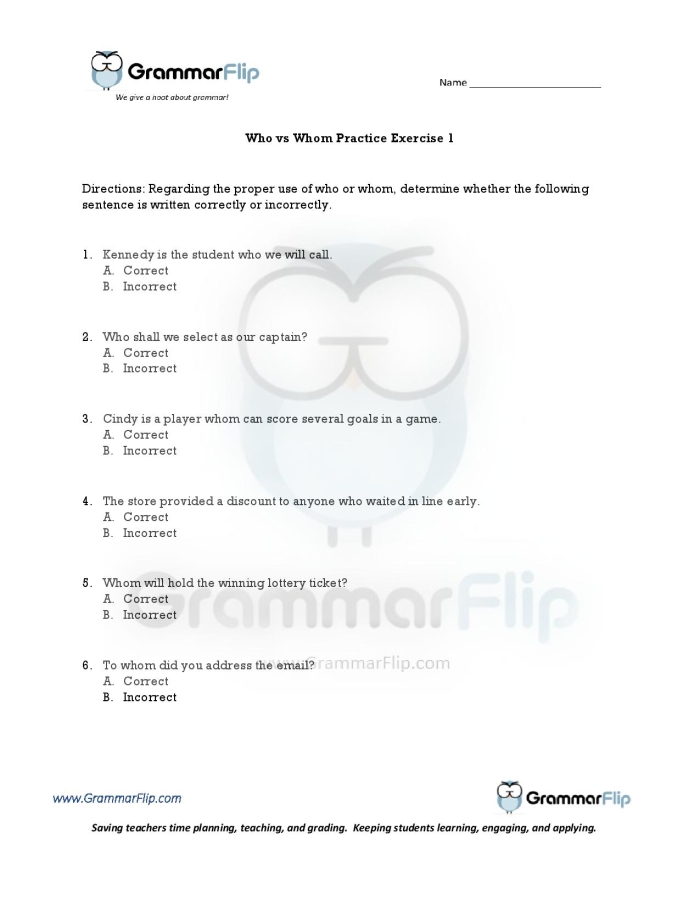
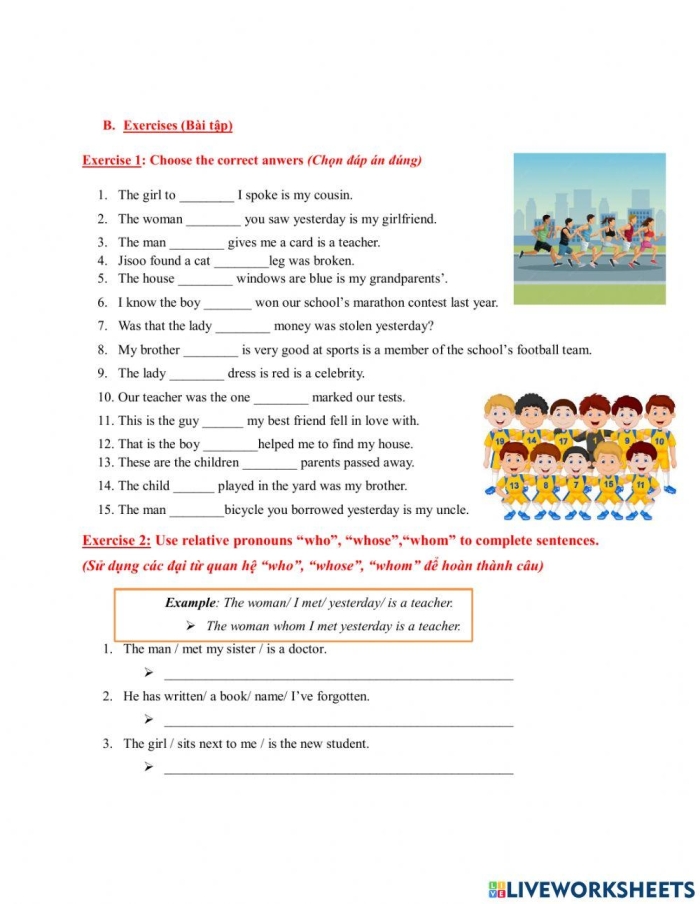
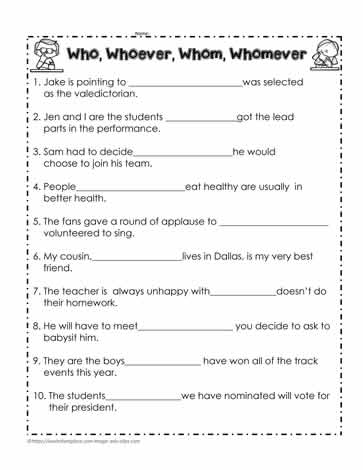
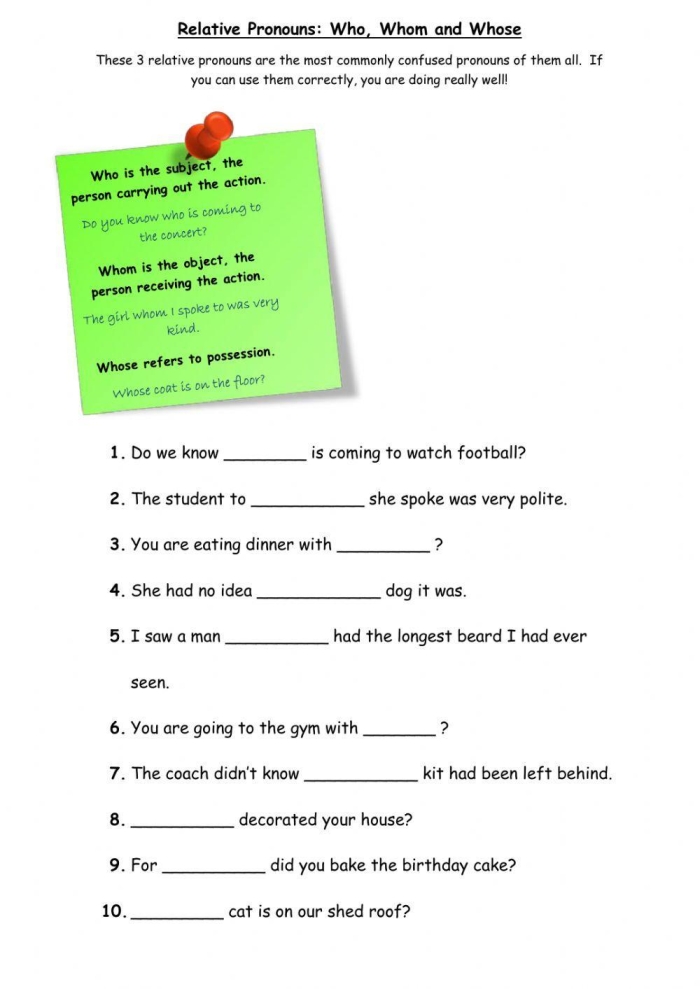
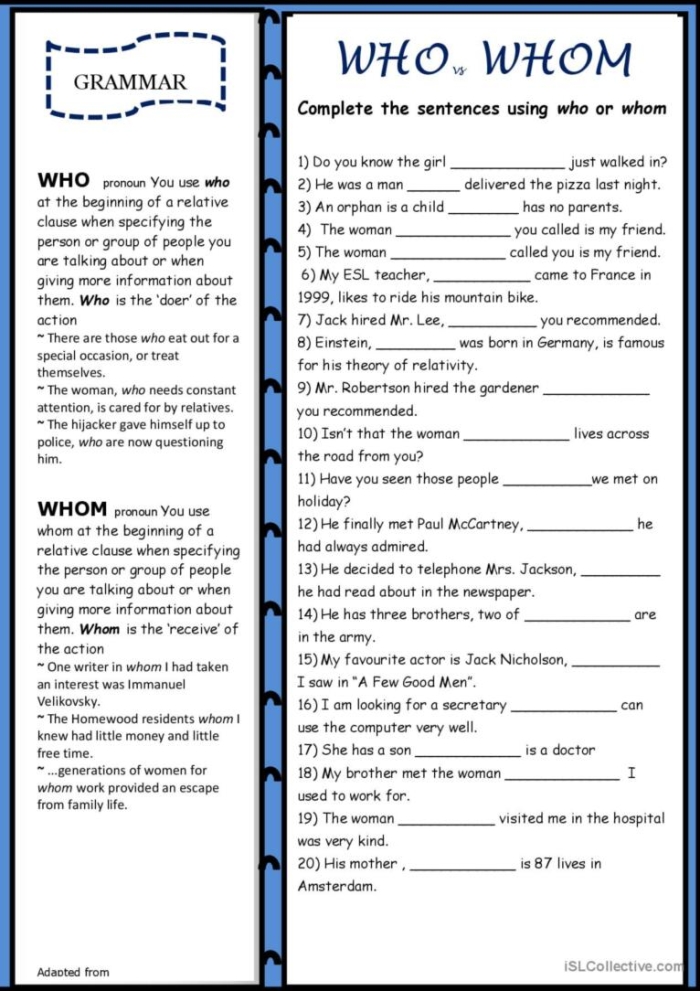
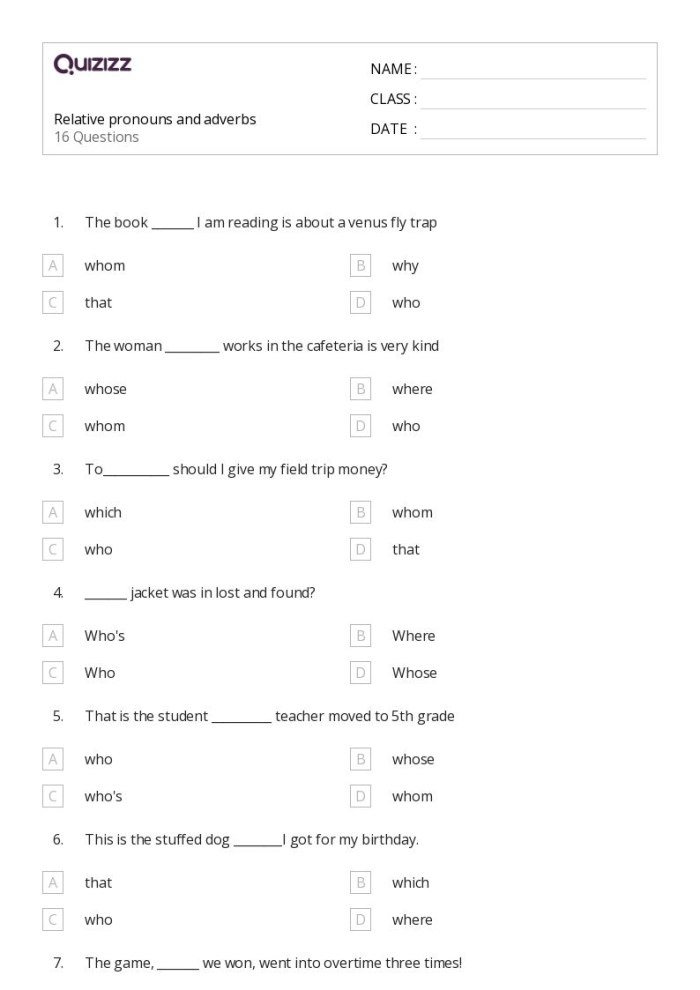
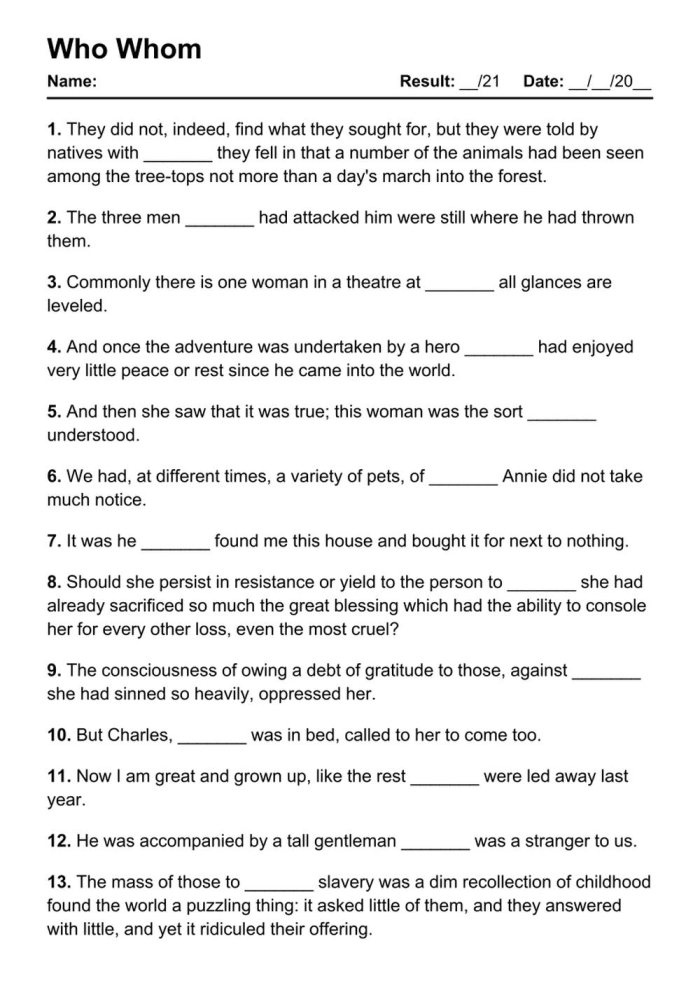
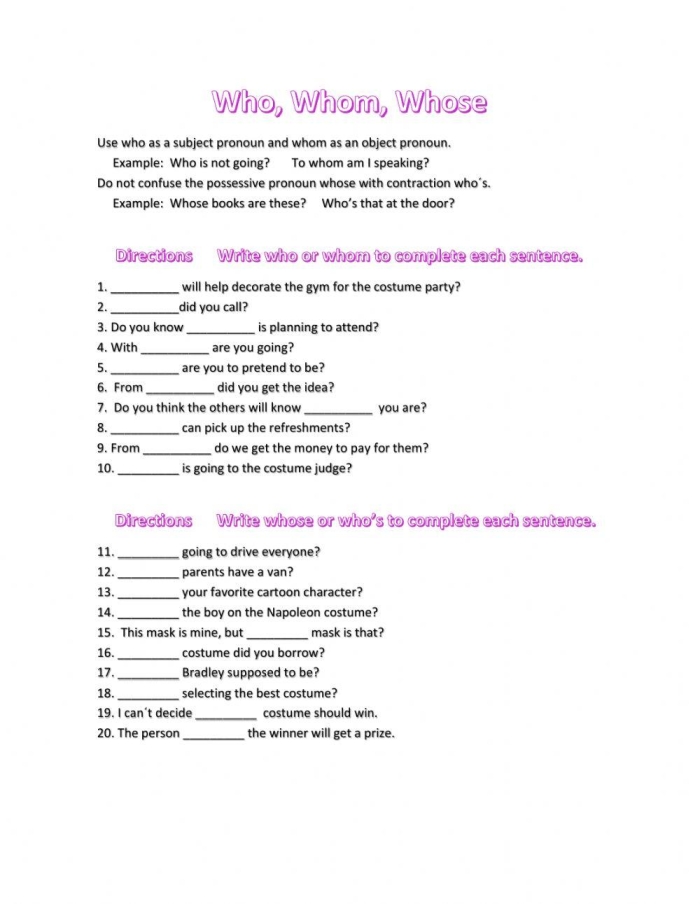
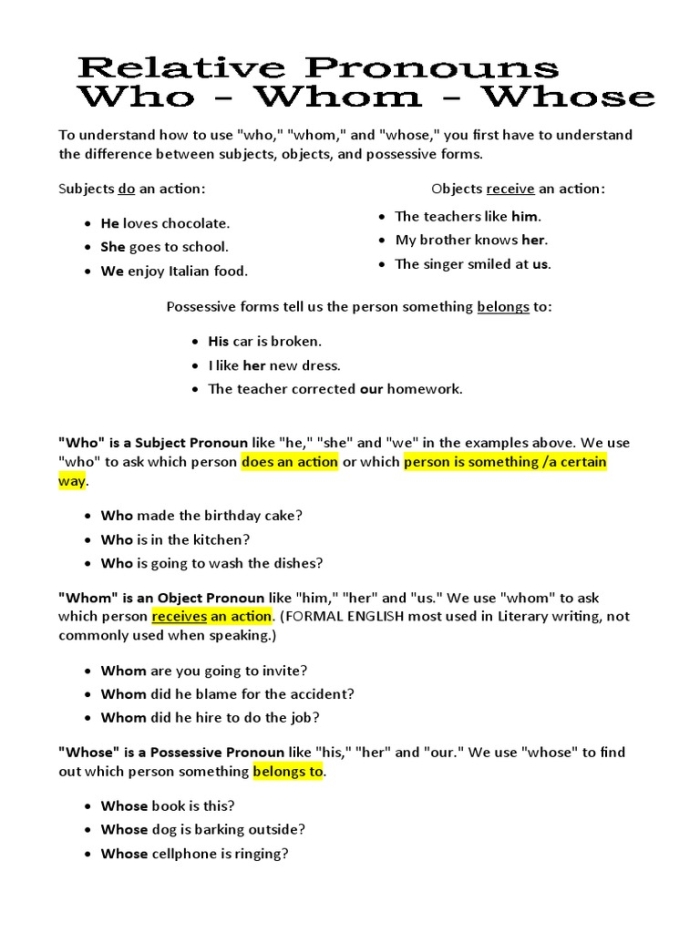
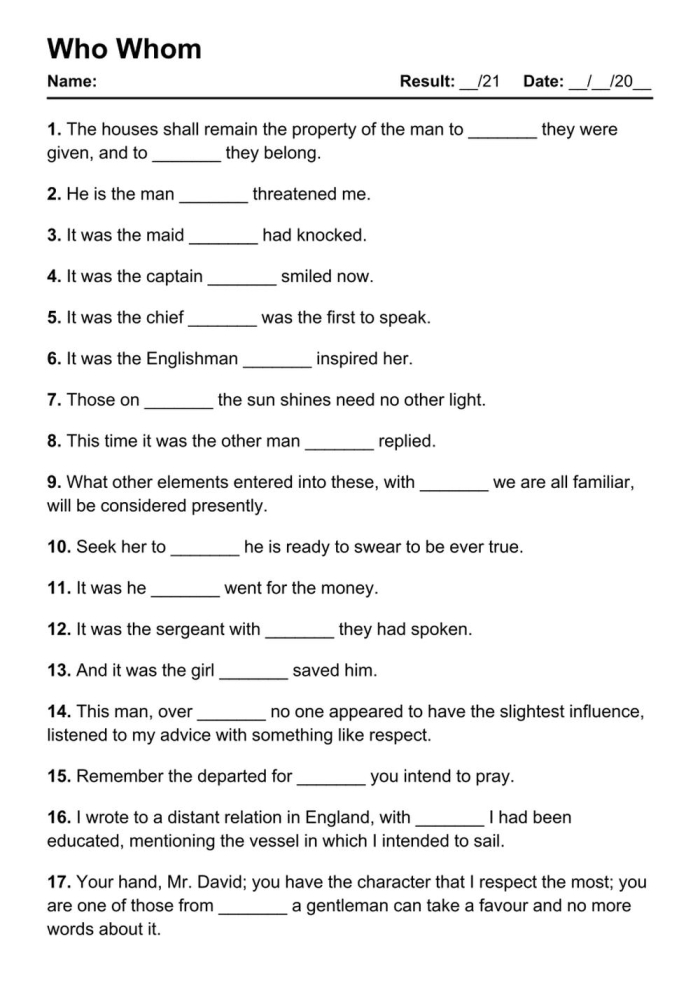
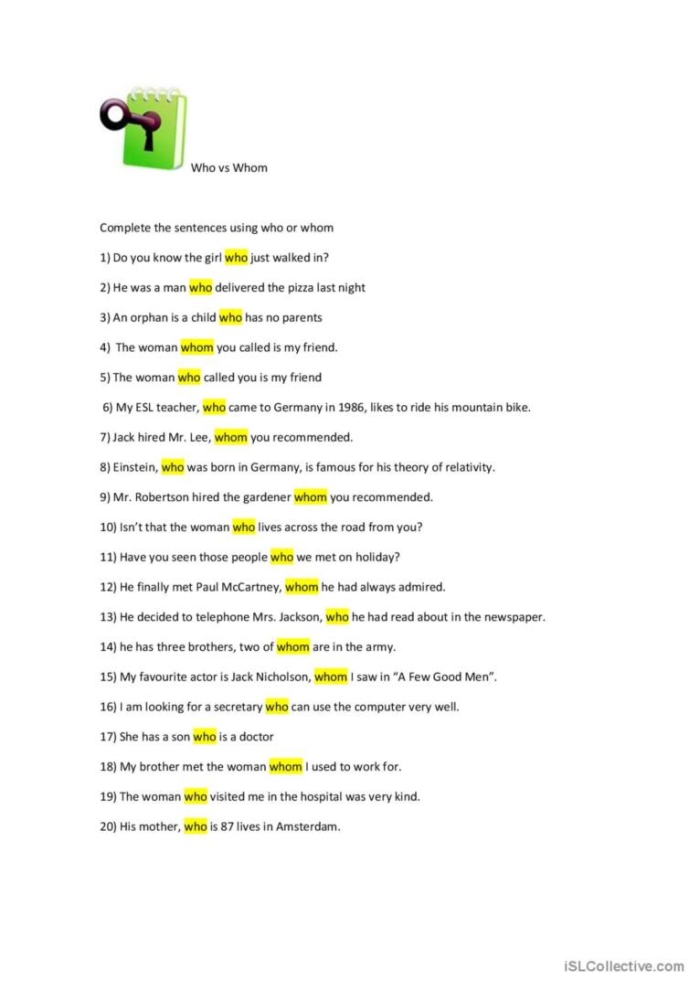
Understanding the difference between “who” and “whom” can be a tricky concept for third graders. These two words serve different grammatical purposes, and mastering their use is essential for clear communication. In this fill-in-the-blanks grammar worksheet, children will have the opportunity to learn the rules governing when to use “who” and when to use “whom.” This hands-on approach not only engages them but also reinforces their understanding of grammar and mechanics.
“Who” is typically used as a subject in a sentence, referring to the person performing an action. For example, in the sentence “Who is coming to the party?” “who” is the subject asking about the individual performing the action of coming. On the other hand, “whom” is used as an object, referring to the person receiving the action. For instance, in the question “To whom should I address the letter?” “whom” is the object of the preposition “to.”
By practicing with fill-in-the-blanks exercises, children can apply these rules in context. This approach allows them to see the application of grammar in real sentences, making the learning experience more meaningful. Additionally, worksheets can be a great way to assess their grasp of the concept, as they can identify correct usages based on their understanding.
Using printable worksheets focused on “who” and “whom” offers a structured way to learn essential grammar rules. These resources complement other grammar lessons, such as those found in materials on comparing fractions or multiplication word problems. With regular practice, students will find it easier to distinguish between these two words, enhancing their writing and speaking skills.
Ultimately, mastering “who” and “whom” fosters better communication, helping children express themselves clearly in their writing. Engaging with grammar and mechanics through targeted worksheets can set a strong foundation for their educational journey.
Hands-On Worksheet Activities