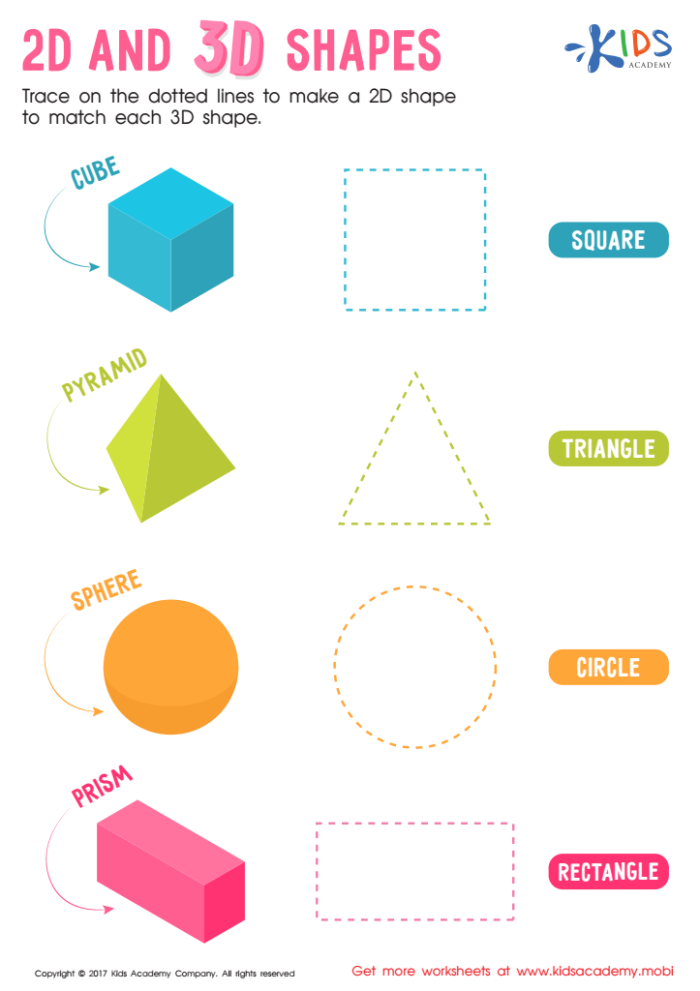
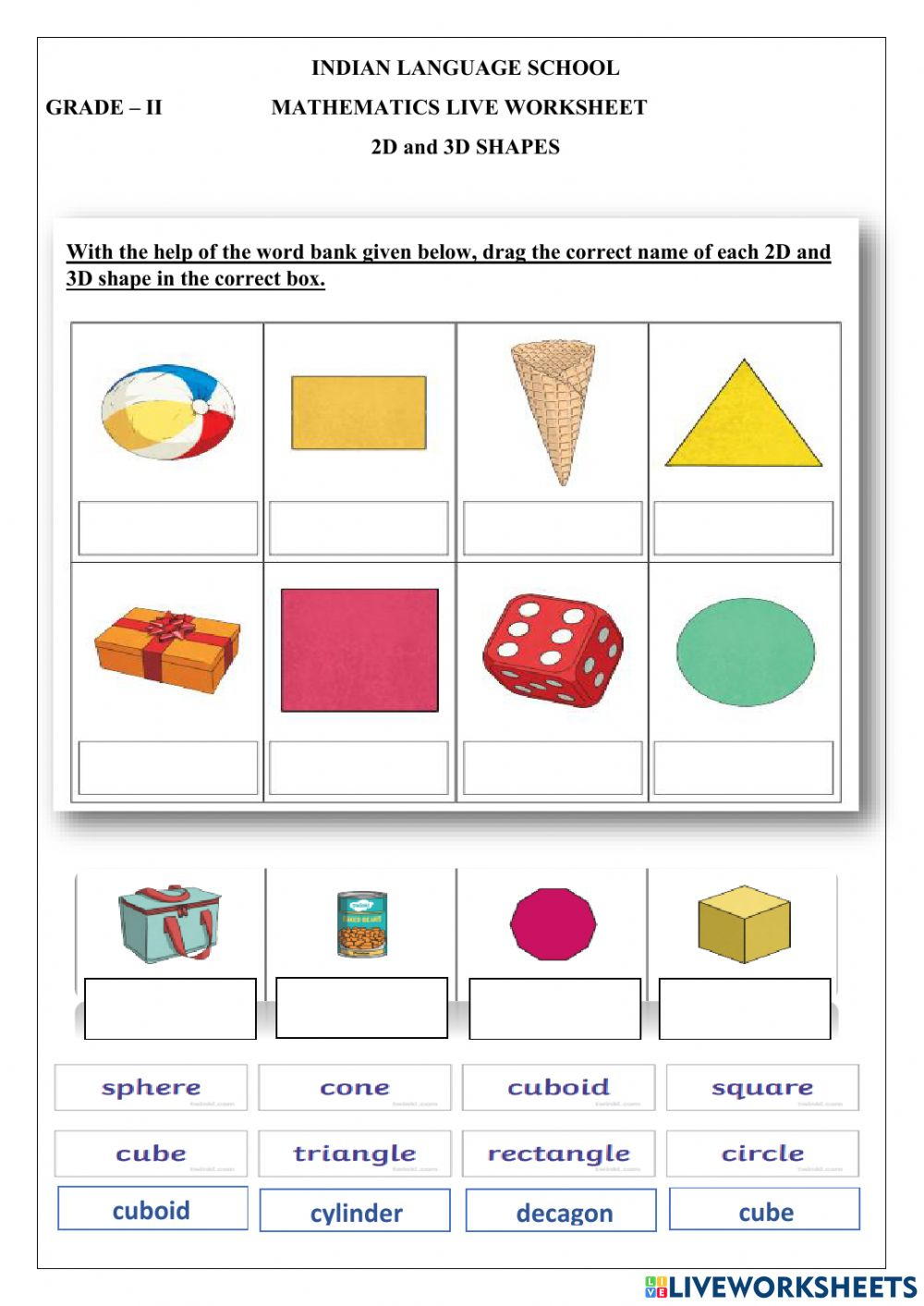
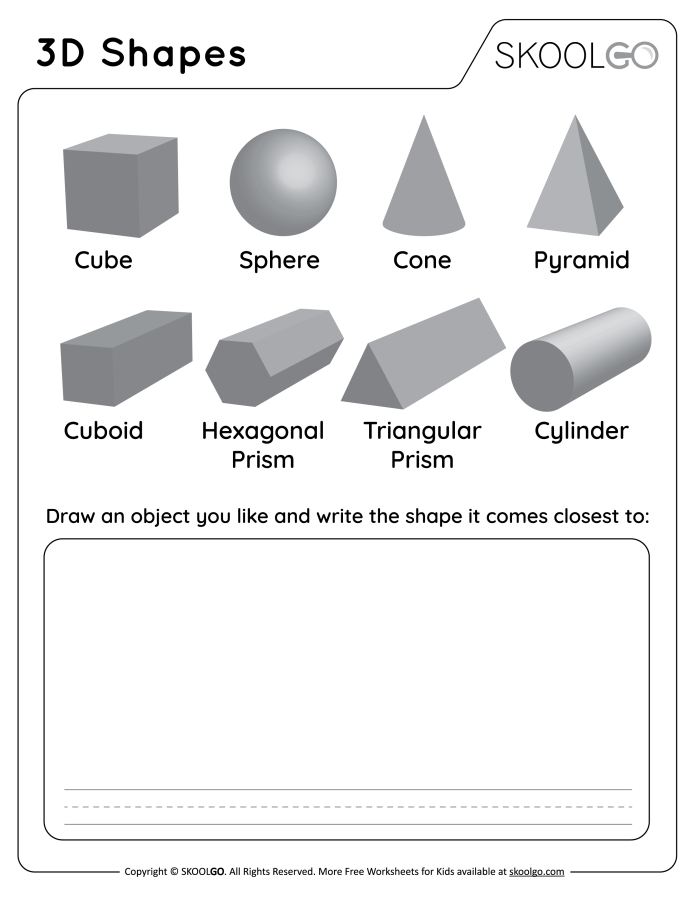
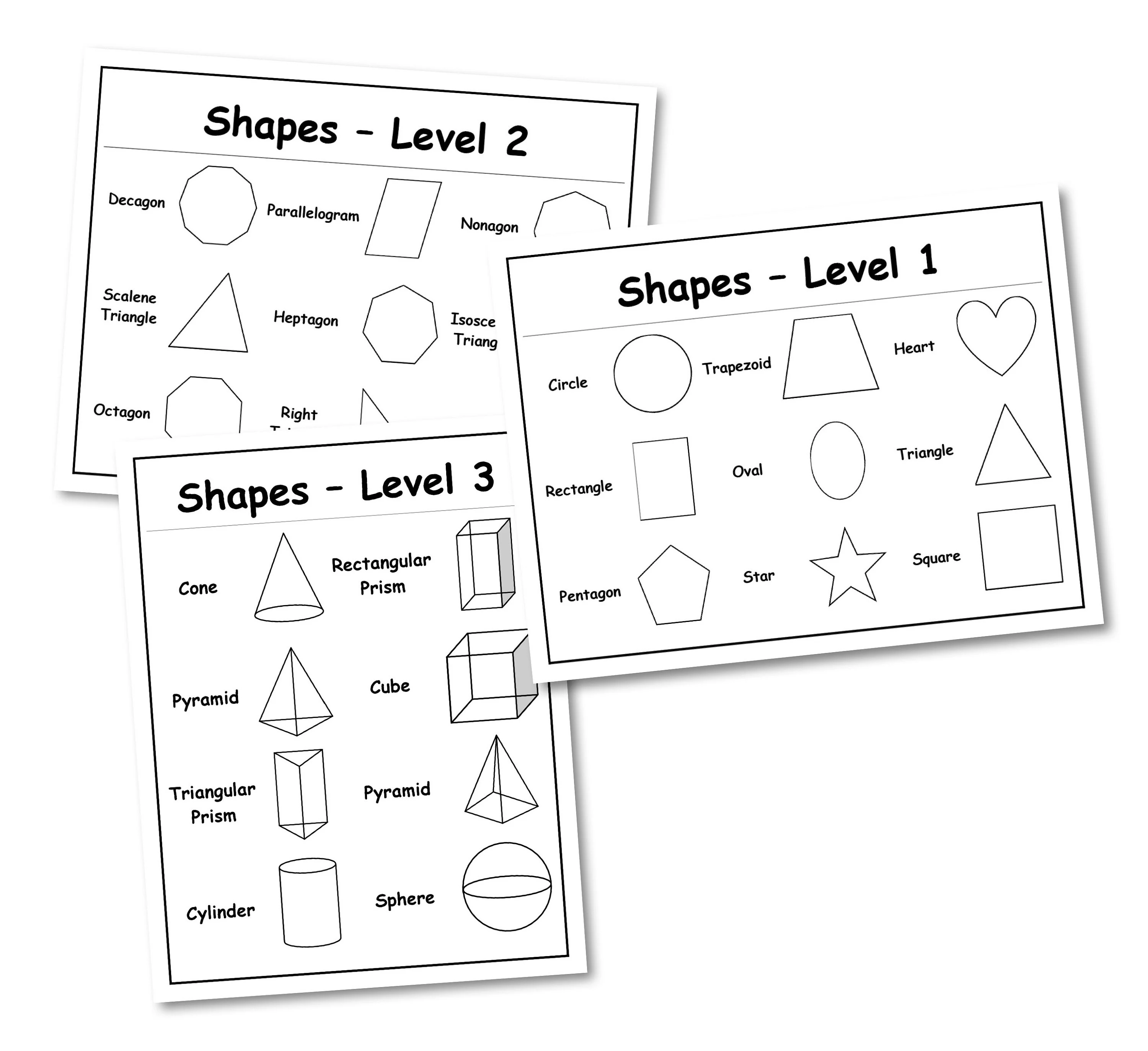
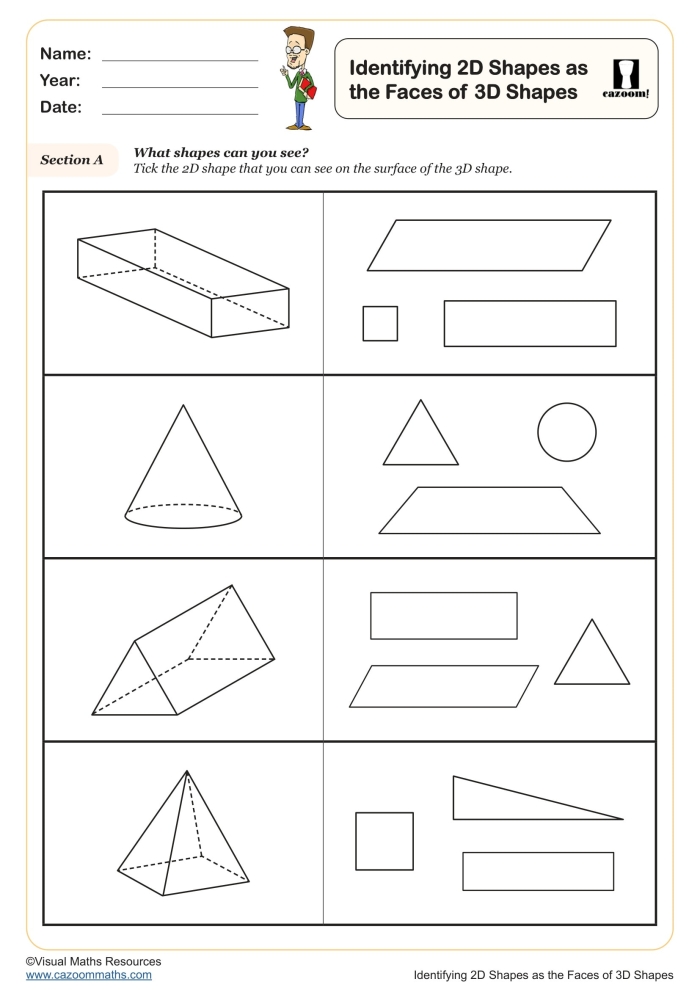
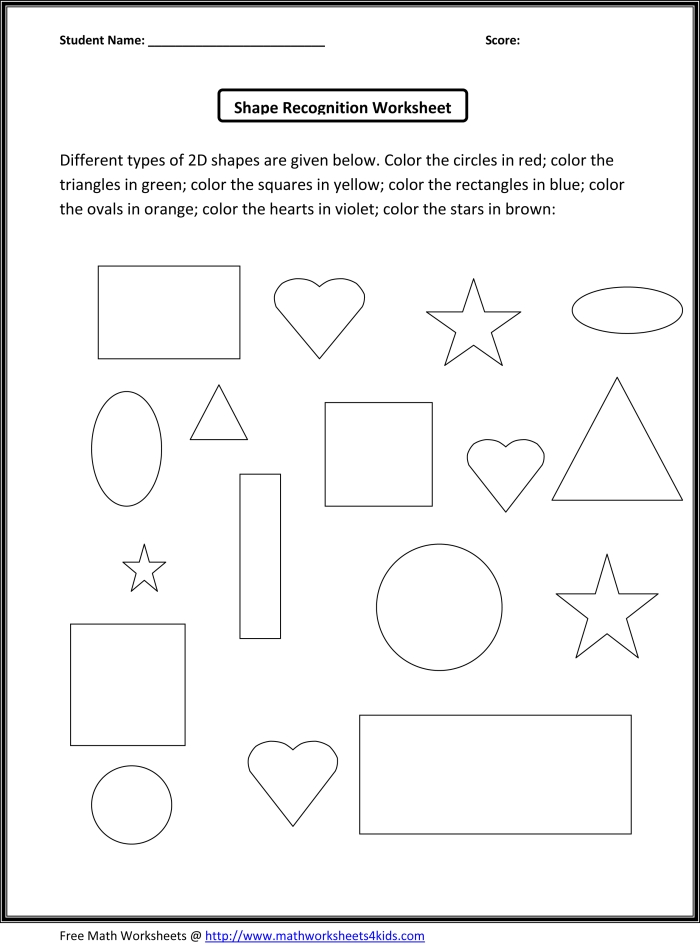
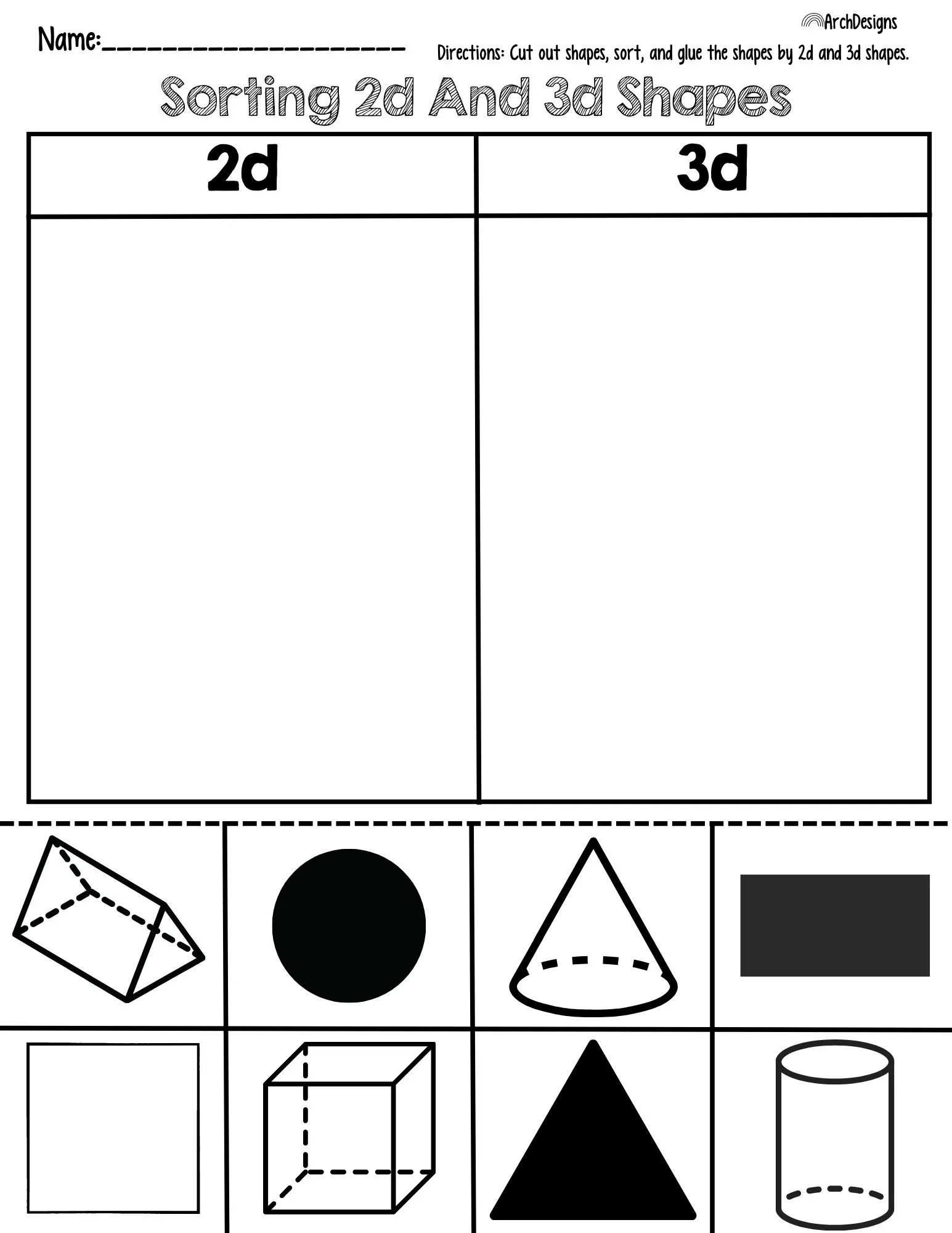
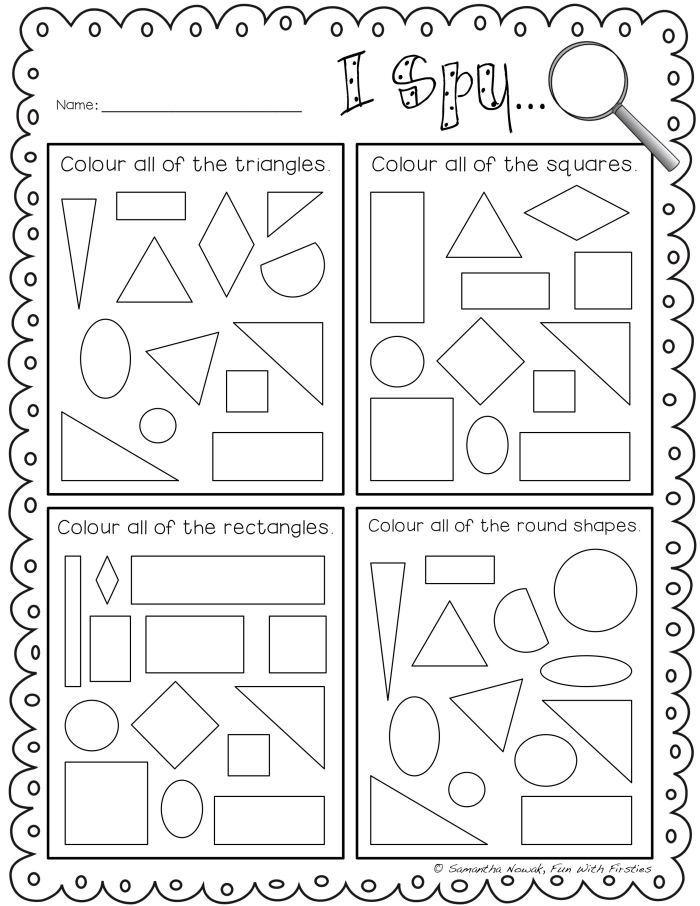
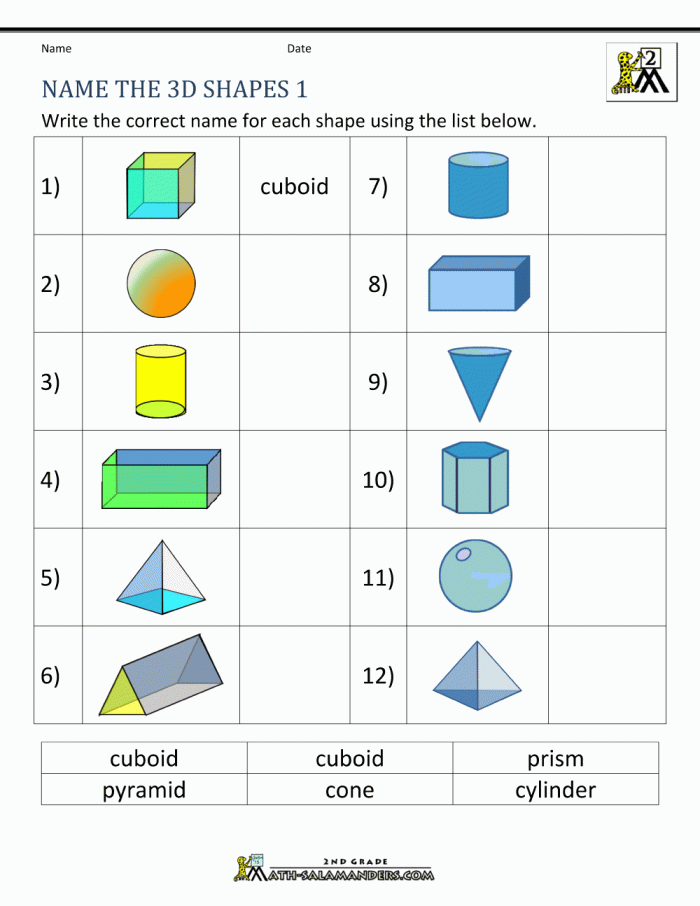
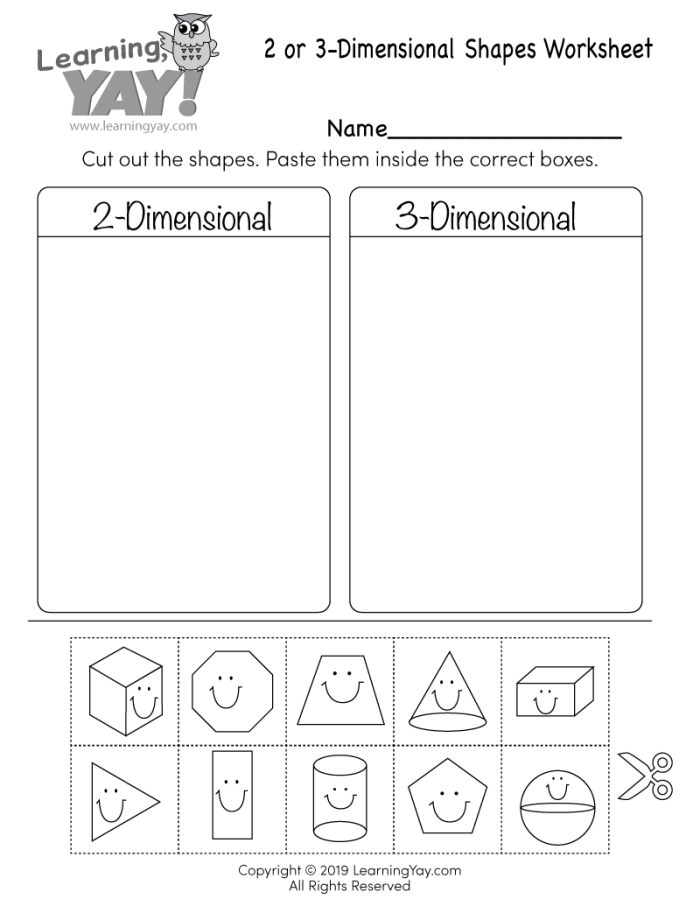
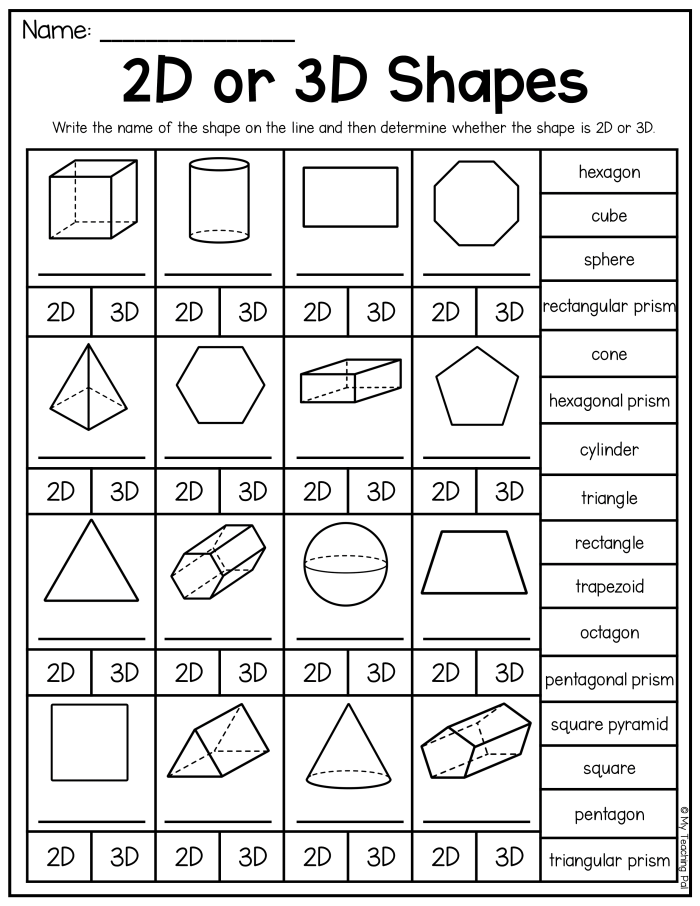
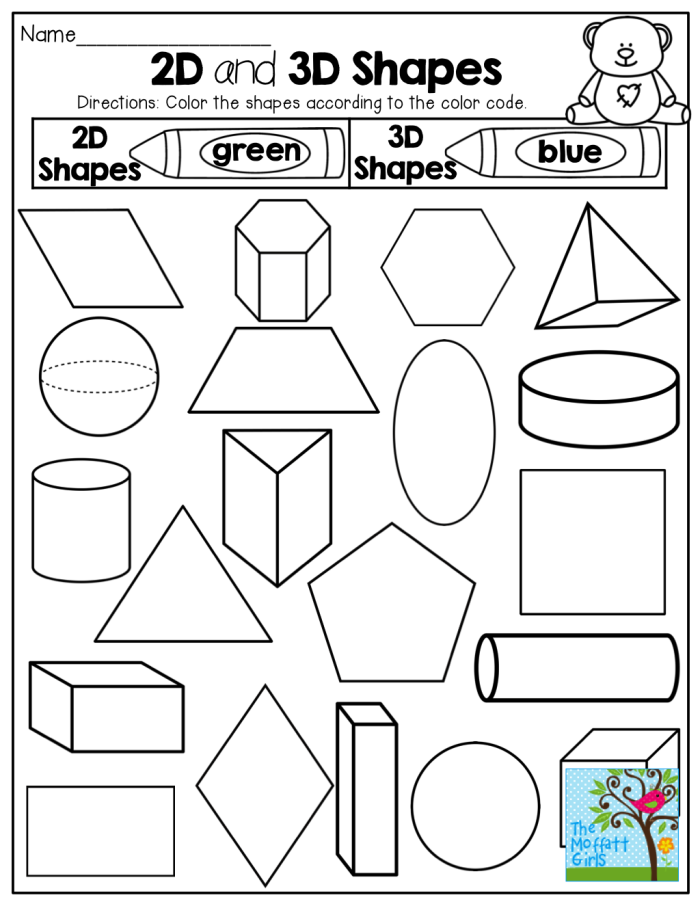
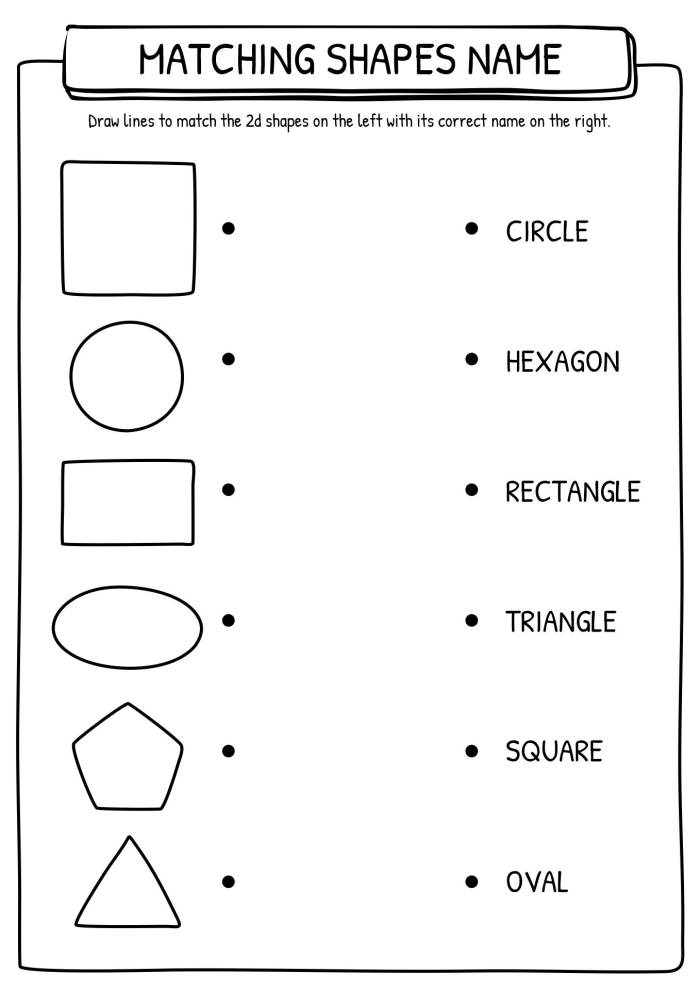
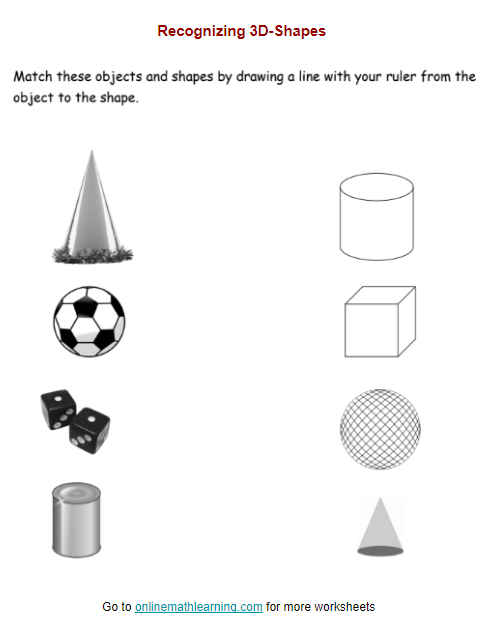
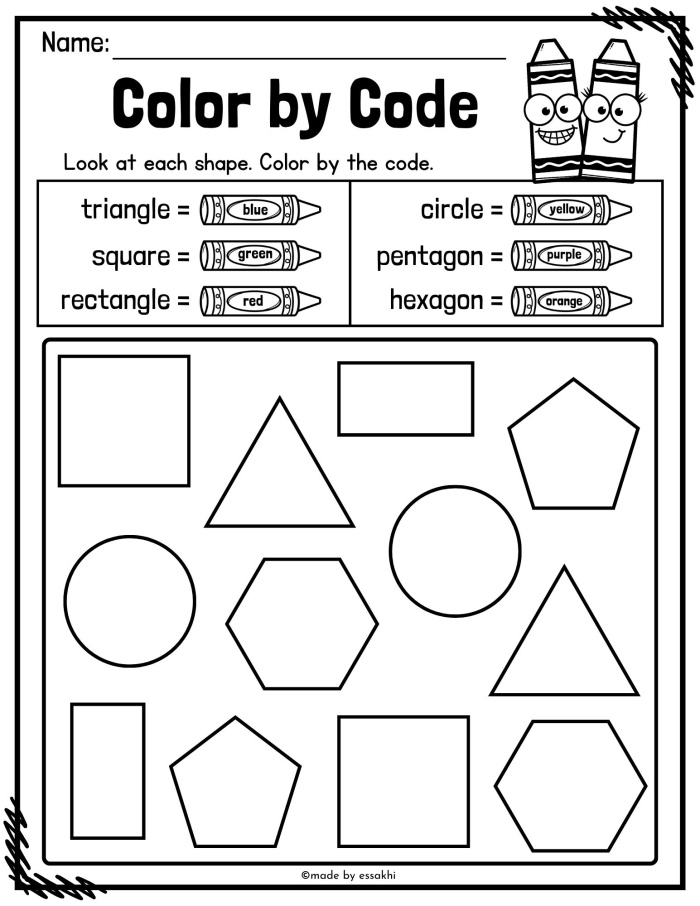
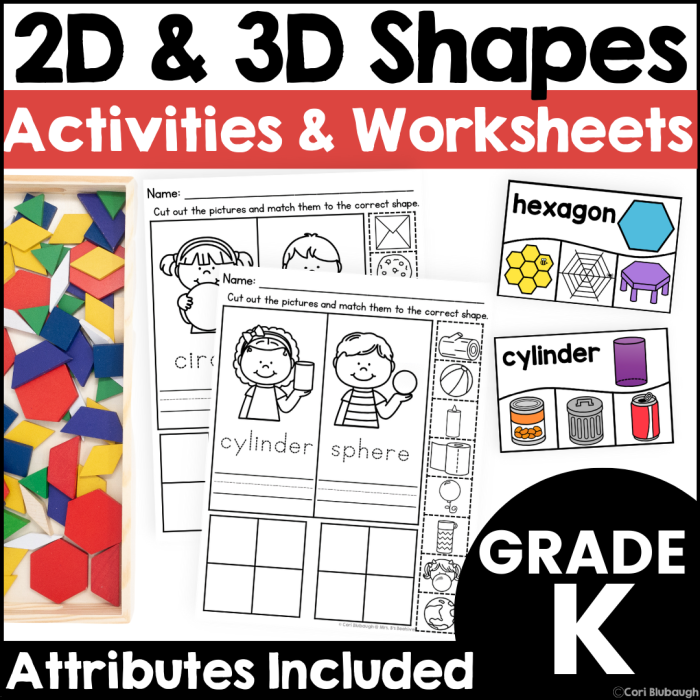
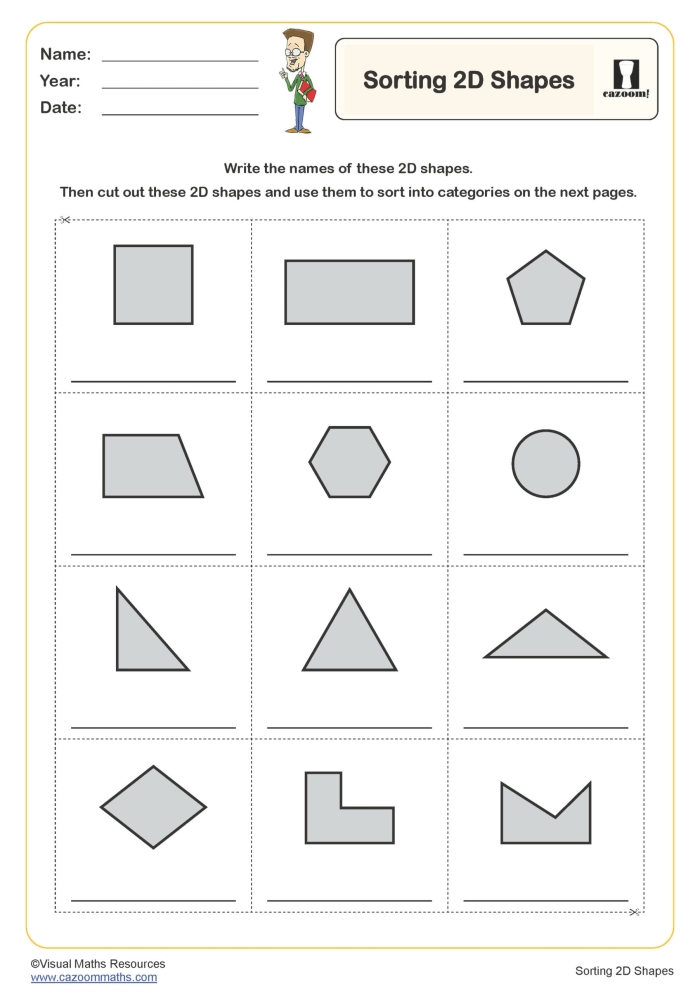
Understanding the difference between flat shapes and solid objects is one of those foundational skills that clicks for children when they see it in action. A worksheet that asks first grade students to match 2D and 3D shapes forces them to really look at what makes a square different from a cube, or a circle different from a sphere. This kind of hands-on comparison builds spatial reasoning in ways that passive instruction simply cannot.
When children work through matching exercises, they’re not just memorizing definitions. They’re developing the ability to recognize that a 2D shape is something you can draw on paper with length and width, while a 3D shape has depth and can be held in your hand. A triangle drawn on a page looks completely different from a pyramid sitting in front of them. This distinction matters because it’s the gateway to understanding geometry at deeper levels later on.
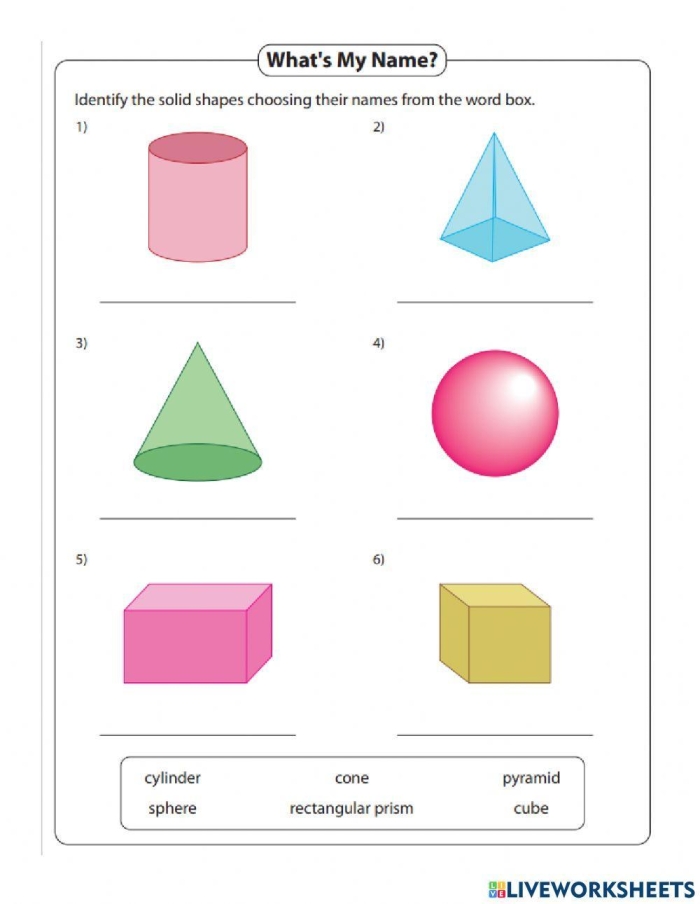
The beauty of this approach is that it works naturally with how first graders already learn. They benefit from visual activities that connect abstract concepts to real objects they encounter every day. A ball is a sphere. A box is a rectangular prism. A stop sign is an octagon. When worksheets make these connections explicit through matching activities, the learning sticks.
If you’re looking to strengthen your child’s geometry foundation, pairing shape worksheets with other first grade math practice creates a more complete picture. Resources like printable 2D and 3D shapes worksheets work well alongside activities that build number sense. You might also explore how fact family exercises develop logical thinking skills that support spatial reasoning.
The matching format keeps children engaged because it feels like a puzzle rather than a lesson. They’re solving something, finding the right connections, and that sense of discovery makes geometry feel accessible instead of intimidating.
Download These Worksheets for Practice