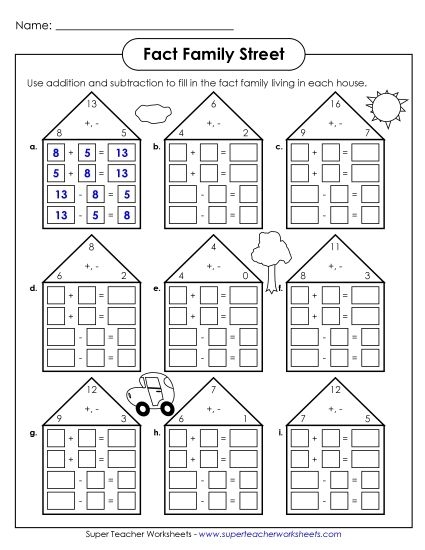
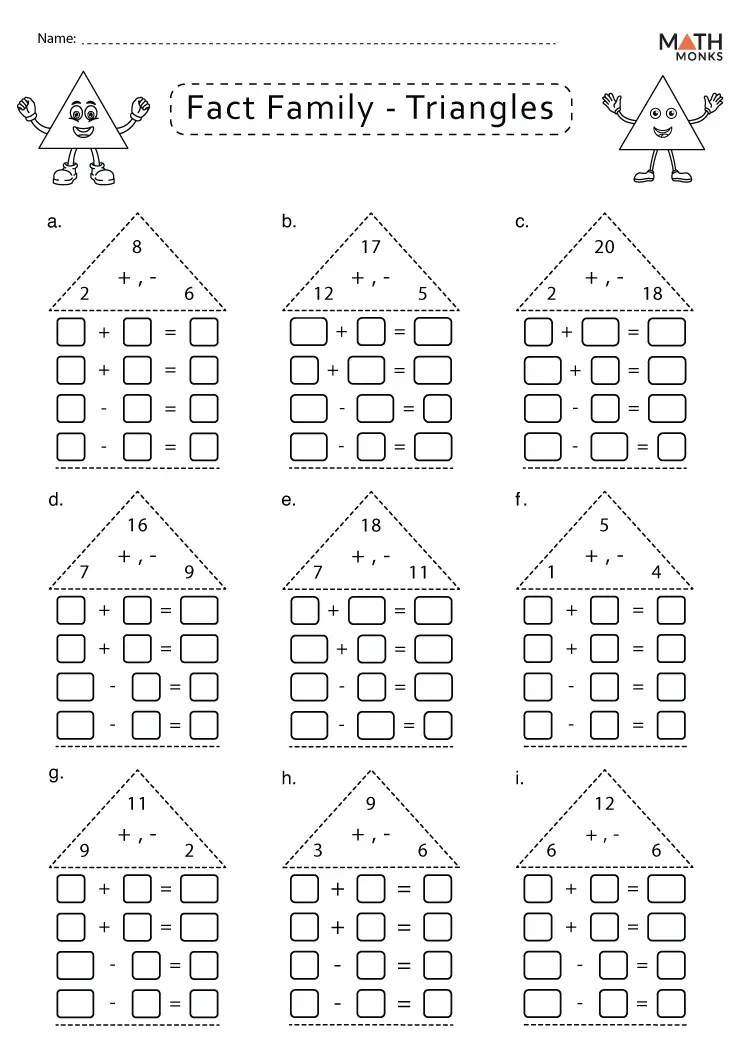
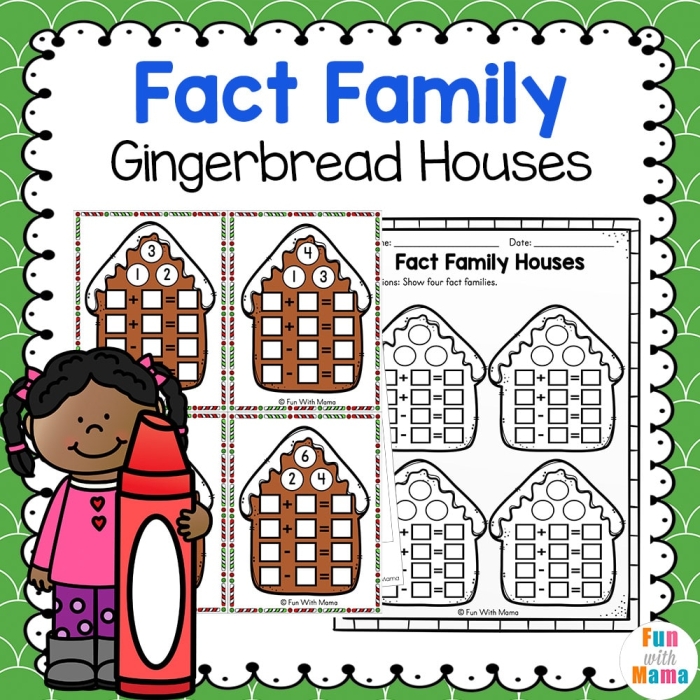
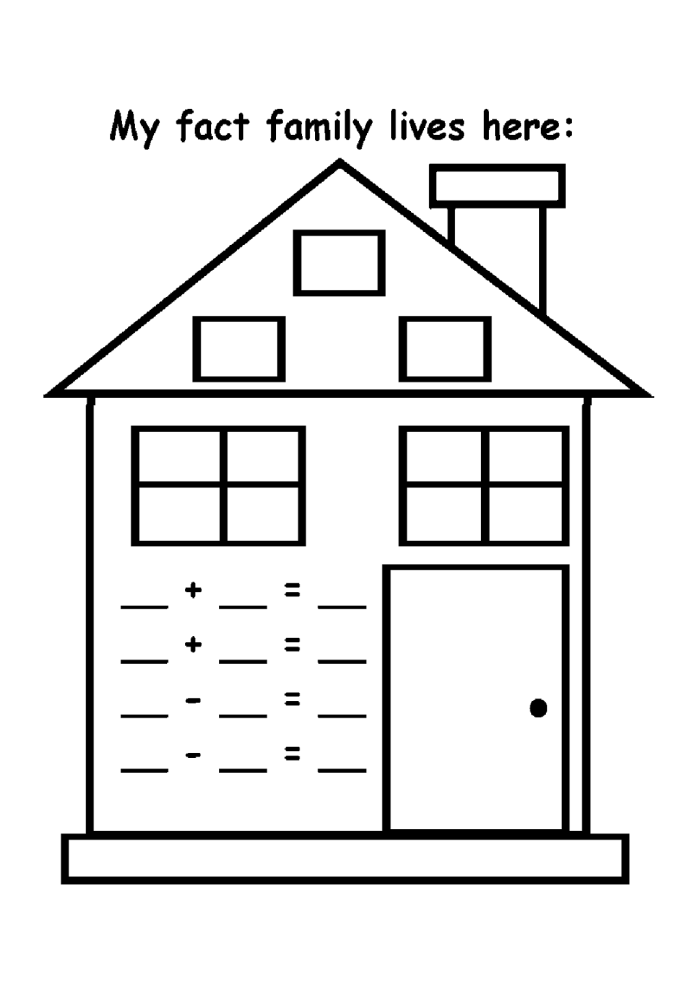
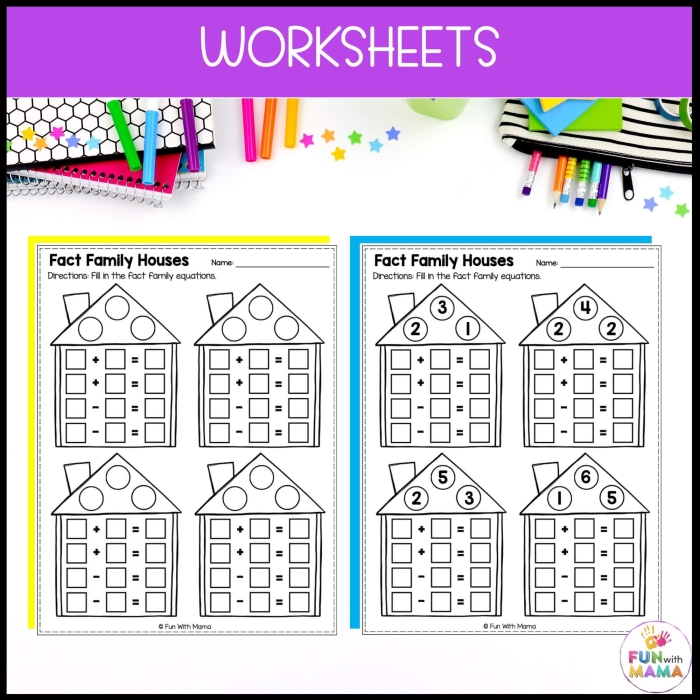
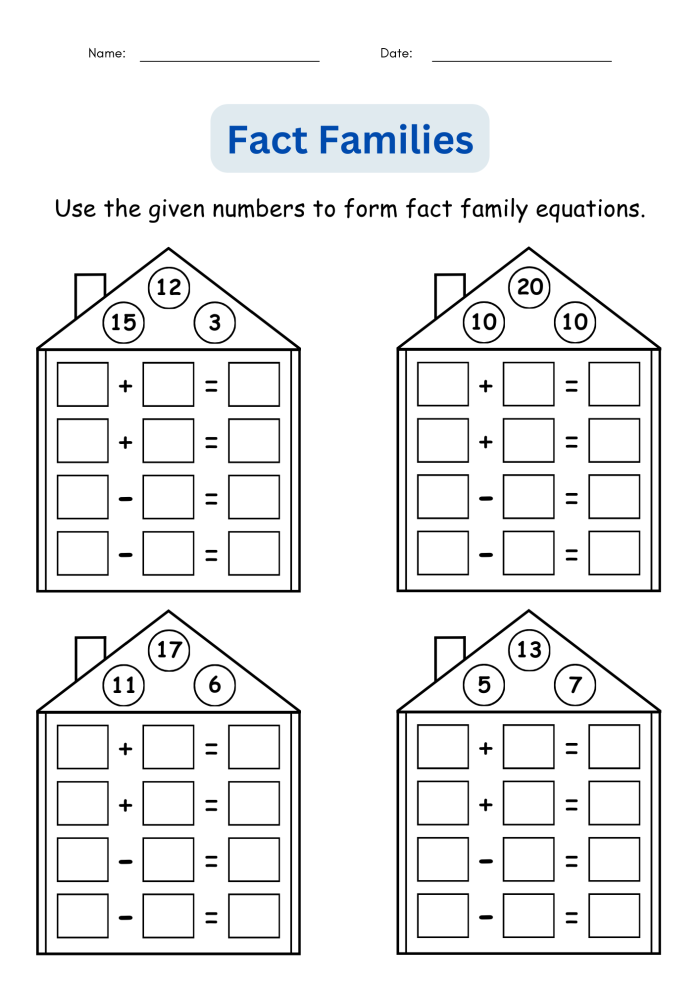
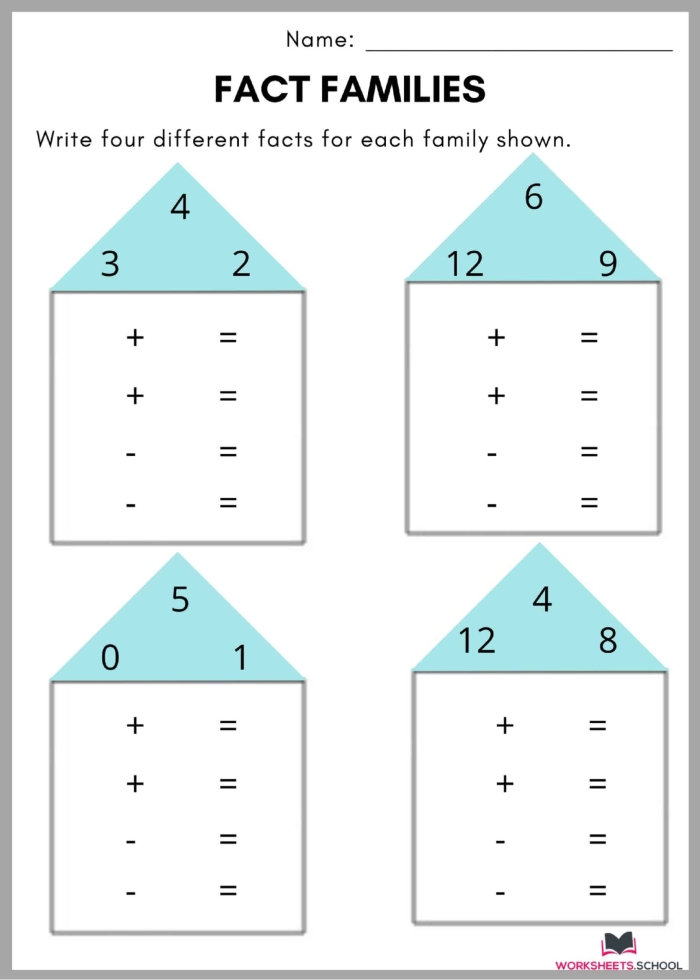
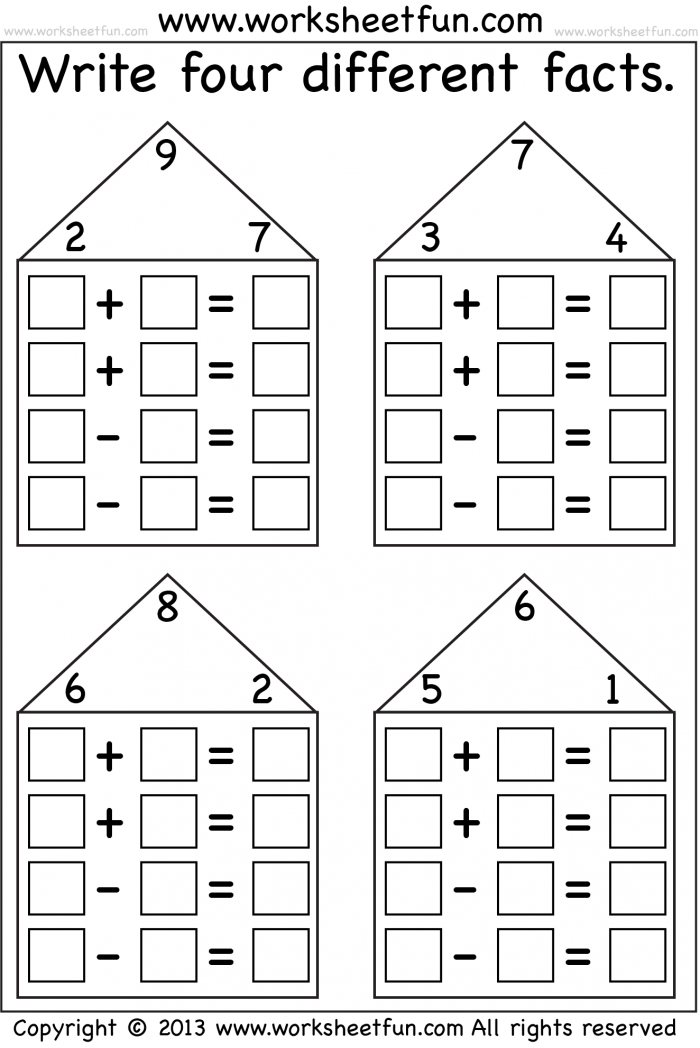
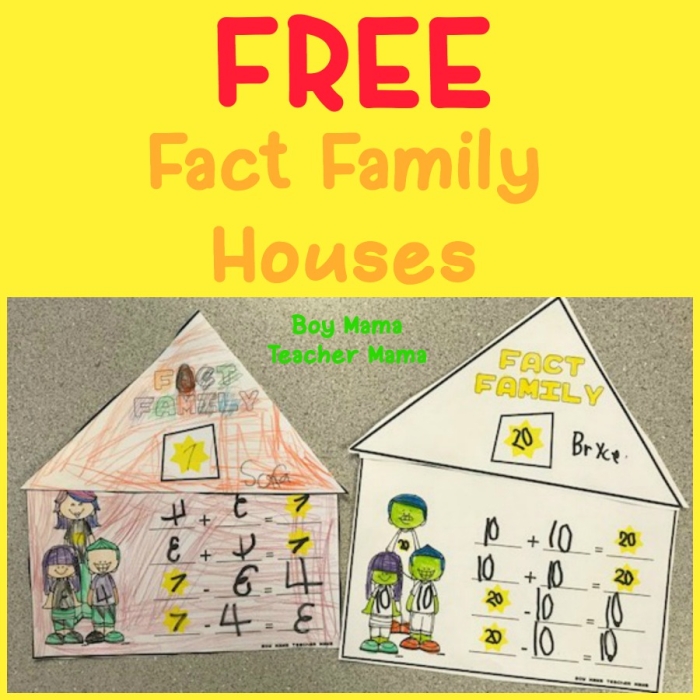
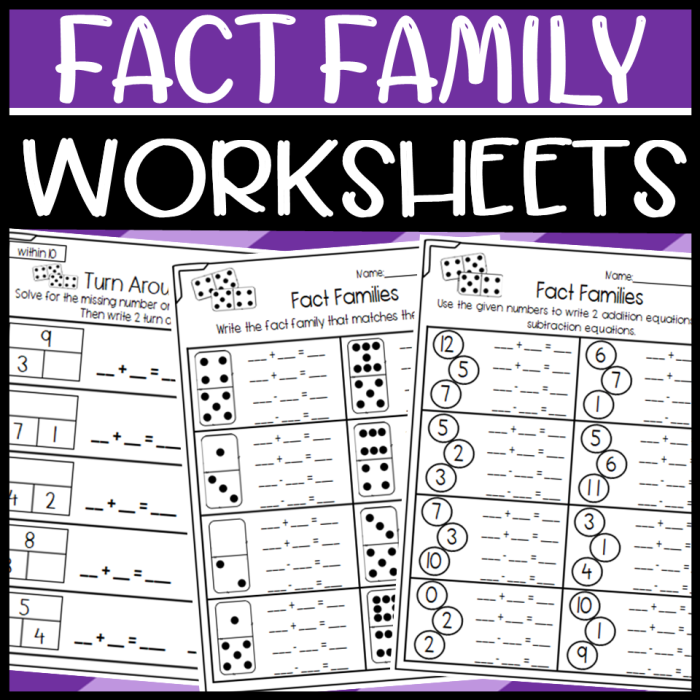
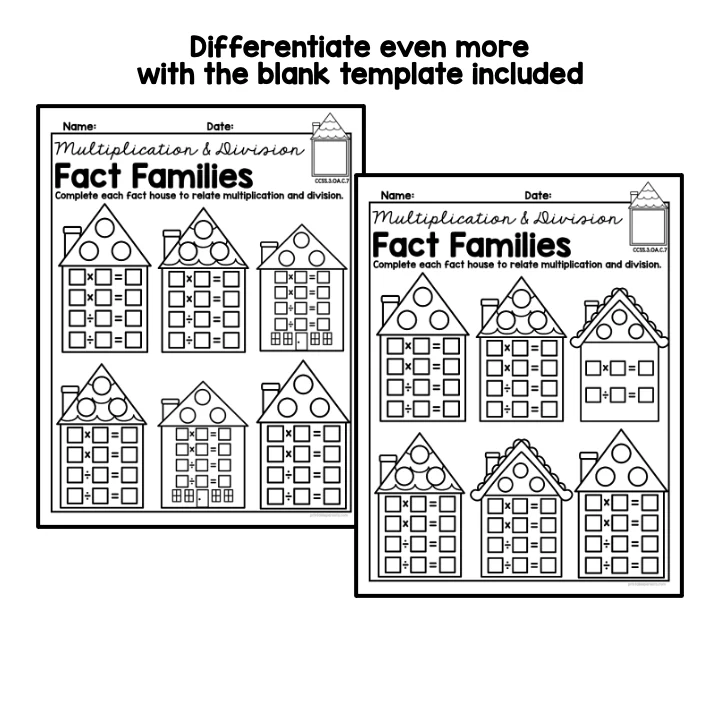
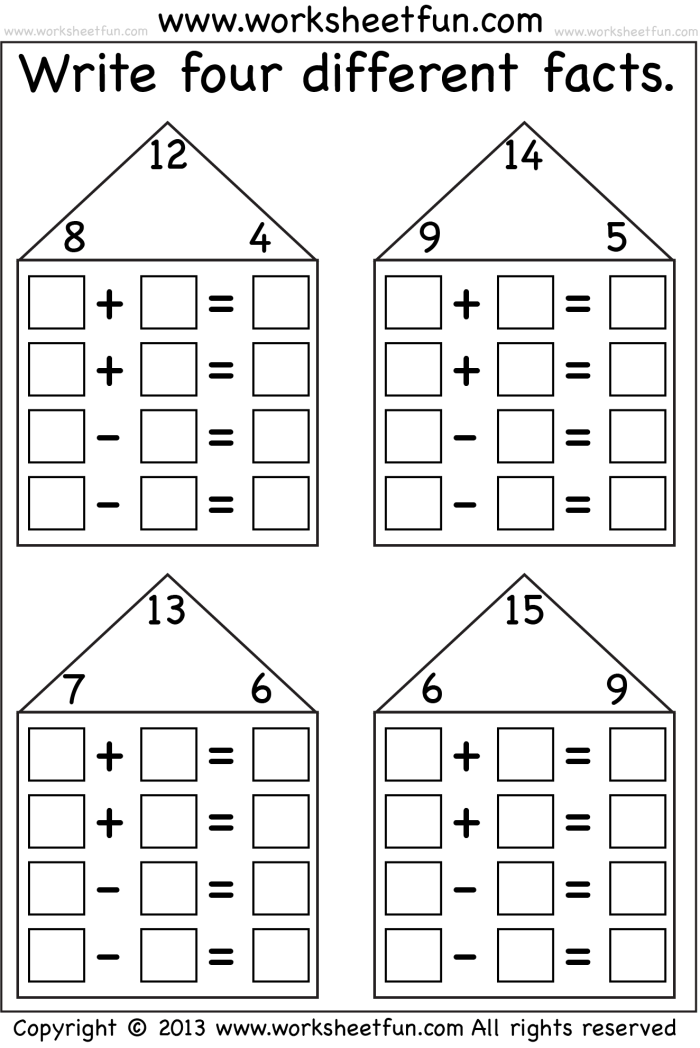
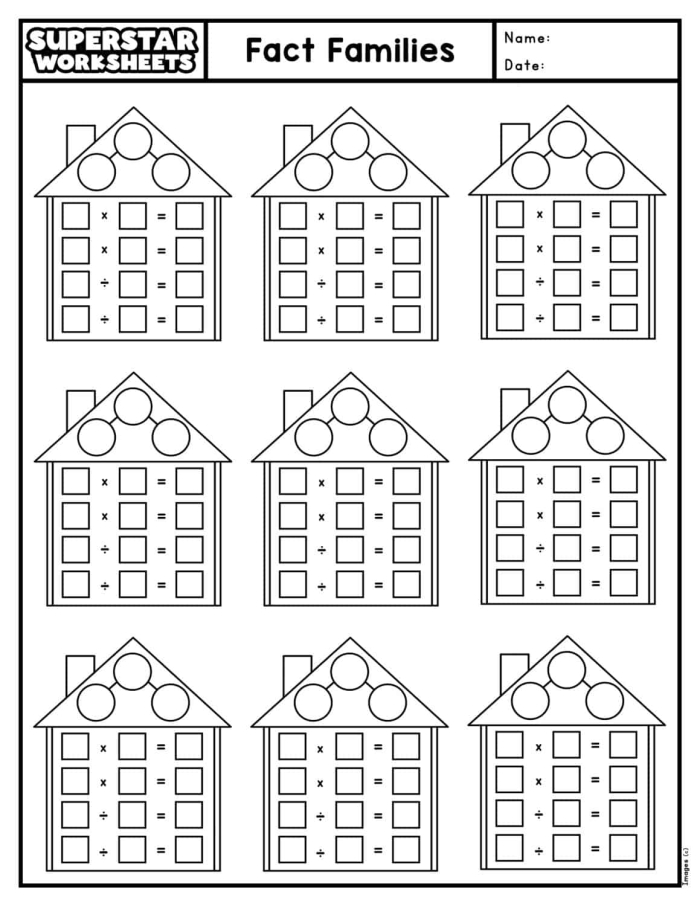
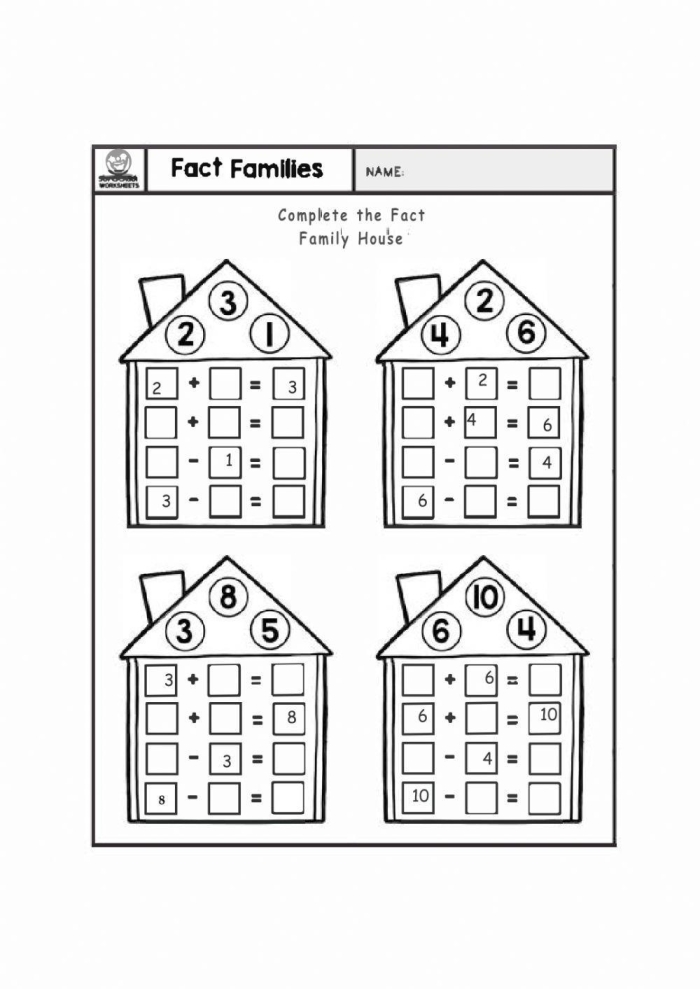
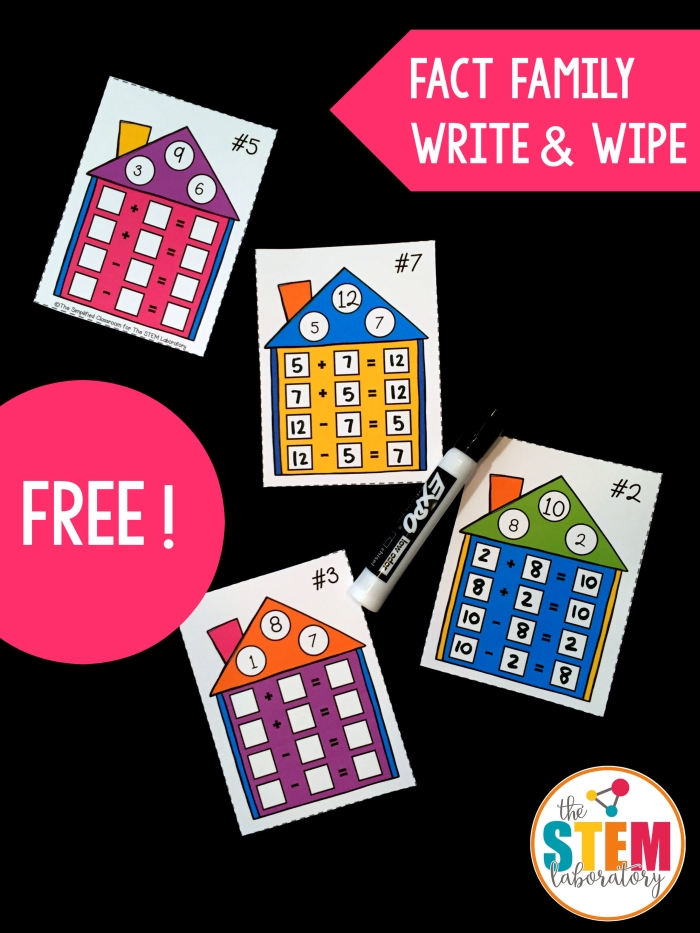
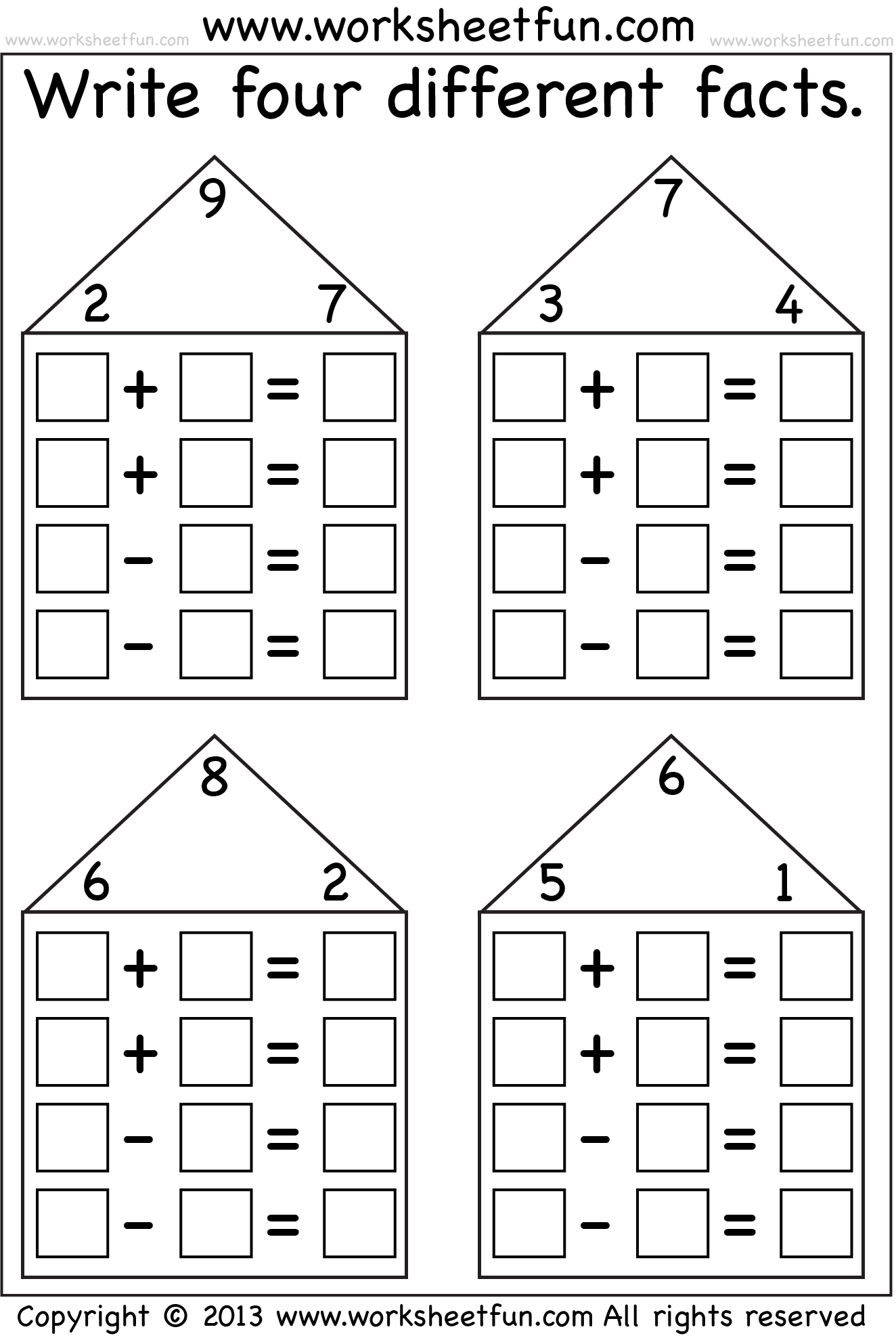
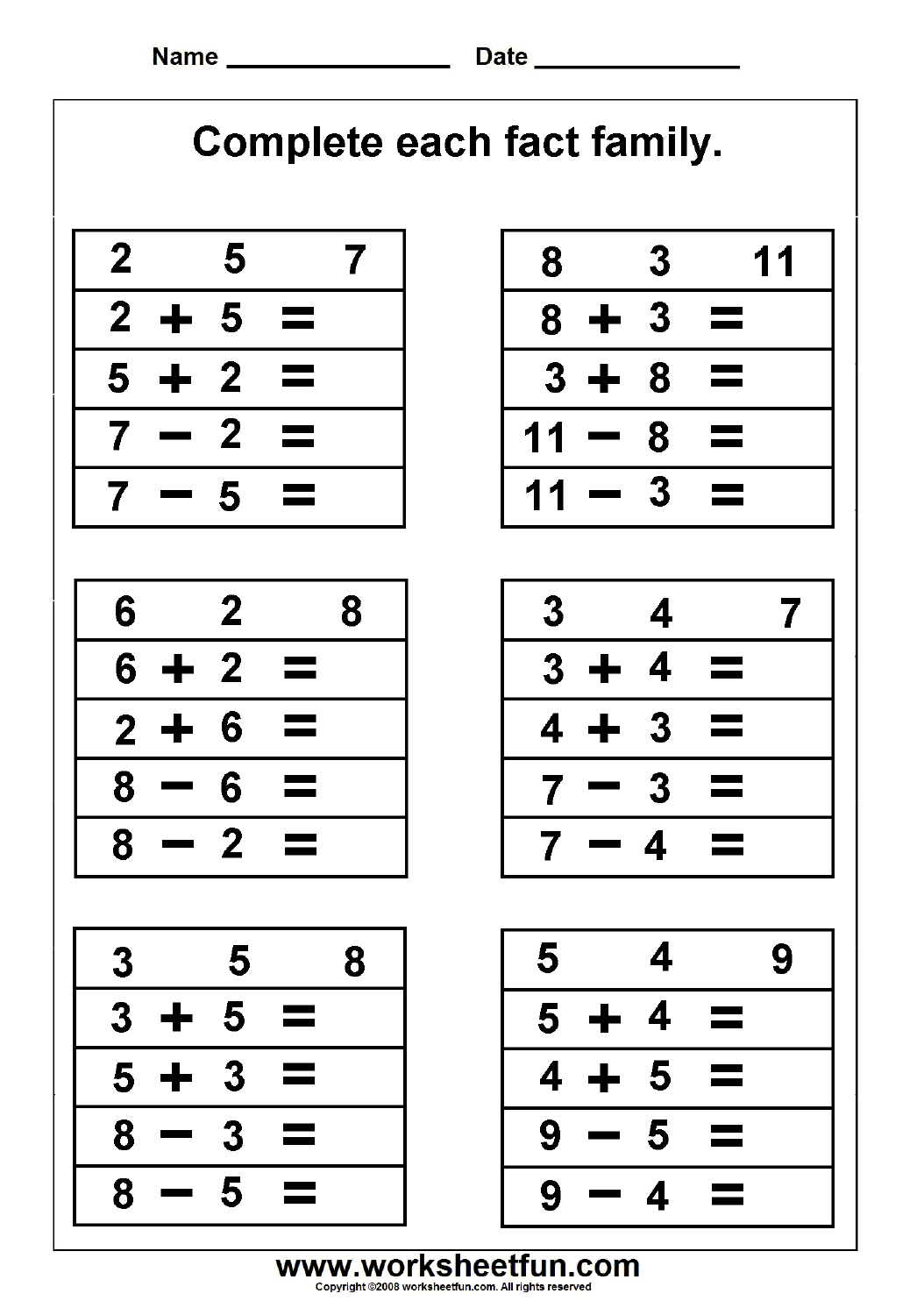
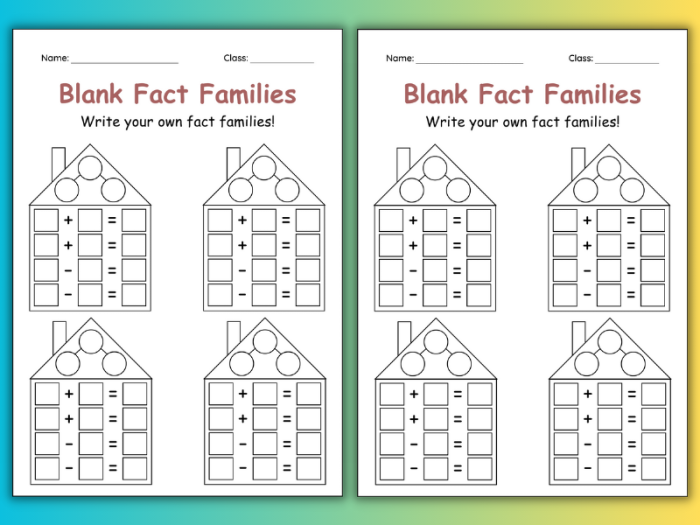
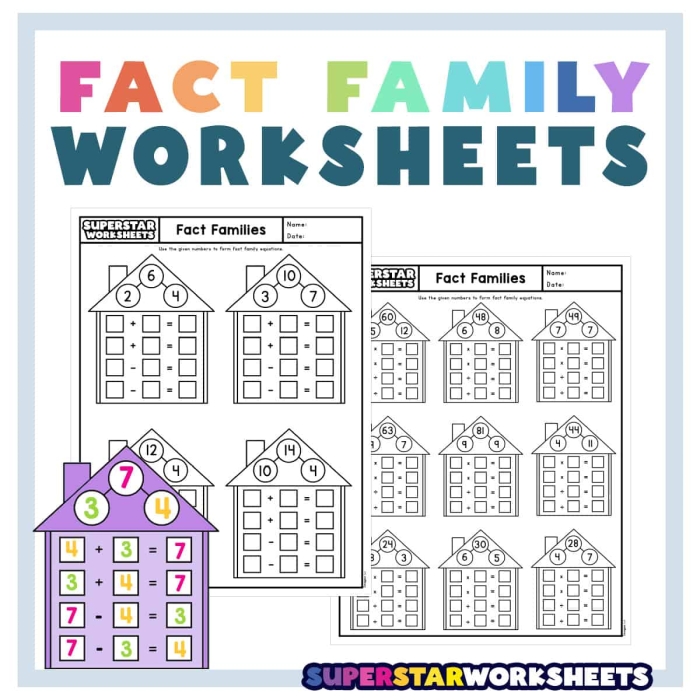
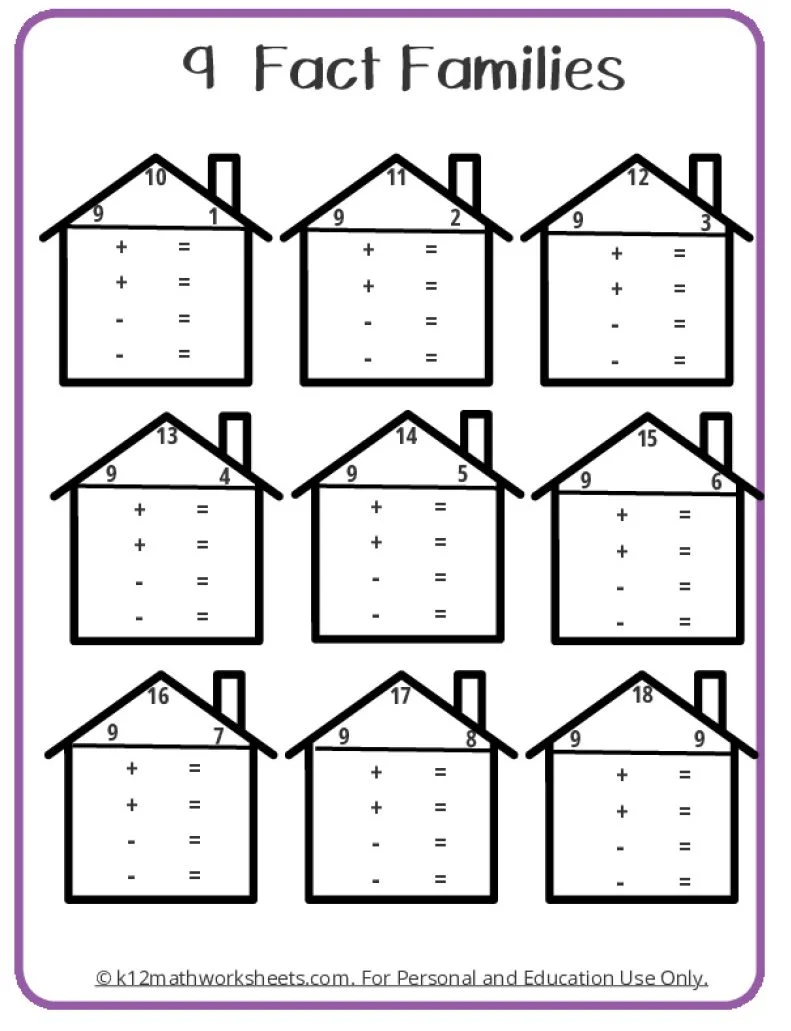
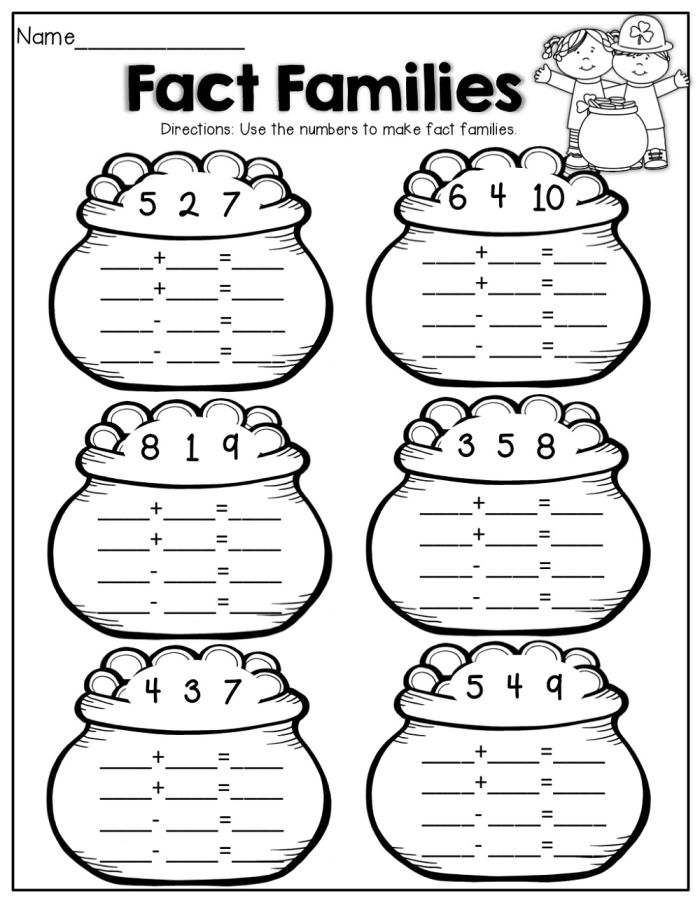
Fact family houses work because they show kids how addition and subtraction connect to each other. When third graders fill in the missing numbers in these visual structures, they’re not just practicing isolated math problems. They’re learning that 3 + 5 = 8 and 8 – 5 = 3 belong to the same family of related facts.
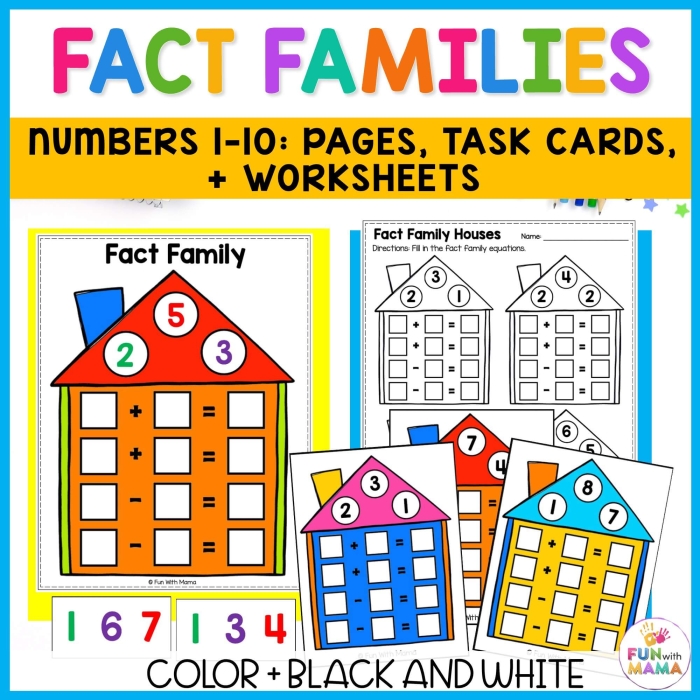
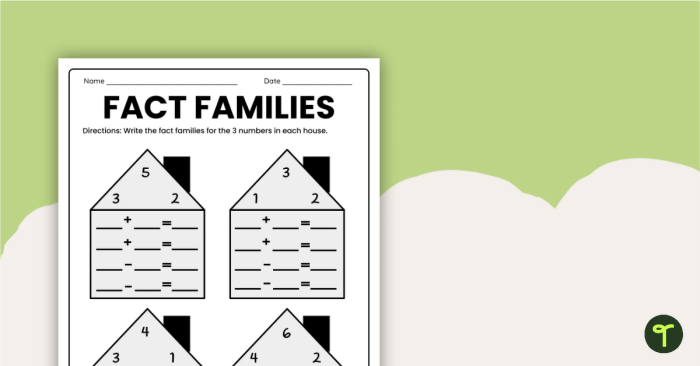
A typical fact family house has a roof that holds the largest number, with two numbers in the foundation below. Students see that the two smaller numbers always add up to the bigger one, and subtracting either small number from the big one gives you the other small number. This concrete visual approach helps kids understand the inverse relationship between addition and subtraction in a way that makes sense to their developing brains.
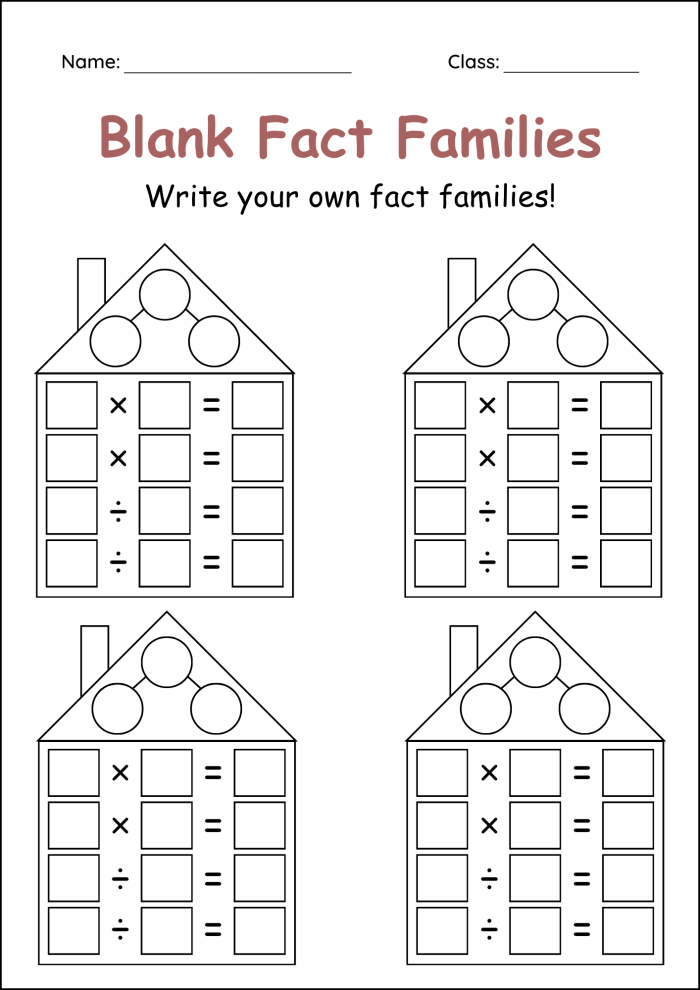
The worksheet format keeps students engaged because they’re solving a puzzle rather than grinding through a list of problems. Each empty space represents something to discover, and filling it in feels like progress. Teachers report that kids who struggle with abstract math concepts often have breakthroughs when working with fact family houses because the layout gives them something tangible to reference.
These worksheets fit naturally into a broader math curriculum. Once students master basic number relationships through fact families, they build confidence for more complex operations. The same principle of connecting related concepts appears in other foundational skills, like how telling time with visual aids helps first graders understand how minutes and hours work together.
For classroom use, fact family house worksheets work best when introduced after kids have solid understanding of basic addition and subtraction facts. Starting with smaller numbers like 2, 3, and 5 keeps the focus on the relationship rather than computational difficulty. Once students grasp the pattern with small numbers, they can apply the same thinking to larger fact families.
Practice with These Worksheets