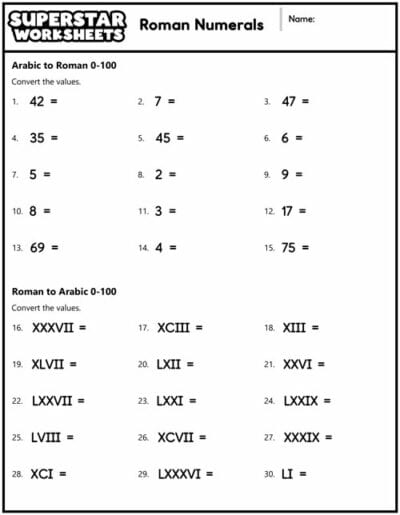
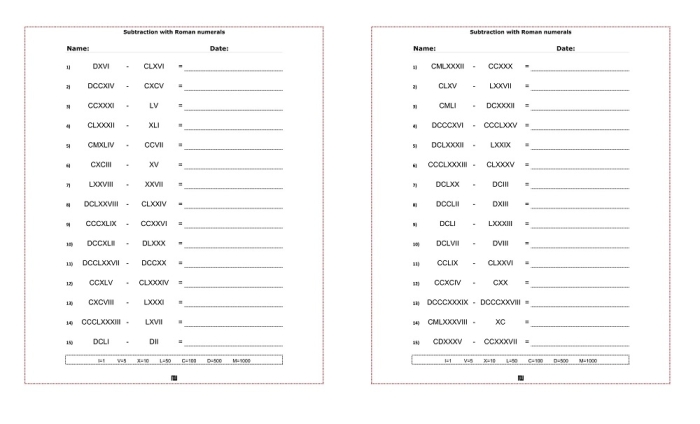
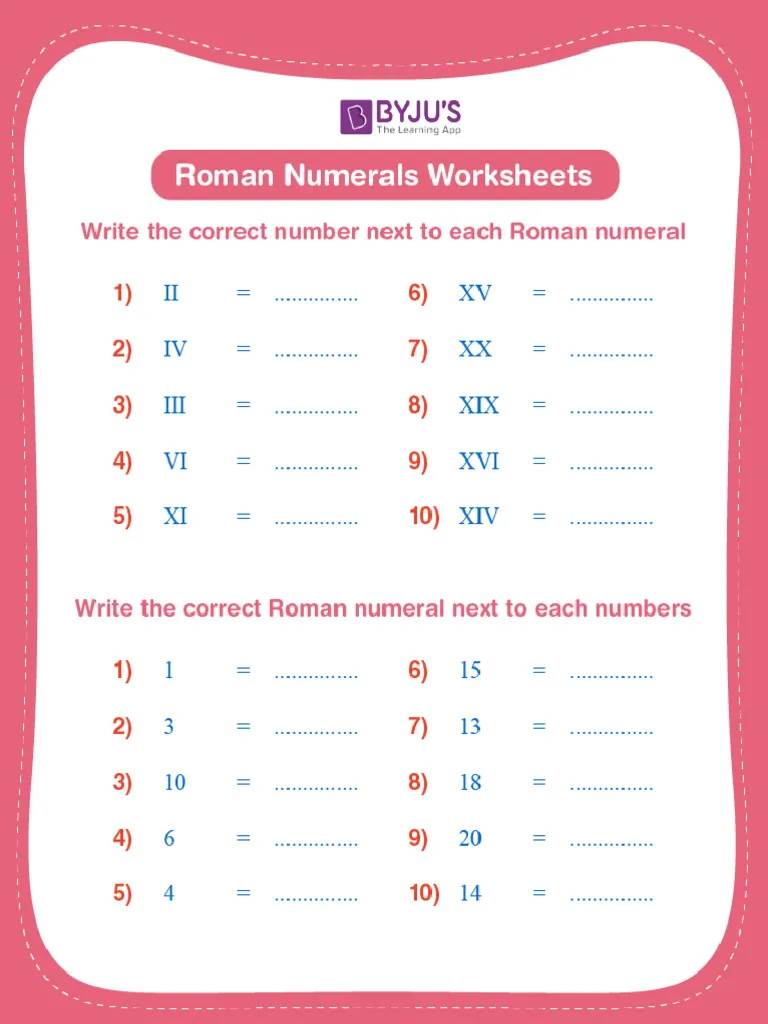
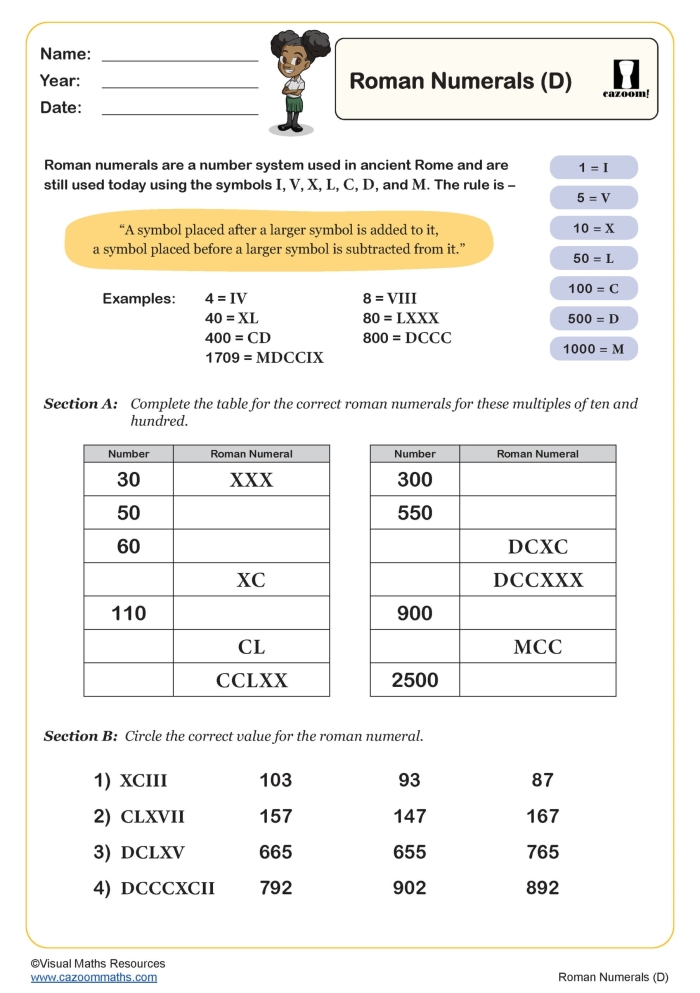
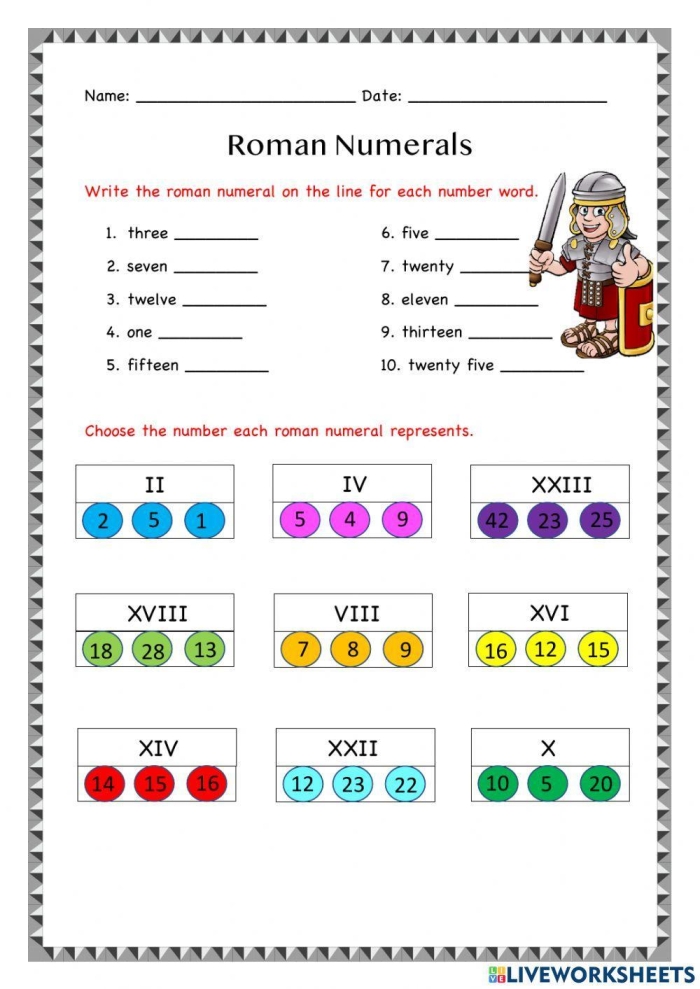
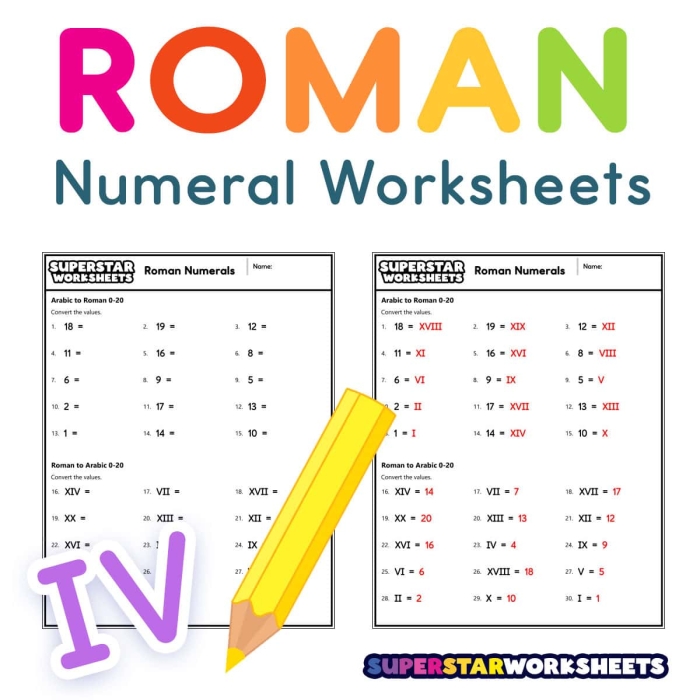
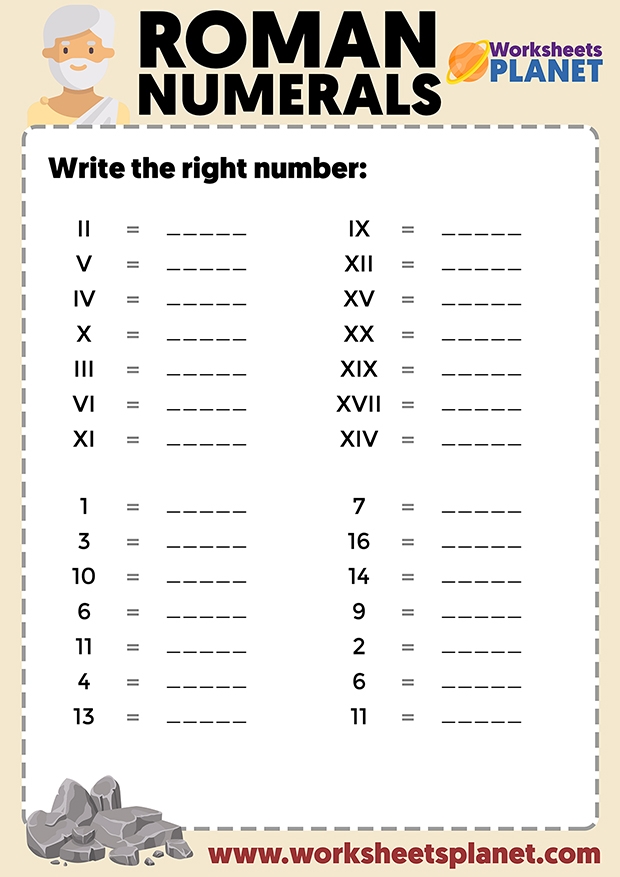
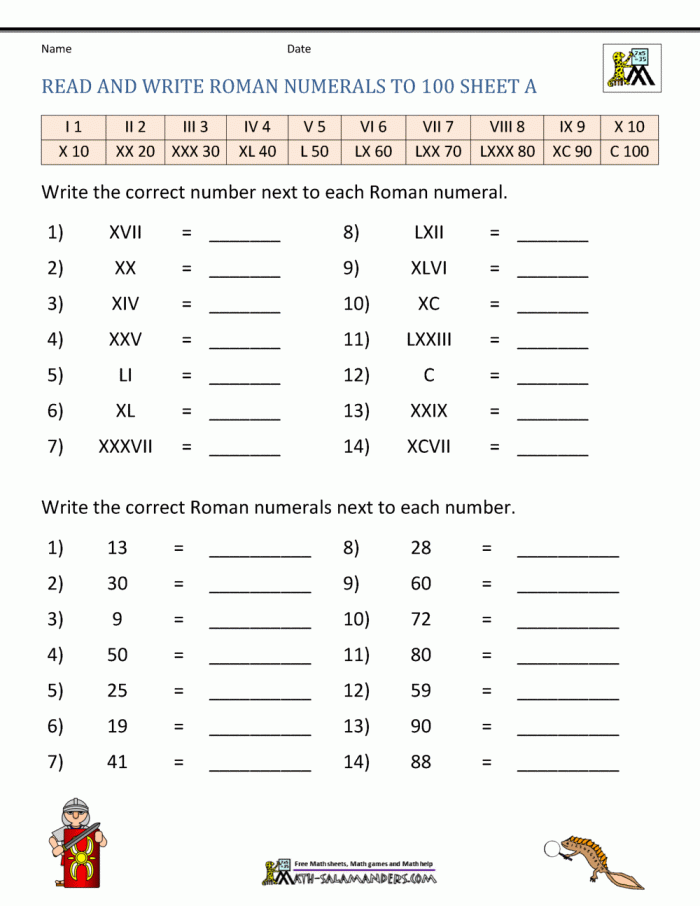
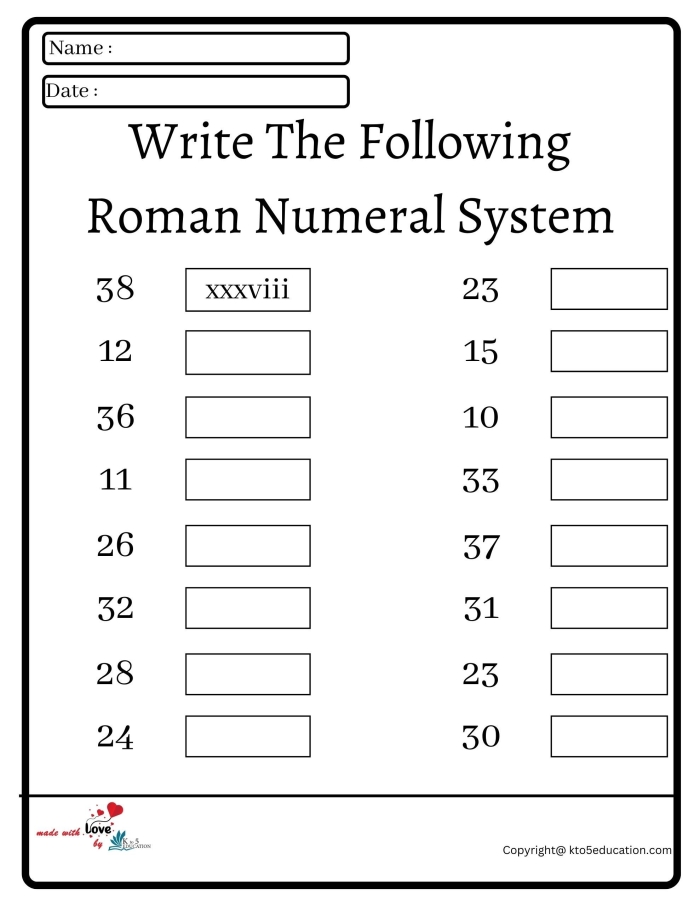
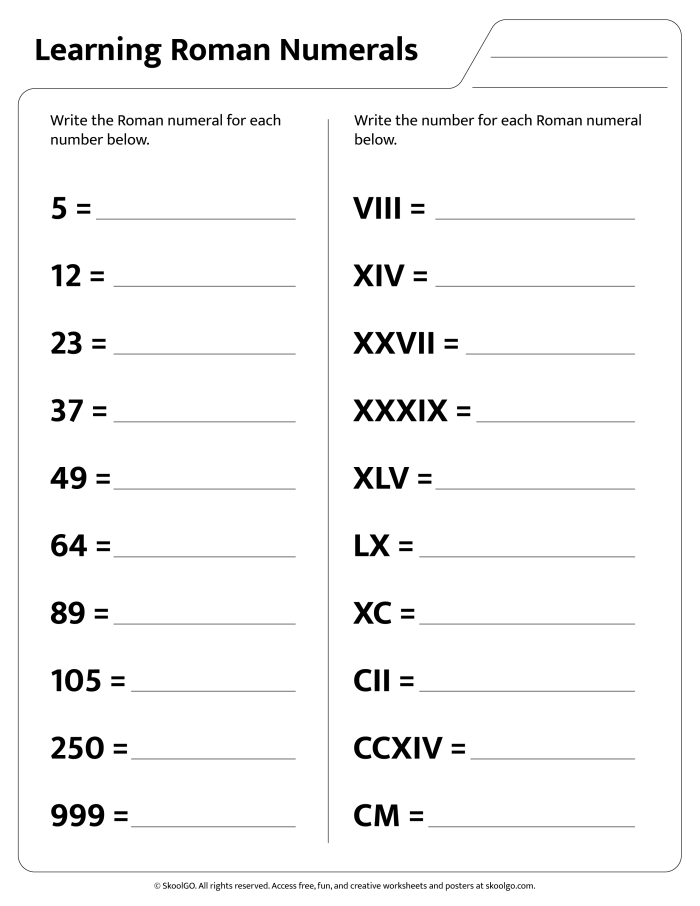
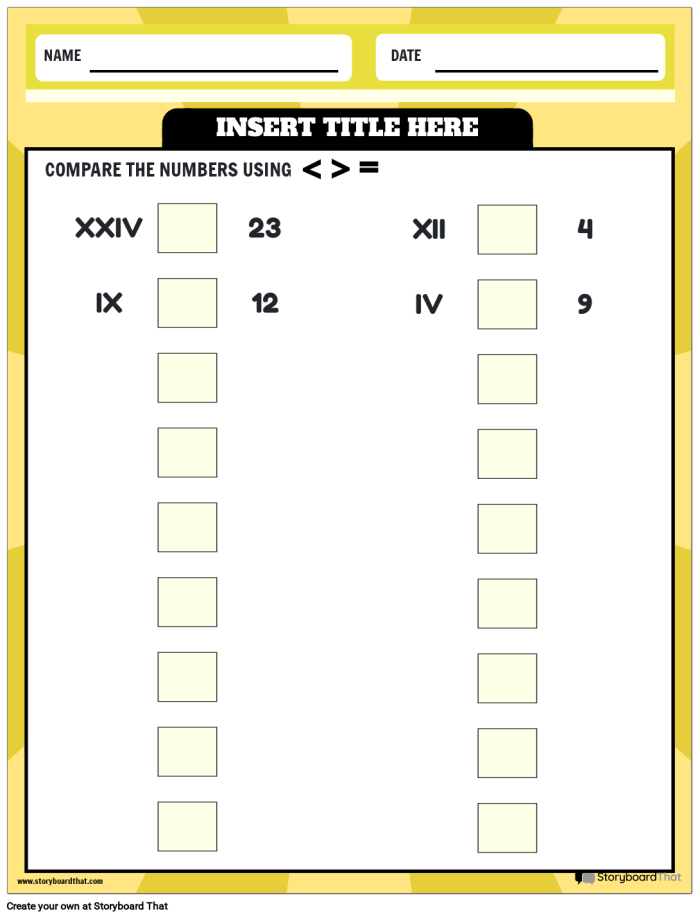
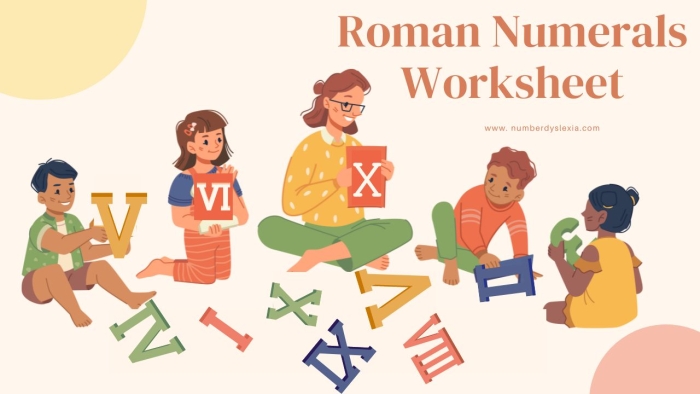
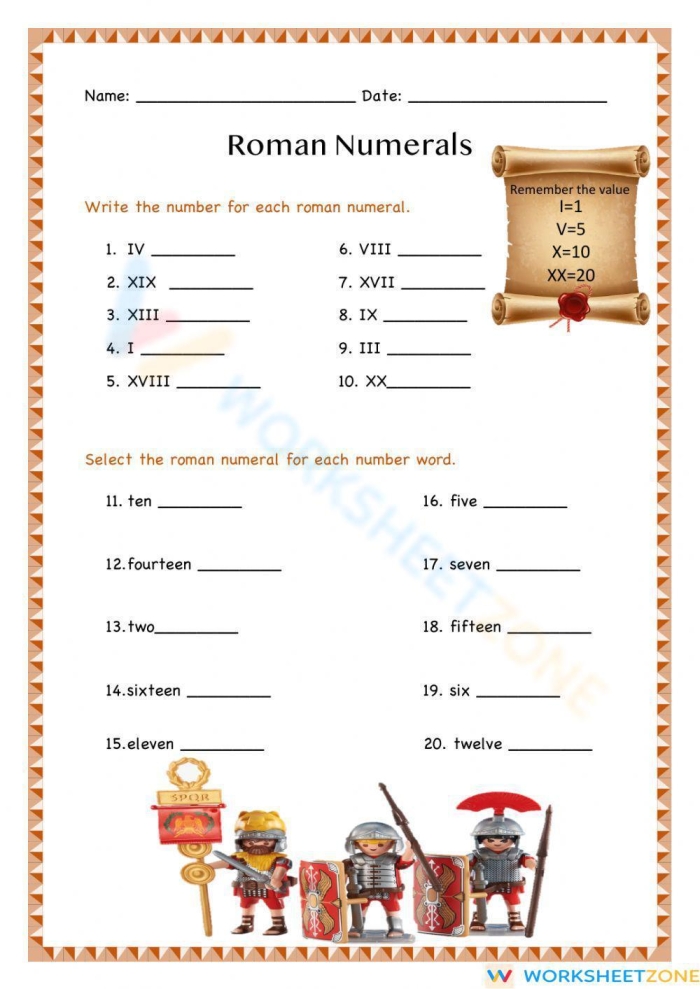
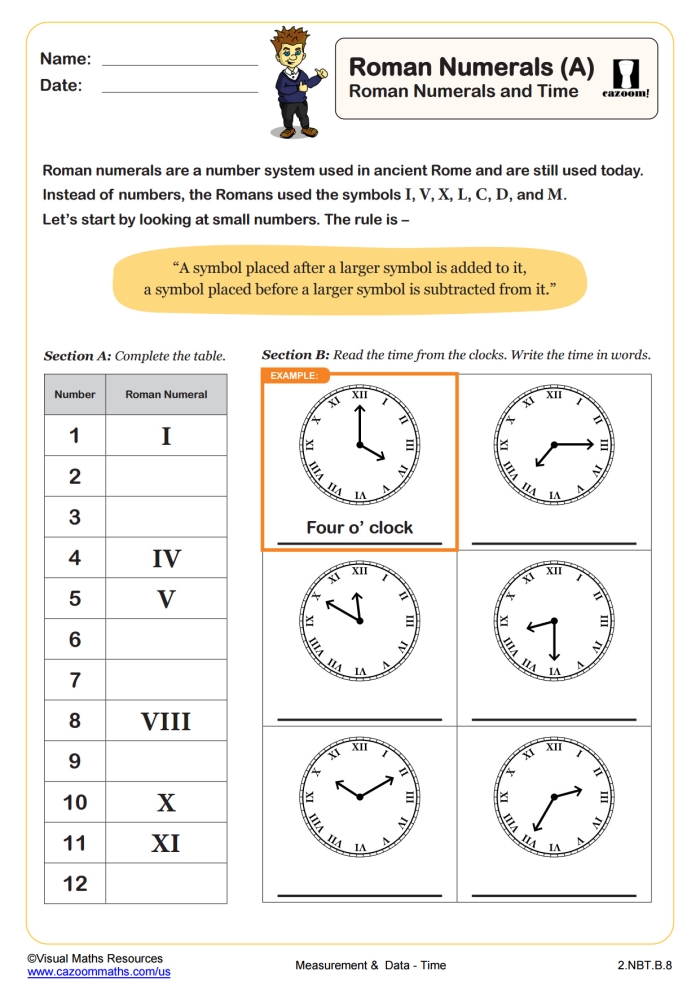
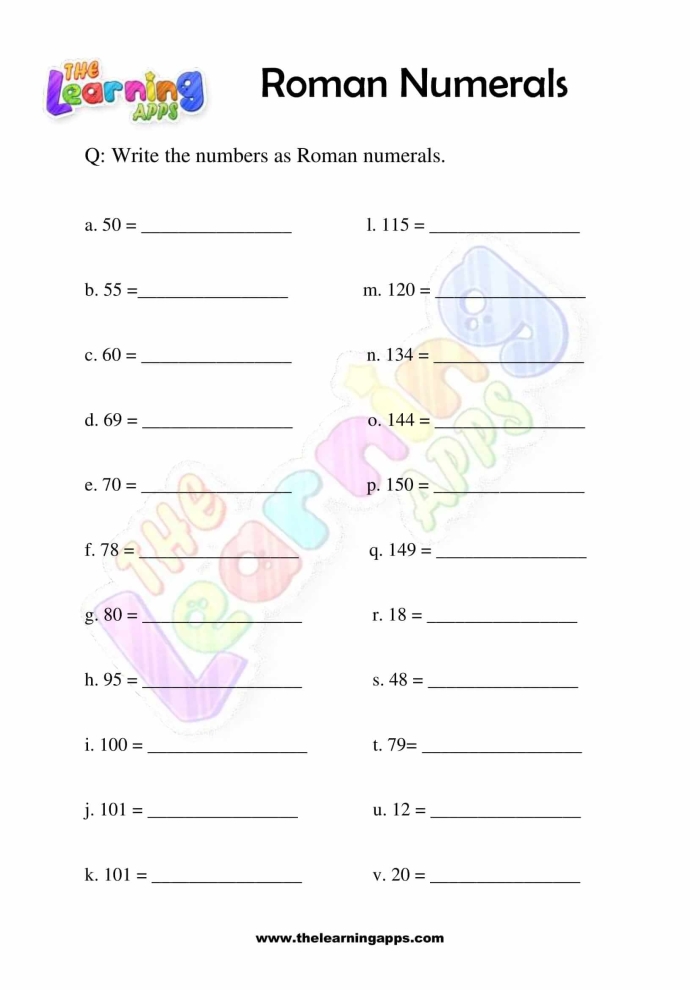
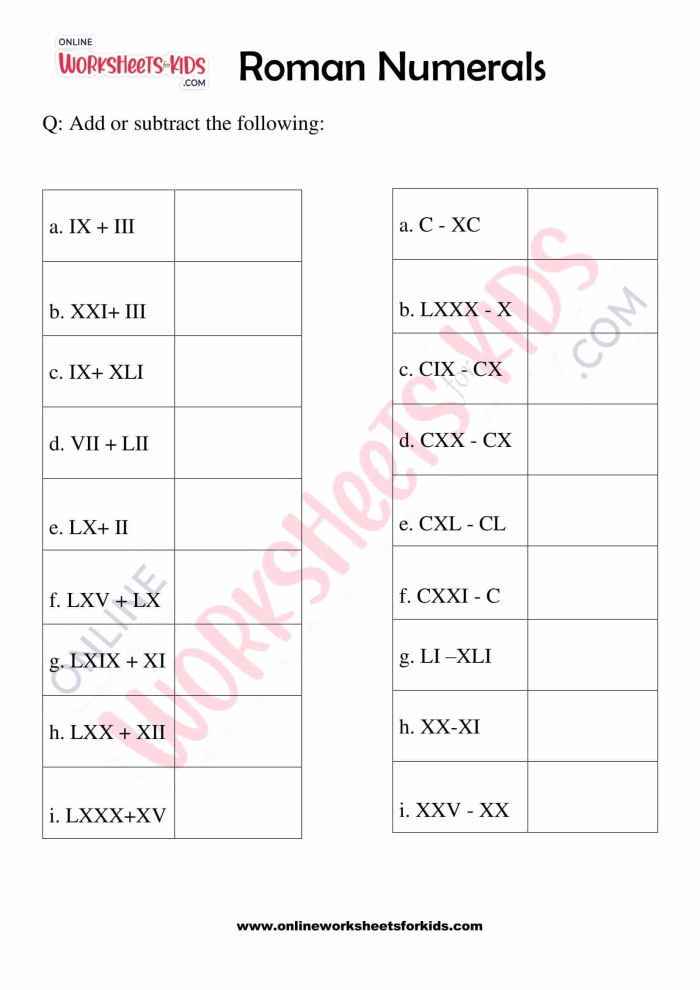
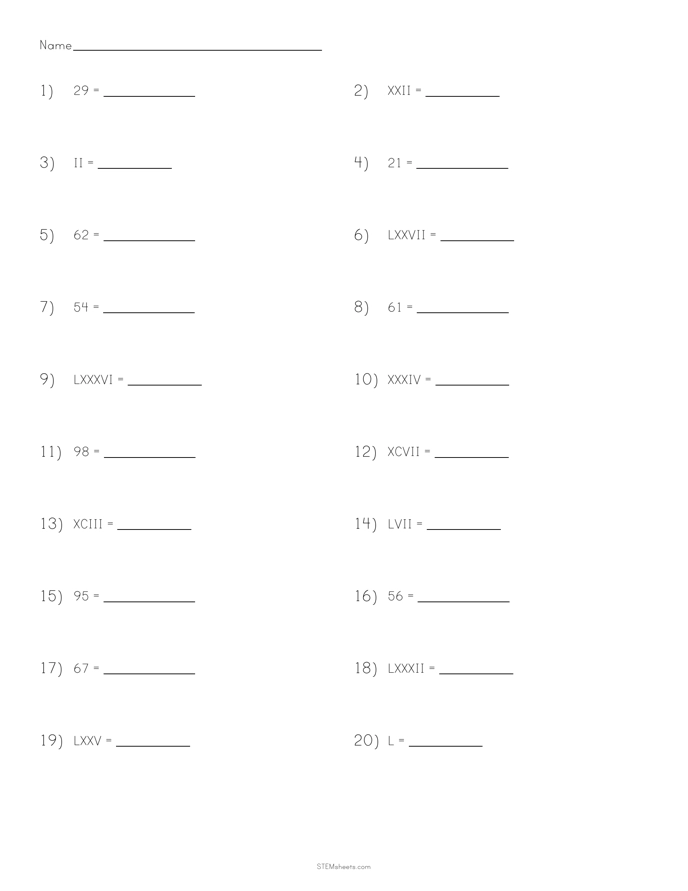
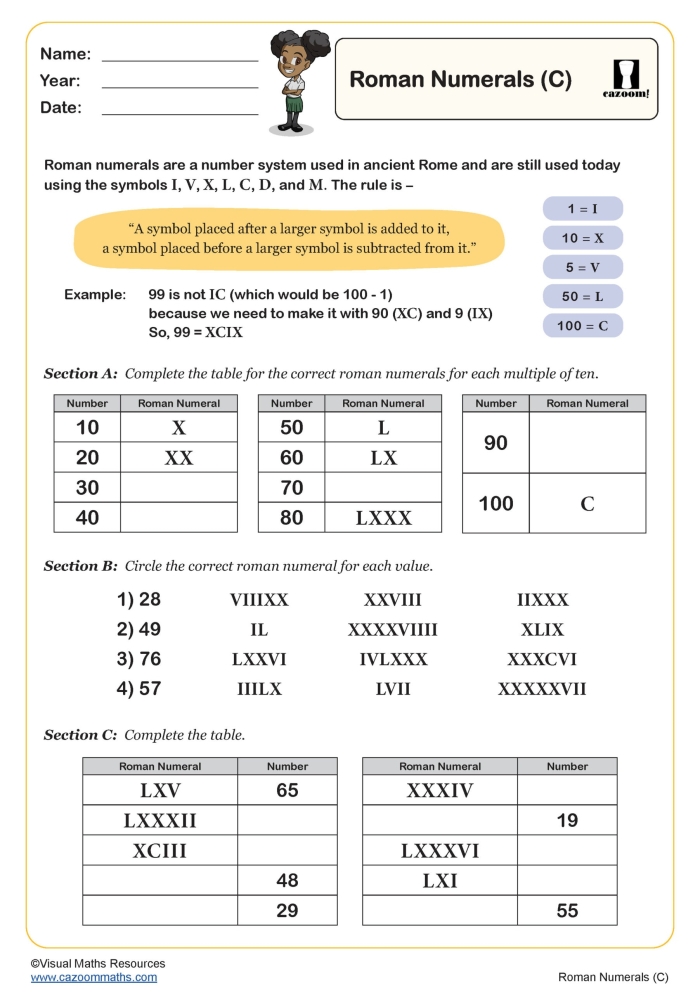
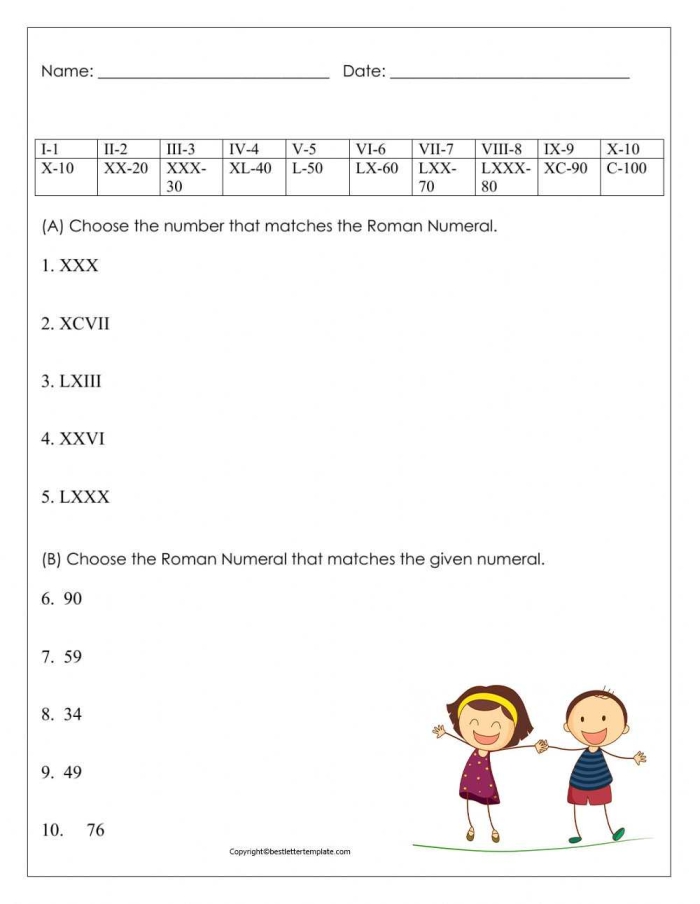
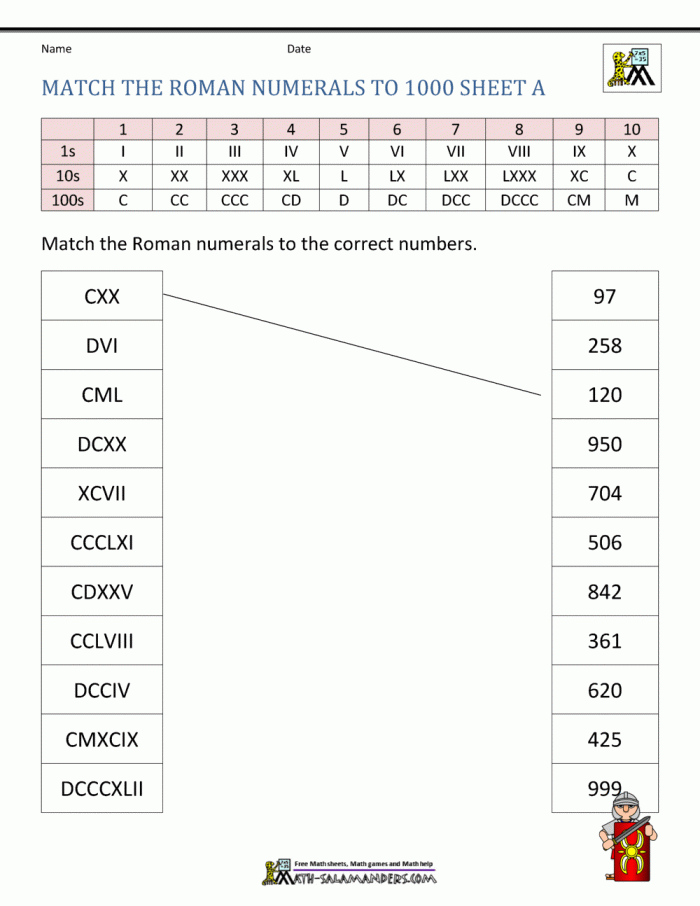
Introducing children to Roman numerals is a fascinating way to engage their minds and enhance their numerical skills. In third grade, students often encounter various methods to learn mathematics, but working with Roman numerals stands out as both enjoyable and educational. This introductory worksheet allows children to identify and convert these ancient symbols, making learning a hands-on experience.
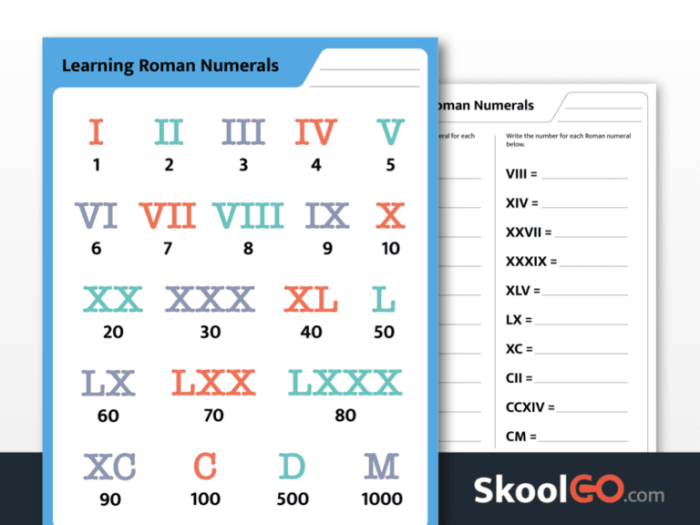
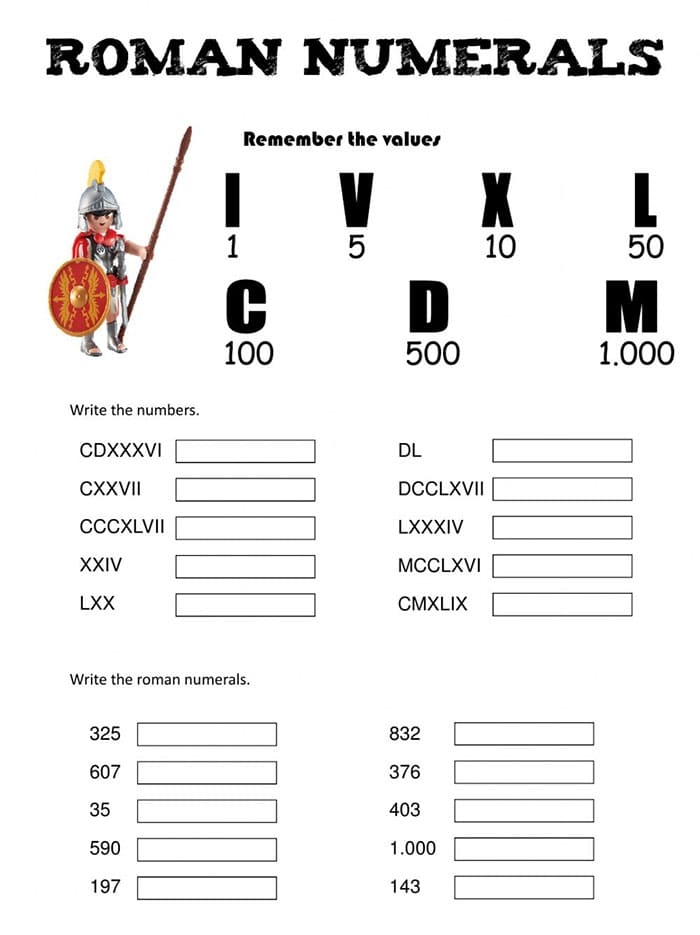
Roman numerals, which originated in ancient Rome, use combinations of letters from the Latin alphabet to signify values. For example, the letter “I” represents 1, “V” stands for 5, and “X” denotes 10. With the help of a printable worksheet, students can practice converting these symbols into standard numbers, reinforcing their understanding of both concepts. This type of exercise not only helps with number recognition but also improves problem-solving skills, as students must analyze and decode the values presented.
One practical benefit of teaching Roman numerals is that it connects to history, allowing children to see how different cultures approached counting and record-keeping. This can spark interest in ancient civilizations and encourage discussions about how mathematics has evolved. Additionally, worksheets like this can be easily integrated into the broader phonics curriculum, which often includes learning about letters and sounds. For example, while practicing Roman numerals, children might also explore words that begin with the letter “J,” enriching their vocabulary alongside their math skills.
As students progress through the worksheet, they will encounter various challenges that require them to convert numbers back and forth between Roman and Arabic formats. This dual approach fosters a deeper understanding of numerical systems and prepares them for more complex math concepts in the future. Resources such as those available at Luminaworksheets further complement these learning experiences, providing additional exercises that can enhance their readiness for reading and math.
Download These Worksheets for Practice