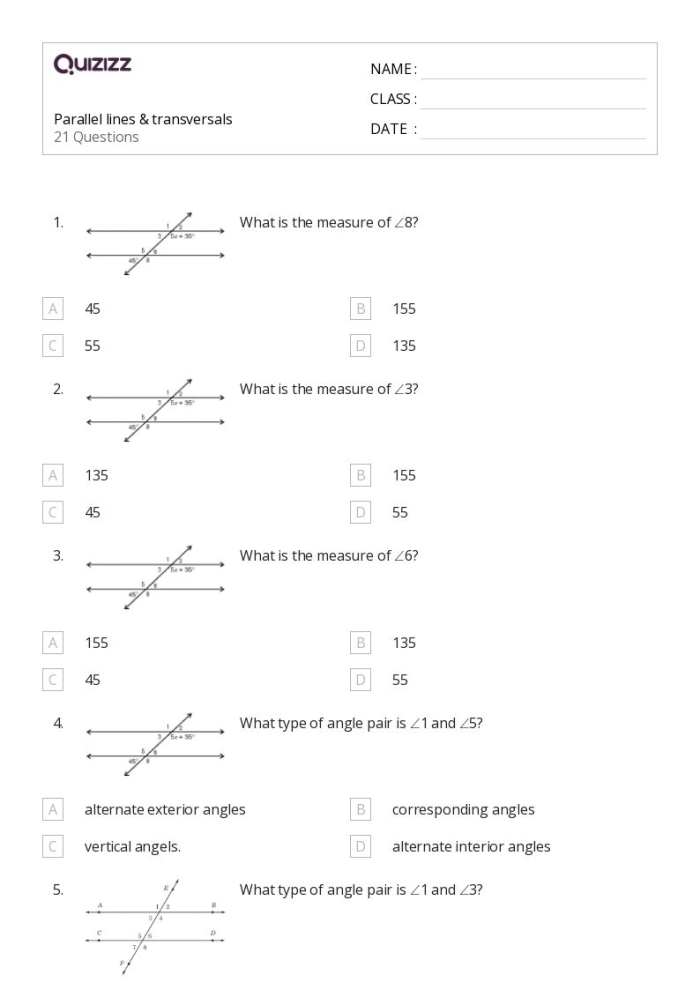
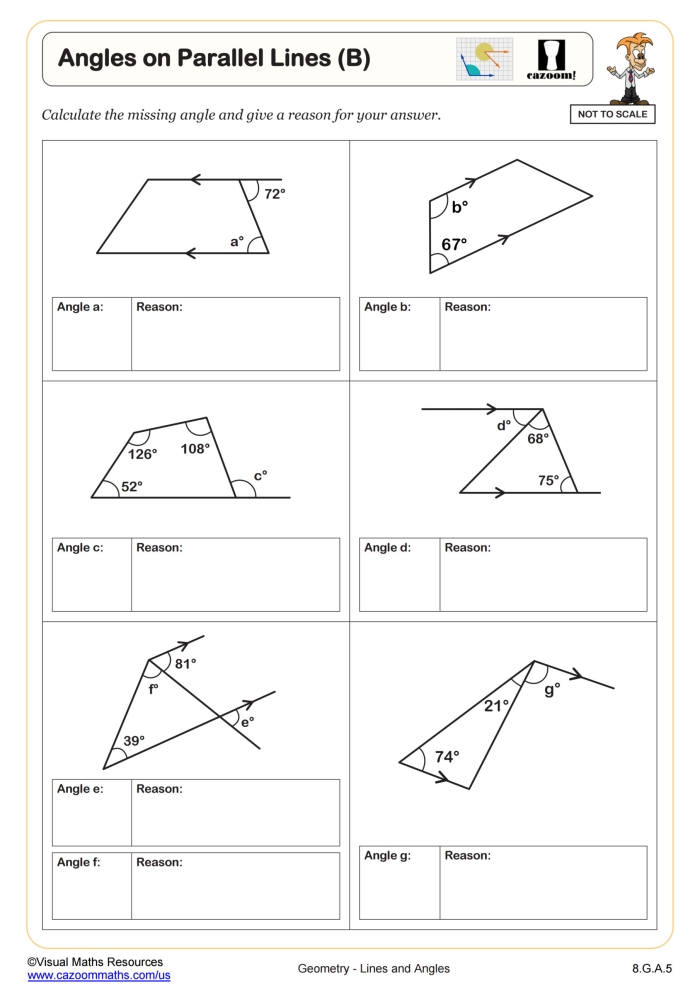
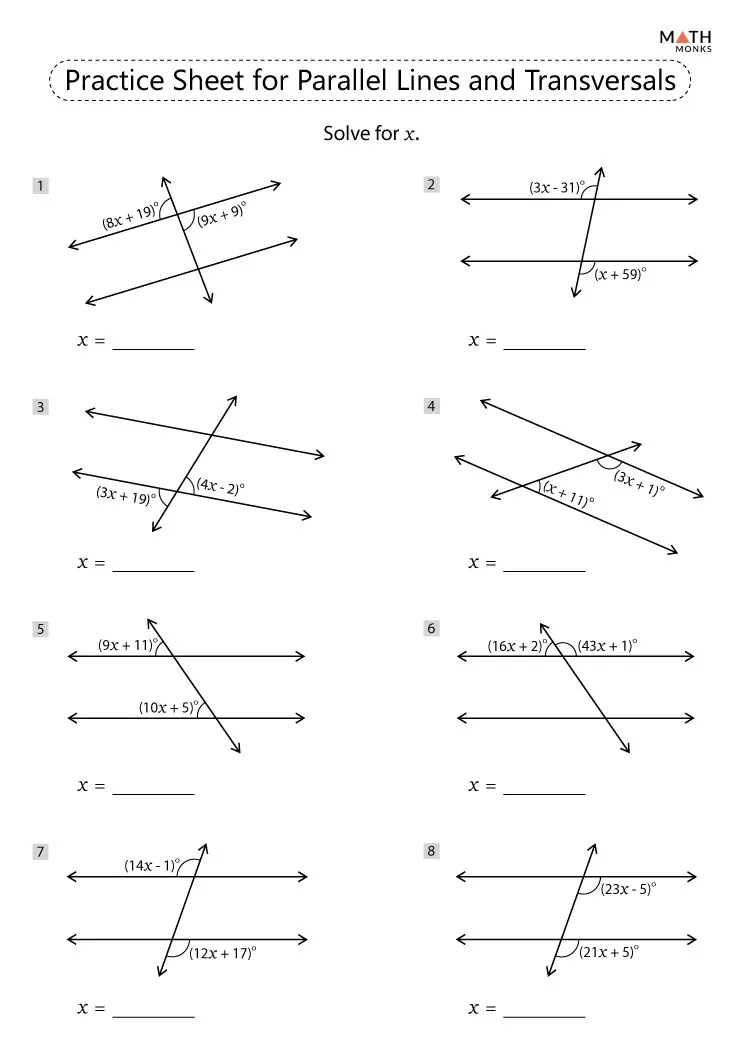
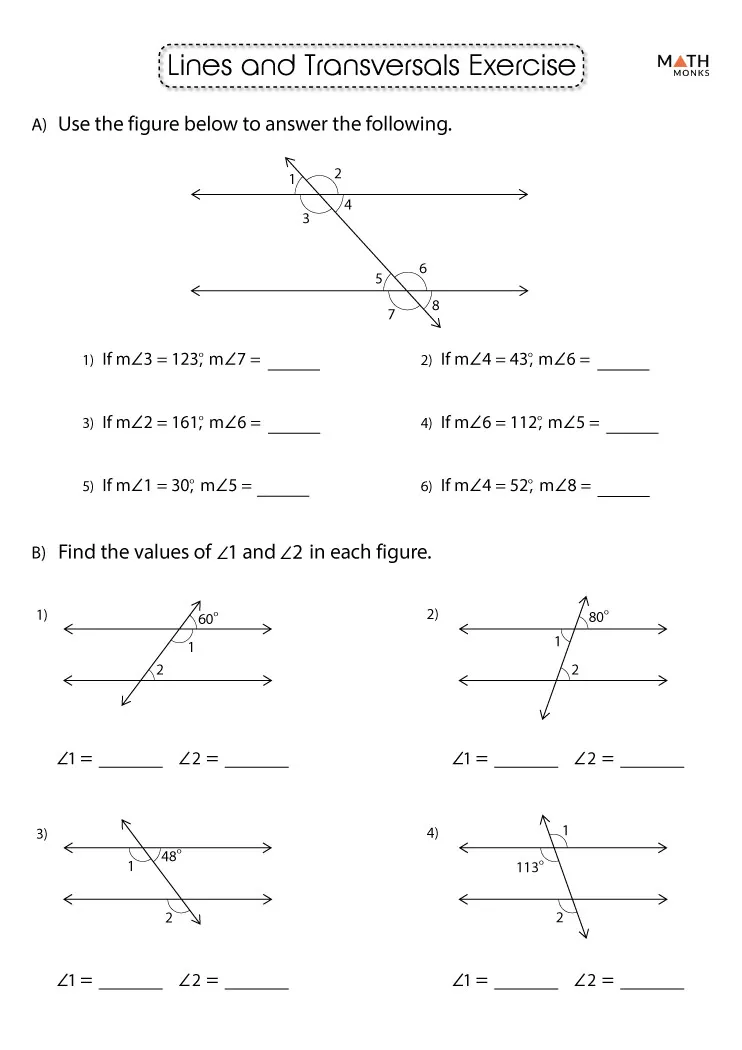
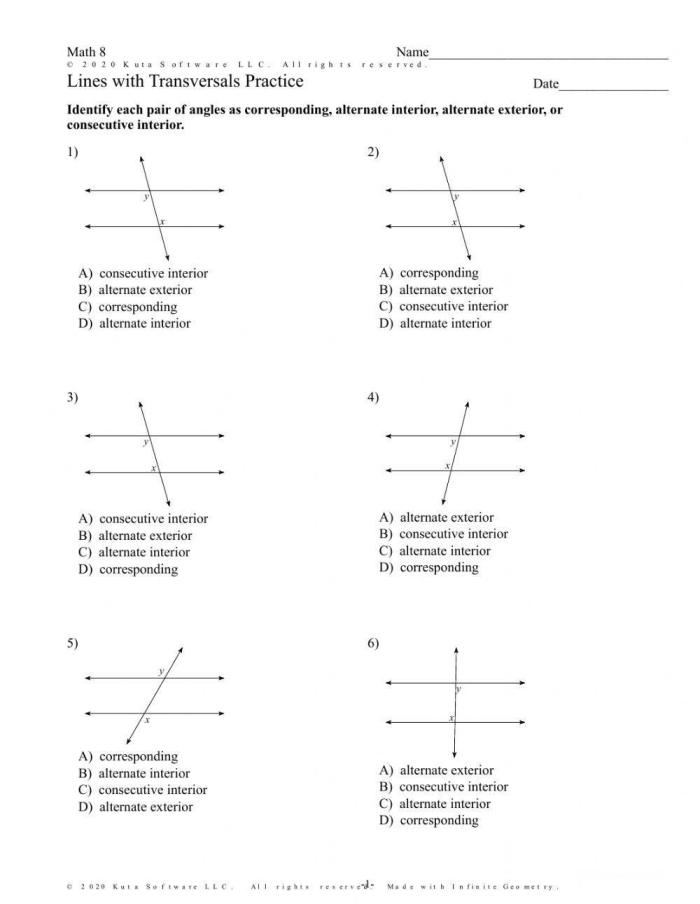
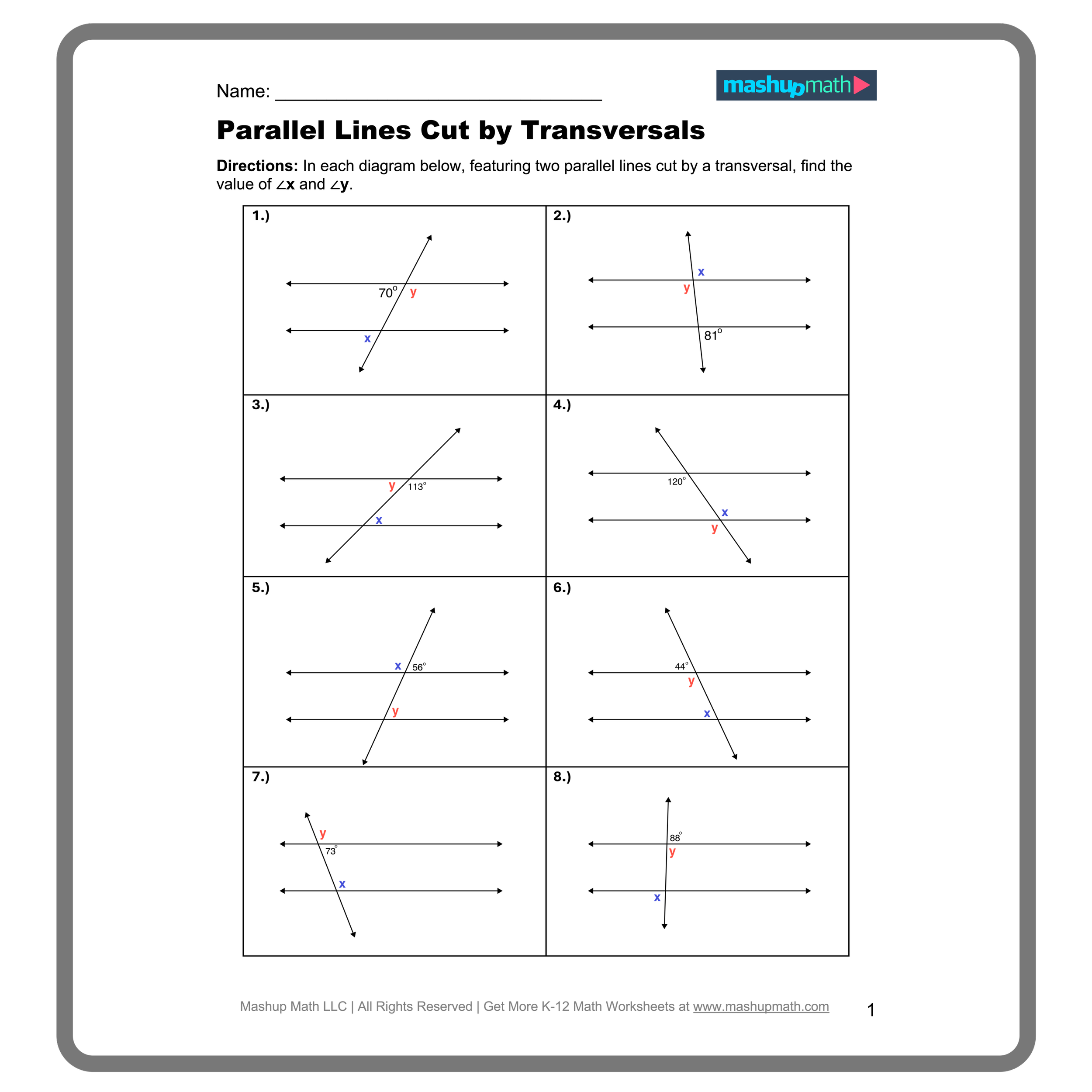
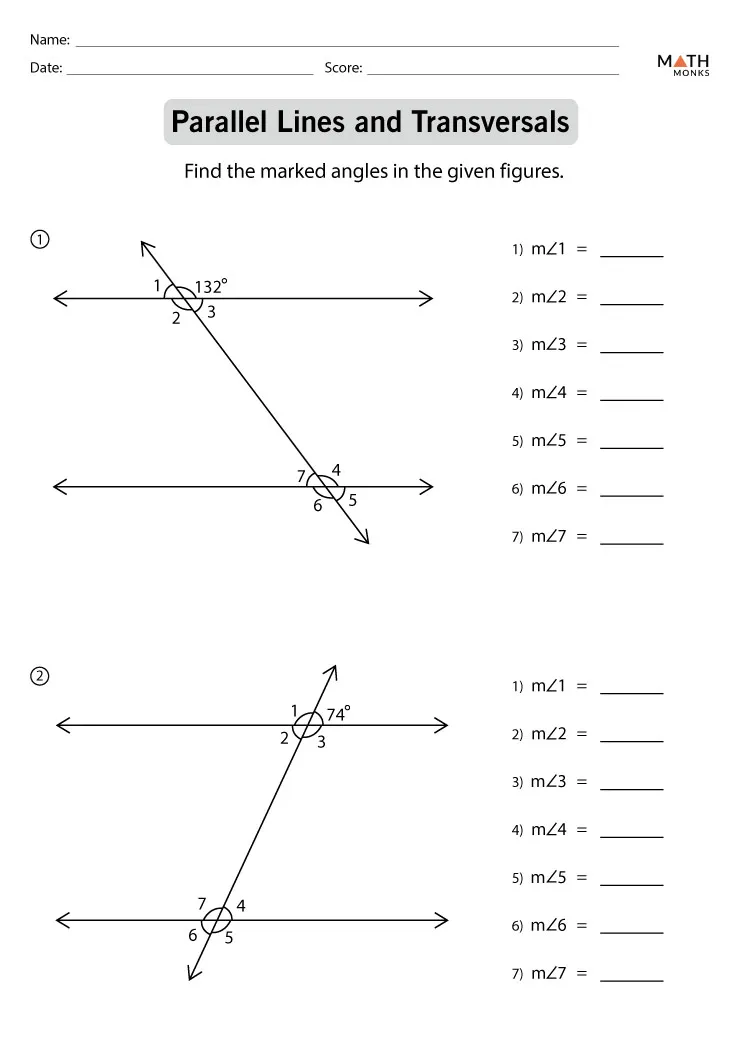
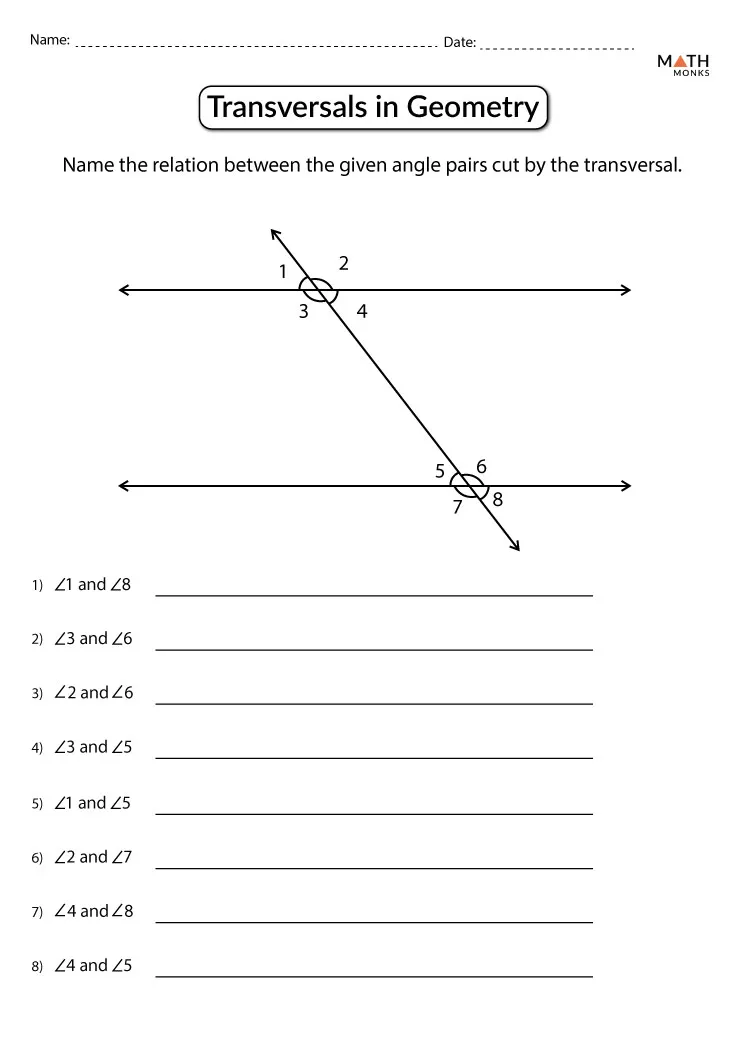
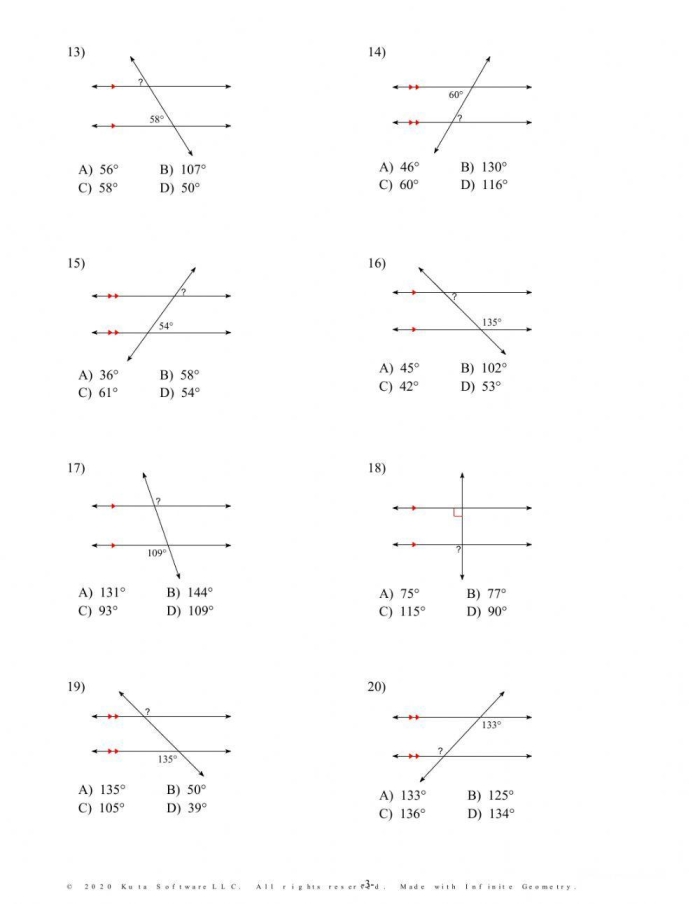
Understanding the relationship between angles formed by parallel lines cut by a transversal is essential for eighth graders tackling geometry. This concept is not just a theoretical exercise; it has practical implications in various fields such as architecture, engineering, and even art. When students engage with a worksheet focused on this topic, they are not merely filling in answers—they are developing critical thinking skills and spatial awareness.
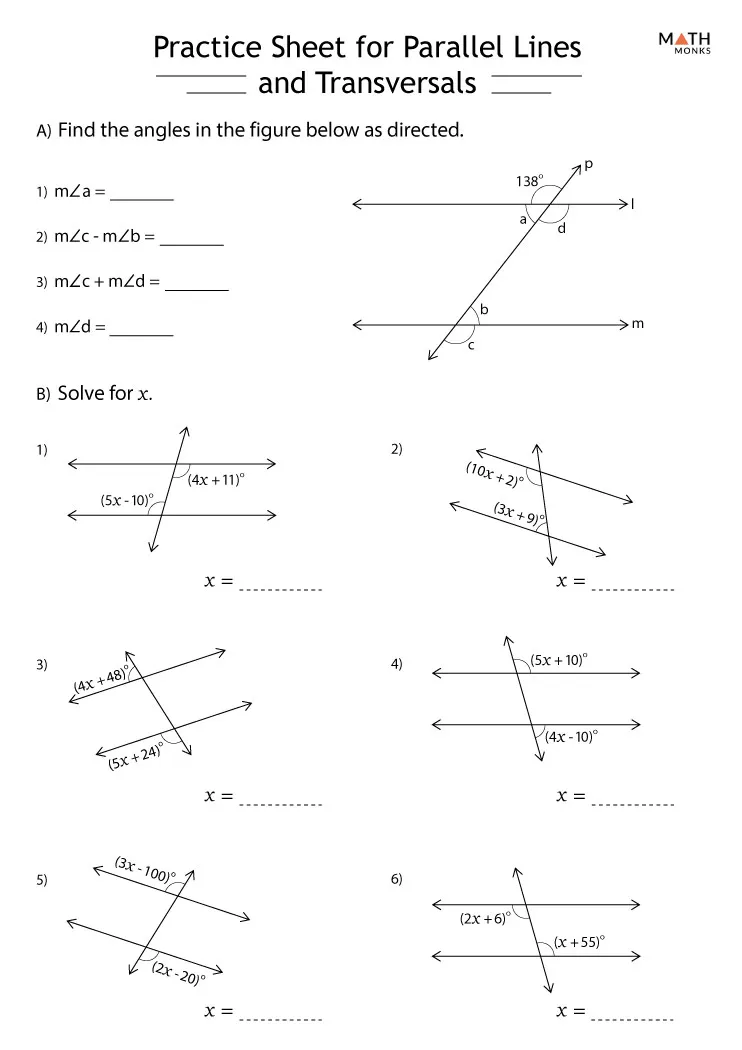
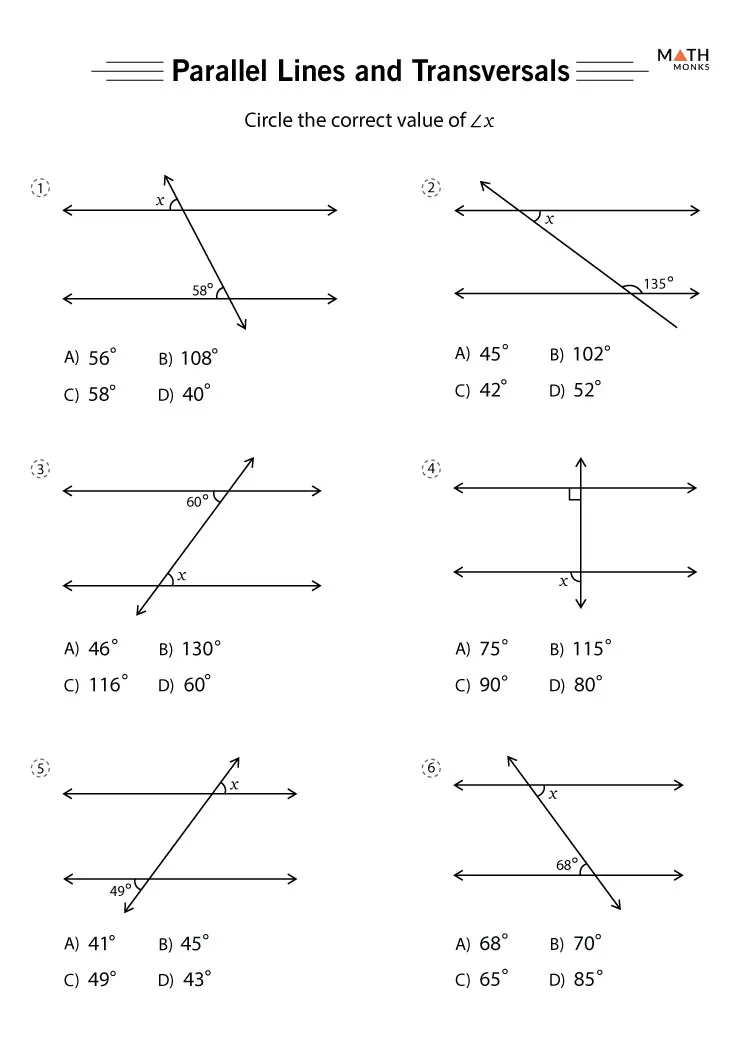
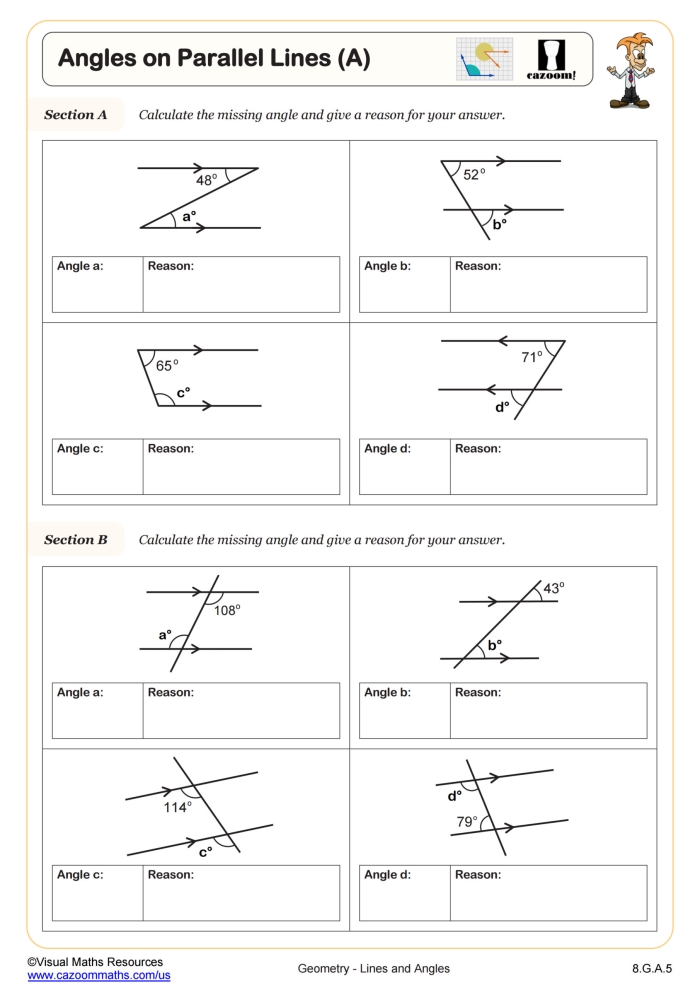
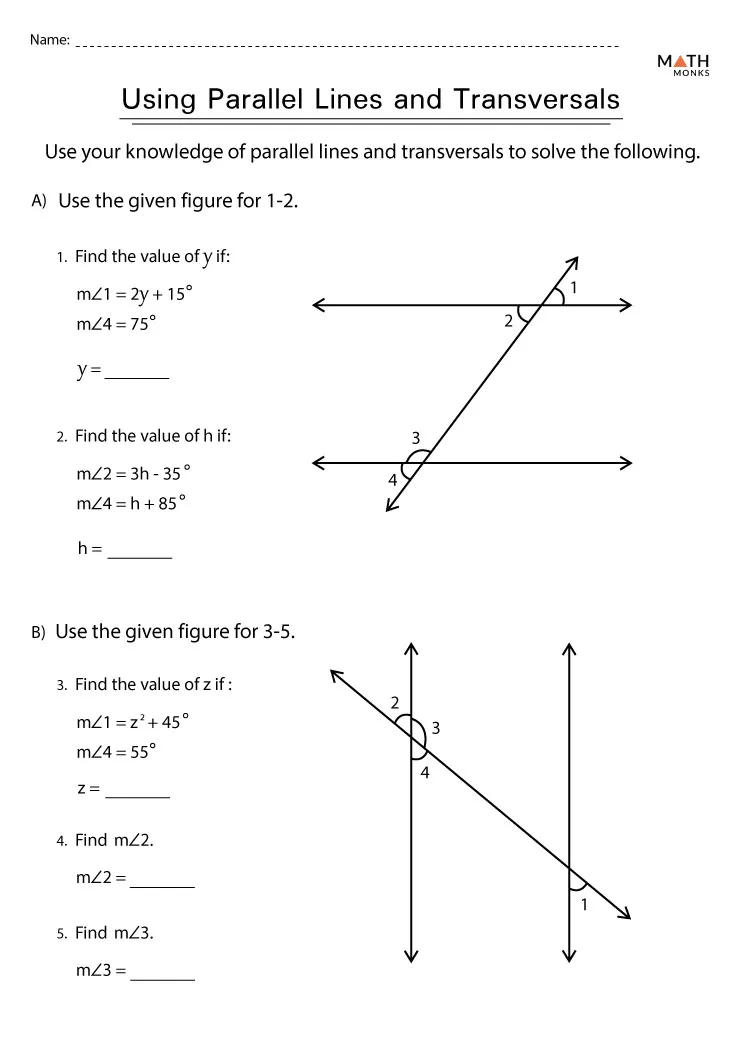
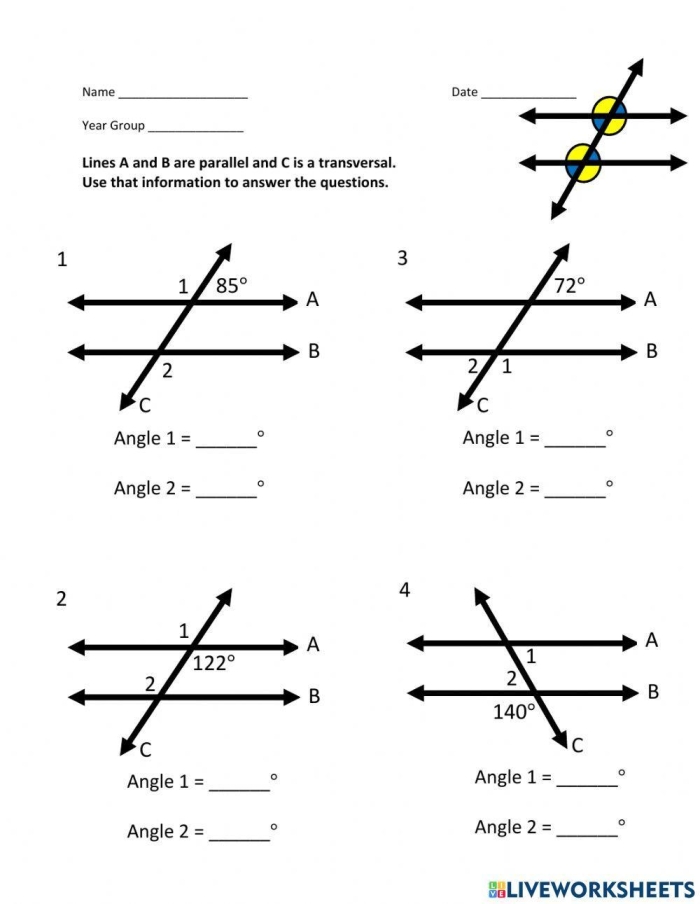
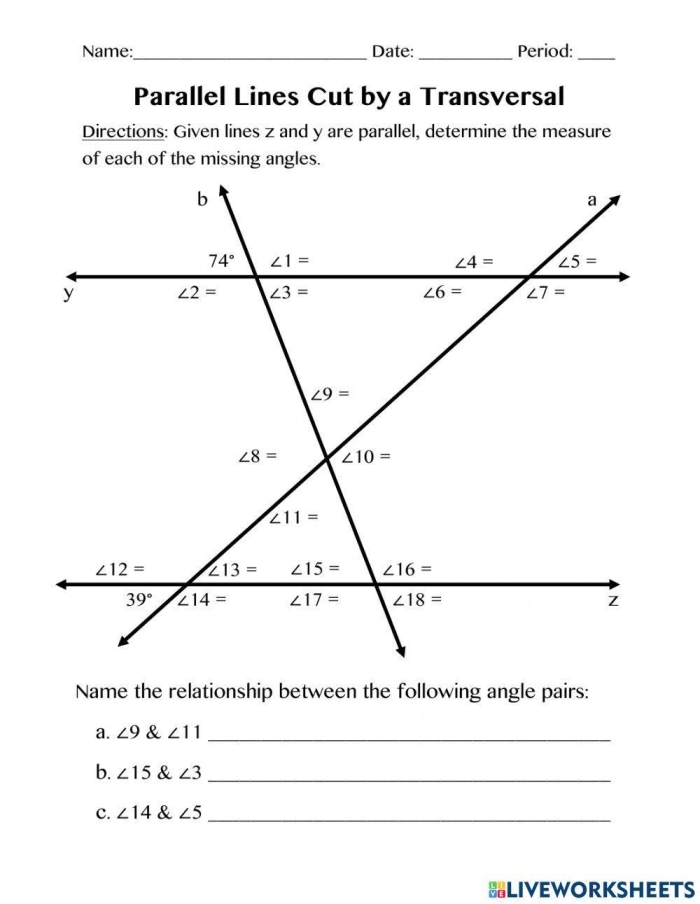
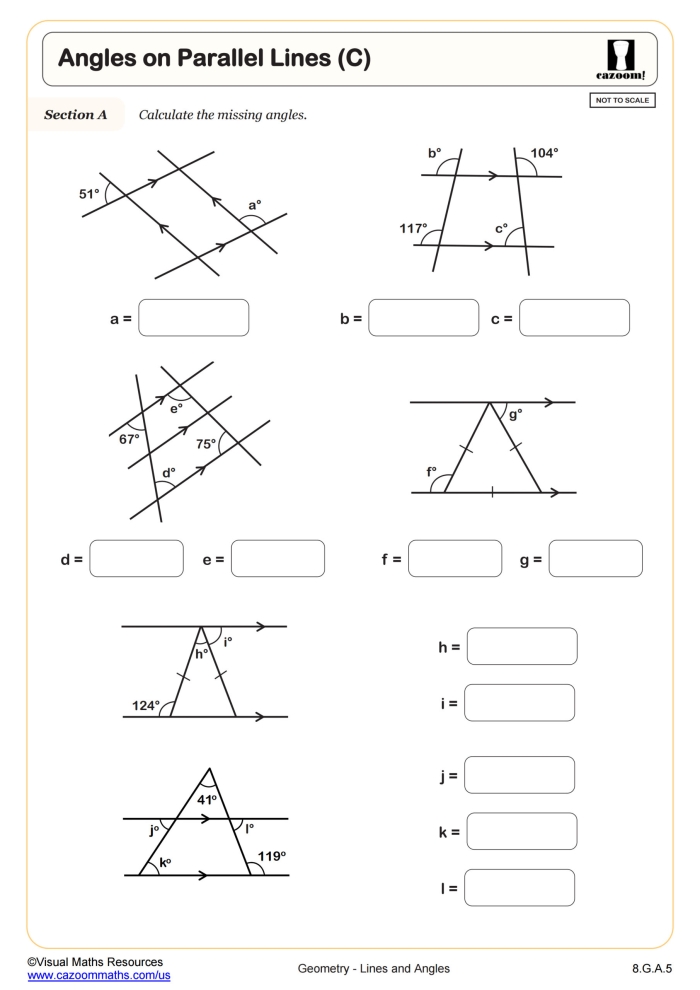
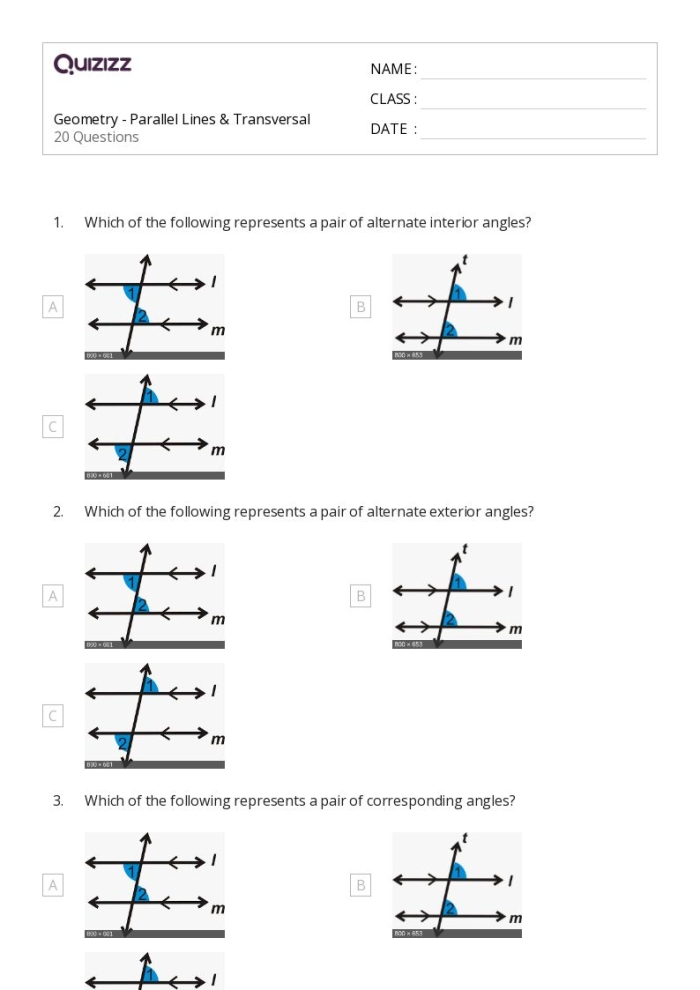
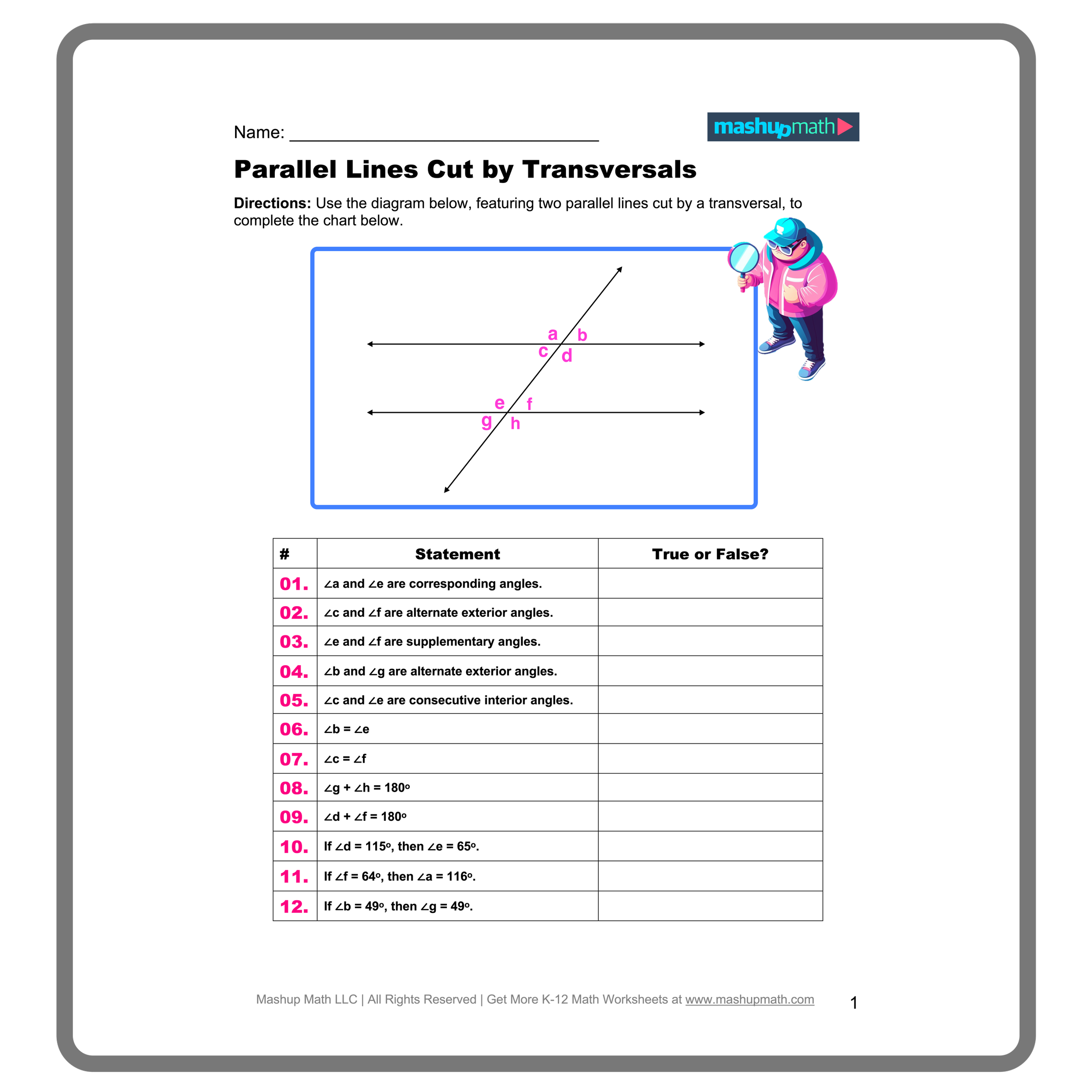
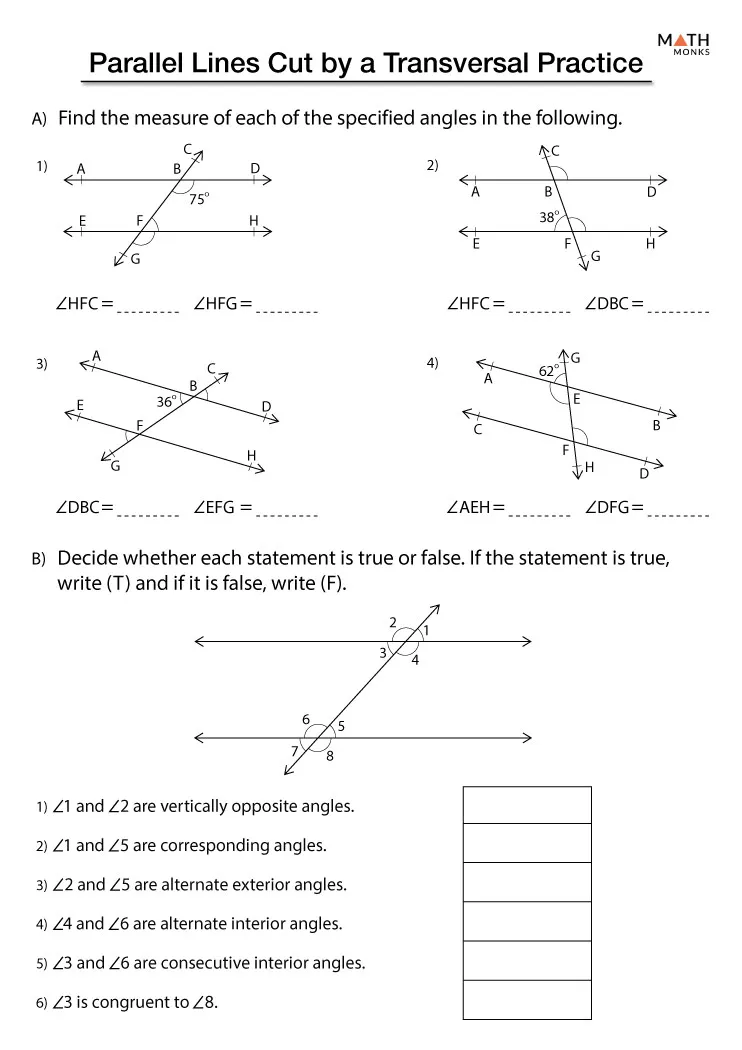
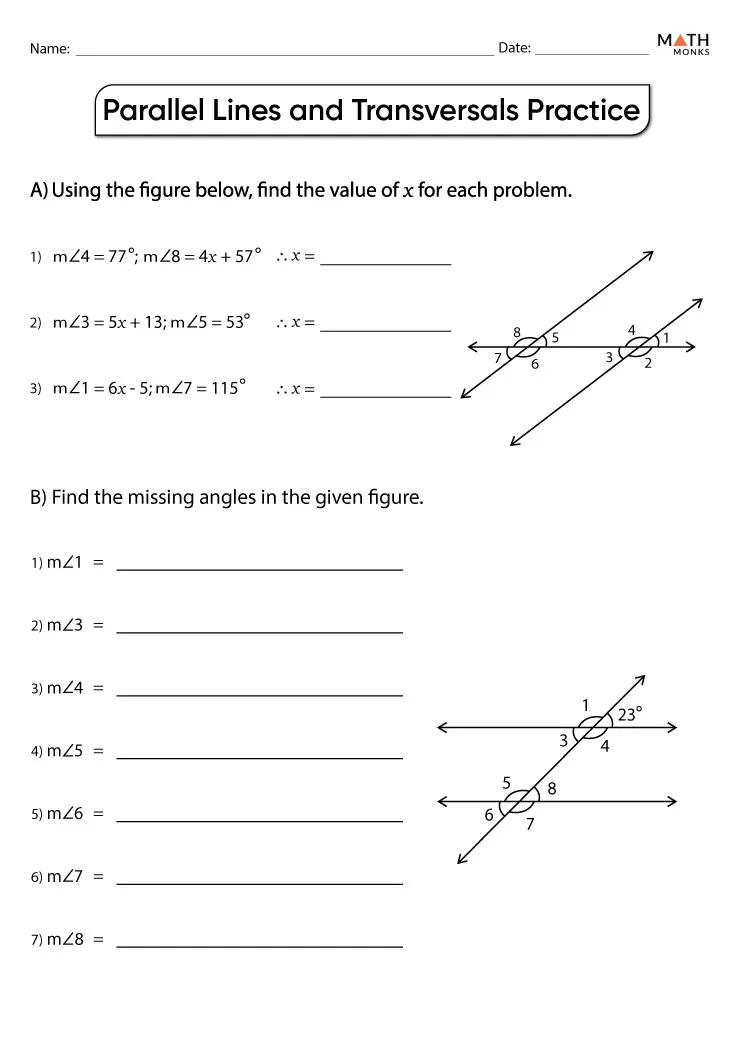
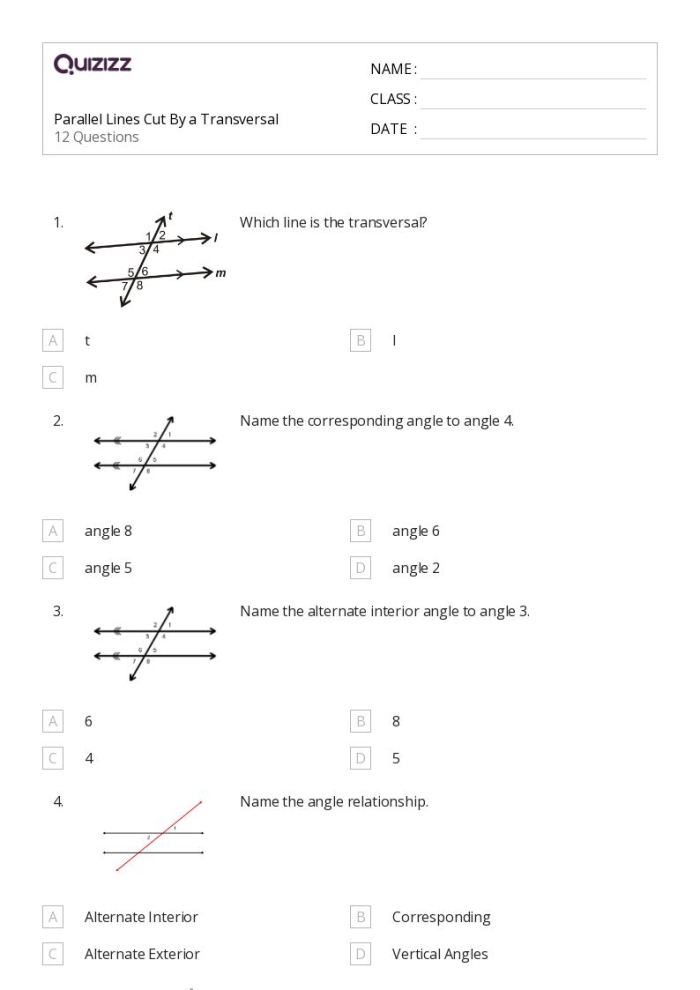
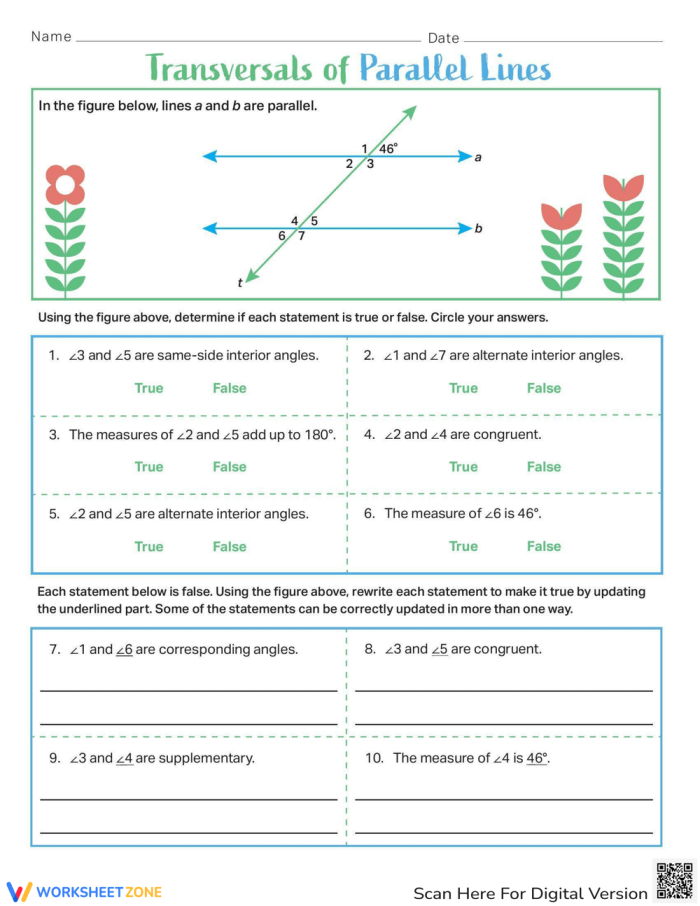
A transversal is a line that intersects two or more lines at distinct points. When this line crosses parallel lines, it creates several pairs of angles: corresponding angles, alternate interior angles, and consecutive interior angles. Each of these angles has specific properties. For instance, corresponding angles are equal, while alternate interior angles are also equal. Recognizing these relationships can help students solve complex problems and understand the fundamentals of geometry. A worksheet designed around these concepts encourages students to practice identifying and calculating these angles, reinforcing their learning through repetition.
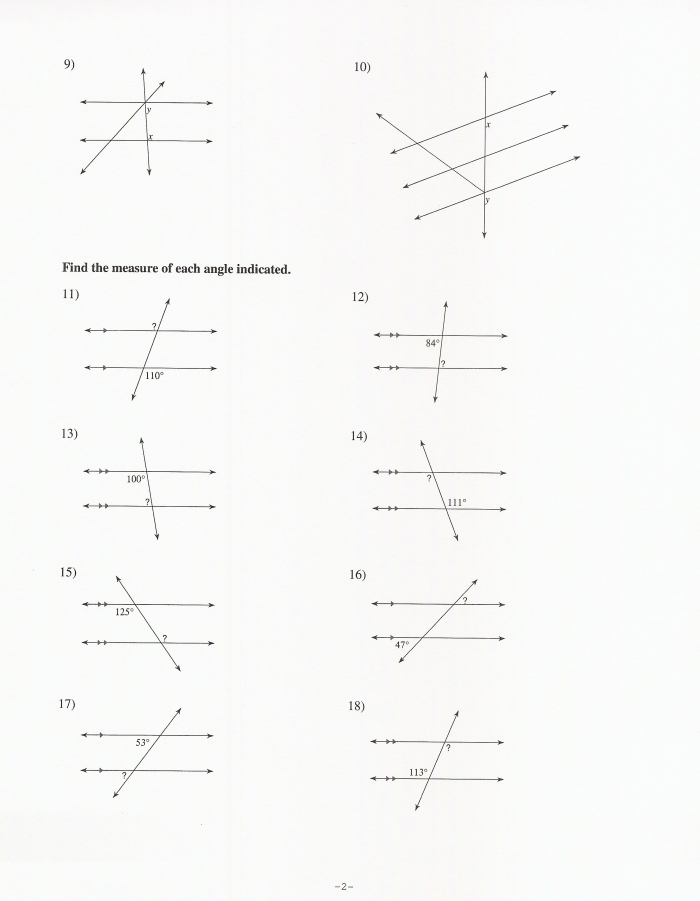
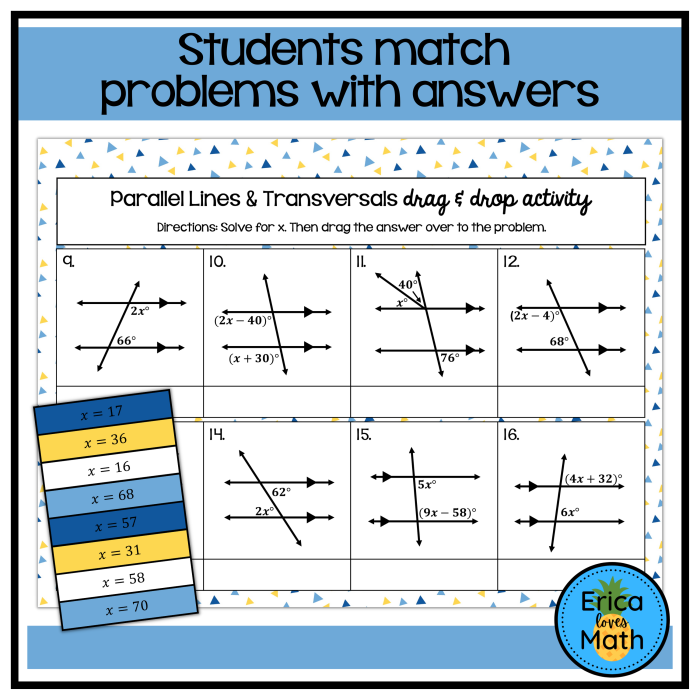
Consider a practical example: if students are given a diagram with two parallel lines cut by a transversal, they might be asked to find the measure of an angle given the measure of its corresponding angle. This type of problem not only tests their understanding but also enhances their ability to apply geometric principles in real-world scenarios.
By utilizing resources like printable worksheets on transversals of parallel lines, students can explore this topic in depth. Engaging with such materials allows for independent practice, which is crucial for mastering geometry concepts. For additional practice, students might find it beneficial to explore worksheets that focus on related topics, such as writing equations in slope-intercept form or functions.
Ultimately, honing knowledge of angles through targeted worksheets enriches students’ understanding of geometry, preparing them for more advanced mathematical concepts in the future. By emphasizing the importance of angle relationships, educators can help students build a strong foundation in geometry that will benefit them throughout their academic journey.
Worksheet Practice Section