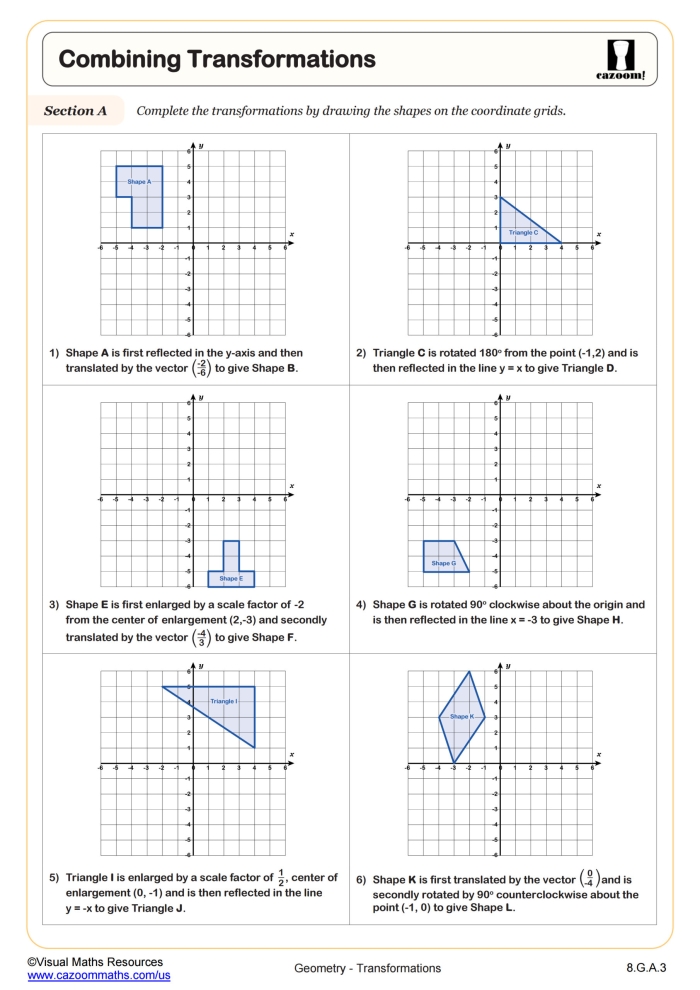
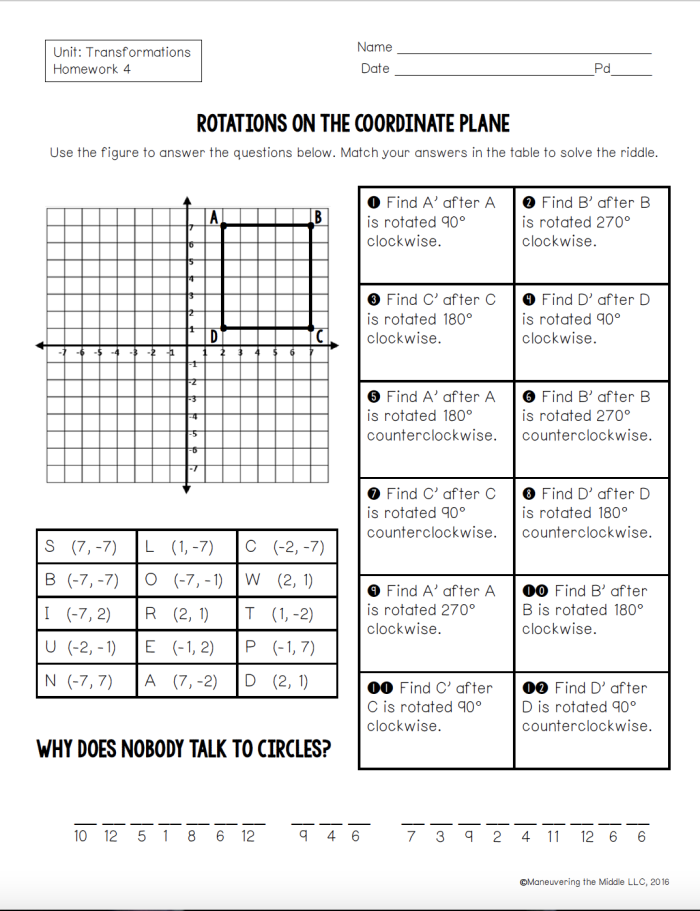
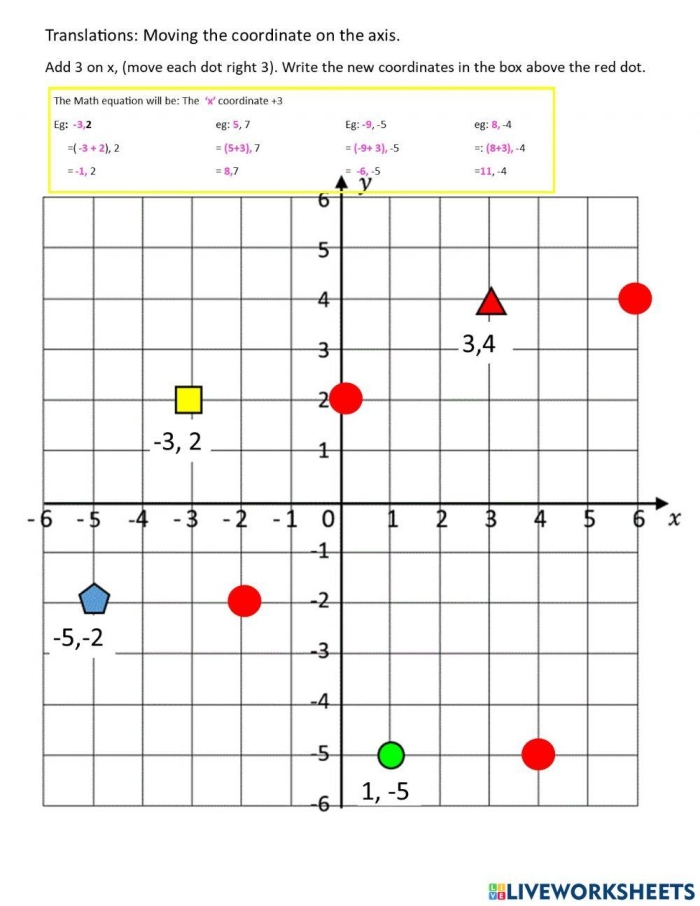
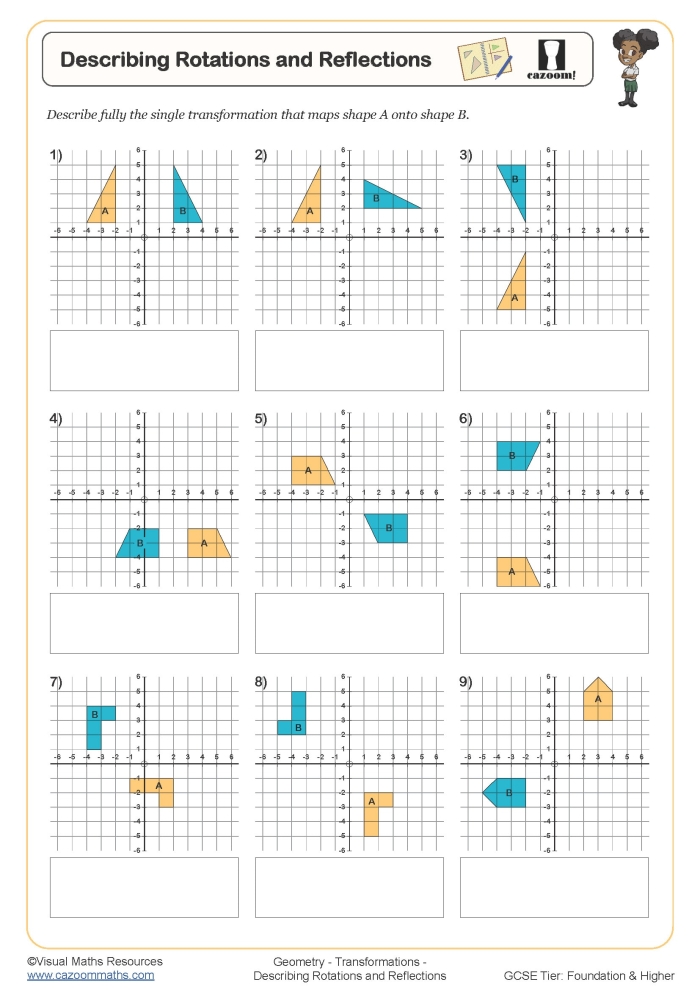
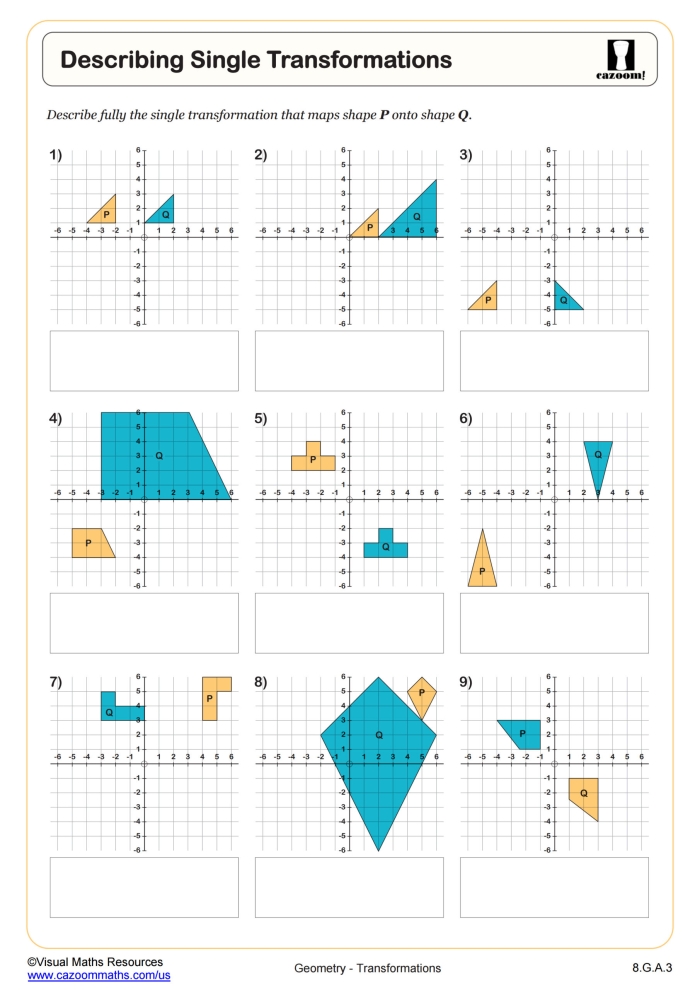
Understanding rotations on the coordinate plane is a crucial skill for eighth-grade students as they explore transformations in mathematics. A well-designed handout can serve as an effective tool to simplify this concept and assist learners in grasping the fundamentals of rotations.
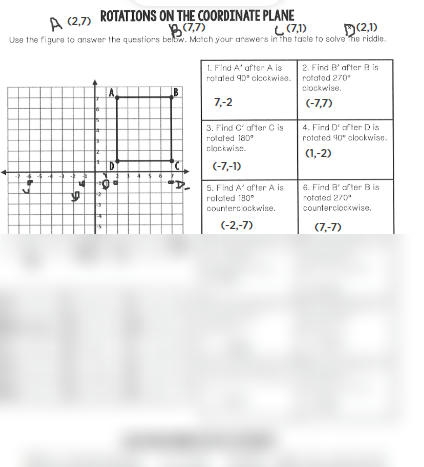
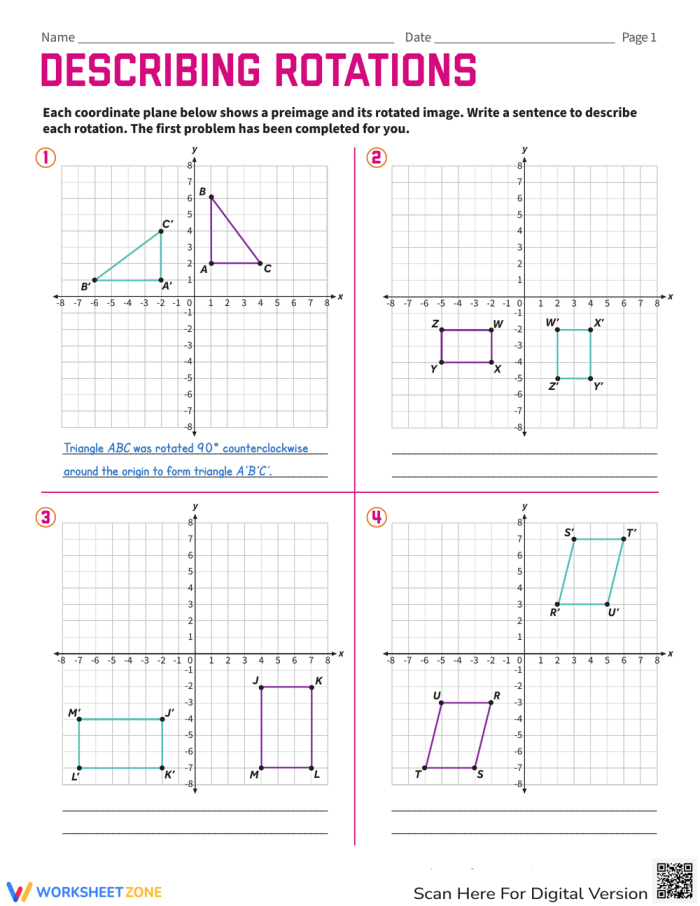
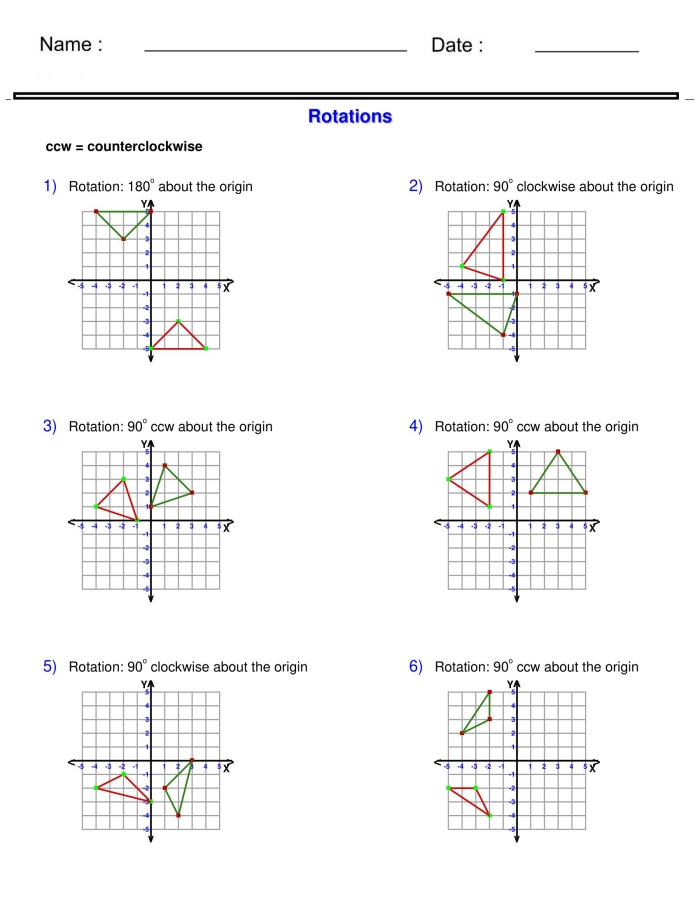
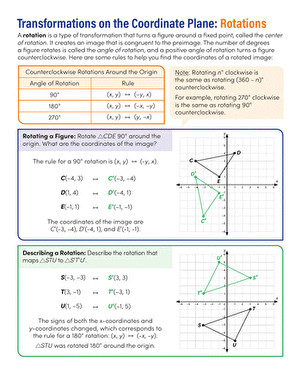
Rotating a figure around a point involves turning it a specific angle in a clockwise or counterclockwise direction. For example, if you rotate a point (2, 3) by 90 degrees counterclockwise around the origin (0, 0), the new coordinates become (-3, 2). This transformation provides a visual way of understanding how shapes change position without altering their size or orientation.
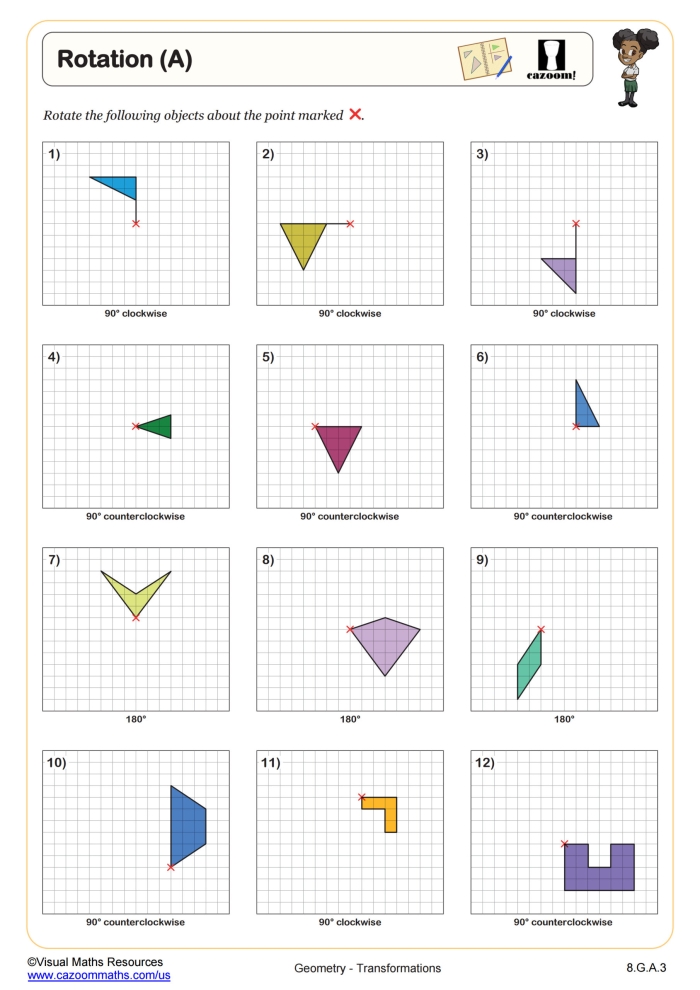
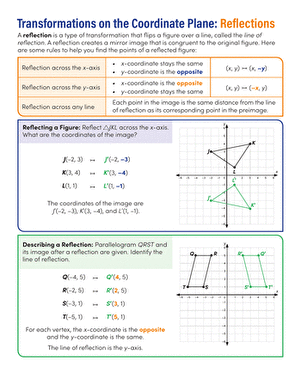
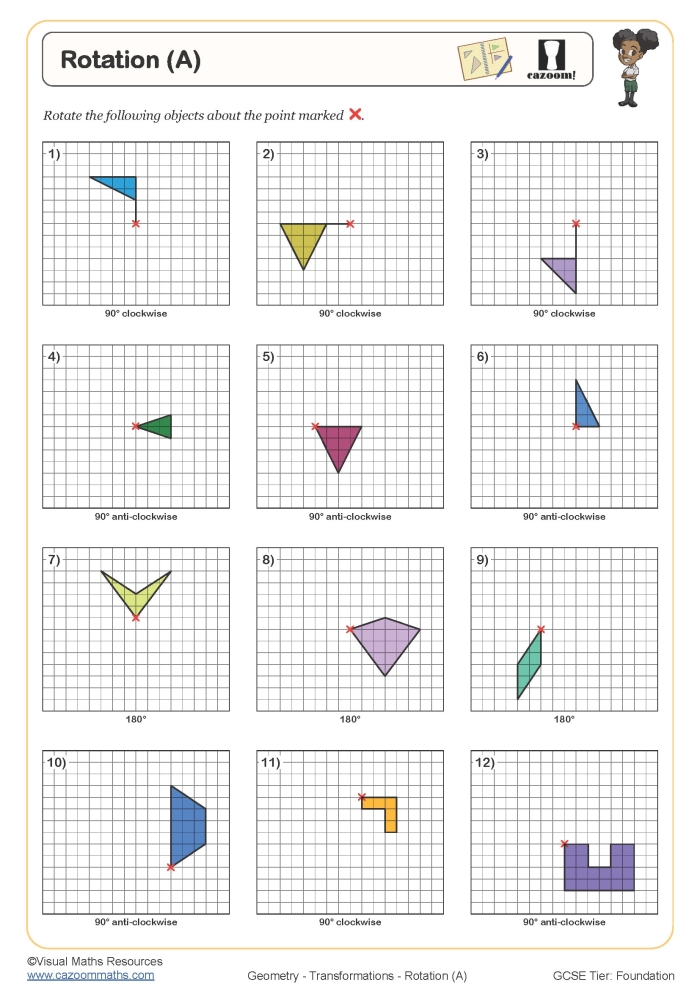
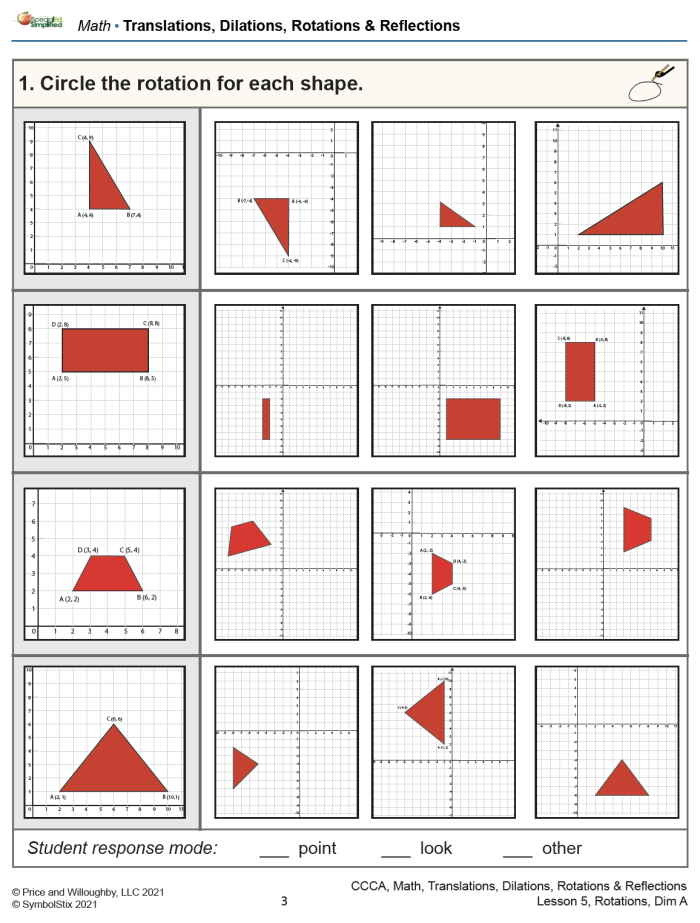
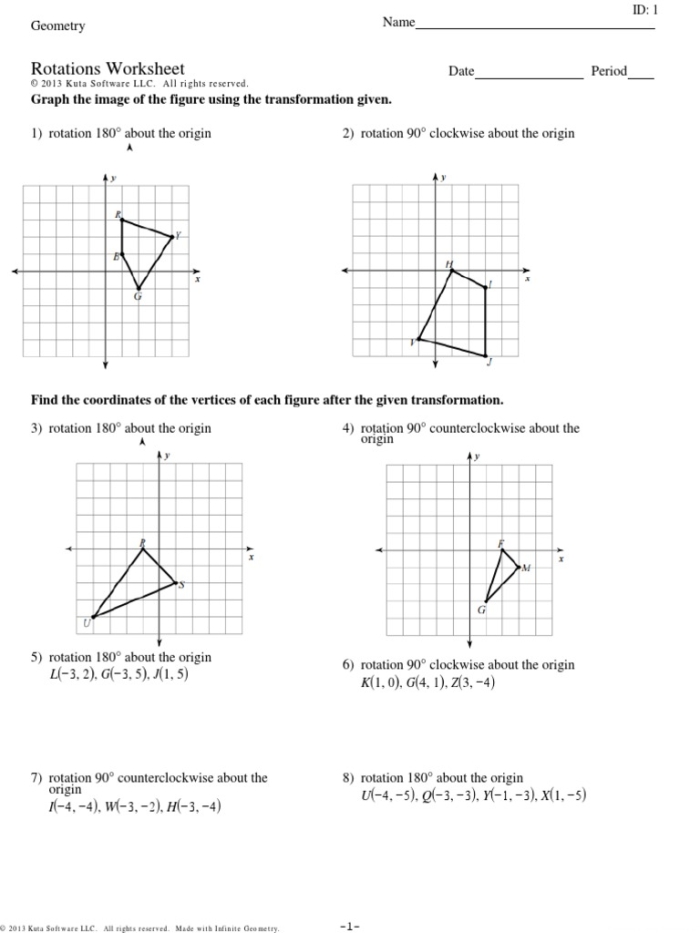
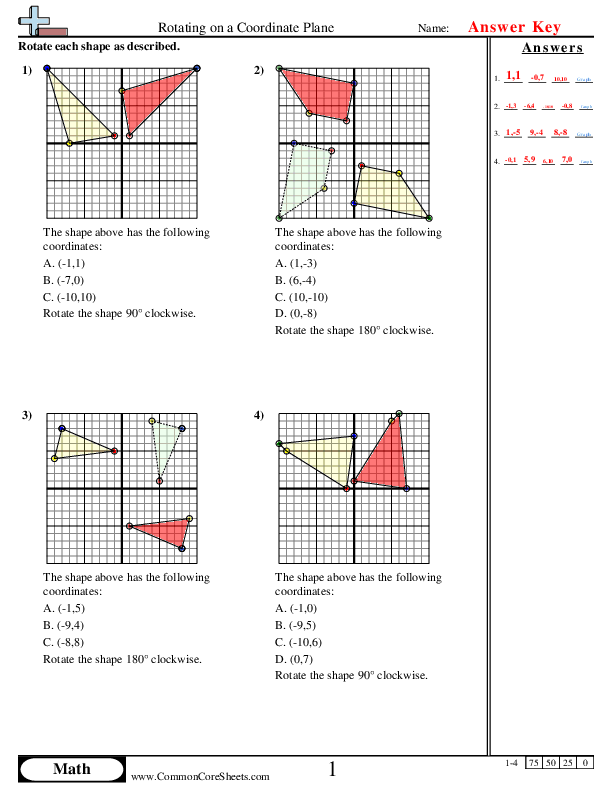
One-page handouts dedicated to rotations can present this knowledge clearly and concisely. They often include diagrams that visually represent the rotation process, which is particularly helpful for visual learners. When students can see the before and after effects of a rotation, they are more likely to comprehend the concept effectively.
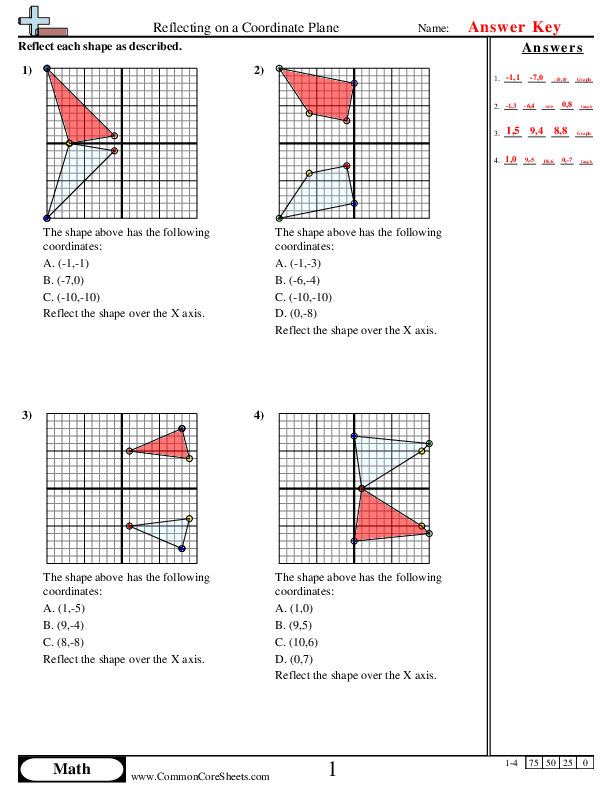
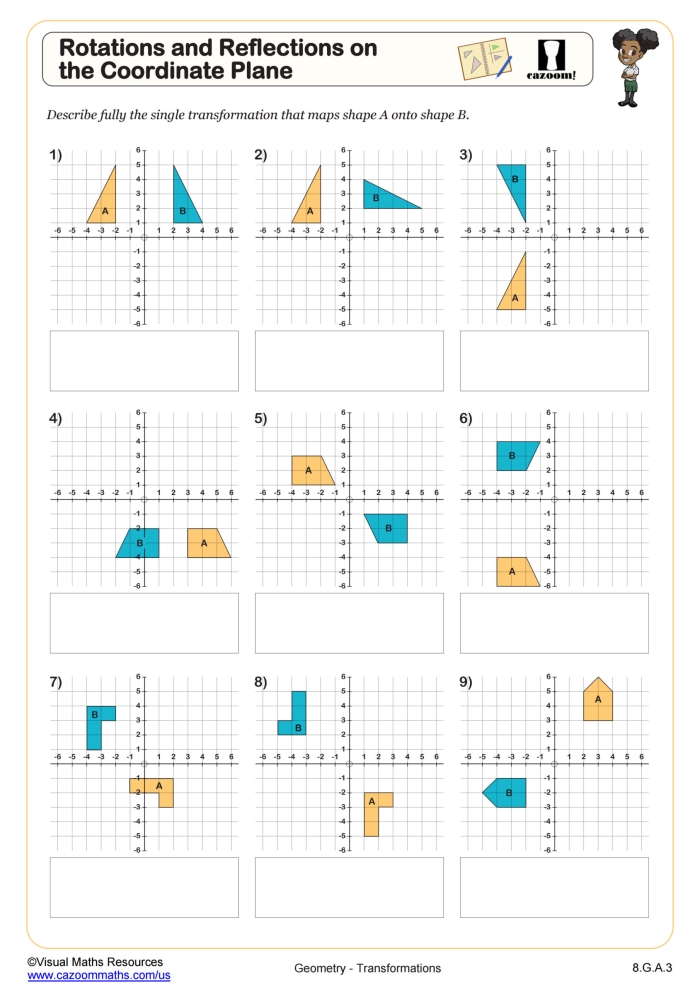
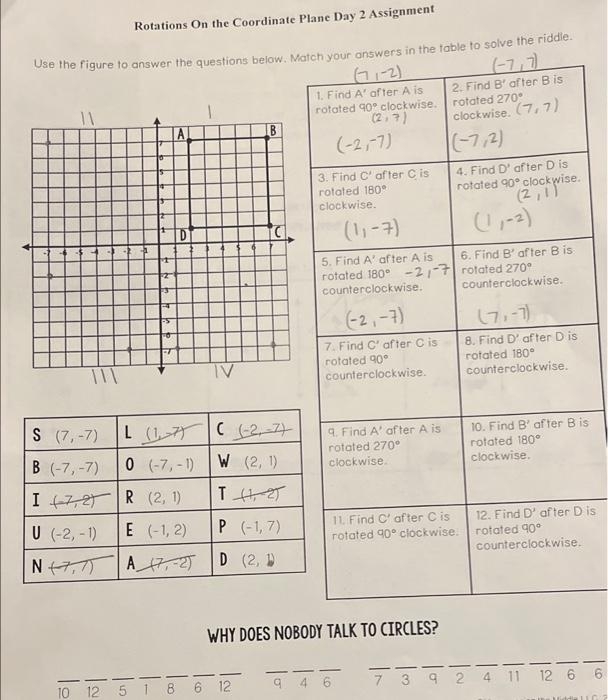
Additionally, integrating practice problems into the handout allows students to apply what they’ve learned. For instance, asking students to rotate various shapes by different angles can reinforce their understanding and boost their confidence. This hands-on practice is invaluable in eighth-grade mathematics, where students are expected to demonstrate their understanding of transformations.
For educators looking to expand on this topic, resources like the solutions to linear equations worksheets or the function worksheets may provide complementary materials that can enrich students’ learning experiences. By creating an engaging, practical handout focused on rotations, teachers can help students navigate the coordinate plane with confidence and curiosity.
Use These Worksheets Today