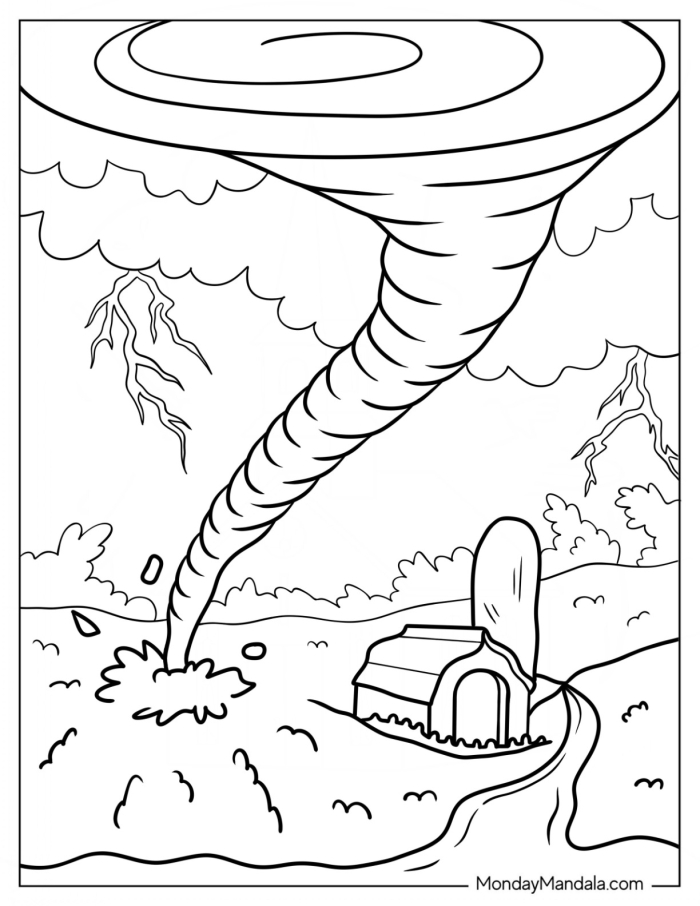
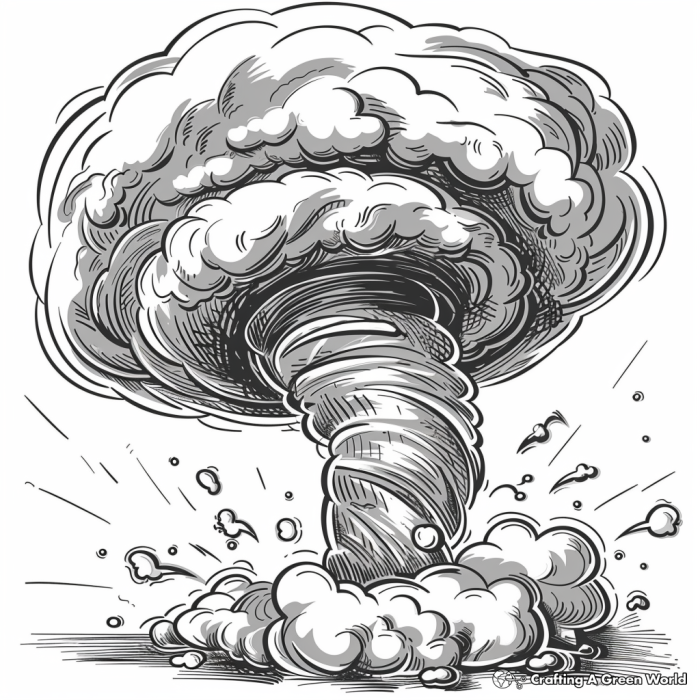
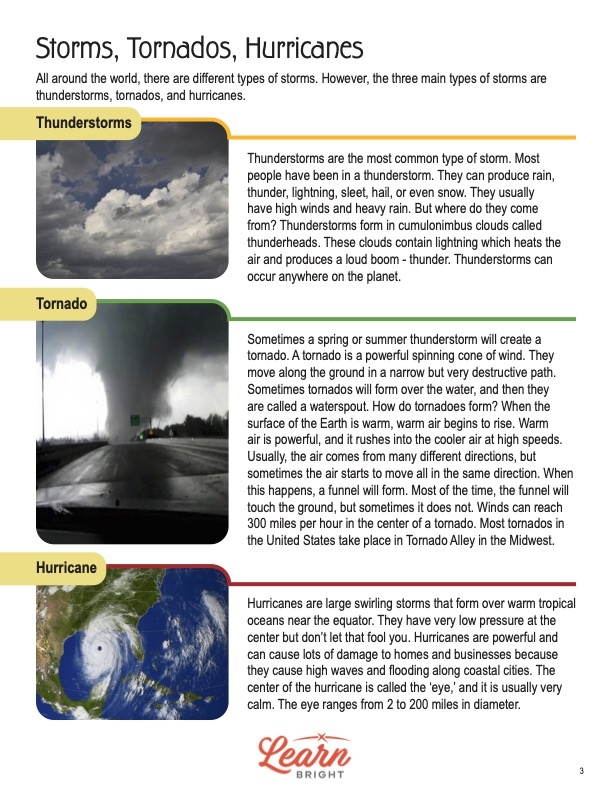
Tornadoes rank among nature’s most violent phenomena, and understanding how they form requires grasping some genuinely fascinating atmospheric physics. When you watch a tornado tear across the landscape, you’re seeing the result of specific conditions colliding in the atmosphere: warm, moist air near the ground meeting cooler, dry air above, combined with wind shear that creates rotation. This rotation, called a mesocyclone, can tighten and intensify until it produces that distinctive funnel shape.
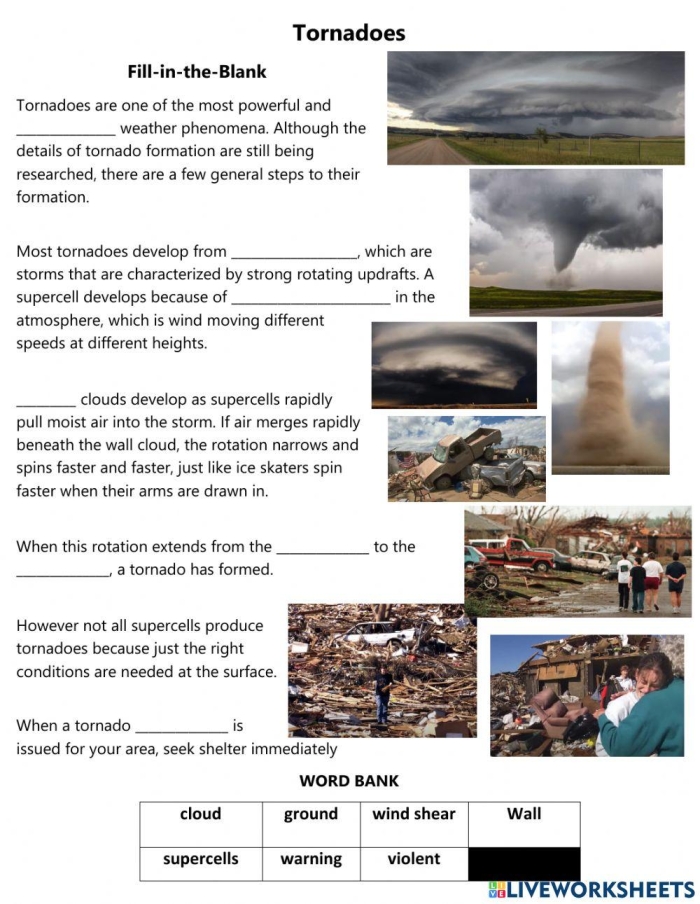
The science behind tornadoes involves several key components working together. Wind shear, which occurs when wind speed or direction changes with height, tilts horizontal rotating air into a vertical column. Updrafts in thunderstorms then stretch this column, making it spin faster, much like how a figure skater spins faster when pulling their arms inward. The pressure inside the tornado drops dramatically, which is why structures explode outward when a tornado passes over them.
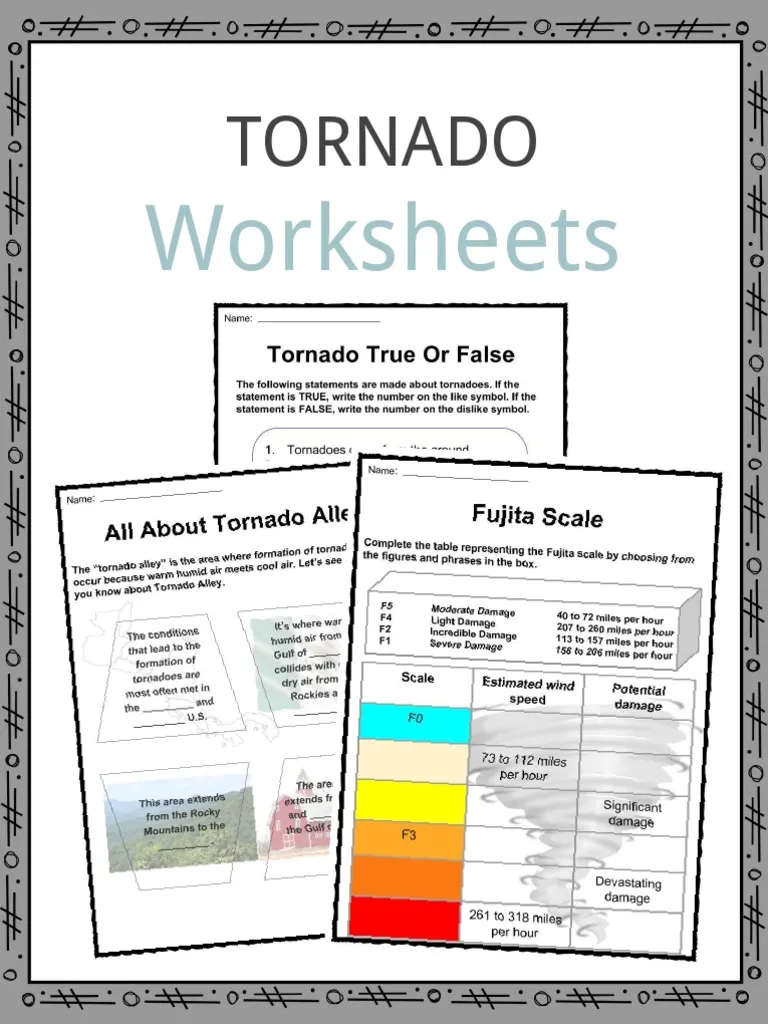
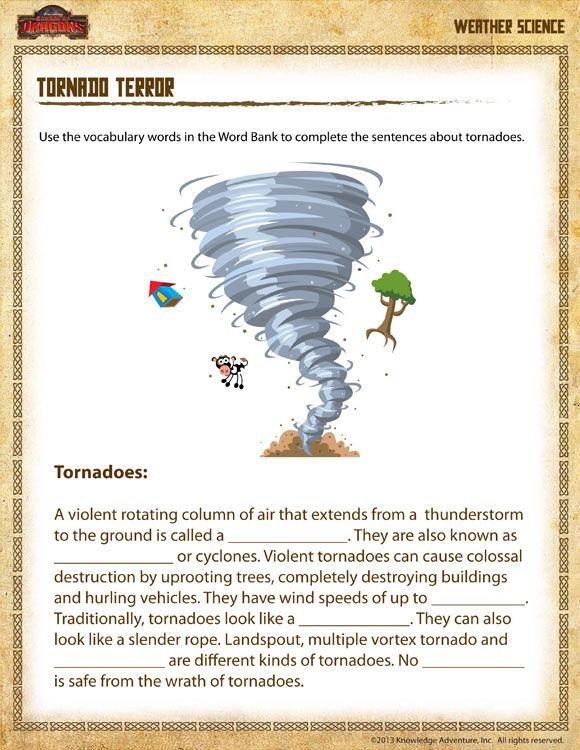
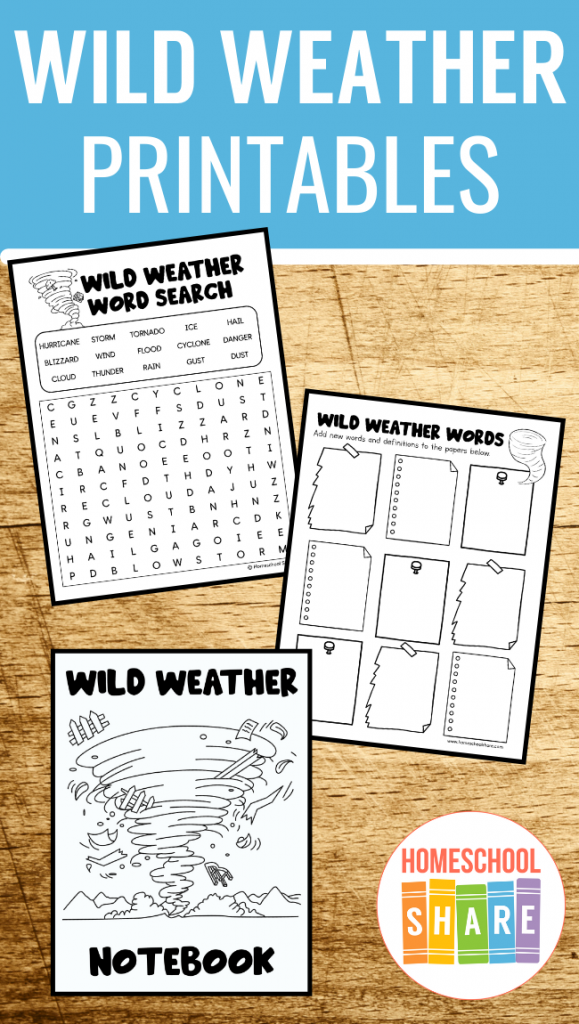
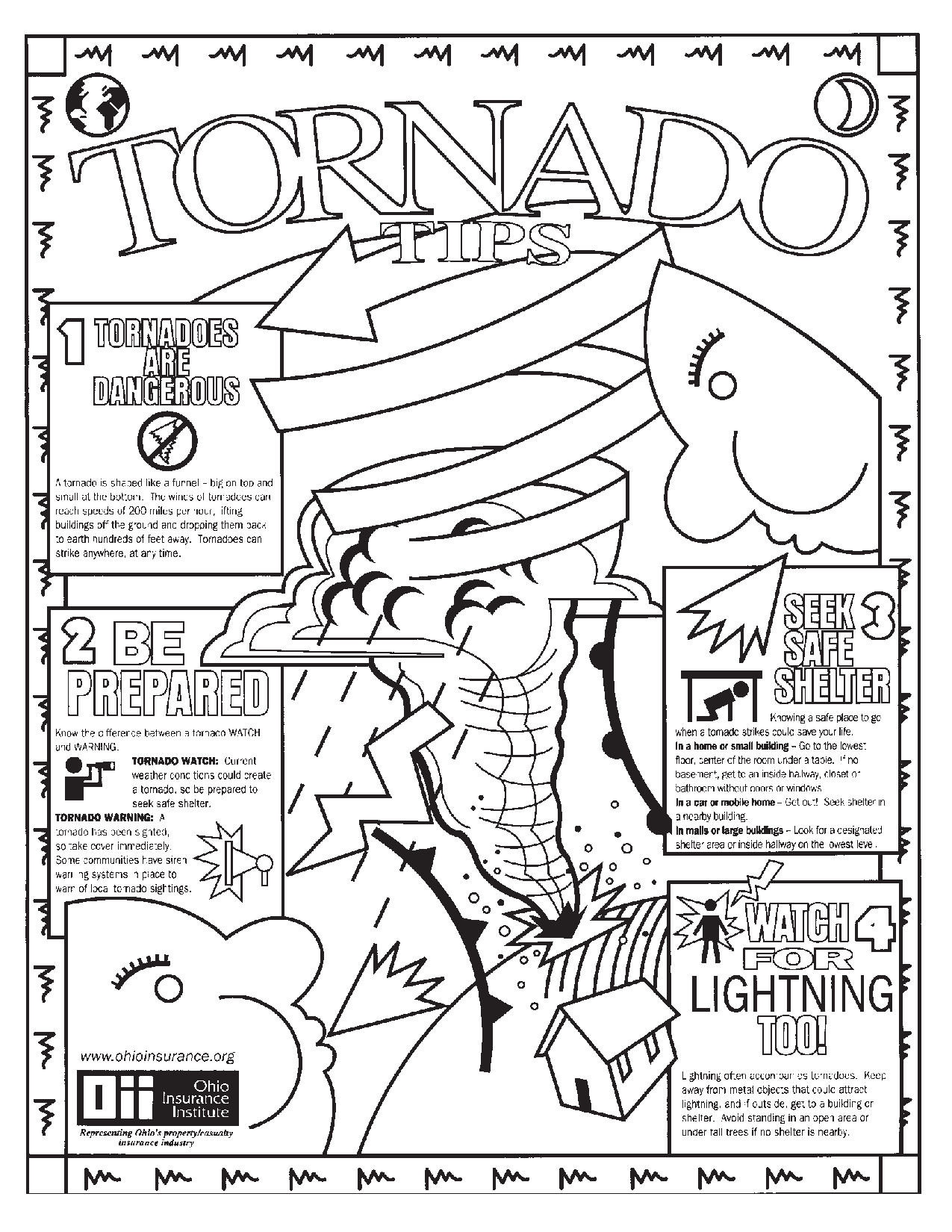
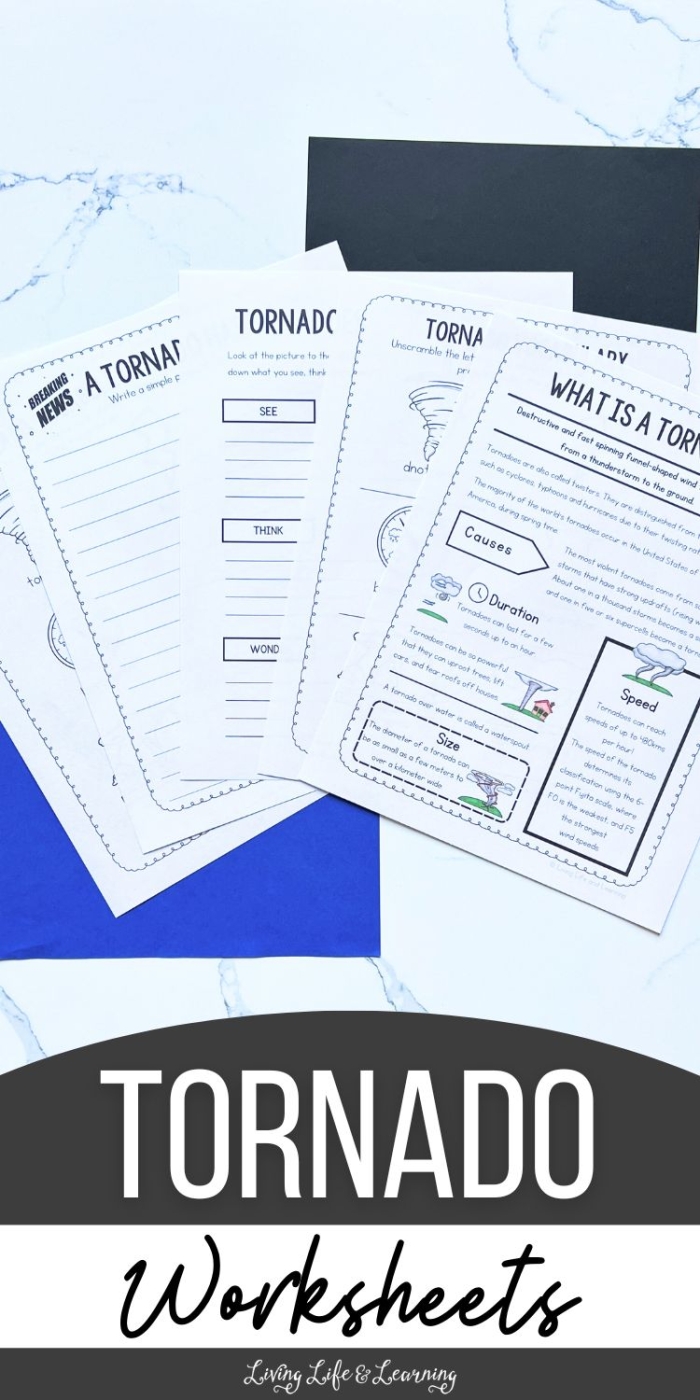
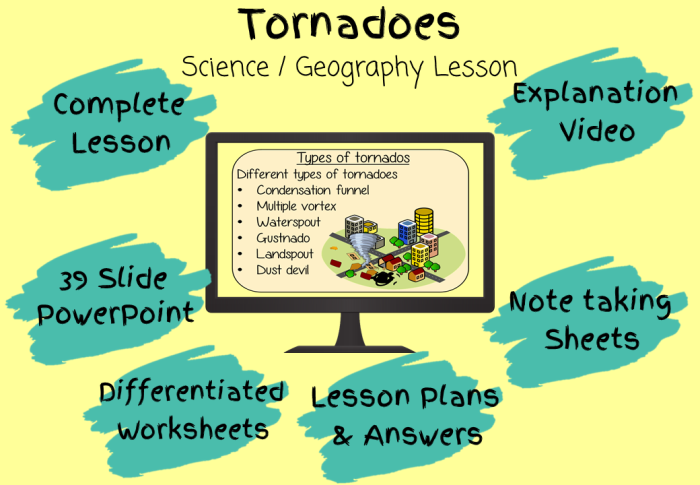
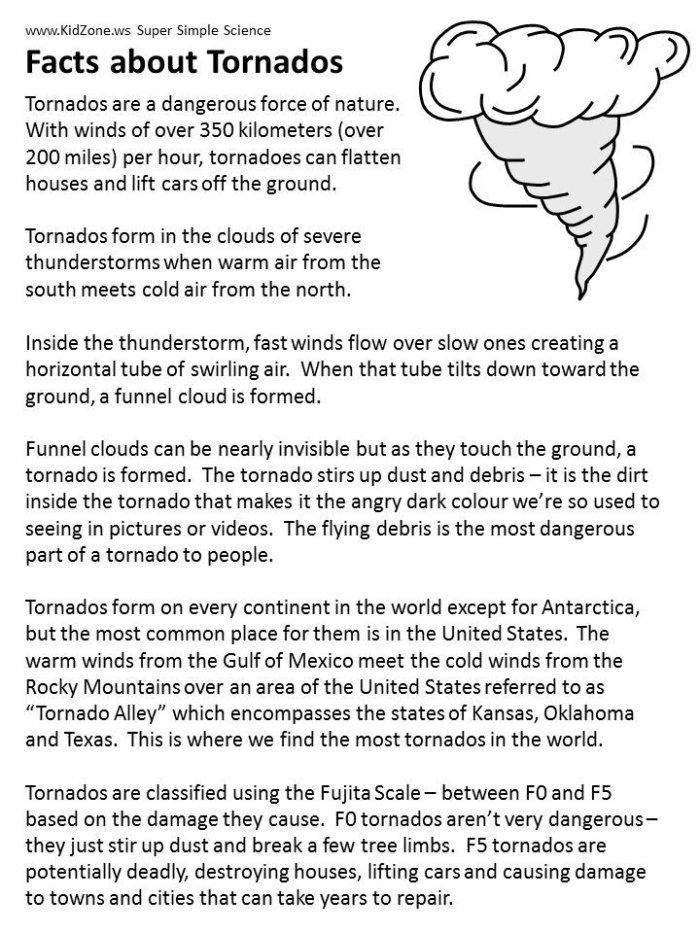
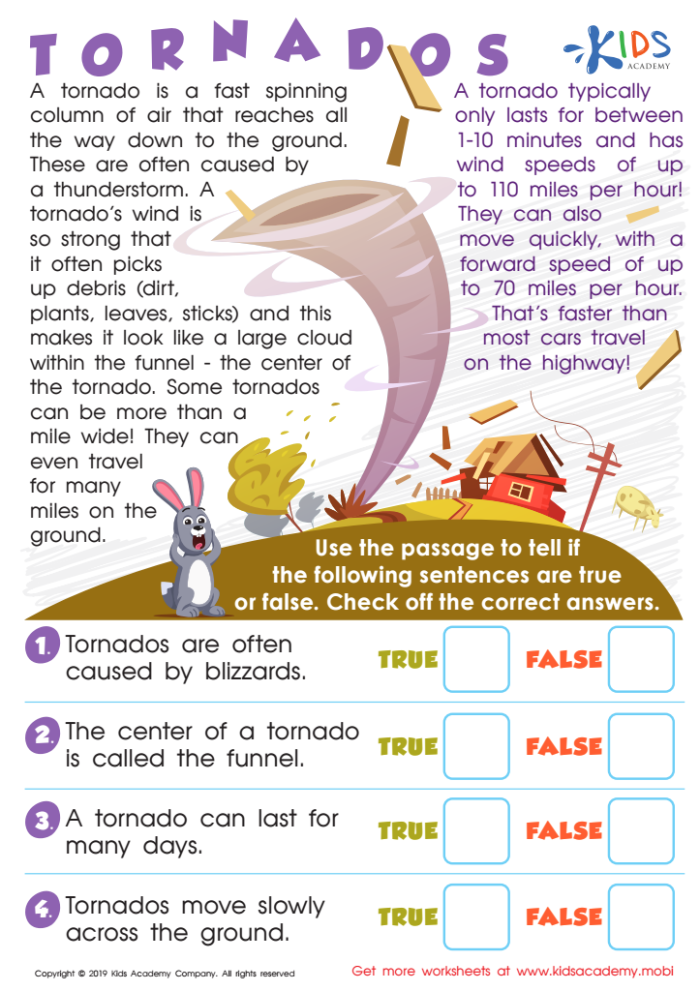
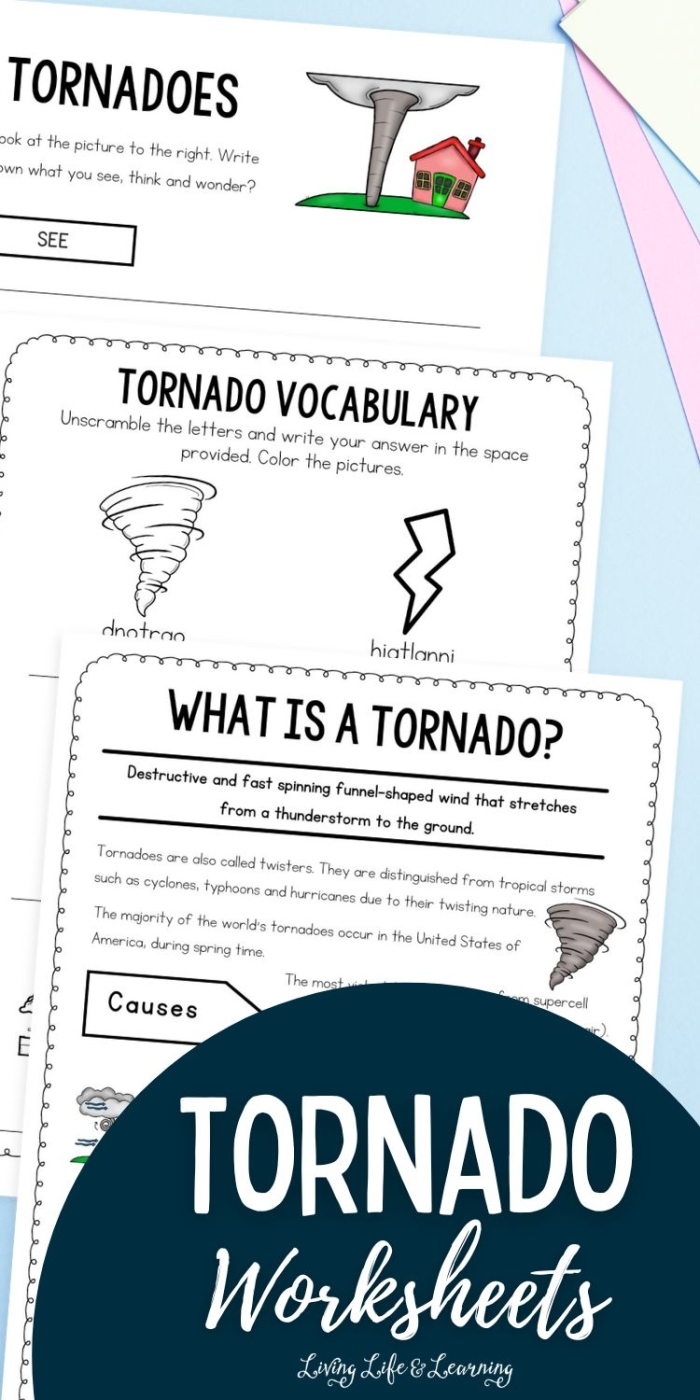
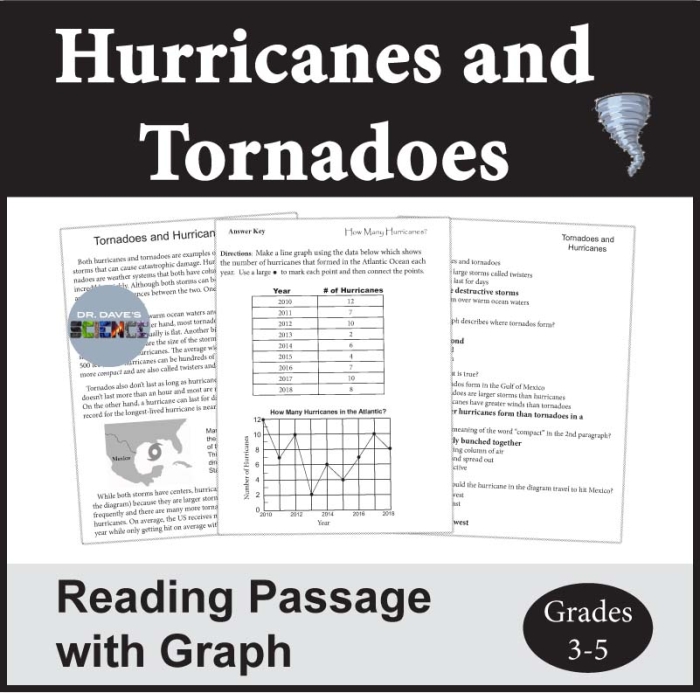
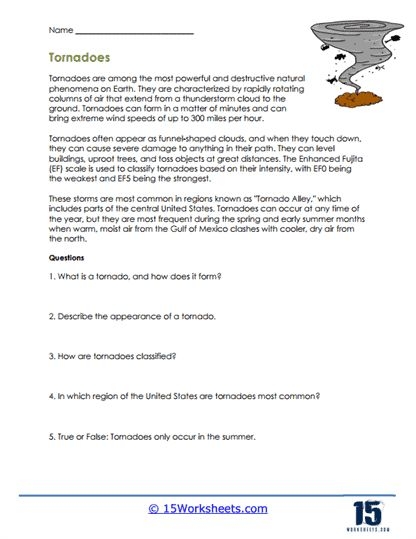
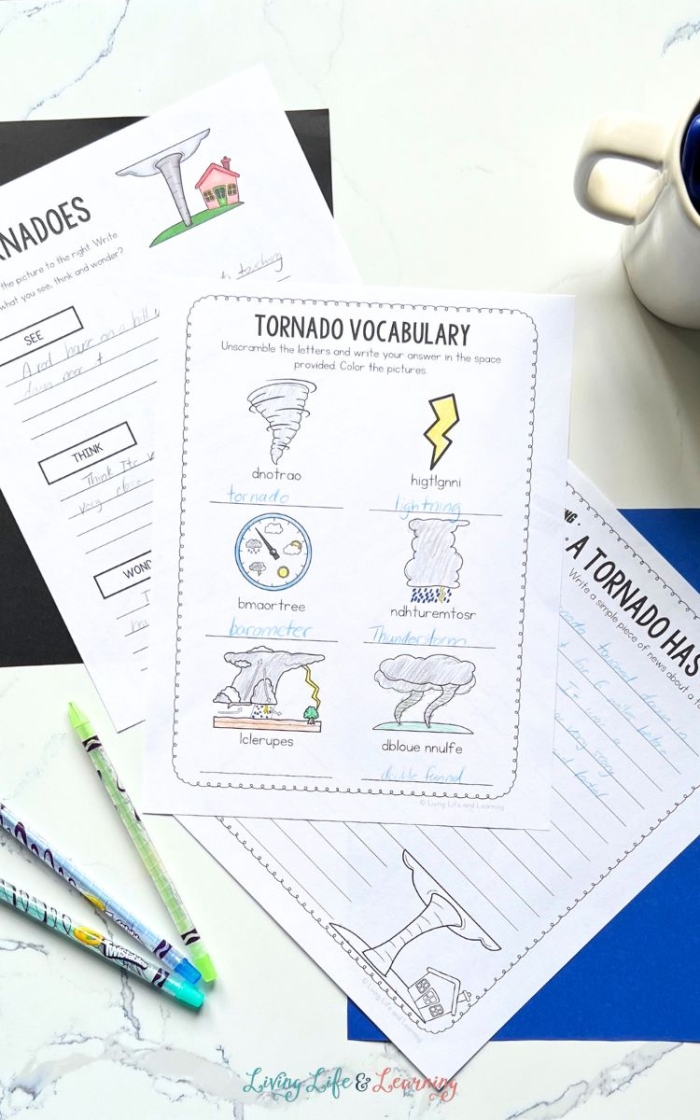
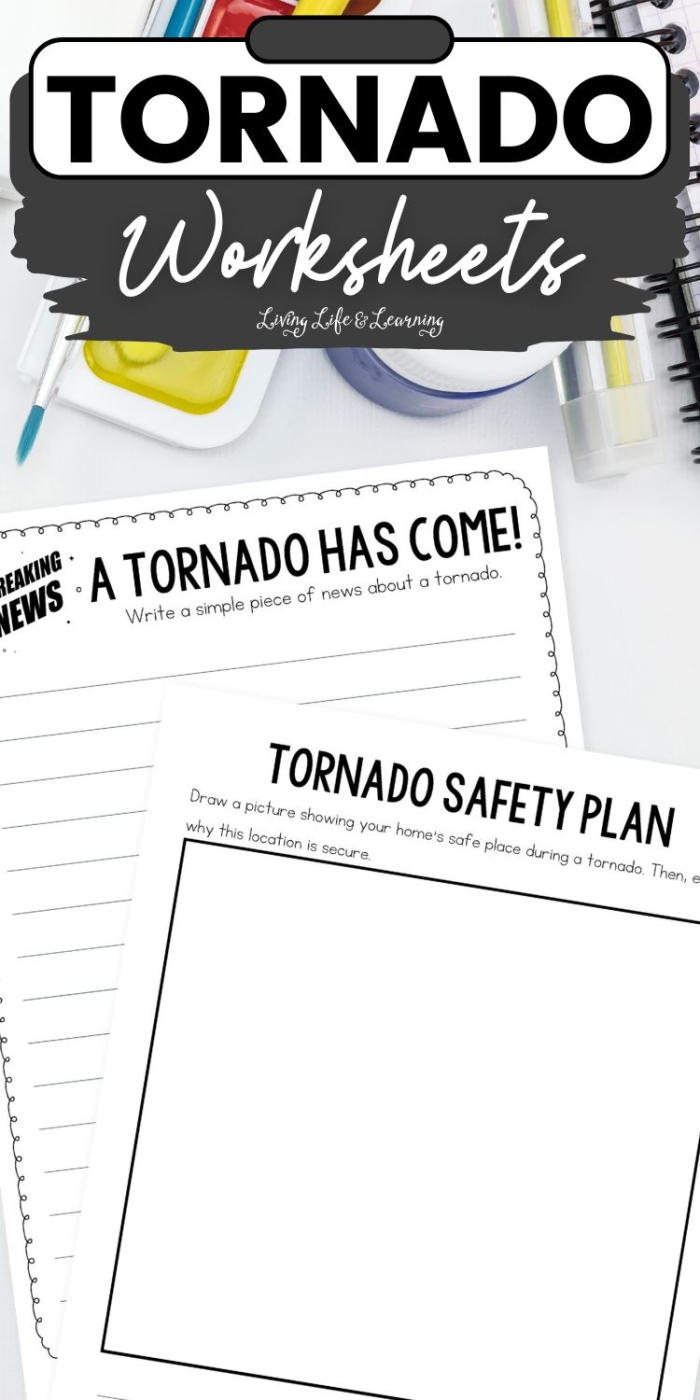
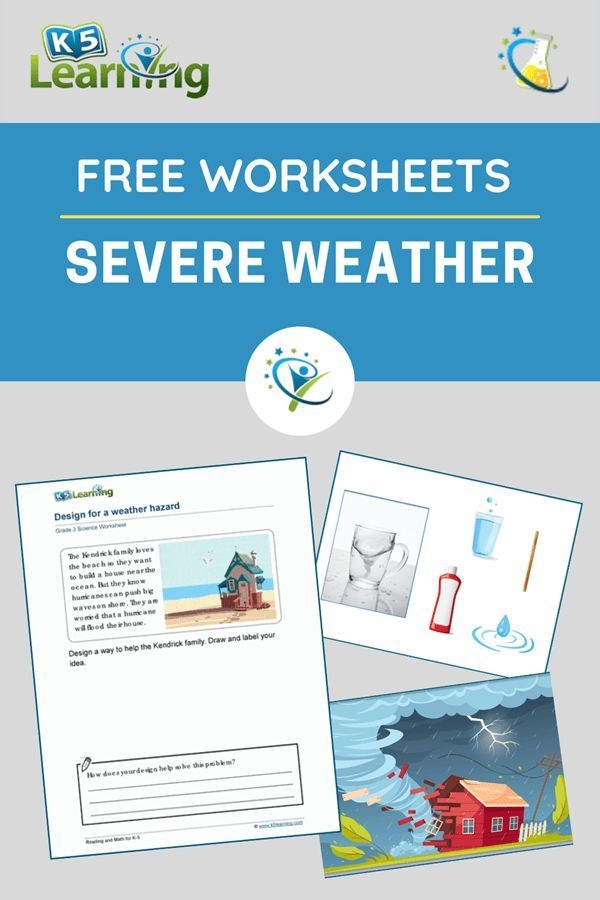
For fifth grade students, learning about tornado science through worksheets makes complex meteorology accessible. A good worksheet guides readers through the sequence of events leading to tornado formation, helping them understand cause and effect relationships. Many worksheets incorporate reading comprehension passages that explain concepts like wind shear and pressure systems, allowing students to practice their reading skills while absorbing scientific knowledge.
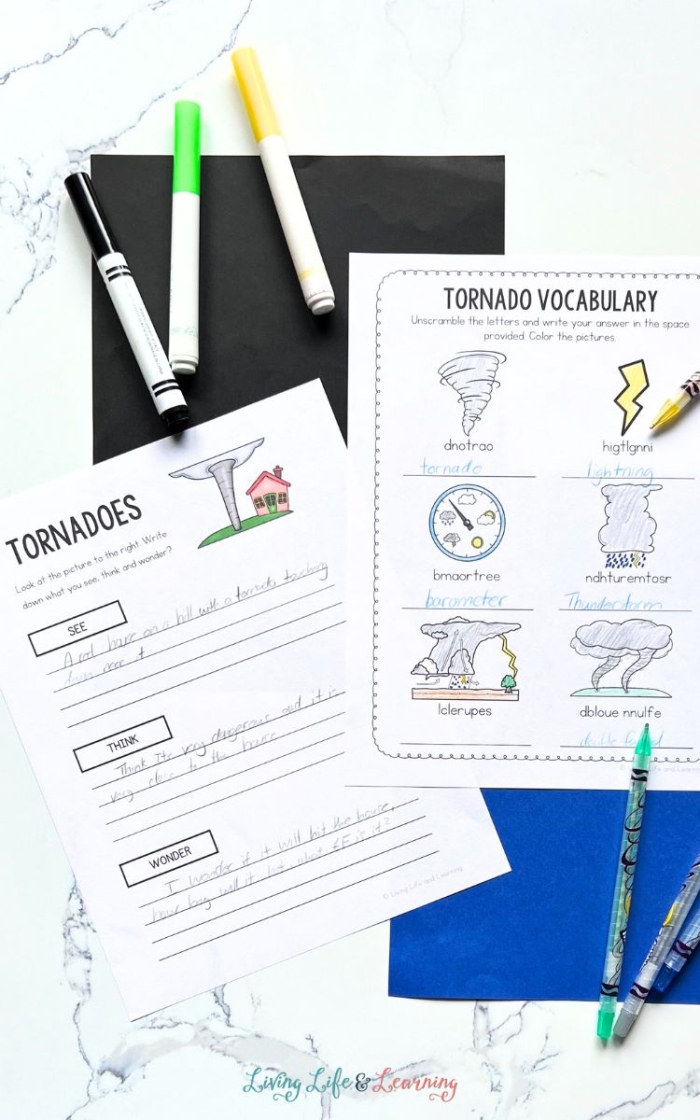
Interactive learning materials work best when they combine text with visual elements. Students benefit from worksheets that ask them to identify context clues about tornado formation or sequence the stages of tornado development. These approaches help fifth graders build both scientific literacy and reading comprehension simultaneously, making tornado science both engaging and educational.
Download These Worksheets for Practice