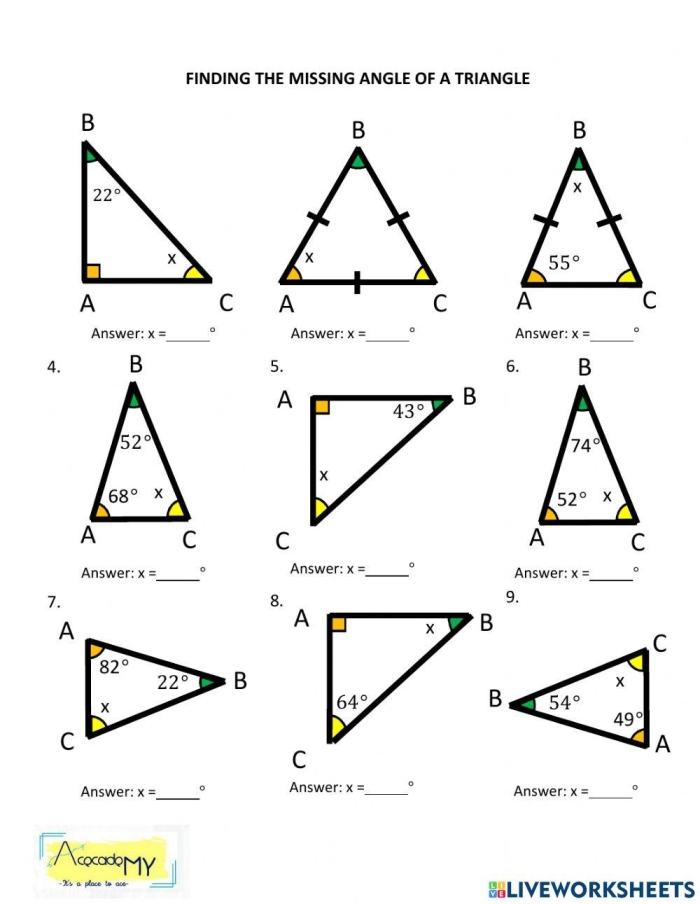
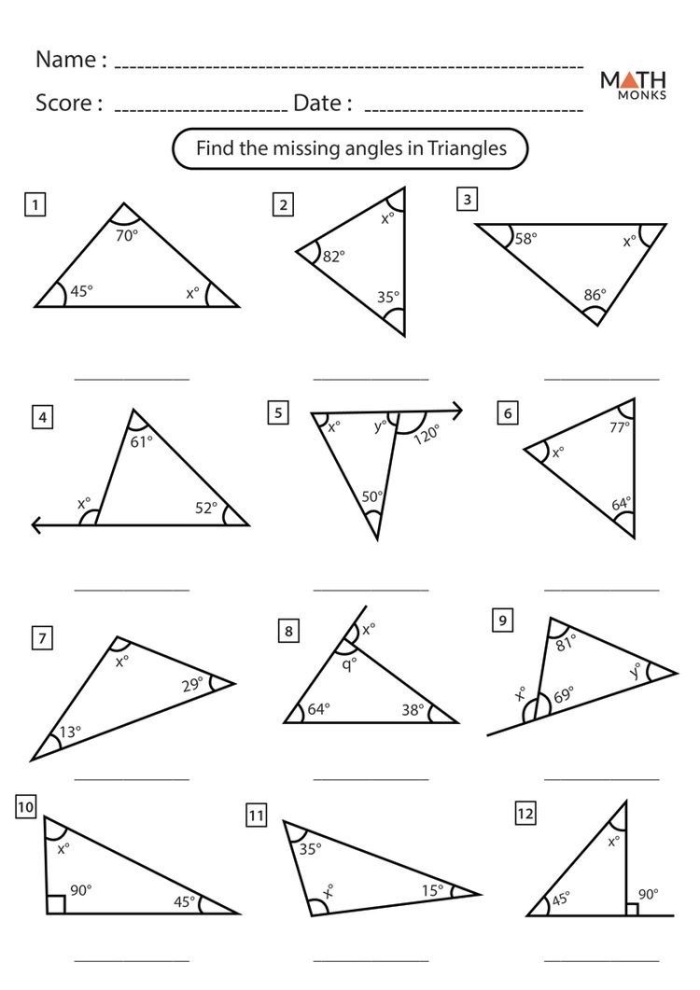
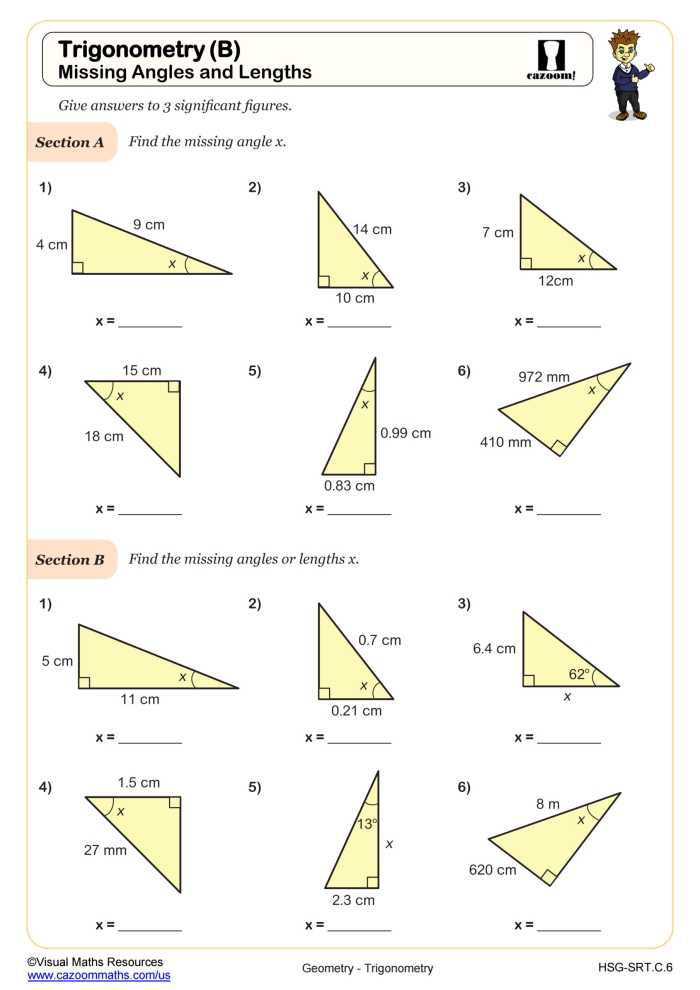
Most eighth grade students can name the three sides of a triangle and maybe recite that angles add up to 180 degrees. But when you hand them a triangle with two known angles and ask them to find the missing one, suddenly the concept feels less concrete. This is where understanding angle relationships in triangles moves from theory into practical problem-solving.
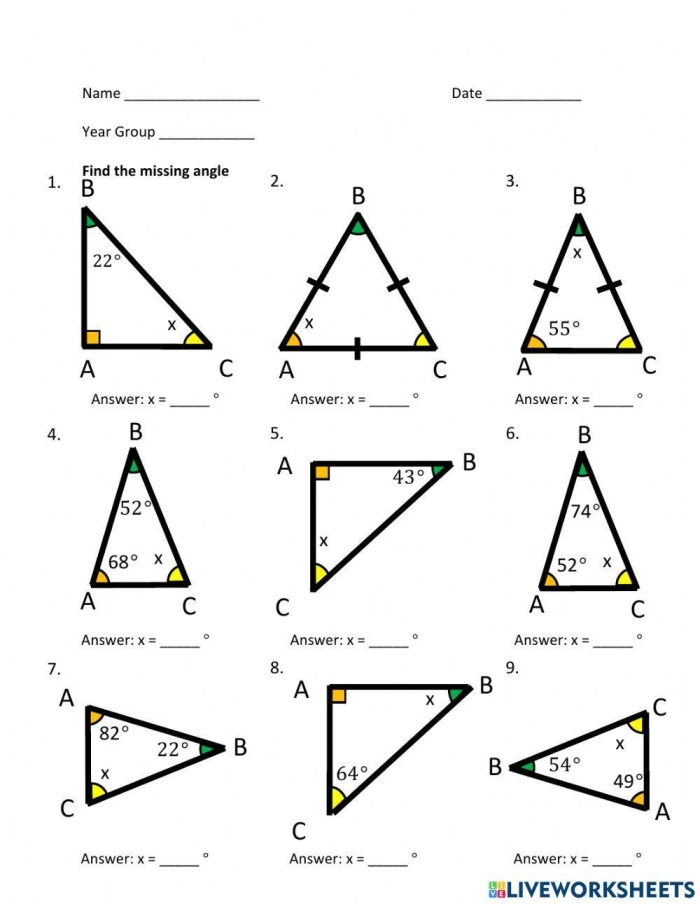
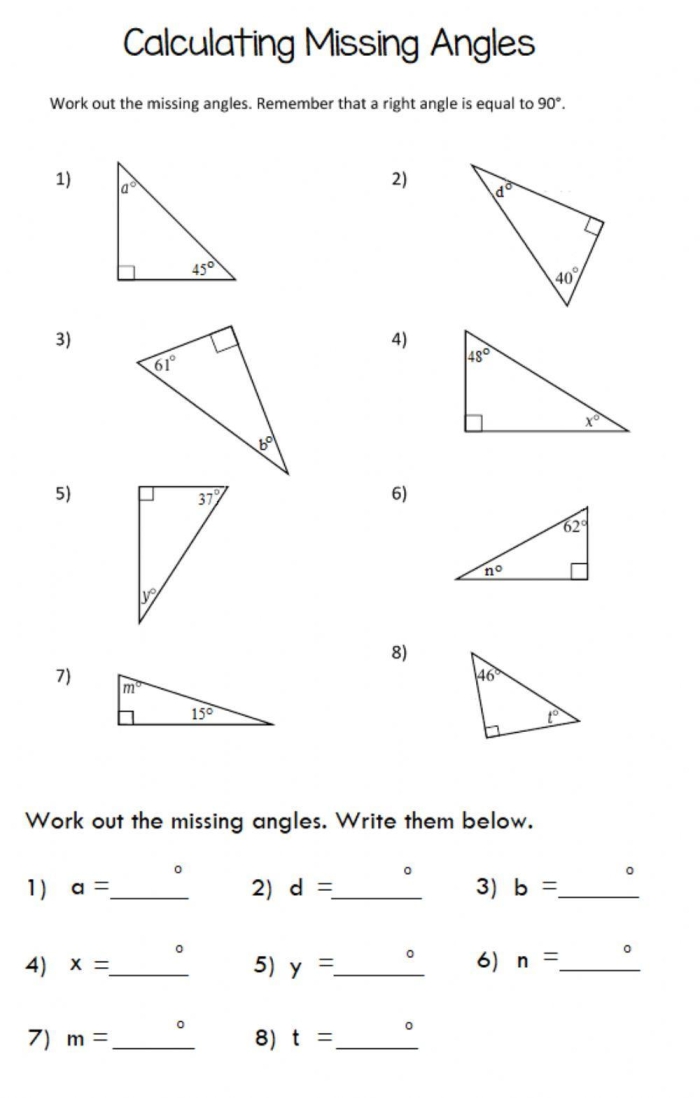
The fundamental rule is straightforward: the three interior angles of any triangle always sum to exactly 180 degrees. This isn’t an approximation or a special case, it’s a mathematical certainty. If you know two angles, you subtract their sum from 180 to find the third. For example, if a triangle has angles of 60 degrees and 70 degrees, the missing angle must be 50 degrees. The calculation itself is simple arithmetic, but recognizing which angles to use and applying the rule correctly requires solid conceptual understanding.
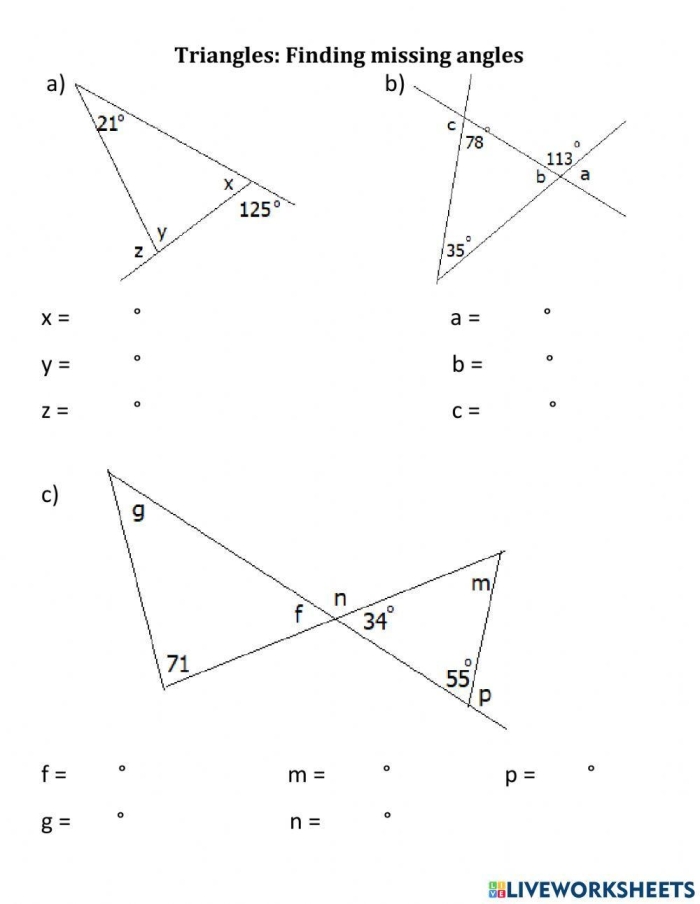
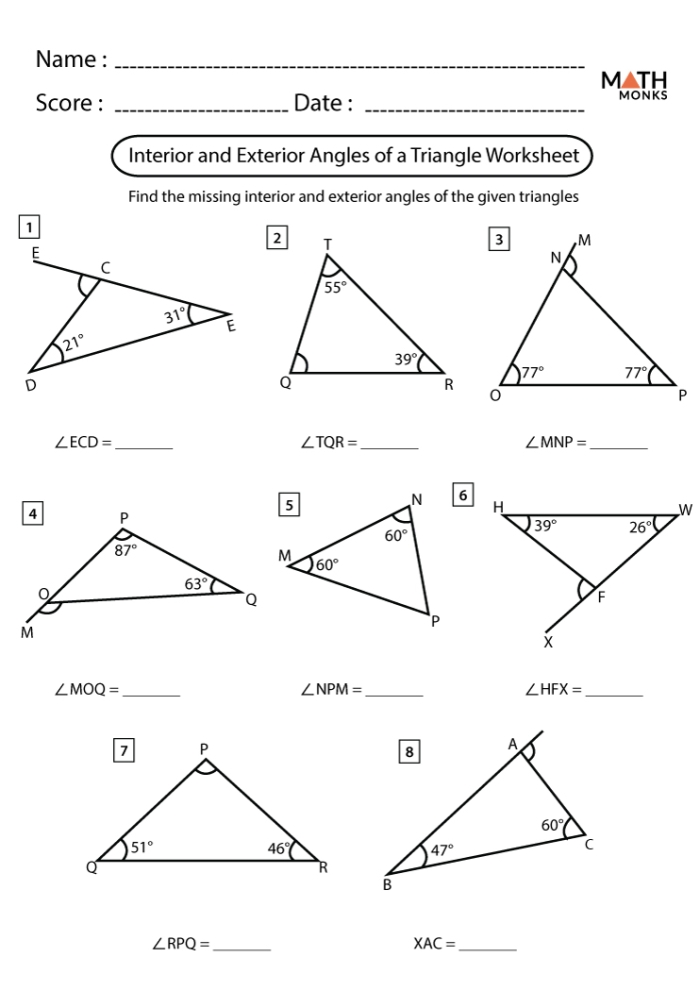
Many students struggle not with the math, but with visualization. They might confuse interior angles with exterior angles, or fail to identify which angles actually belong to the triangle when diagrams show overlapping lines. Hands-on practice with varied triangle types strengthens this skill significantly.
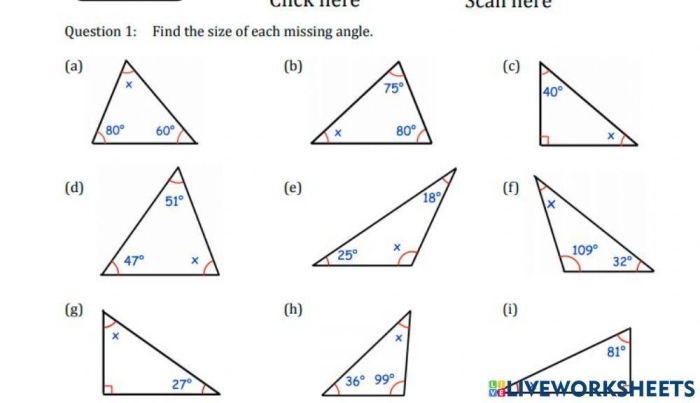
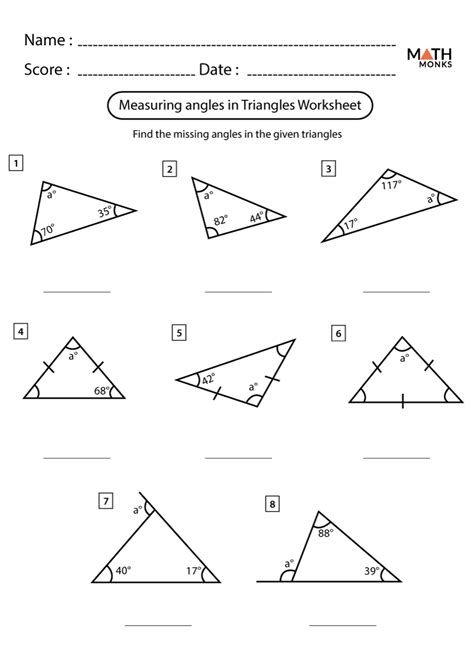
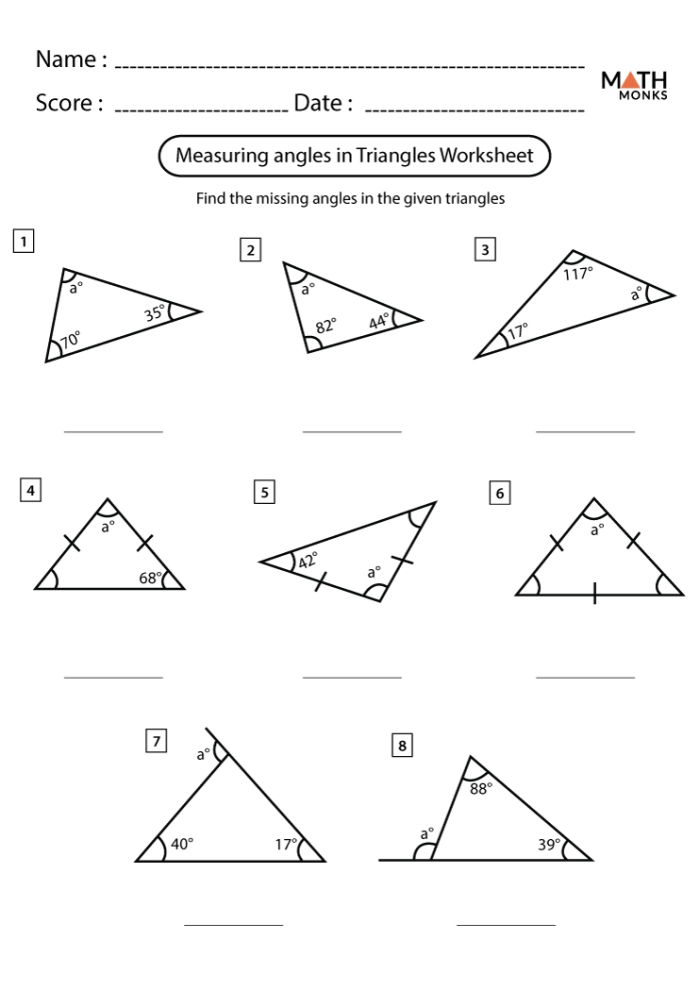
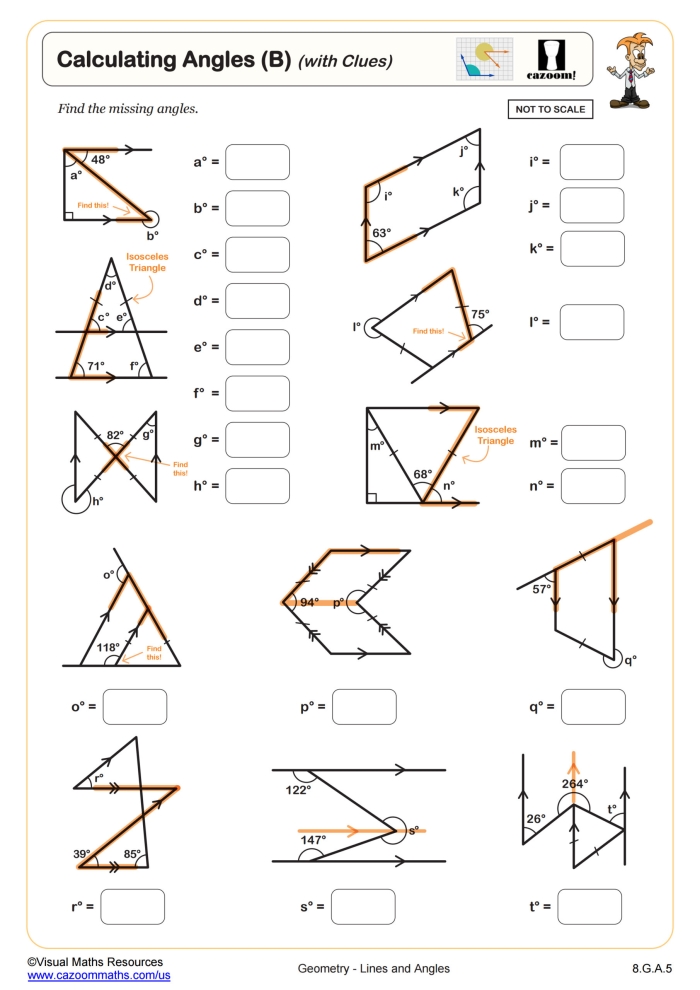
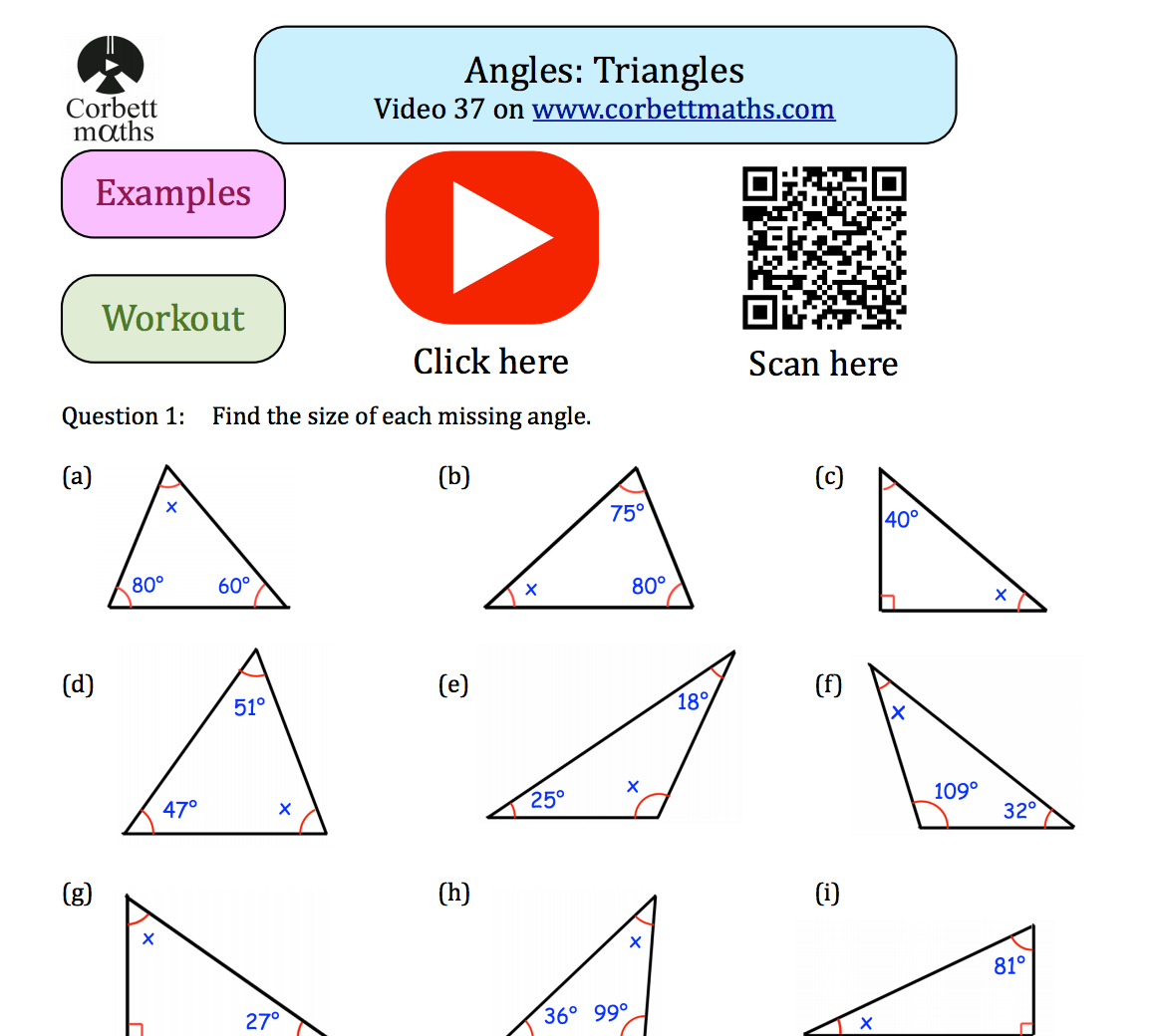
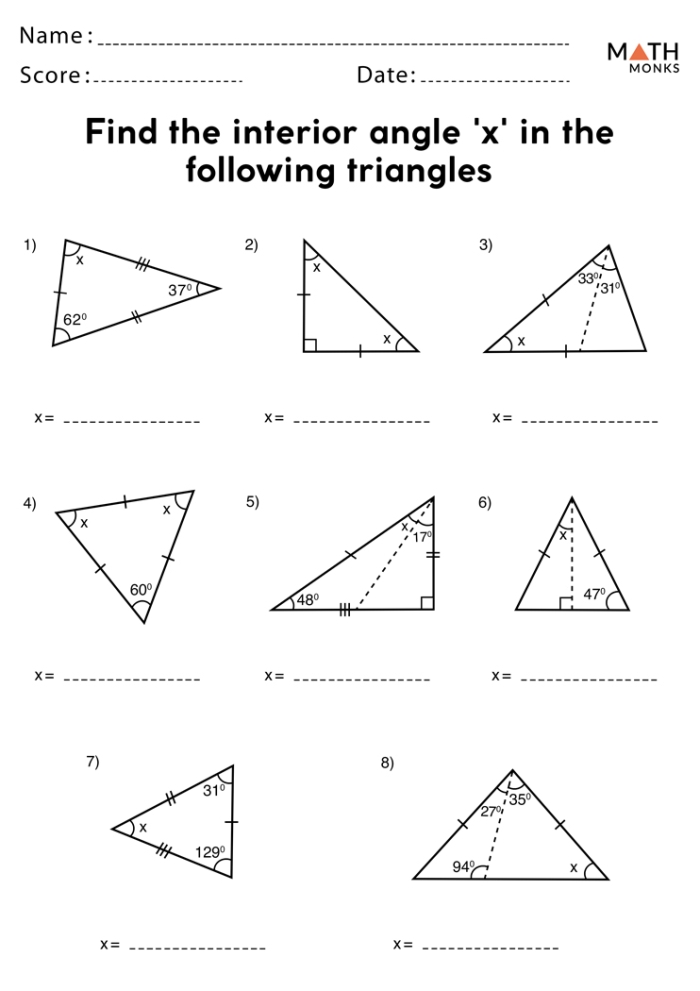
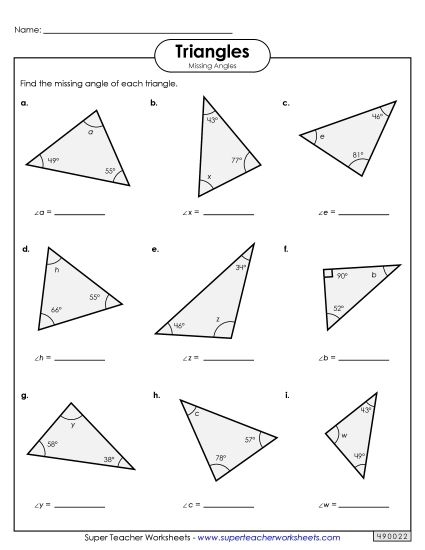
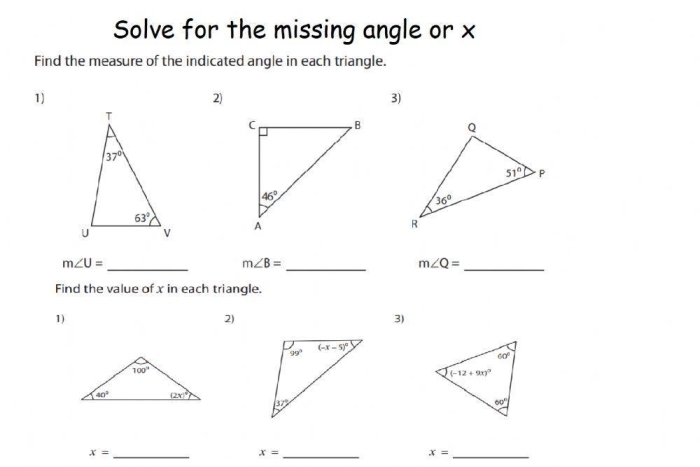
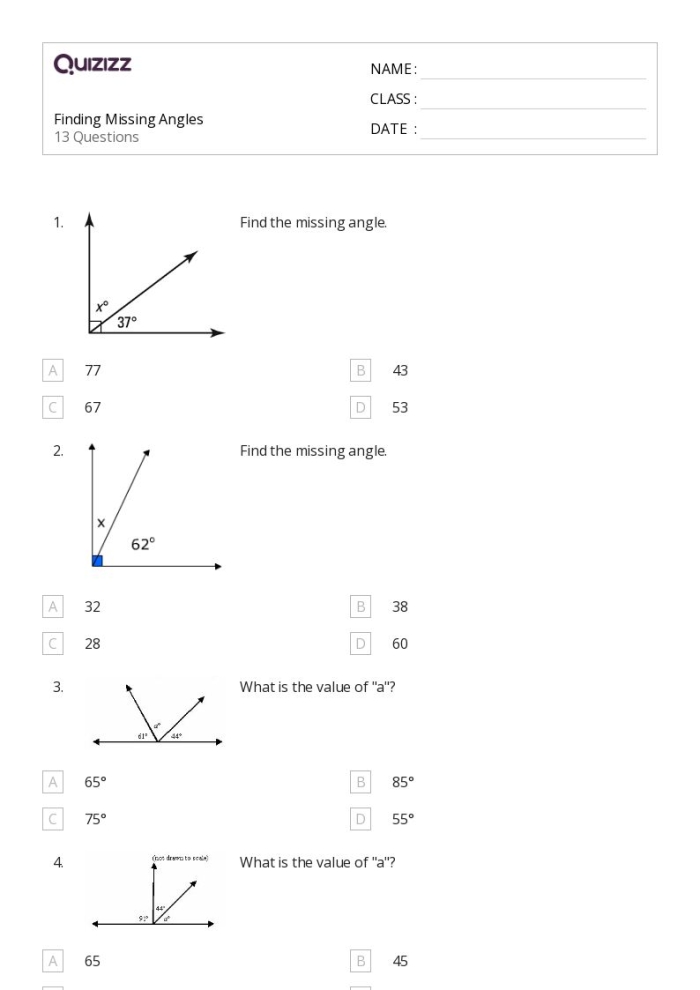
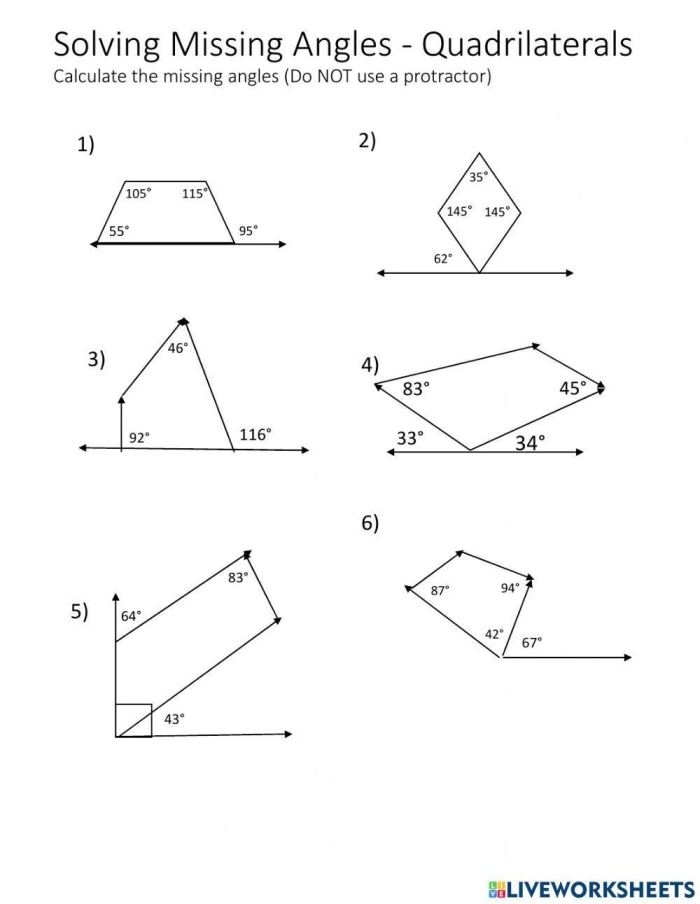
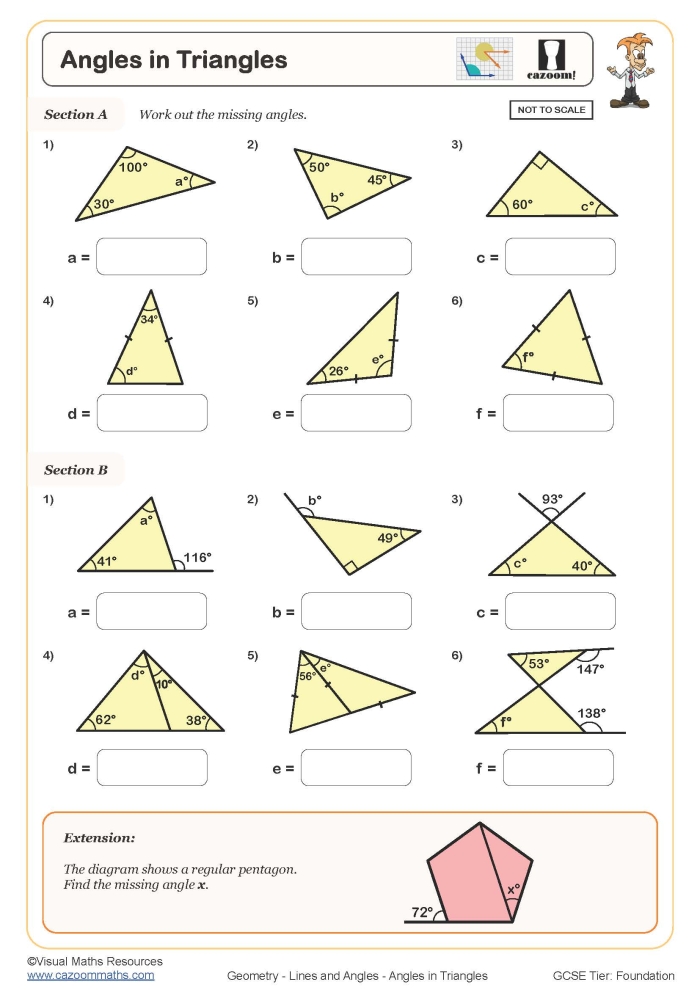
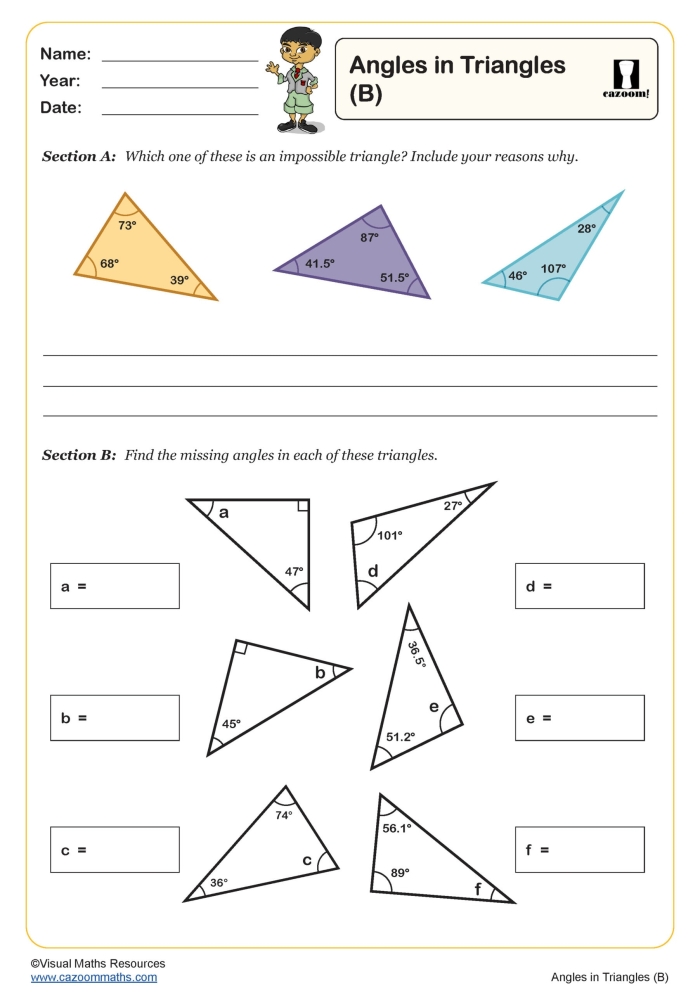
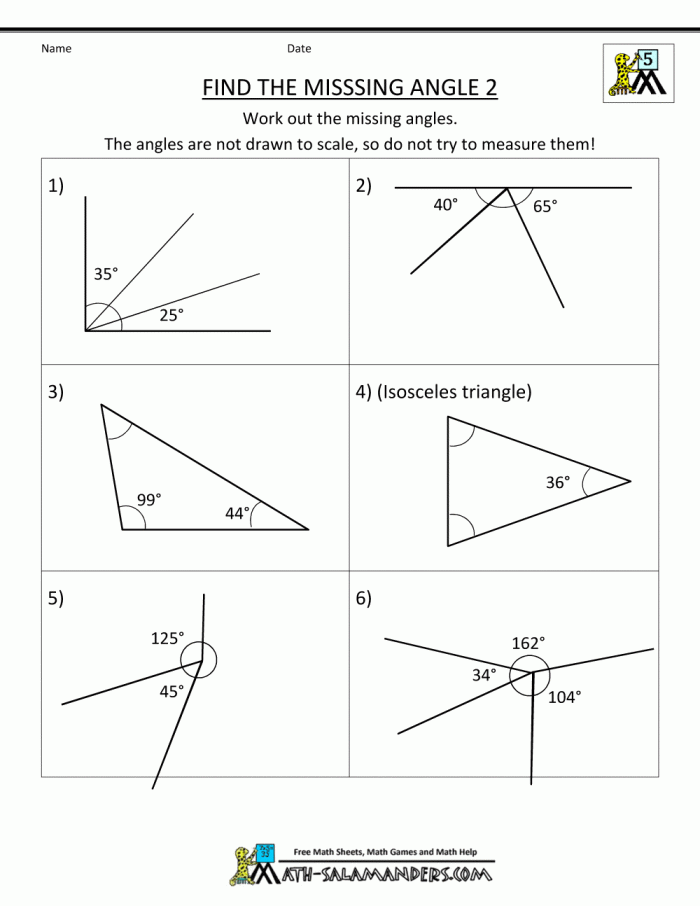
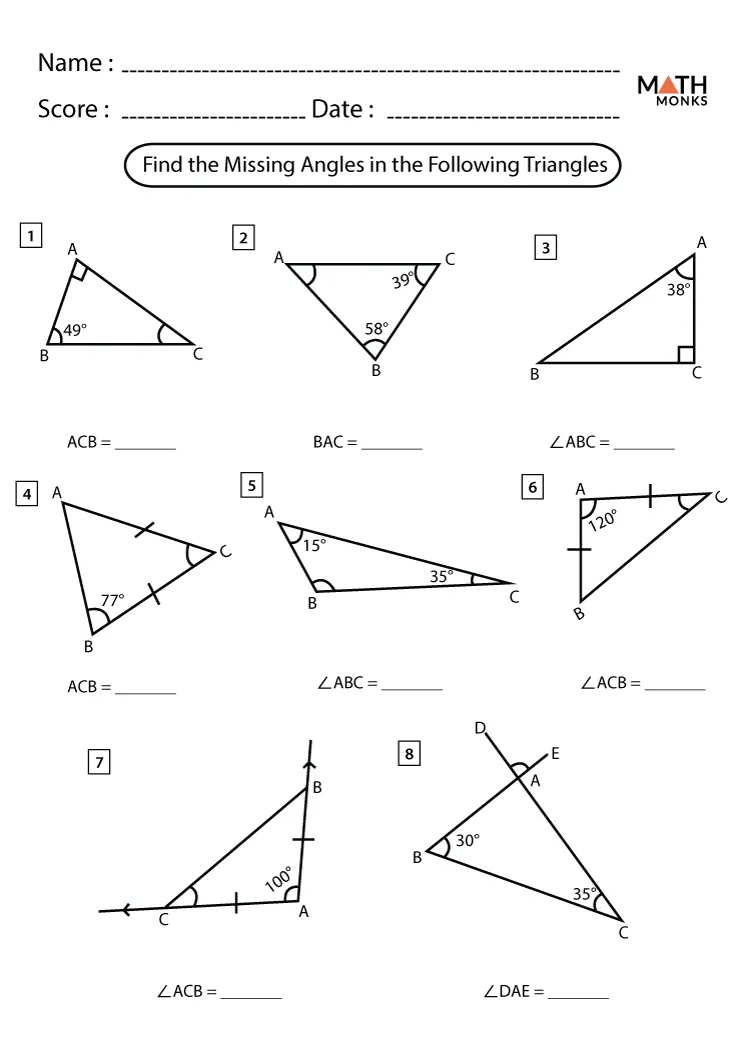
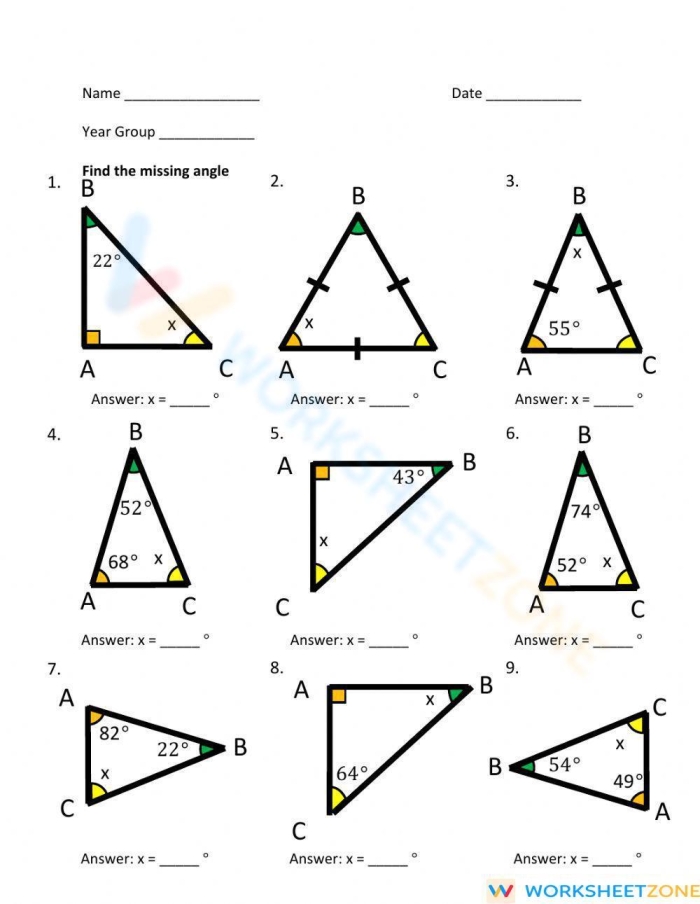
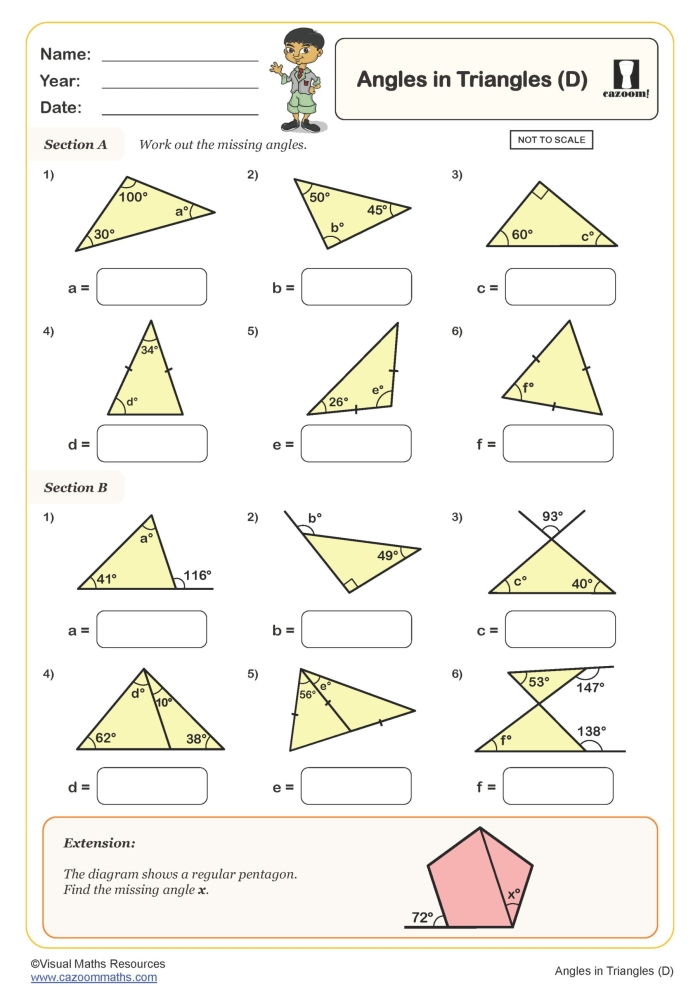
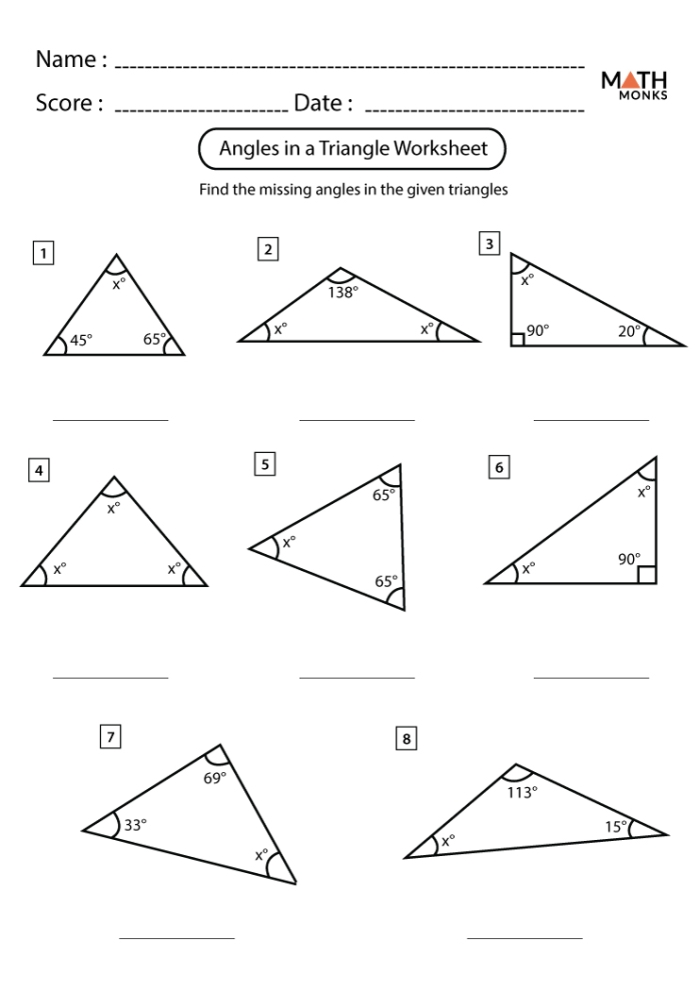
Working through printable worksheets on finding the missing angle in triangles helps students build confidence through repetition. Beyond this specific skill, eighth grade geometry connects to broader mathematical thinking. Understanding how angles work prepares students for later concepts like the Pythagorean theorem, which relies on right triangles and their specific angle properties.
If your child hesitates when solving these problems, encourage them to draw the triangle, label what they know, and work through the subtraction step by step. Consistency matters more than speed at this stage.
Worksheet Practice Section