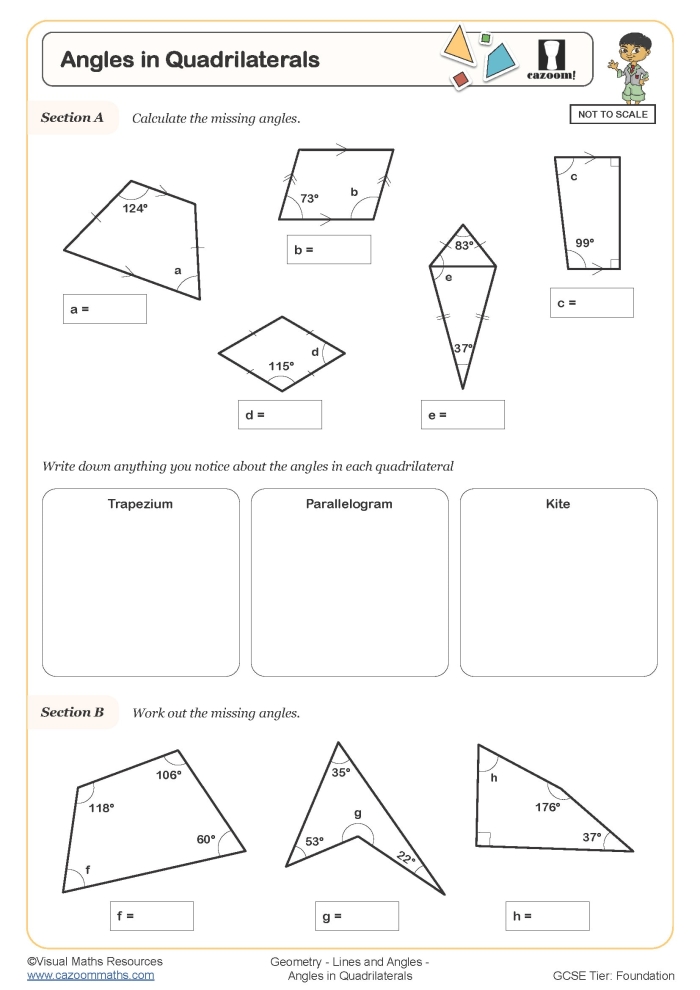
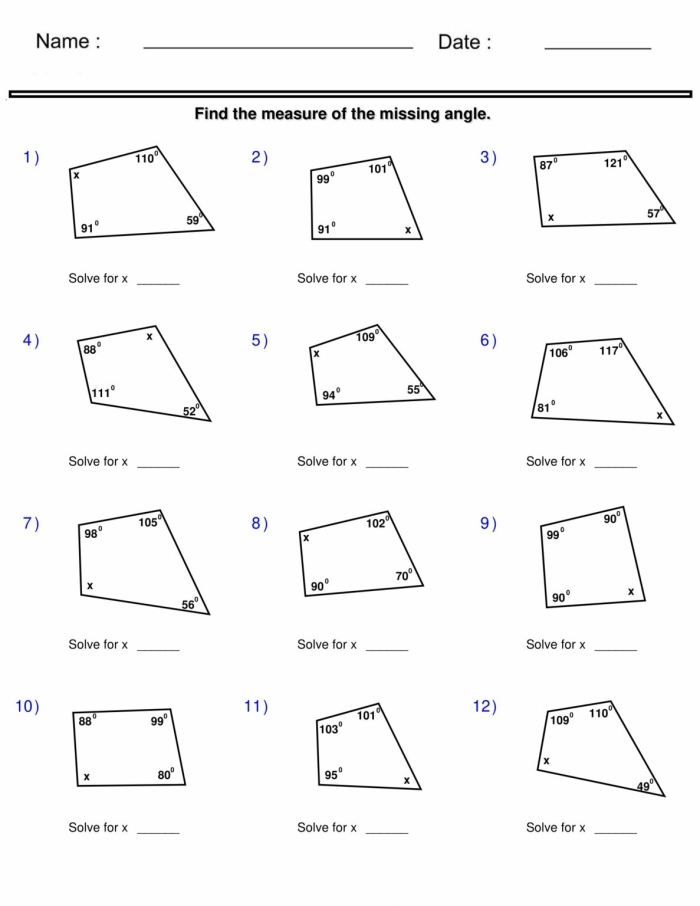
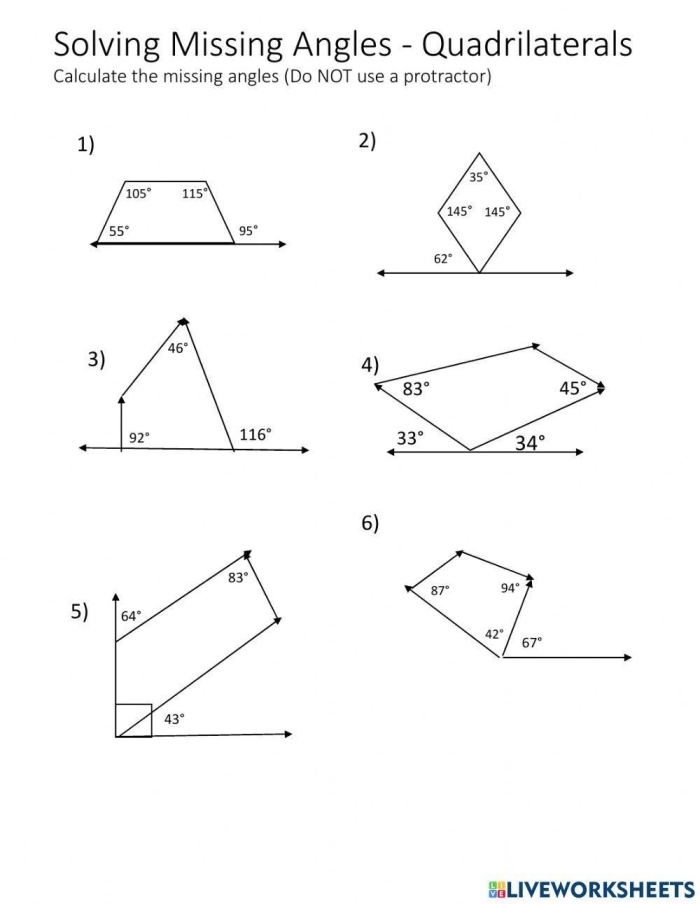
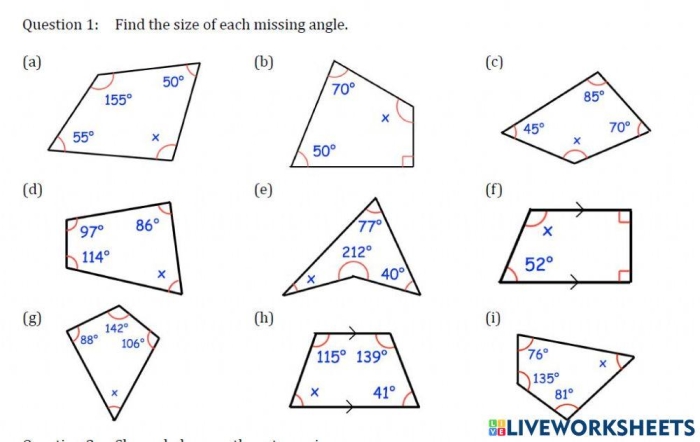
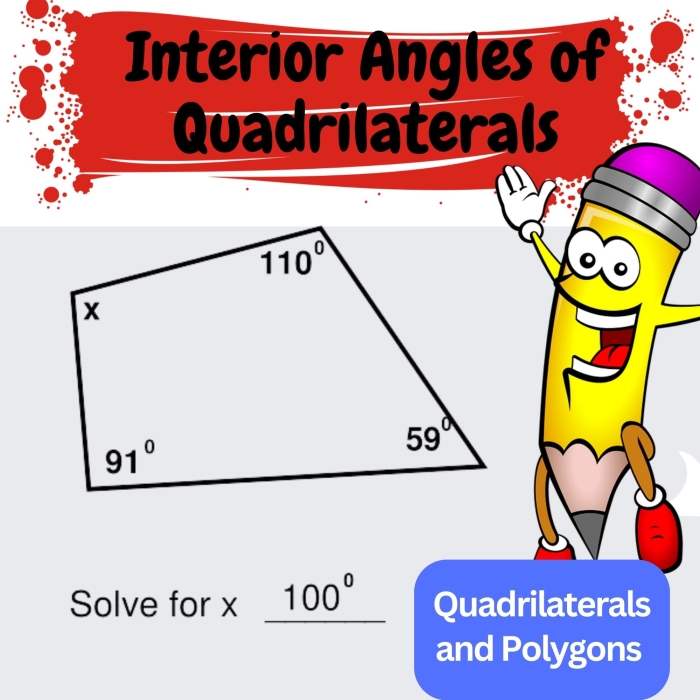
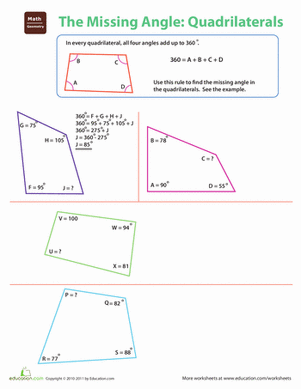
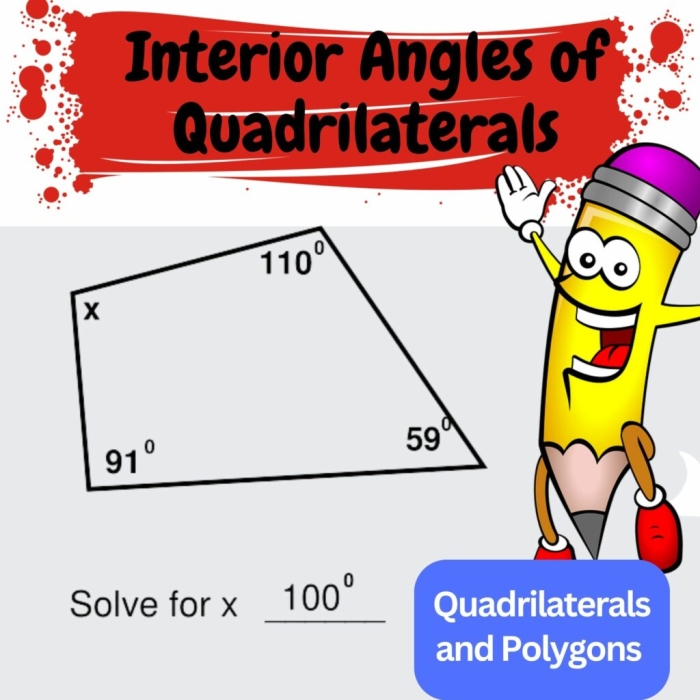
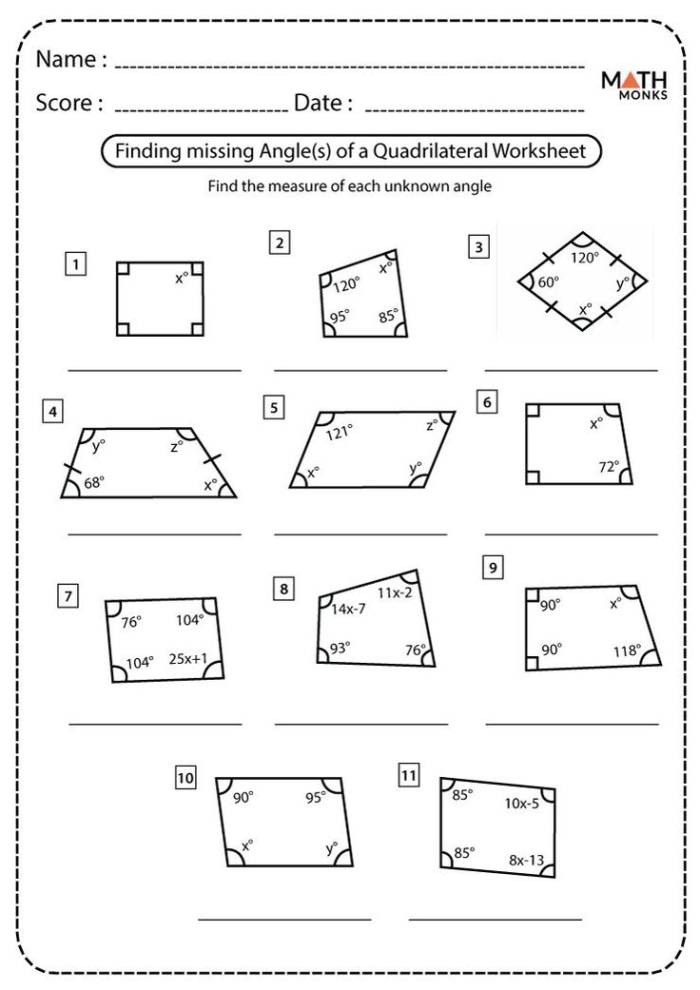
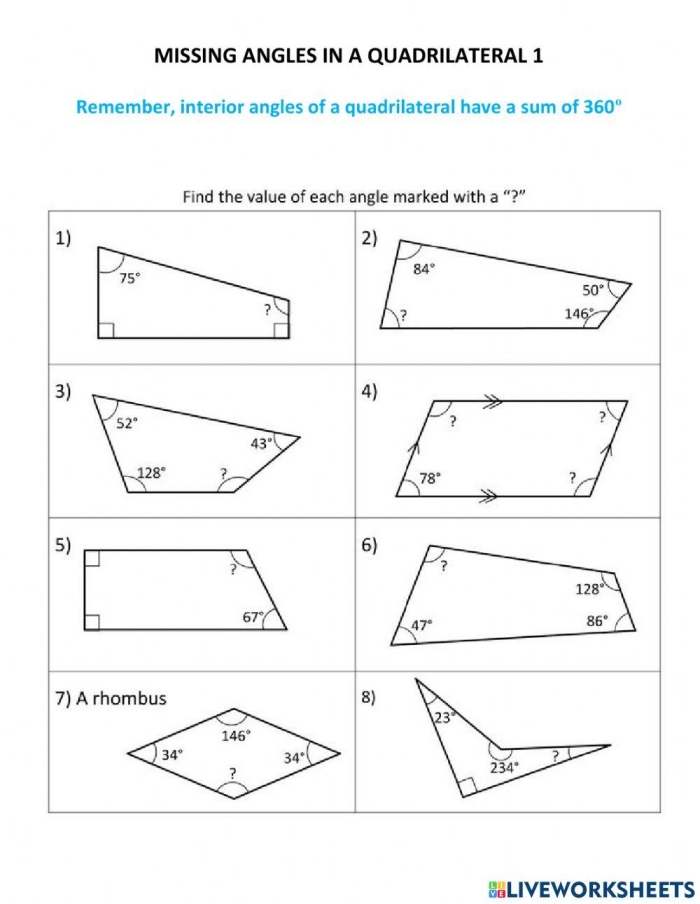
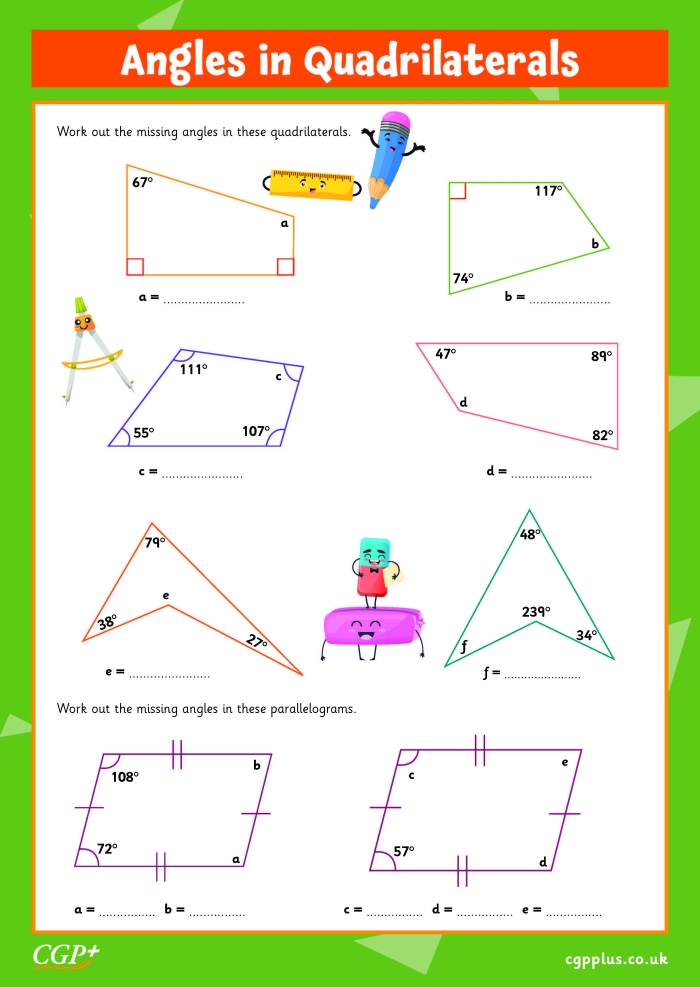
Your child can become a geometry detective by hunting for missing angles in quadrilaterals. This detective work teaches a fundamental truth about four-sided shapes: the sum of all interior angles always equals 360 degrees. Once students grasp this rule, finding any missing angle becomes a straightforward puzzle.
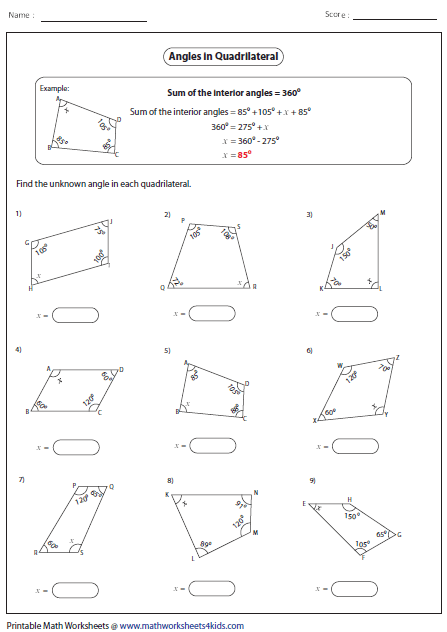
When eighth grade students encounter a quadrilateral with three known angles, they’re really just solving a simple equation. If a shape has angles measuring 85 degrees, 120 degrees, and 95 degrees, the missing angle must be 360 minus the sum of those three. That gives 360 minus 300, which equals 60 degrees. The detective work involves identifying what you know, what you’re searching for, and applying the angle sum property to close the case.
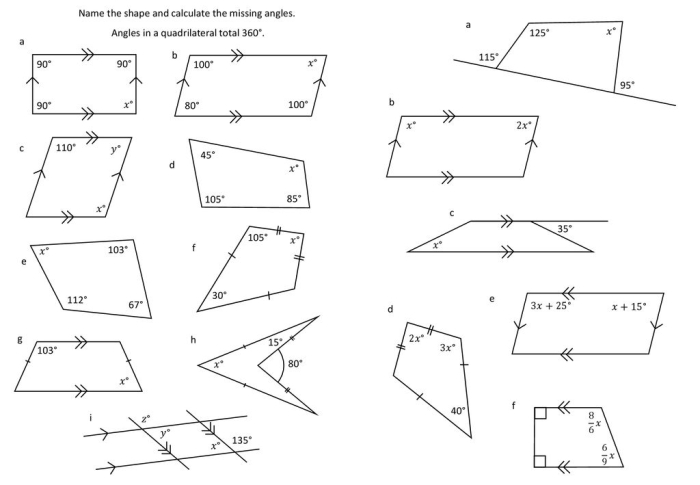
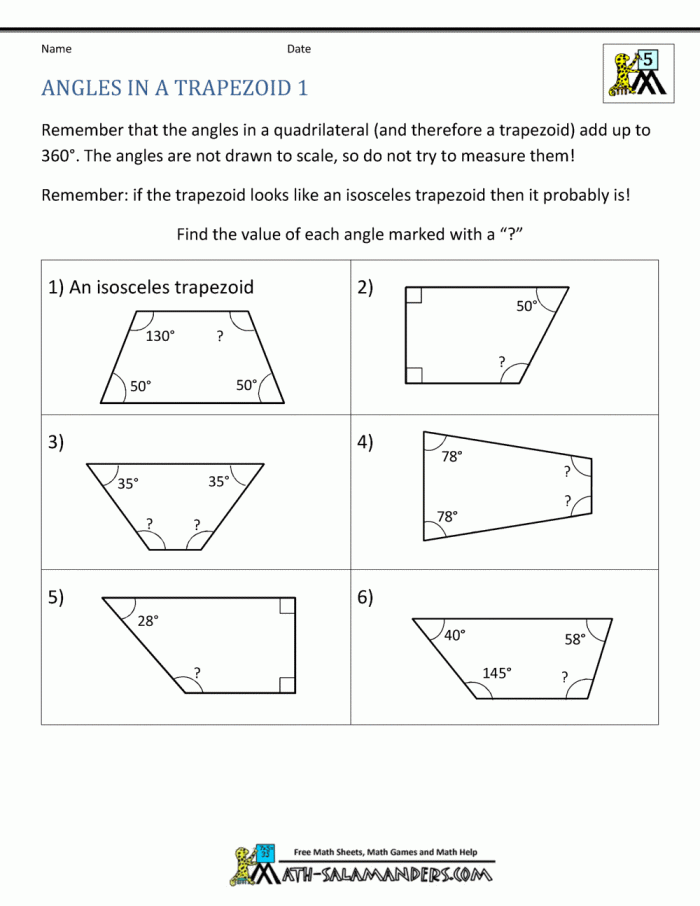
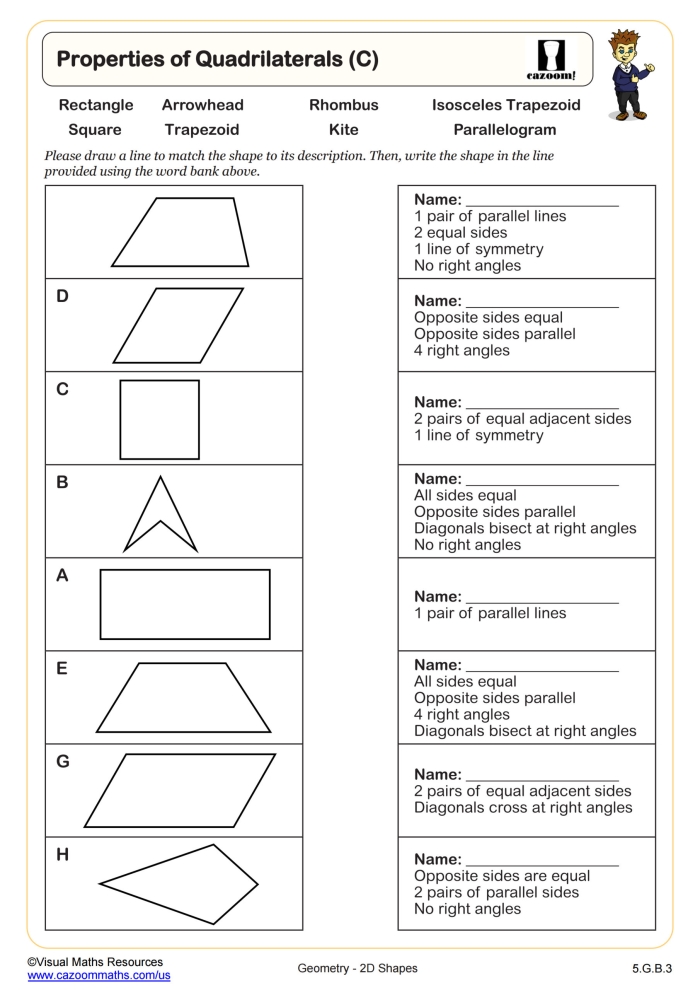
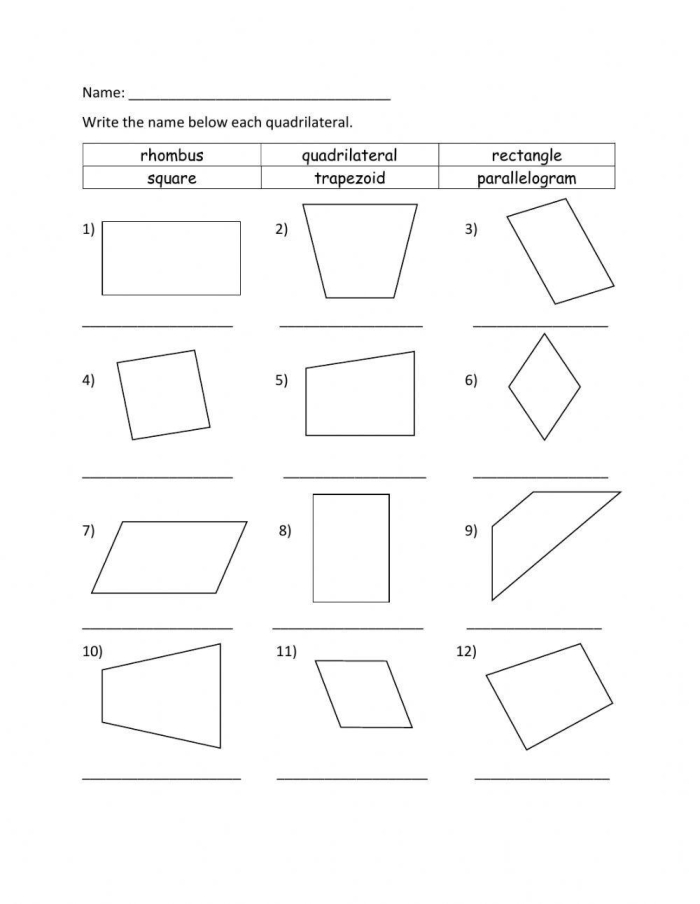
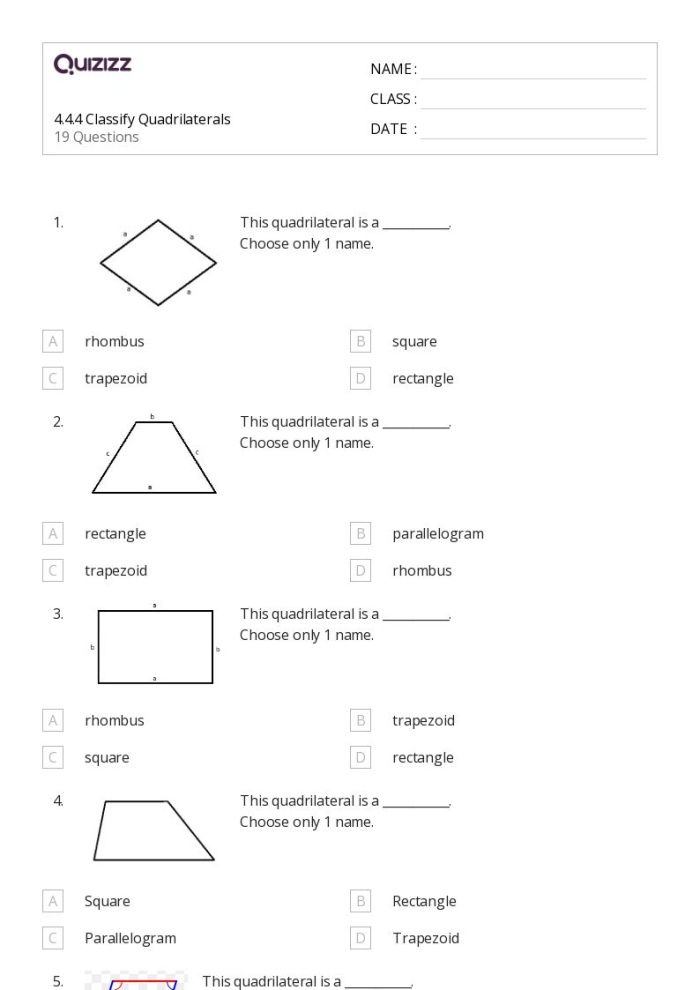
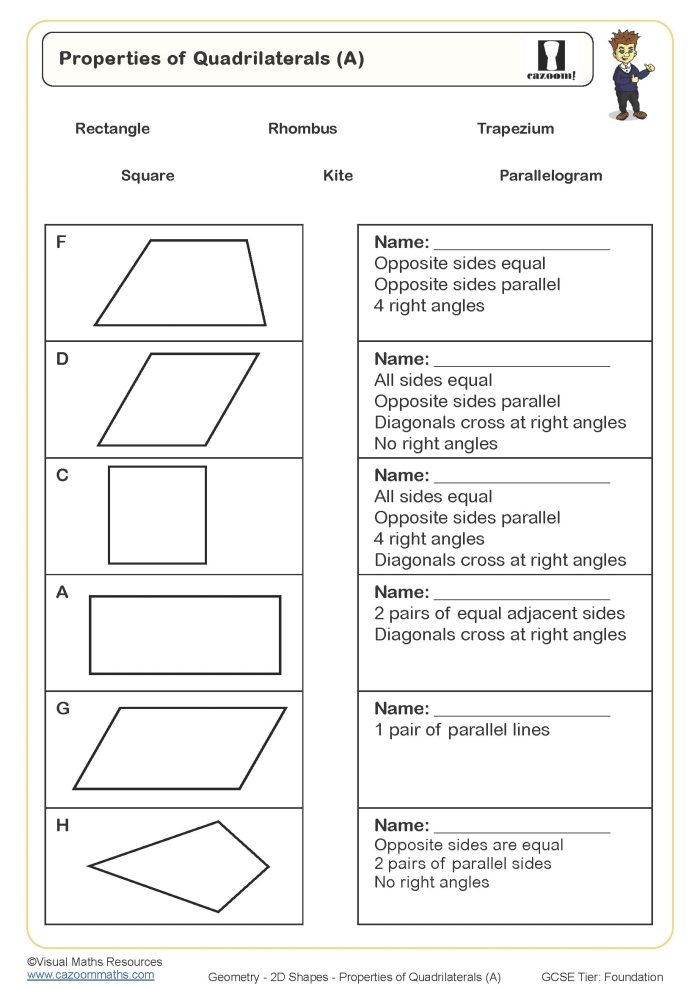
Different quadrilaterals offer different clues. A rectangle always has four 90-degree angles, making it straightforward. Parallelograms have opposite angles that match each other, so knowing one angle helps you find its opposite. Trapezoids and irregular quadrilaterals require more careful calculation since no two angles need to match.
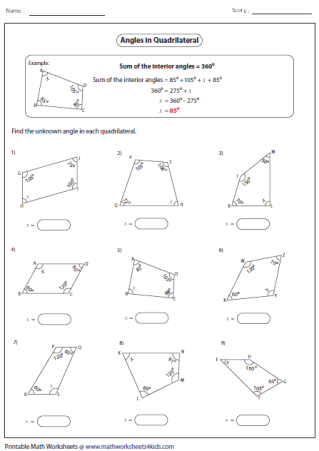
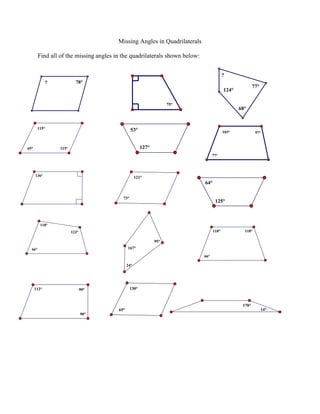
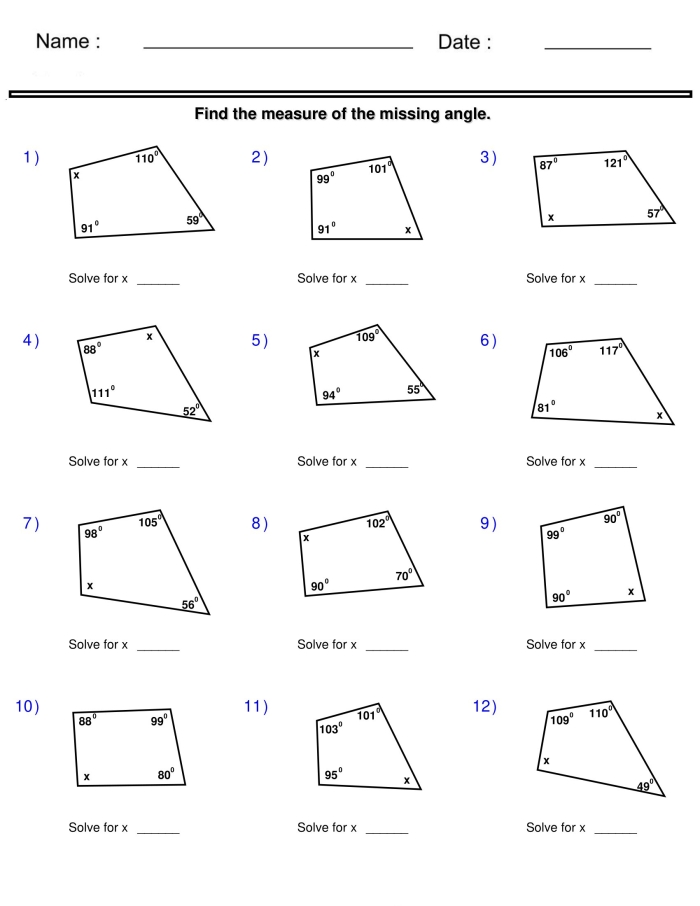
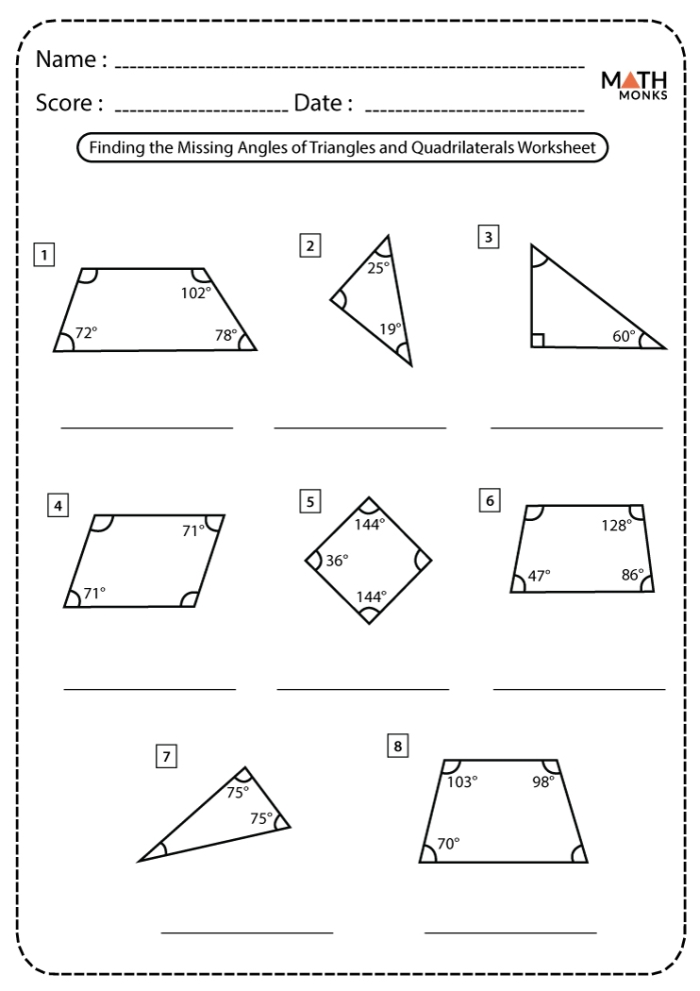
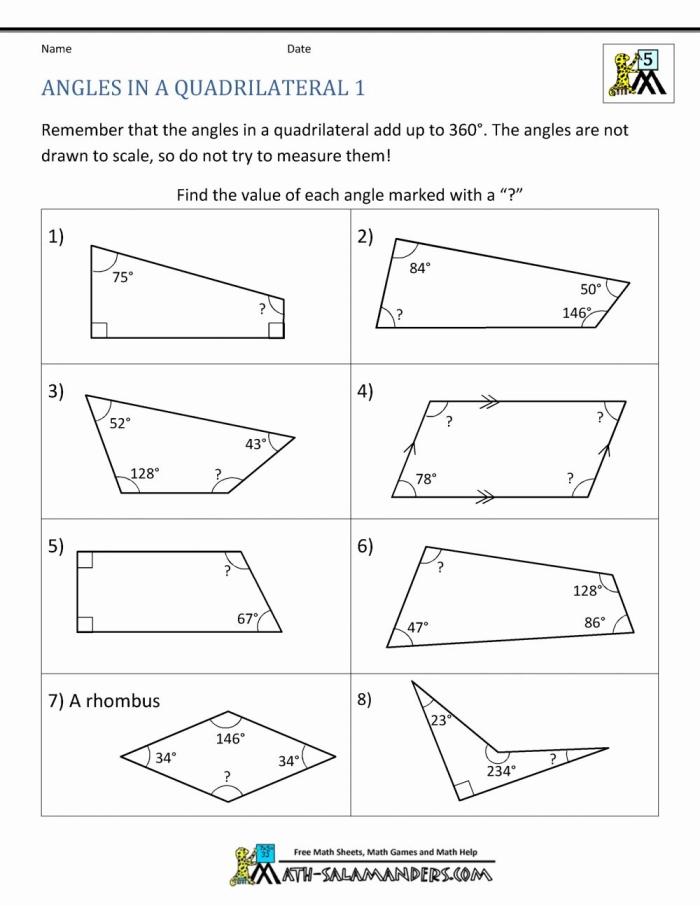
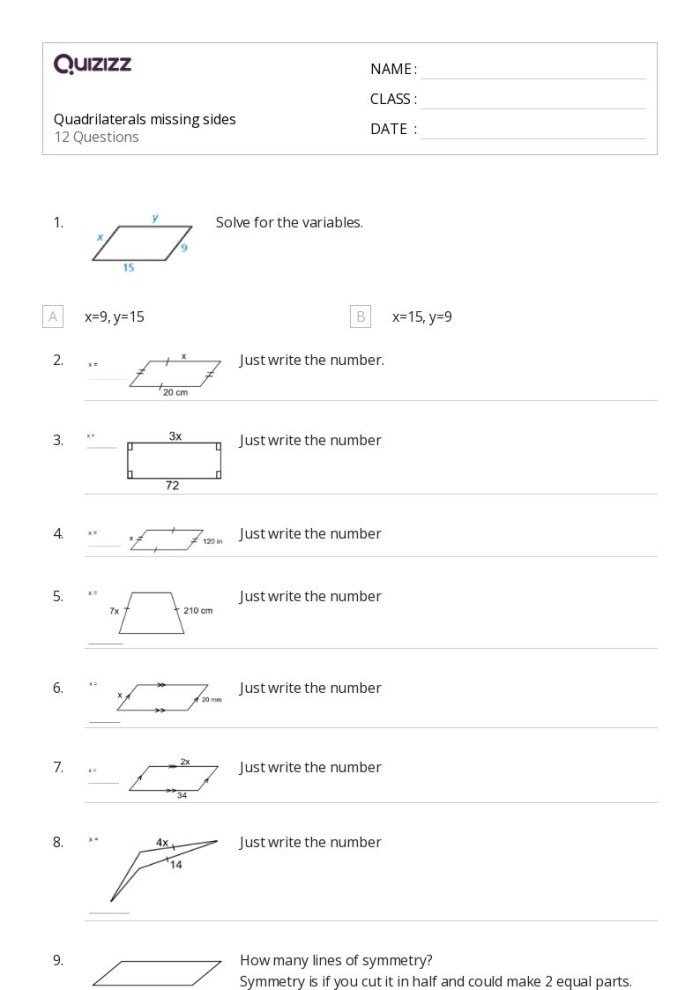
Practicing with printable missing angle quadrilaterals worksheets gives students multiple cases to solve. Each problem reinforces the 360-degree rule while building confidence with angle measurement. Students learn to work backwards from what they observe to what they need to find.
This geometry skill connects to broader mathematical thinking. Understanding angle relationships helps with transformations on the coordinate plane and other spatial reasoning tasks. The detective approach makes eighth grade geometry feel like solving mysteries rather than memorizing rules, which keeps students engaged and helps the concepts stick longer.
Hands-On Worksheet Activities