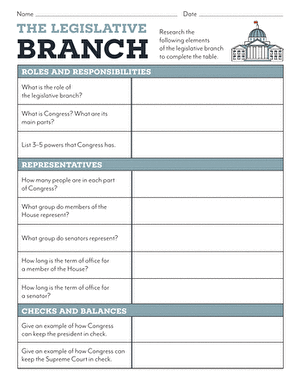
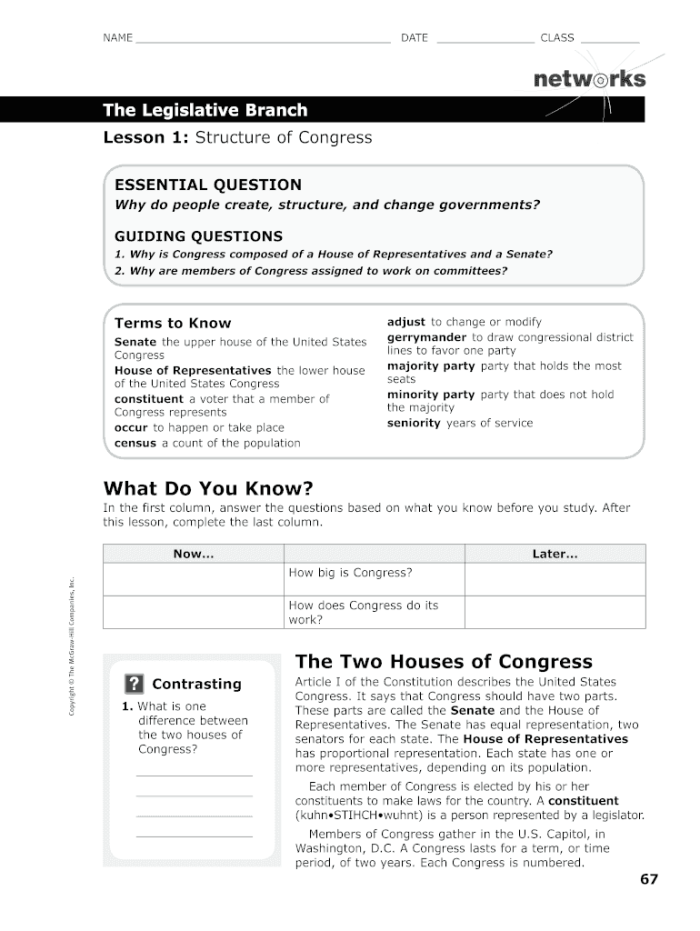
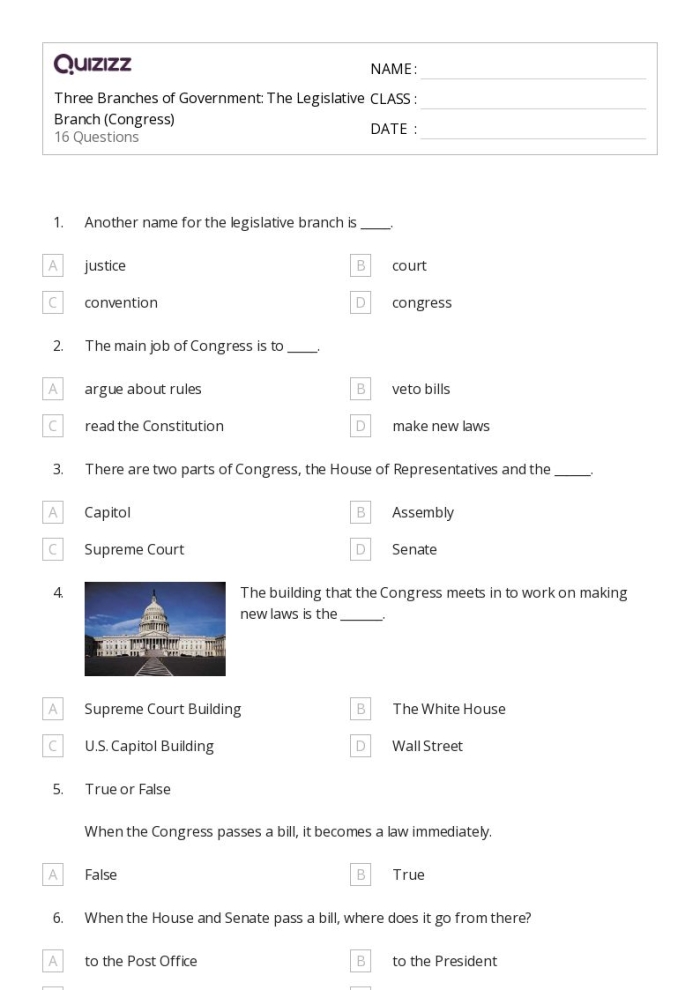
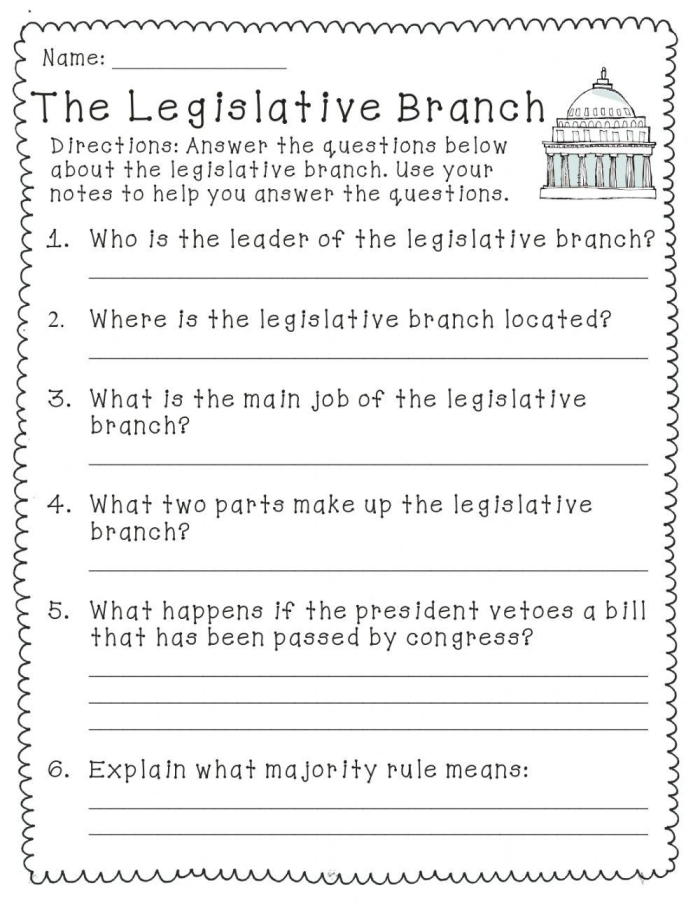
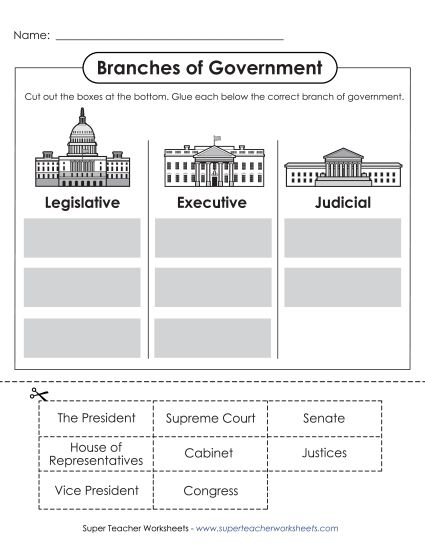
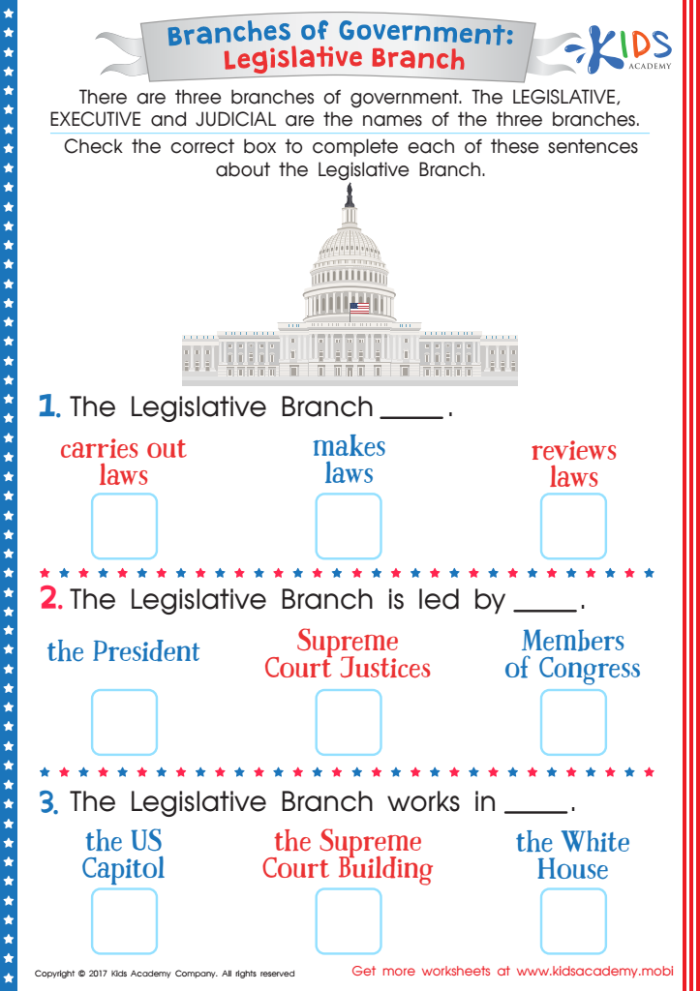
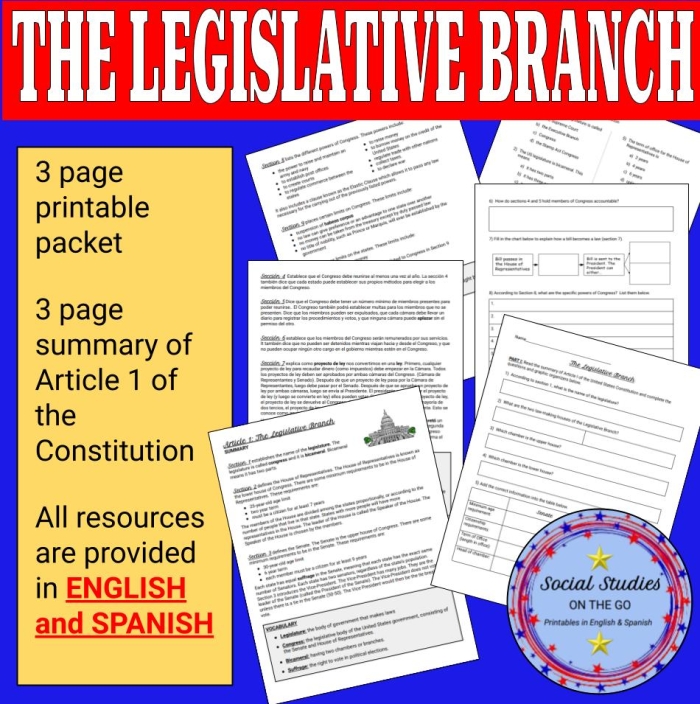
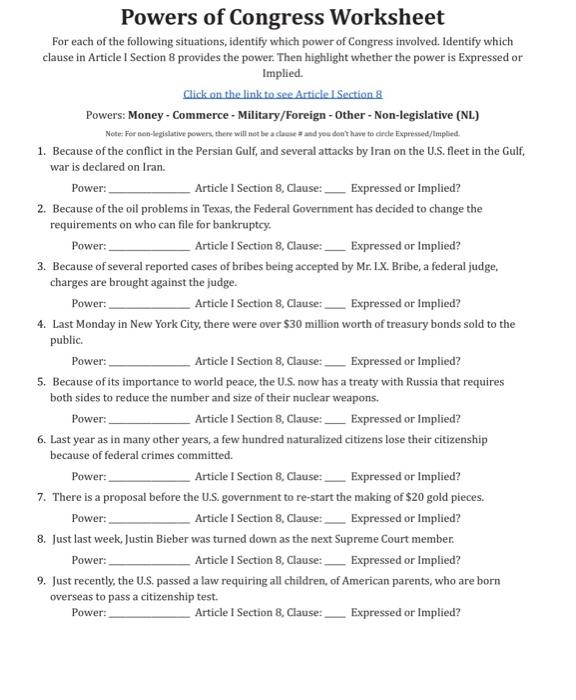
Learning about the legislative branch of the U.S. government is essential for students to understand how laws are made and the role of Congress in shaping our society. This engaging civics worksheet offers sixth graders a chance to explore the two chambers of Congress: the House of Representatives and the Senate. By examining the distinct functions and characteristics of each chamber, students gain a clearer picture of our democratic system.
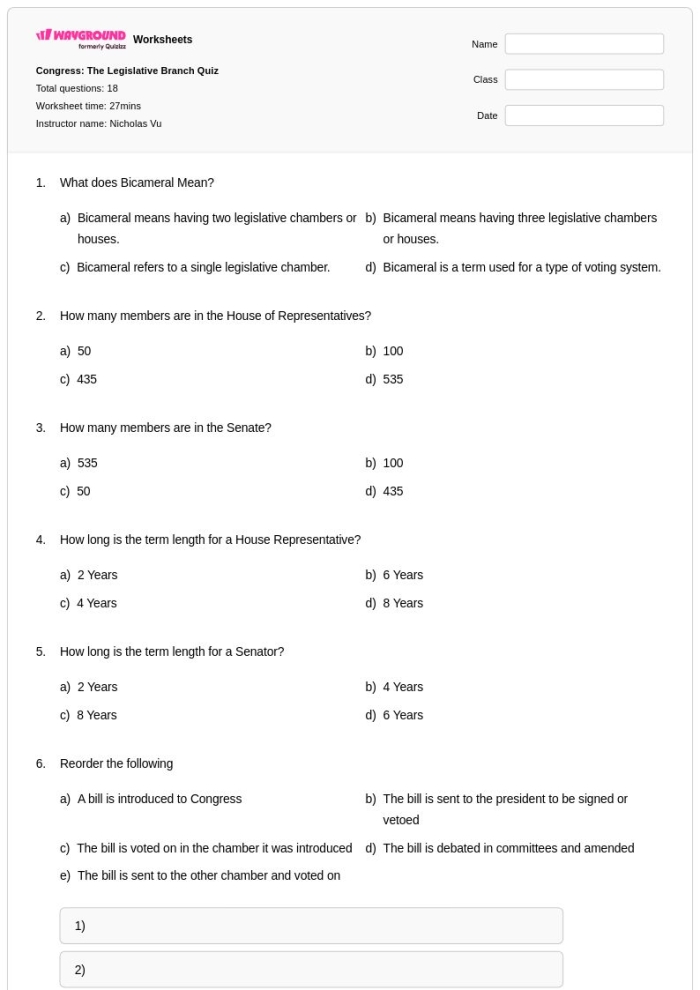
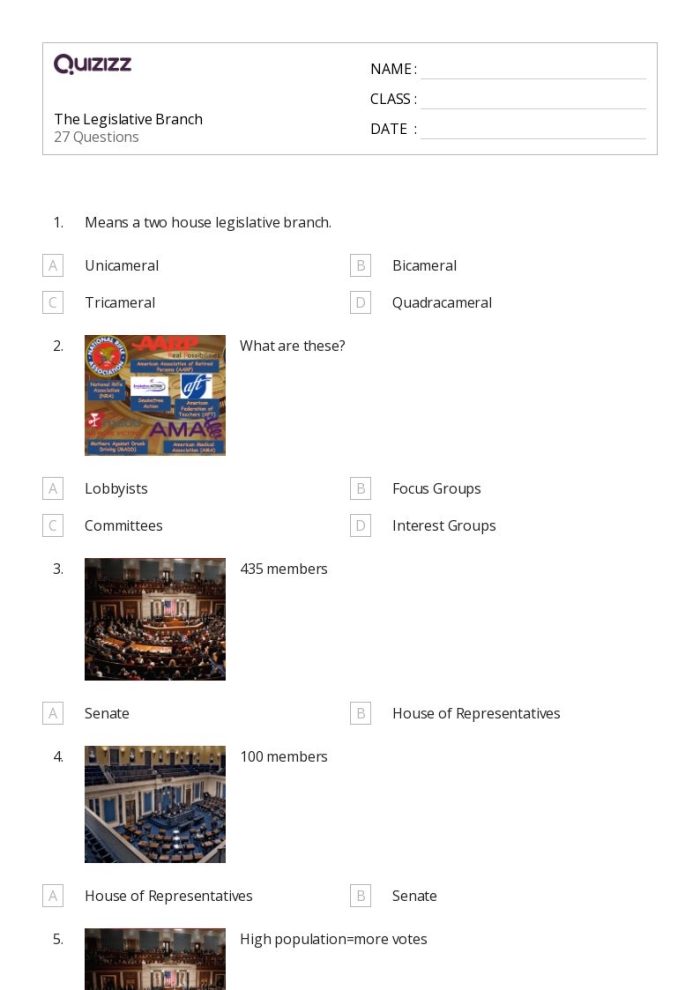
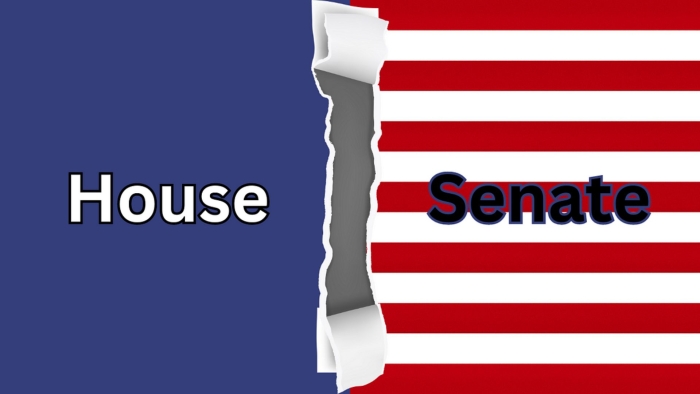
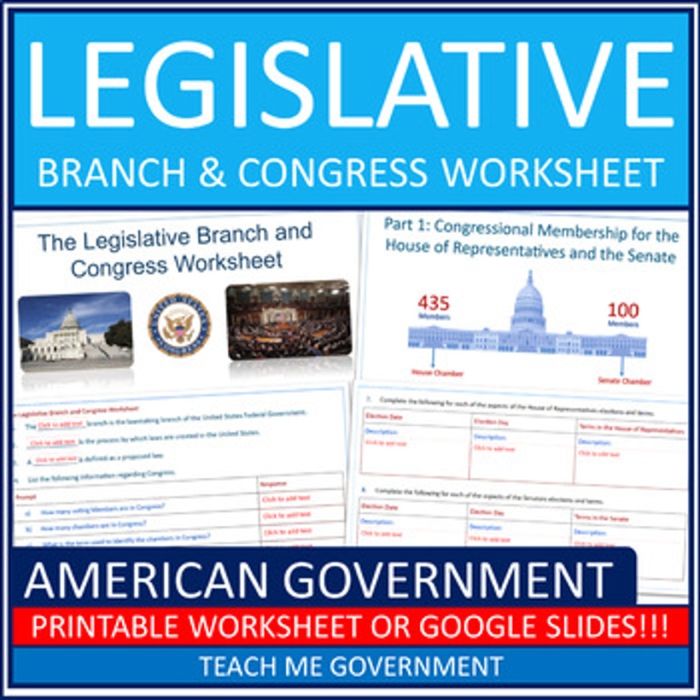
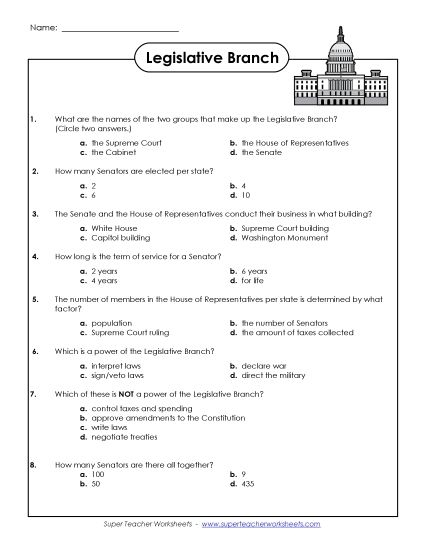
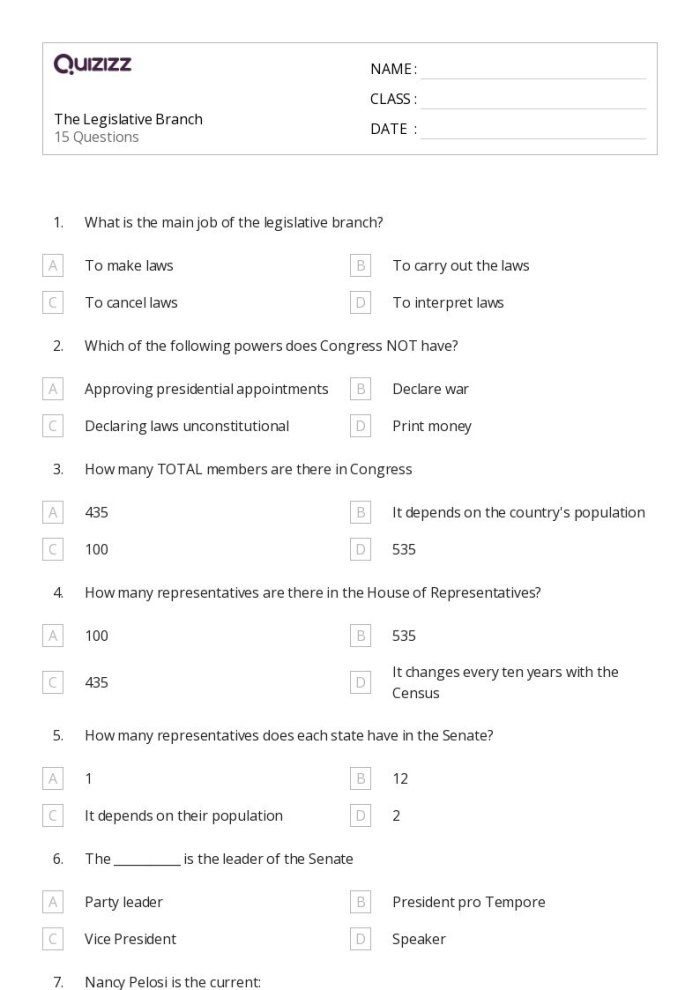
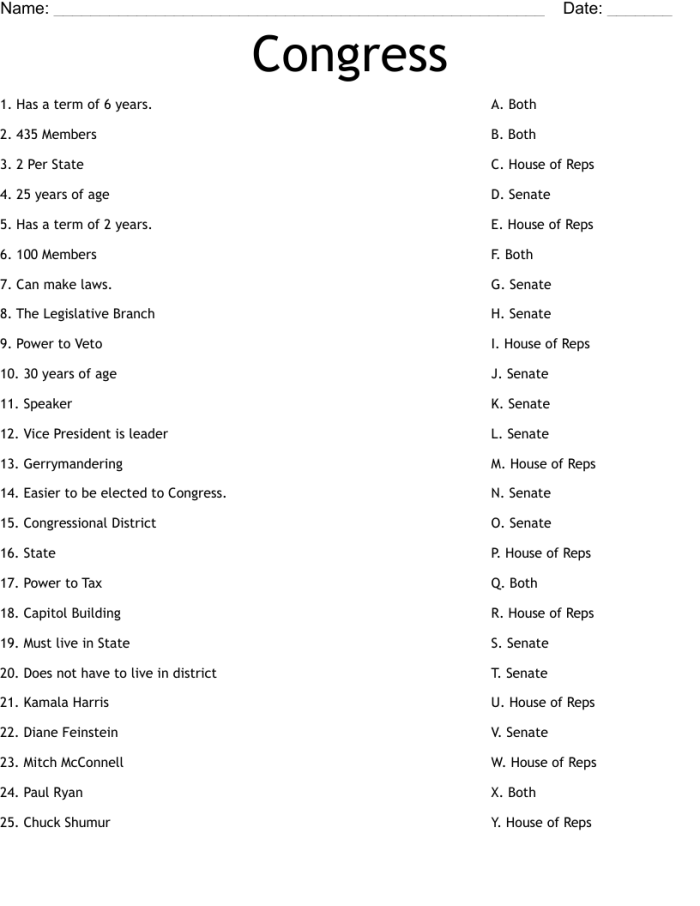
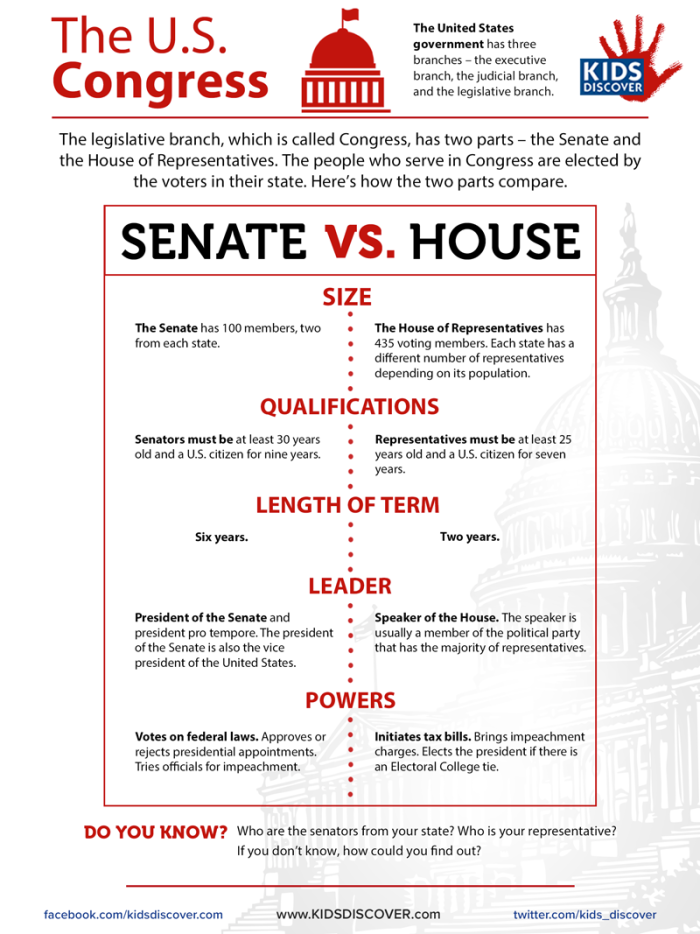
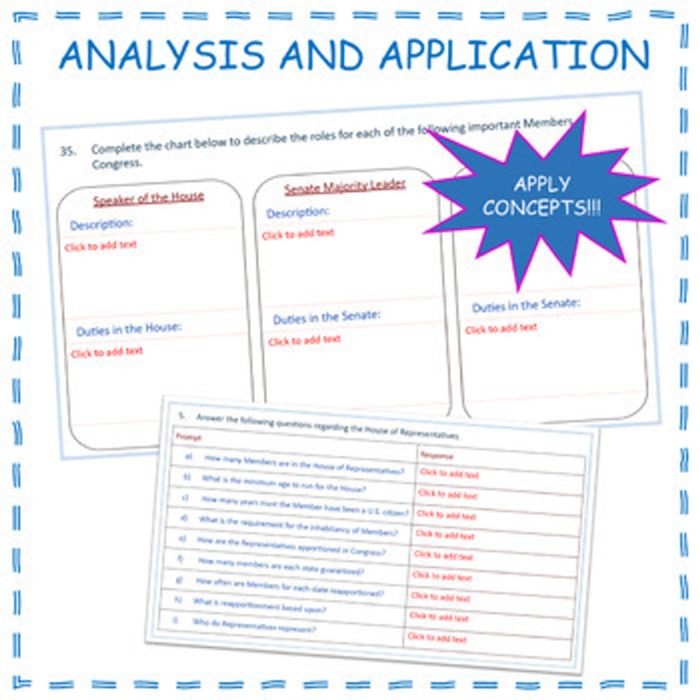
The House of Representatives, composed of 435 members, is designed to represent the population of each state. This means that larger states have more representatives than smaller ones. Students can learn that members serve two-year terms and are often closely tied to their constituents’ needs. In contrast, the Senate is made up of 100 senators, with each state represented by two, regardless of size. Senators serve six-year terms, allowing them to focus on long-term issues rather than immediate political pressures.
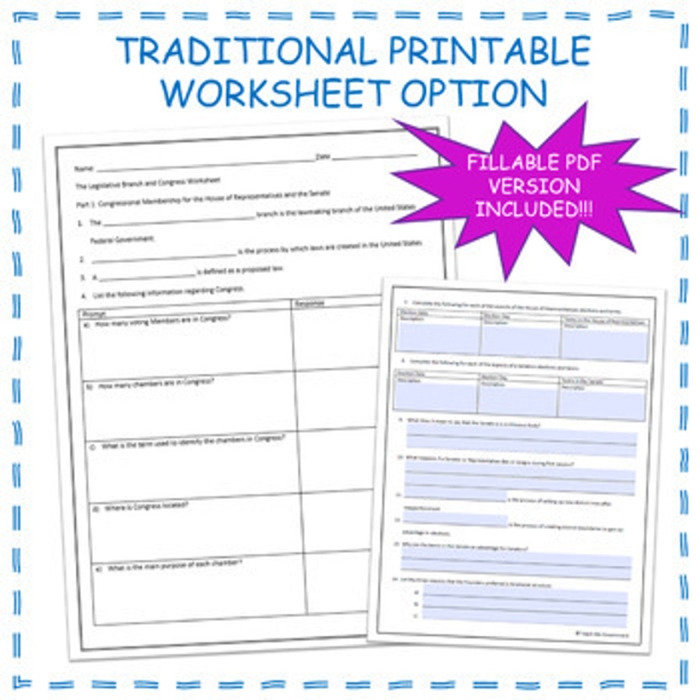
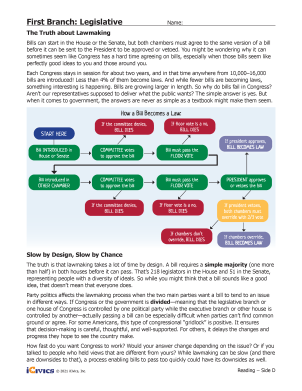
Through the worksheet, students can engage with key facts, such as the process of how a bill becomes law. Understanding this process helps them appreciate the checks and balances that are crucial to our government. For example, a bill must pass both chambers before it can be signed into law by the President. This requirement ensures that different perspectives are considered, fostering a more comprehensive legislative process.
Beyond just memorizing facts, this activity encourages critical thinking. Students can discuss the implications of having a larger versus smaller legislative body and how that affects representation and decision-making. Incorporating worksheets like this into the curriculum not only enhances students’ understanding of civics but also ties into broader themes of numbers and counting, as they analyze data related to Congress.
For those interested in expanding their knowledge further, resources on related topics such as the cell cycle or argument writing can be found on educational platforms. Engaging with these materials not only bolsters students’ comprehension but also prepares them for informed citizenship in the future.
Worksheet Practice Section