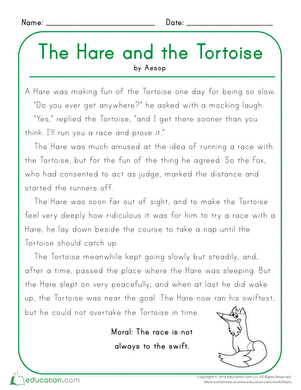
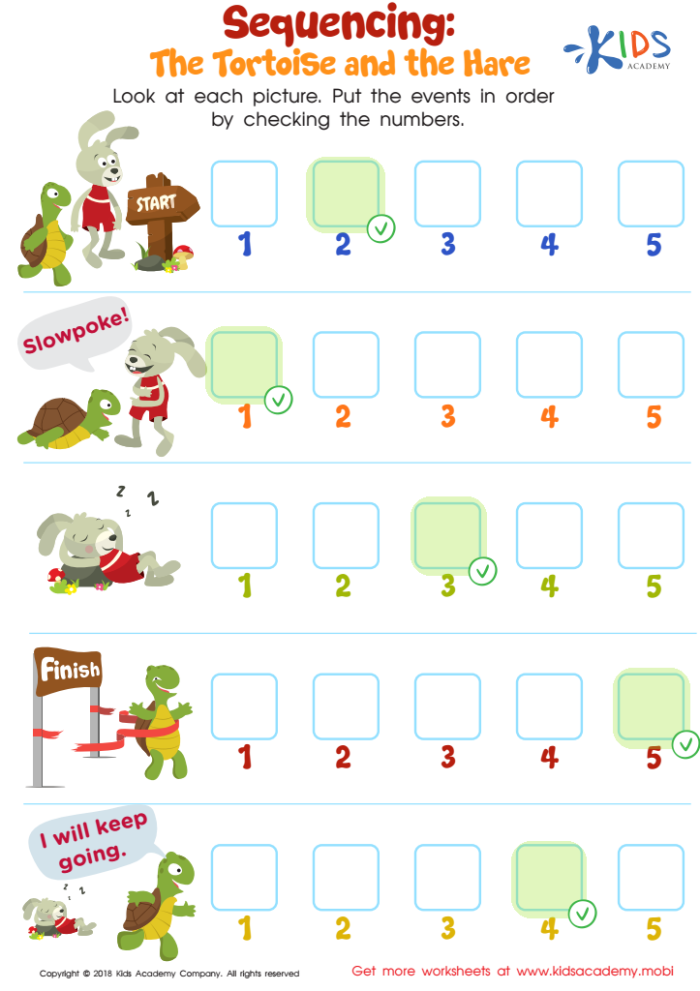
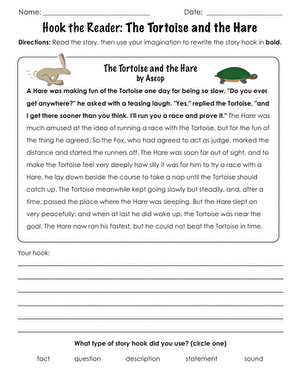
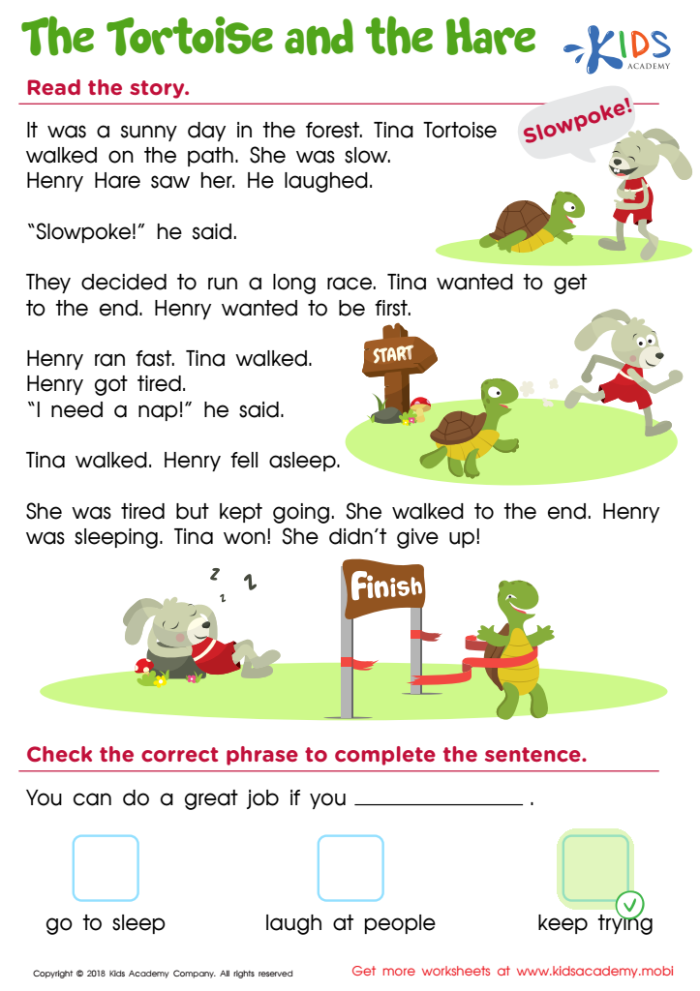
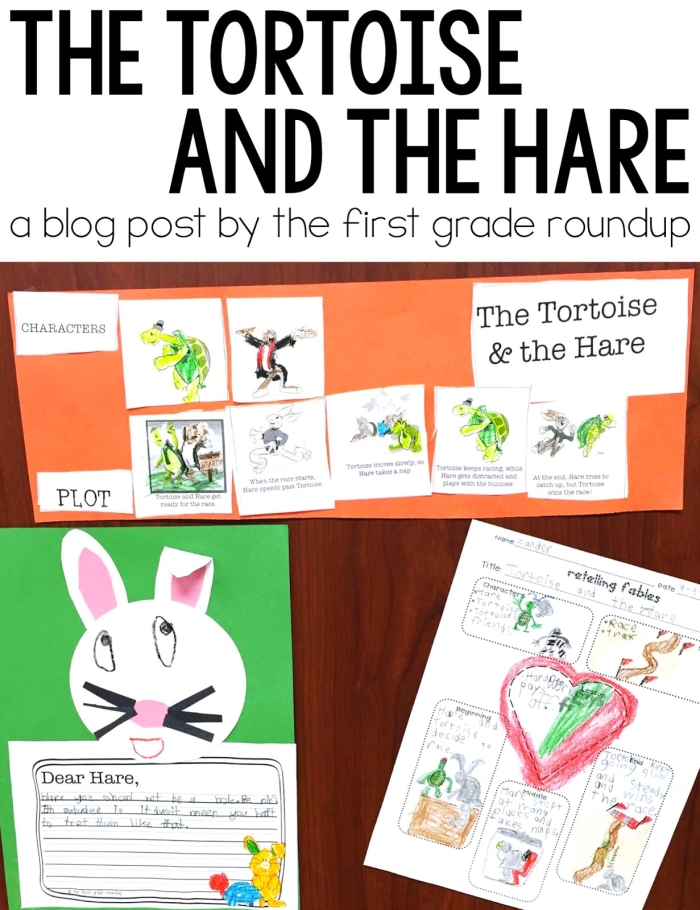
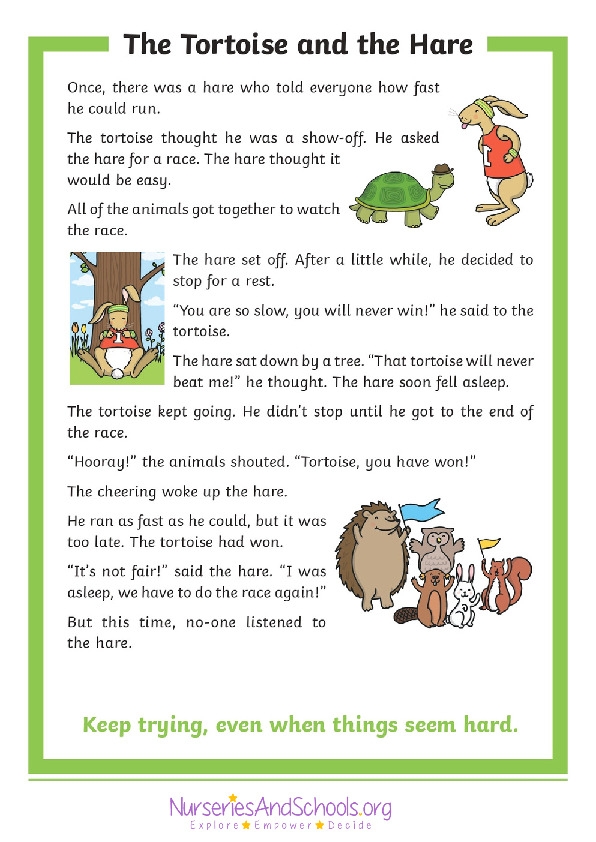
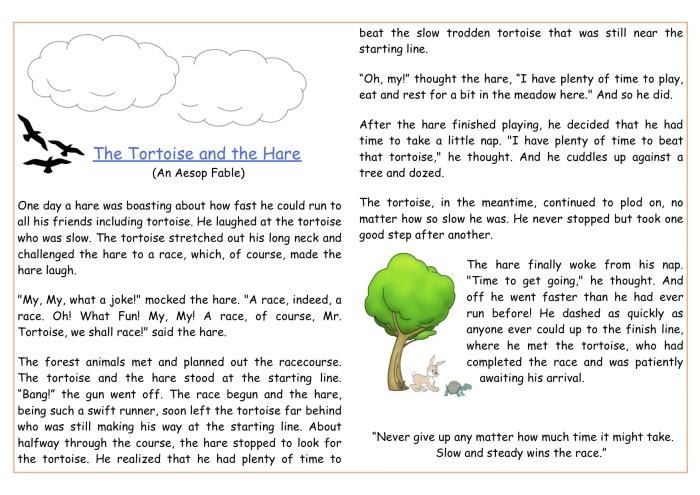
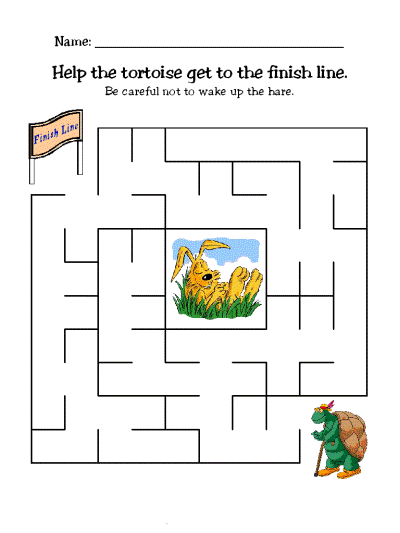
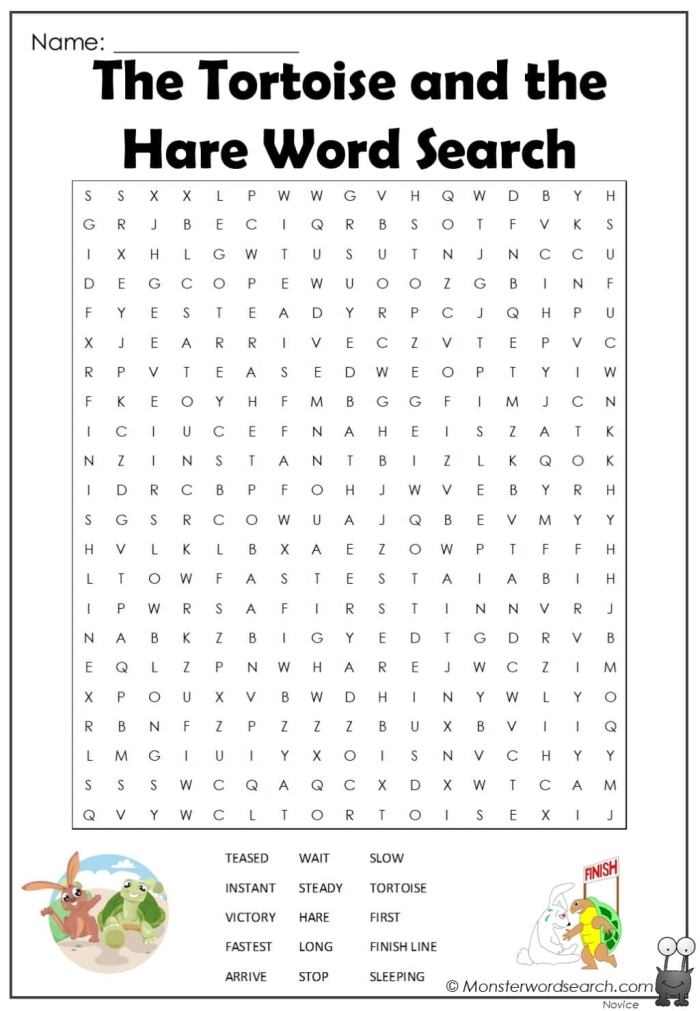
Building a puppet show from The Hare and the Tortoise gives kindergarten students a hands-on way to experience this classic story. Rather than simply reading or watching, children become active participants in storytelling, which deepens their understanding of the narrative and its lesson about persistence.
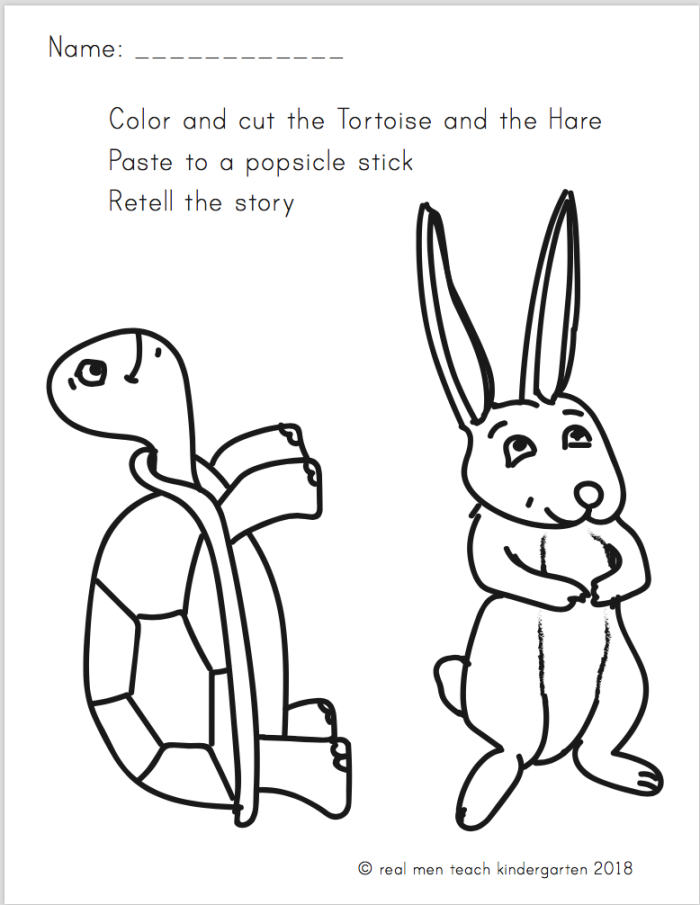
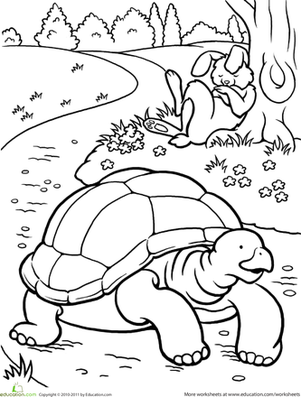
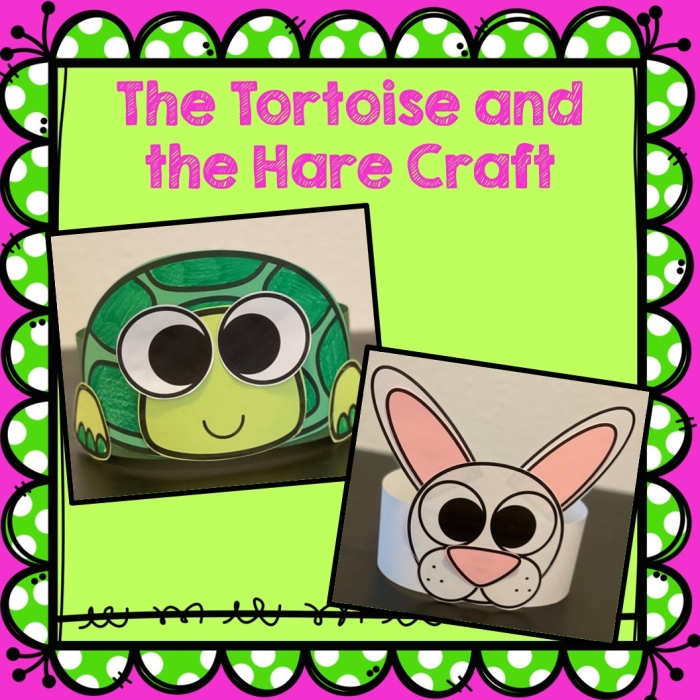
Templates make the assembly process straightforward for young learners. Pre-drawn puppet characters, scenery pieces, and simple instruction sheets eliminate the frustration of starting from scratch. Children can color the templates, cut them out, and attach them to craft sticks or popsicle sticks. This tactile work develops fine motor skills while keeping the focus on the story itself. The templates typically include the hare, tortoise, trees, and a finish line, giving students all the visual elements they need.
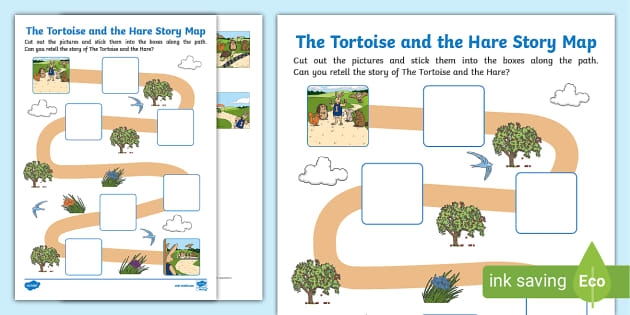
Staging the puppet show involves more than just moving figures around. Kindergarteners learn to plan scenes, decide where characters should stand, and think about how to show movement and emotion through their puppets. This process connects to history and storytelling traditions, as puppet theater has been used for centuries to teach lessons and entertain audiences across cultures.
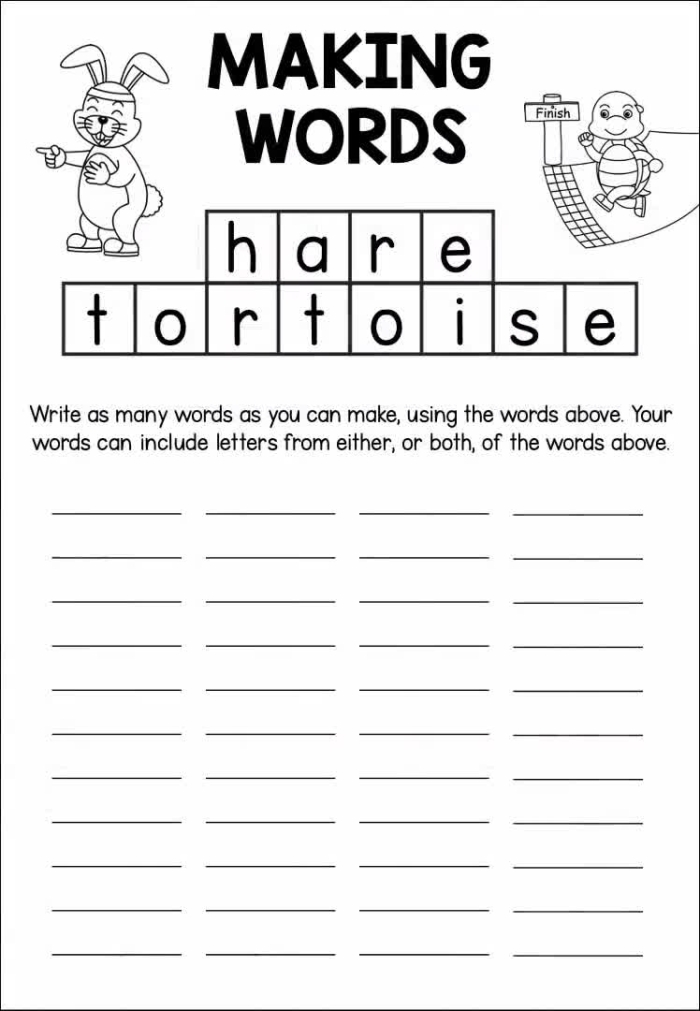
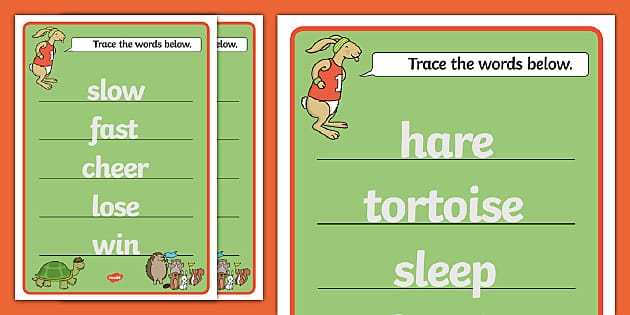
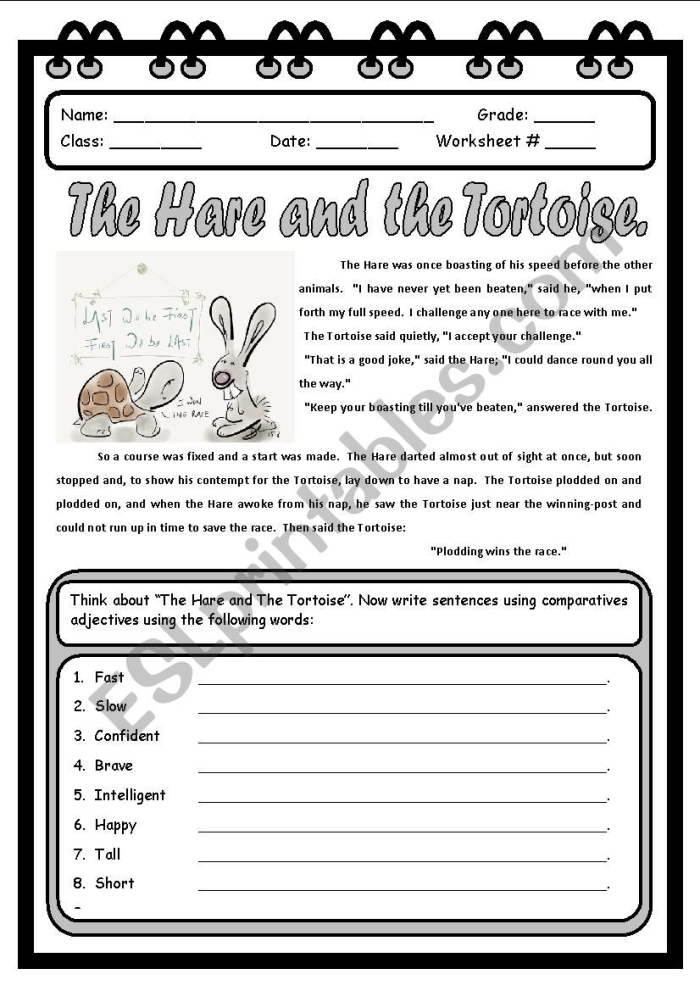
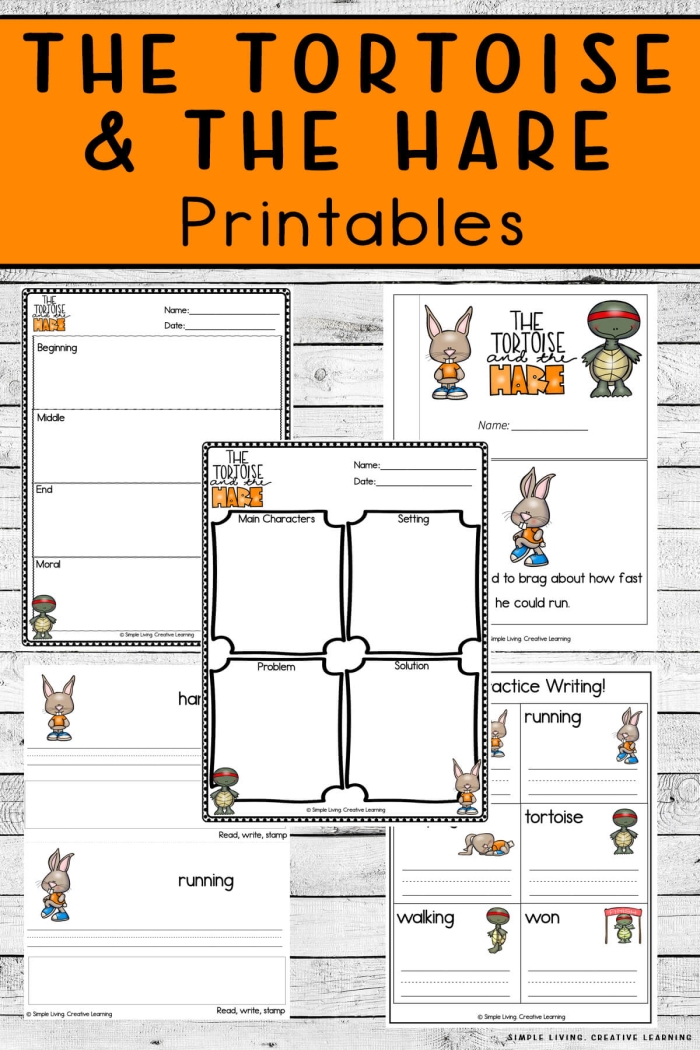
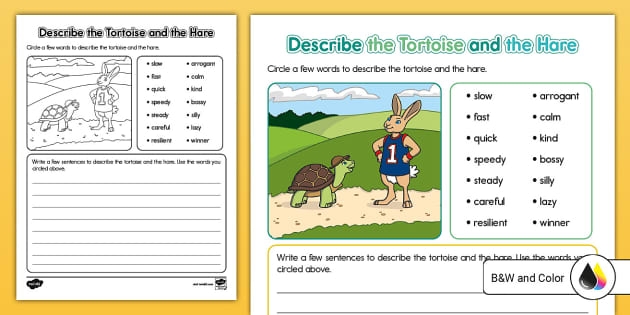
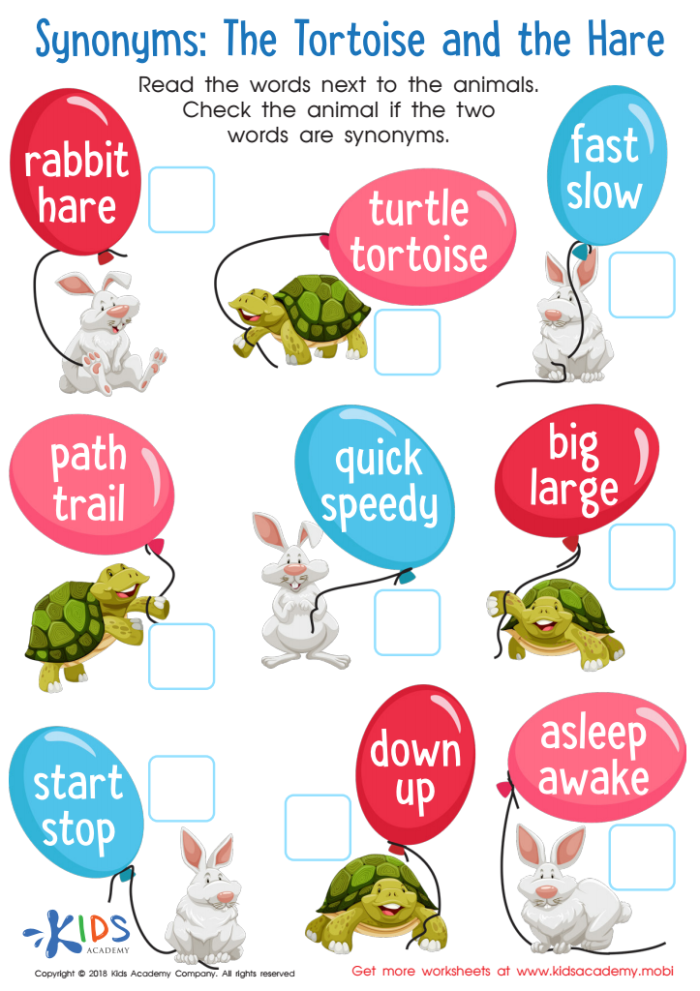
To expand the learning experience, pair the puppet show with related materials. Finger counting activities can reinforce math concepts, while sight word cards help build reading skills. For additional context about nature in the story, tree-themed worksheets work well, and comparison exercises reinforce the faster-versus-slower theme central to the tale.
Once the puppets are ready, children perform for classmates, parents, or other classes. This performance builds confidence and gives meaning to their creative work. The combination of crafting, planning, and performing creates a complete learning experience that makes The Hare and the Tortoise memorable long after the show ends.
Use These Worksheets Today