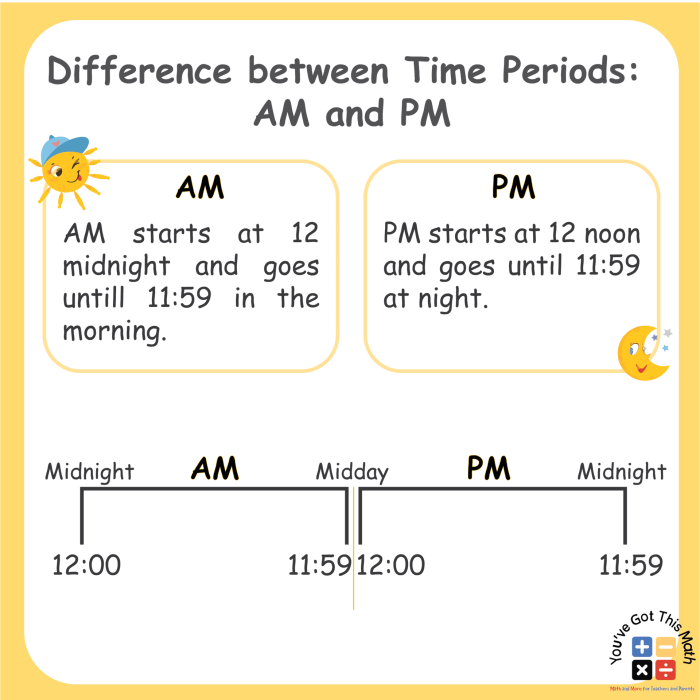
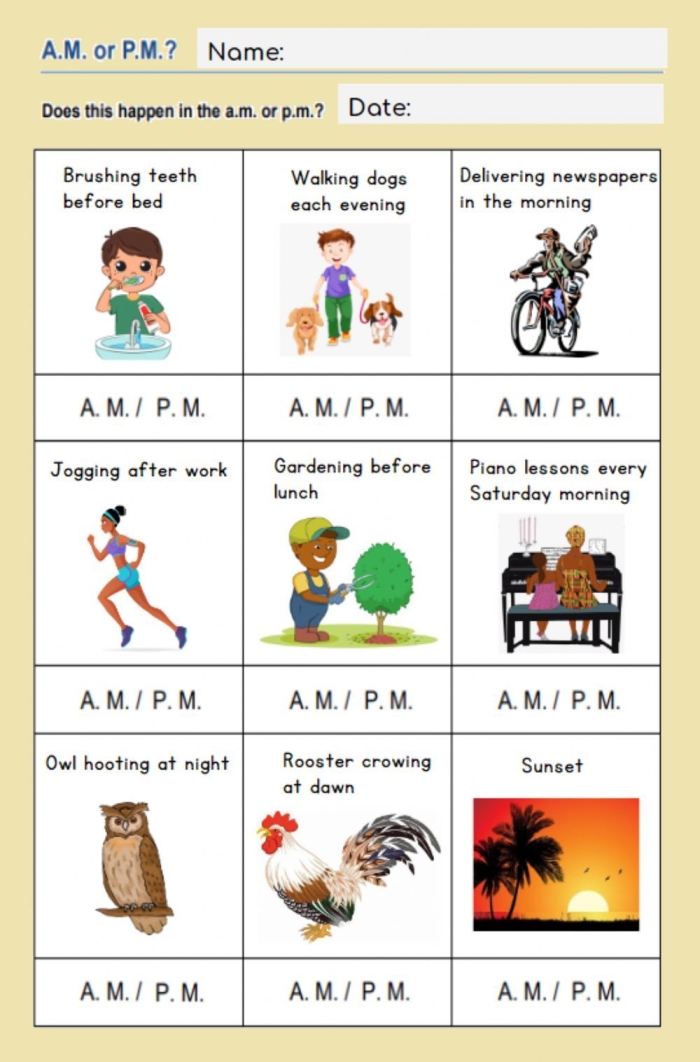
Understanding the difference between a.m. and p.m. is a fundamental skill for children, especially as they begin to manage their own schedules. One engaging way to help your child grasp this concept is through reading simple sentences that describe everyday events. By determining whether these events occur before or after noon, children can develop a clearer understanding of time.
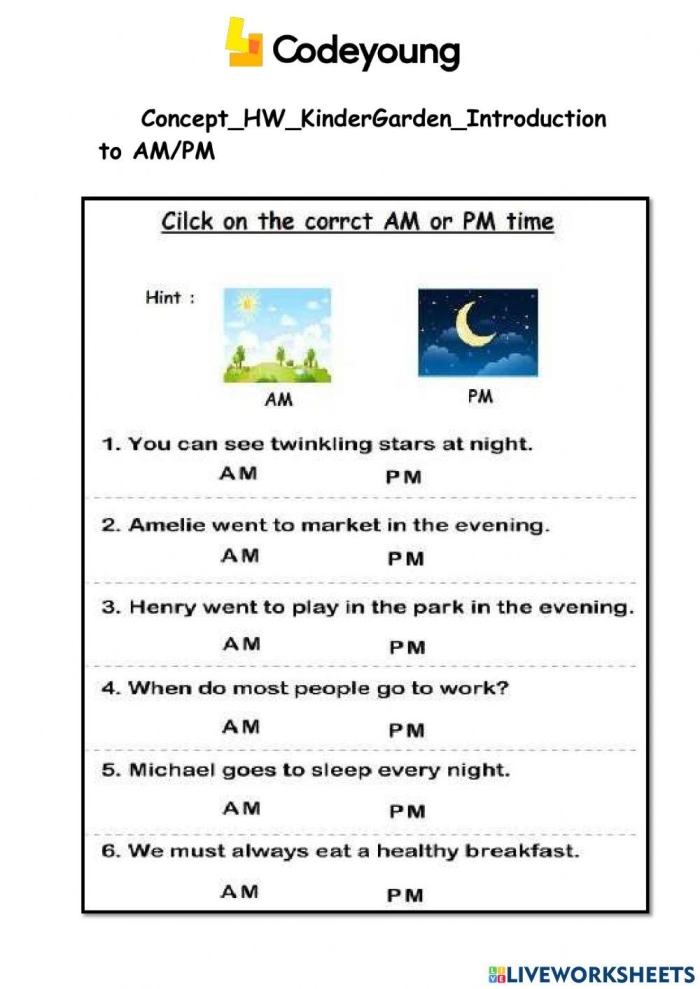
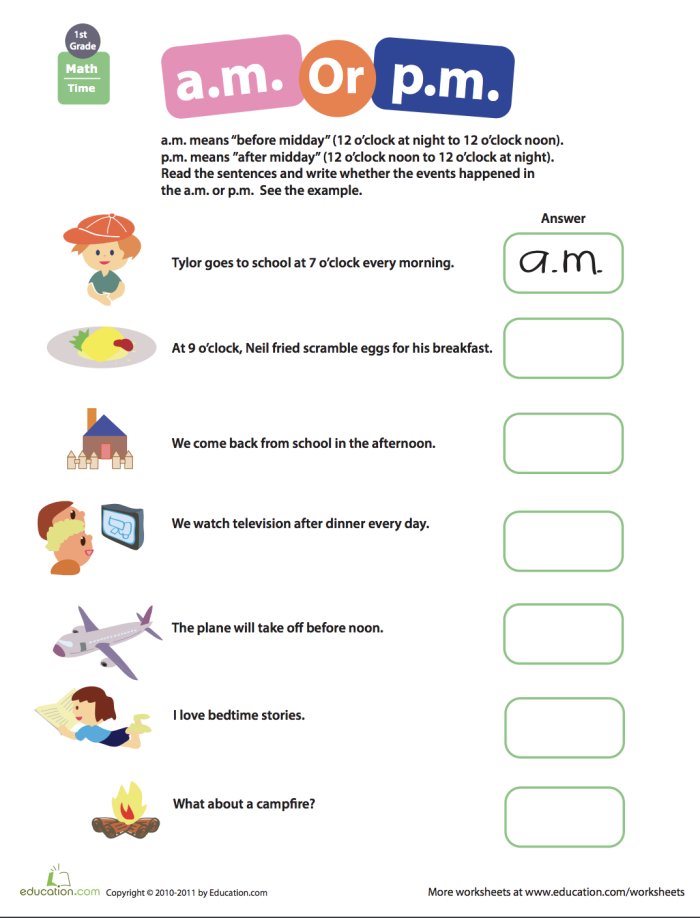
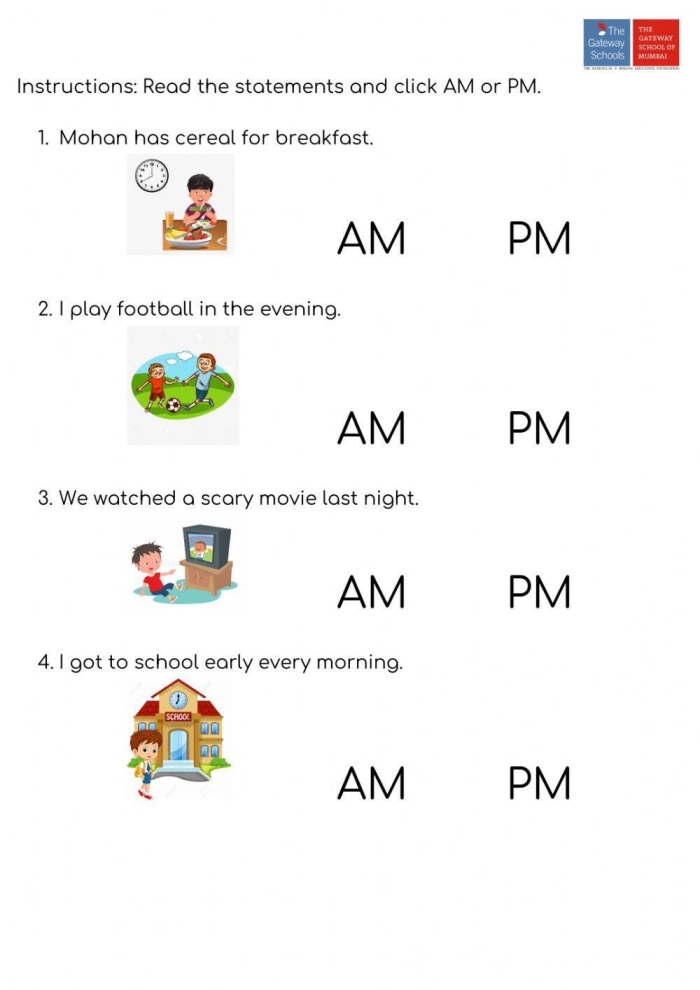
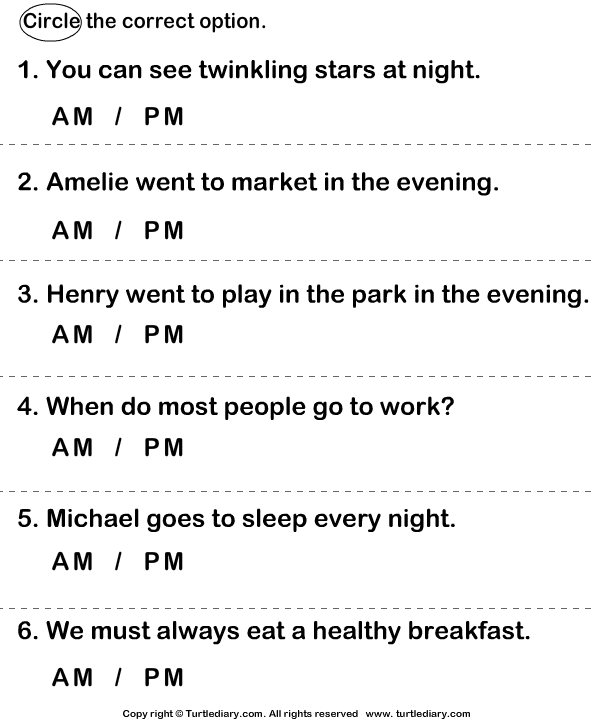
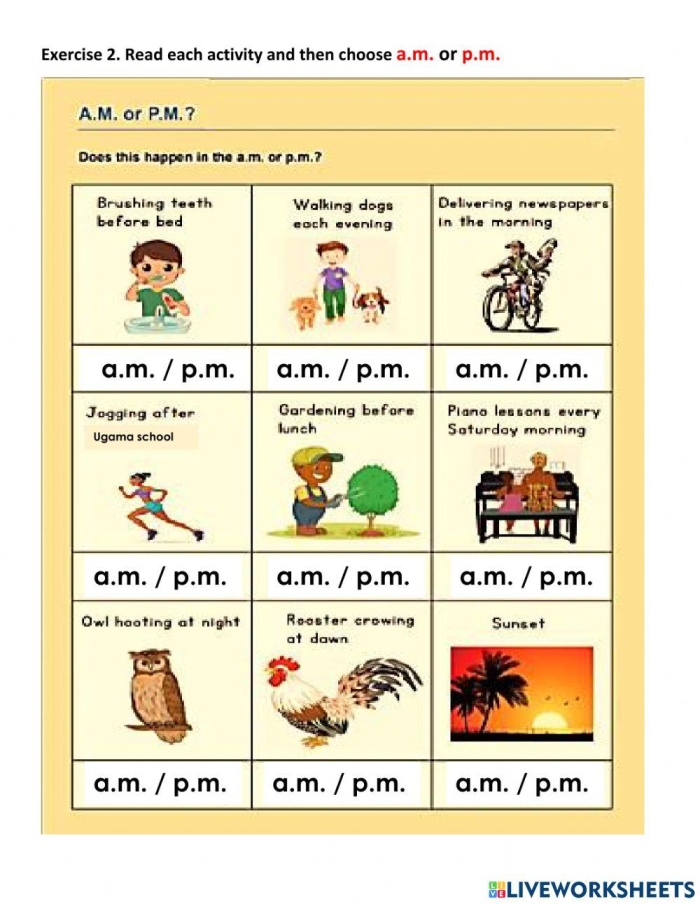
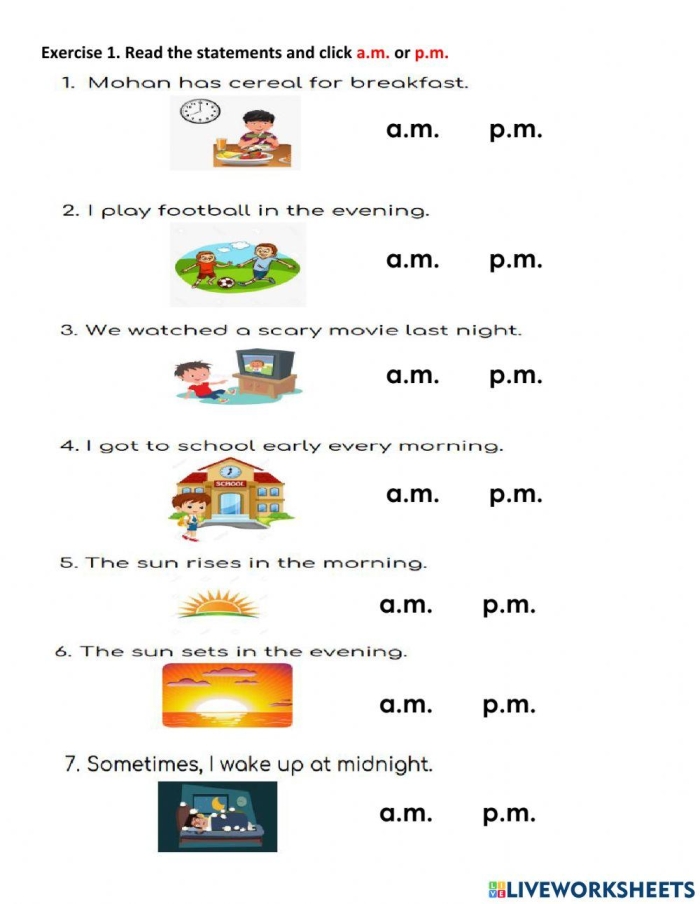
For example, consider a sentence like, “We have breakfast at 8:00 a.m.” Your child can easily identify that breakfast happens in the morning, making it a.m. Next, present a sentence such as, “We watch a movie at 3:00 p.m.” This time, they recognize that the movie takes place in the afternoon, categorizing it as p.m. This method is straightforward and allows children to actively engage with the material.
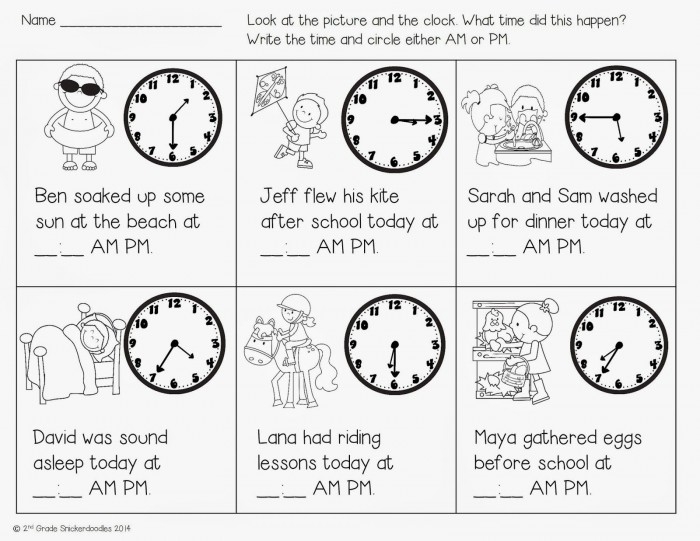
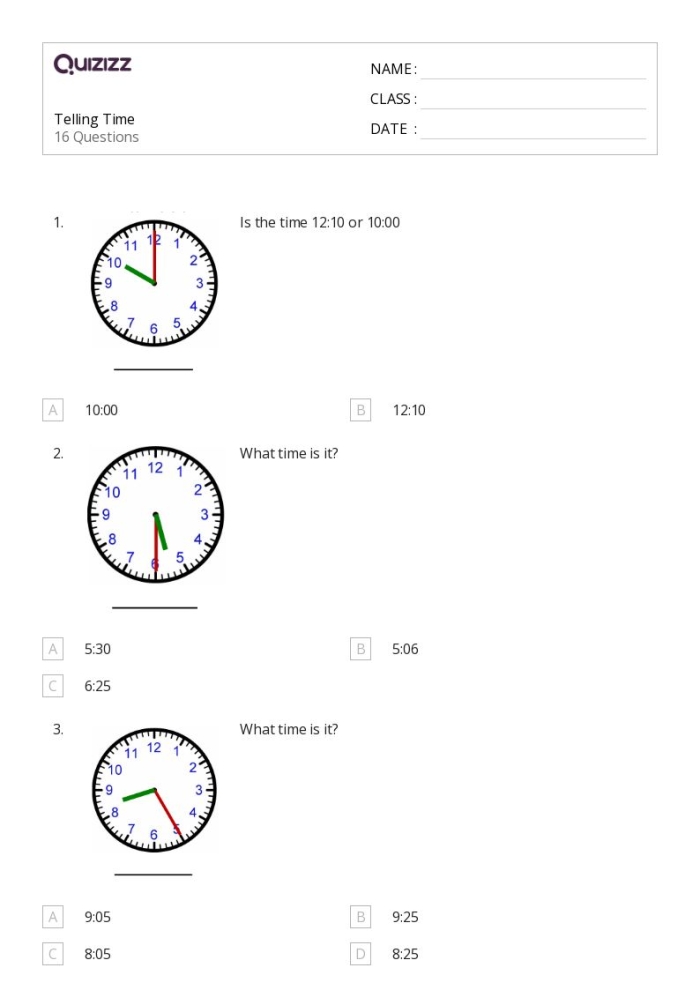
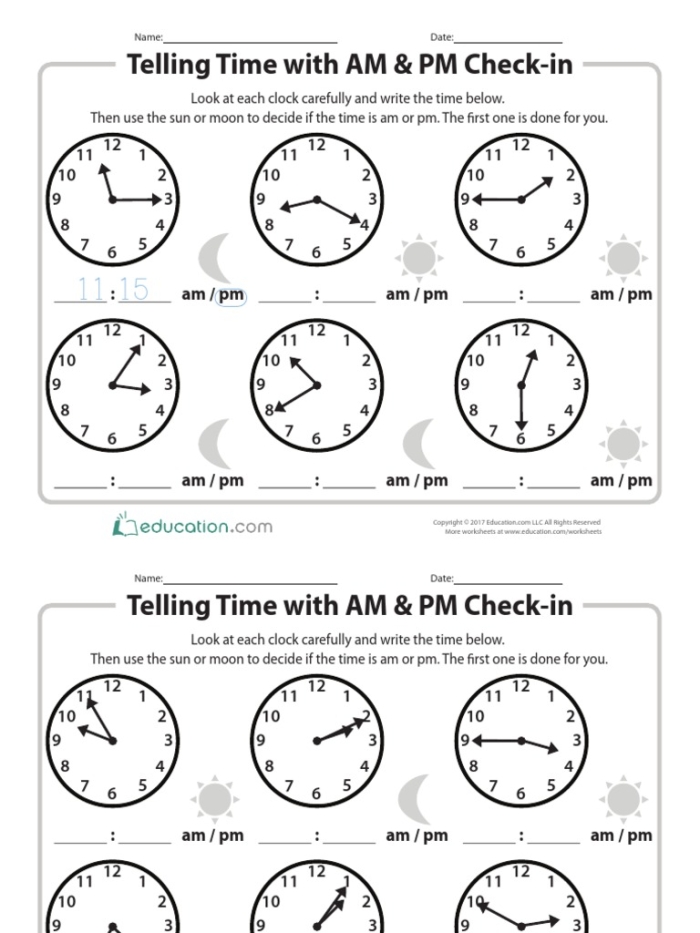
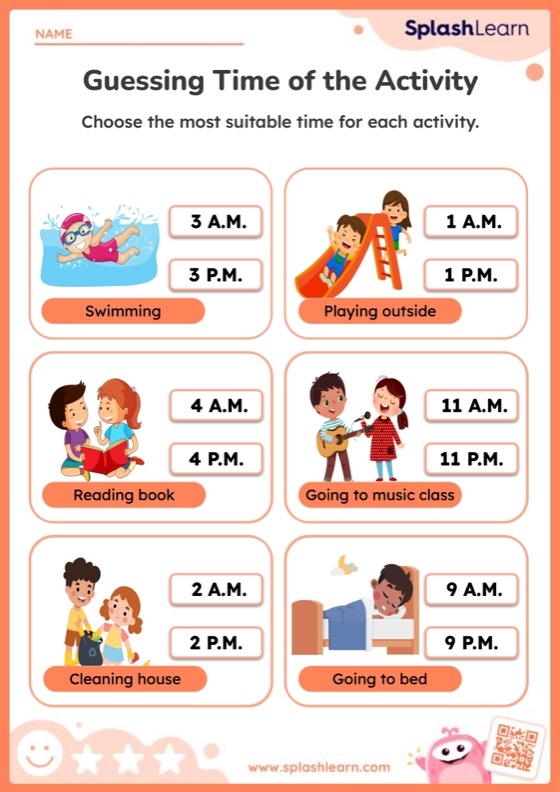
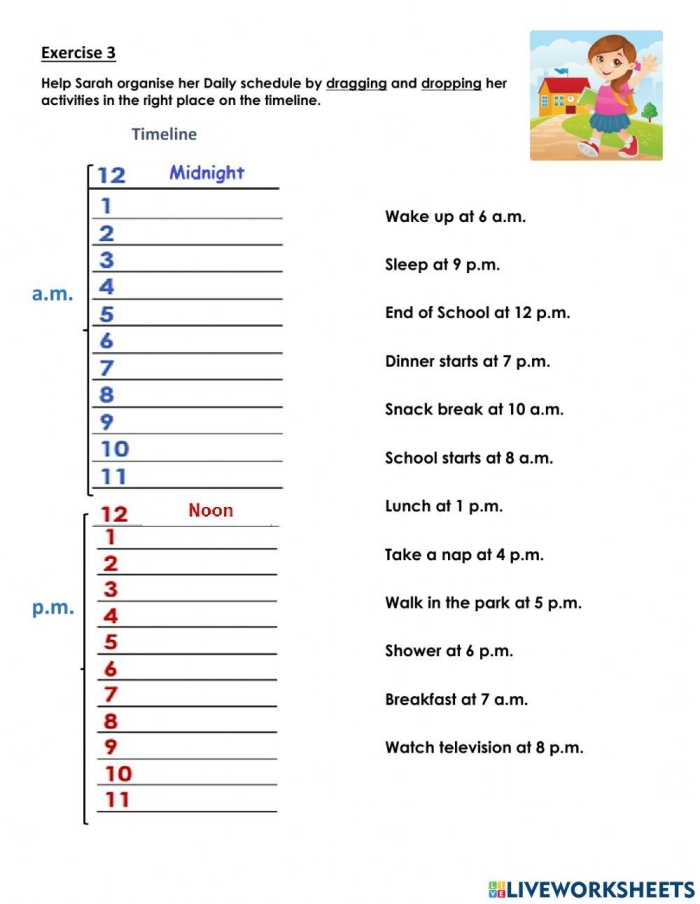
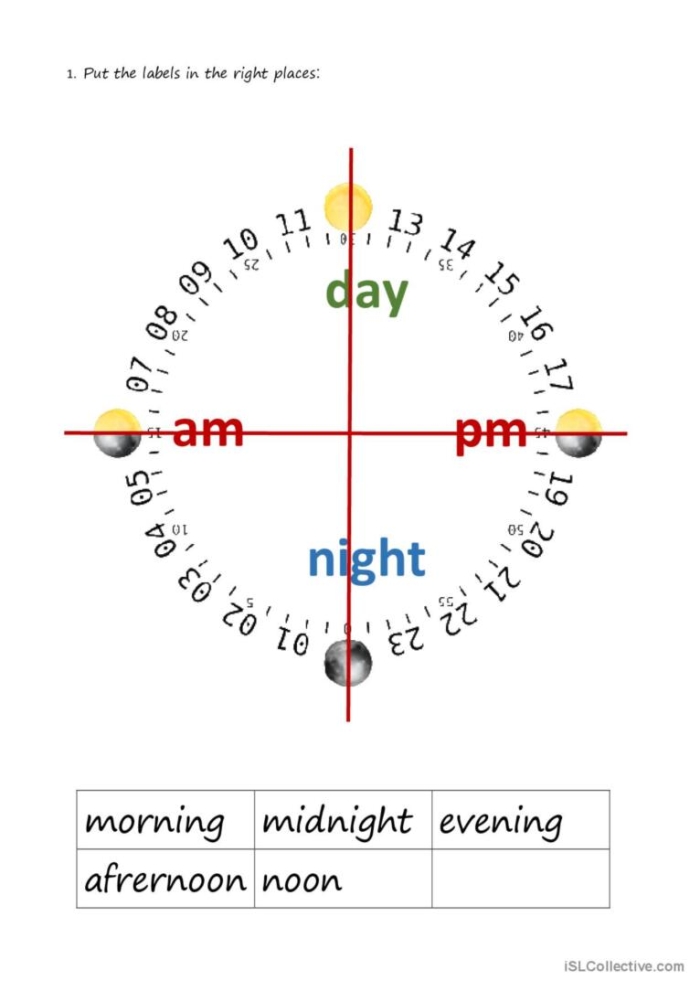
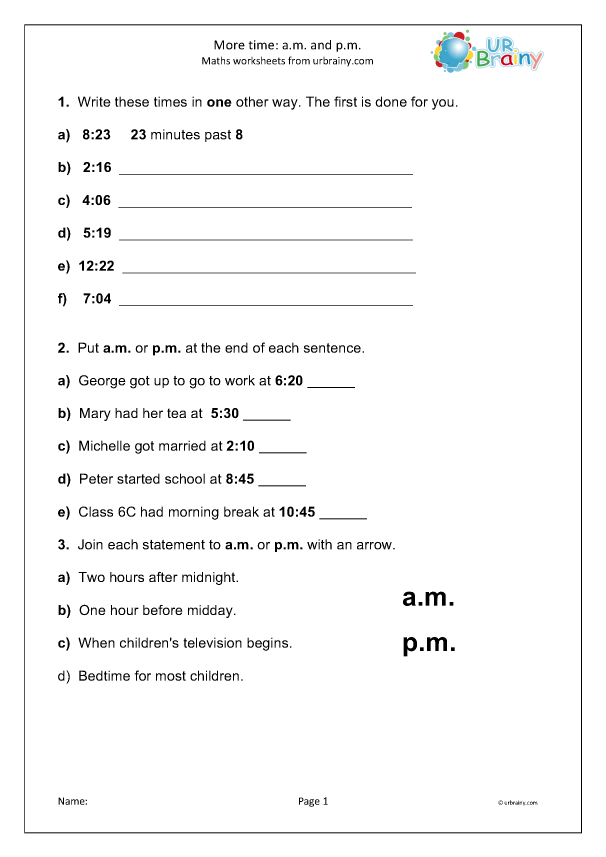
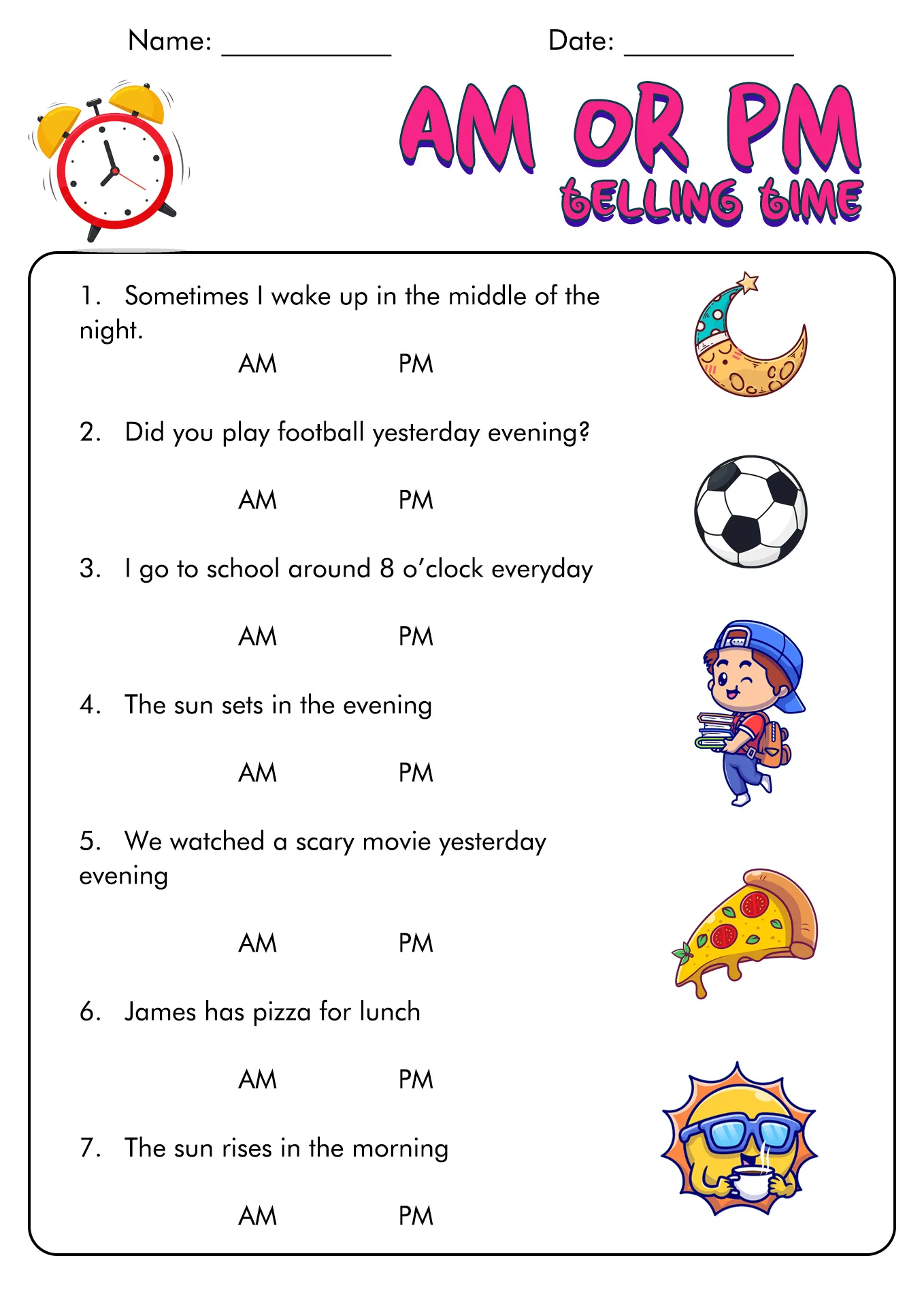
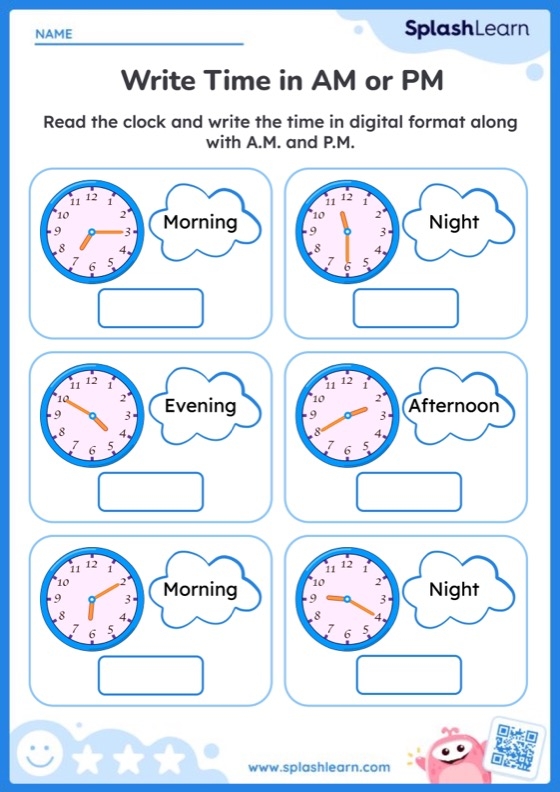
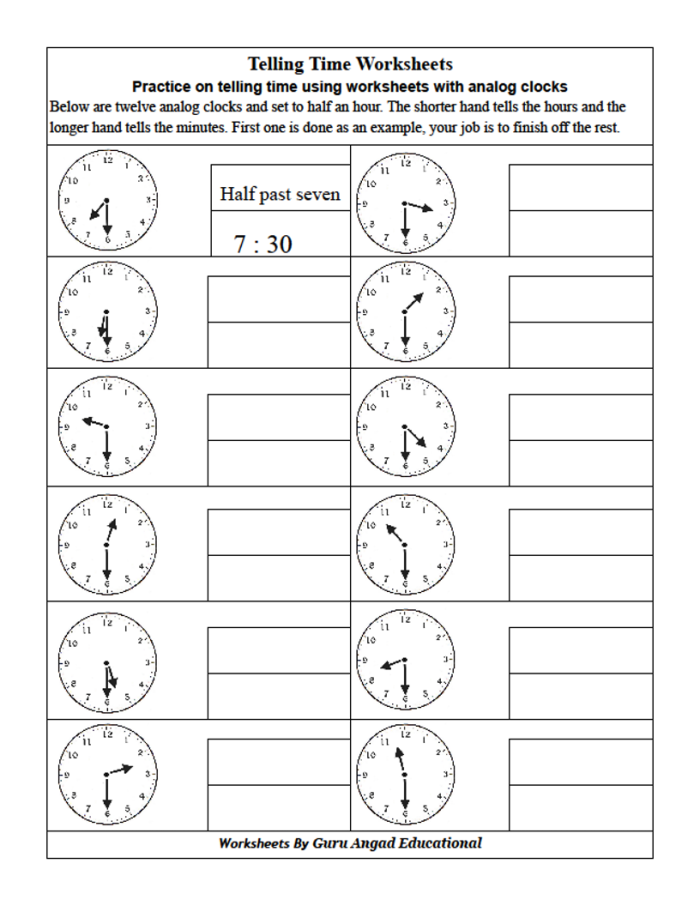
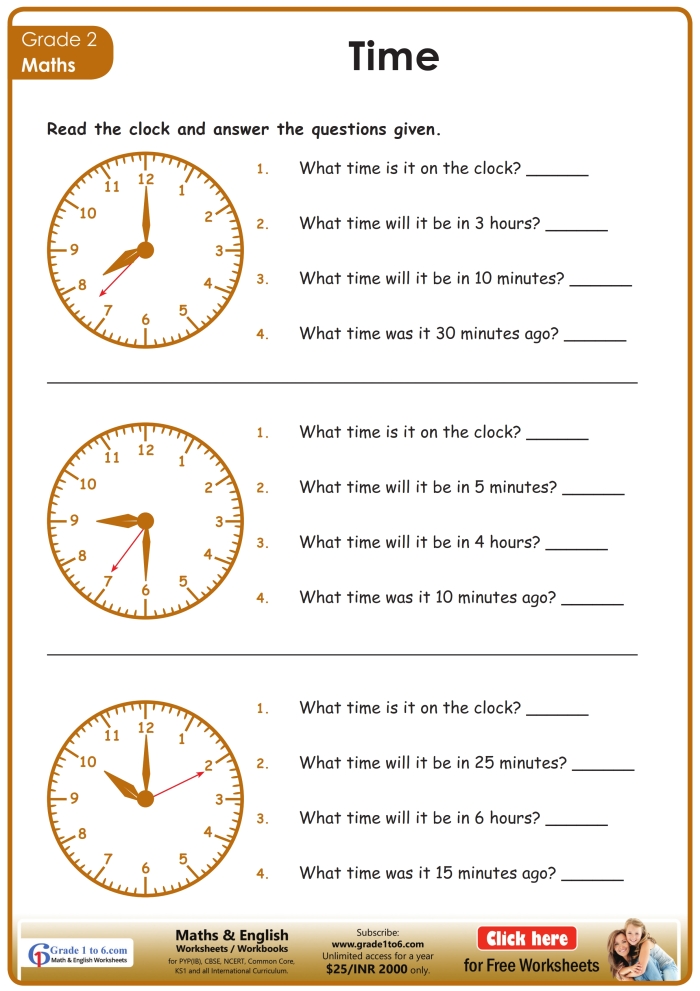
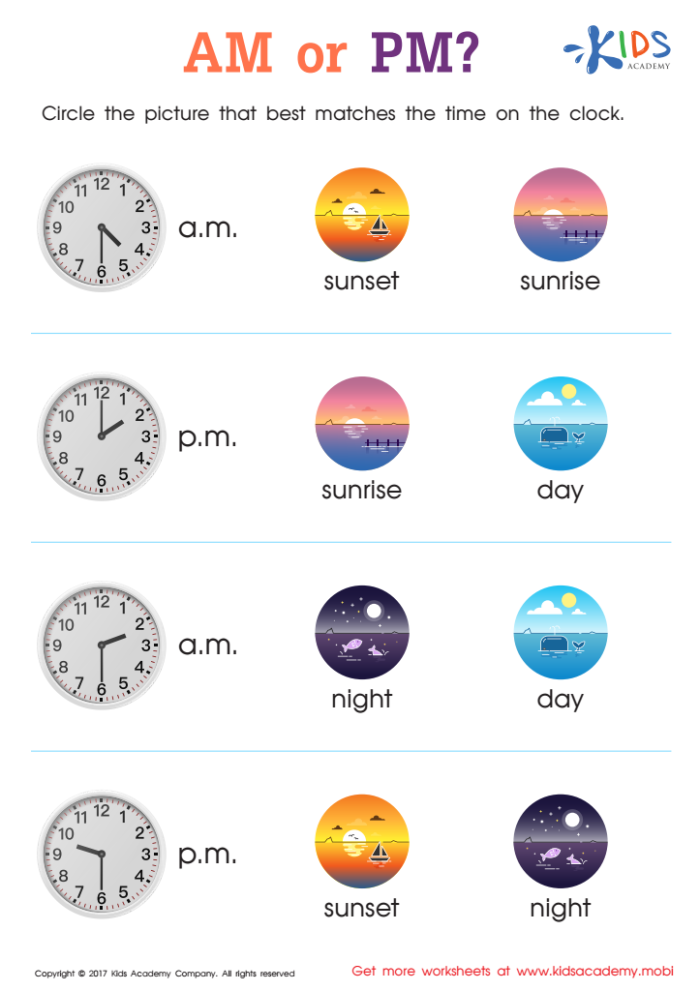
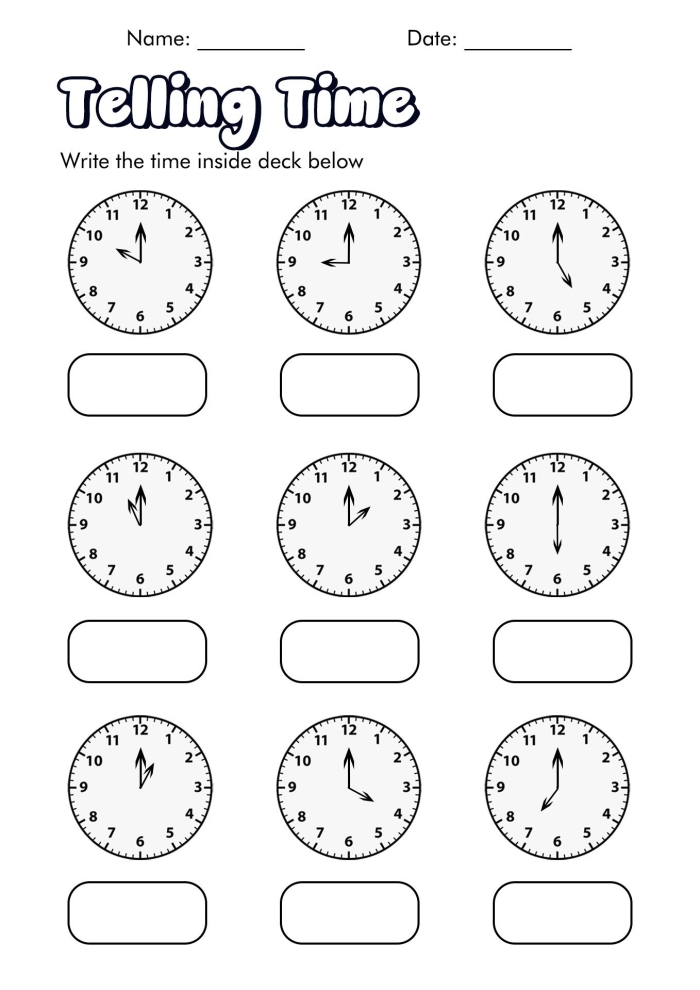
Using printable worksheets can enhance this learning experience. There are Printable Telling Time: A.M. or P.M.? Worksheets specifically designed for second graders. These worksheets often include various sentences that prompt children to decide the correct designation of time. They can practice identifying a.m. and p.m. while also improving their reading skills.
Incorporating this activity into your daily routine can make a significant difference. Whether it’s during breakfast or before bedtime, take a moment to read a sentence together and discuss its time classification. This not only reinforces their learning but also encourages a fun and interactive way to understand daily schedules.
By utilizing simple sentences and engaging activities, you can help your child navigate the concept of a.m. and p.m. effectively. With regular practice, they will become more confident in telling time and managing their day-to-day activities.
Try These Printable Worksheets