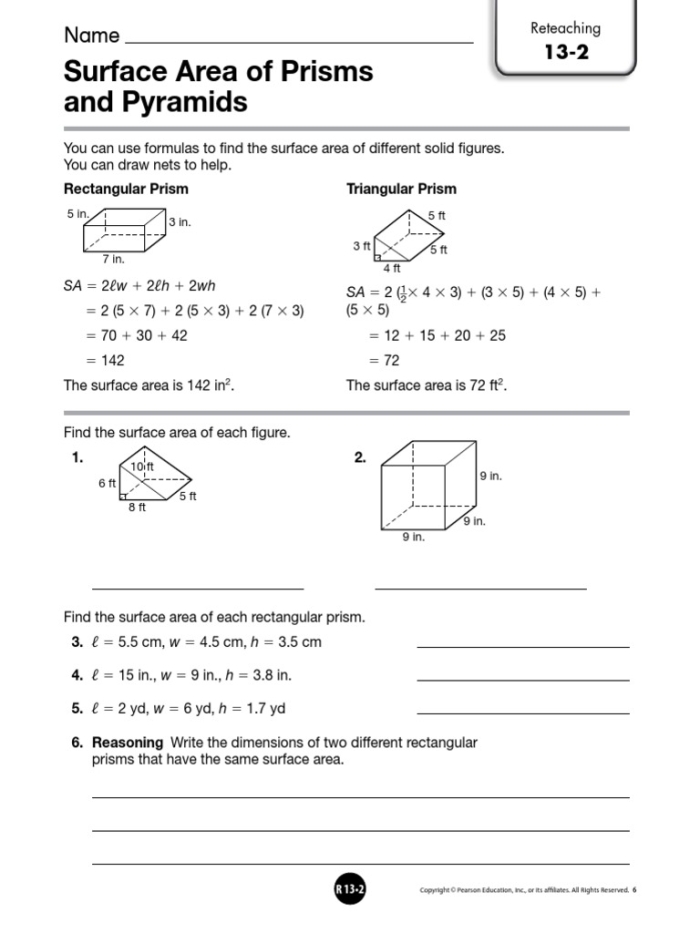
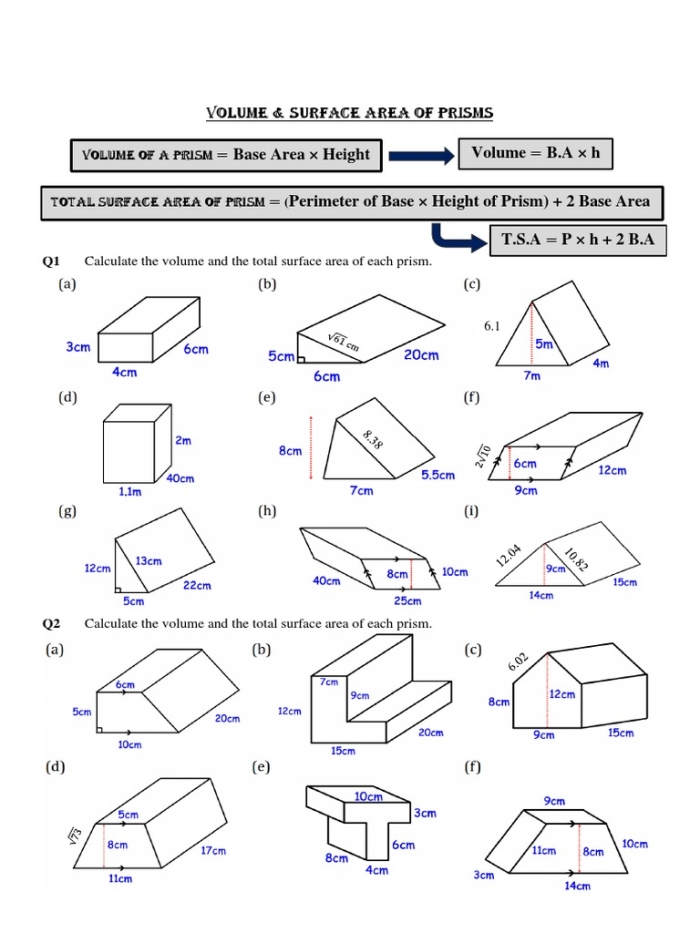
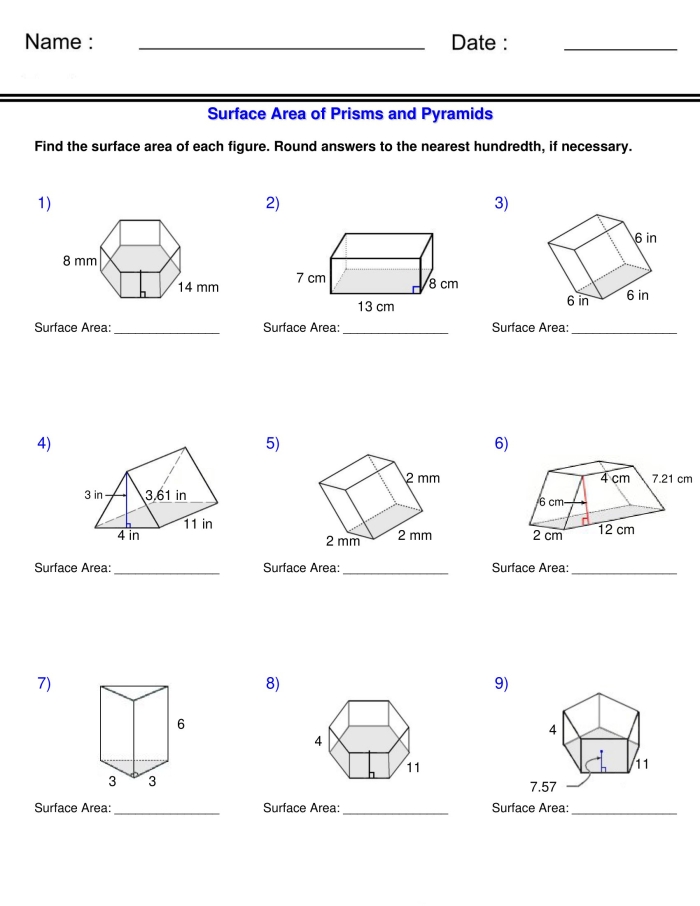
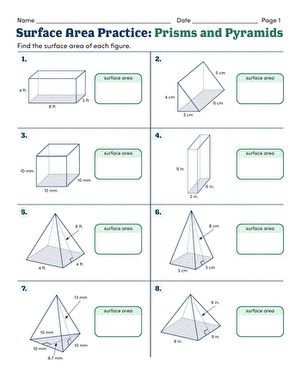
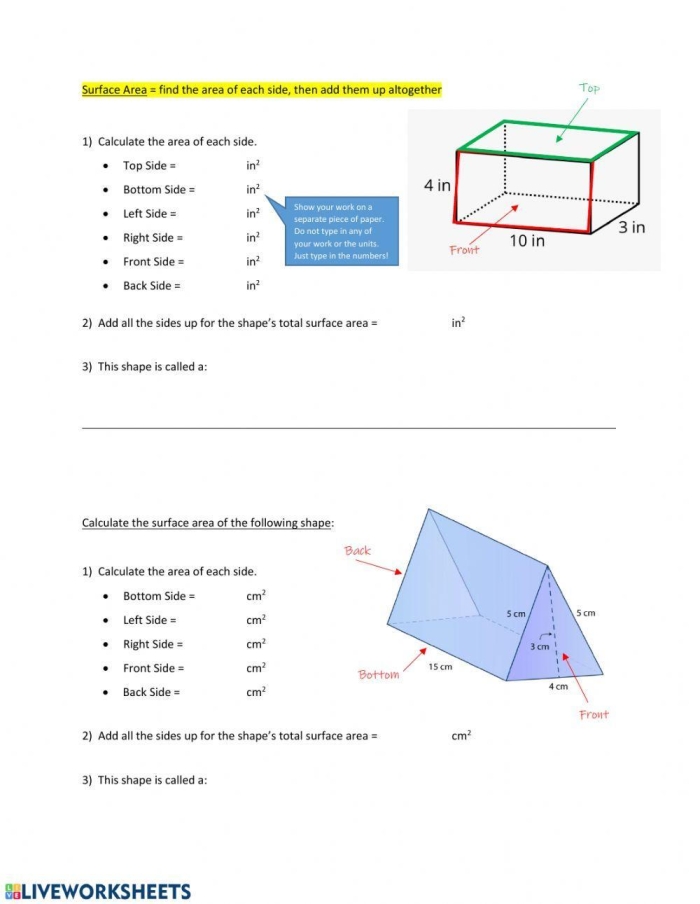
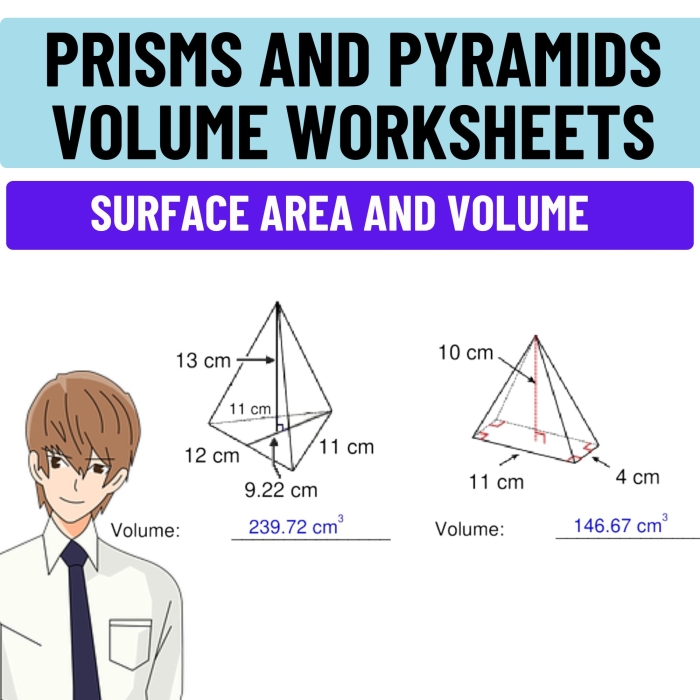
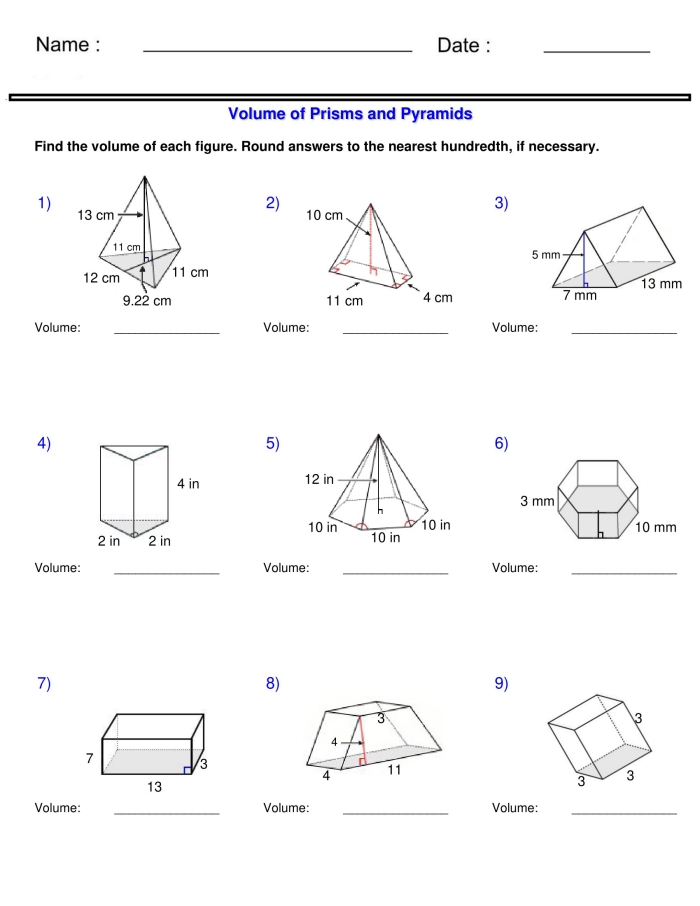
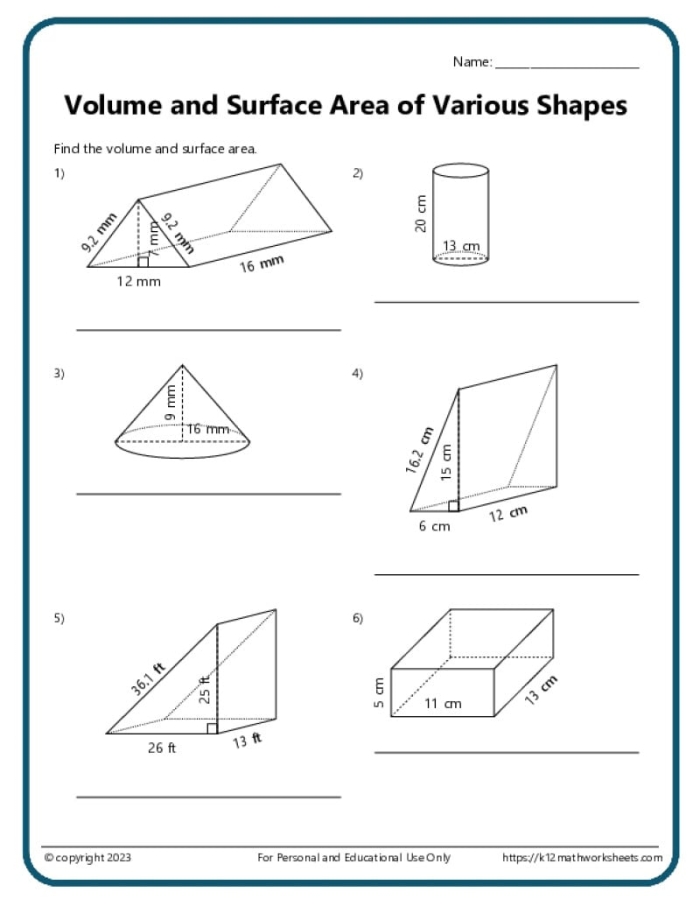
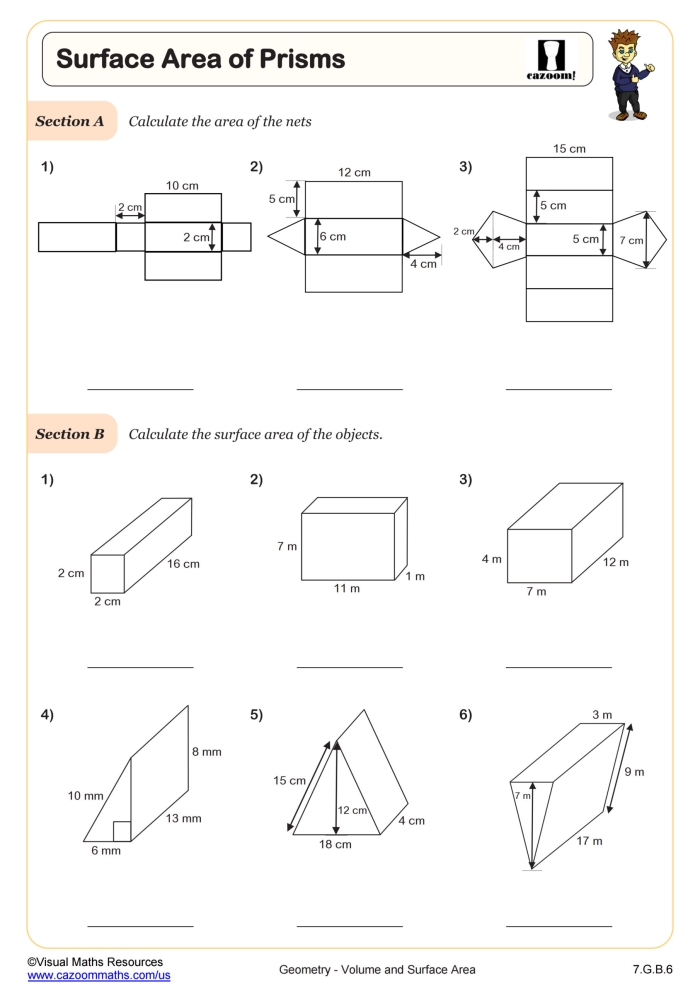
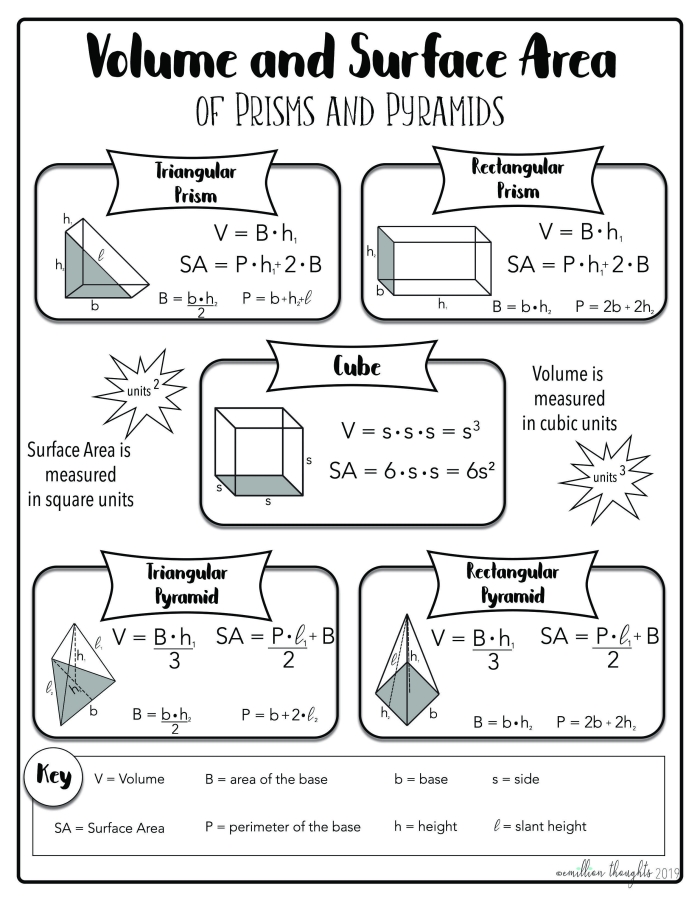
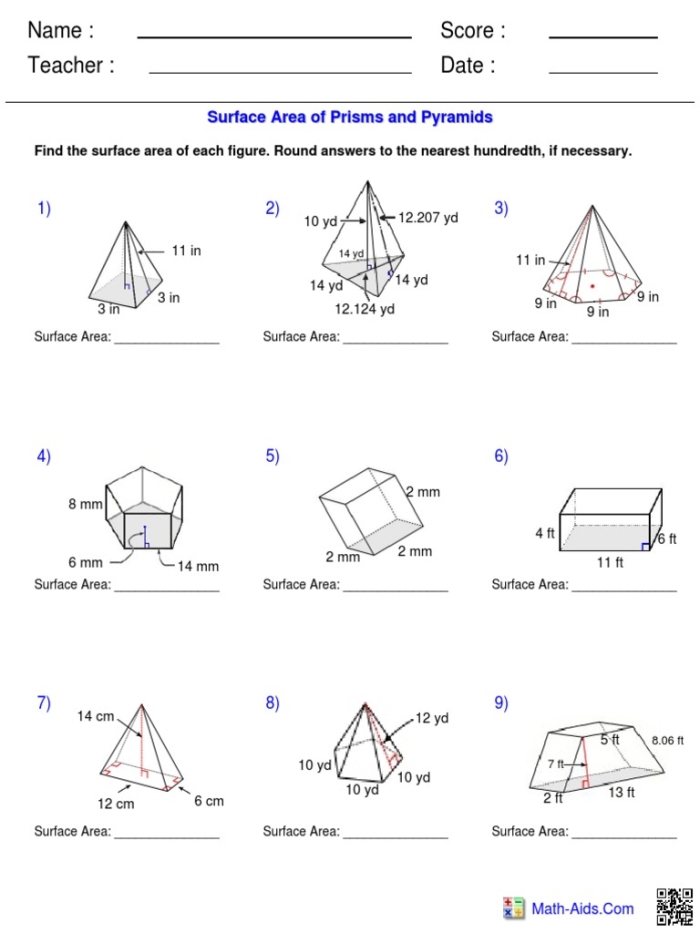
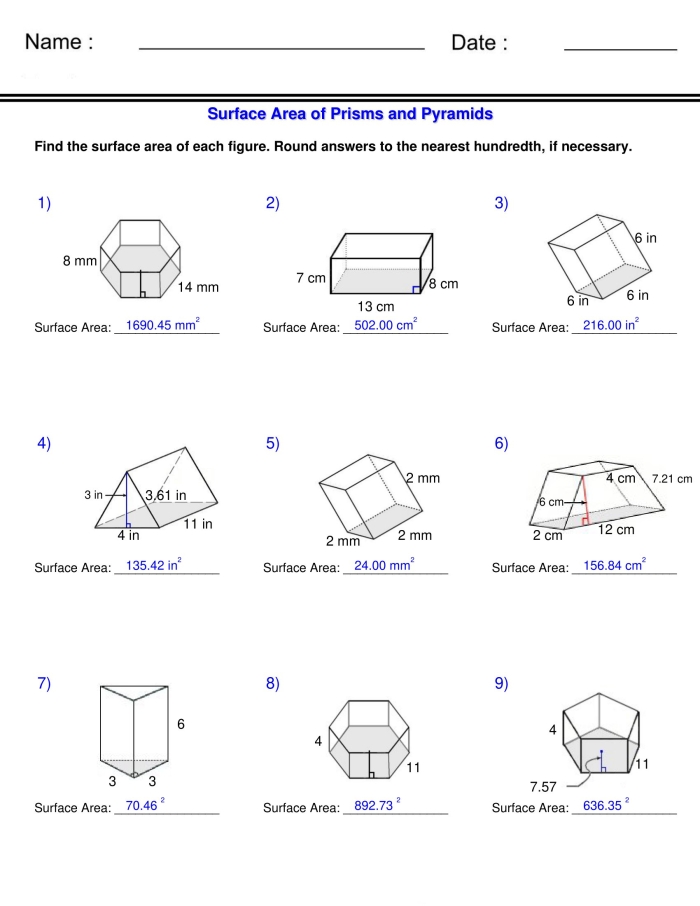
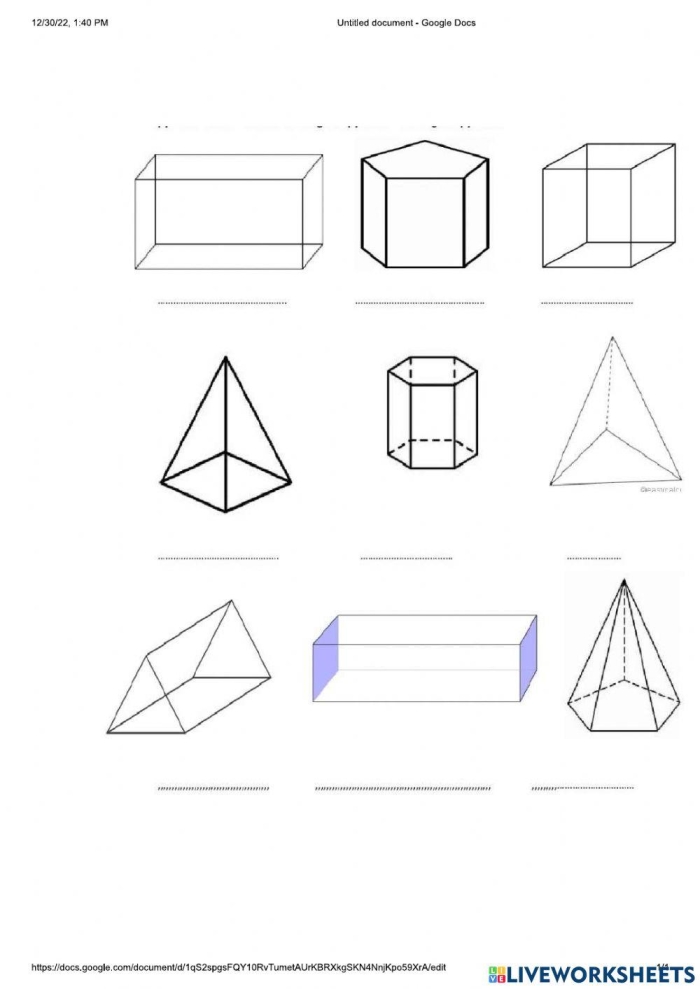
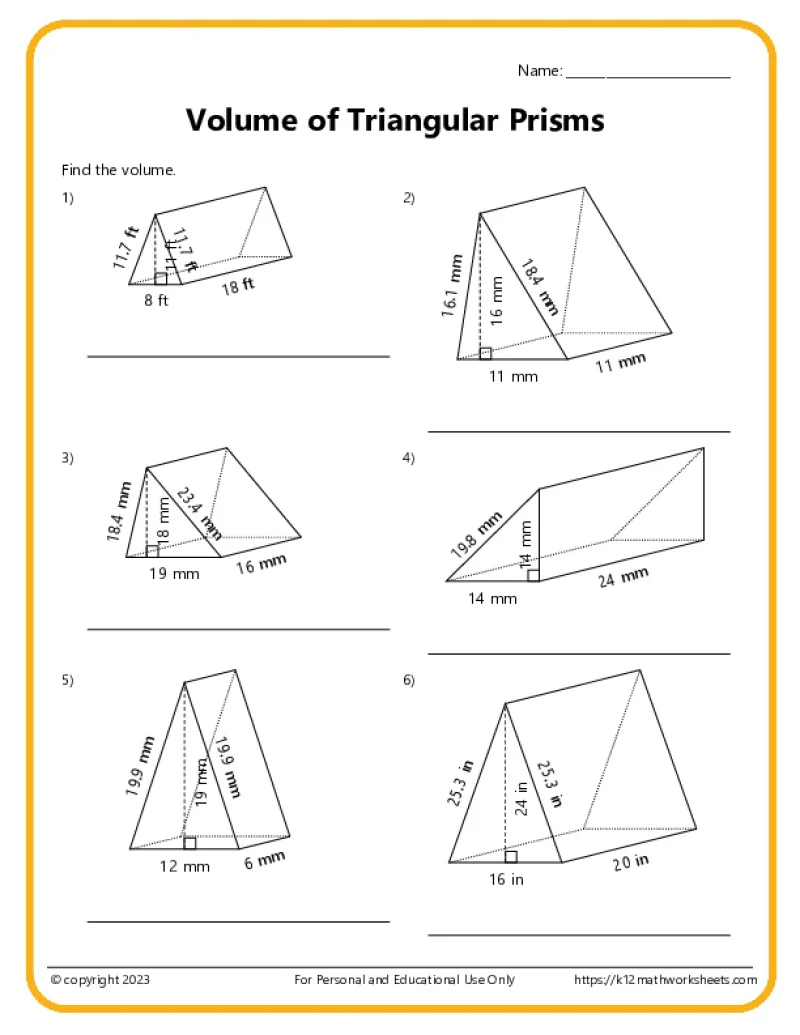
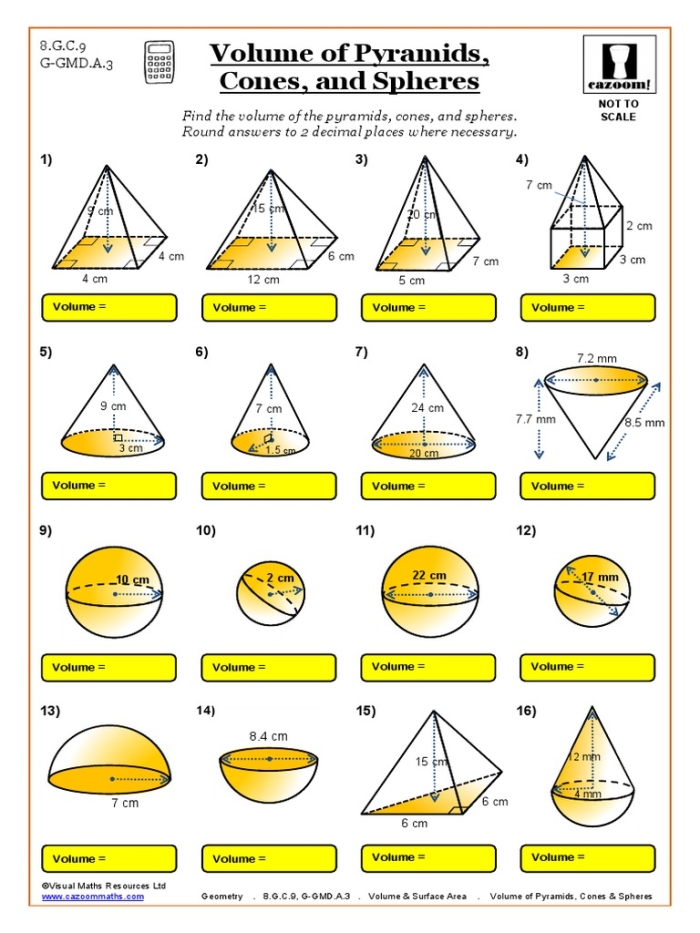
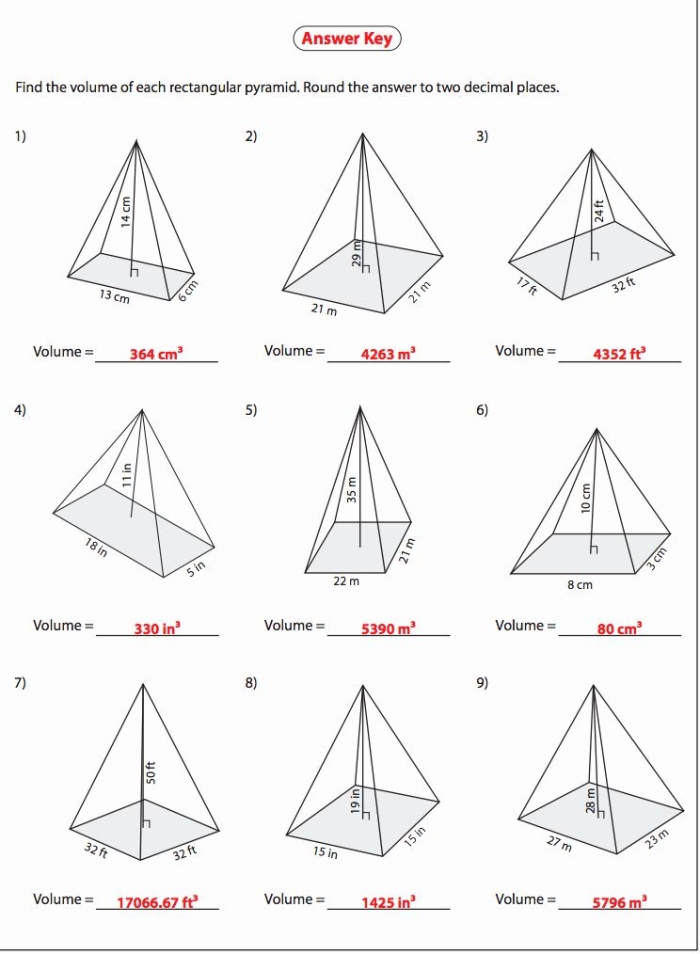
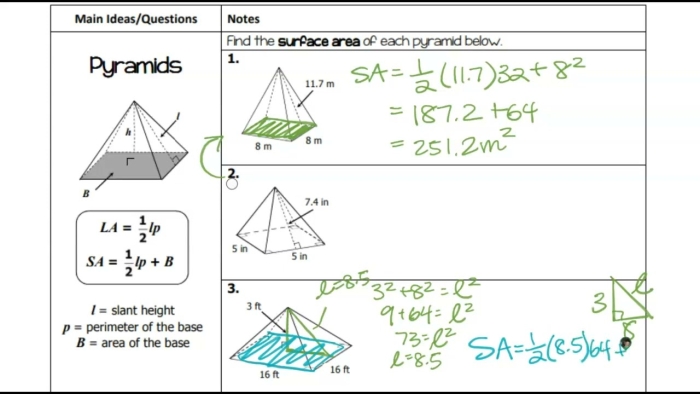
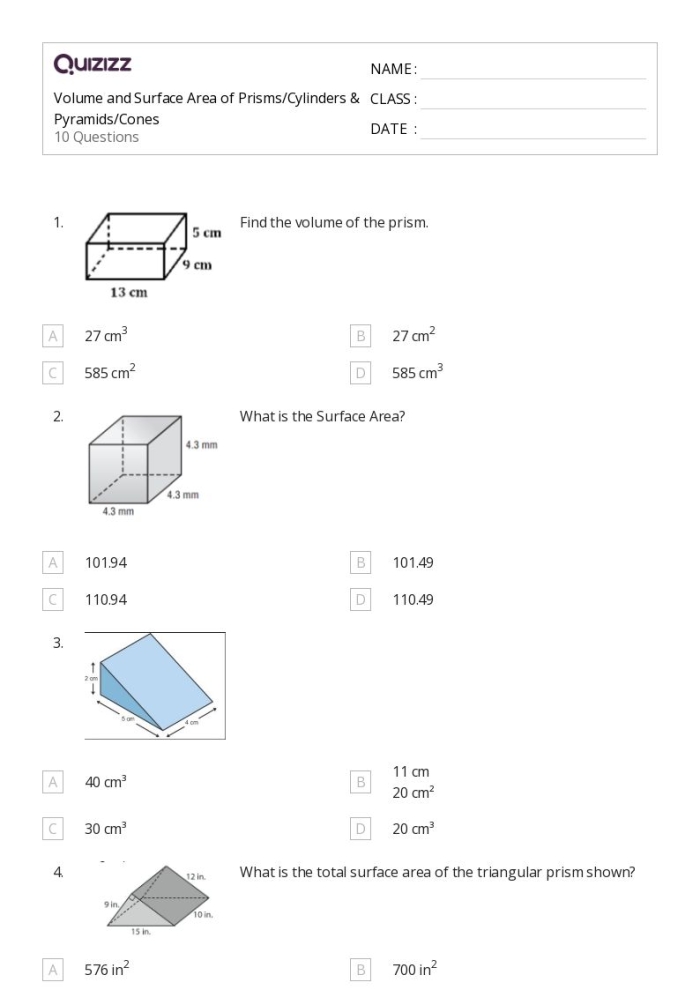
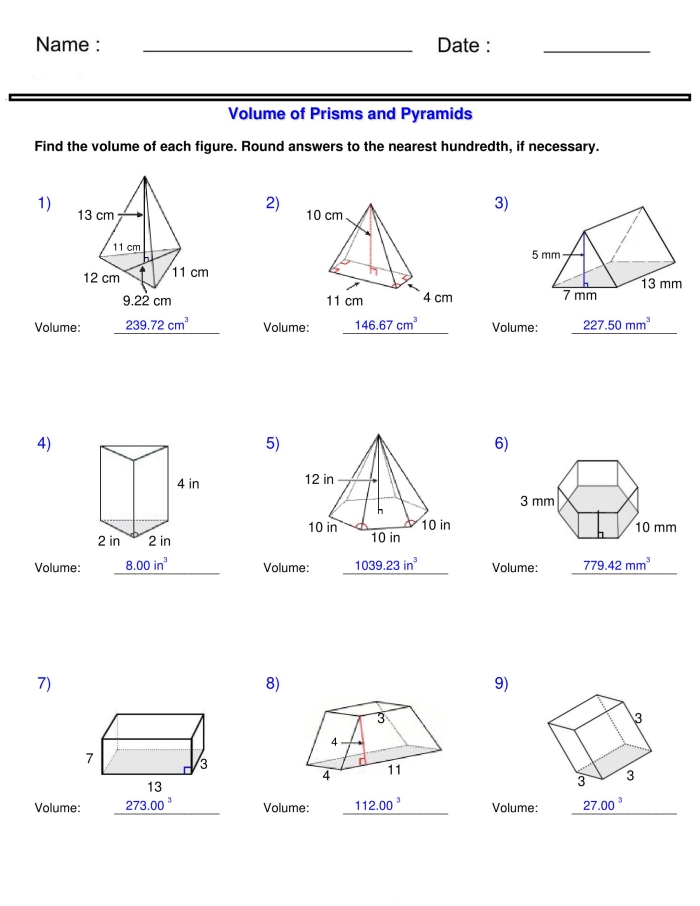
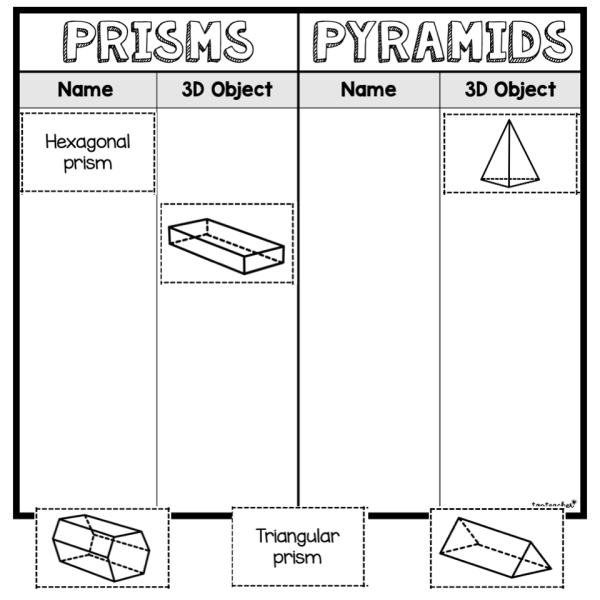
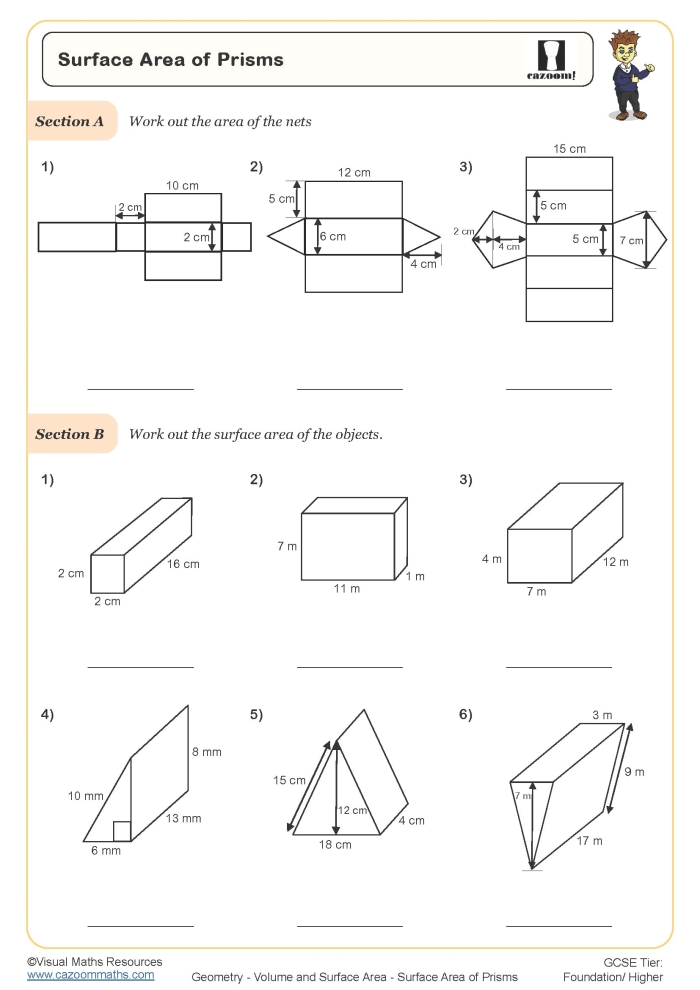
Surface area problems can feel abstract until you actually build them out on paper. This two-page geometry worksheet gives sixth grade students a concrete way to practice calculating the surface area of prisms and pyramids, two shapes that show up constantly in real-world applications from packaging design to architecture.
The worksheet breaks down the process systematically. Students work through problems involving rectangular prisms, triangular prisms, and various pyramid types, learning to identify each face and add them together. What makes this approach effective is that it forces you to visualize the shape unfolded, rather than just memorizing a formula. When you actually count the faces of a rectangular prism on paper, you see why there are six surfaces to account for, and why opposite faces have equal areas.
Sixth grade is the right moment for this skill. Students have already worked with basic area calculations and understand how to find the area of rectangles and triangles. Surface area extends that knowledge into three dimensions, making it a natural progression. The worksheet includes problems that require subtraction as well, since some calculations involve finding missing dimensions or working backwards from a total area to find an unknown measurement.
The two-page format gives students enough repetition to build confidence without overwhelming them. Early problems walk through the steps, while later ones require more independent thinking. This scaffolding approach means students aren’t just plugging numbers into formulas, they’re actually understanding the geometry behind the calculations.
If you’re looking for additional practice materials that complement geometry skills, you might also explore logic puzzles that strengthen spatial reasoning or worksheets on how punctuation clarifies meaning. These help round out a complete math and language arts foundation.
Worksheet Practice Section