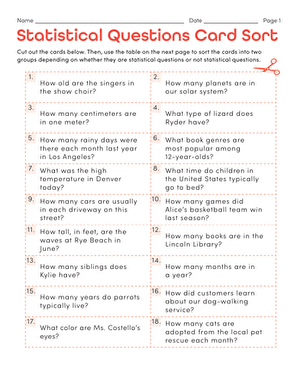
Engaging with statistical questions can be a pivotal part of a sixth grader’s journey through math. One effective way to help students grasp this concept is through a hands-on card sorting activity. This interactive approach not only makes learning enjoyable but also enhances their understanding of what constitutes a statistical question versus a non-statistical one.
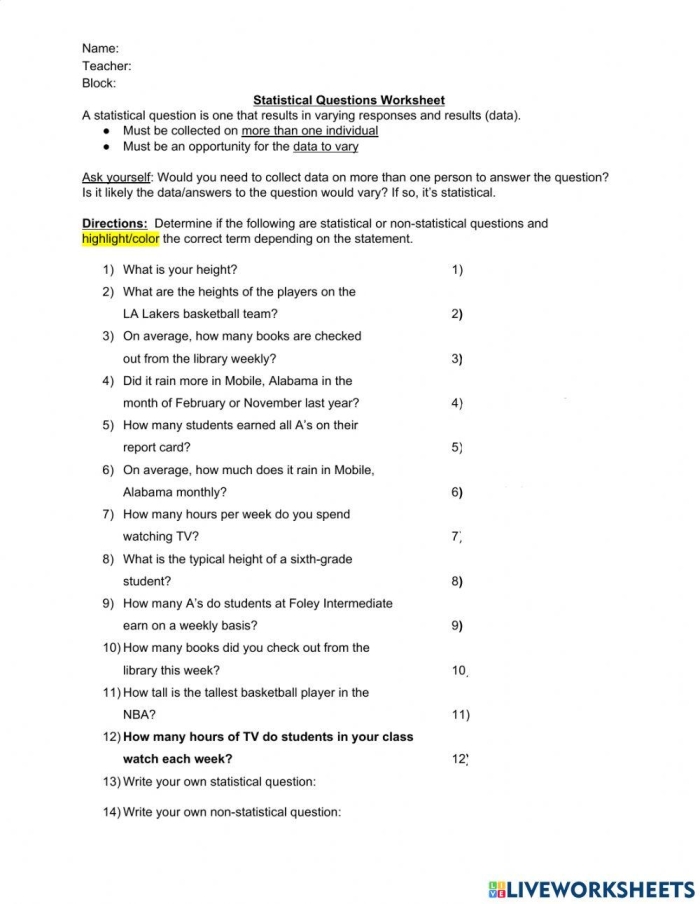
Statistical questions are those that anticipate variability in the data. For instance, asking, “What is the average height of students in our school?” is statistical because it recognizes the differences in height among students. In contrast, a question like “What is the height of the tallest student?” is not statistical, as it seeks a definitive answer without variability. Through the card sorting activity, learners can physically manipulate cards that contain various questions, sorting them into two categories. This tactile method reinforces the distinction between the two types of questions and helps solidify their understanding.
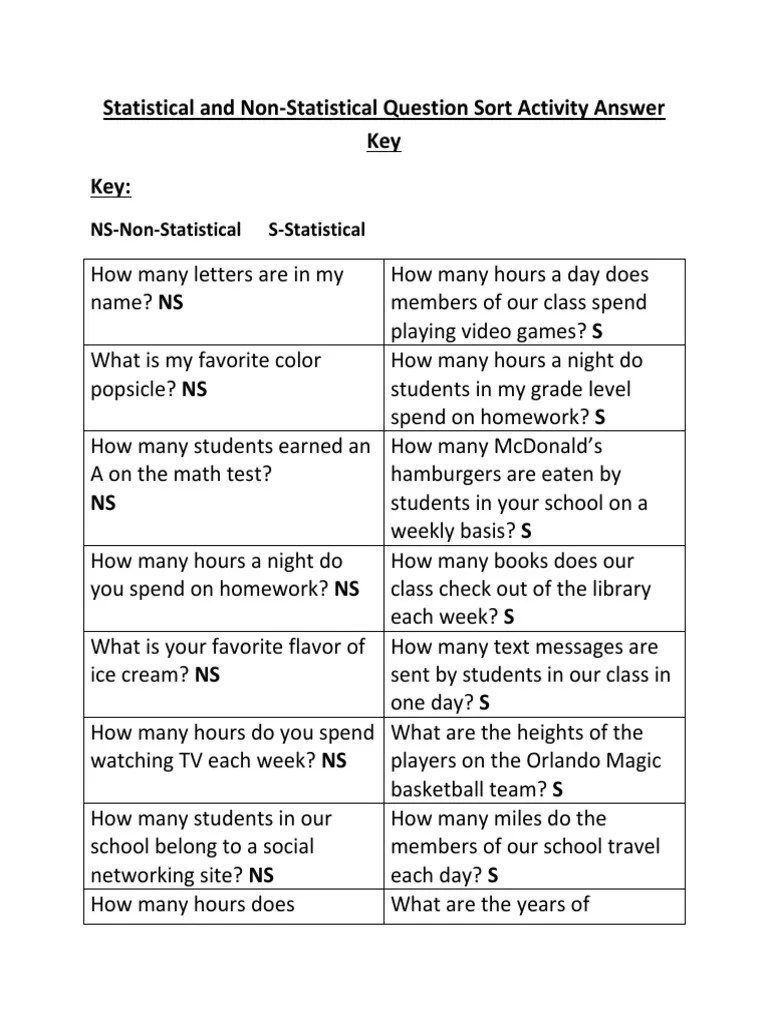
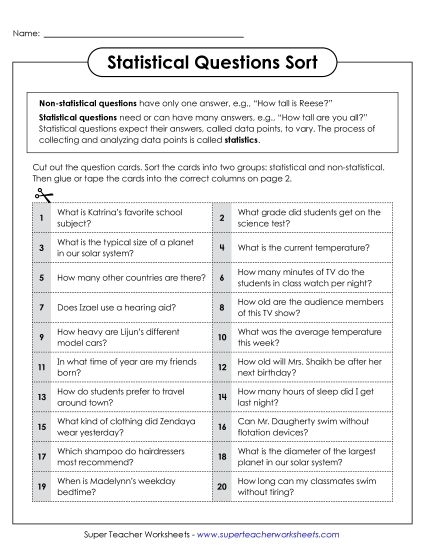
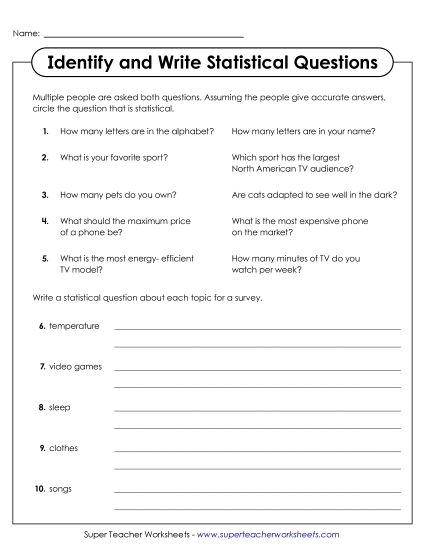
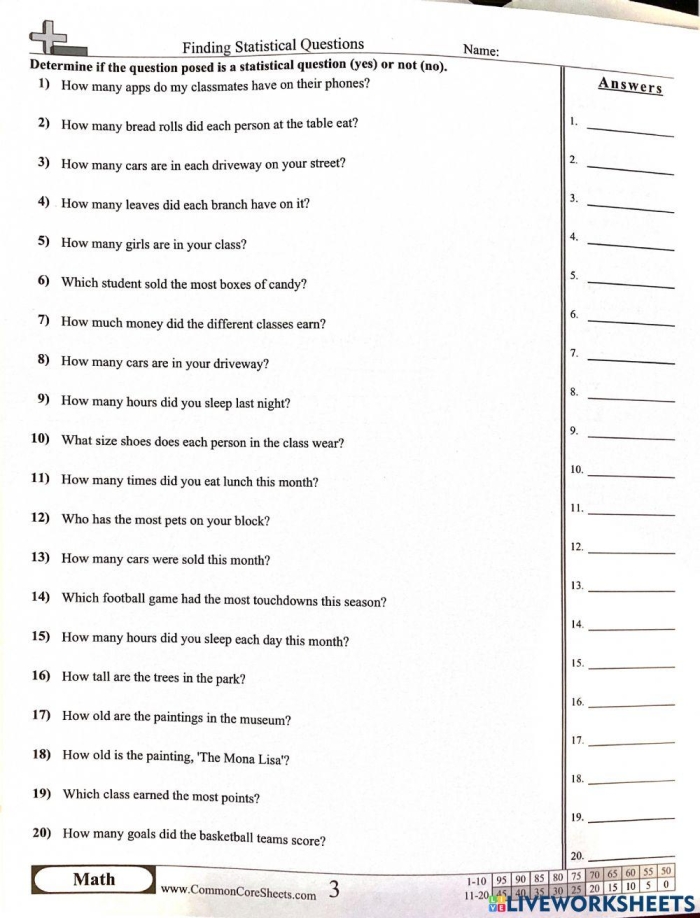
To implement this activity, you can create a set of printable cards that feature a mix of statistical and non-statistical questions. Encourage students to work in pairs or small groups, fostering collaboration and discussion as they sort the cards. This peer interaction promotes critical thinking and allows them to articulate their reasoning behind each classification. As they engage with their peers, they not only learn from each other but also develop their communication skills.
For teachers seeking structured resources, Statistical Questions Card Sort worksheets can provide a ready-made solution. These worksheets are designed specifically for sixth-grade learners, making them an excellent addition to any math puzzles collection.
Incorporating such hands-on activities into your curriculum not only makes learning fun but also empowers students with essential analytical skills. By distinguishing between statistical and non-statistical questions, they gain a better foundation in understanding data, which is crucial for future mathematical concepts.
Printable Worksheets for Practice