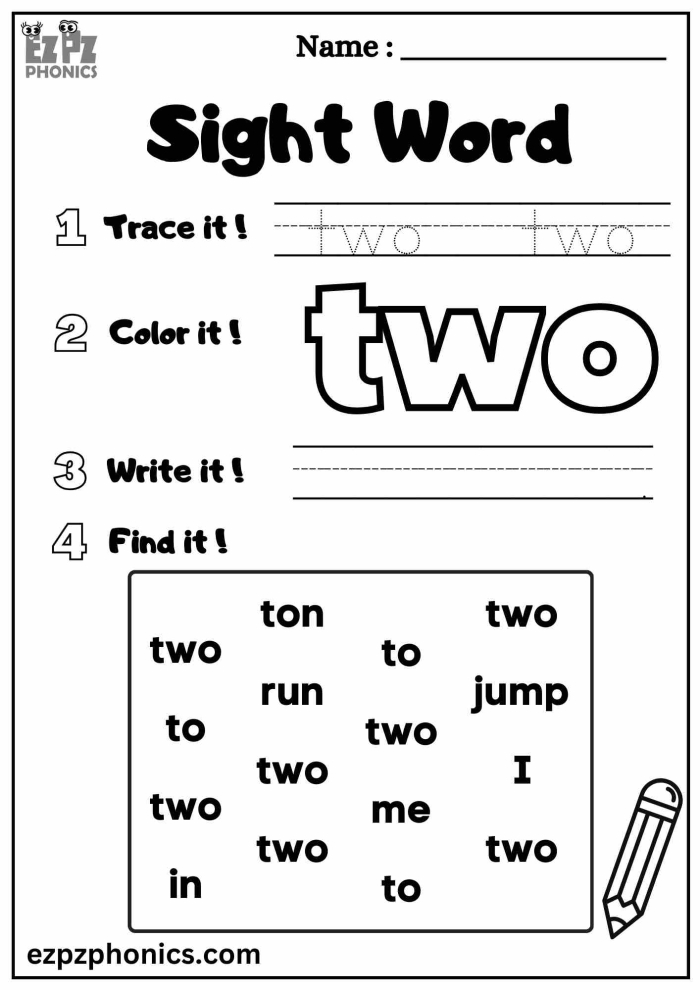
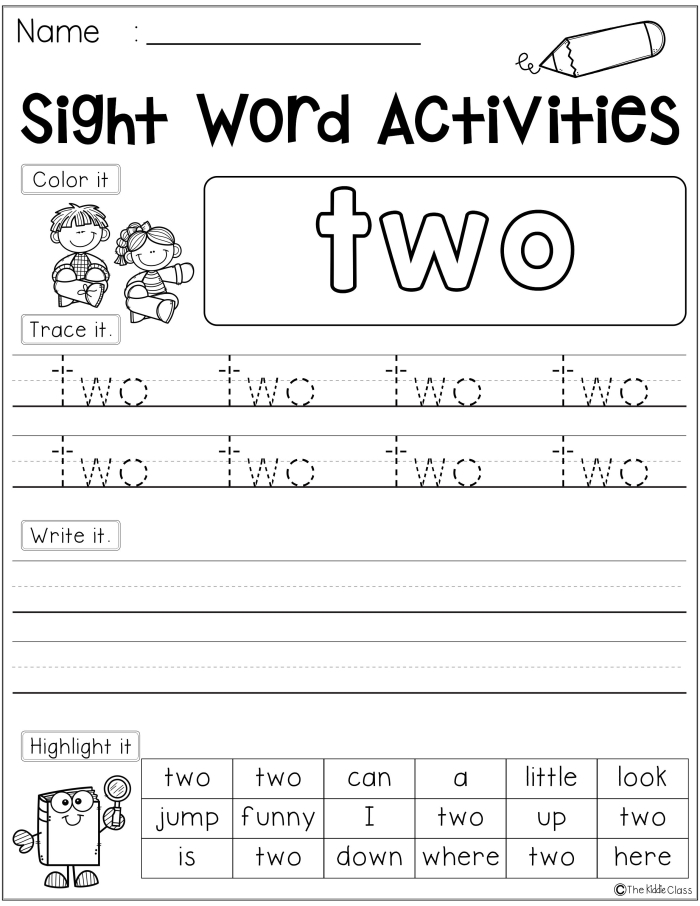
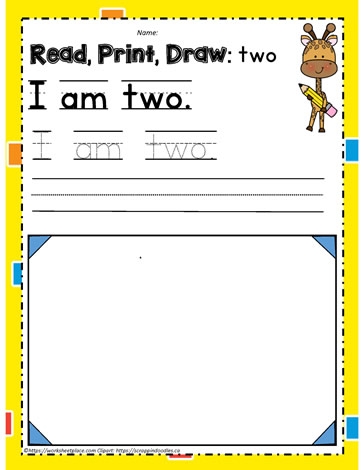
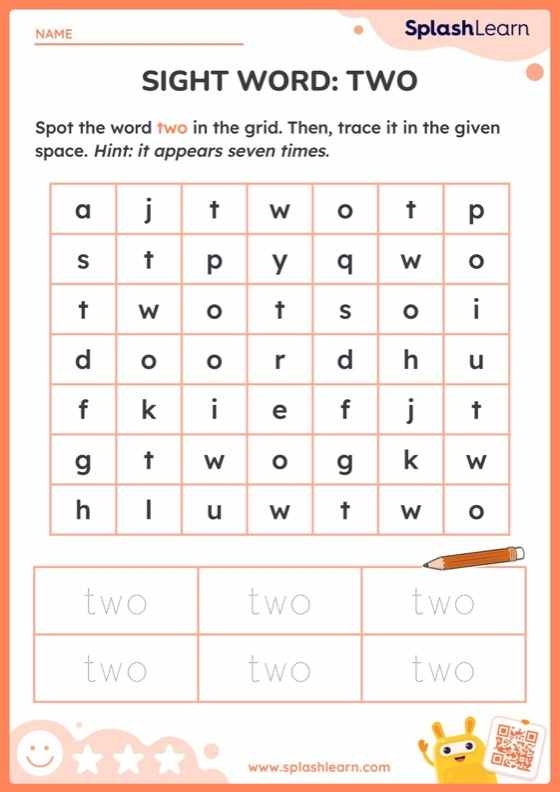
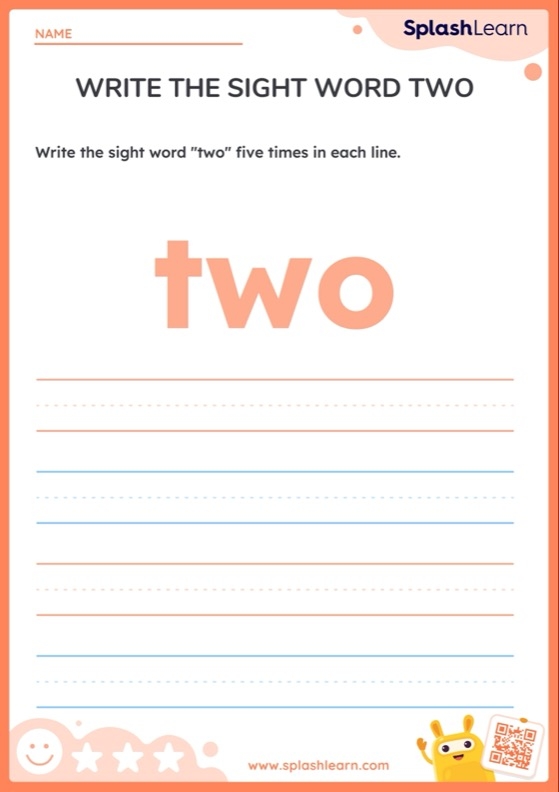
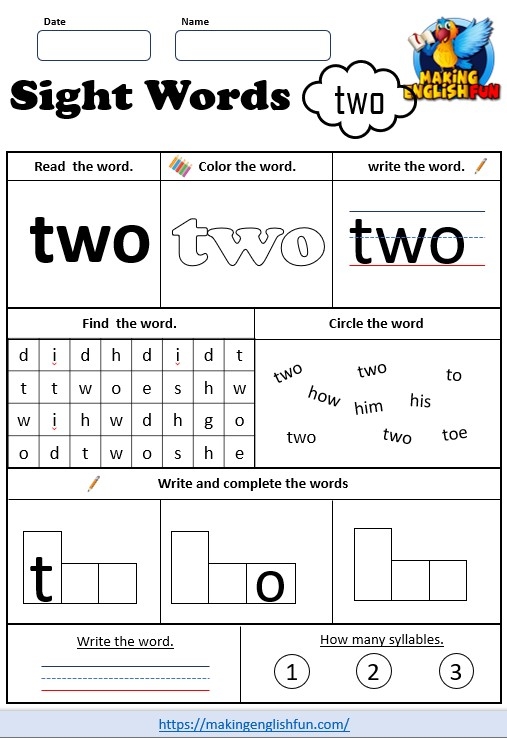
Learning sight words sticks better when you combine multiple approaches. This printable worksheet on the word “two” proves that combining visual recognition with hands-on practice creates stronger memory pathways in young learners.
The challenge with teaching Pre-K students is keeping their attention while building foundational literacy skills. Sight words like “two” appear constantly in early readers, yet children often struggle to recognize them without context clues. A single repetition method rarely locks these words into long-term memory. When you layer different learning modalities together, something shifts. The child who traces the letters while saying the word aloud engages motor memory, auditory processing, and visual recognition simultaneously.
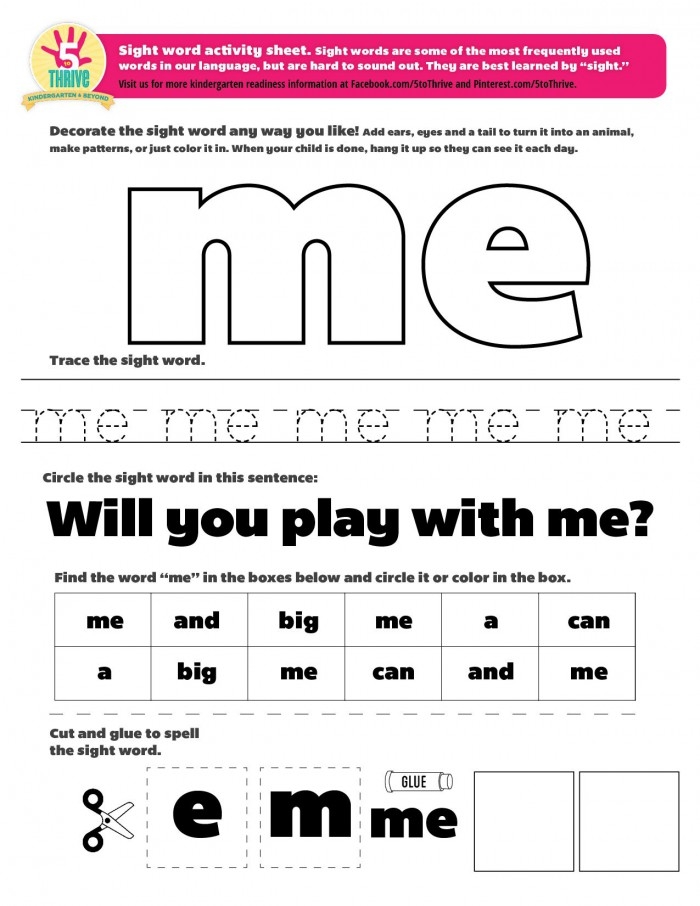
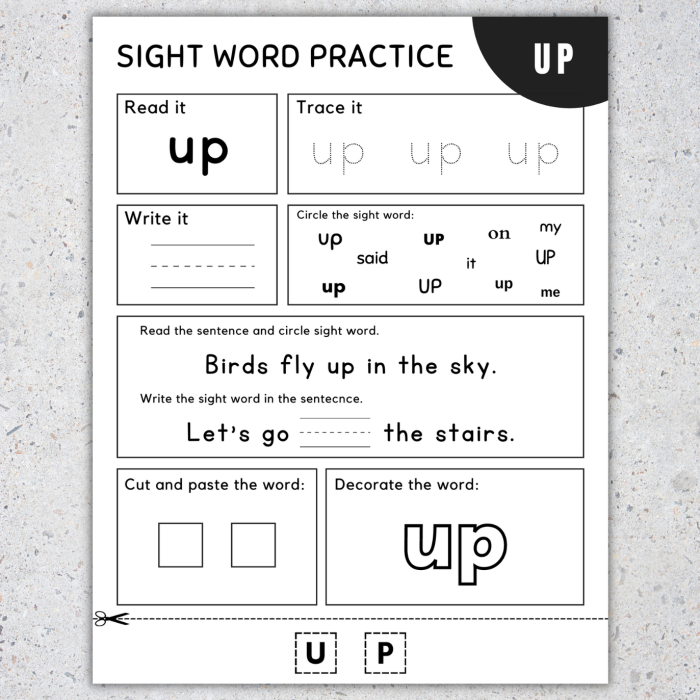
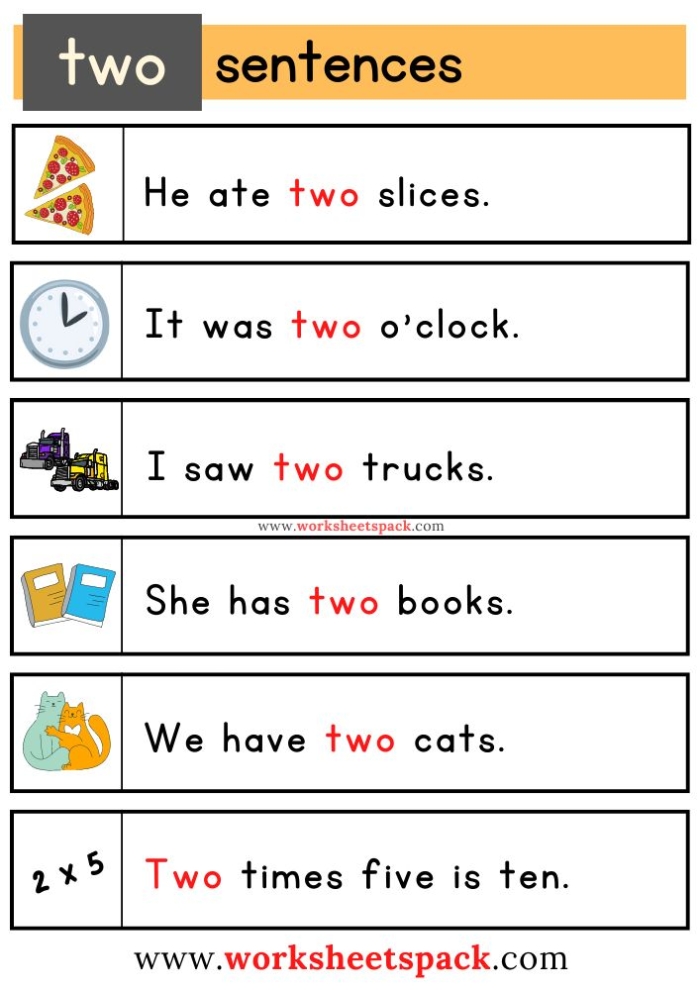
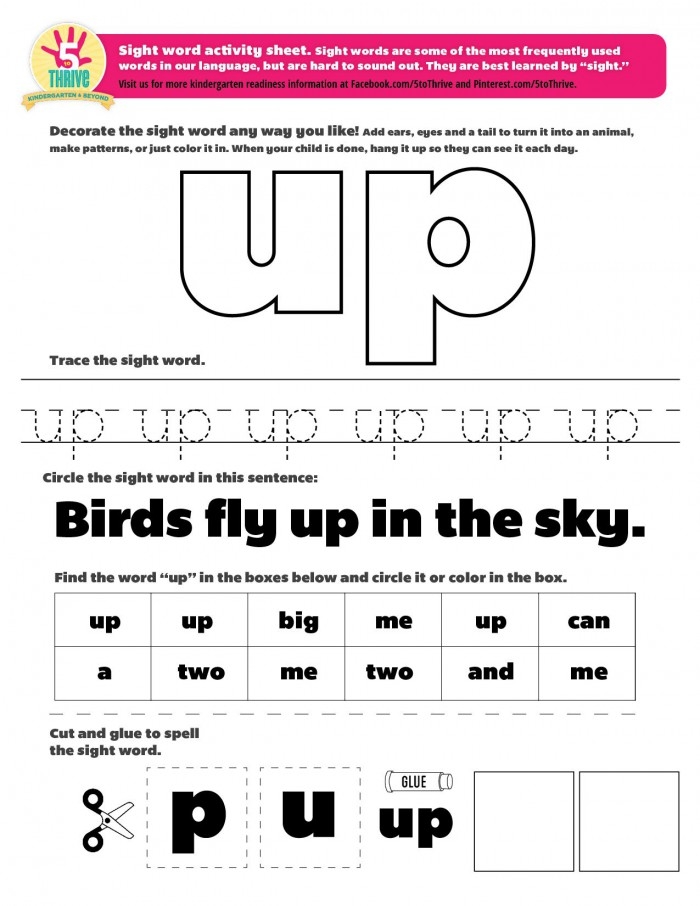
This worksheet takes that principle seriously. Rather than asking children to simply read or copy the word, it invites them to explore “two” through multiple angles. They might trace it, circle it within a sentence, or match it to images showing pairs of objects. Each activity reinforces recognition without feeling repetitive to the student.
Pre-K worksheets work best when they feel like play rather than instruction. The design here keeps that balance. Children stay engaged because the tasks vary, even though they’re all building the same skill. One moment they’re working with letters, the next they’re connecting words to real-world examples.
If you’re looking to expand this approach, pairing this worksheet with other foundational activities strengthens the learning foundation. Consider combining it with practice writing the number 2 to connect the word with its numerical counterpart. You might also explore matching numbers and one more to build number sense alongside sight word recognition.
The beauty of combining methods is that every child learns differently. Some respond to visual patterns, others to movement and touch. By offering multiple entry points to the same word, you ensure that each learner finds their pathway to mastery.
Boost Skills with These Worksheets