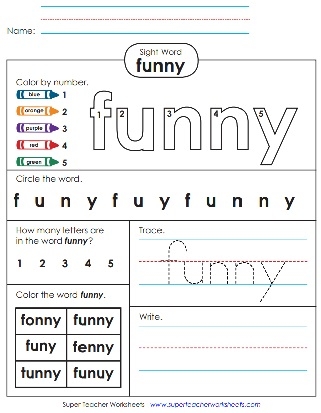
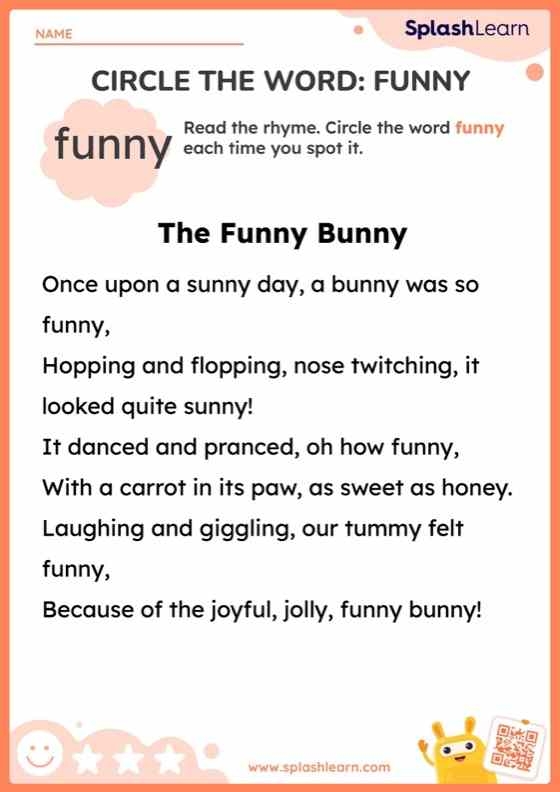
The word “funny” trips up a lot of beginning readers. It doesn’t follow the phonetic patterns they’ve learned, and the double N can confuse young eyes trying to sound it out. If your Pre-K student squints at this sight word and looks genuinely puzzled, you’re not alone. The good news: turning this tricky word into a hands-on arts and crafts project makes it stick in their memory far better than flashcards ever could.
Sight words like “funny” are essential for early literacy because they appear constantly in children’s books, yet many can’t be decoded by sounding out individual letters. Rather than drilling these words through repetition, creative activities engage different parts of a child’s brain. When kids cut, color, and build something with their hands while encountering a word, they create multiple sensory associations that strengthen recall.
Why Arts and Crafts Work for Sight Words
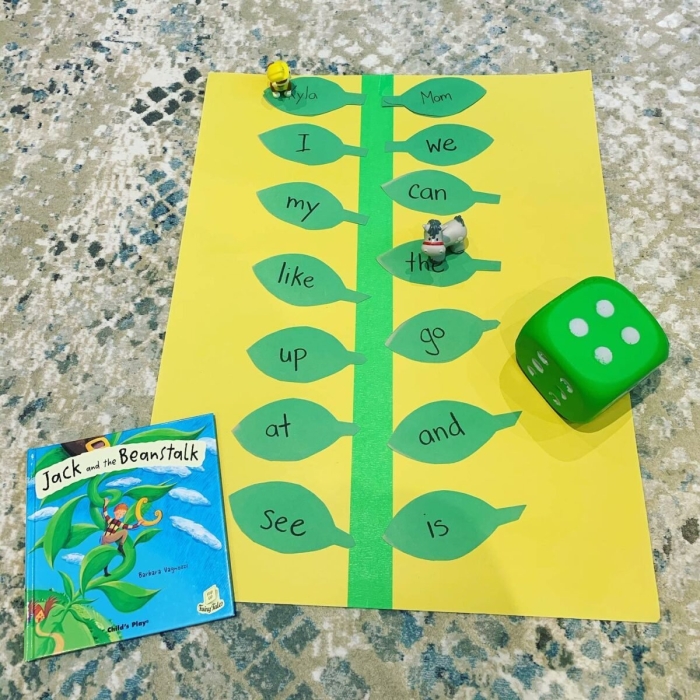
Young learners are tactile and visual. They remember what they touch and create. When you combine the word “funny” with a craft activity, you’re anchoring it to an experience rather than just a symbol on a page. Your student might create a funny face collage, decorate letter cutouts, or build a word puzzle. Each time their hands move, their brain reinforces the letter sequence f-u-n-n-y.
You can pair this approach with other Pre-K learning activities. For instance, while working on sight words, incorporate color-by-number activities that also build fine motor skills, or explore picture-based learning that connects words to images your child enjoys.
Simple Craft Ideas for “Funny”
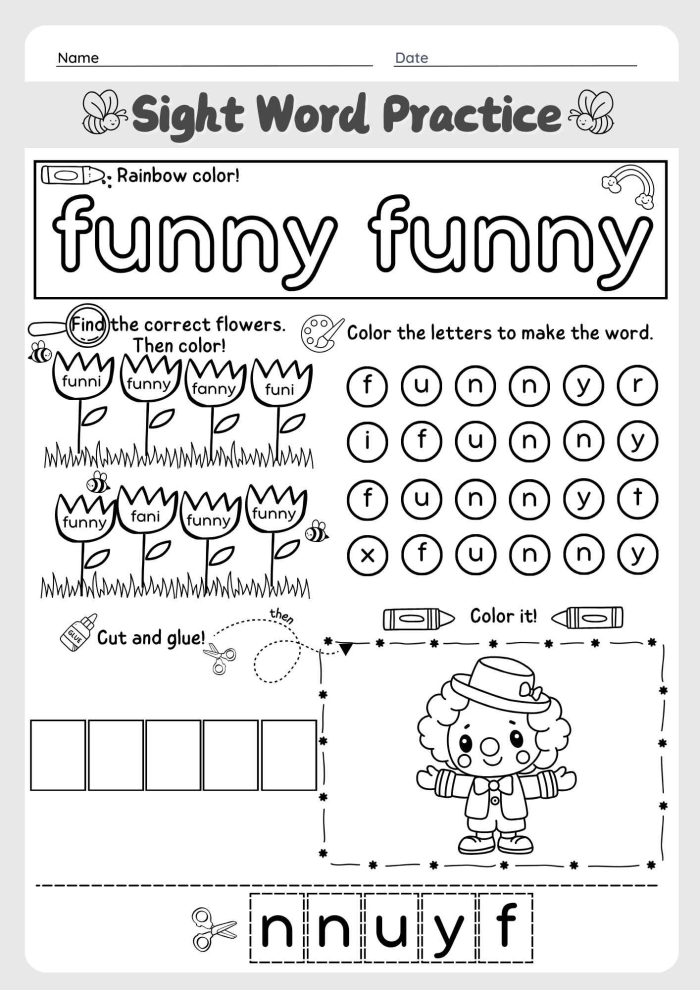
Create a funny face using paper plates, googly eyes, and yarn. Write the word “funny” across the forehead. Let your child decorate it however they like. Another option: make letter tiles where each letter of “funny” is on a separate card decorated with drawings or stickers. Your student can arrange and rearrange them, saying the word aloud each time.
You might also try a word hunt craft where your child searches through magazines for images that make them laugh, glues them onto poster board, and labels the collection with the word “funny.” This connects the abstract word to concrete, meaningful concepts in their world.
The repetition happens naturally through the creative process, without feeling like work. Your beginning reader sees, touches, and speaks the word while having genuine fun, which is exactly what learning should feel like at this age.
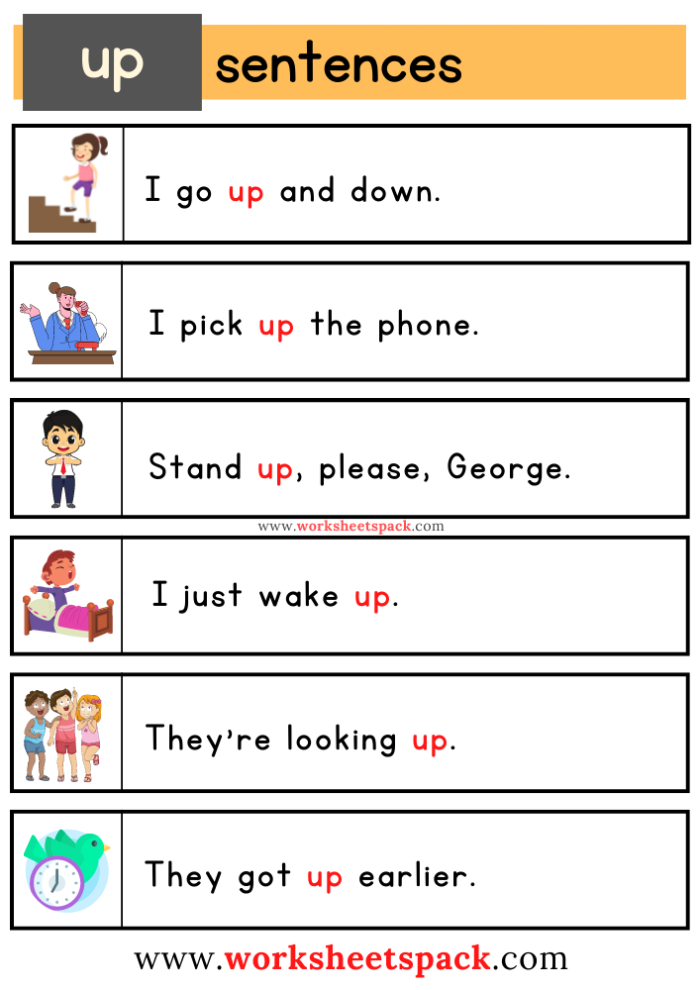
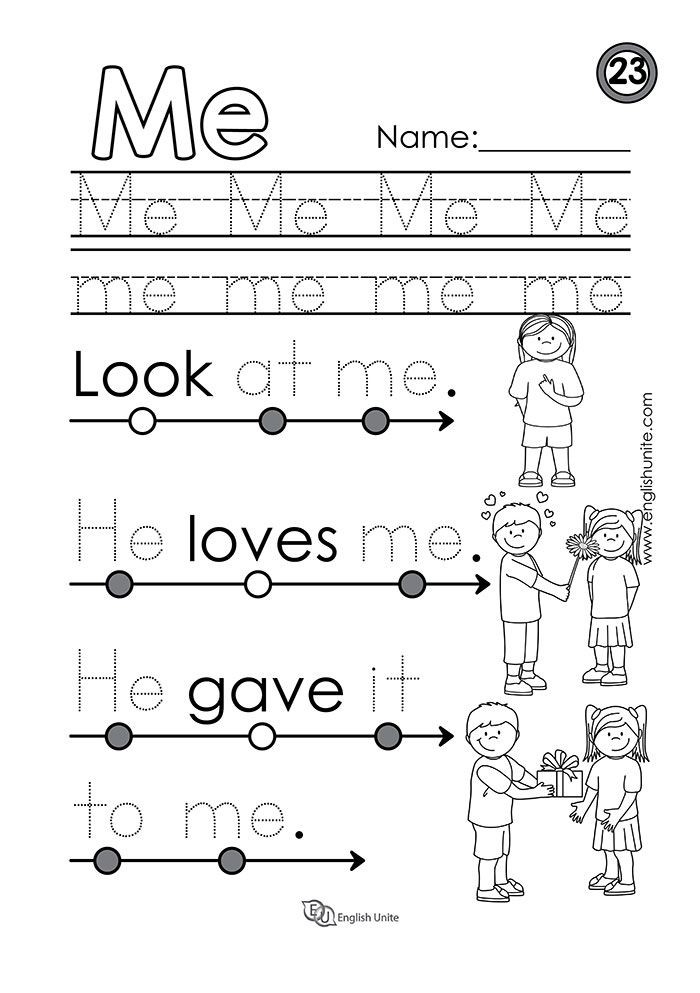
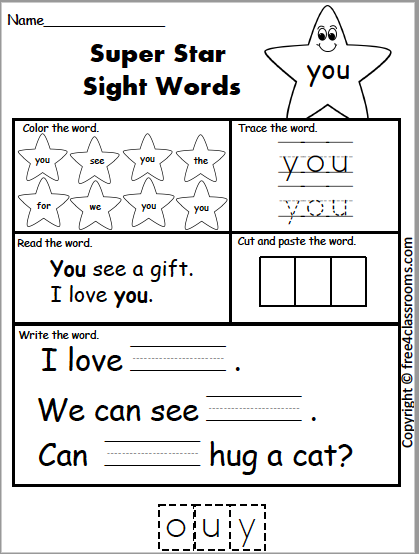
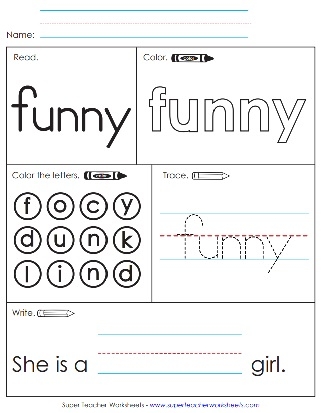
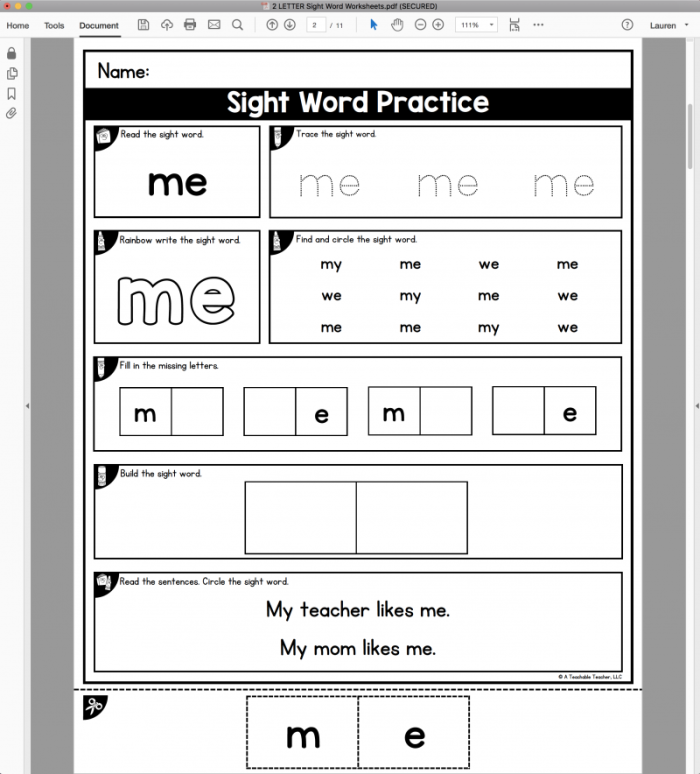
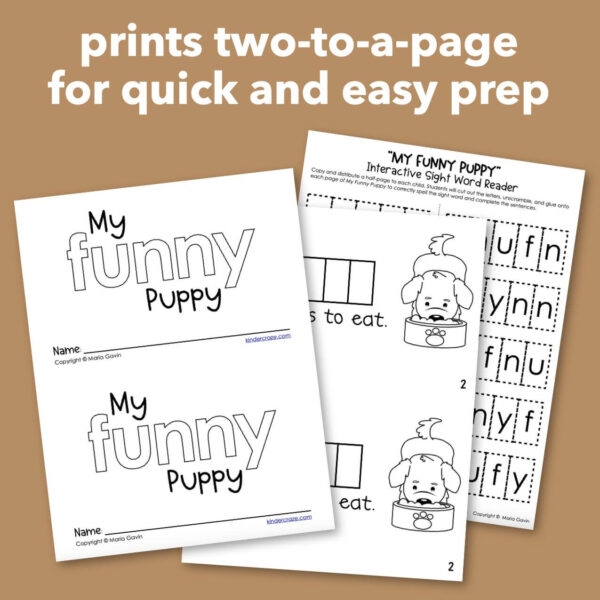
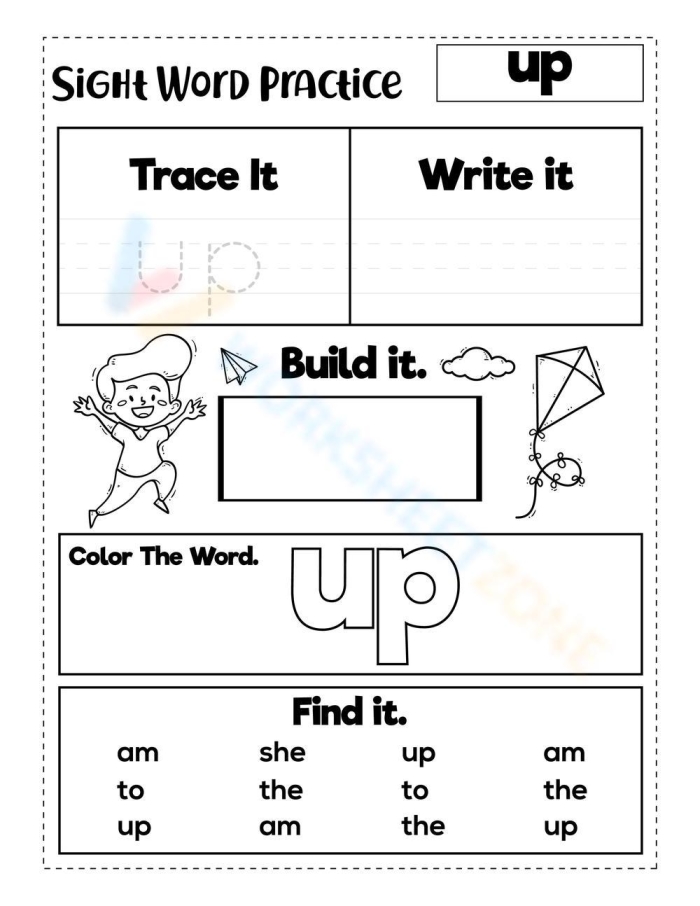
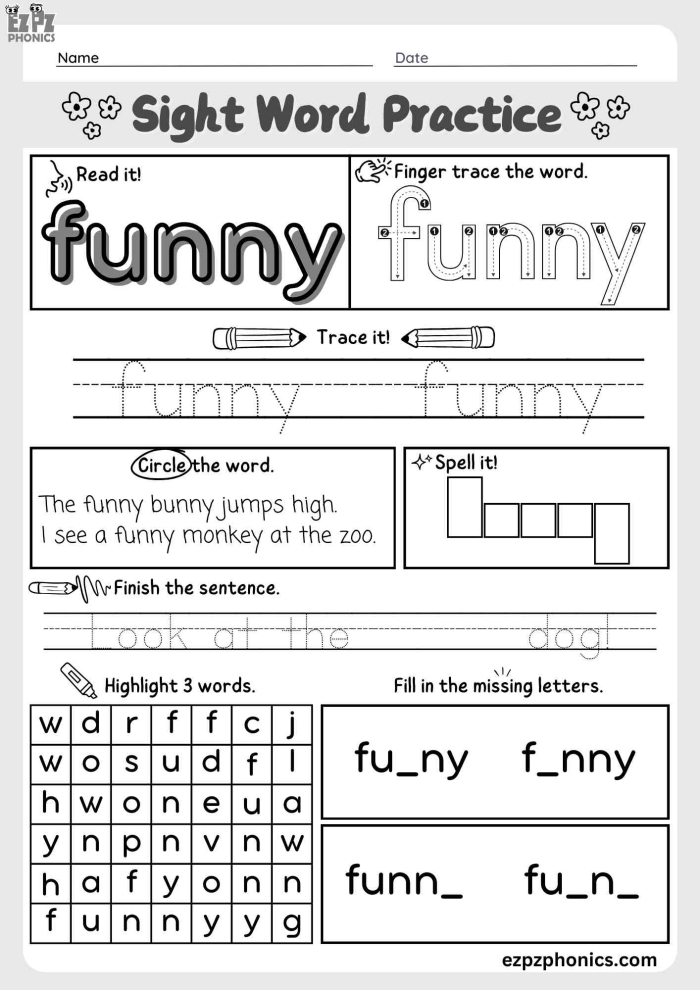
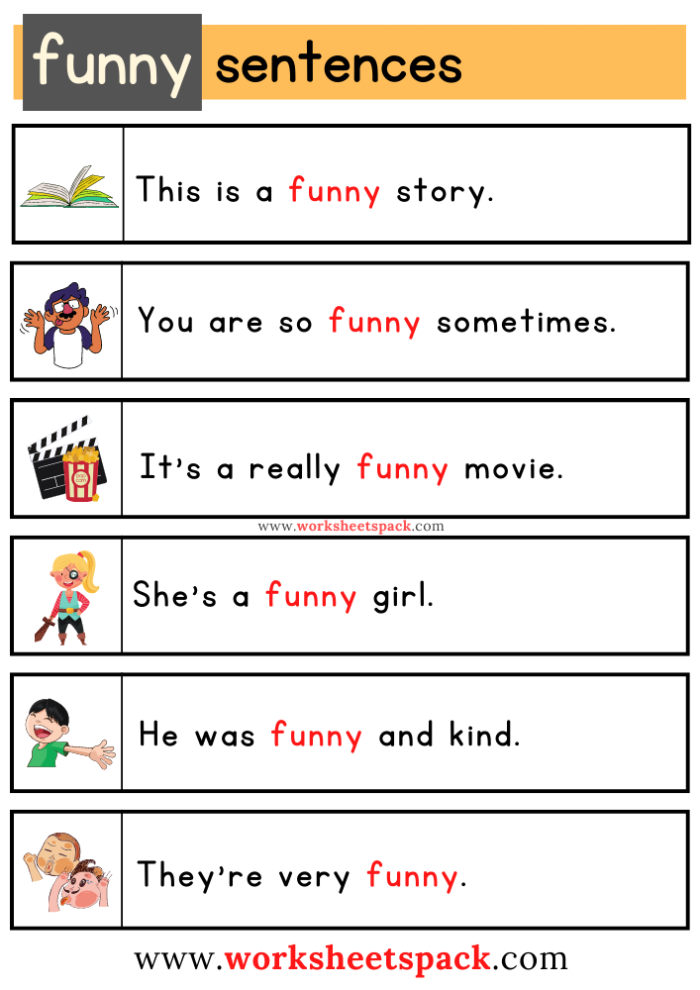
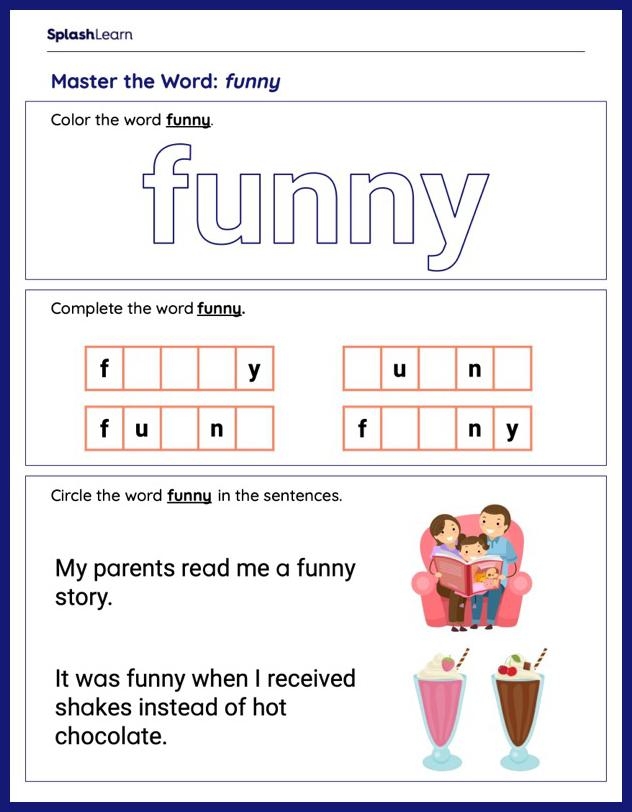
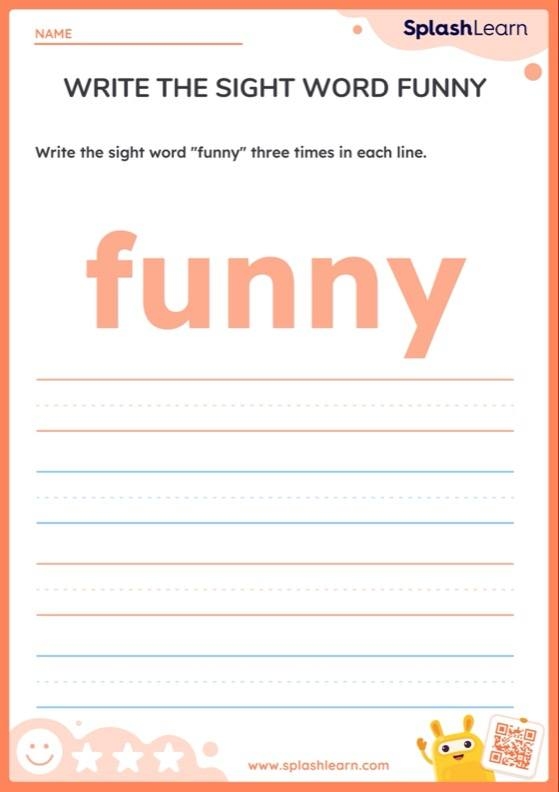
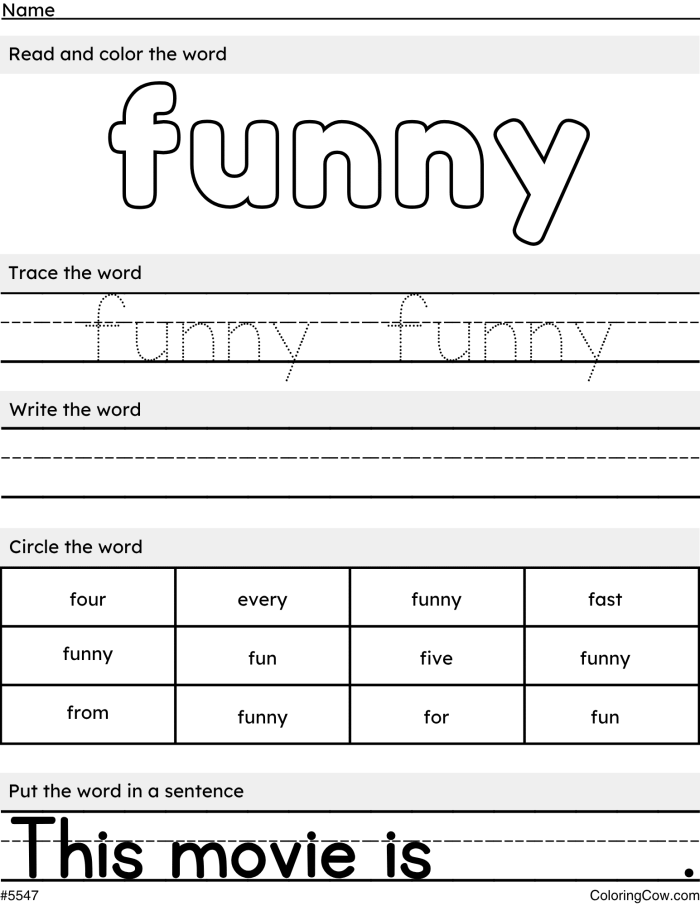
Boost Skills with These Worksheets