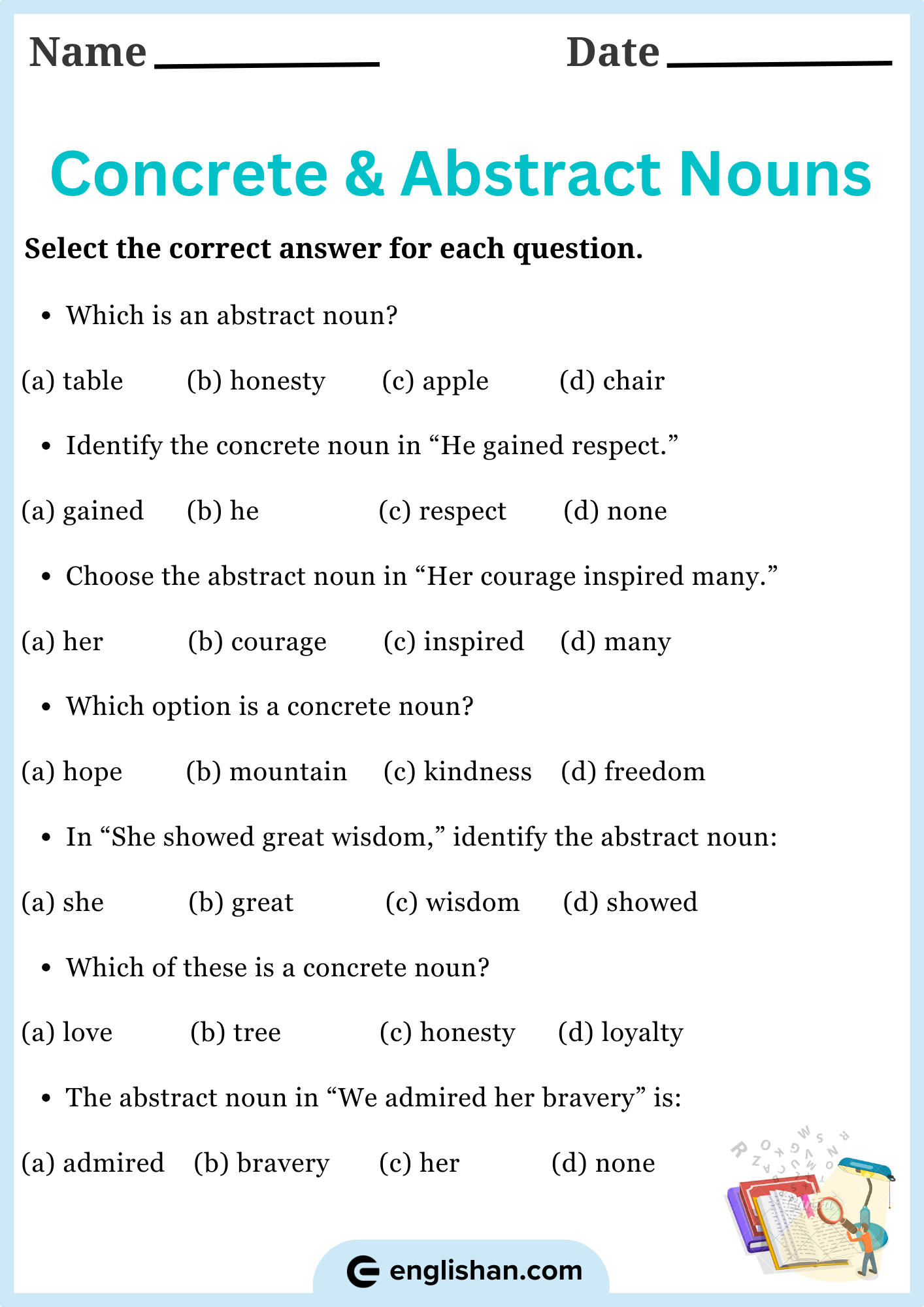
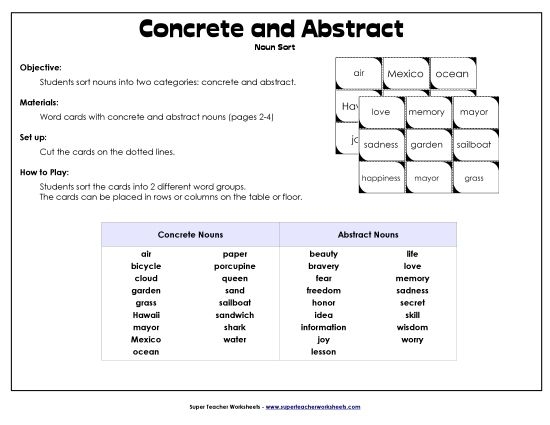
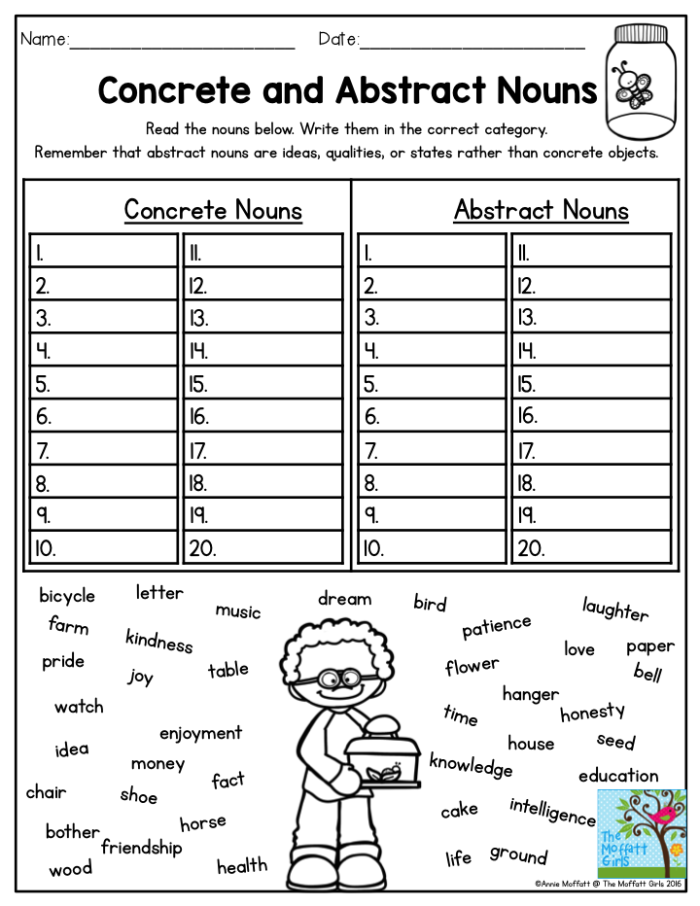
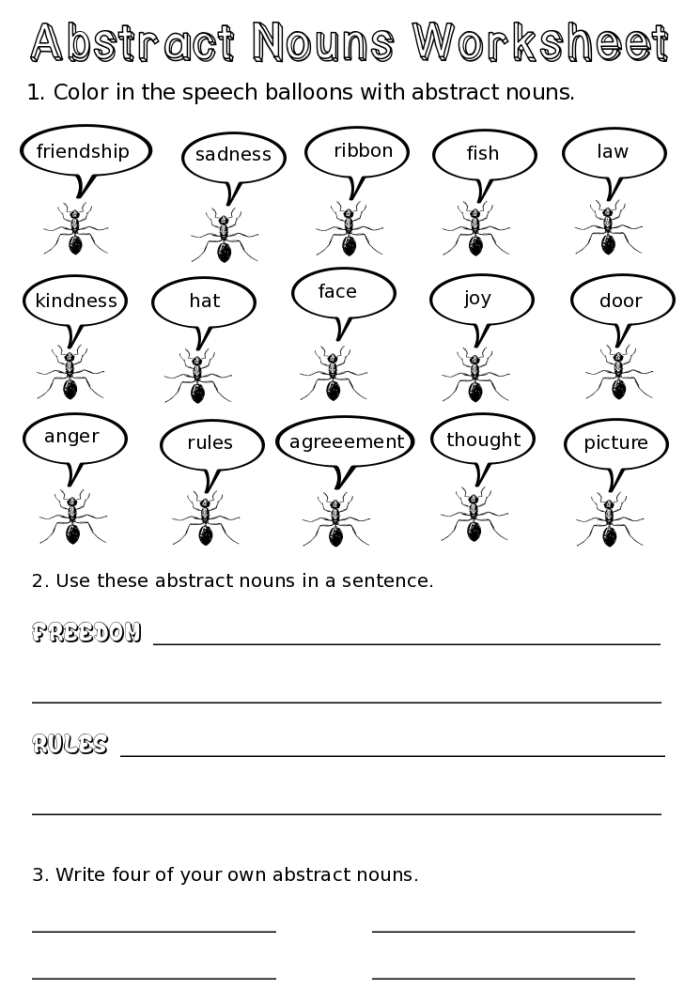
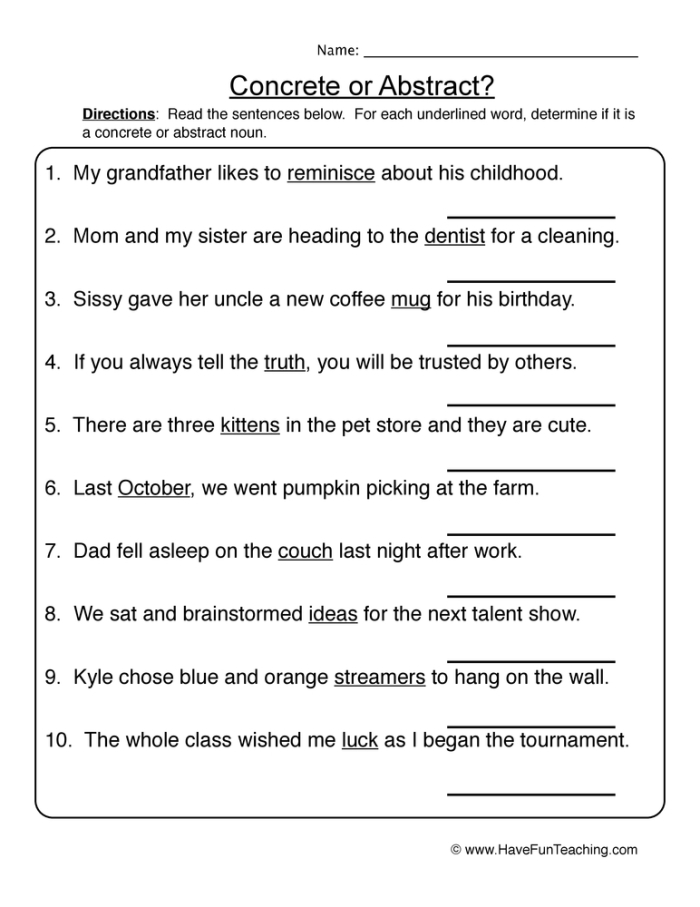
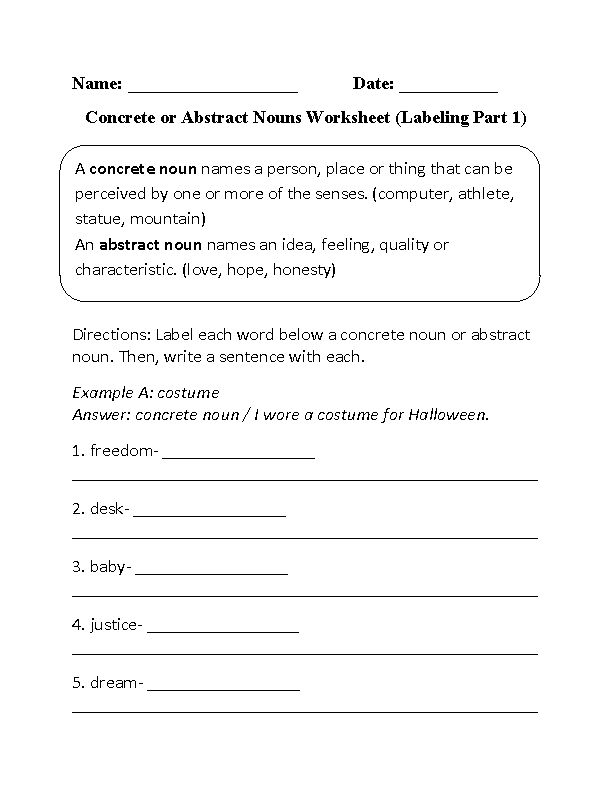
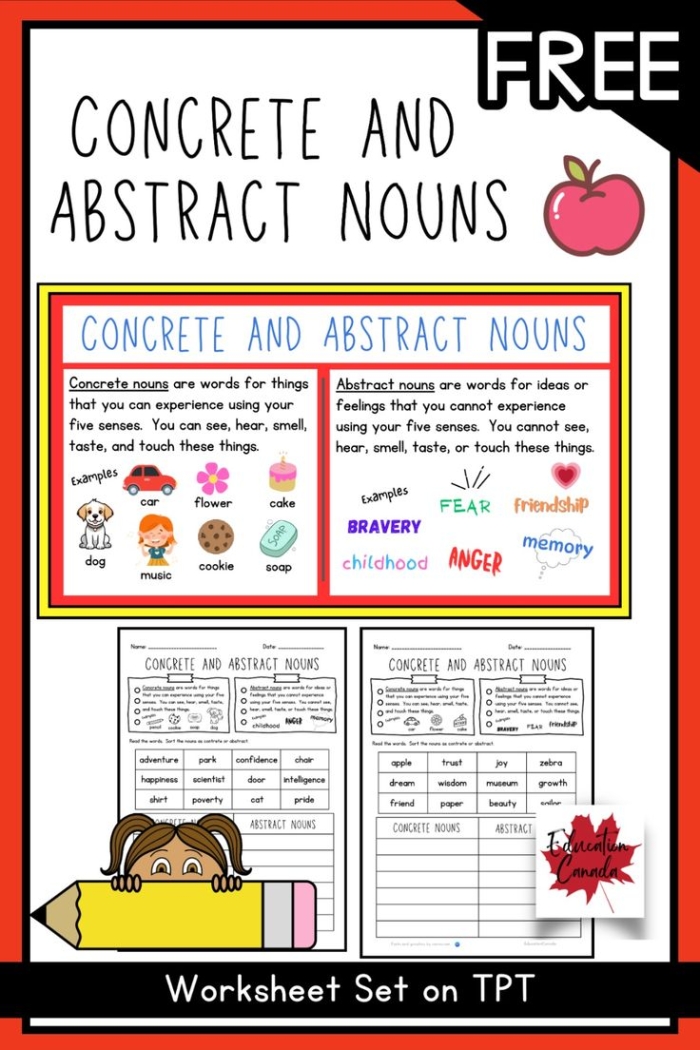
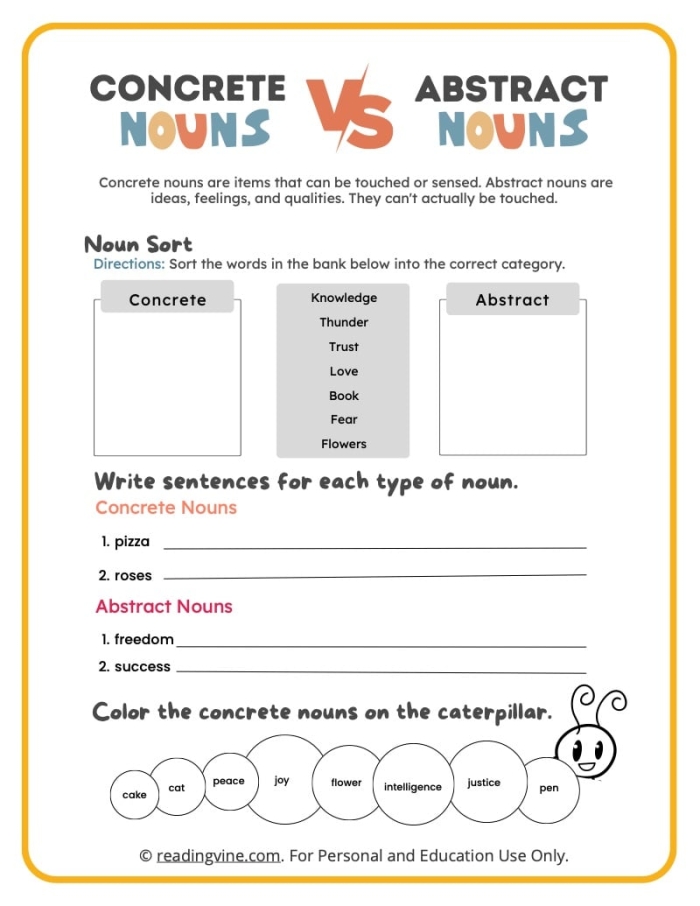
Sorting concrete and abstract nouns is one of those grammar skills that clicks instantly when students see it in action. Third graders often struggle to understand why some nouns you can touch feel different from nouns you can only think about, but a hands-on sorting activity makes the distinction crystal clear.
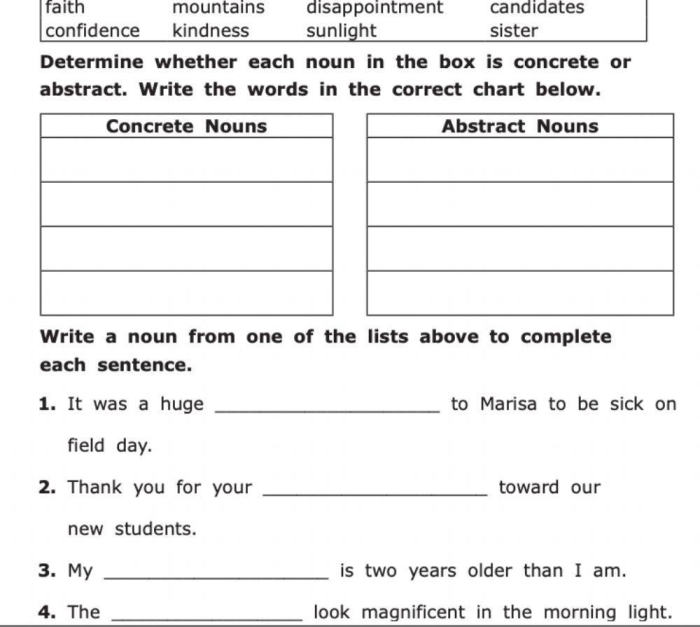
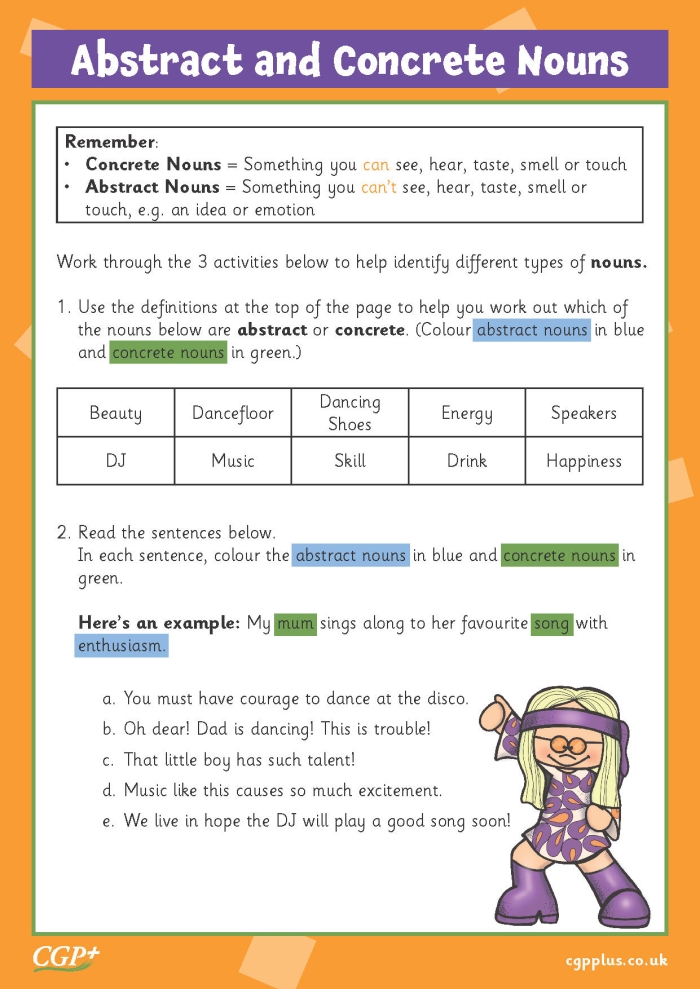
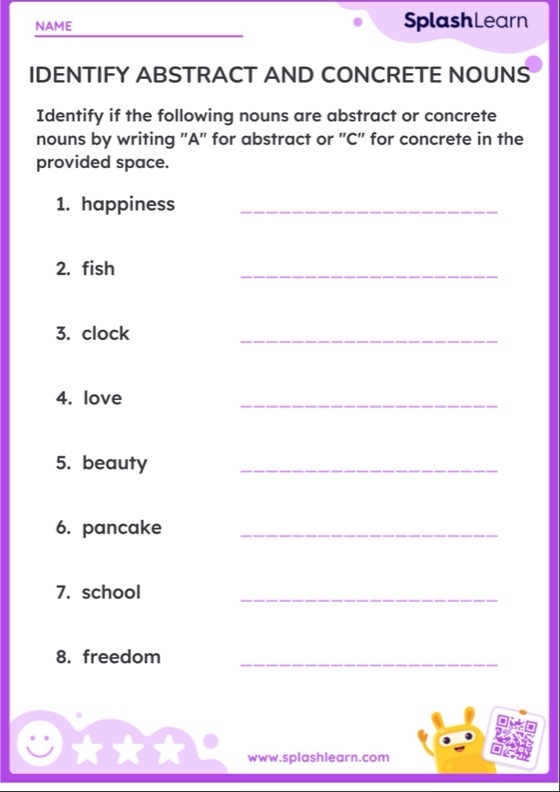
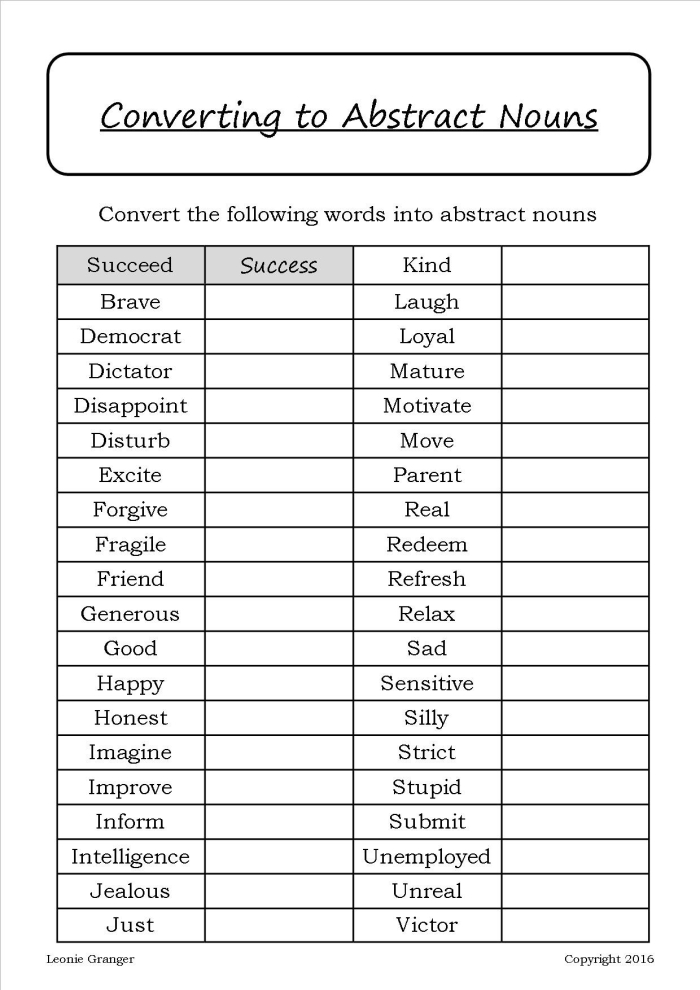
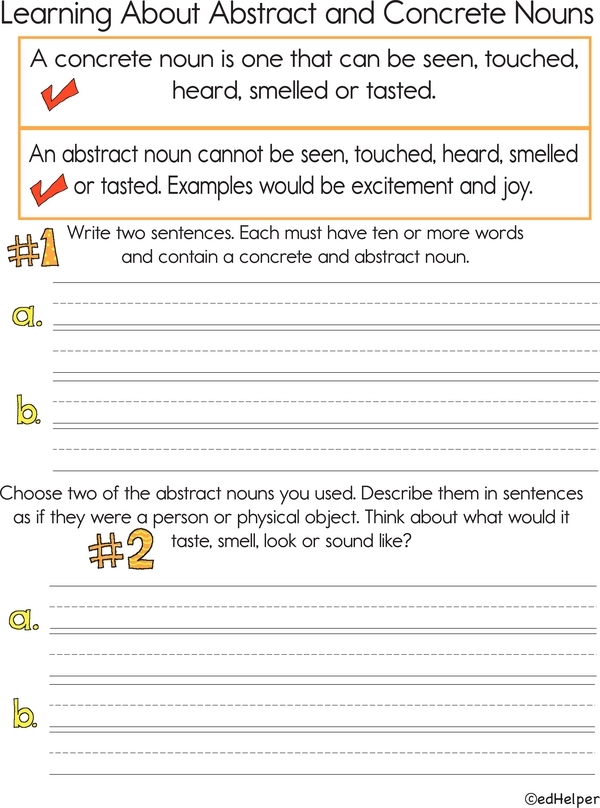
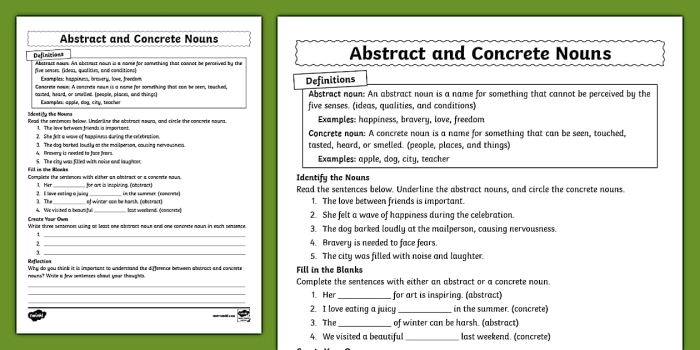
Concrete nouns represent things you can perceive with your five senses. A desk, a pencil, a sandwich, a puppy, or a raindrop are all concrete because you can see, touch, taste, smell, or hear them. Abstract nouns, by contrast, exist only in the mind. Kindness, courage, happiness, friendship, and honesty cannot be grabbed or observed directly. They describe feelings, ideas, or qualities.
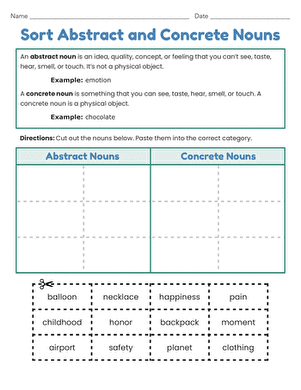
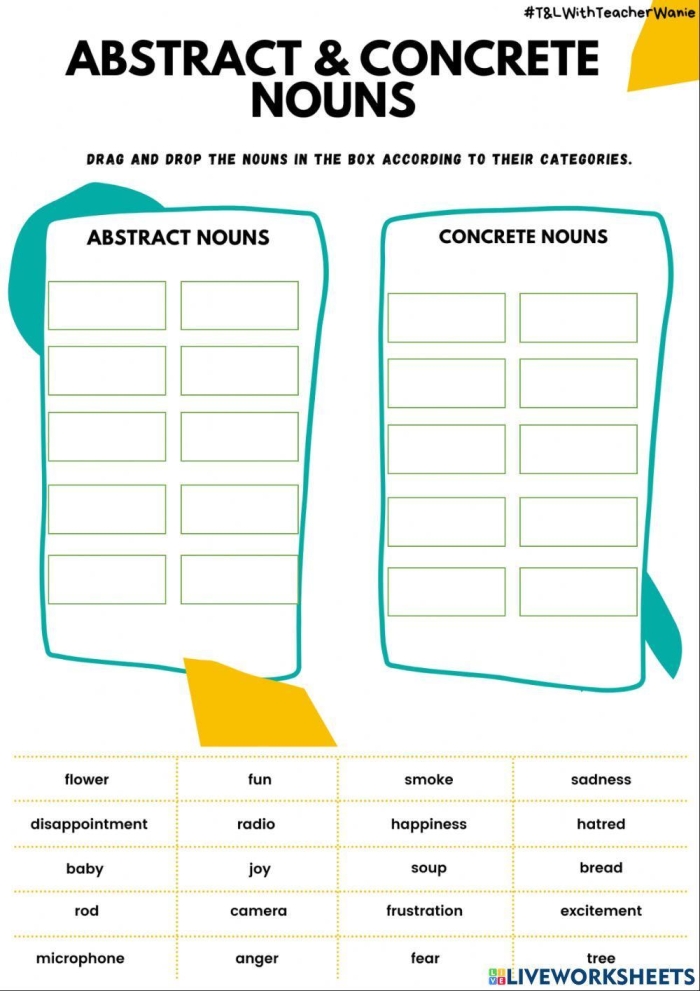
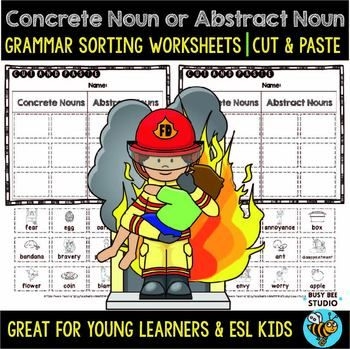
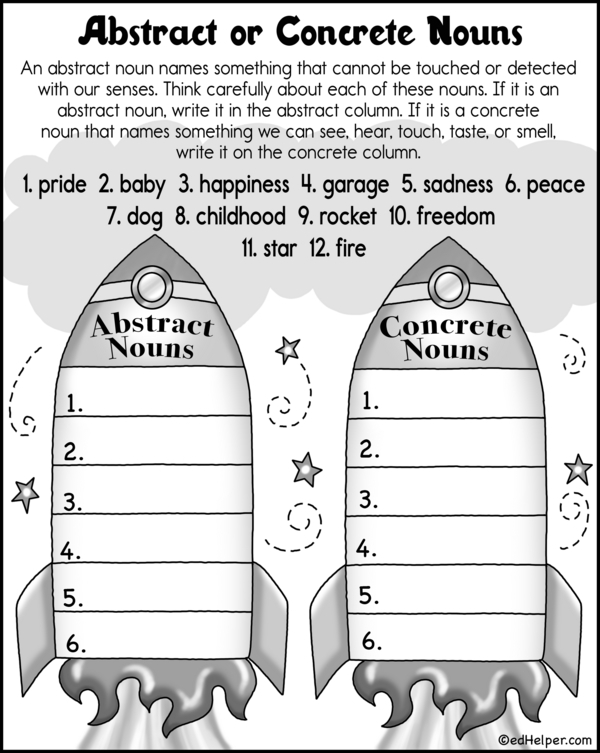
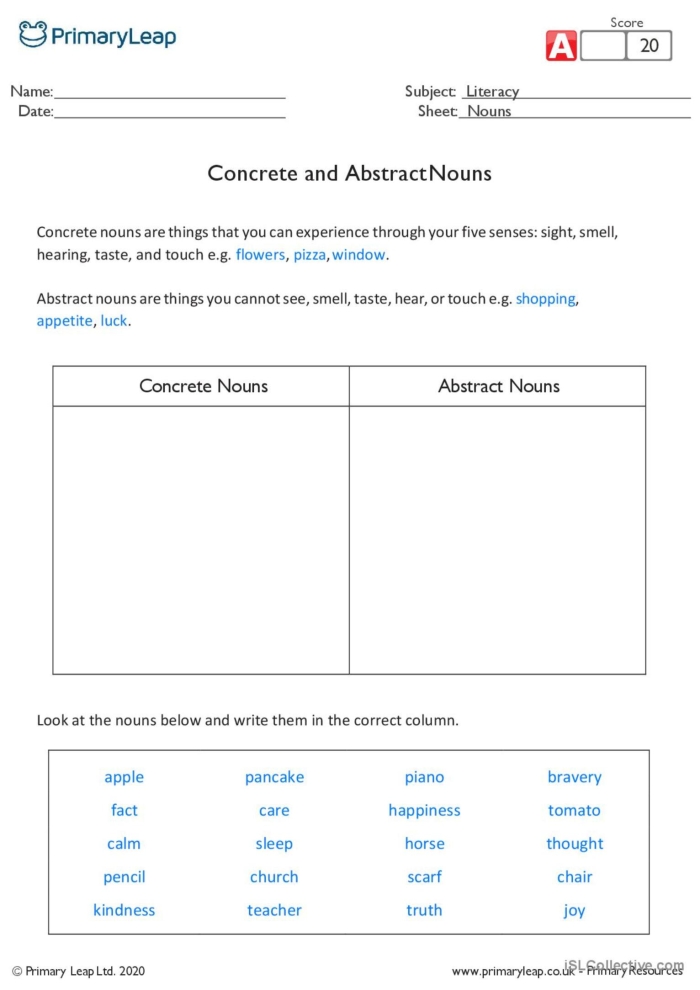
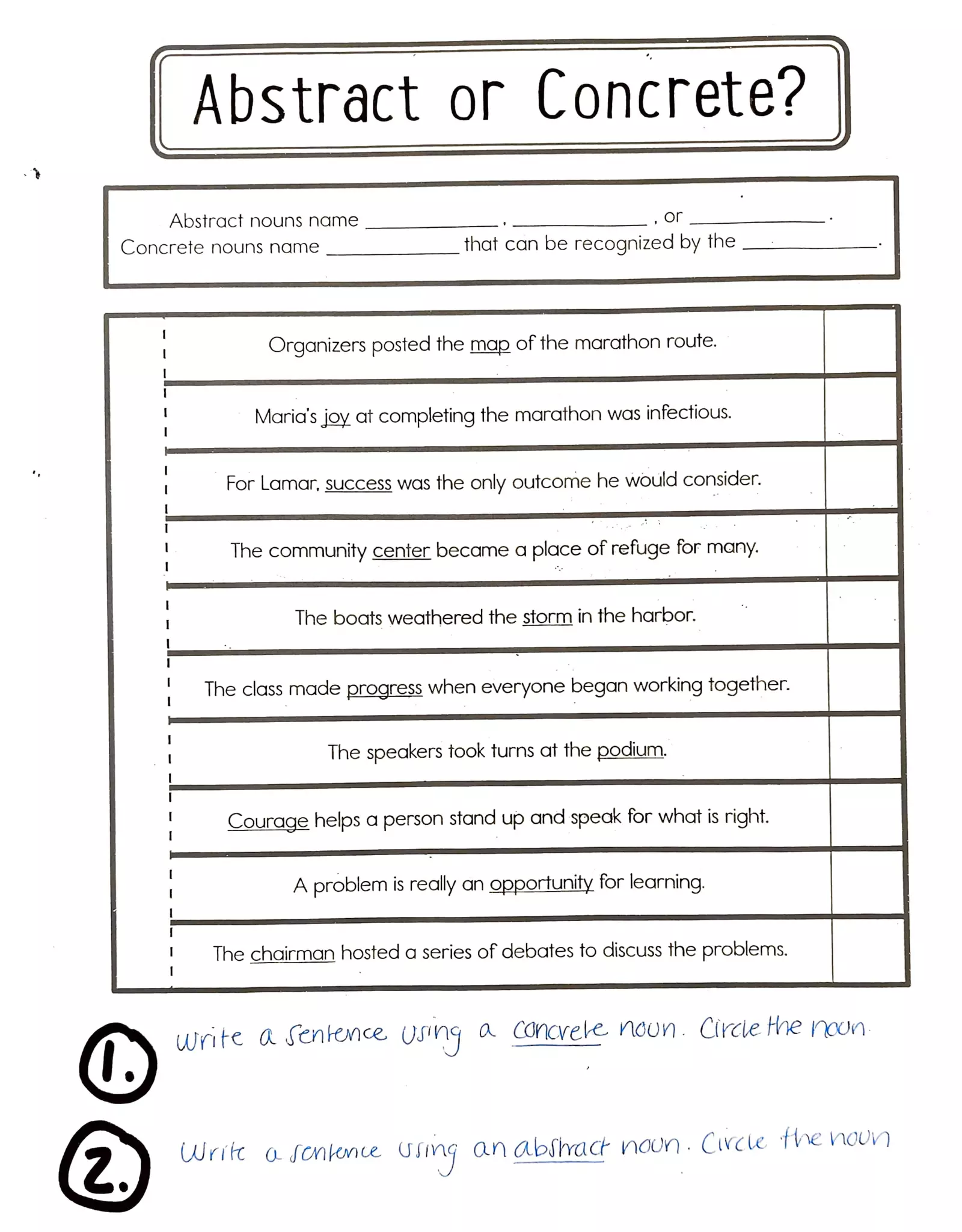
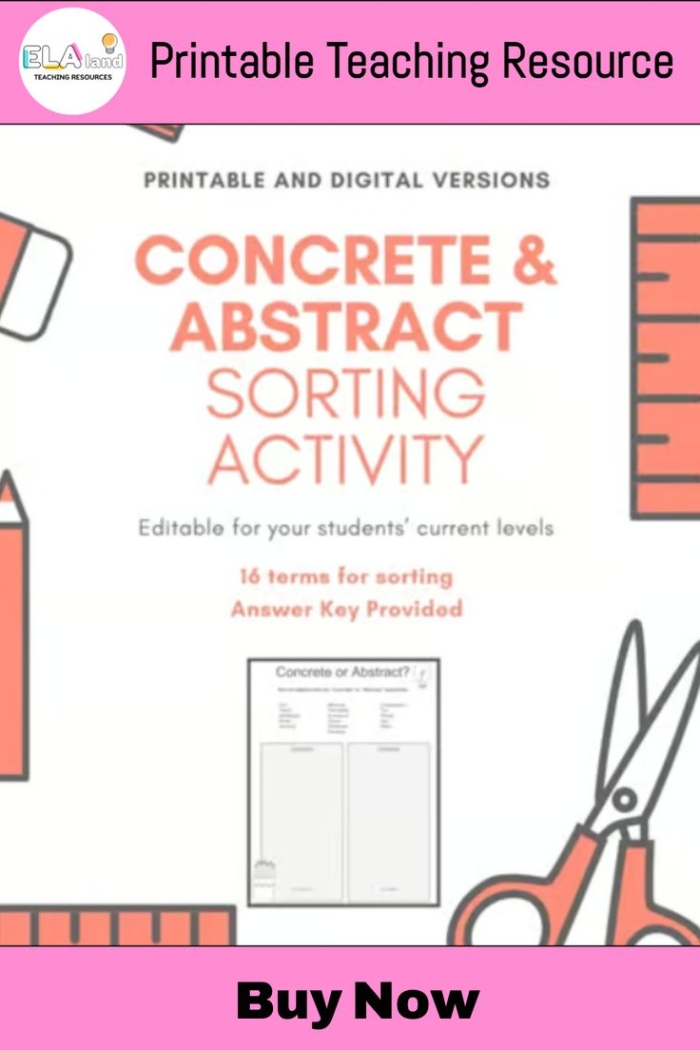
The sorting activity works by giving students a mixed list of nouns and asking them to place each one into either the concrete or abstract category. You might include words like “joy,” “table,” “bravery,” “cloud,” “love,” and “shoe.” Students physically move cards or write nouns under the correct heading. This tactile approach helps the concept stick far better than a worksheet explanation alone.
What makes this activity particularly effective for third graders is that it removes the pressure of perfect grammar terminology. Instead of memorizing definitions, students develop an intuitive sense by comparing and contrasting examples. When they sort “tree” as concrete and “freedom” as abstract, they’re applying logical thinking rather than reciting rules.
You can extend the activity by having students create their own examples or draw pictures of concrete nouns. Pairing this with other grammar work, like distinguishing fact and opinion, reinforces how language works on multiple levels. The sorting approach builds confidence and makes grammar feel less like memorization and more like discovery.
Boost Skills with These Worksheets