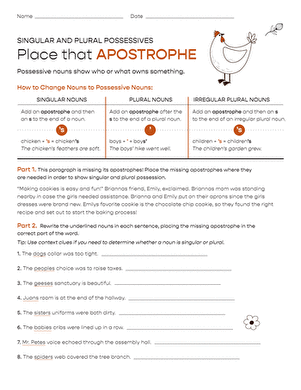
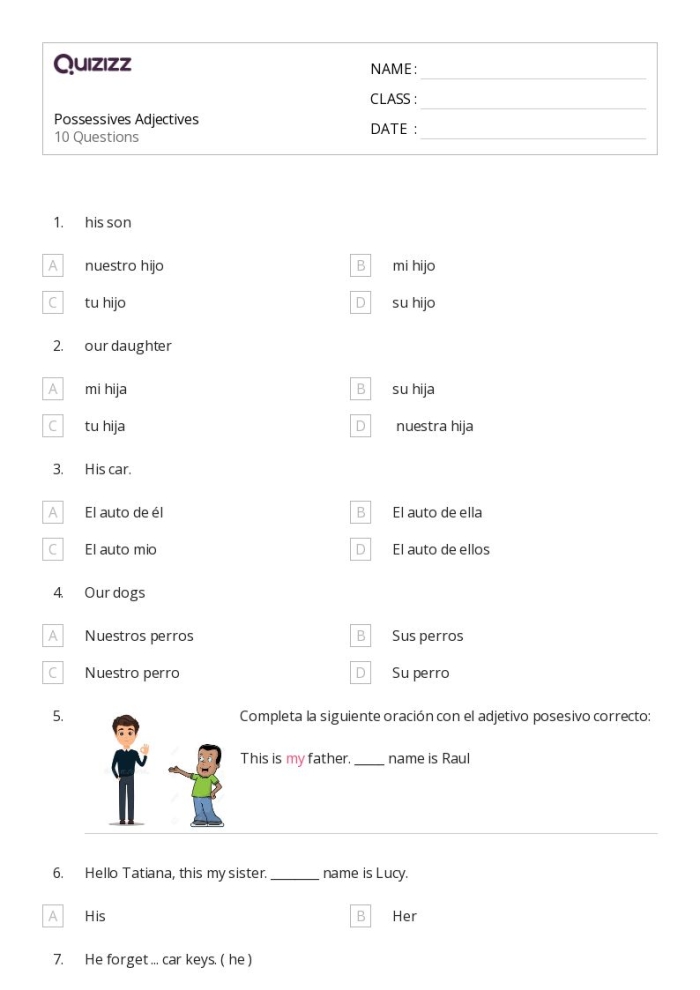
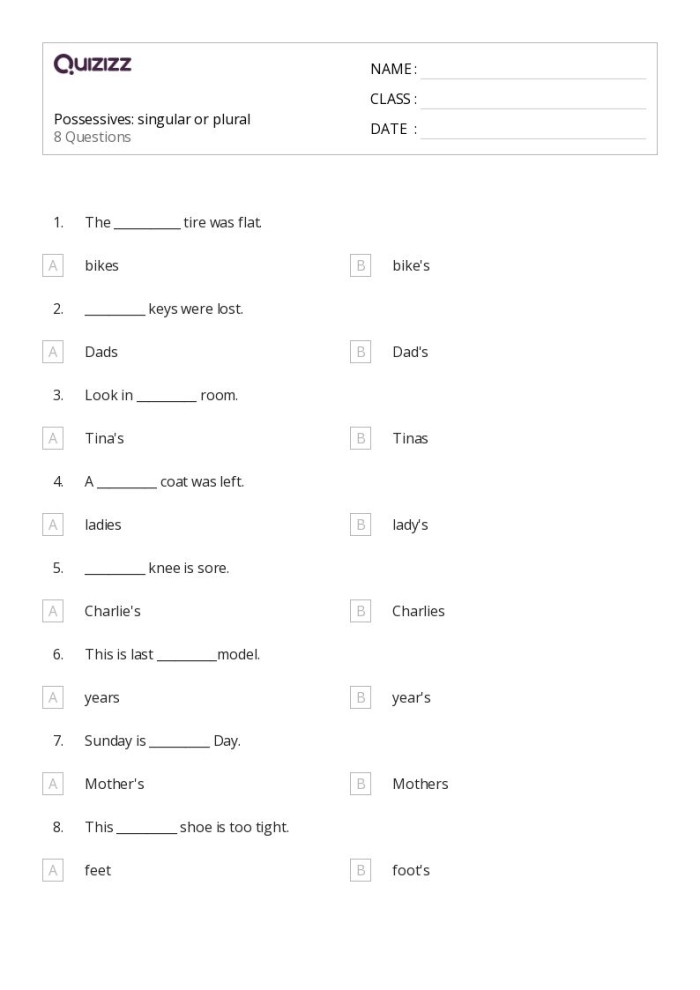
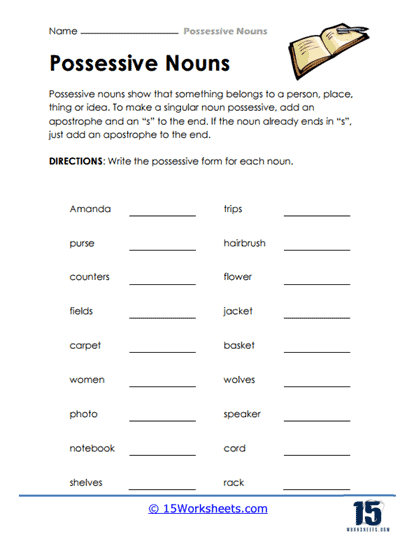
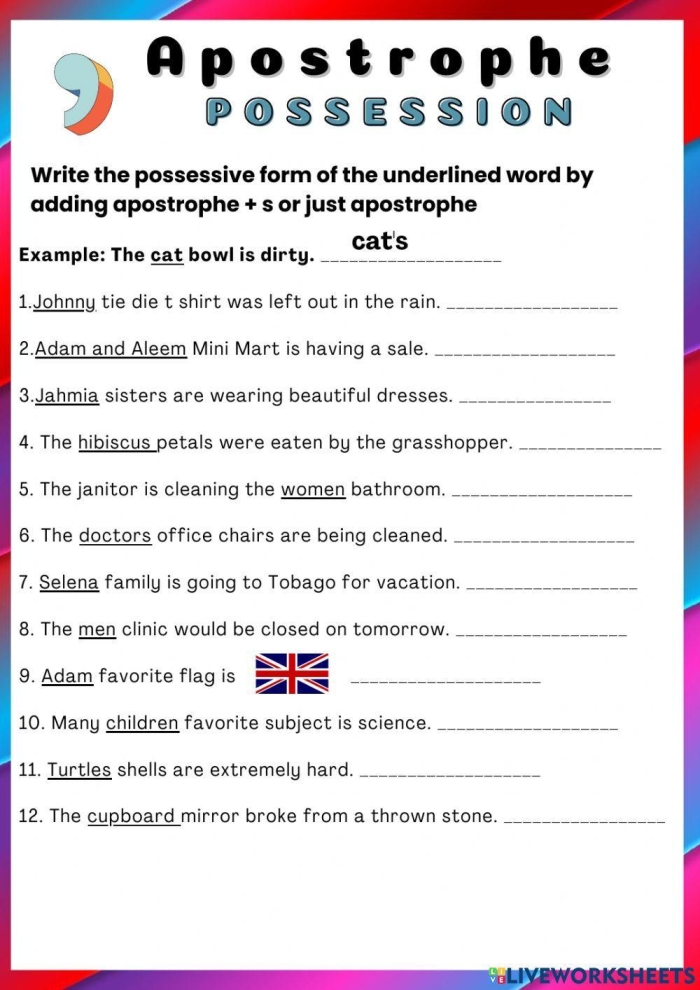
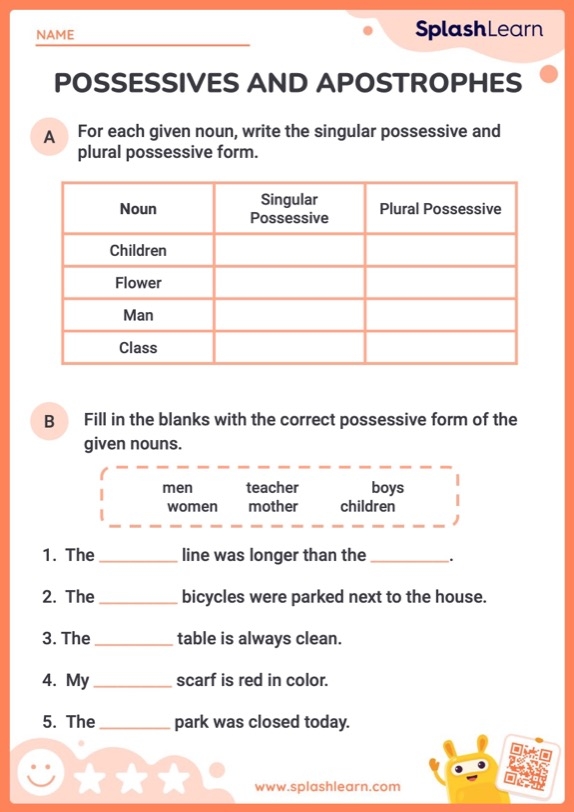
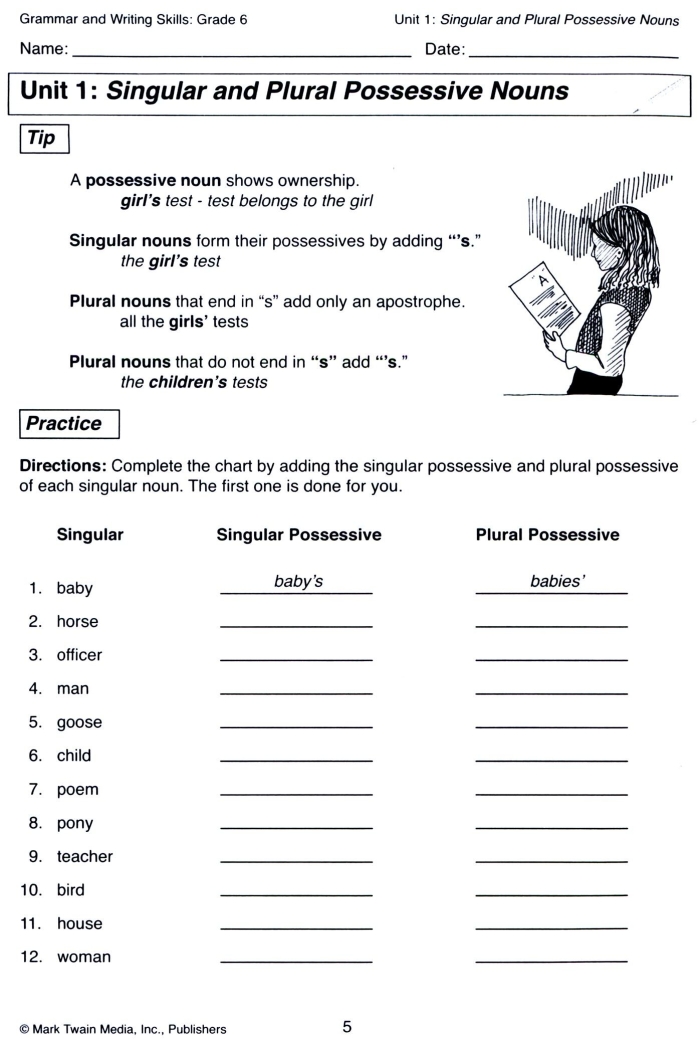
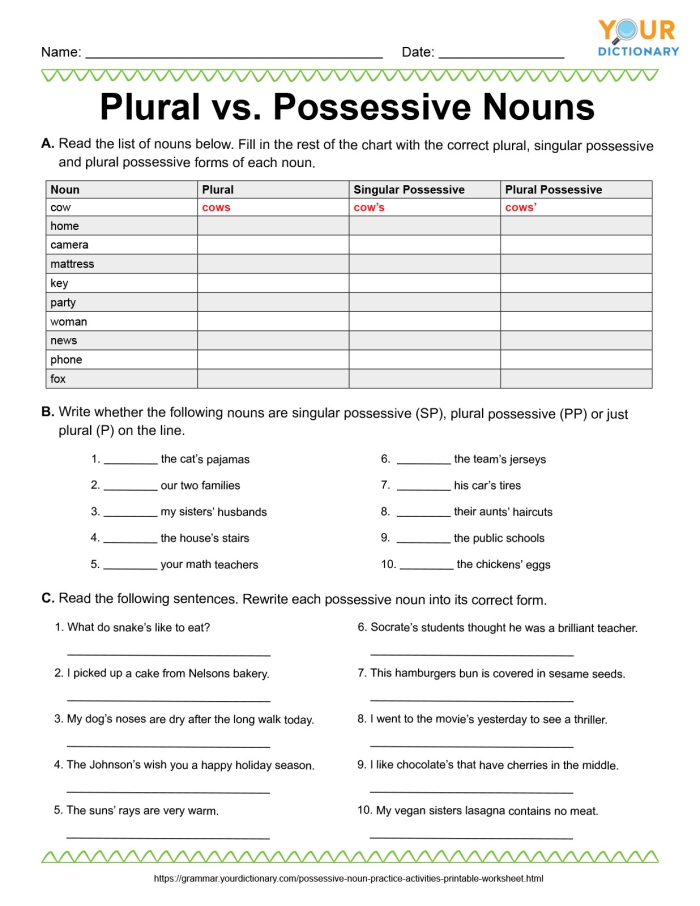
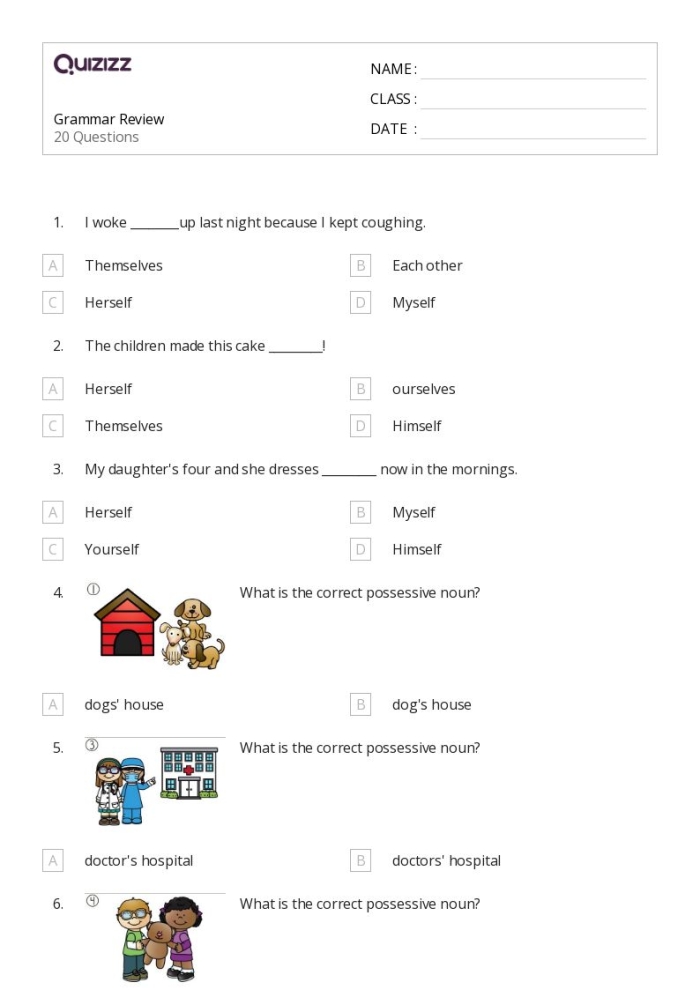
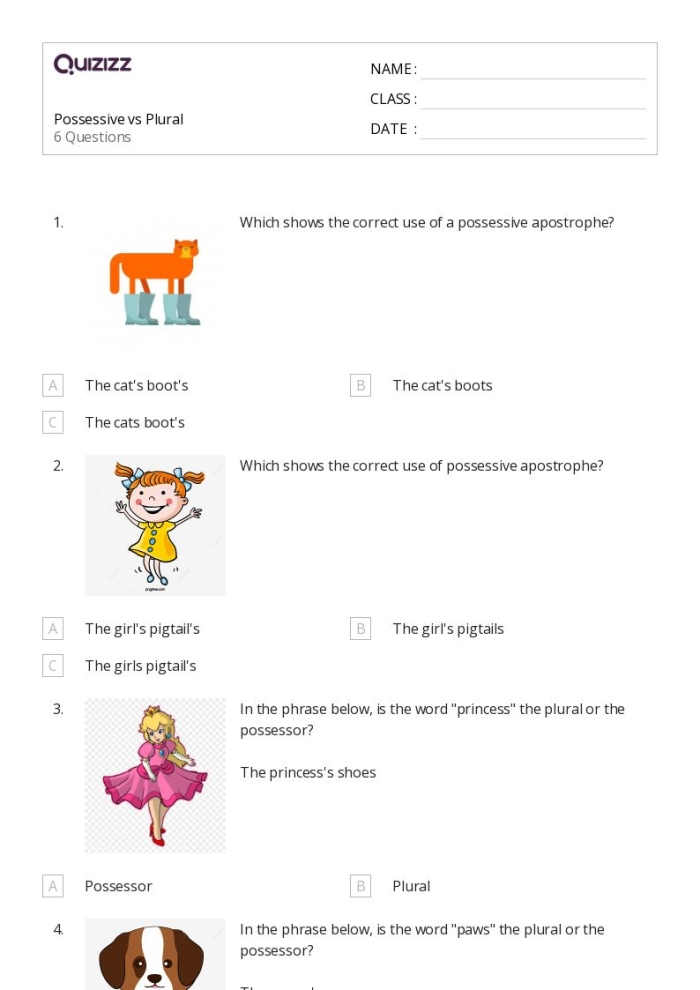
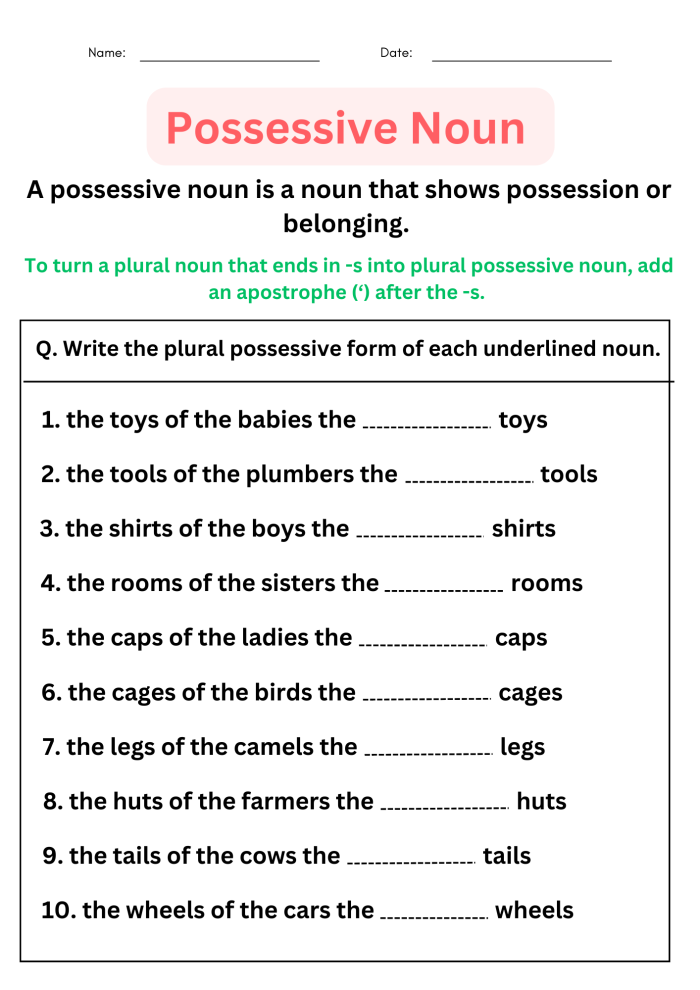
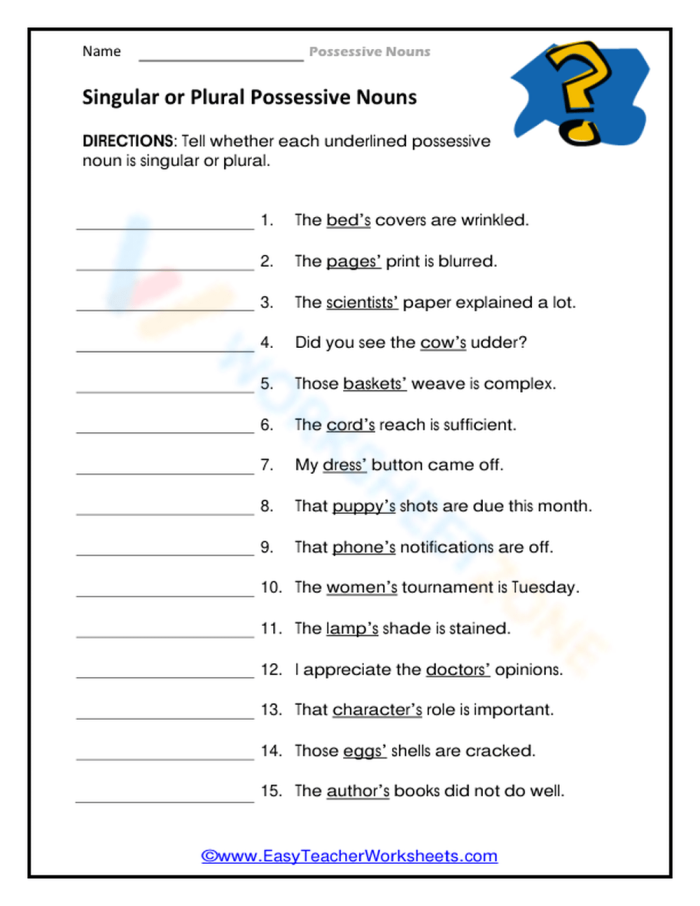
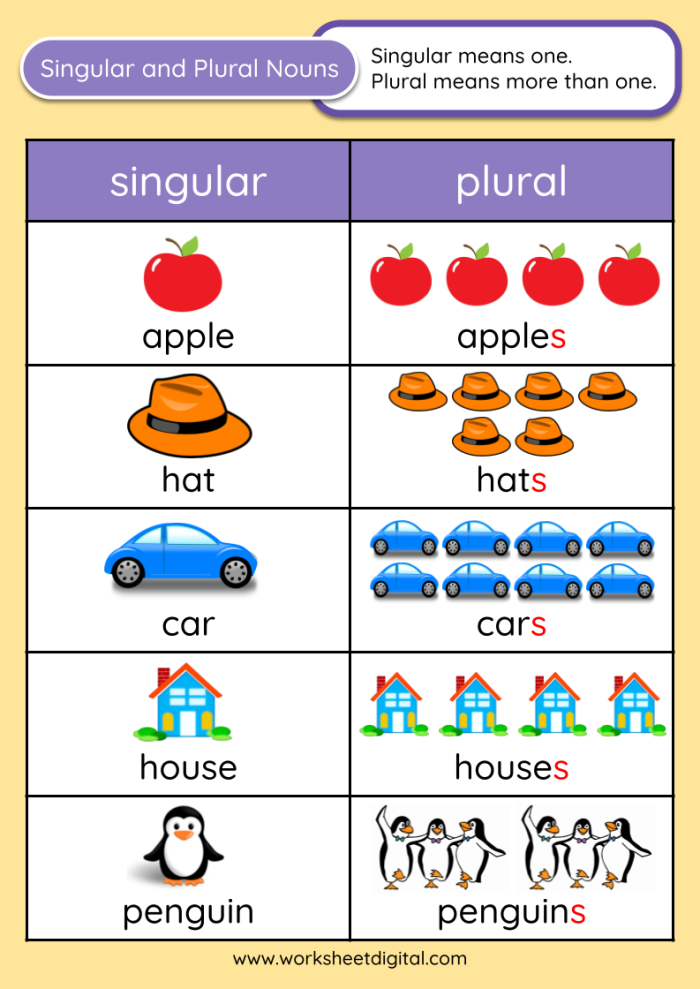
Understanding possessive nouns is an essential skill for fourth graders, especially when it comes to mastering the rules for changing singular, plural, and irregular plural nouns into possessive forms. This worksheet offers a structured approach to help learners grasp these concepts effectively.
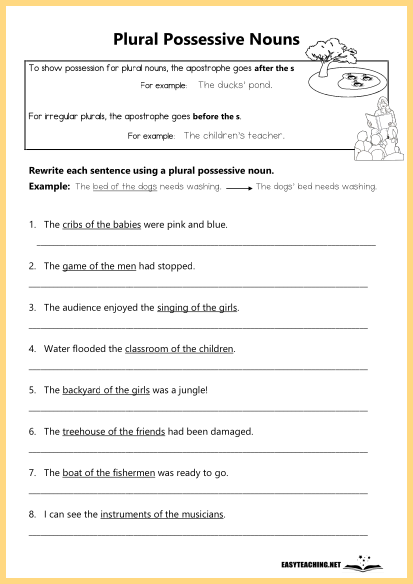
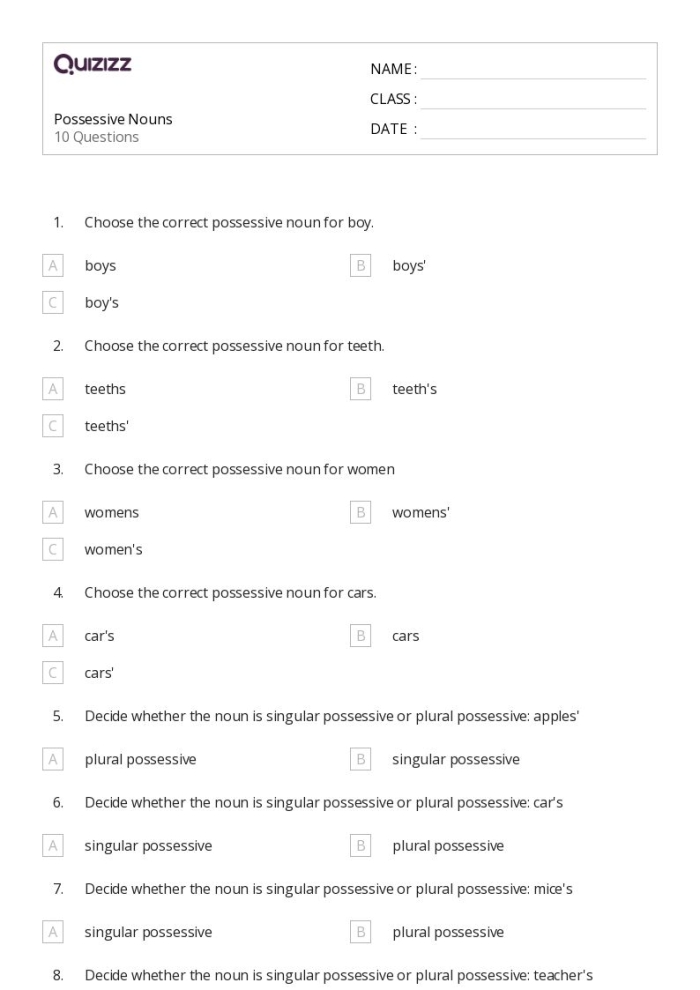
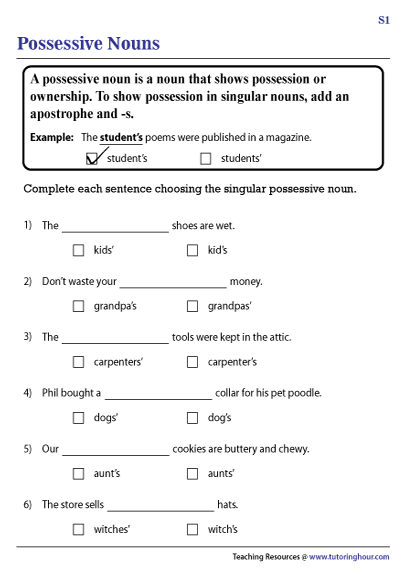
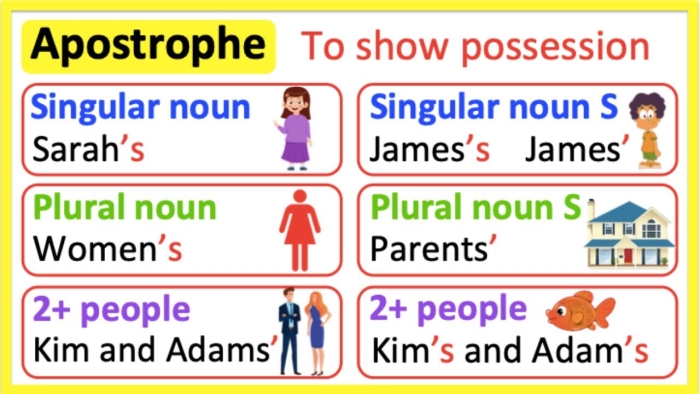
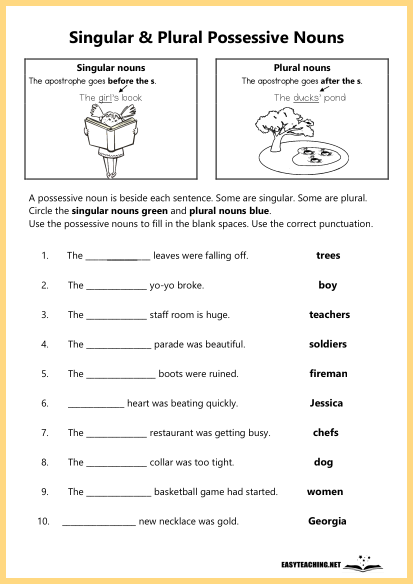
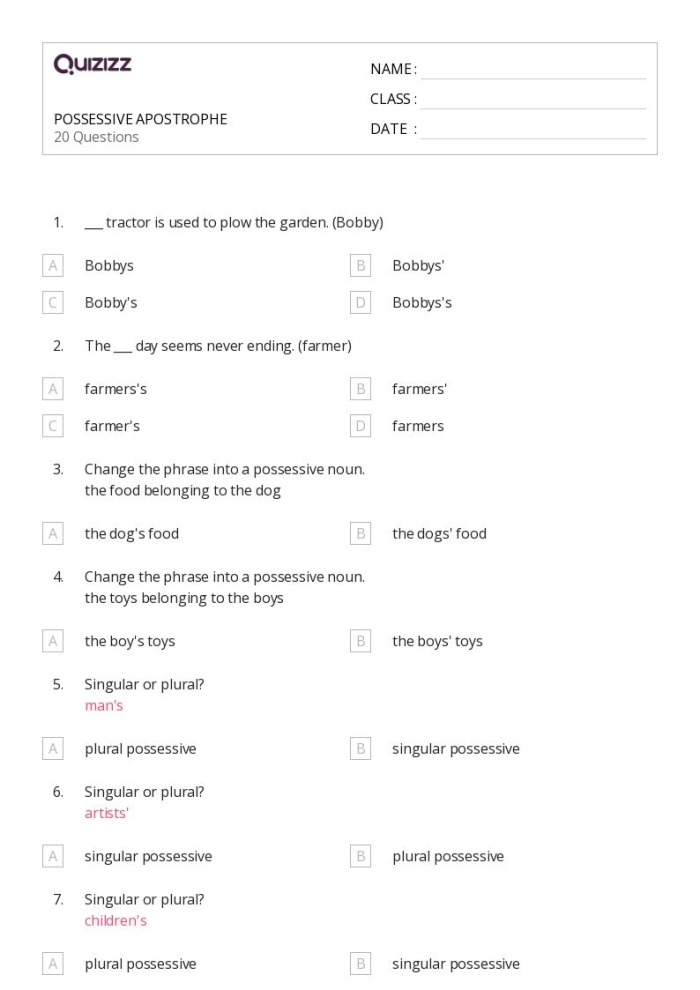
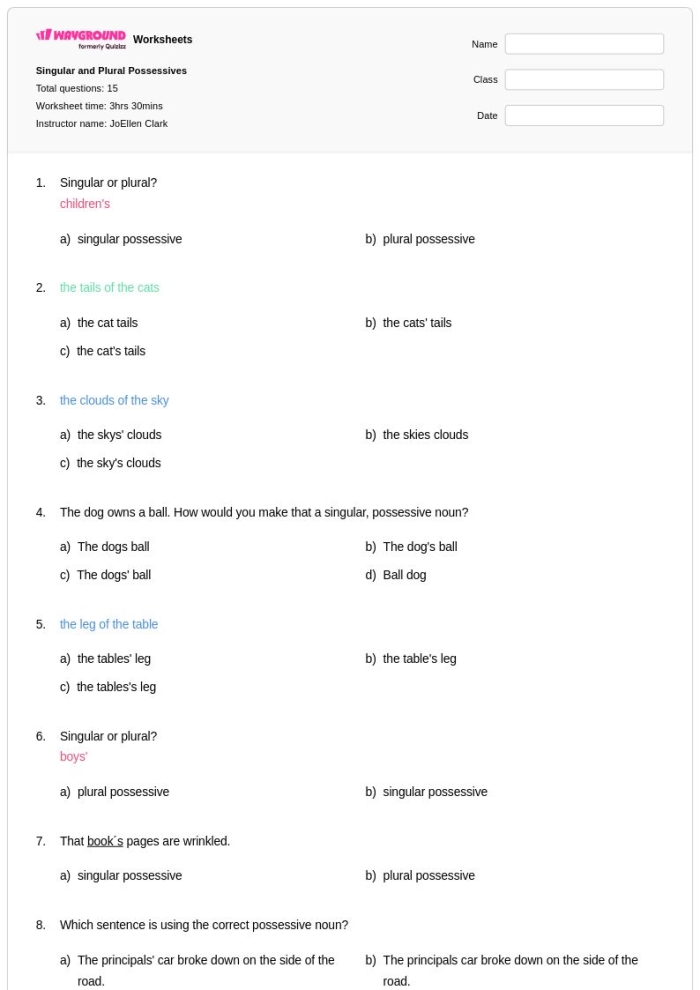
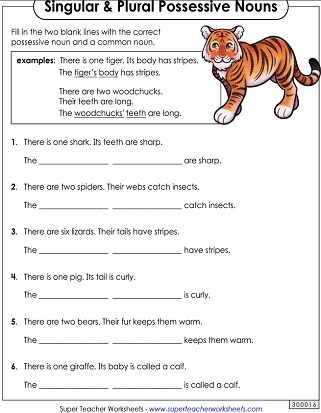
To begin with, a possessive noun shows ownership or a relationship between things. For example, in the phrase “the dog’s leash,” the noun “dog” becomes possessive by adding an apostrophe and an “s.” This indicates that the leash belongs to the dog. In contrast, when dealing with plural nouns that already end in “s,” like “dogs,” the possessive form simply requires an apostrophe at the end: “the dogs’ owner.”
Irregular plural nouns, which do not follow the standard rules, can pose a challenge. For instance, the plural of “child” is “children.” To make “children” possessive, one would write “the children’s toys,” adding an apostrophe and an “s” even though “children” itself is irregular. This worksheet provides clear examples and practice opportunities that will reinforce these rules.
Additionally, incorporating activities into the learning process can enhance understanding. Using this worksheet, students can engage with various sentence structures, allowing them to see possessive nouns in context. This practical application not only aids retention but also builds confidence in their writing skills. By practicing with possessive nouns, students can improve their overall command of grammar, which is crucial for effective communication.
For those looking to explore more resources, worksheets on related topics such as advanced grammar or phonics can provide additional support. Mastering singular and plural possessives is a stepping stone for fourth graders in their language journey, ensuring their writing is clear and precise.
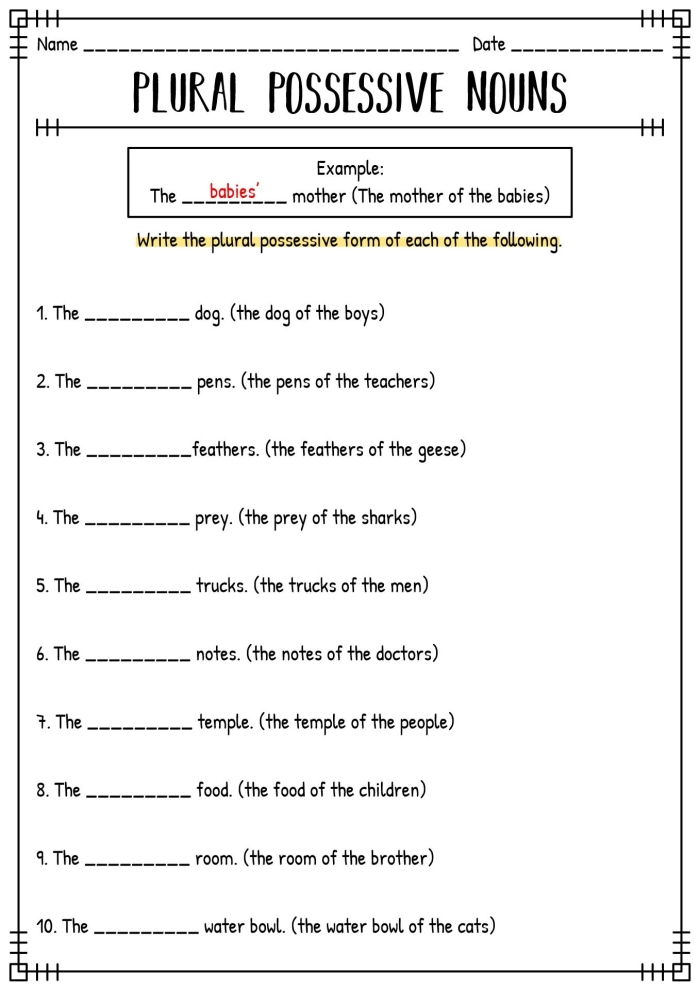
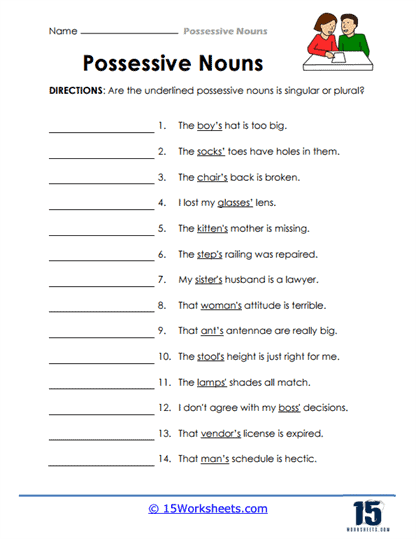
Worksheet Practice Section