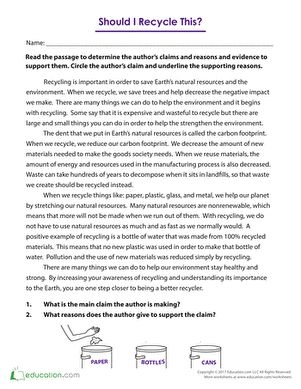
When students encounter informational texts about everyday decisions, they’re learning one of the most practical reading skills available: how to identify what an author actually believes and why. “Should I Recycle This?” presents exactly this kind of real-world scenario, asking fifth graders to examine claims about recycling and trace the evidence supporting them.
The text works as a teaching tool because it mirrors how readers encounter information outside the classroom. An author makes a claim, “this plastic container can be recycled,” and then provides reasons: the number stamped on the bottom, what your local facility accepts, or environmental impact data. Fifth grade students benefit from seeing this structure clearly because it builds critical thinking skills they’ll need for years to come.
What makes this approach effective is that students can immediately test the author’s reasoning. They can look at containers in their own homes, check the recycling symbols, and verify whether the claims hold up. This connection between text and reality sticks with learners far better than abstract examples.
Teachers can strengthen this lesson by pairing the text with targeted activities. For instance, students practicing cause and effect relationships can identify how recycling decisions lead to specific outcomes. Meanwhile, distinguishing factual claims from unsupported statements helps students become more discerning readers. Even math connections emerge naturally when students calculate fractions of materials that get recycled versus those sent to landfills.
The strength of this informational text lies in its accessibility. Fifth graders already handle plastic bottles, paper, and cardboard daily. By examining an author’s claims about something they touch, they develop genuine engagement with evidence-based reasoning rather than viewing reading comprehension as a disconnected school task.
Use These Worksheets Today