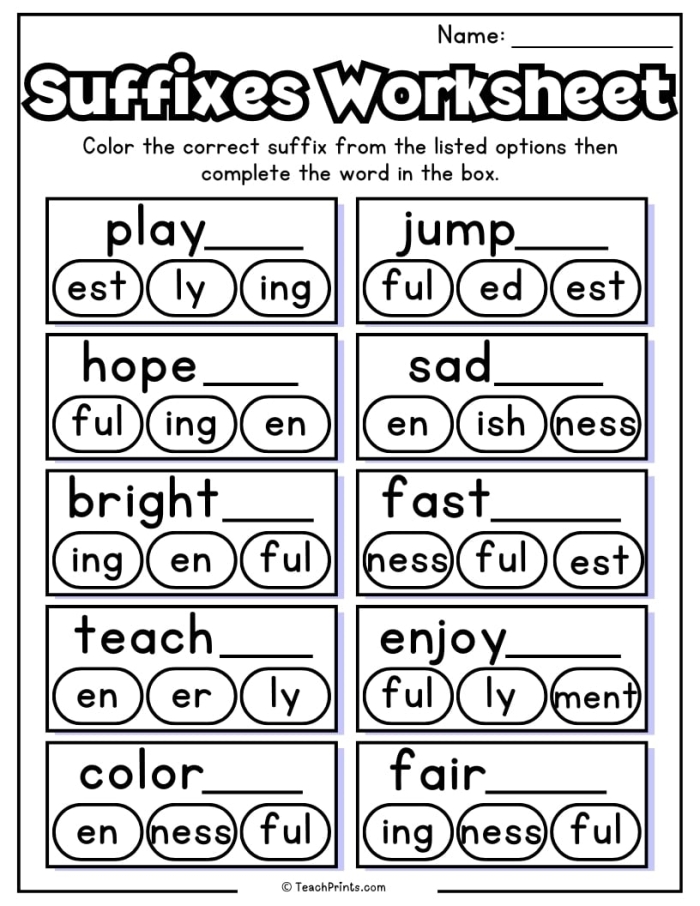
When third graders encounter a word like “happiness,” they’re seeing more than just a random combination of letters. They’re looking at a root word paired with a suffix, a pattern that unlocks hundreds of new words once they understand how it works. Suffix exercises give students the tools to decode unfamiliar words independently, rather than stopping every time they encounter something new.
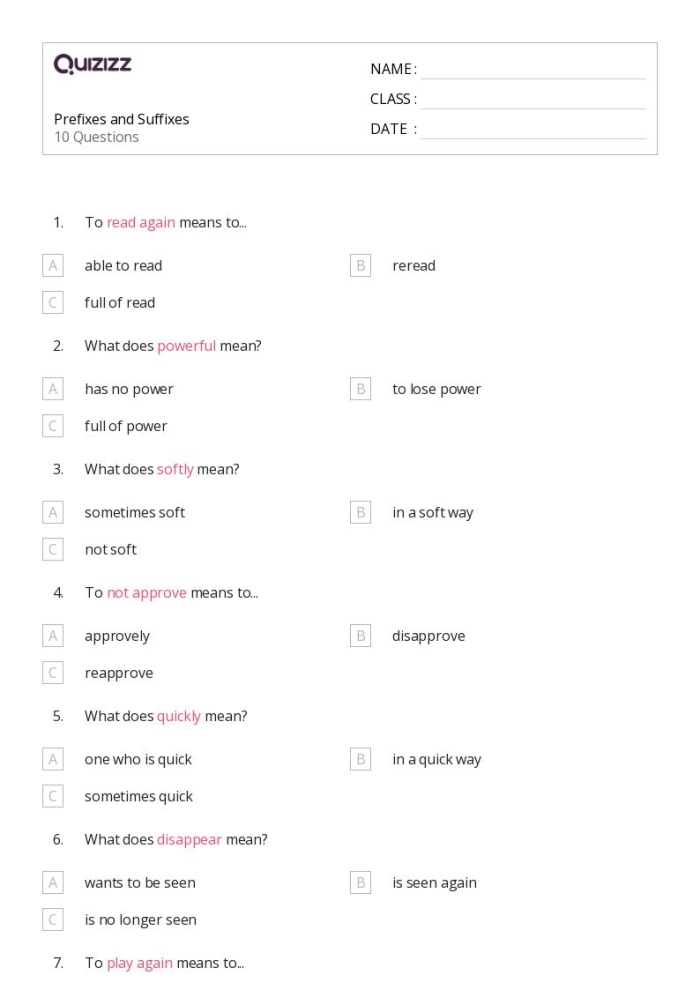
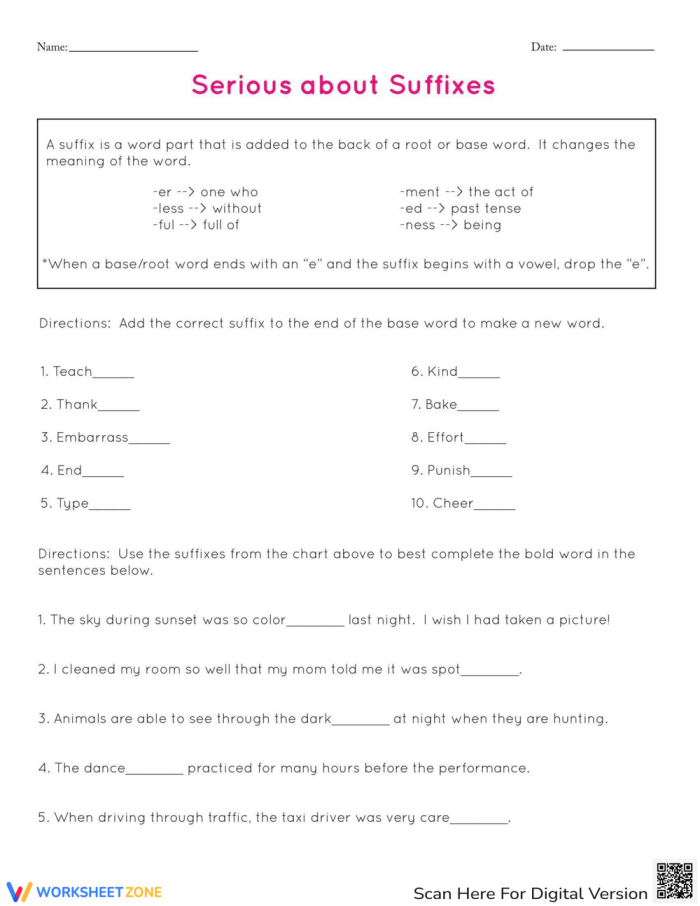
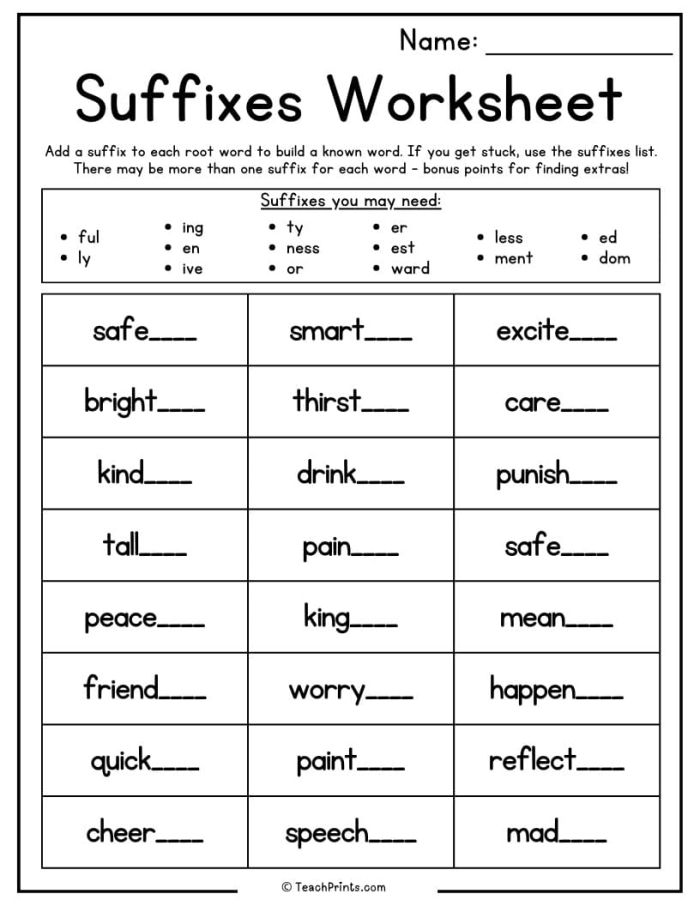
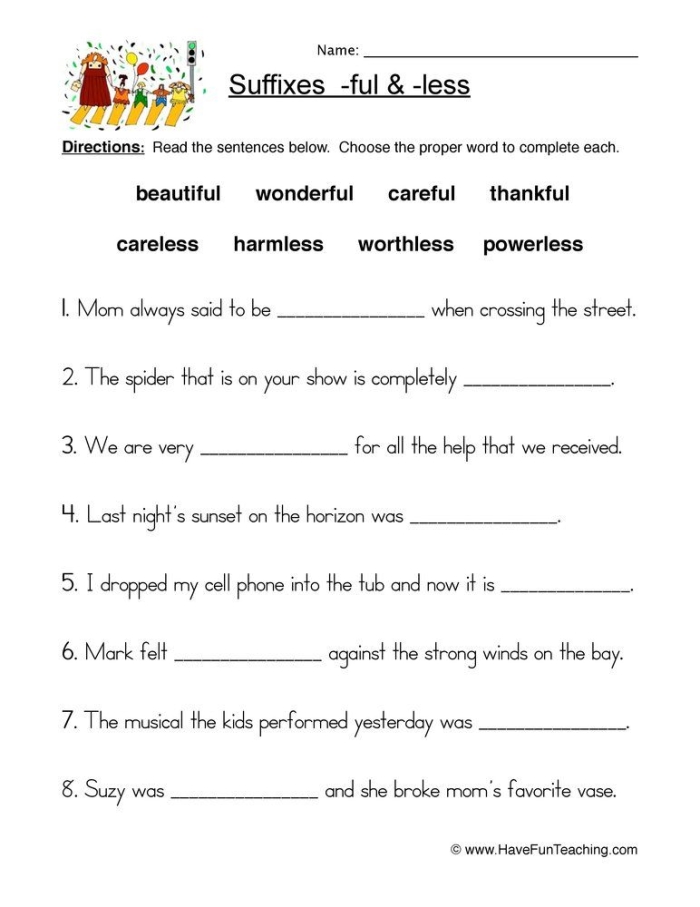
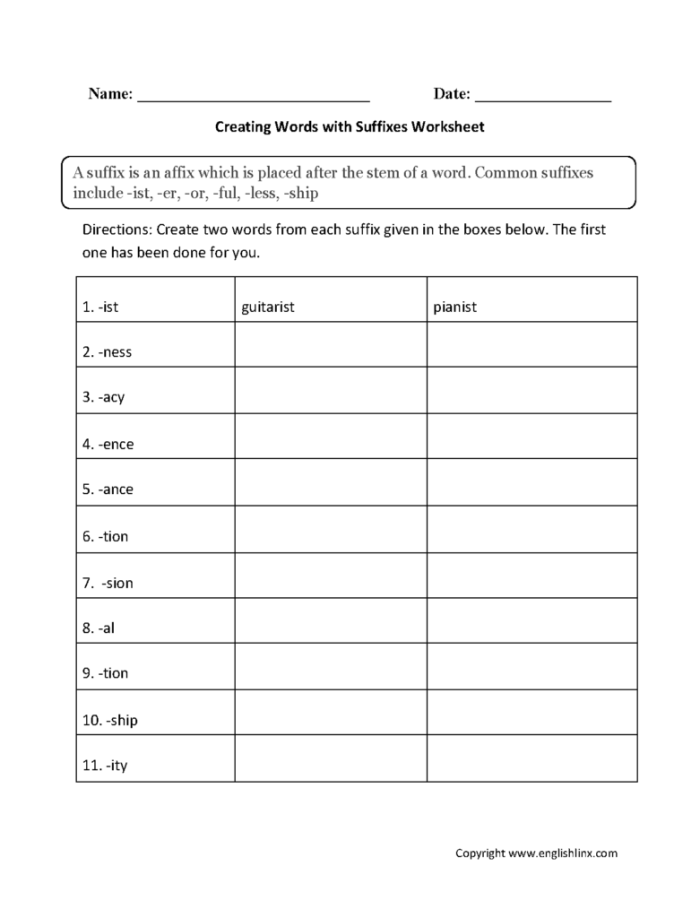
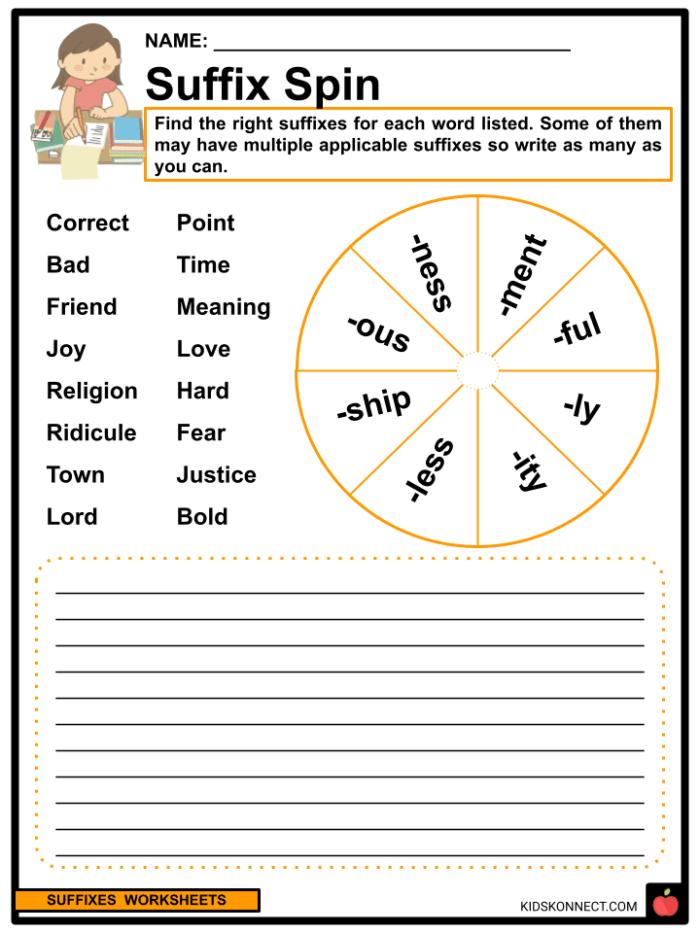
Suffixes are letter combinations added to the end of root words that change meaning or function. Common third grade suffixes include -ful, -less, -tion, -able, and -ment. When students practice with these patterns, they build a mental framework for understanding word families. The word “play” becomes “playful,” “player,” and “playground.” Suddenly, one root word generates multiple possibilities, and students realize they can predict meaning rather than memorize it.
This kind of practice develops what educators call morphological awareness, the ability to recognize and use word parts. Research shows that students with strong morphological skills read more fluently and comprehend texts better. They also become more confident writers because they can form new words to express their ideas more precisely.
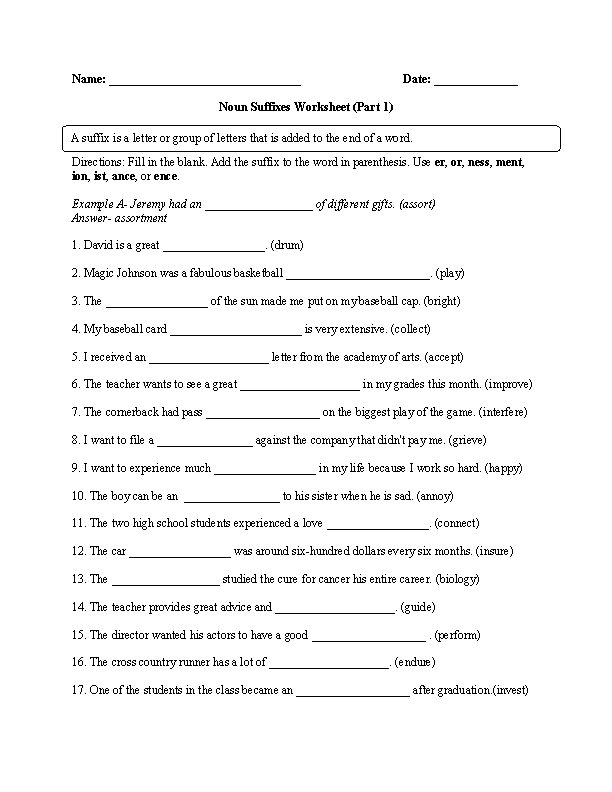
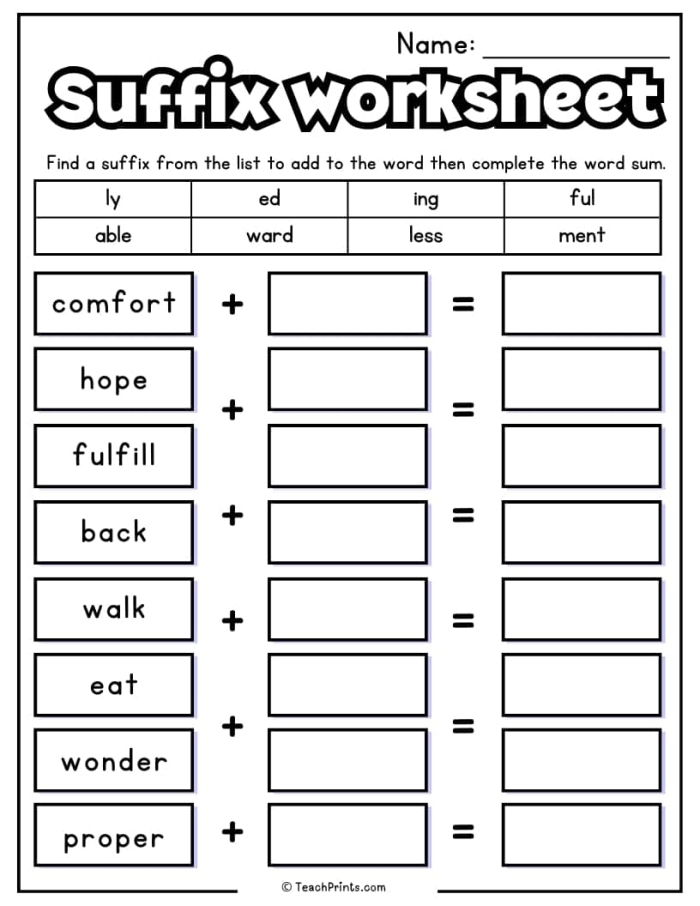
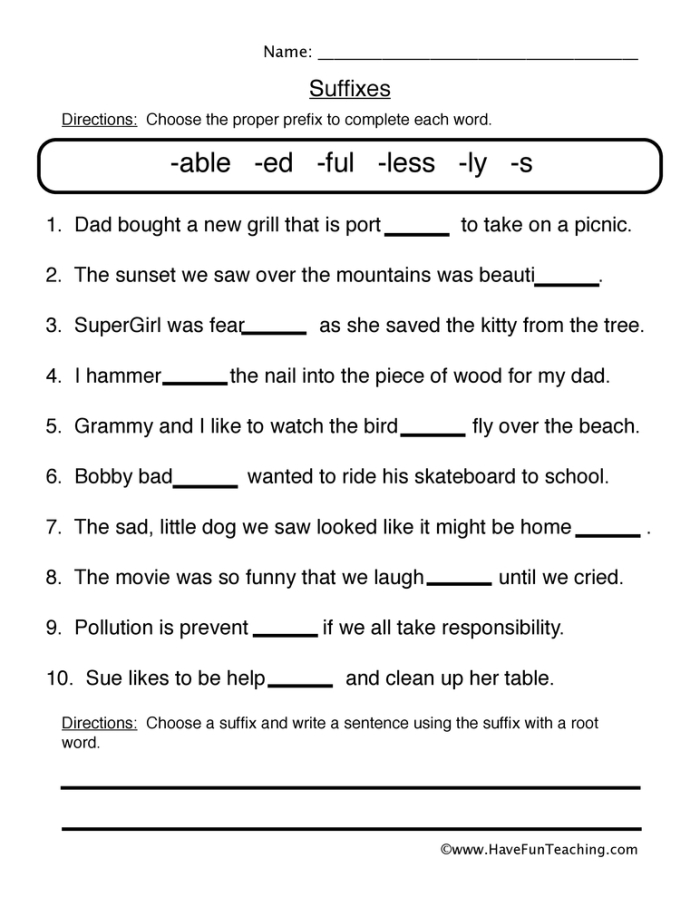
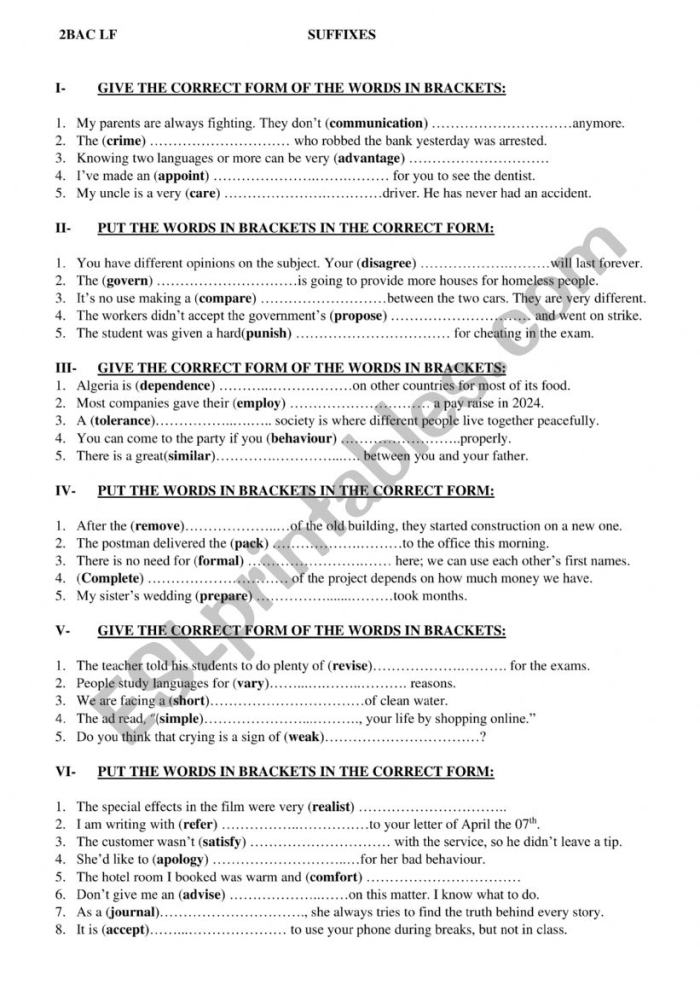
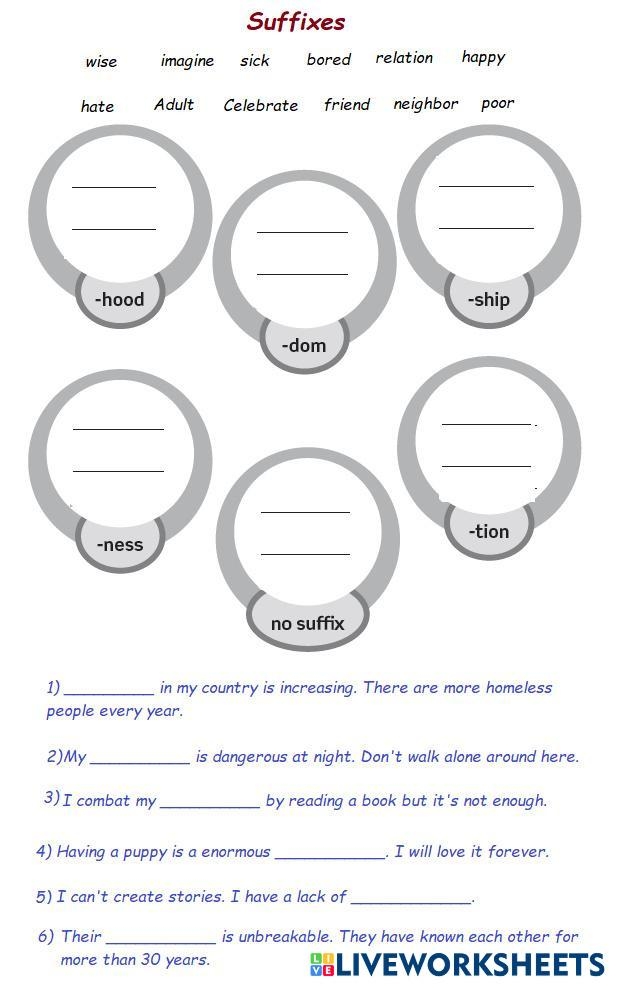
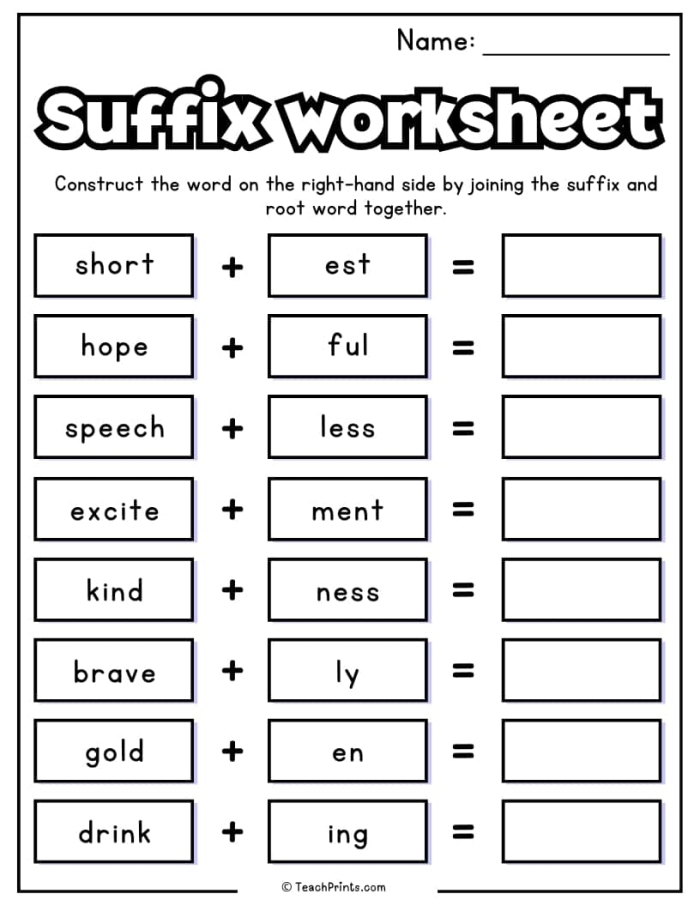
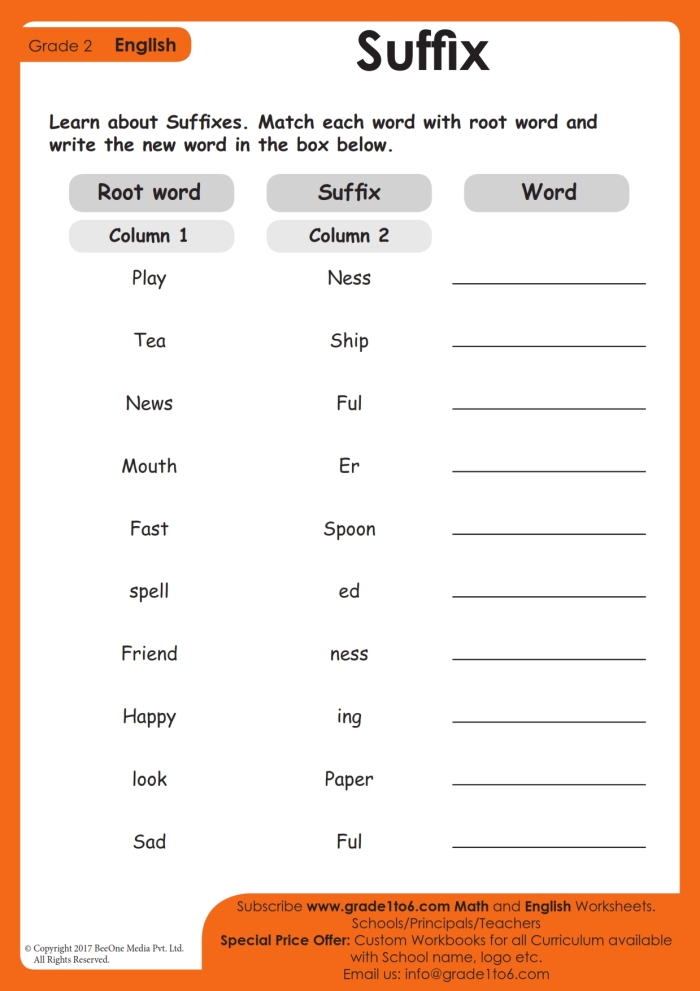
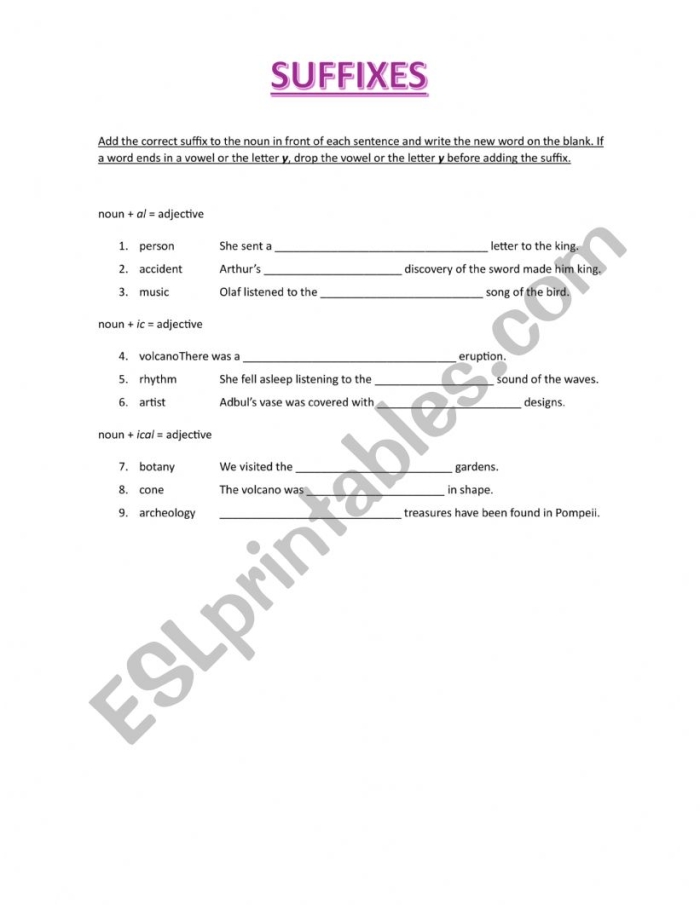
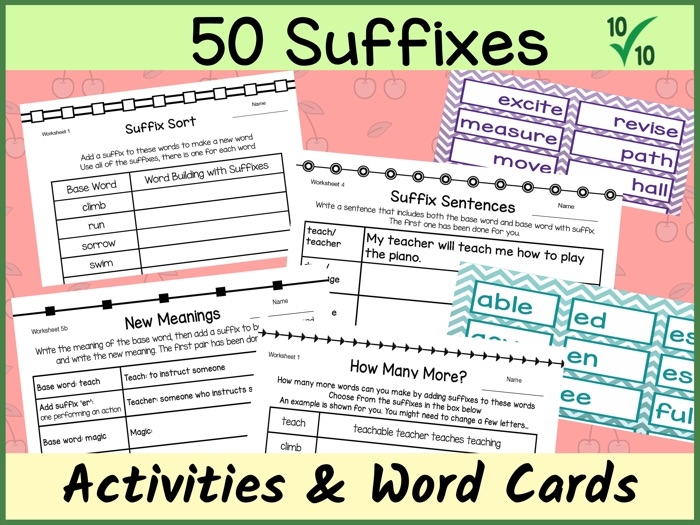
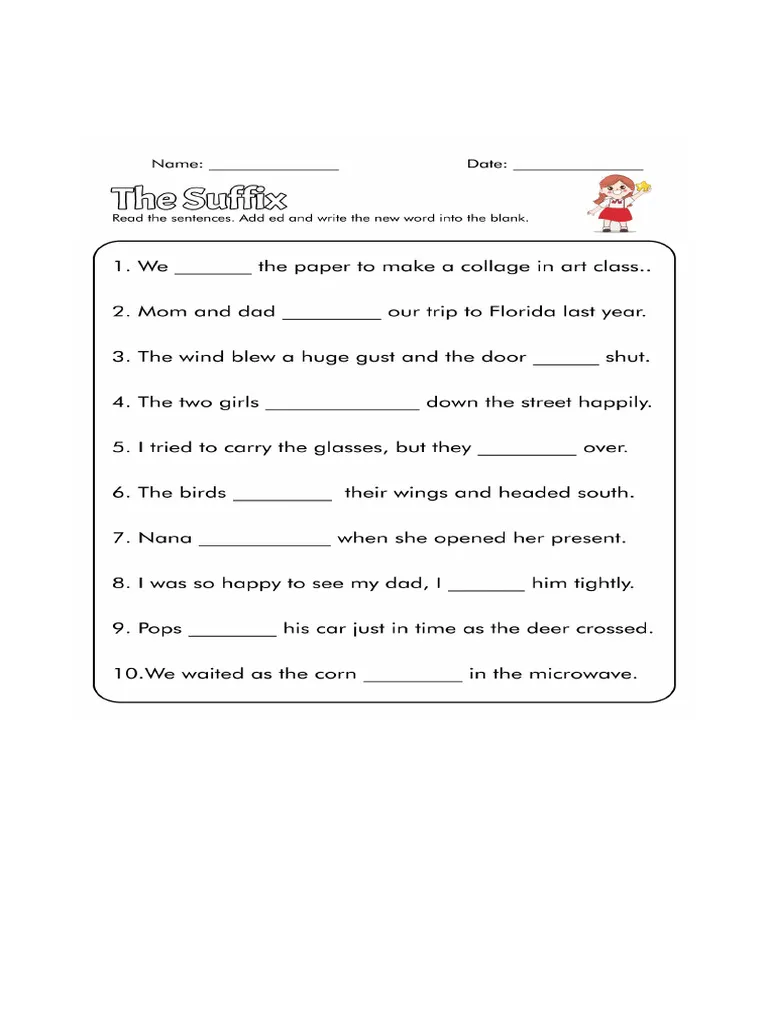
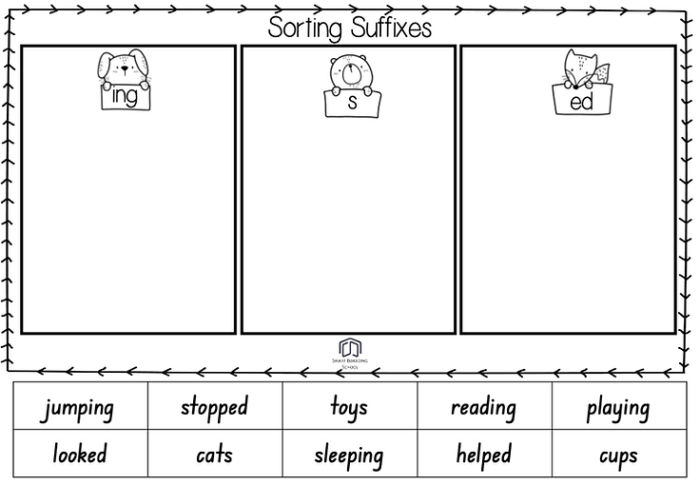
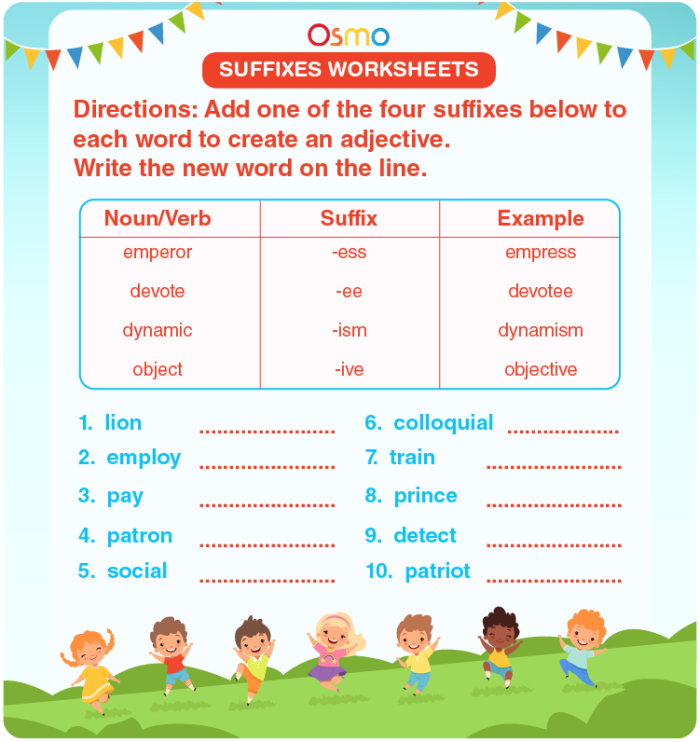
A well-designed suffix exercise works best when it combines pattern recognition with meaningful application. Students might sort words by their suffixes, match root words to correct suffixes, or write sentences using newly formed words. When practicing capitalization, punctuation, and spelling, students also reinforce how suffixes affect word structure.
The beauty of suffix practice is that it transfers directly to reading. When a third grader encounters “colorless” or “hopeful” in a story like Casey at the Bat, they don’t need to stop and ask for help. They already know the pattern. This independence builds reading fluency and confidence that carries into all academic areas.
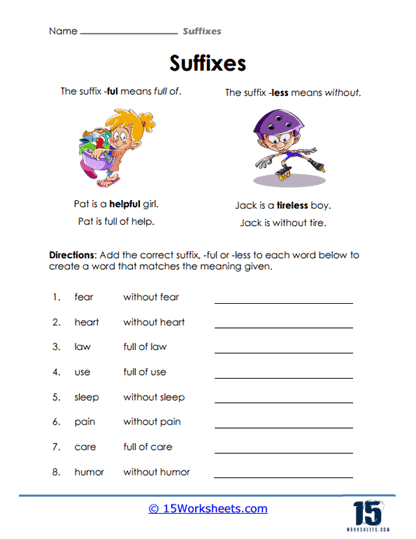
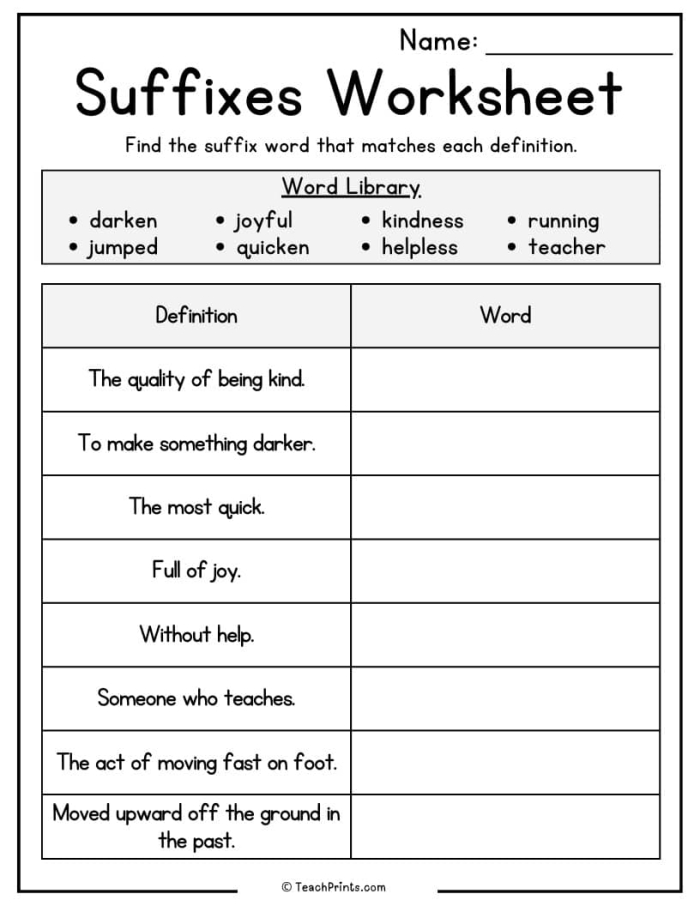
Download These Worksheets for Practice