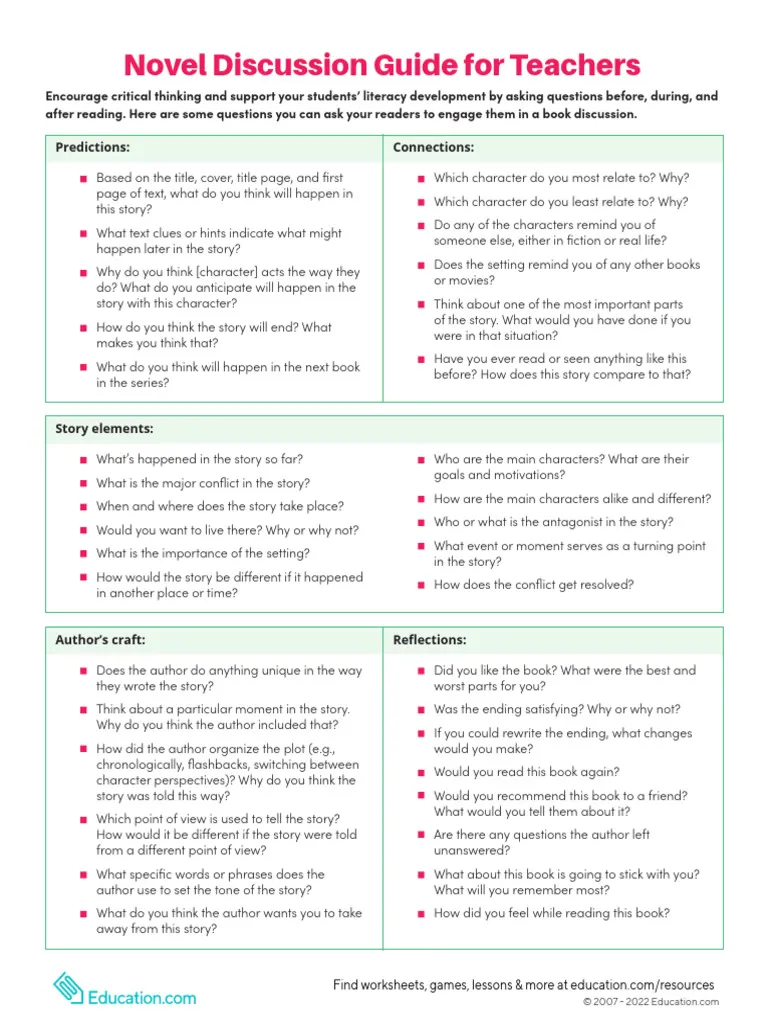
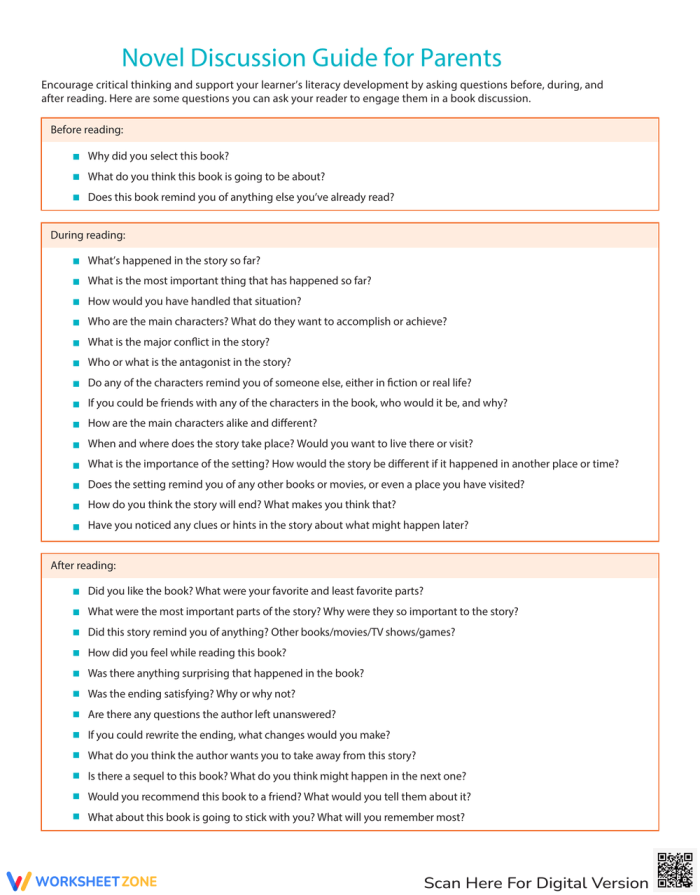
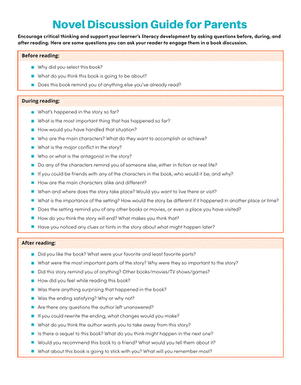
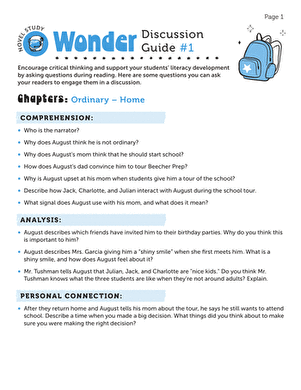
The moment students open a book, their brains should be working, not just their eyes. A well-designed novel discussion guide creates space for this thinking to happen by structuring questions around three distinct moments: before students crack the spine, while they’re reading, and after they’ve finished. This approach transforms reading from a passive activity into an active conversation between reader and text.
Pre-reading questions activate what students already know and set expectations for the story ahead. When sixth graders encounter a novel like The Lightning Thief pre-reading activity, initial questions help them connect personal experiences to the narrative they’re about to enter. This groundwork matters because students who engage with a text before reading comprehend it more deeply.
Questions during reading keep students accountable while maintaining momentum. Rather than waiting until the final page, students pause at key moments to reflect on character motivations, plot developments, or confusing passages. These checkpoints prevent students from drifting through chapters without understanding what’s happening. For sixth grade readers still building stamina, these built-in stopping points feel natural rather than burdensome.
Post-reading questions push beyond simple recall. Instead of asking “What happened?” ask “Why did the character make that choice?” or “How would you have handled this situation differently?” This is where critical thinking truly develops. Students synthesize information, evaluate evidence, and form opinions grounded in the text itself.
A printable novel discussion guide for teachers works best when questions build on each other across these three phases. The structure mirrors how strong readers naturally engage with books: they predict, they monitor their understanding, and they reflect. By providing this framework, you’re essentially teaching sixth graders the thinking habits that skilled readers use automatically.
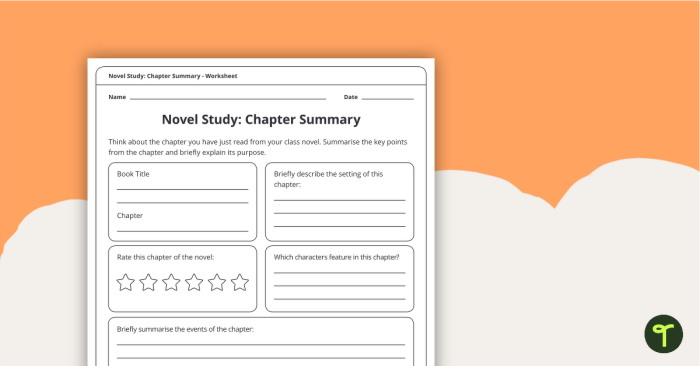
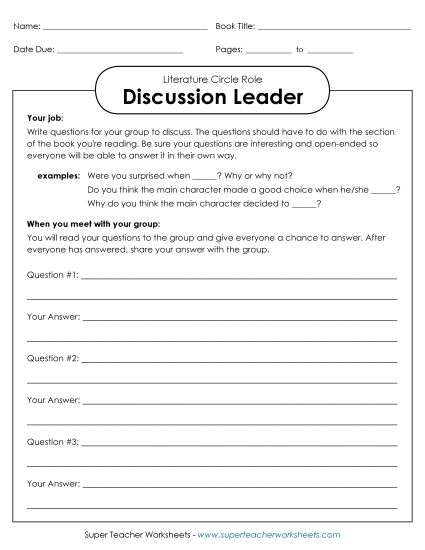
Hands-On Worksheet Activities