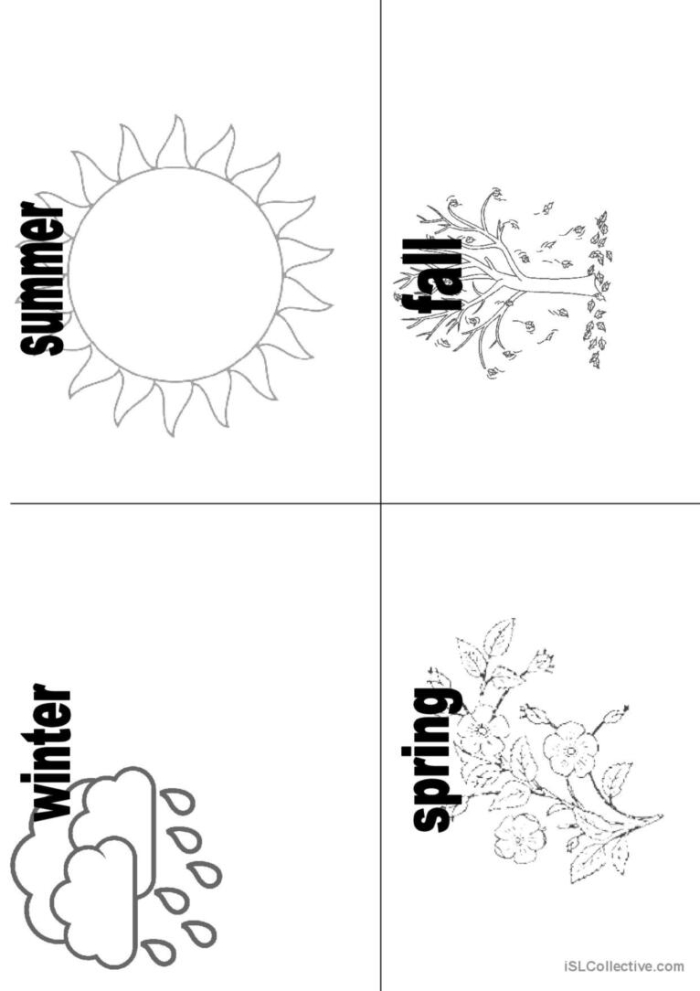
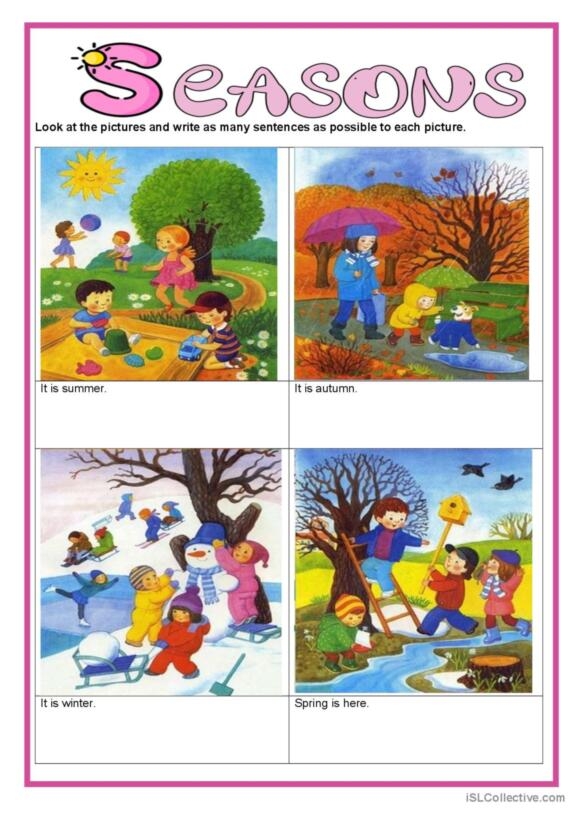
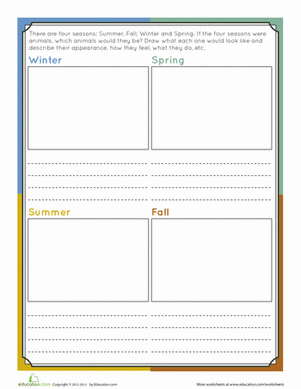
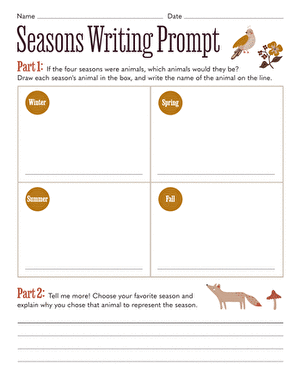
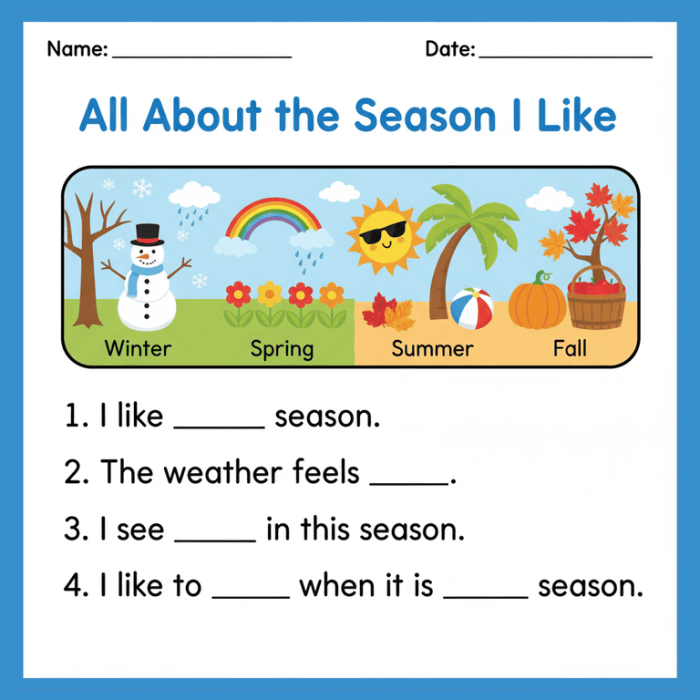
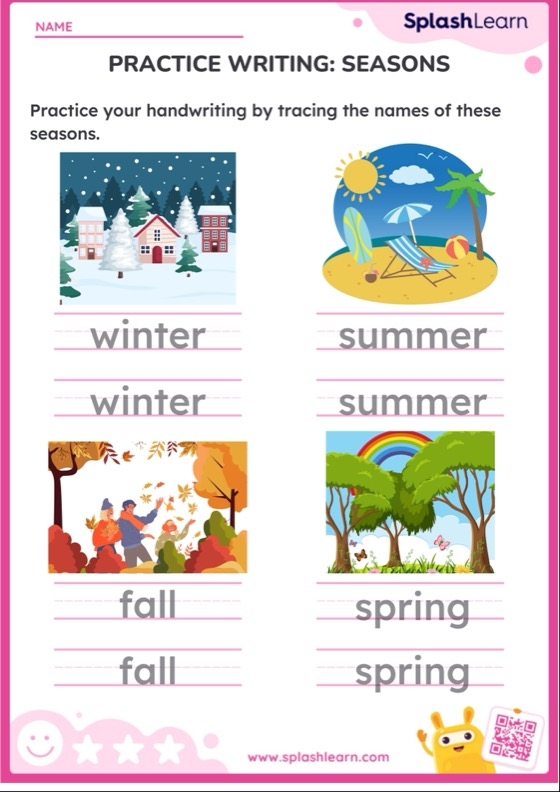
This nonfiction writing worksheet gets third graders thinking about how animals adapt to different times of year. Students pick one animal for each season, sketch it, and then write a short paragraph about one of their choices. The exercise combines observation skills with descriptive writing in a way that feels natural rather than forced.
The structure works well for this age group because it breaks the writing task into manageable pieces. Drawing comes first, which gives students a concrete reference point before they start writing. When kids have a visual they created themselves, the words flow more easily. They’re not staring at a blank page trying to imagine an animal from scratch. Instead, they’re describing something they’ve already thought through and illustrated.
Third graders benefit from this kind of scaffolded approach, especially when learning to recognize patterns in nature. They start noticing that certain animals appear during specific seasons because of food availability, temperature changes, or migration patterns. A child might choose robins for spring, squirrels for fall, or bears for winter. Each choice opens up a conversation about why that animal makes sense for that particular time of year.
The phonics component becomes natural here too. As students write their paragraphs, they encounter seasonal vocabulary words like hibernation, migration, and adaptation. Working through these words reinforces letter patterns and word structure that third graders are actively learning. When you’re writing about something you care about, the phonics instruction doesn’t feel like a separate lesson.
This worksheet also pairs well with other learning activities. You might combine it with word pattern matching exercises to strengthen vocabulary recognition, or use it alongside animal-themed coordinate plane activities to expand into other subjects. The seasonal animal focus gives students multiple entry points for learning across different skill areas.
Printable Worksheets for Practice