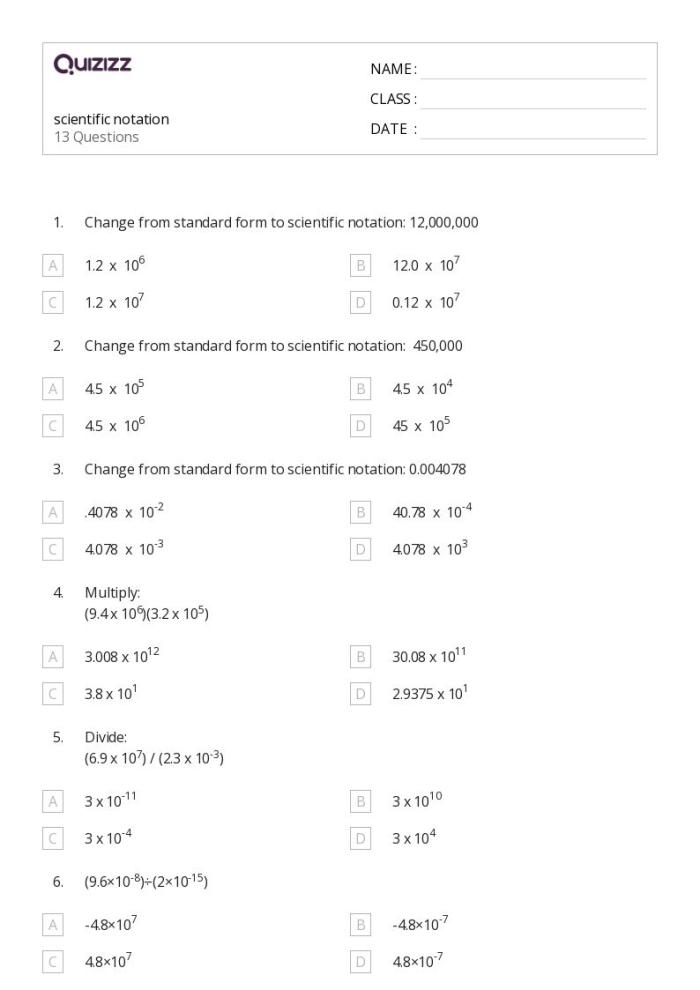
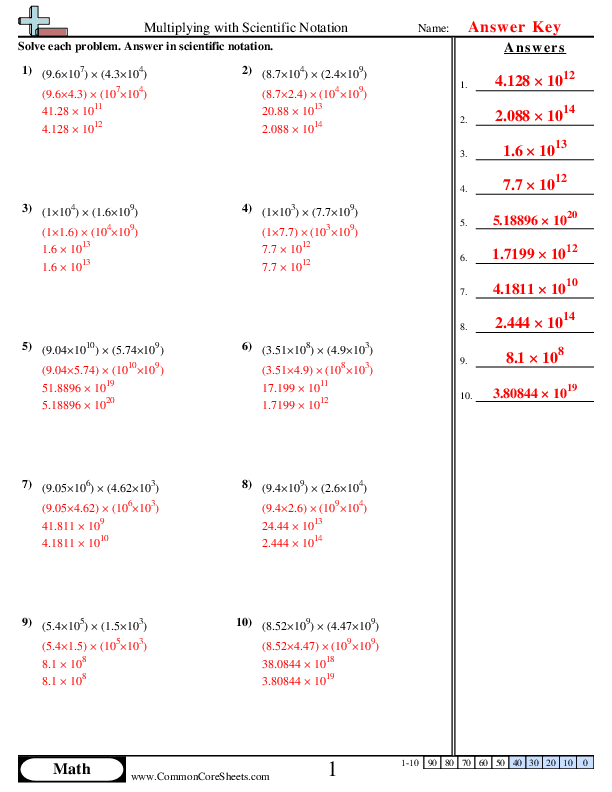
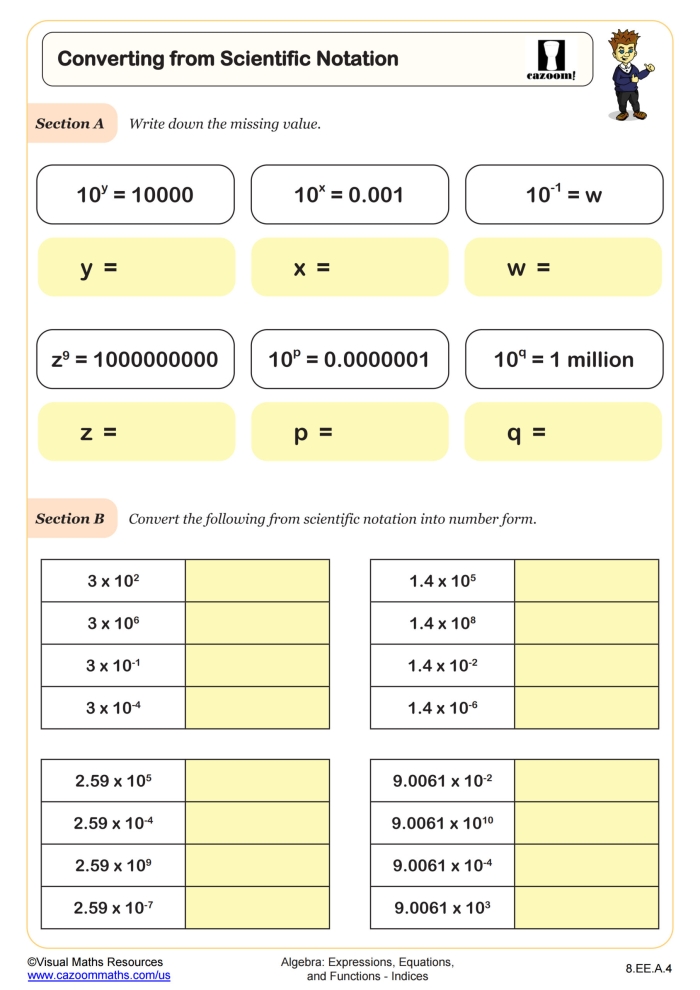
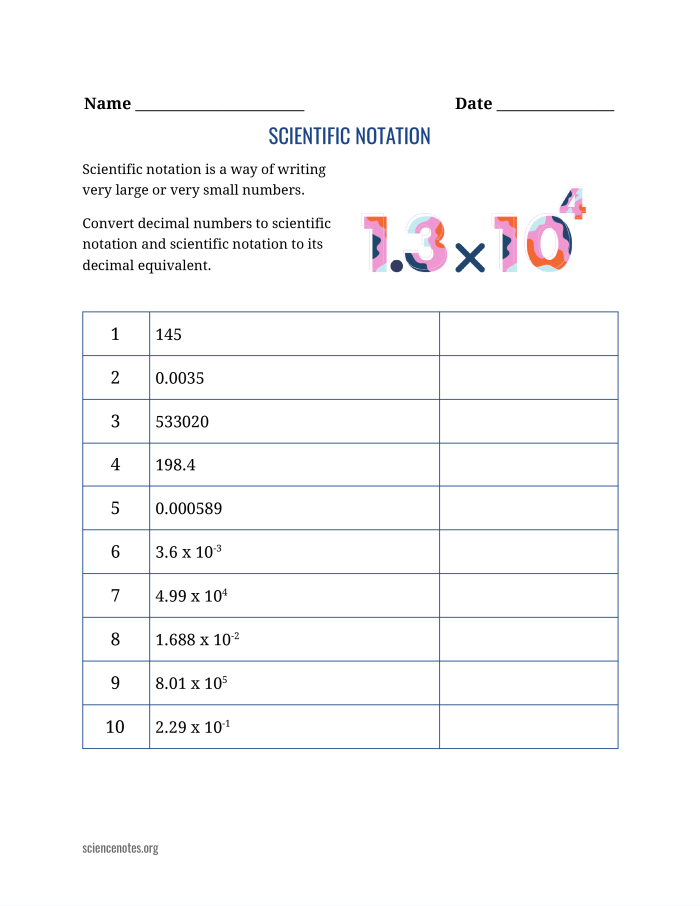
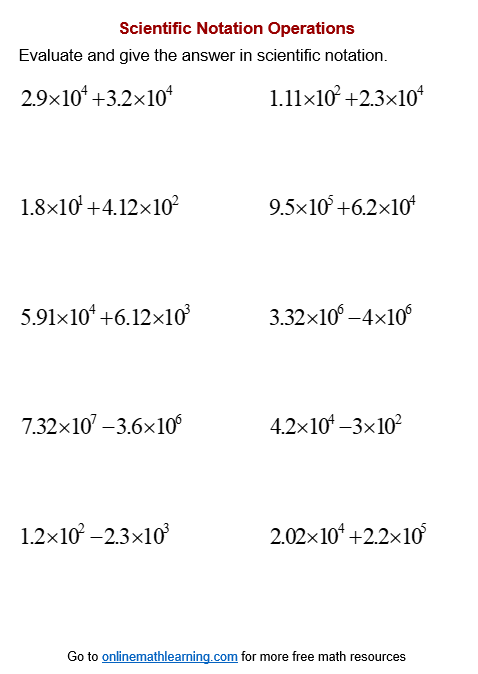
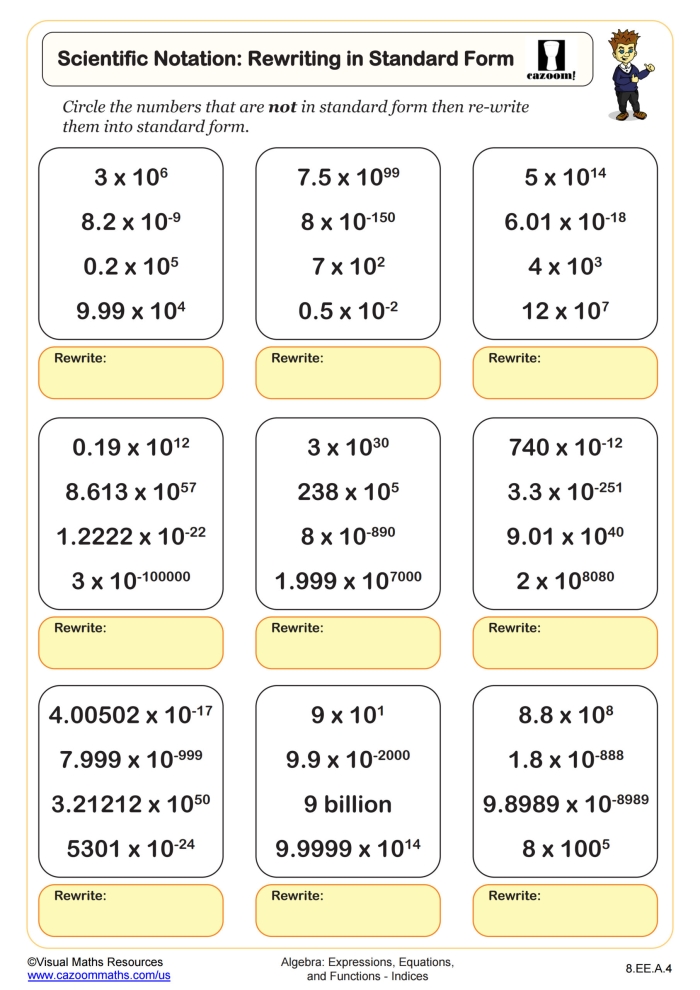
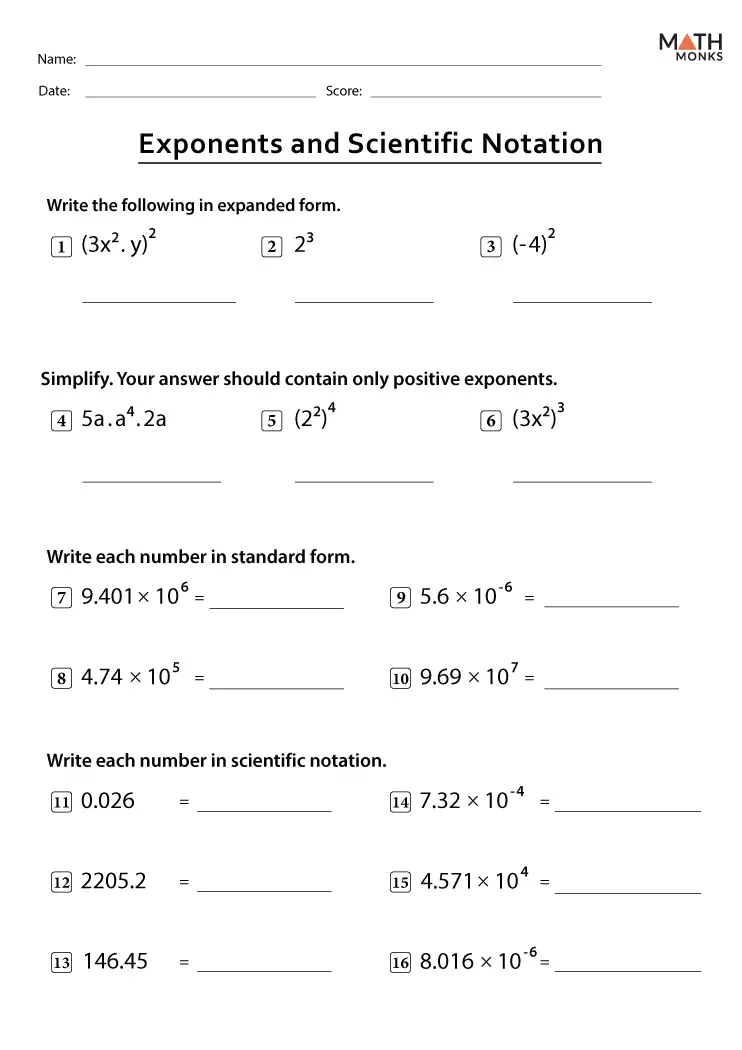
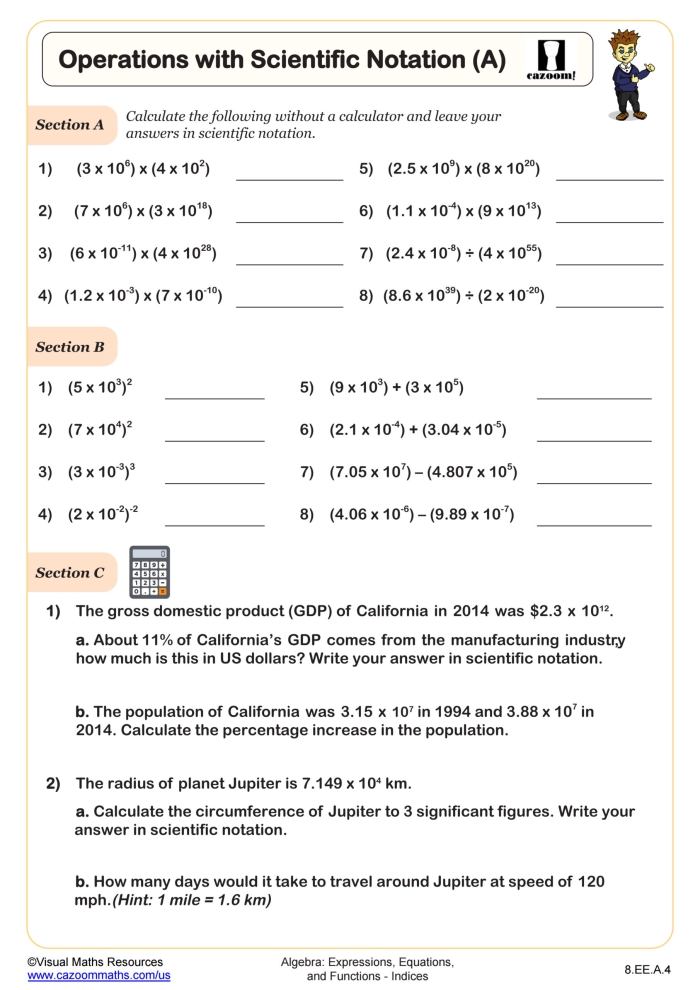
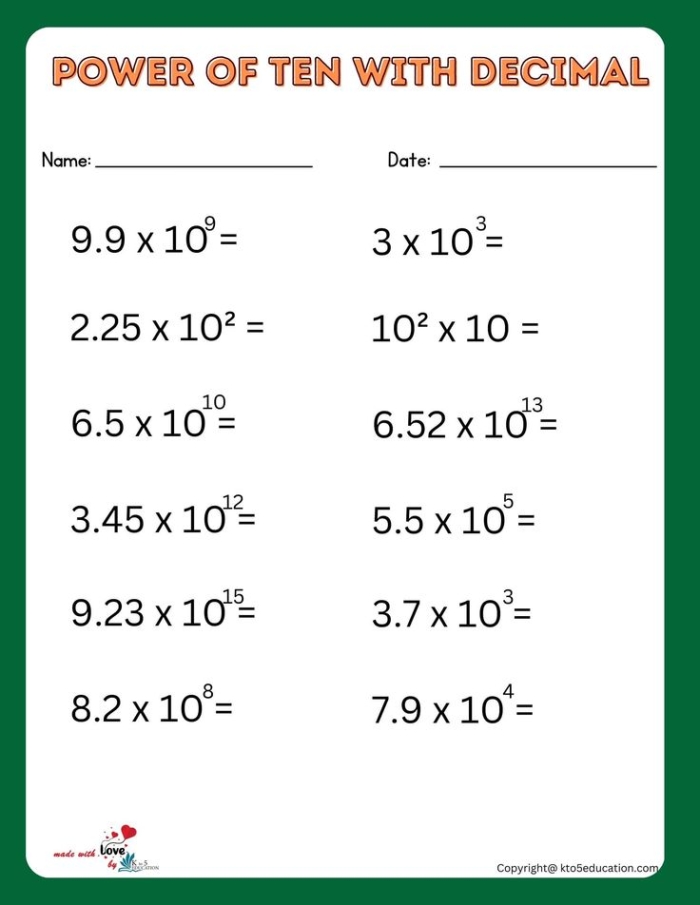
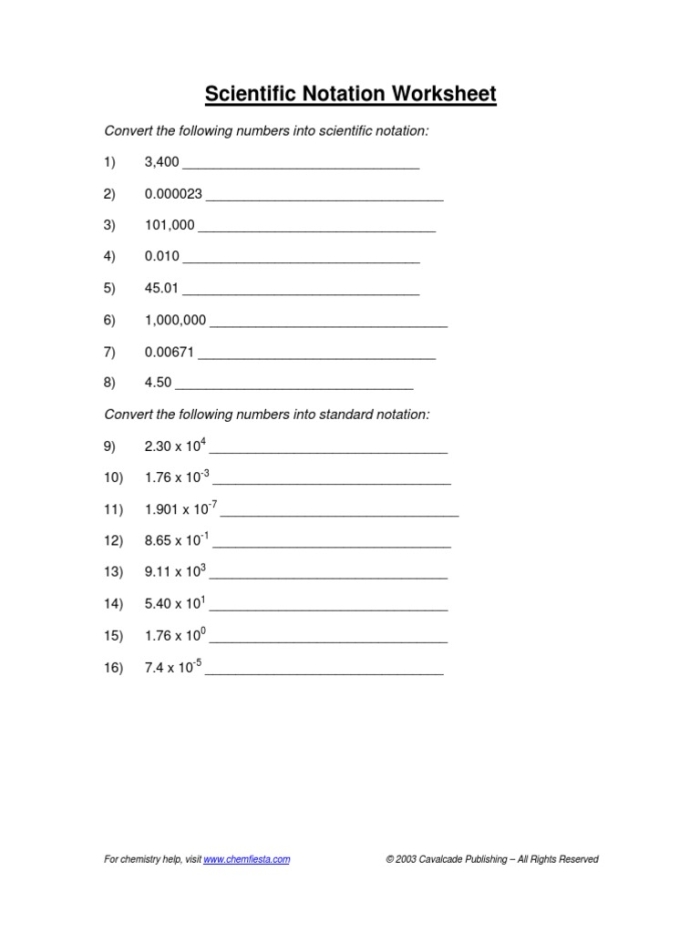
Understanding scientific notation is essential for eighth-grade students, especially when exploring subjects that require precise calculations, such as history and science. This mathematical shorthand allows for easier handling of very large or very small numbers, making it a crucial skill in various academic contexts.
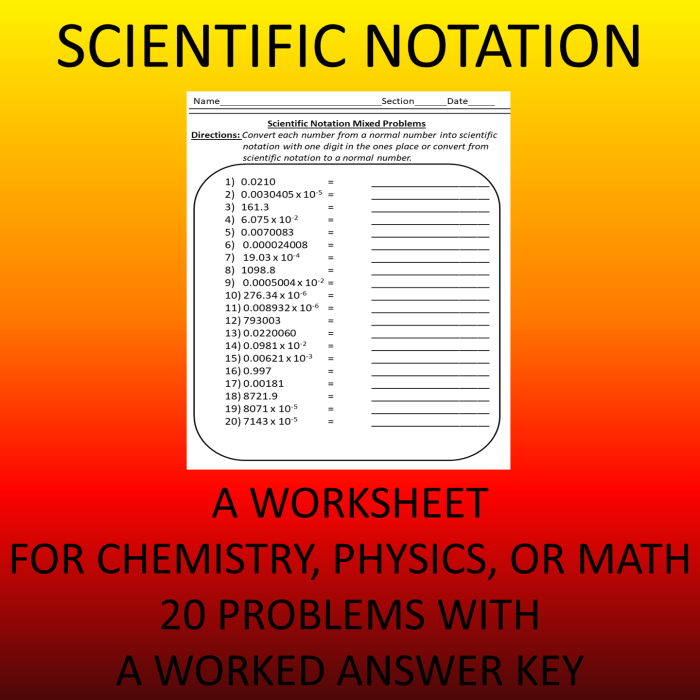
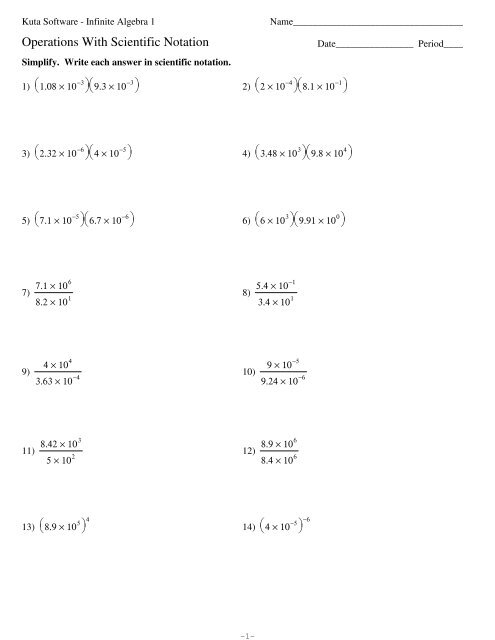
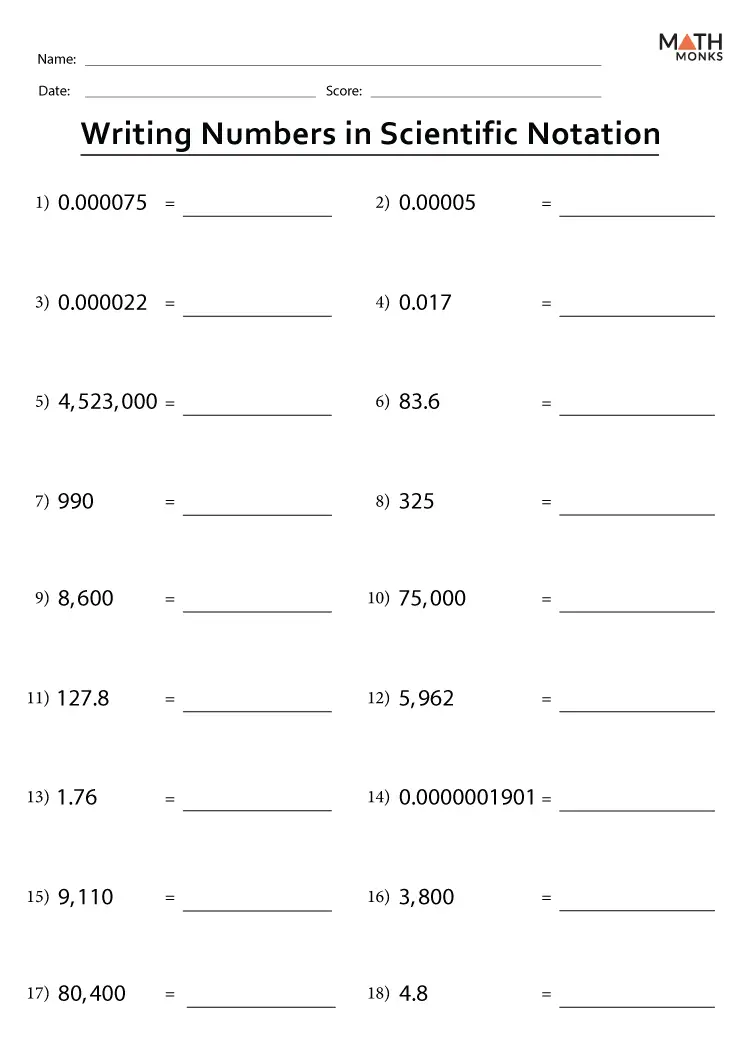
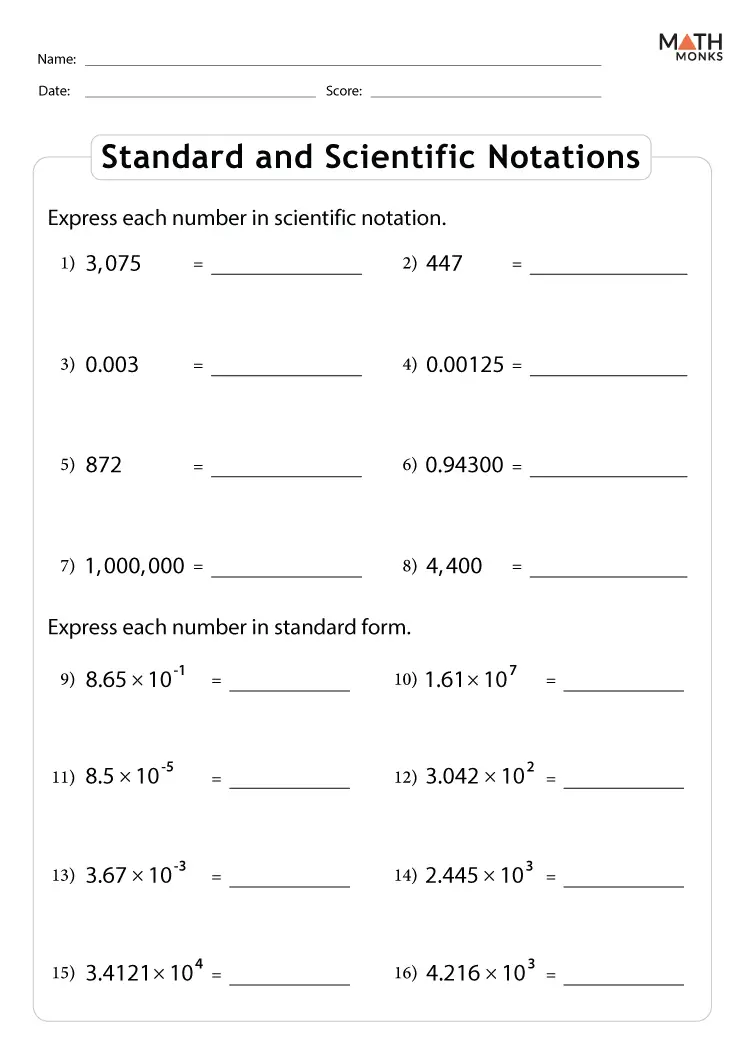
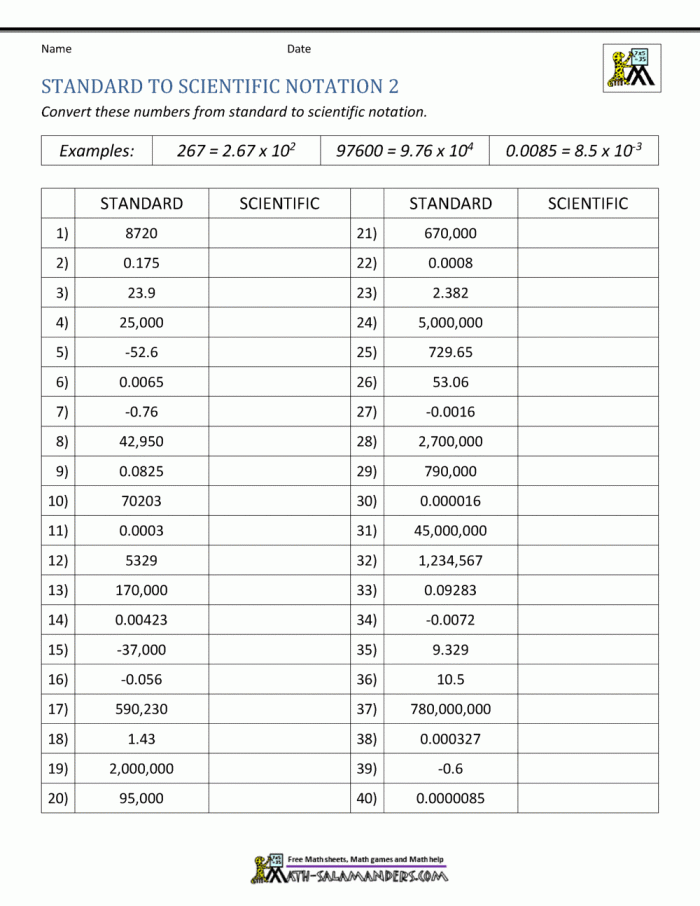
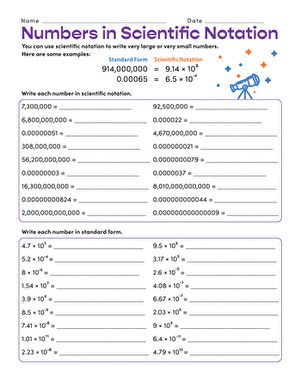
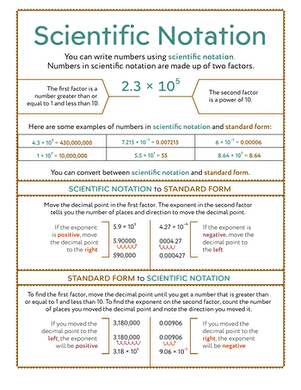
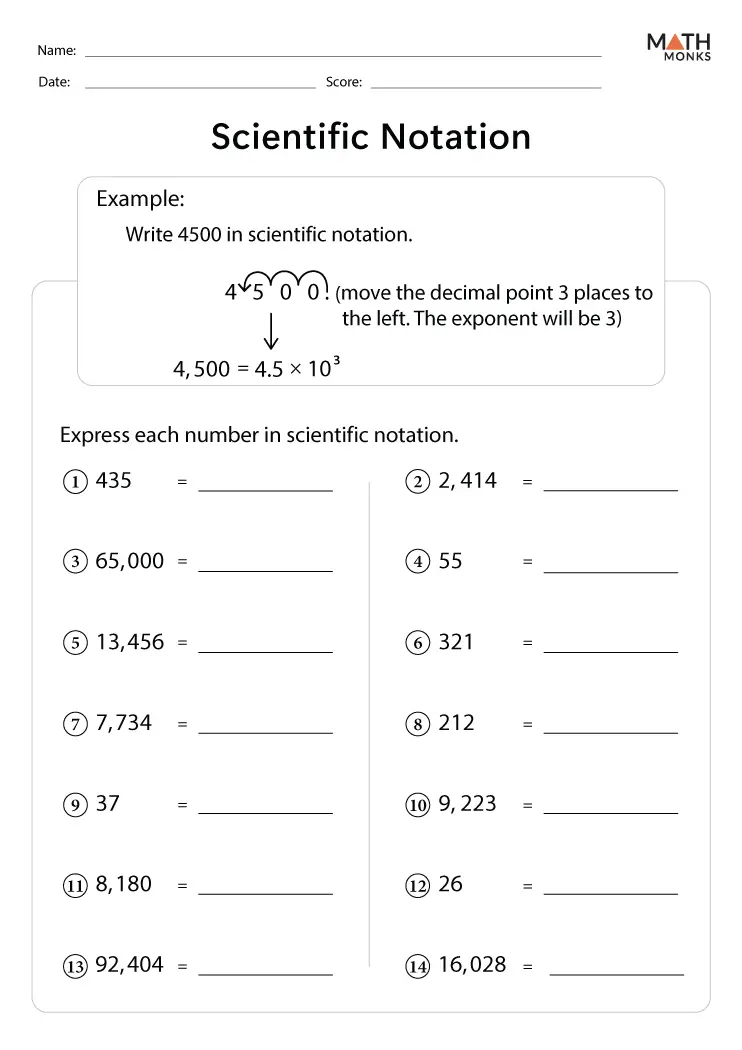
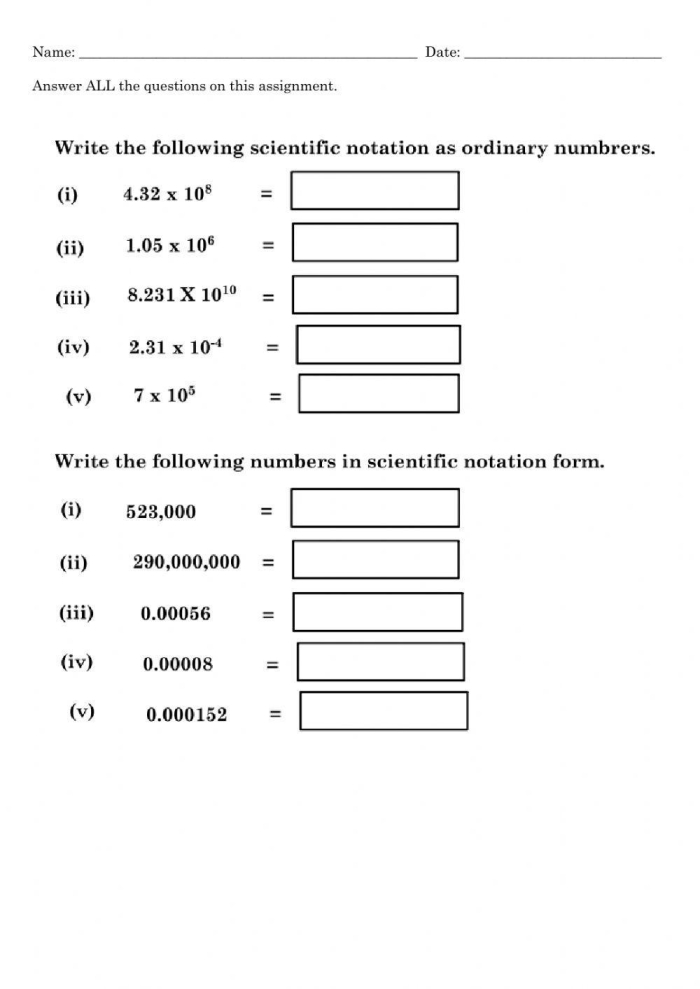
To help students become familiar with scientific notation and its applications, a printable scientific notation handout can be an invaluable resource. This handout breaks down the concept into manageable parts, providing clear definitions and examples. Students learn that scientific notation expresses numbers as a product of a number between 1 and 10 and a power of ten. For instance, the number 5,000 can be written as 5 x 10³.
Moreover, converting between scientific notation and standard form is a key skill that students will need to master. The handout typically includes step-by-step instructions and practice problems that reinforce learning. For example, converting 3.2 x 10⁴ back to standard form involves moving the decimal point four places to the right, resulting in 32,000. This kind of practice is crucial for building confidence and accuracy in calculations.
Using resources like this scientific notation handout not only aids comprehension but also prepares students for higher-level math and science courses. By engaging with the material through hands-on practice, students can better appreciate the importance of these concepts in real-world applications. As they explore historical data—like population trends or astronomical distances—having a solid grasp of scientific notation will enhance their analytical skills.
For additional resources, consider checking out worksheets on related topics, such as subtraction within 20 or comparing texts. These tools can complement the scientific notation handout, providing a well-rounded approach to learning in eighth grade.
Try These Printable Worksheets