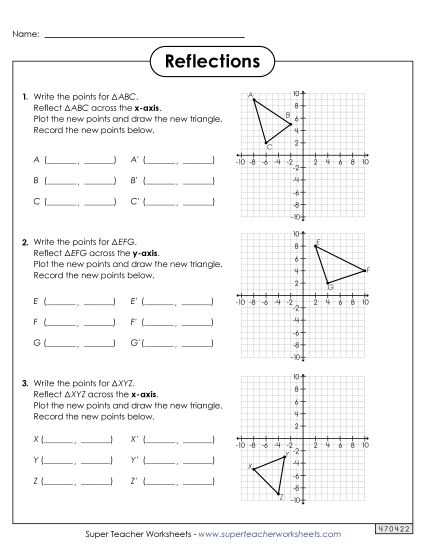
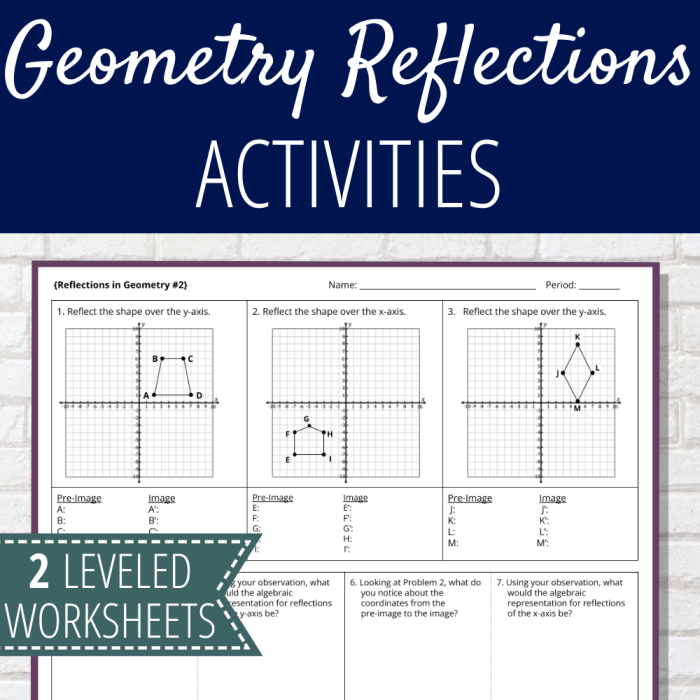
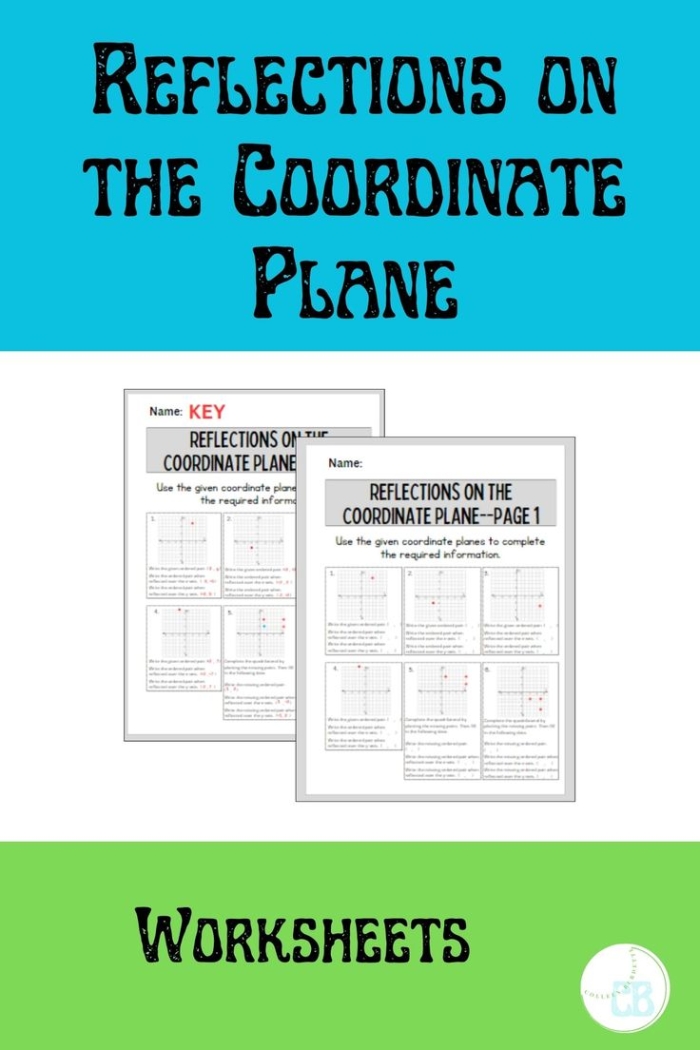
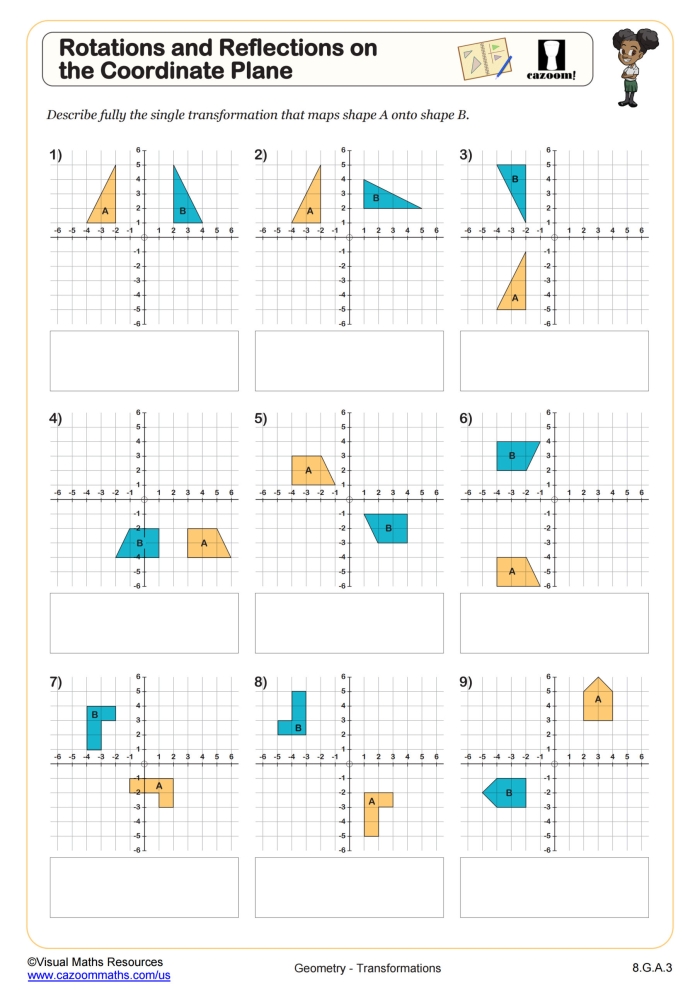
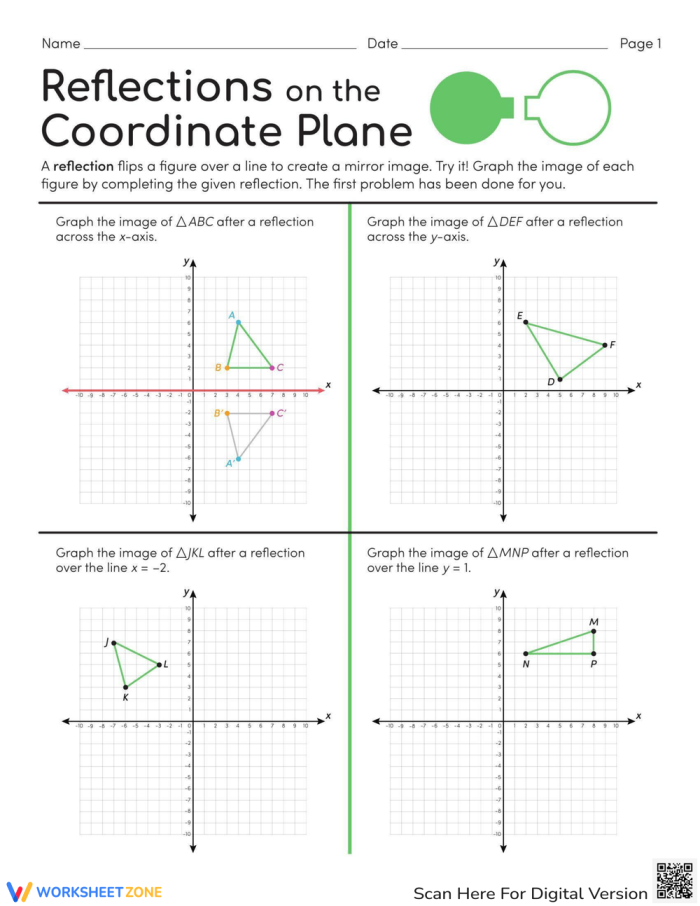
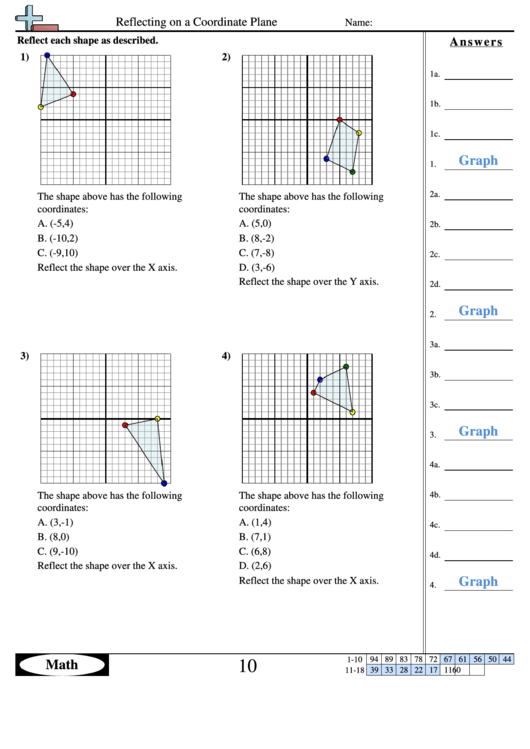
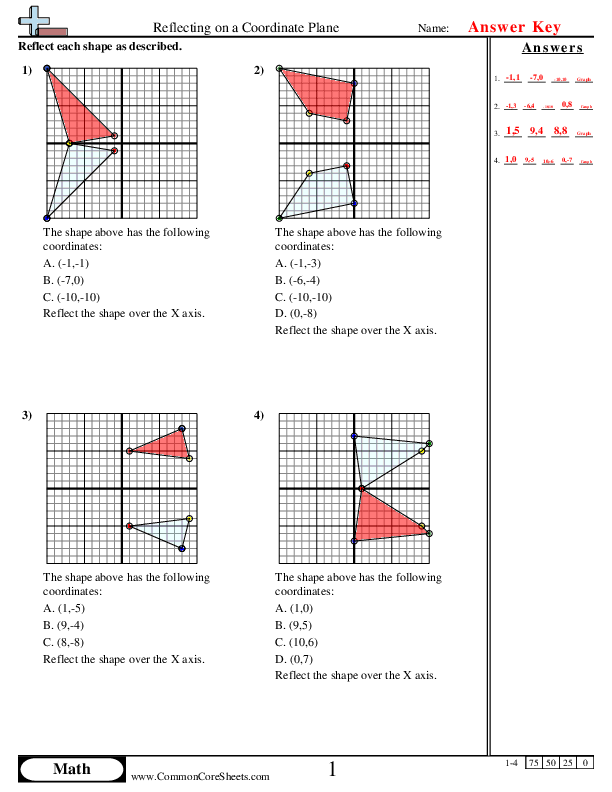
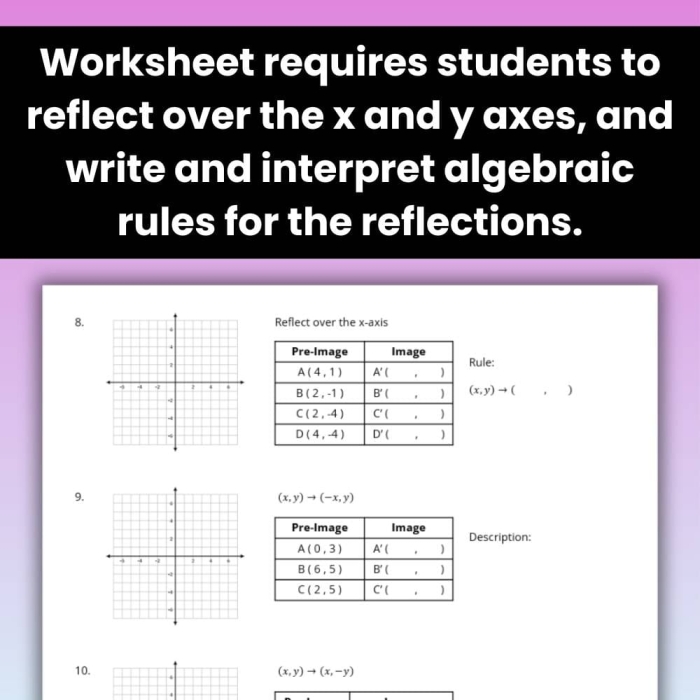
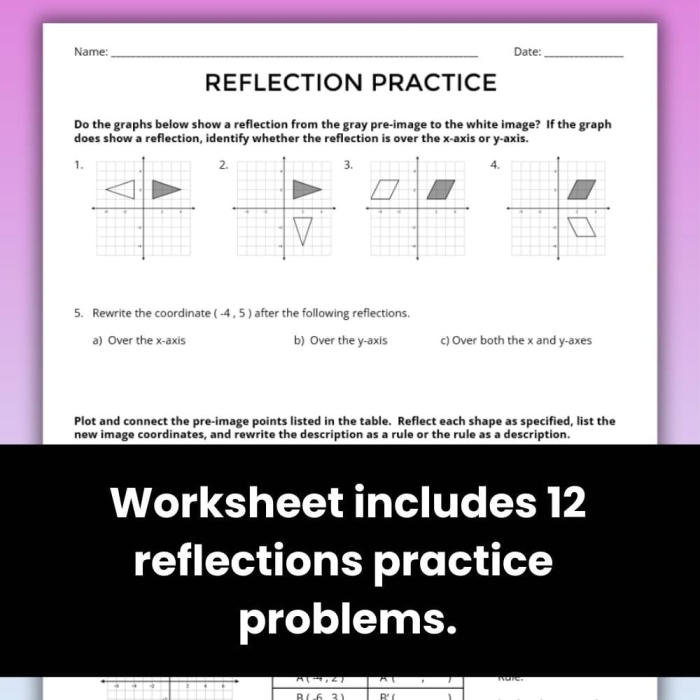
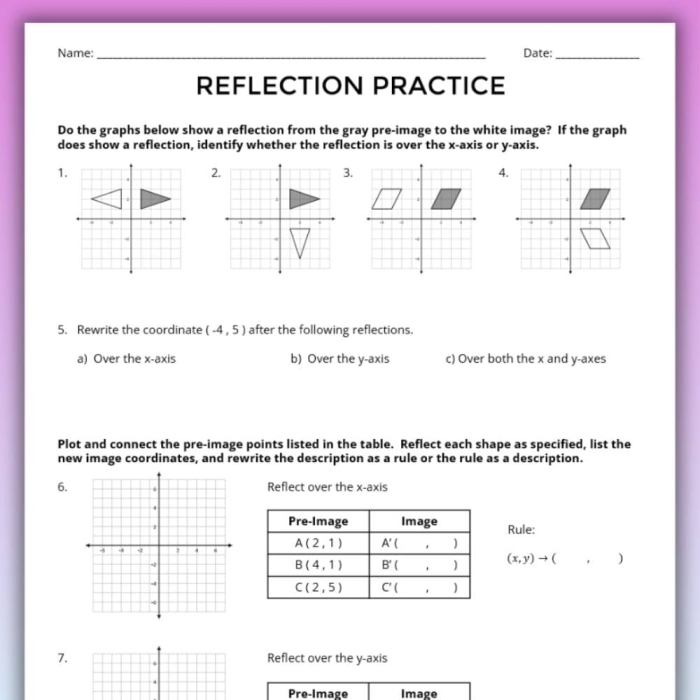
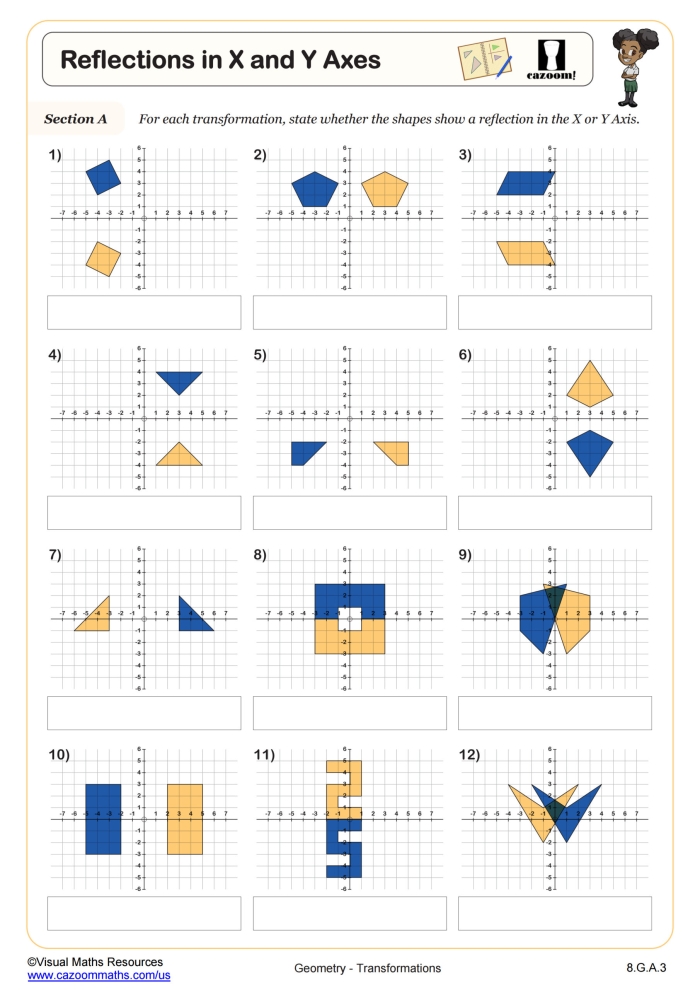
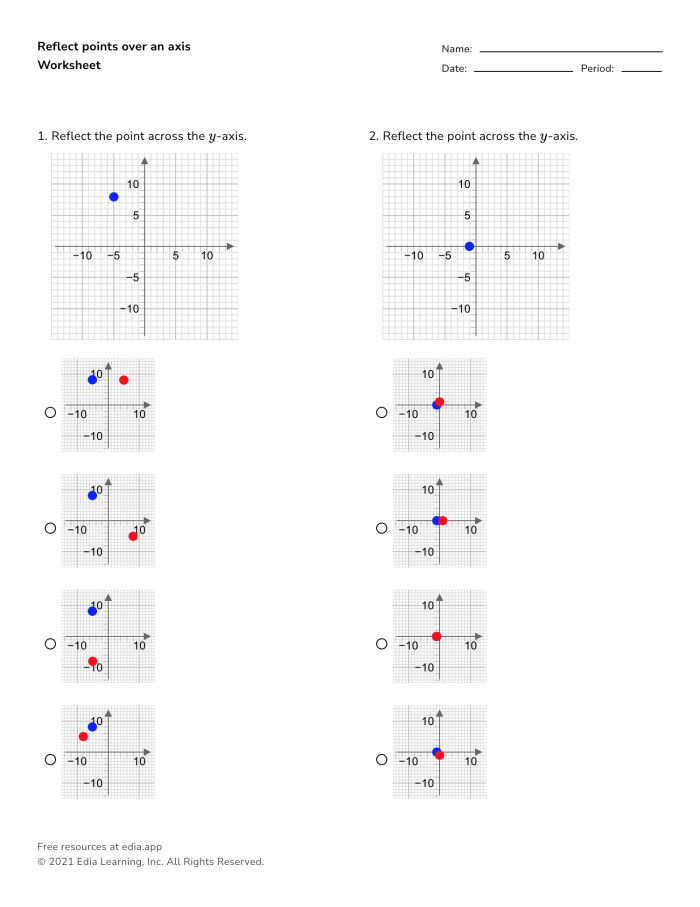
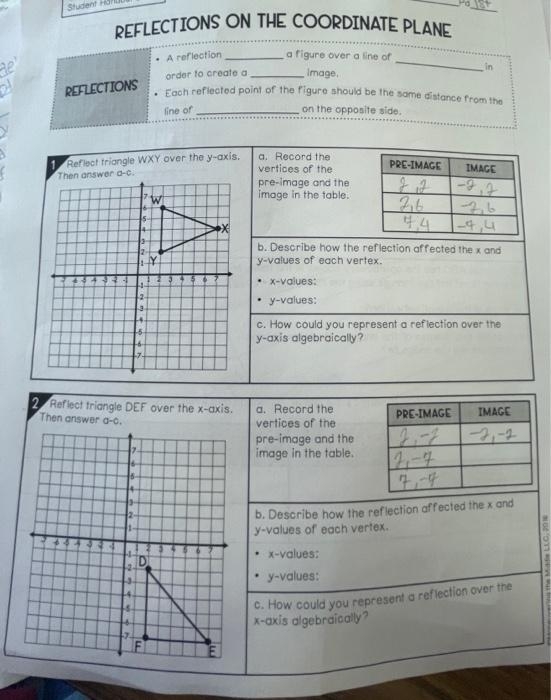
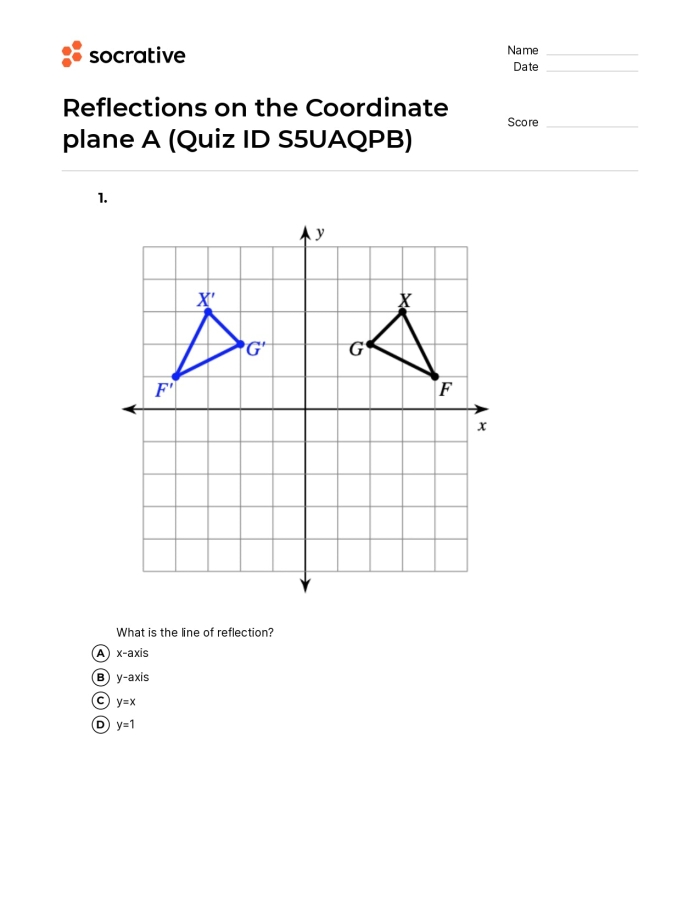
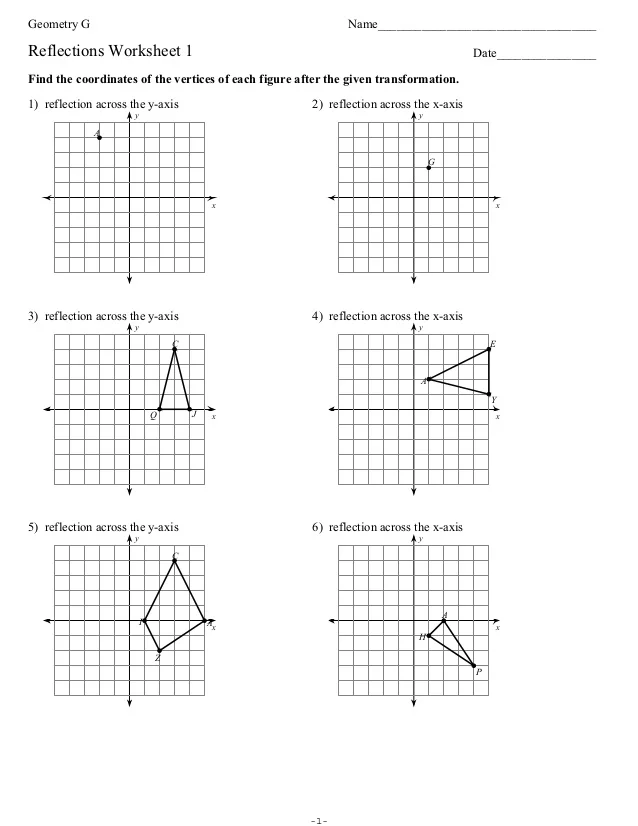
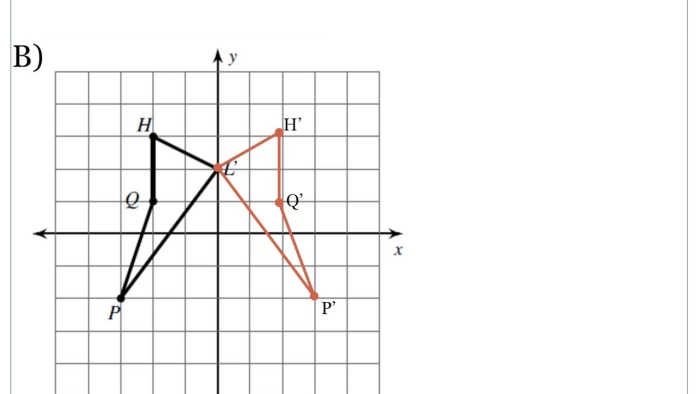
Reflections trip up a lot of eighth-grade students because they require holding two ideas in your head at once: the original figure and its mirror image on the coordinate plane. This geometry worksheet tackles that exact challenge by having students graph the reflected versions of shapes after working through the transformation rules.
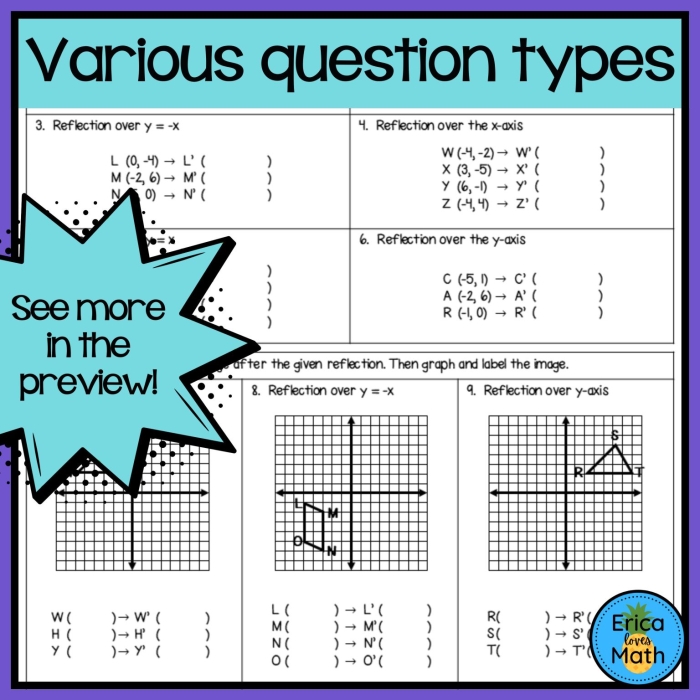
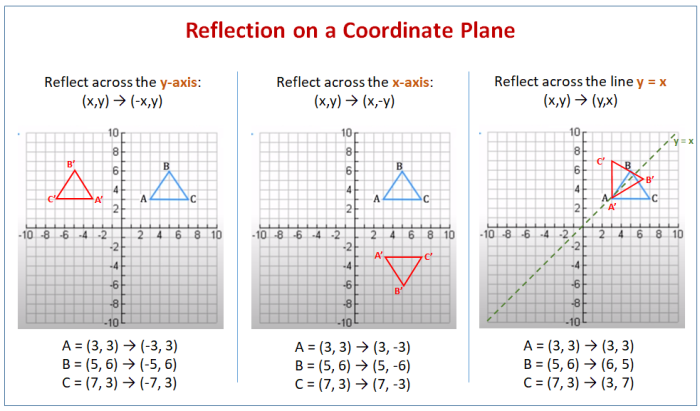
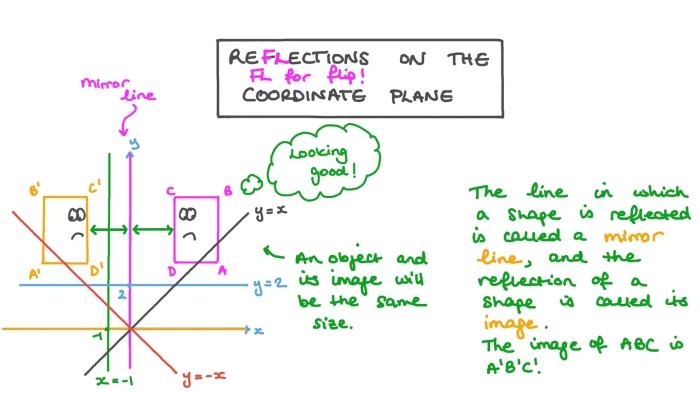
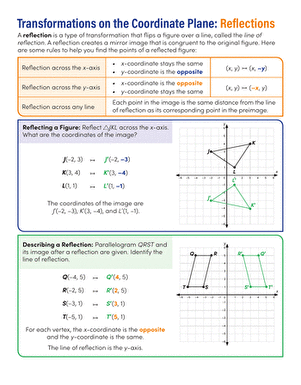
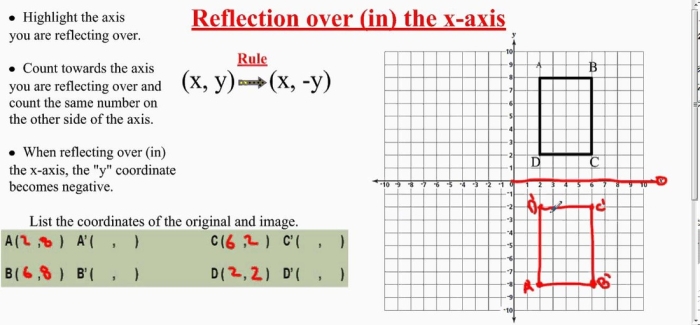
The core skill here is understanding how reflections actually work mathematically. When you reflect a figure across the x-axis, the y-coordinates flip sign while x-coordinates stay the same. Reflect across the y-axis, and the opposite happens. Students need to apply these rules consistently, then accurately plot the new points to create the reflected image. It sounds straightforward until you’re staring at a trapezoid and trying to remember which direction to flip it.
What makes this worksheet valuable is the practice component. Students don’t just learn the reflection rules once and move on. They work through multiple figures, reinforcing the coordinate plane skills that connect to broader eighth-grade math concepts. Understanding how to navigate the coordinate plane feeds directly into work with slope and points, and it supports the graphing skills needed when solving systems of linear equations through graphing.
The worksheet format encourages students to slow down and be precise. Each problem requires identifying vertices, applying the reflection rule, and plotting the image carefully. This repetition builds confidence. By the time students finish the set, they’ve internalized the patterns rather than just memorizing steps.
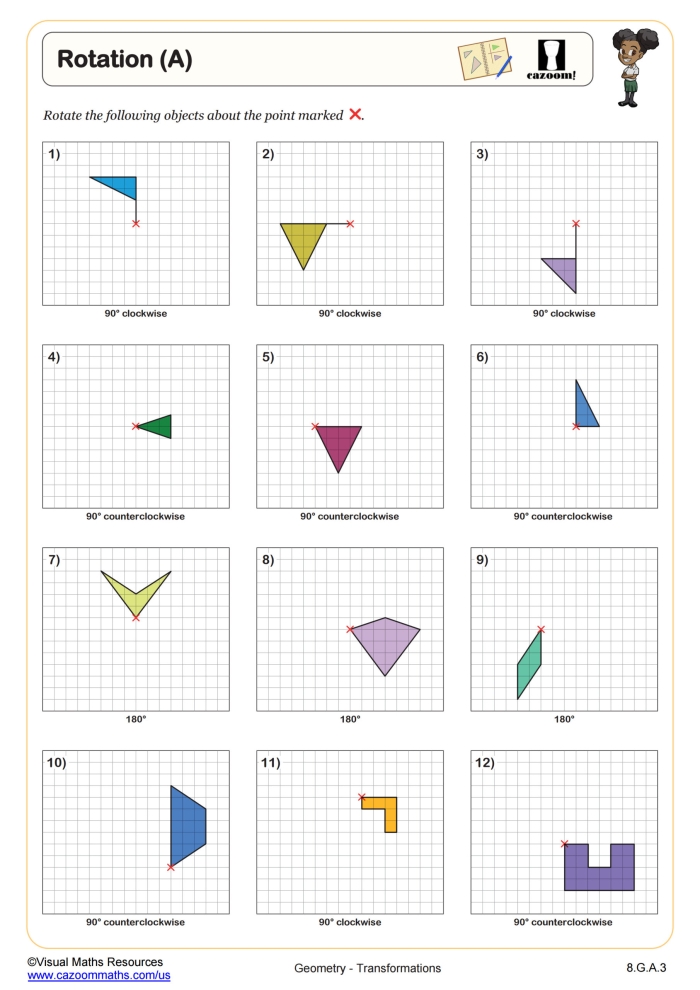
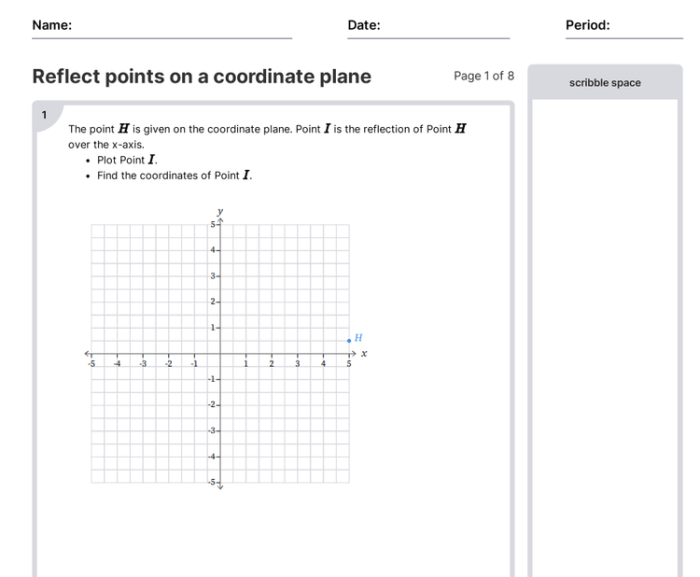
For teachers, this resource fills a specific gap in the eighth-grade curriculum. It isolates reflection practice from other transformations, letting students build mastery before combining reflections with rotations or translations. Pairing this with related work on reflections on the coordinate plane creates a coherent learning sequence that sticks.
Boost Skills with These Worksheets