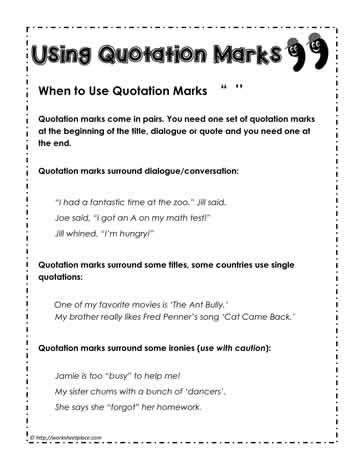
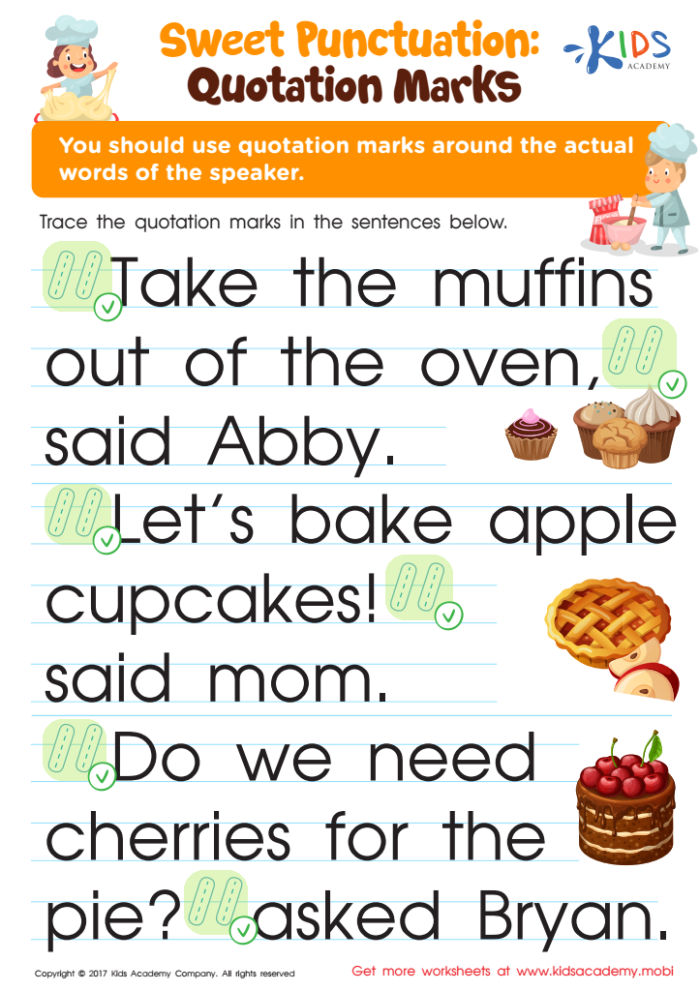
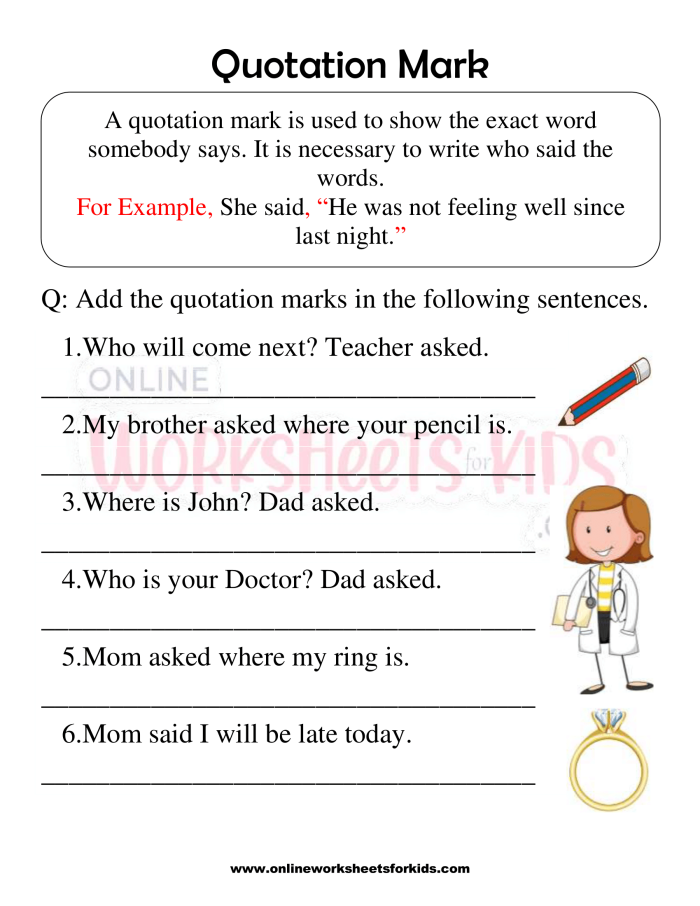
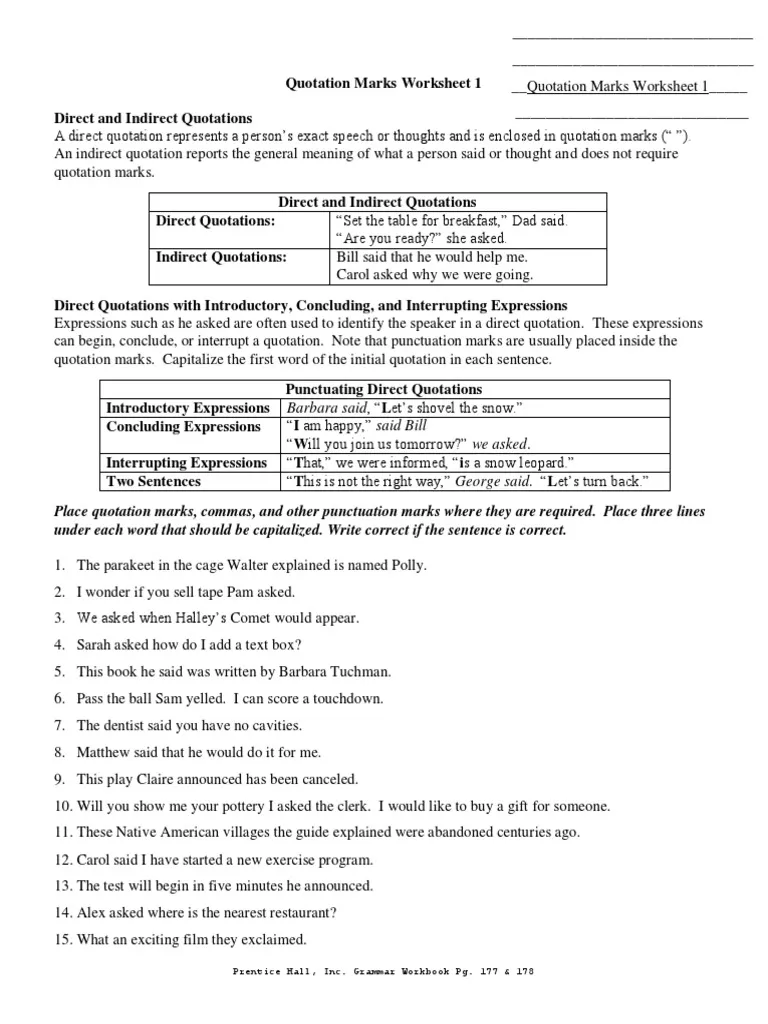
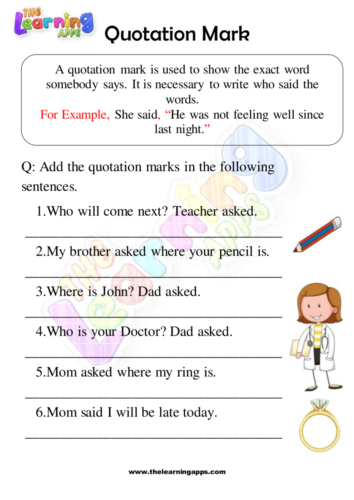
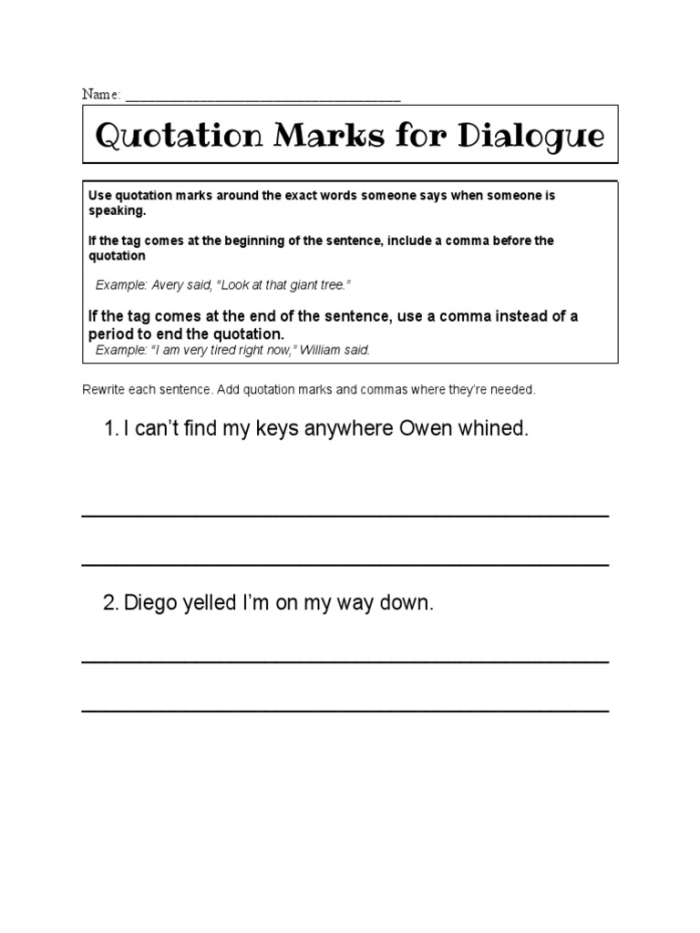
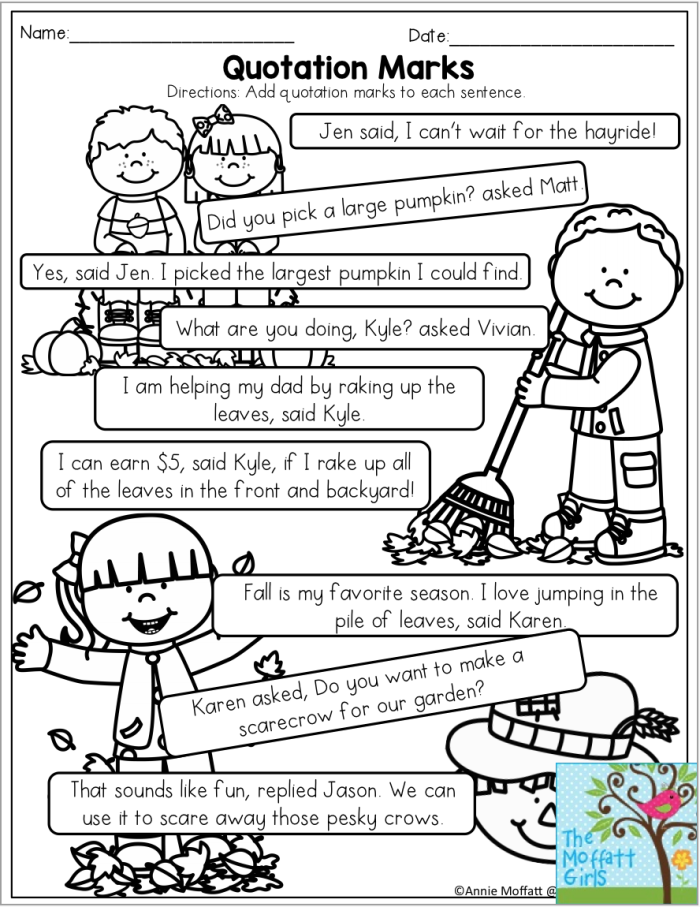
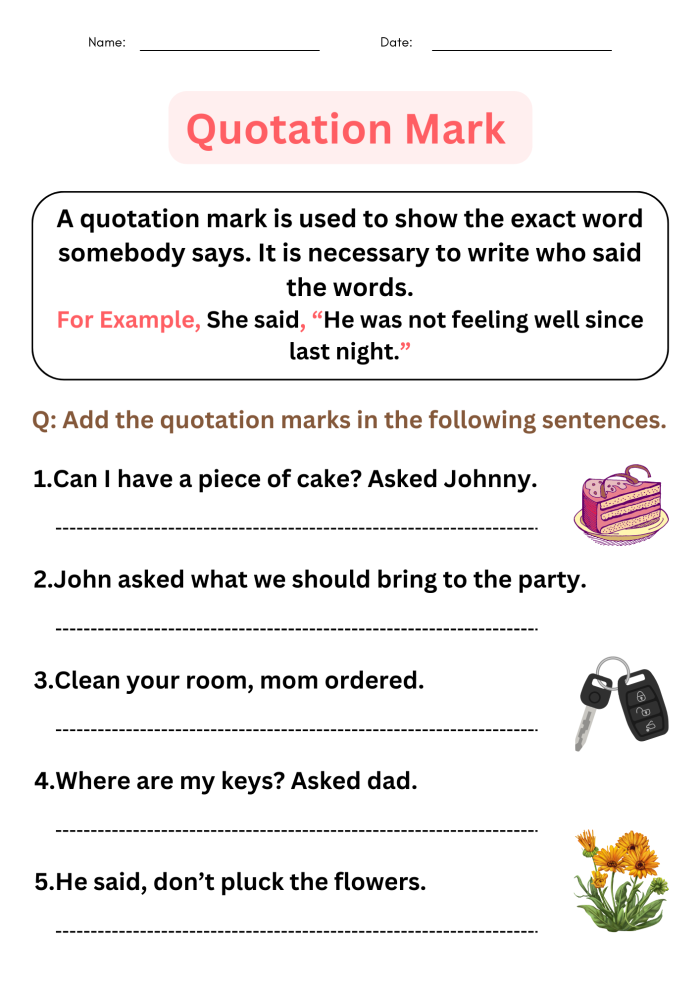
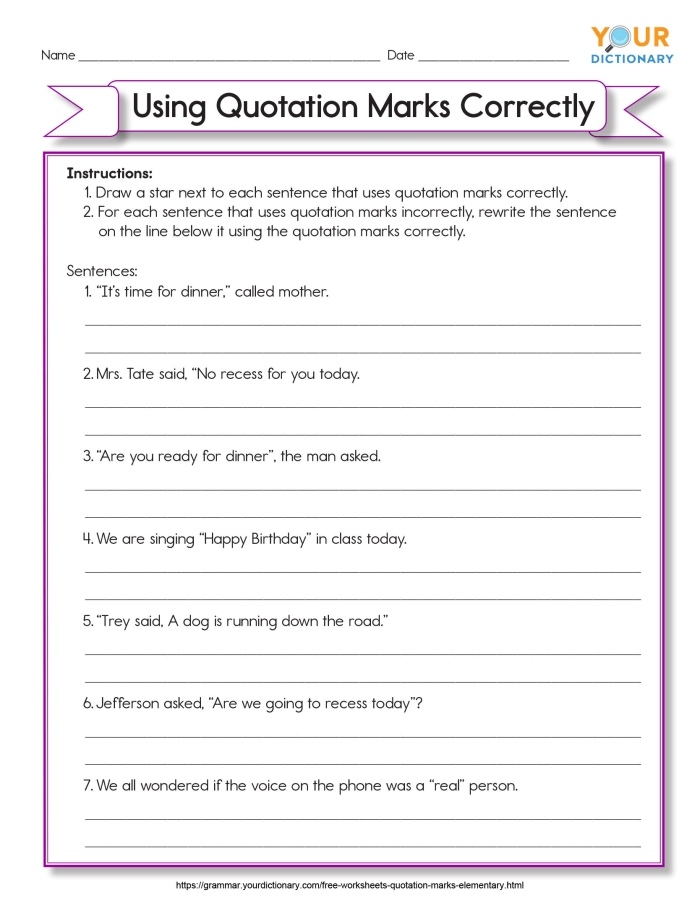
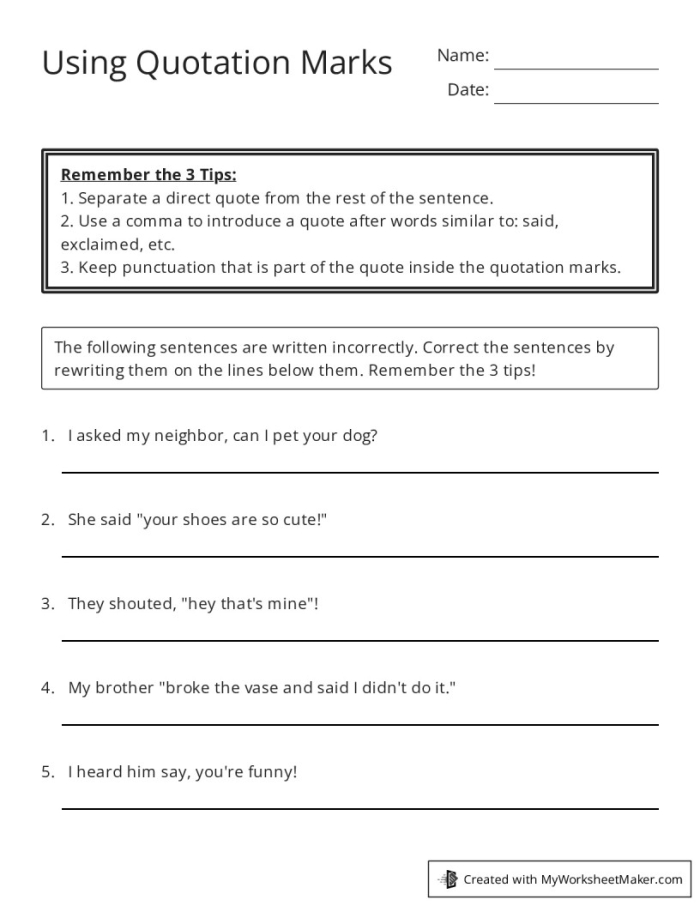
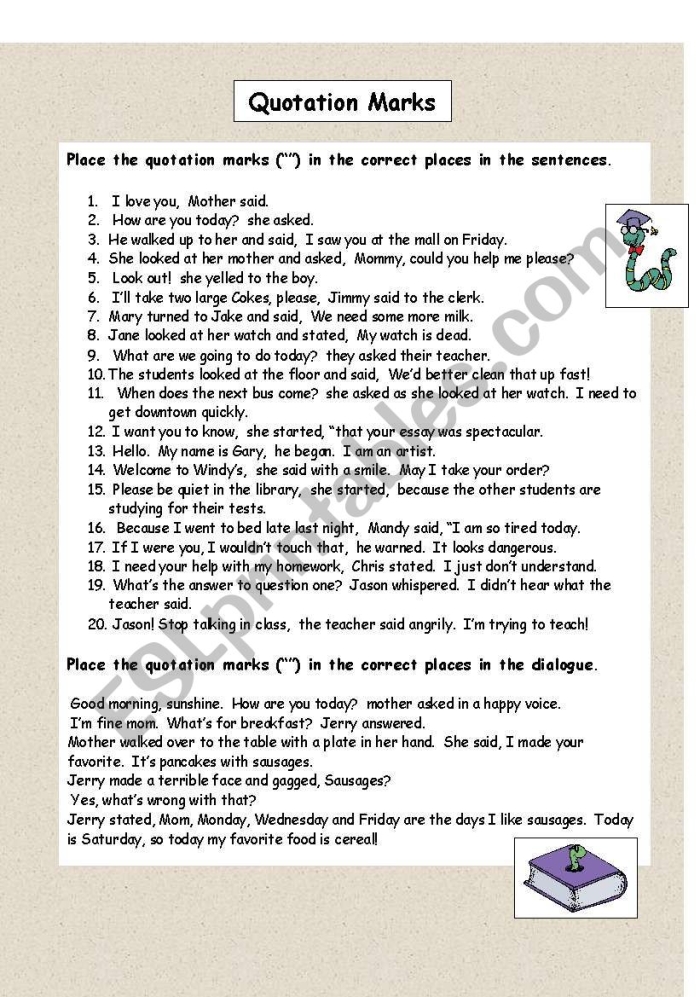
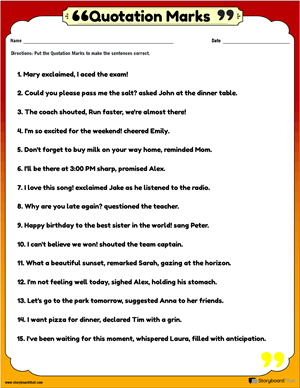
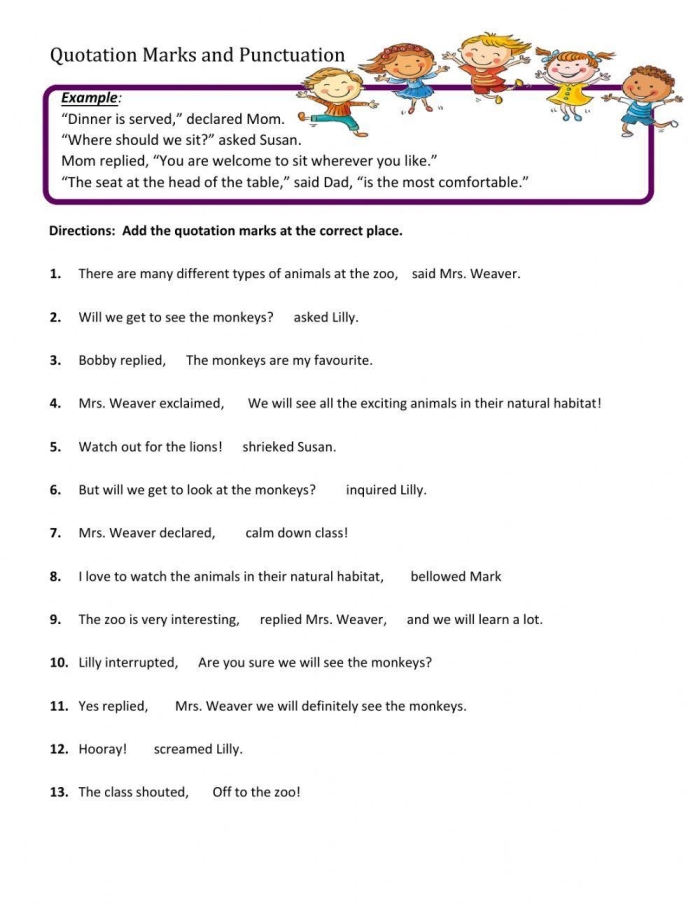
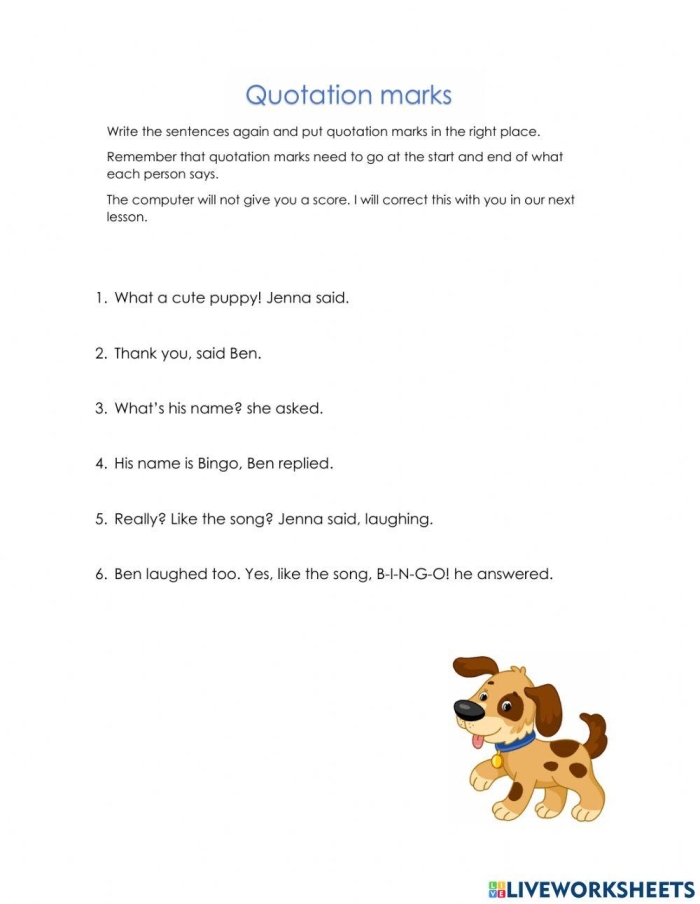
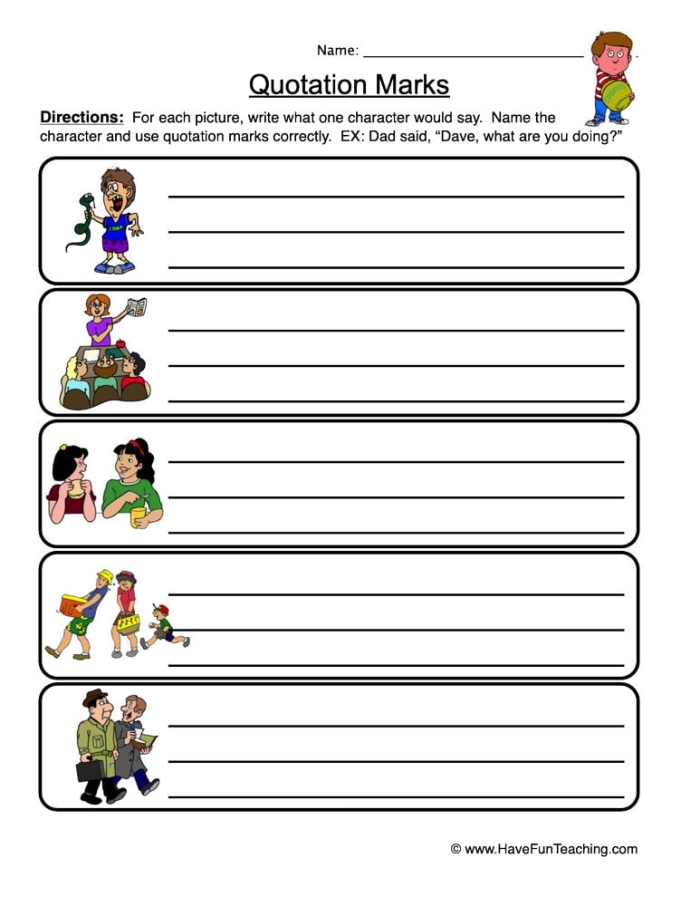
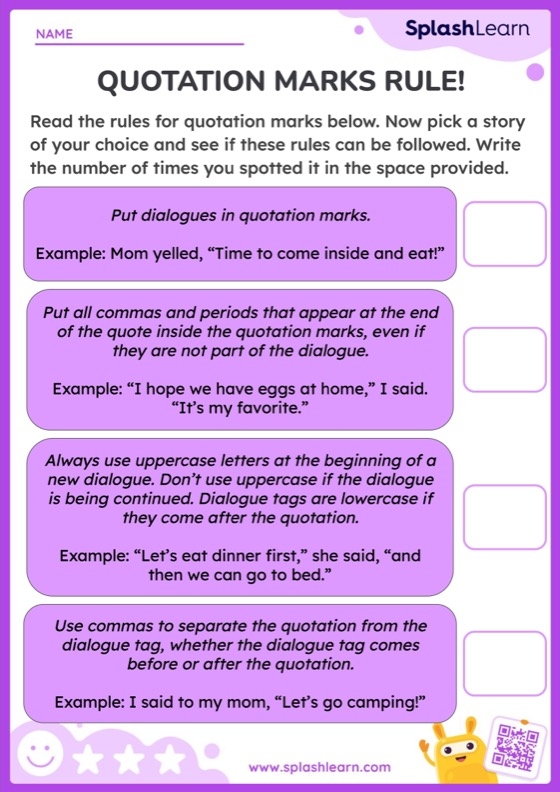
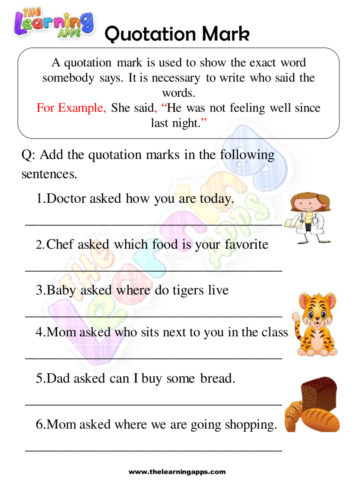
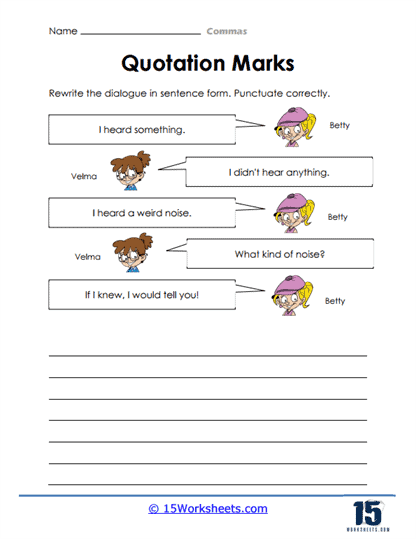
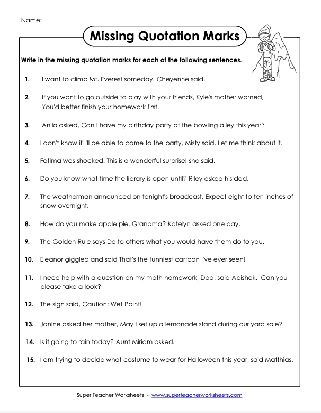
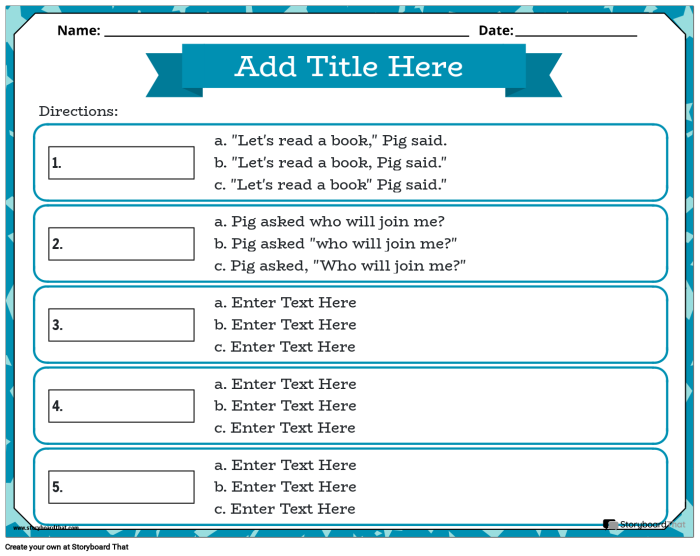
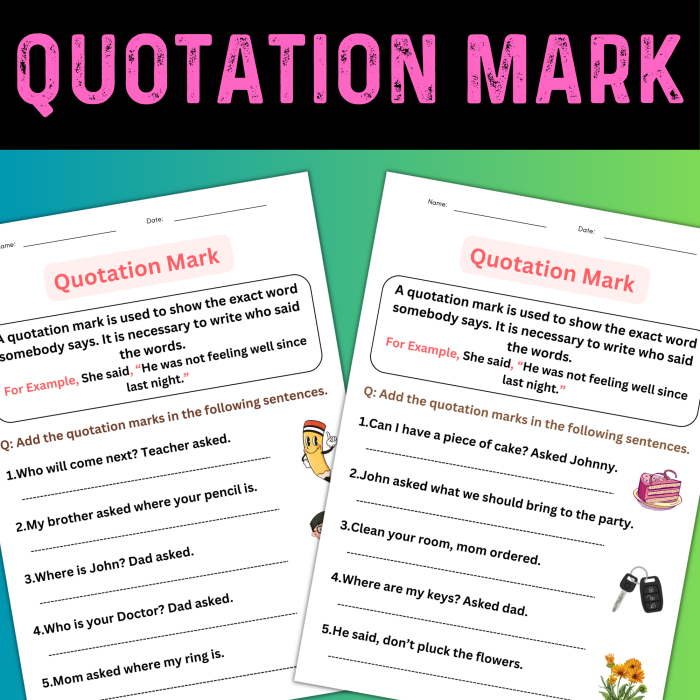
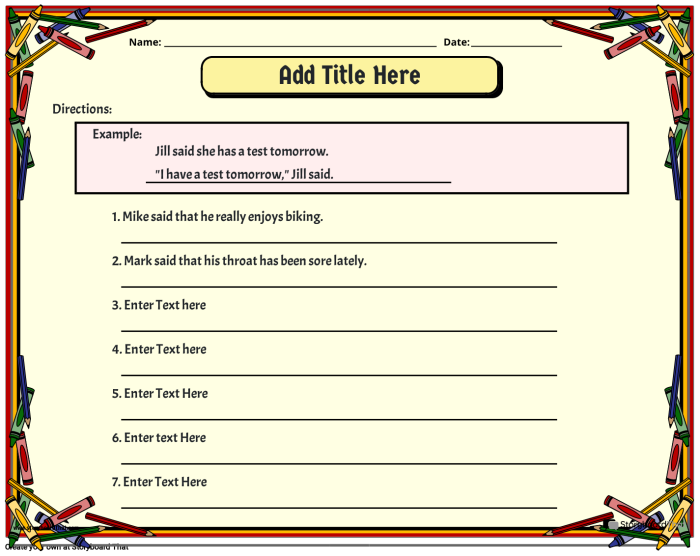
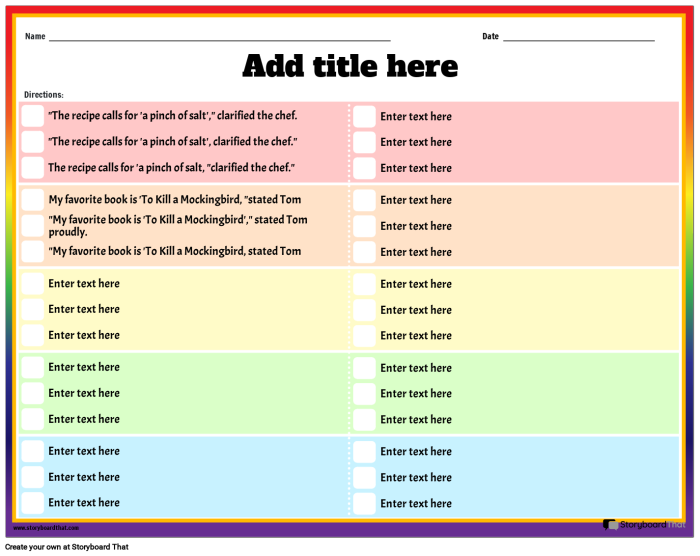
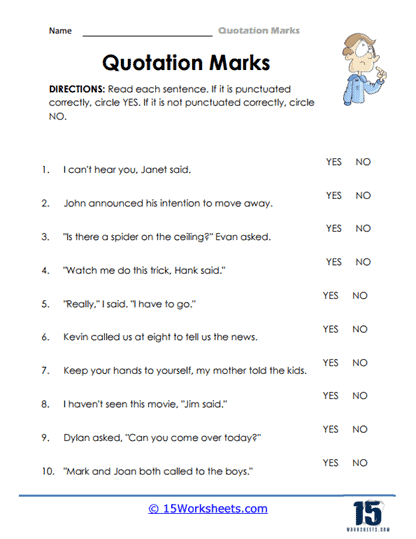
Quotation marks serve as essential tools in writing, helping to clarify dialogue and indicate the titles of works. For third-grade students, mastering the rules for using quotation marks is a crucial part of developing their writing skills. In this grammar and mechanics worksheet, children will review guidelines for using quotation marks, along with examples that illustrate their use in everyday writing.
Understanding the basics of quotation marks can enhance a child’s ability to communicate effectively. For instance, when writing dialogue, quotation marks indicate the exact words spoken by a character, as in: “I can’t wait for the field trip!”. This not only shows who is speaking but also adds excitement to the narrative. Another important rule is that titles of short works, like poems or short stories, should also be enclosed in quotation marks. An example might be: “The Road Not Taken” by Robert Frost.
Using these quotation mark rules correctly can help children express their thoughts more clearly and engage their readers. When they write stories or essays, the proper use of punctuation contributes to the overall clarity of their work. It’s essential for young writers to practice these skills, and worksheets that focus on quotation marks can provide the necessary support. Engaging with printable quotation mark rules worksheets allows students to explore different examples and practice their skills in a structured way.
As children work through these exercises, they will find that using quotation marks correctly not only enhances their writing but also makes it more enjoyable. They can apply these skills beyond grammar worksheets, such as in their geometry-related writing or when creating problem questions for line plots. By connecting grammar to various subjects, like geometry, they can see the broader application of these skills in their academic journey.
Use These Worksheets Today