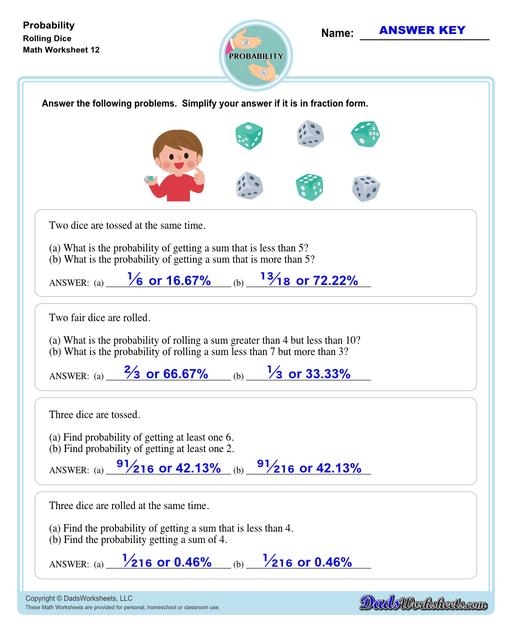
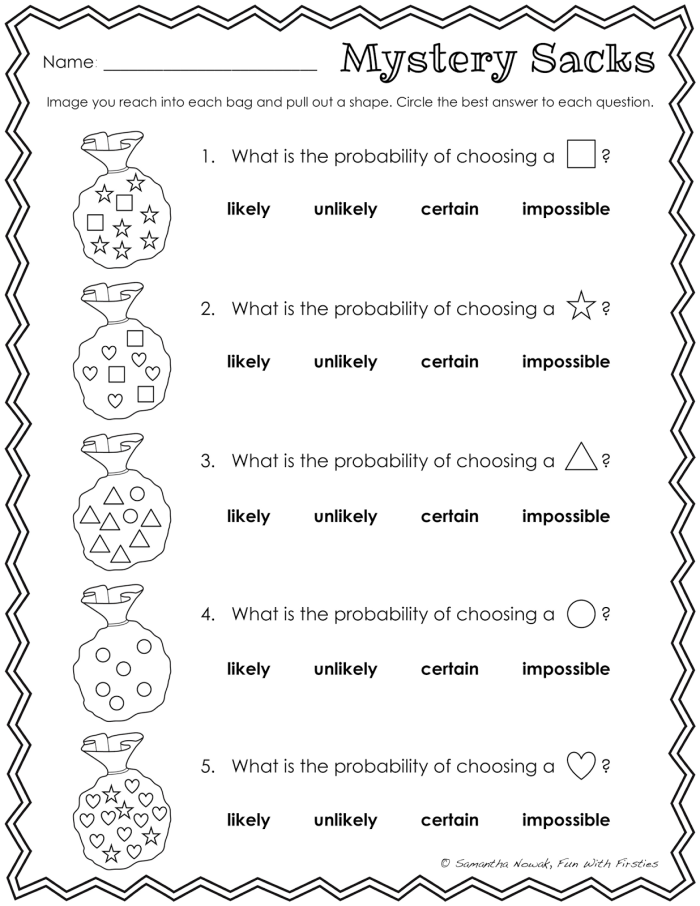
Rolling dice is one of the fastest ways to understand how probability actually works. Pick up a standard six-sided die, roll it, and you’ve got a real-world experiment happening right in your hand. For seventh grade students tackling mixed operations, probability with dice offers something concrete to grab onto before moving into more abstract math concepts.
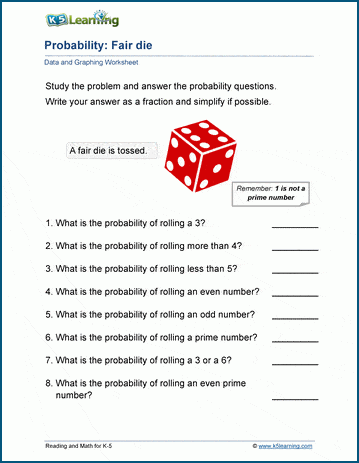
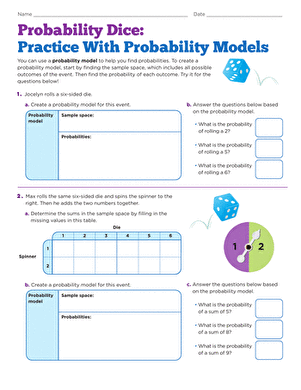
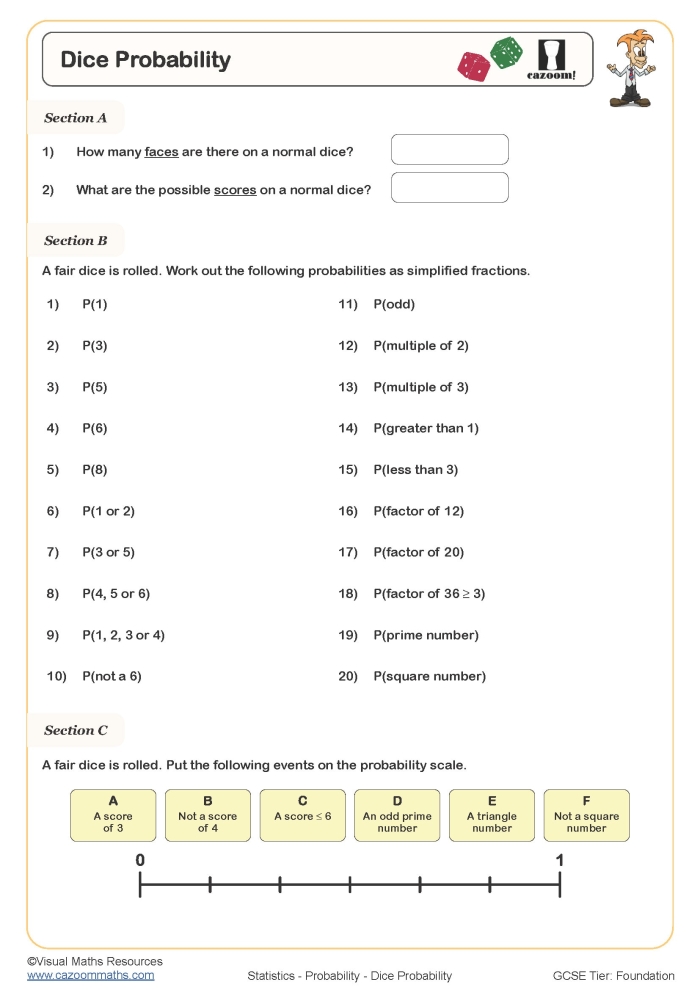
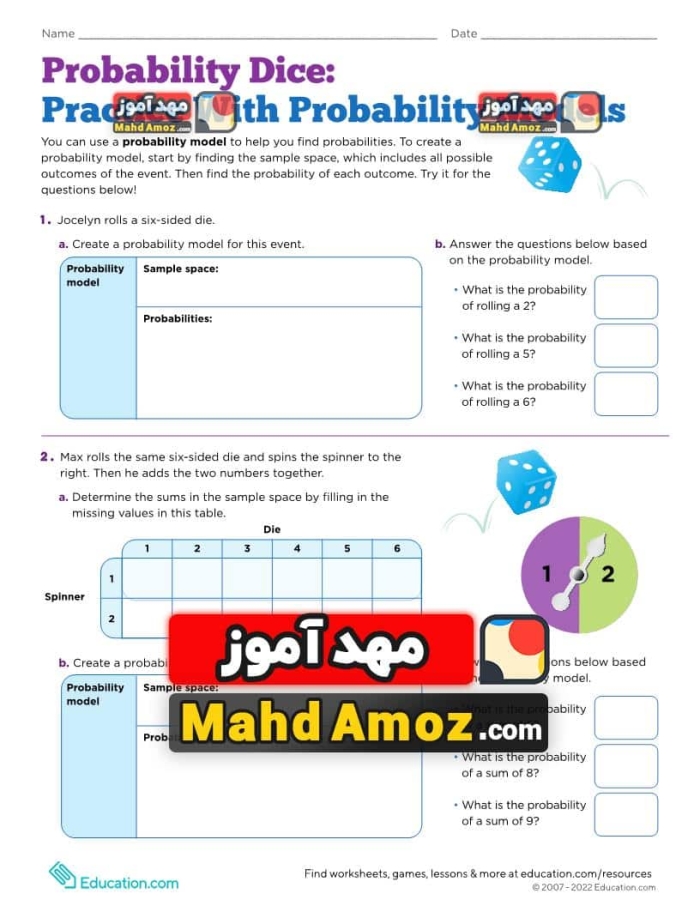
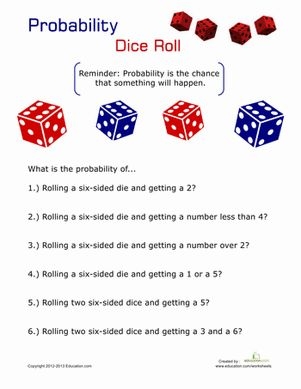
Let’s start with the basics. When you roll a single die, there are exactly six possible outcomes: 1, 2, 3, 4, 5, or 6. Each face has an equal chance of landing face-up. This equal likelihood is what makes dice such a clean teaching tool. The probability of rolling any specific number, like a 2, is one favorable outcome divided by six total possible outcomes. That gives you 1/6, or about 16.7 percent. The same calculation applies to rolling a 6: also 1/6.
The real learning happens when you start asking different questions. What’s the probability of rolling an even number (2, 4, or 6)? Now you have three favorable outcomes out of six possibilities, so the probability jumps to 3/6, which simplifies to 1/2. This is where students begin seeing that probability connects to fractions, which ties directly into the fraction skills seventh graders are developing. If you’re reinforcing those concepts, fraction practice worksheets can strengthen foundational understanding.
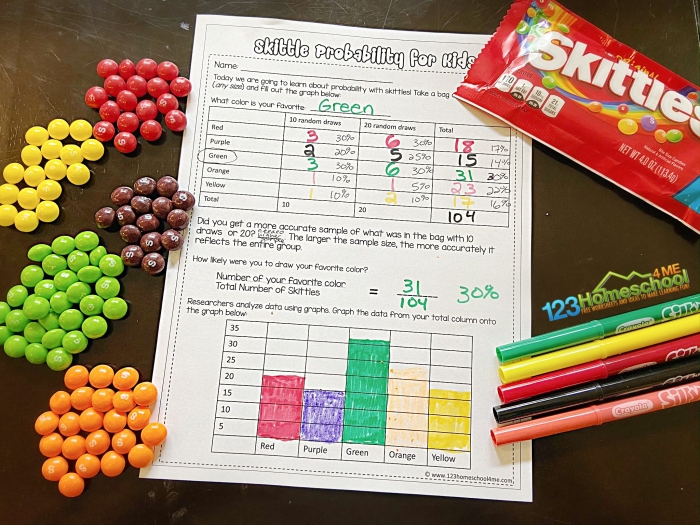
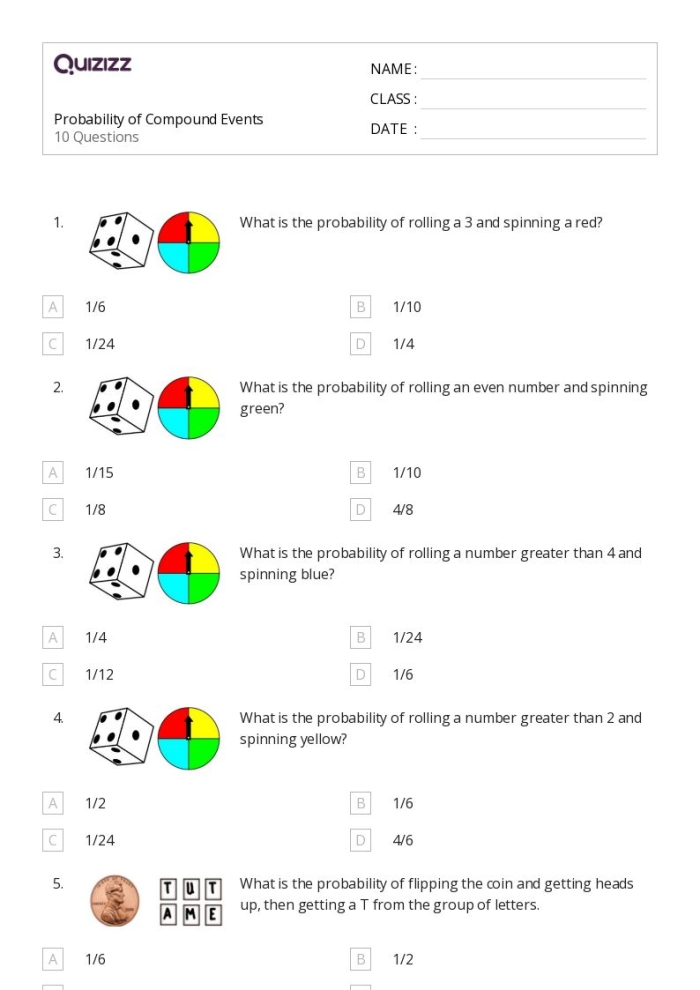
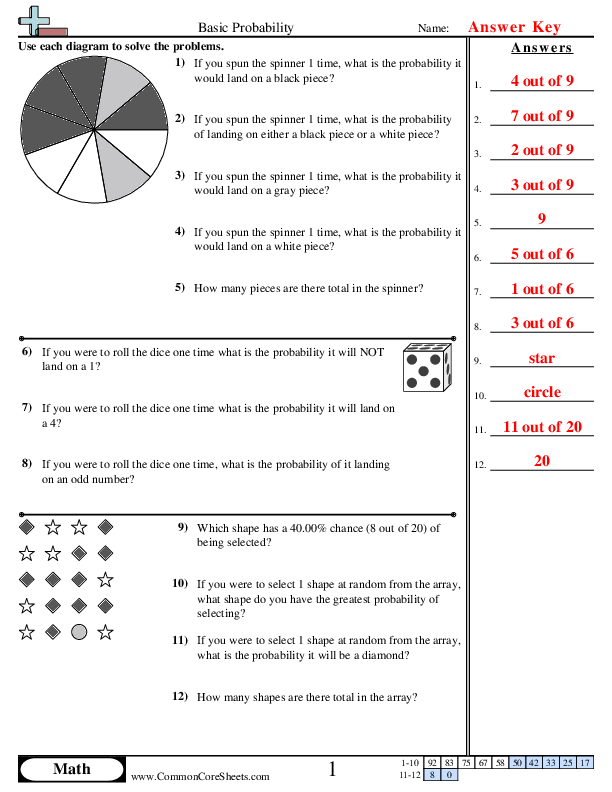
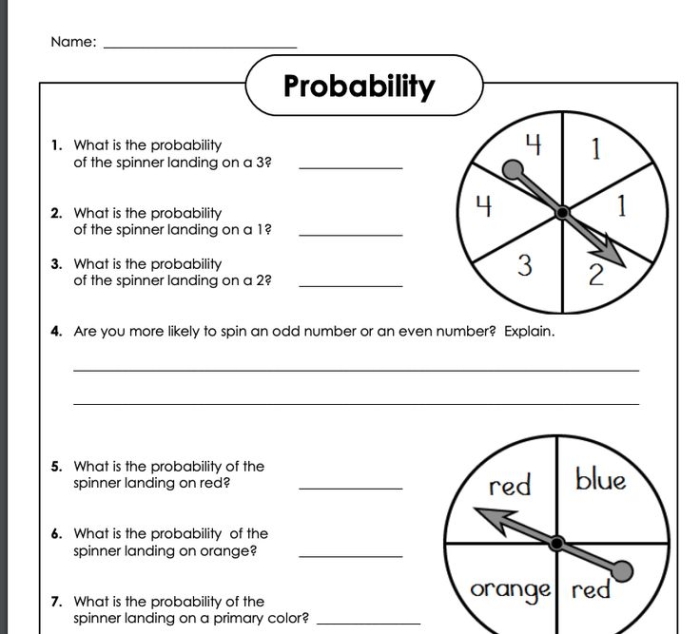
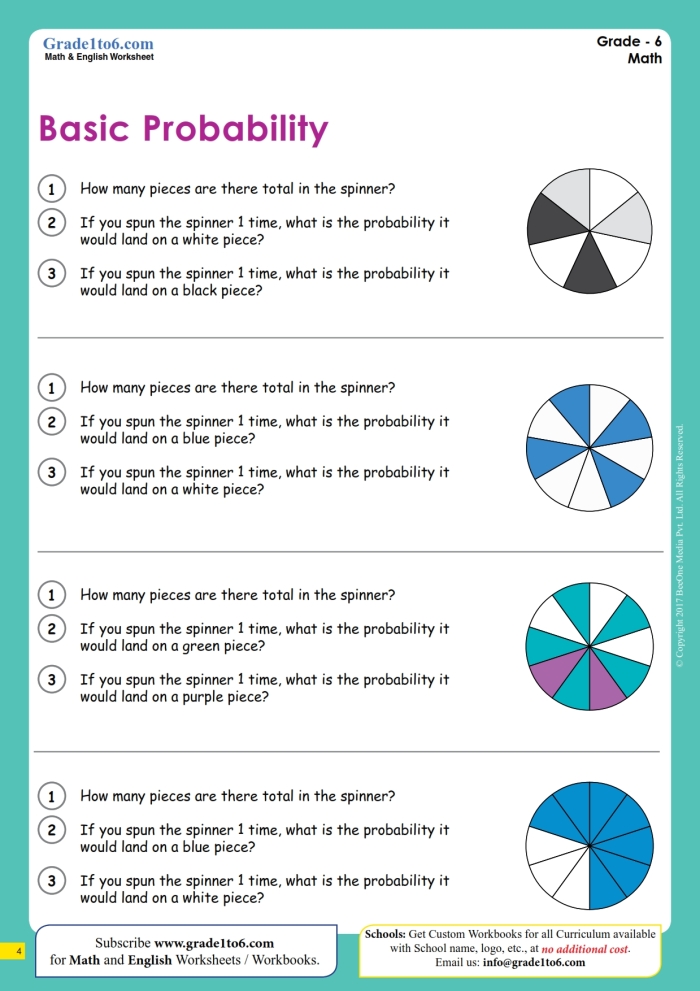
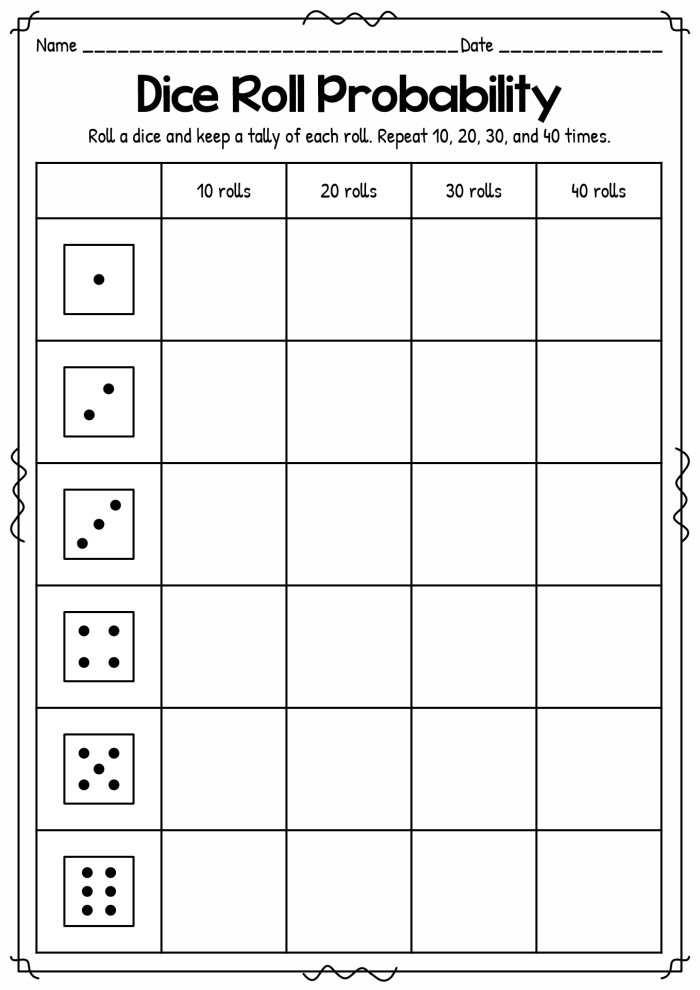
Hands-on practice with dice worksheets lets students run actual experiments. They roll, record results, and compare what they predicted to what actually happened. This gap between theory and reality teaches something textbooks alone cannot. Over many rolls, results trend toward the theoretical probability, but individual rolls stay unpredictable. That’s the real magic of probability.
Working through algebra fundamentals and geometry becomes easier when probability foundations are solid, since both fields rely on understanding likelihood and mathematical relationships.
Printable Worksheets for Practice