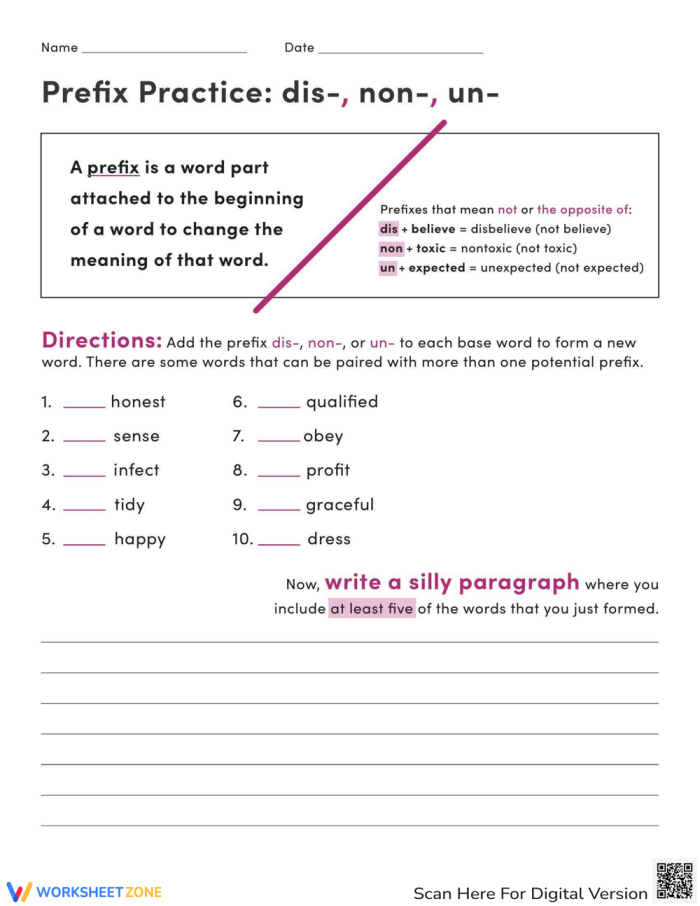
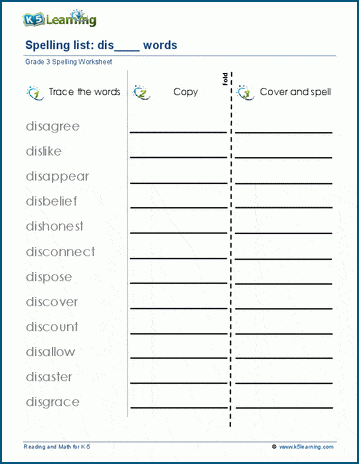
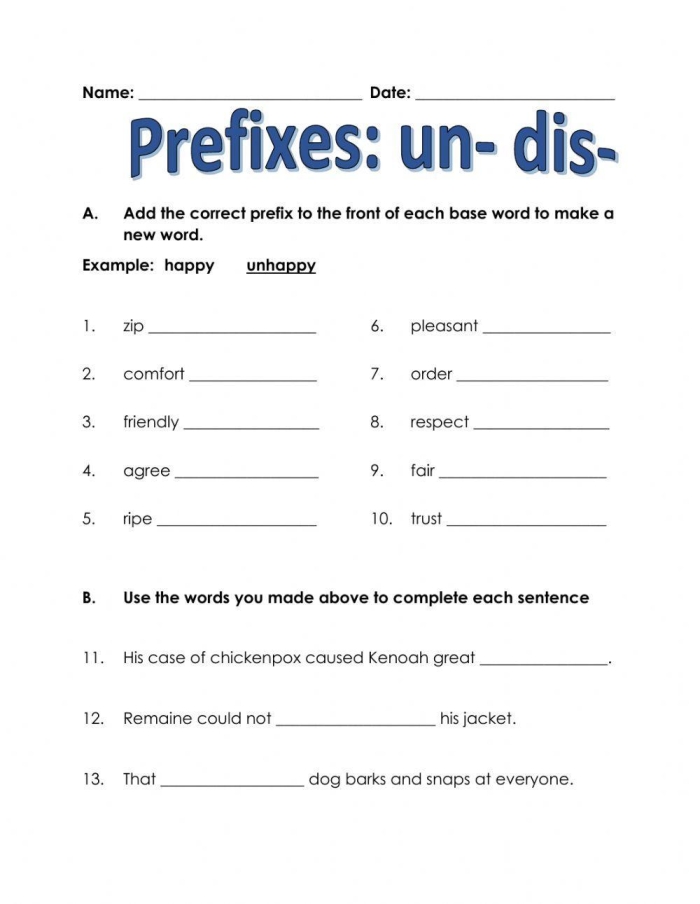
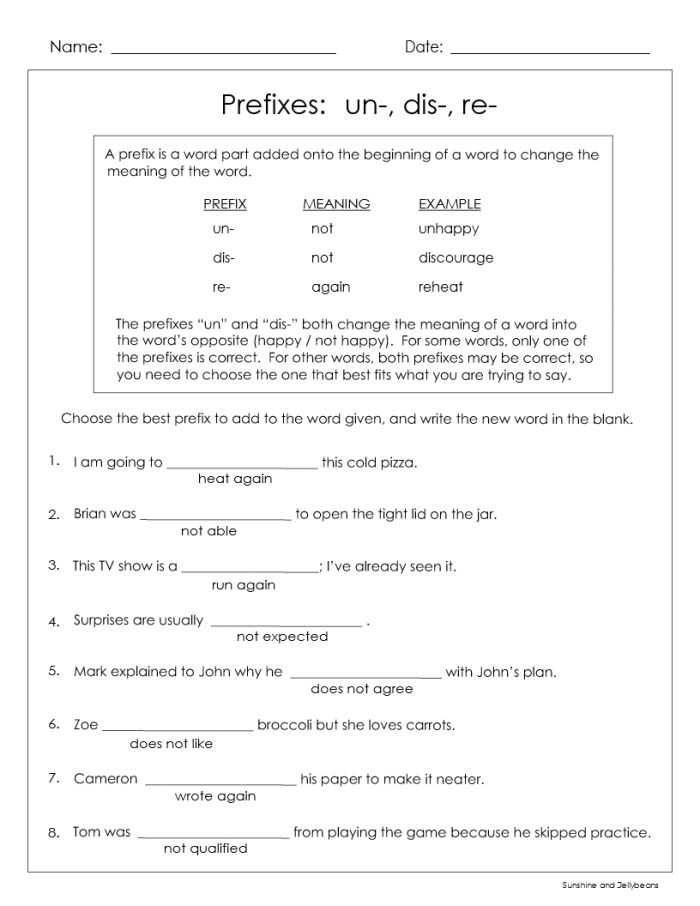
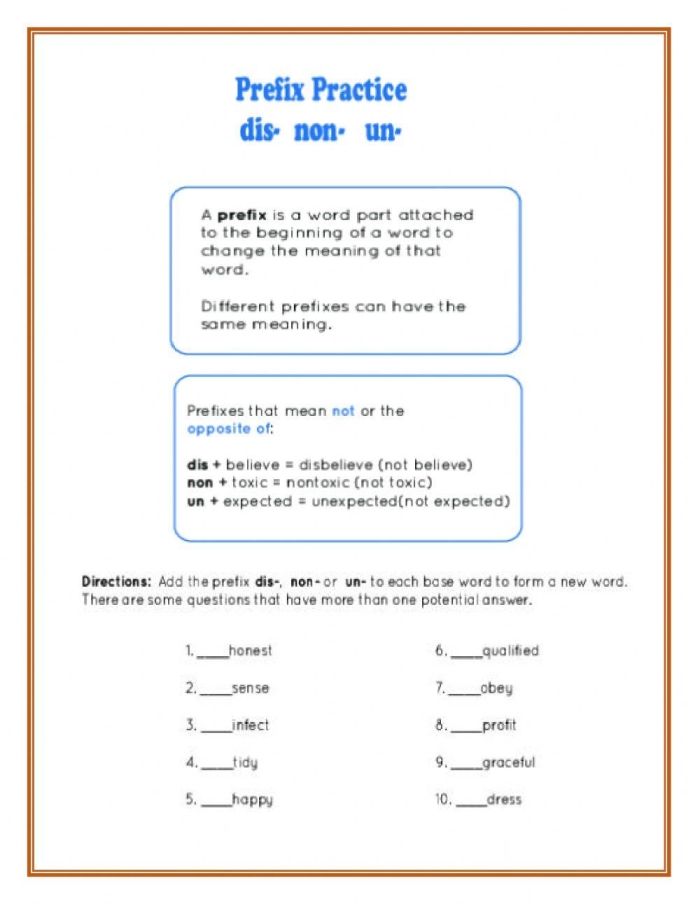
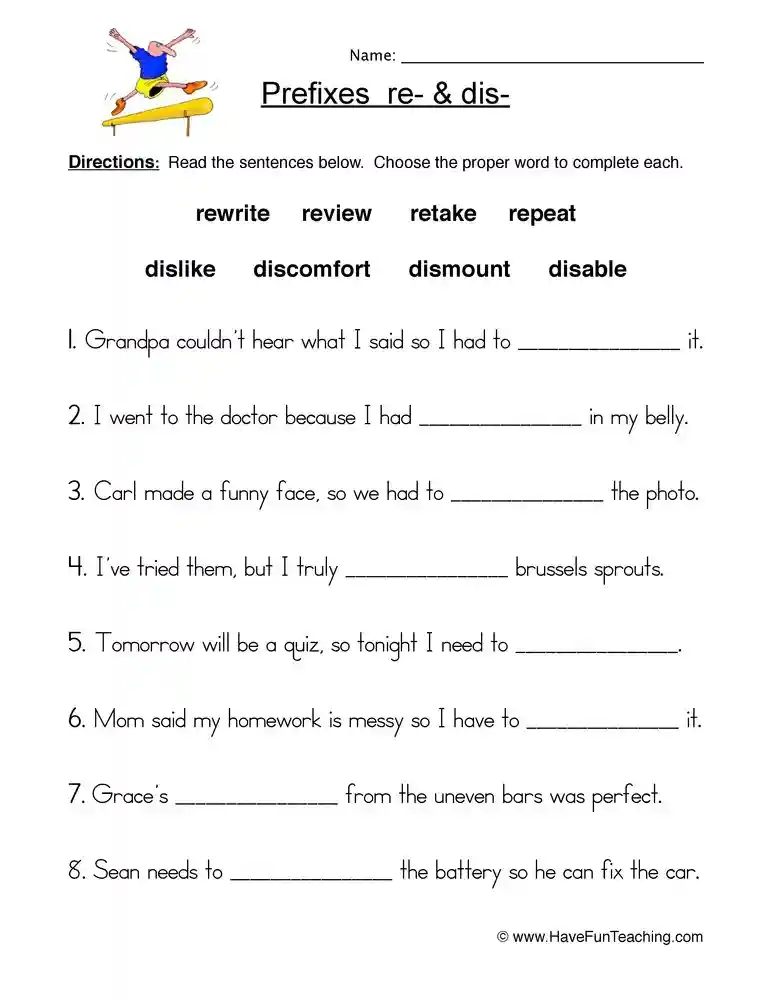
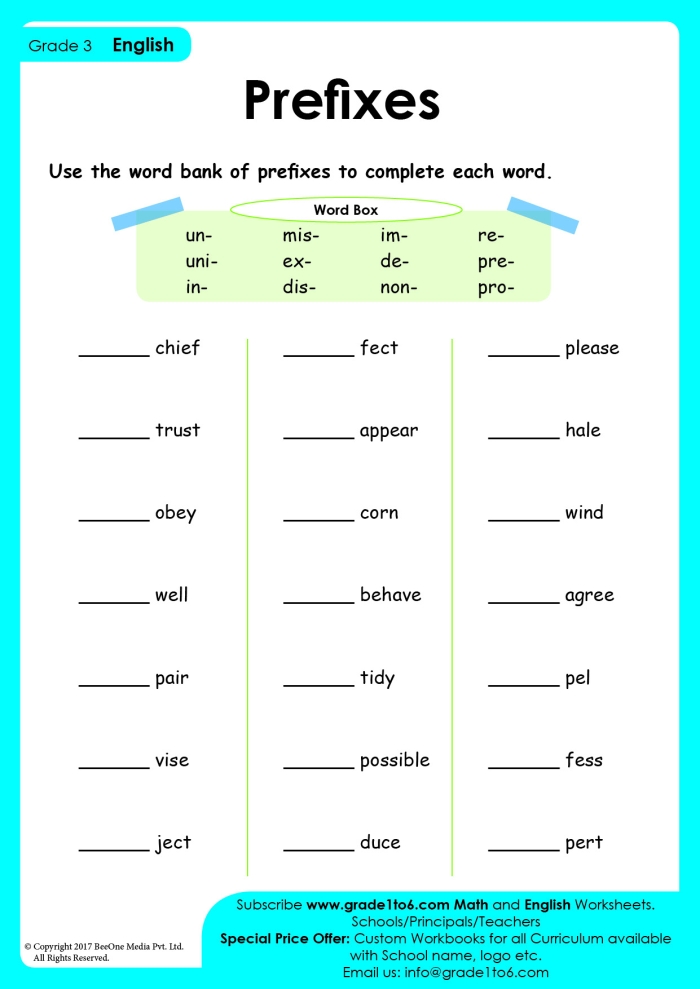
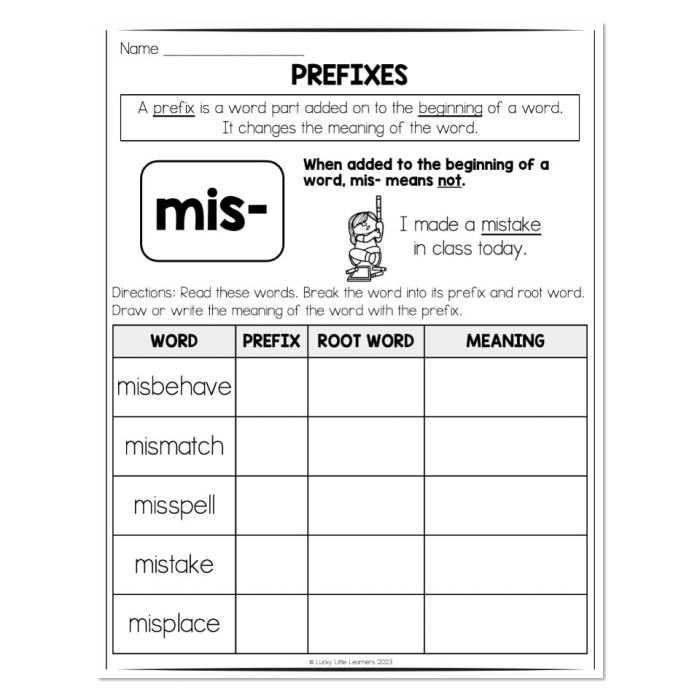
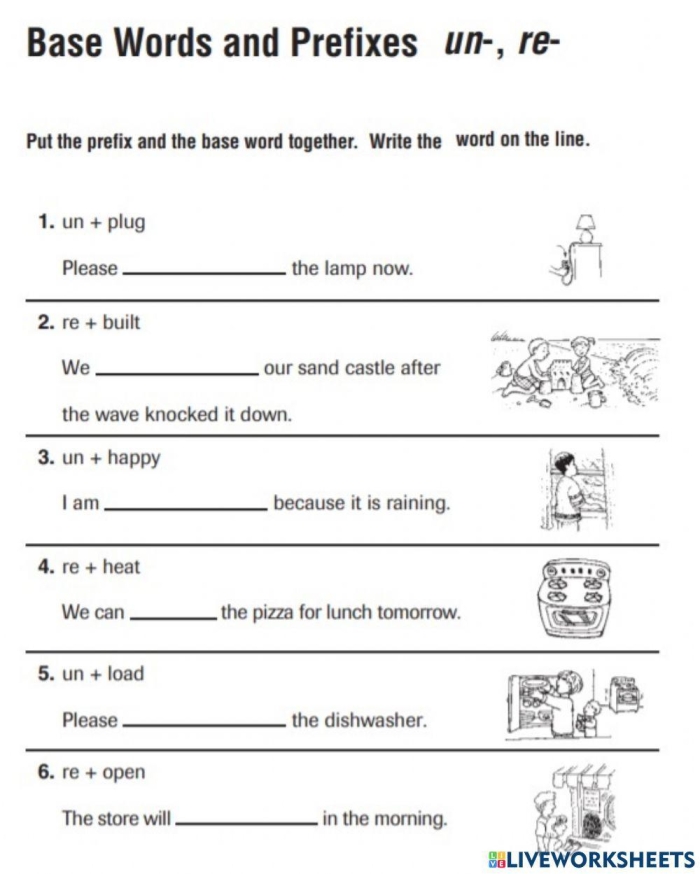
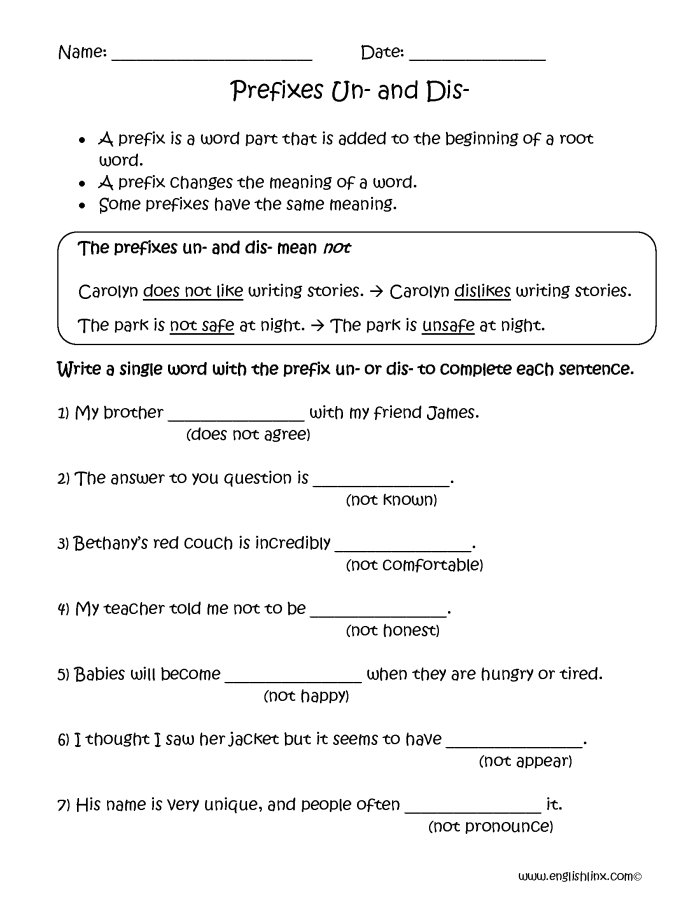
Learning about prefixes can be an exciting journey for third graders, especially when they dive into the world of dis-, un-, and non-. These prefixes are essential building blocks in the English language, allowing kids to modify the meanings of words and understand language more deeply. When children practice using these prefixes in a worksheet, they gain valuable skills that enhance their writing and vocabulary.
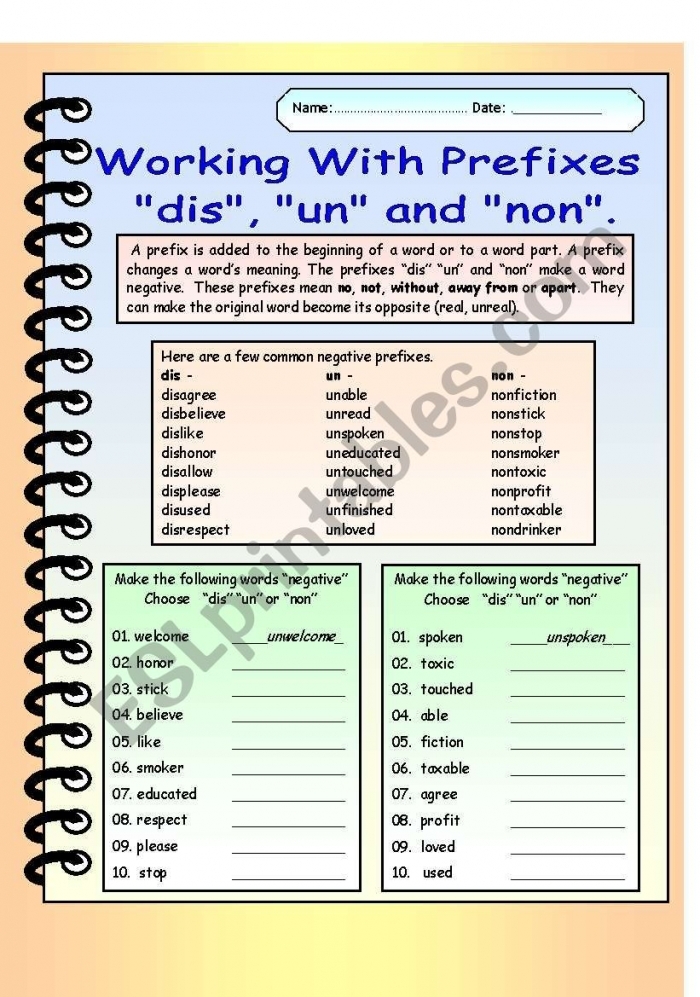
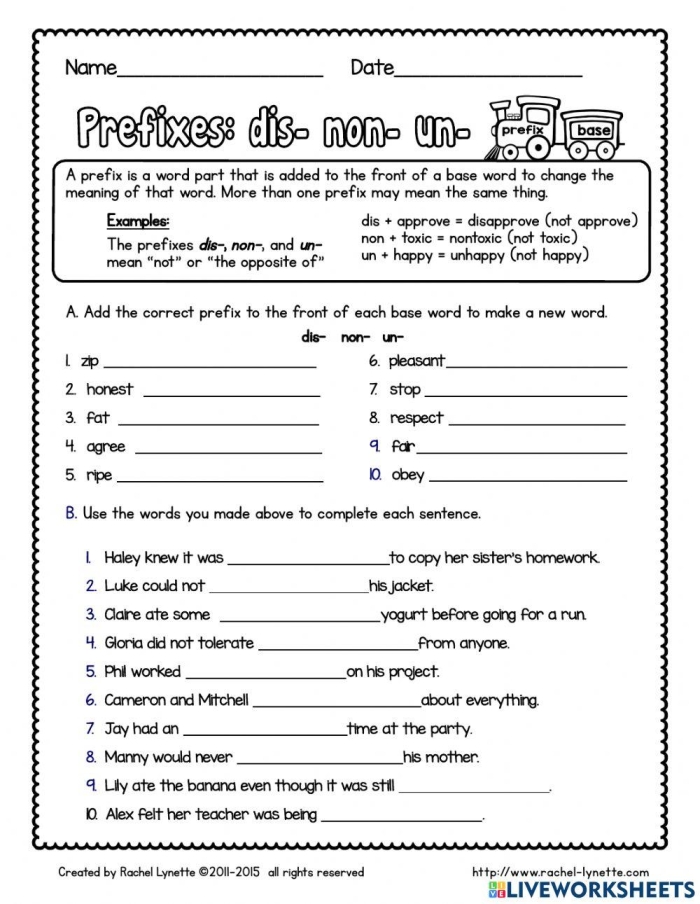
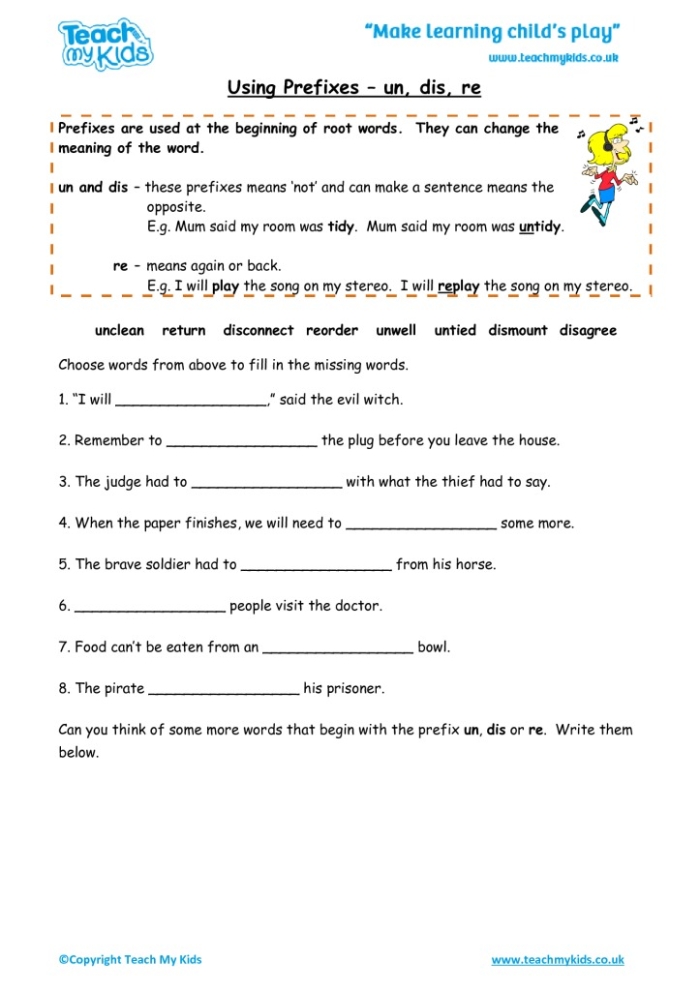
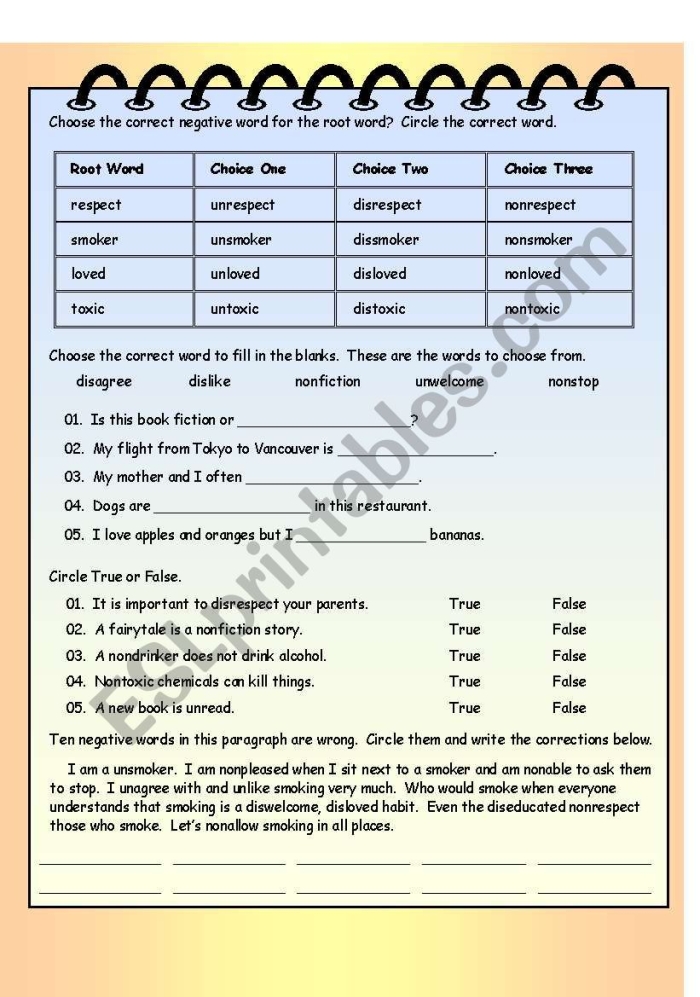
For instance, the prefix “dis-” often indicates negation or reversal. A word like “agree” can transform into “disagree,” changing its meaning entirely. Similarly, “un-” also signals negation, as seen in words like “happy” becoming “unhappy.” Lastly, “non-” is used to denote absence, as in “nonexistent.” Understanding these prefixes helps students decode unfamiliar words, making reading less daunting and more enjoyable.
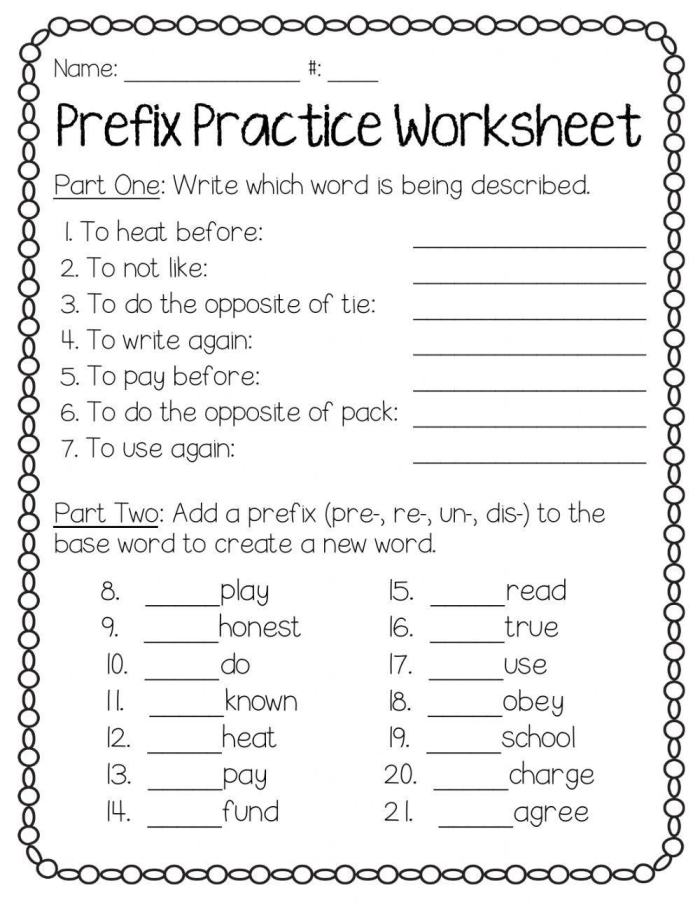
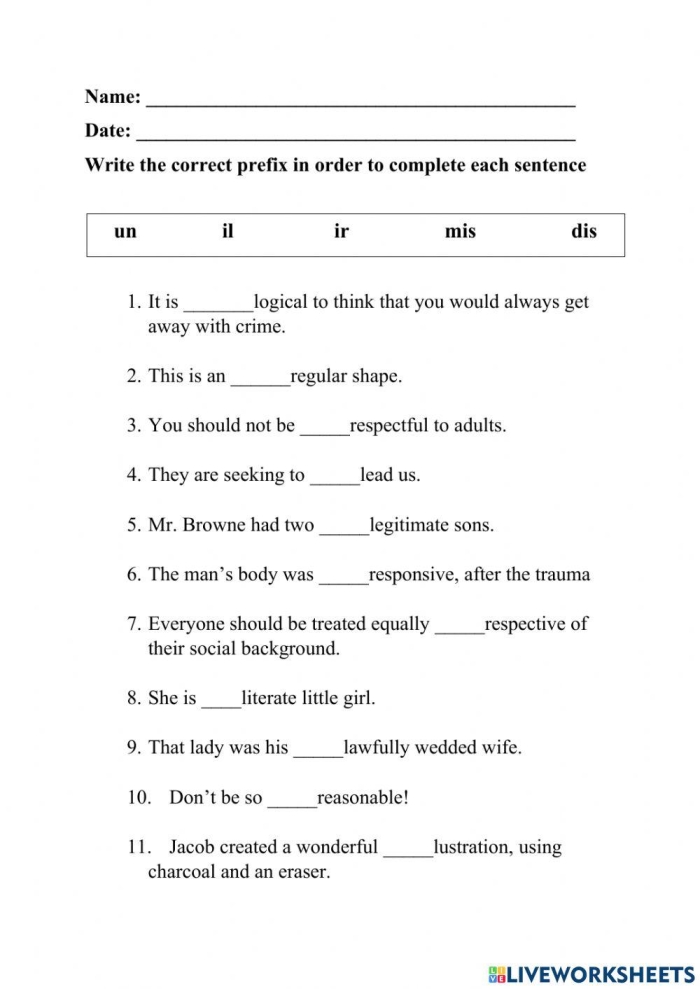
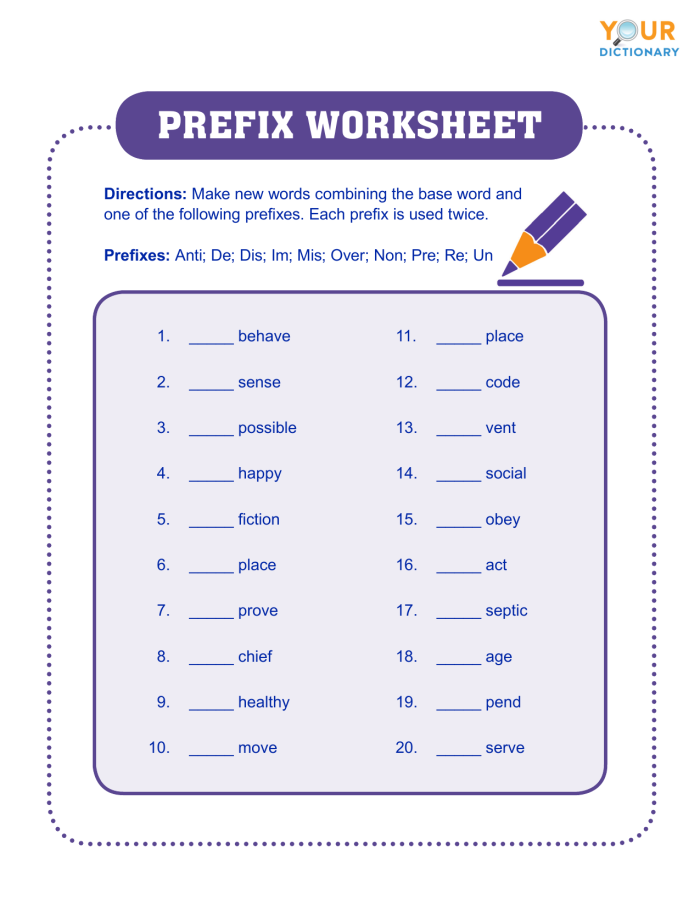
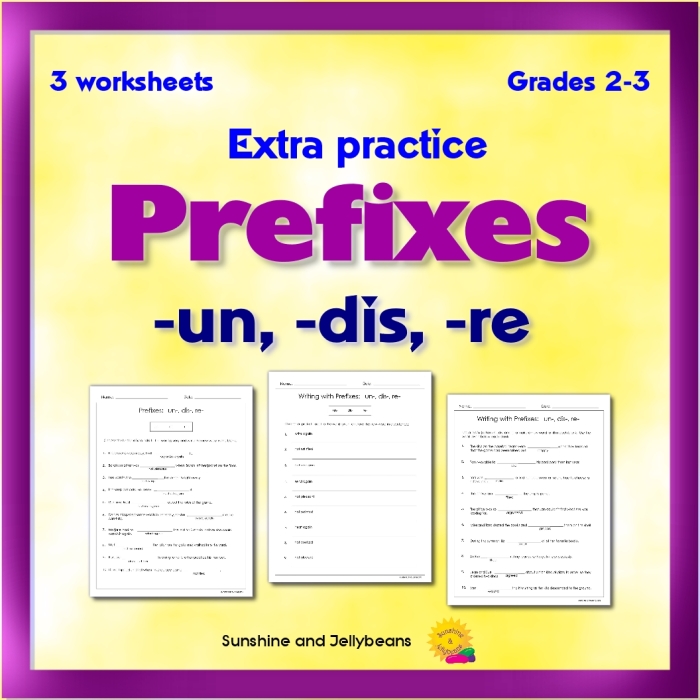
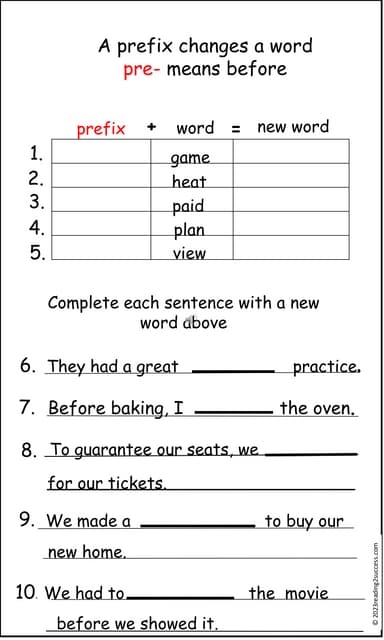
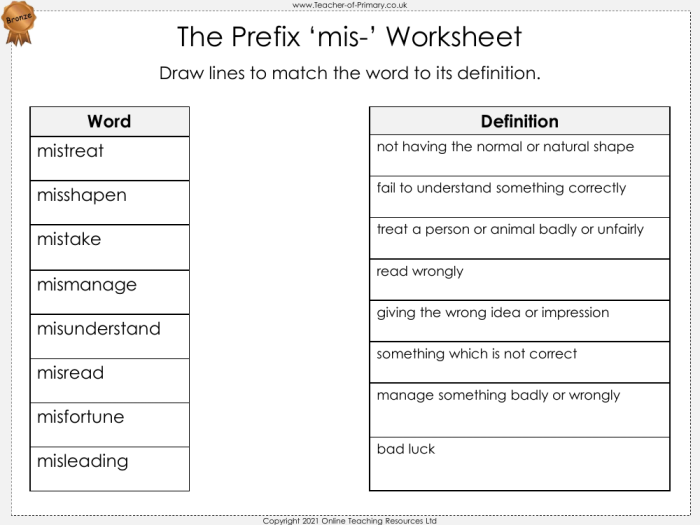
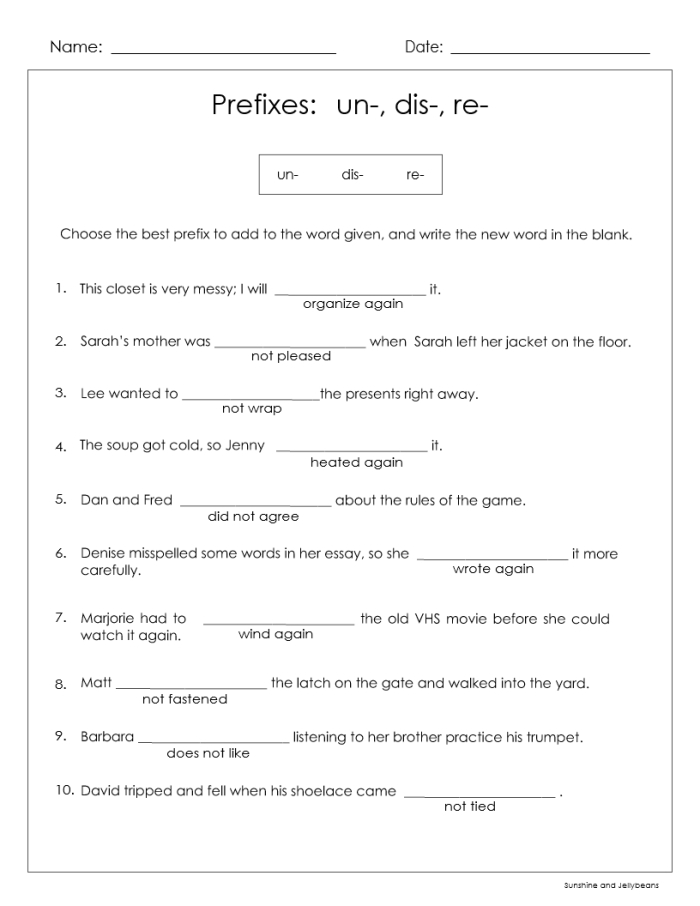
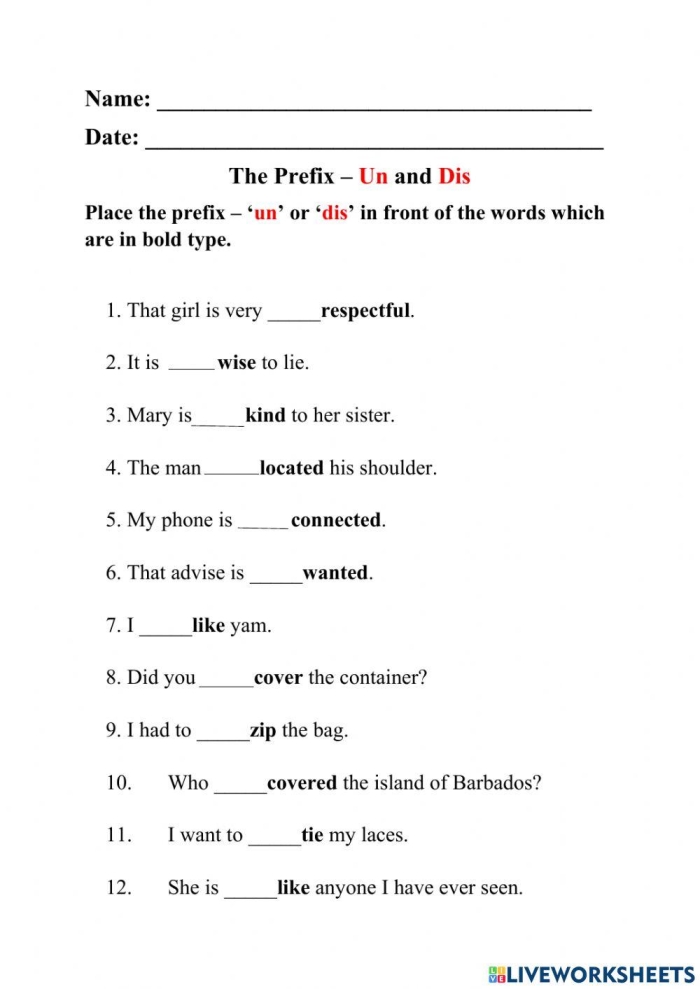
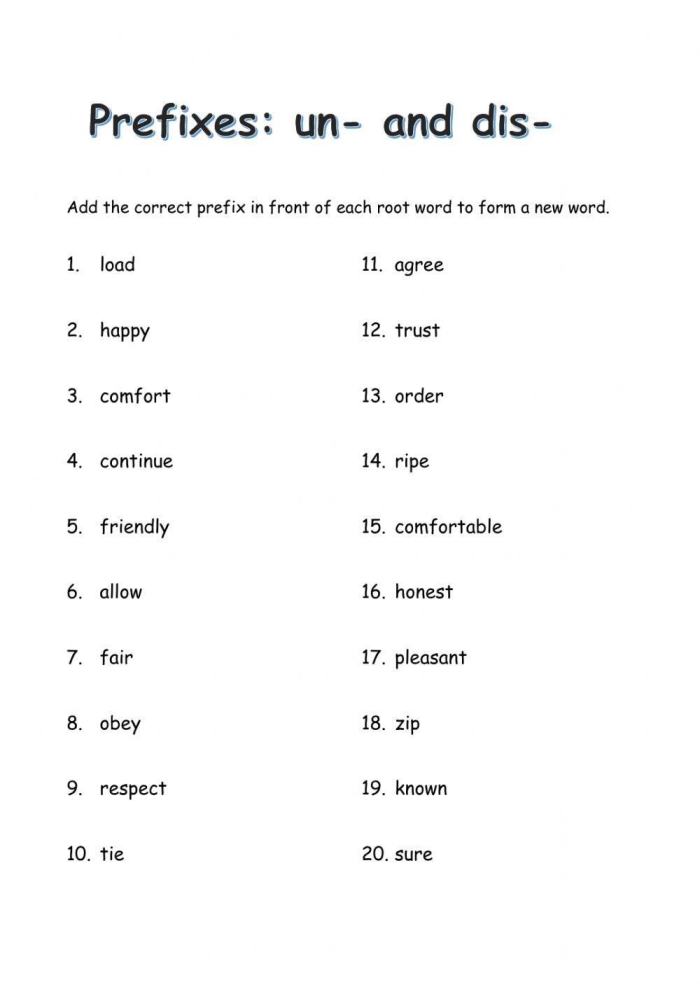
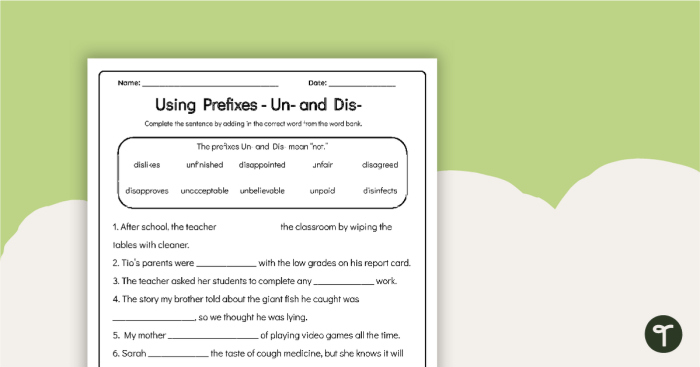
By incorporating prefixes into a structured worksheet, kids can engage in various activities that reinforce their understanding. They might be asked to fill in the blanks with the correct prefix, or perhaps write sentences using words with these prefixes. This hands-on practice not only solidifies their grasp of the material but also encourages creativity in their writing.
Worksheets like these are readily available for third-grade writing exercises. For example, you can explore more engaging activities related to writing comparative and superlative adjectives, or even check out assessments on three-digit place values. These complementary resources enhance the learning experience and provide a well-rounded approach to language skills.
As students practice using dis-, un-, and non-, they build confidence in their writing abilities. This foundational knowledge will serve them well as they progress through their educational journey. By mastering these prefixes now, they set themselves up for greater success in more complex language concepts in the future.
Try These Printable Worksheets