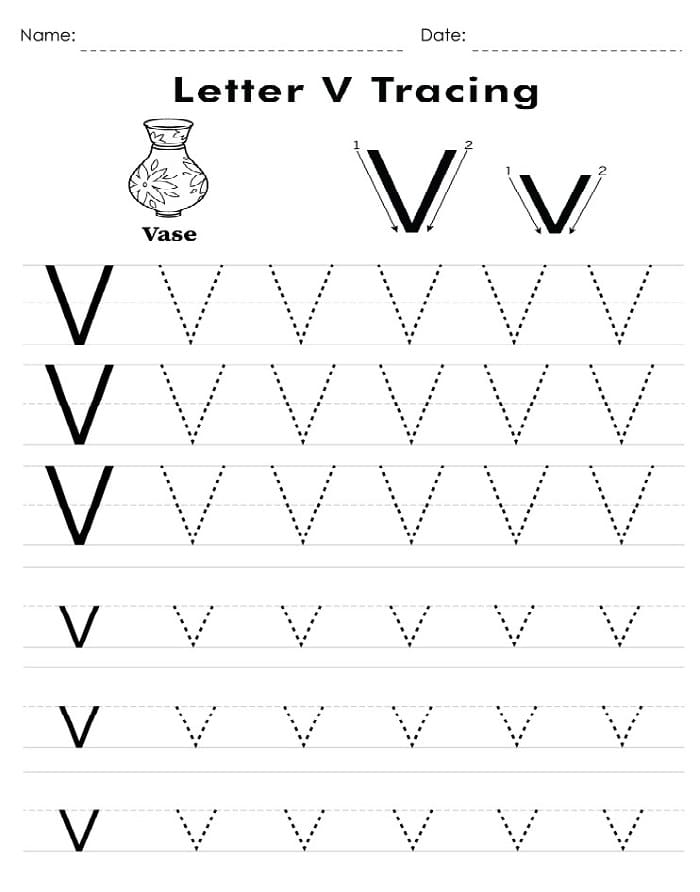
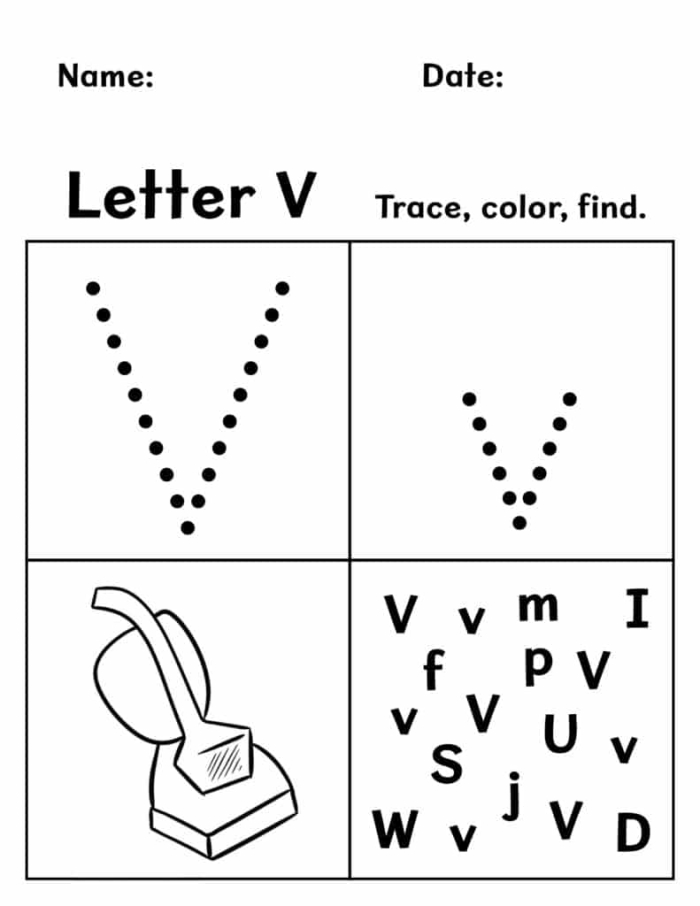
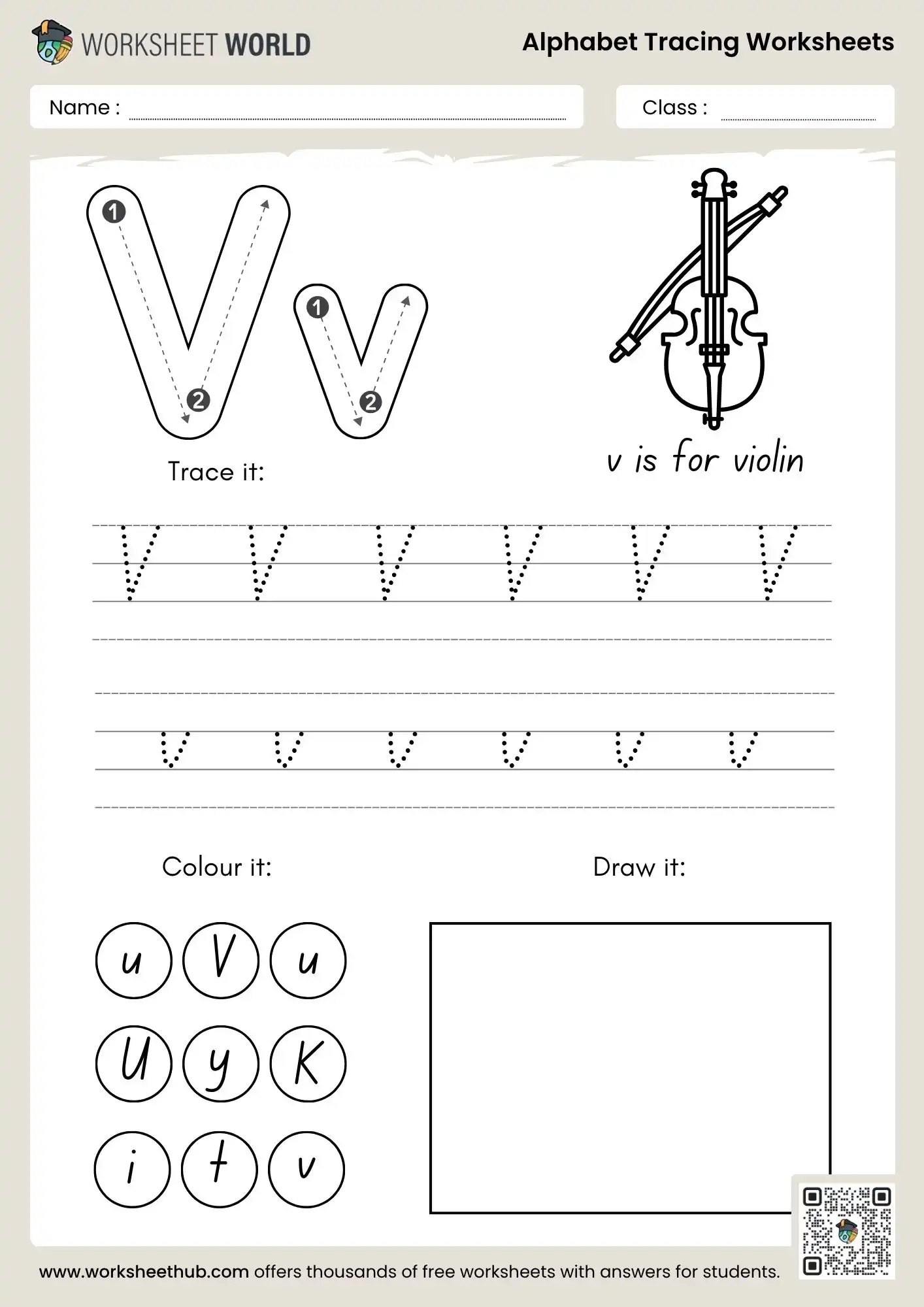
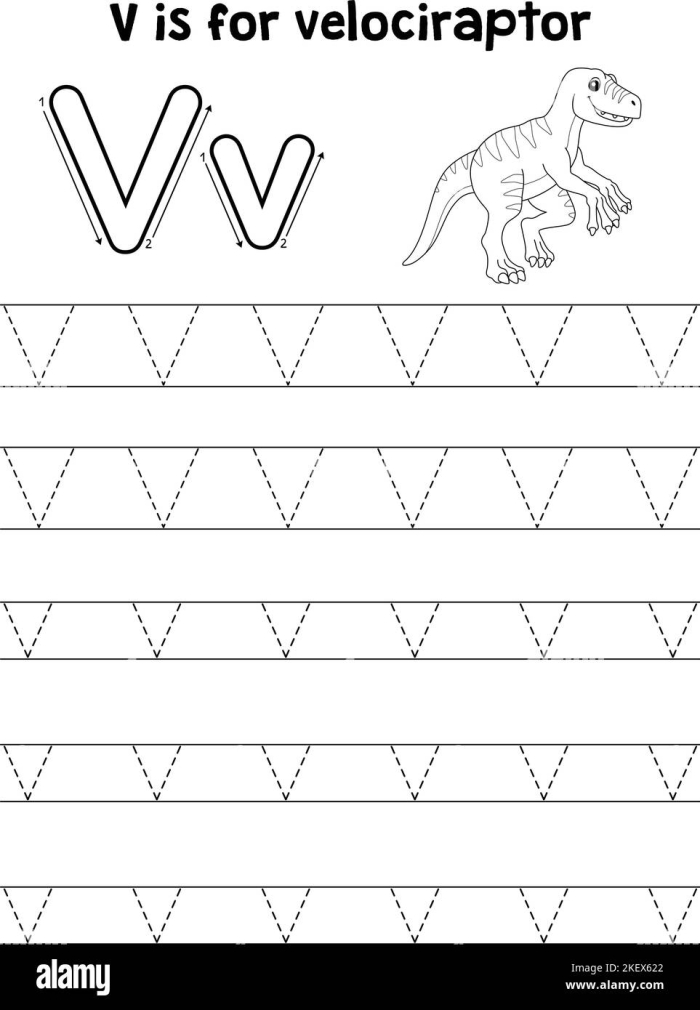
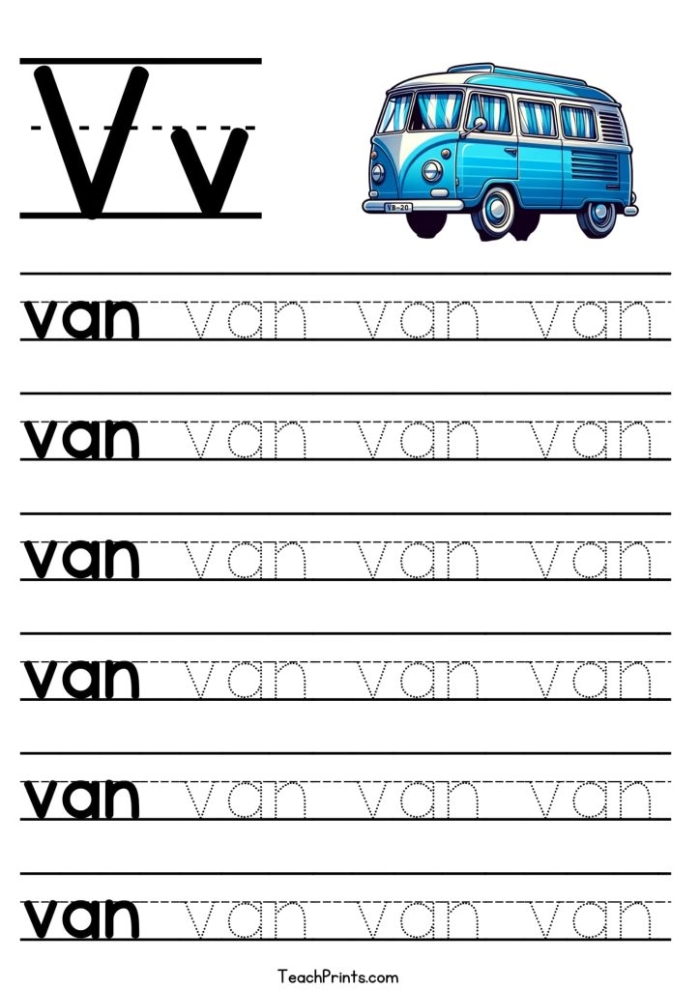
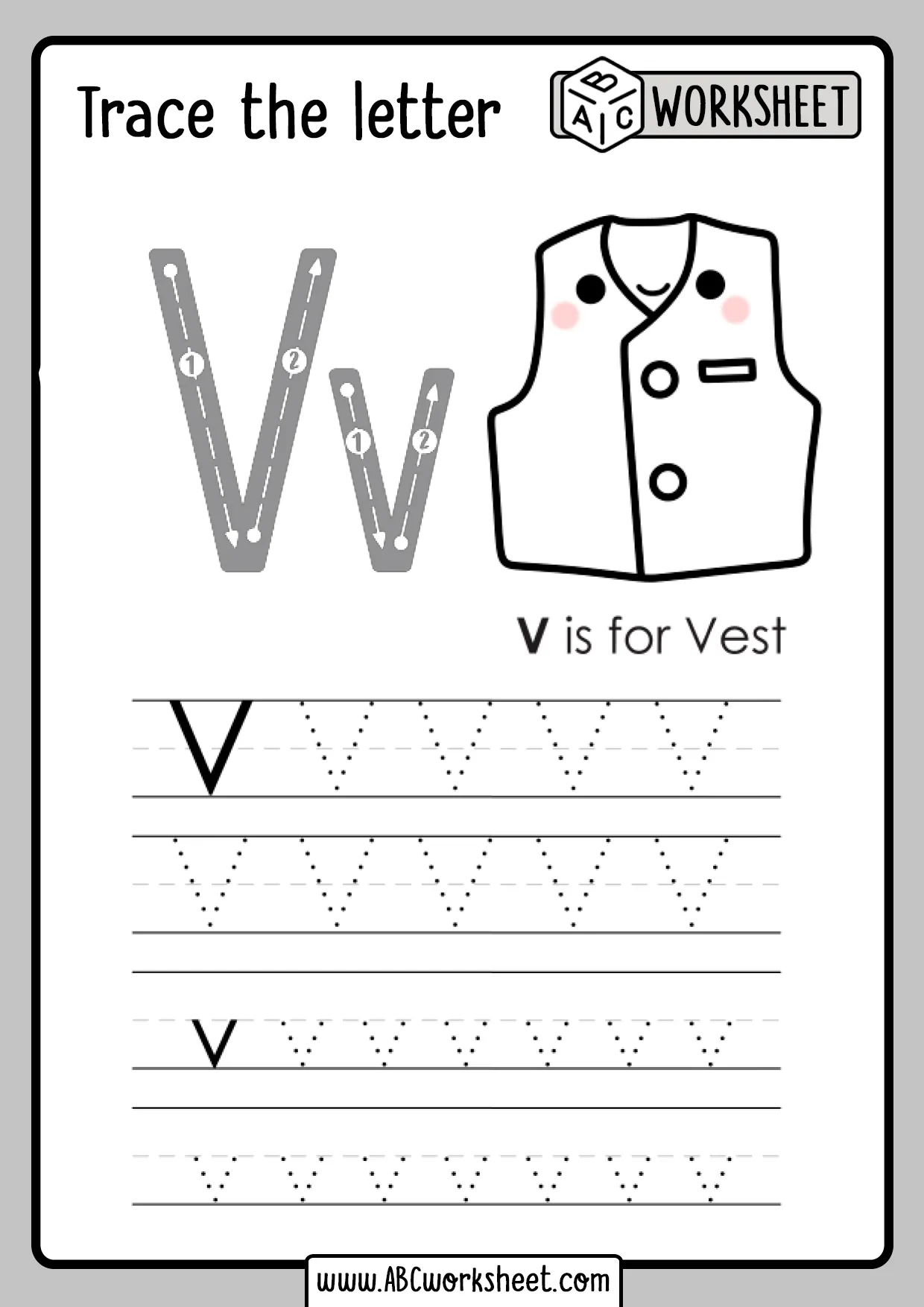
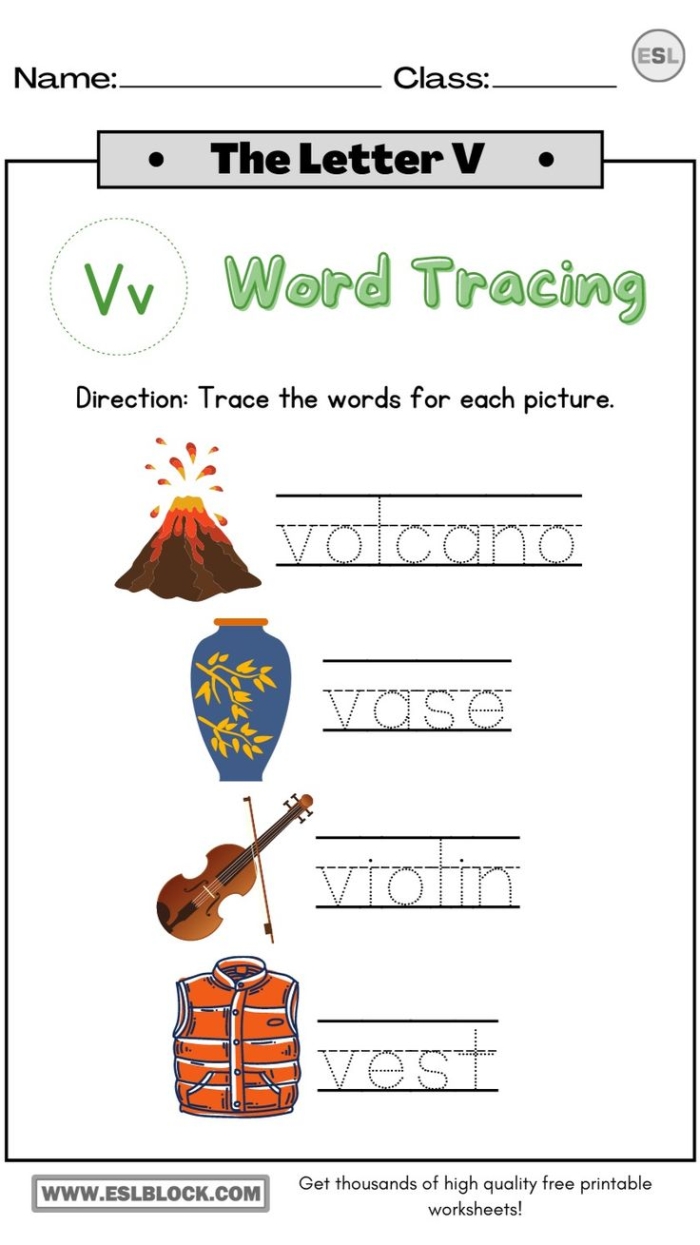
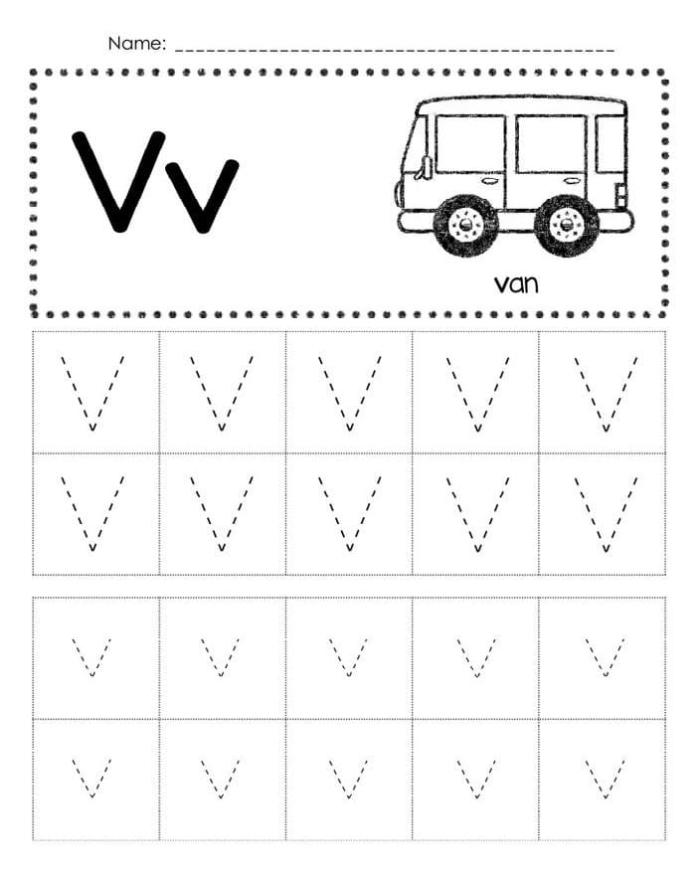
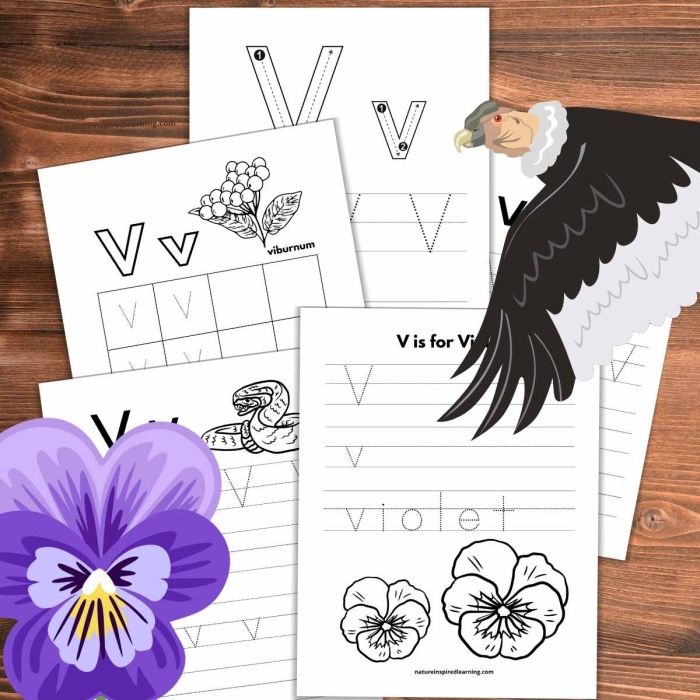
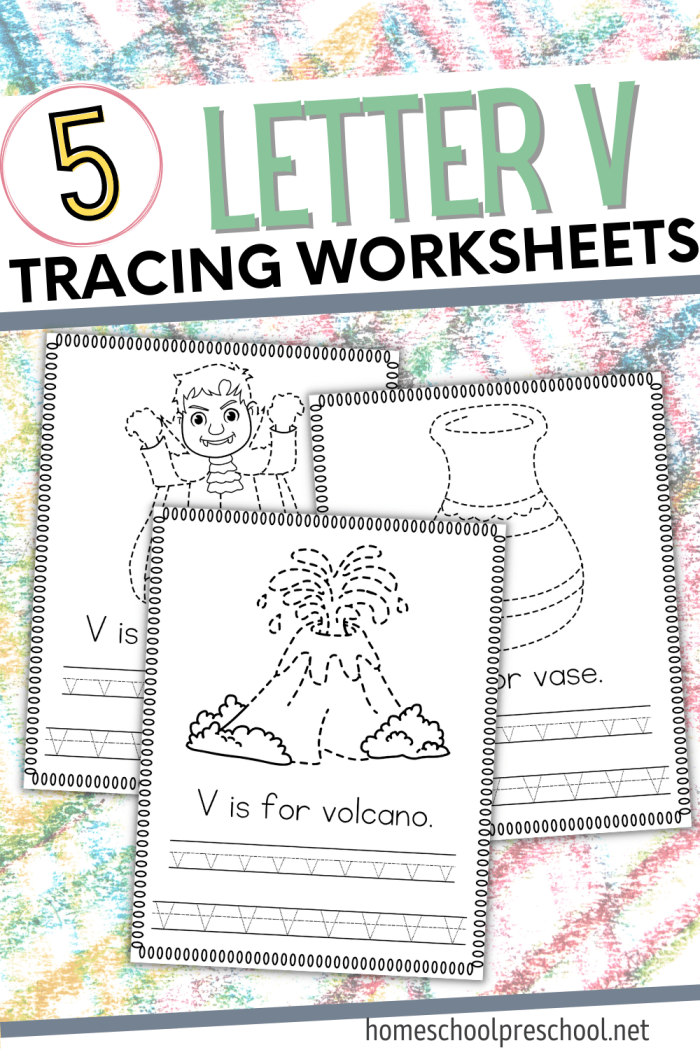
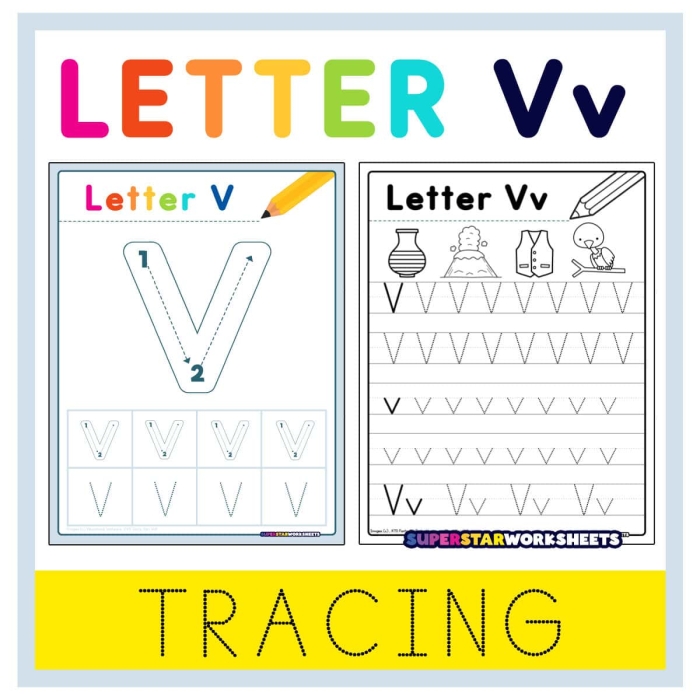
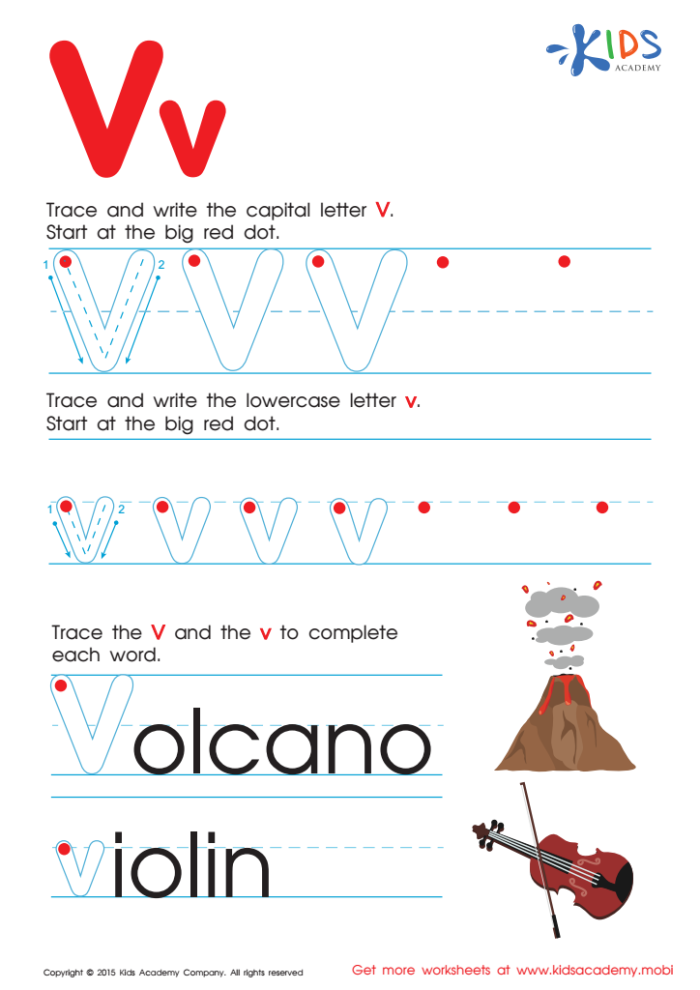
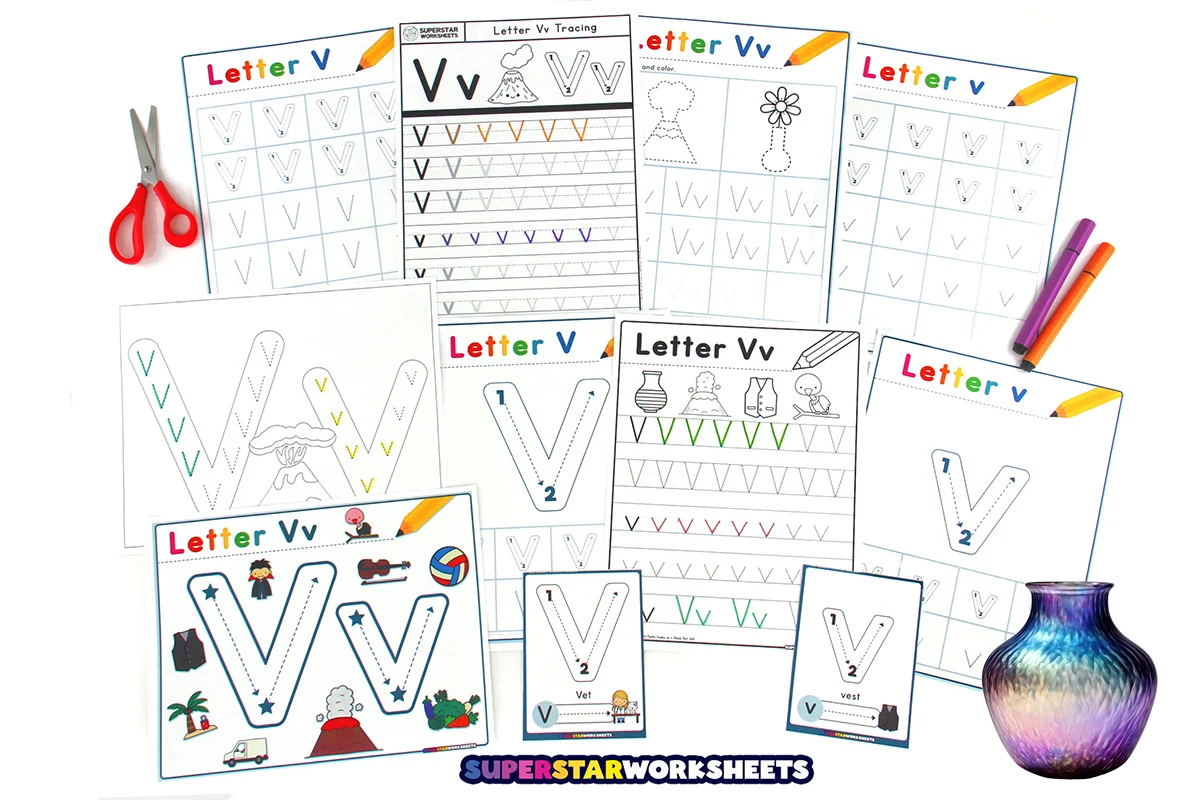
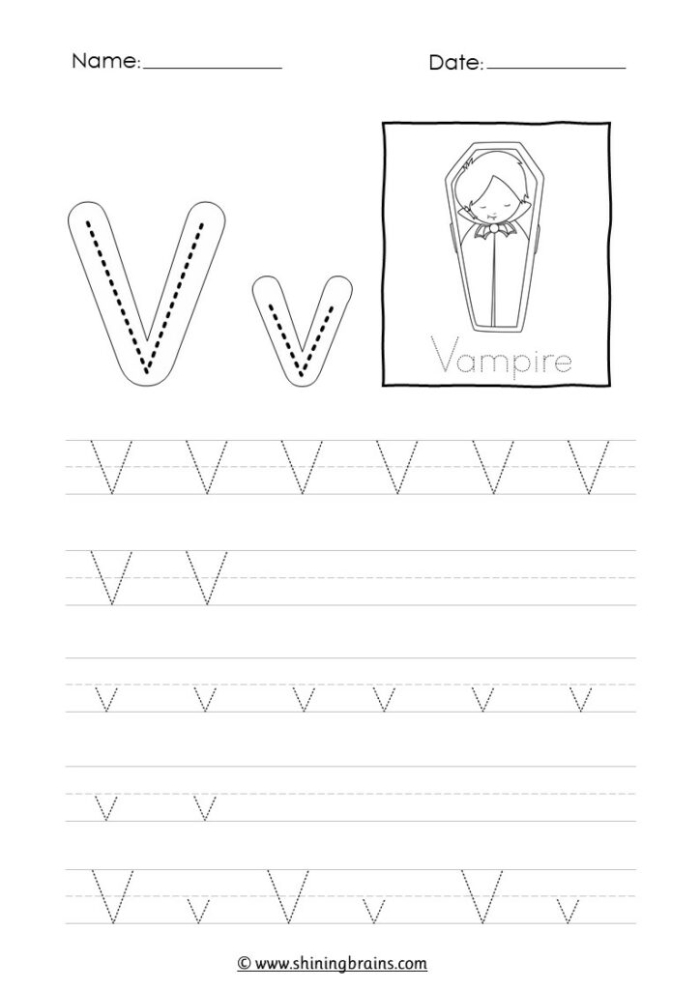
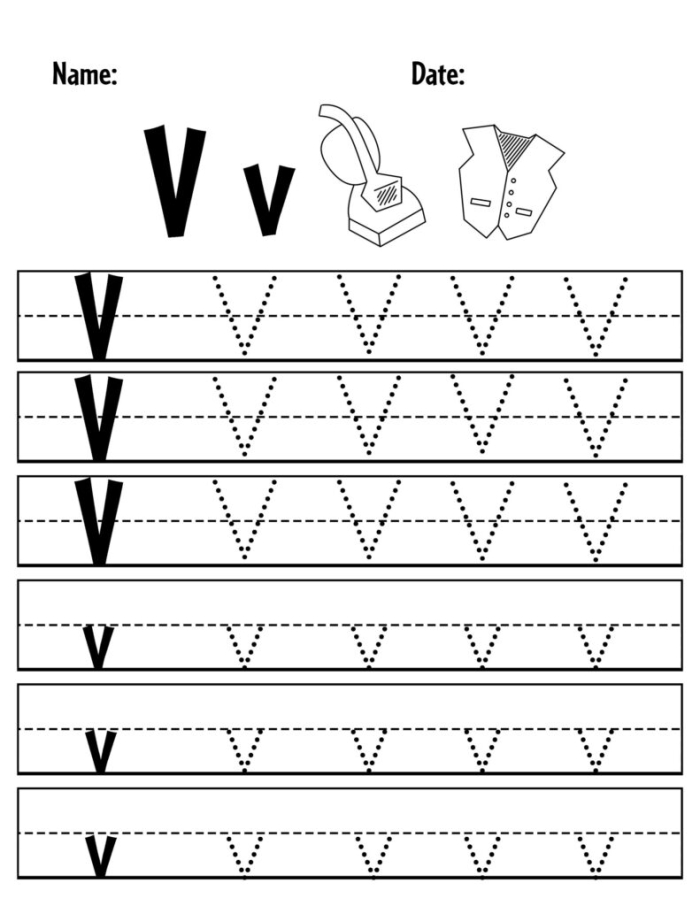
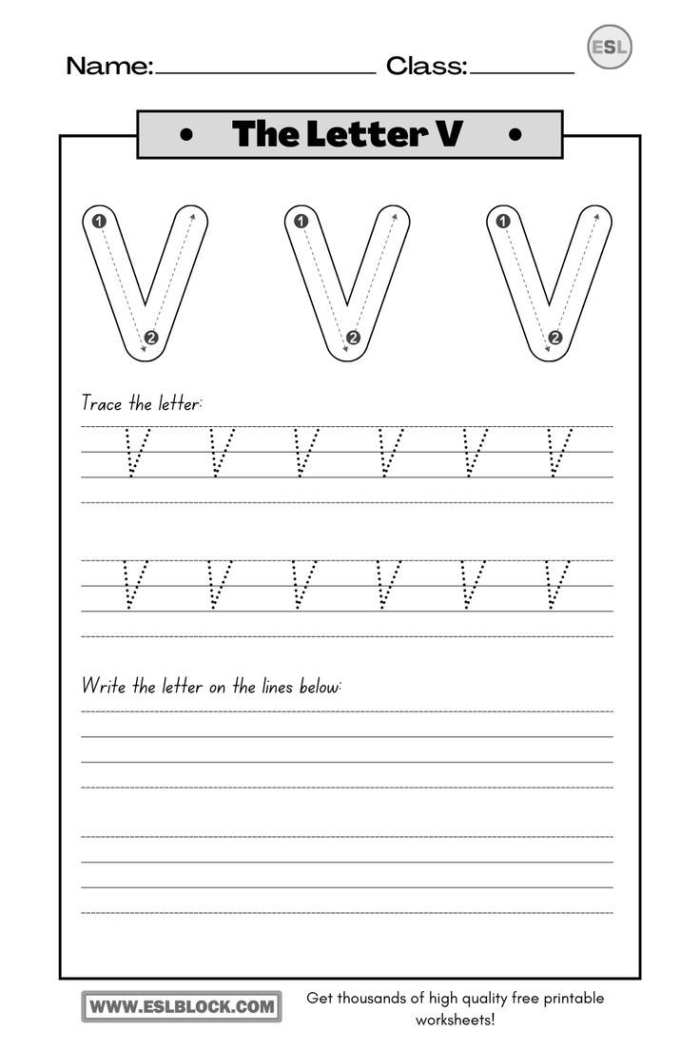
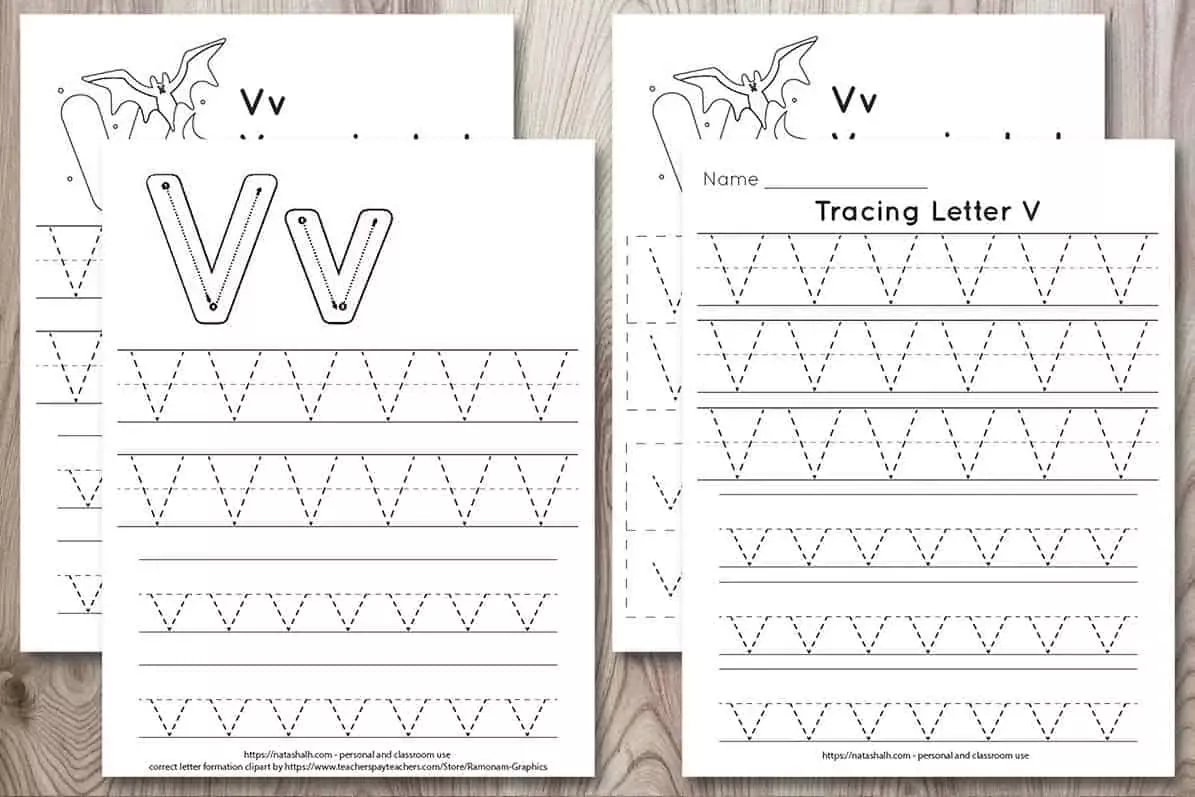
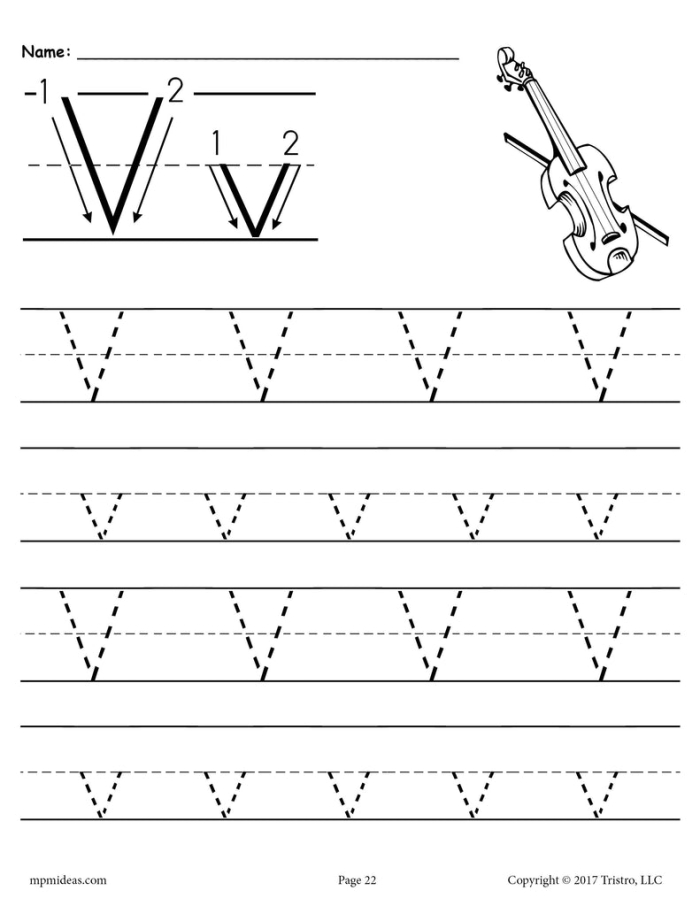
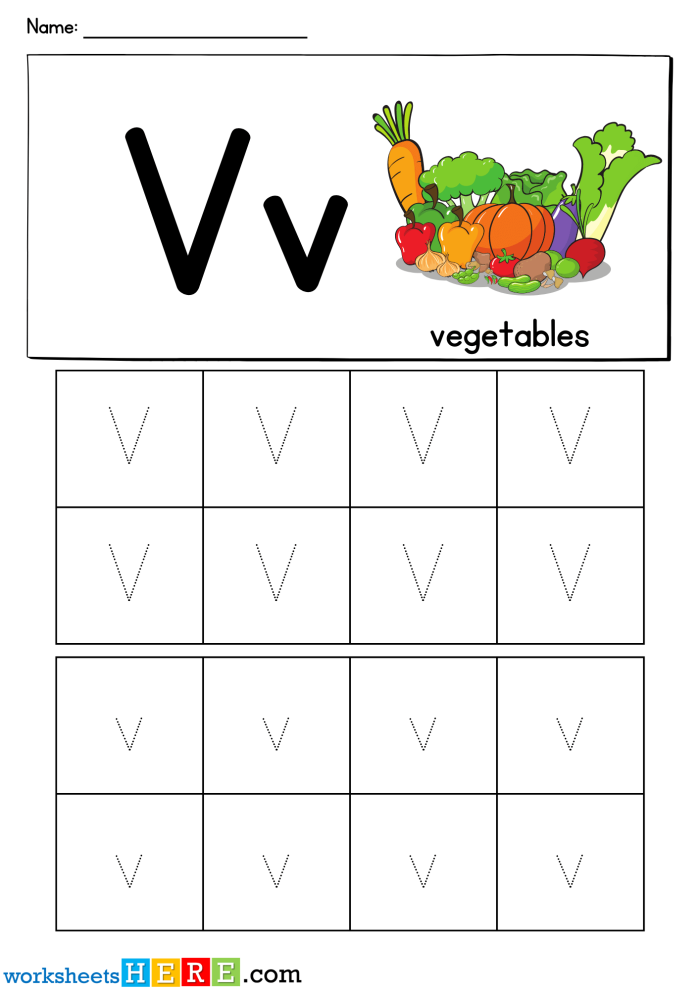
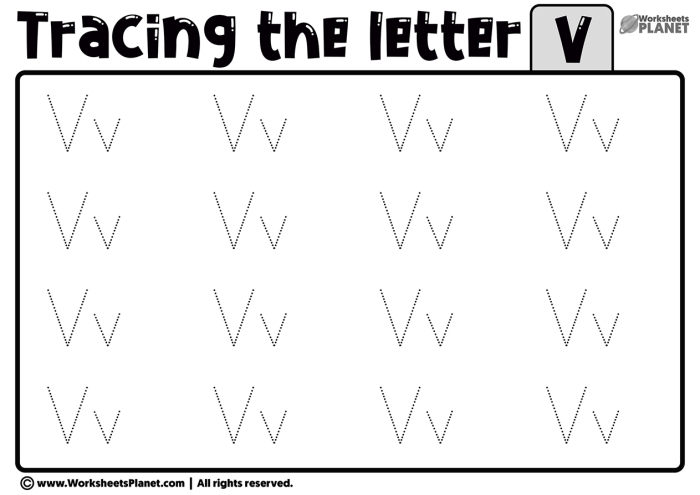
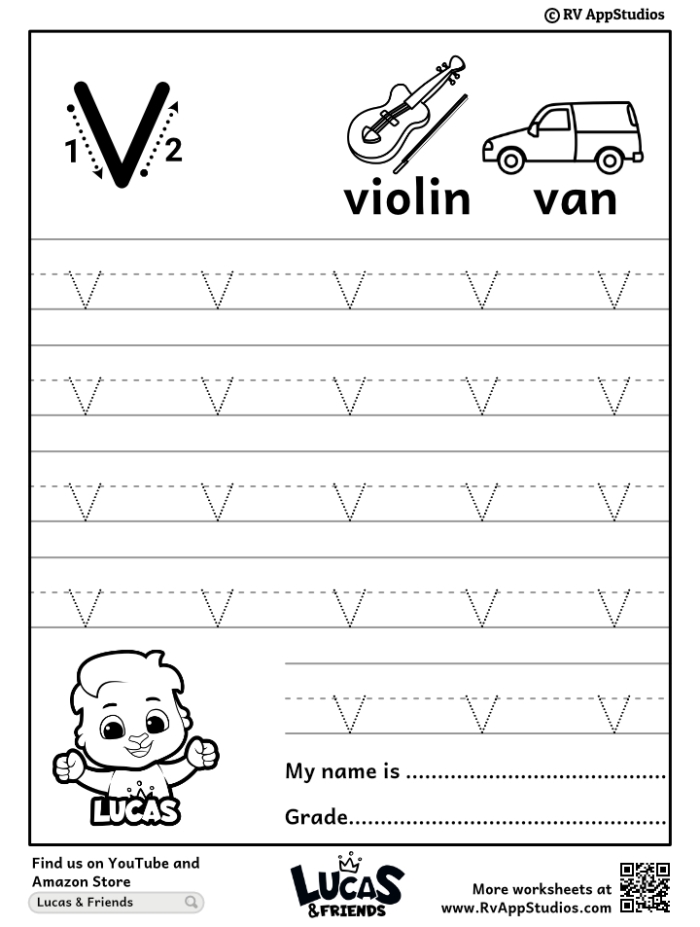
Getting a four-year-old’s hand ready to write takes patience and the right approach. This Pre-K worksheet tackles that challenge by breaking letter formation into manageable steps. Before kids ever touch a pencil to trace the letter V itself, they spend time on preparatory line work that builds the exact hand strength and control they’ll need.
The worksheet starts with simple line tracing exercises. These aren’t random scribbles, though. Each line is designed to mirror the movements required for writing V: diagonal strokes that angle downward from left to right, then shift direction to angle downward from right to left. When a child traces these preliminary lines, their fingers develop muscle memory for the specific hand positions and pressure needed.
Fine motor skills at this age develop unevenly. Some Pre-K students arrive at school with hands that have spent months stacking blocks, drawing circles, and manipulating small objects. Others are just beginning to explore what their fingers can do. This worksheet meets kids where they are by giving them multiple opportunities to practice the same motion in a low-pressure way before attempting the actual letter.
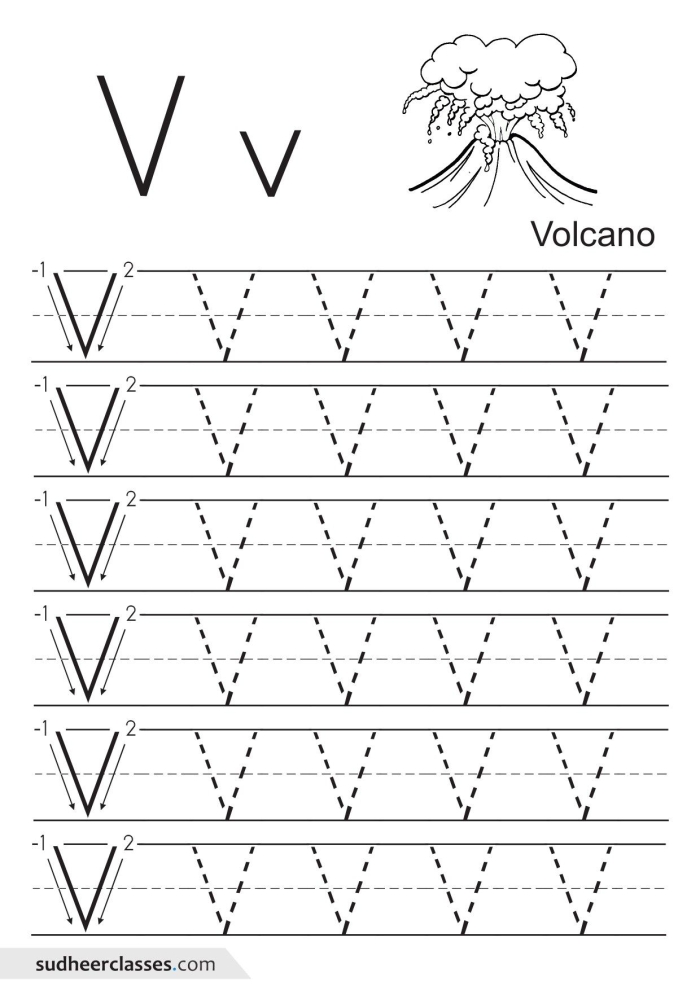
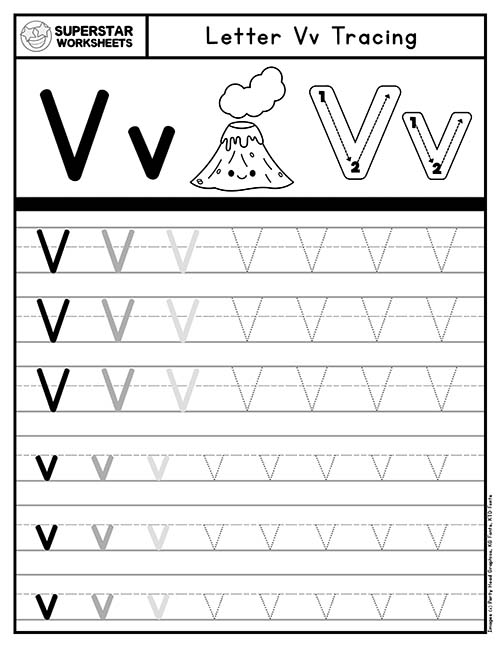
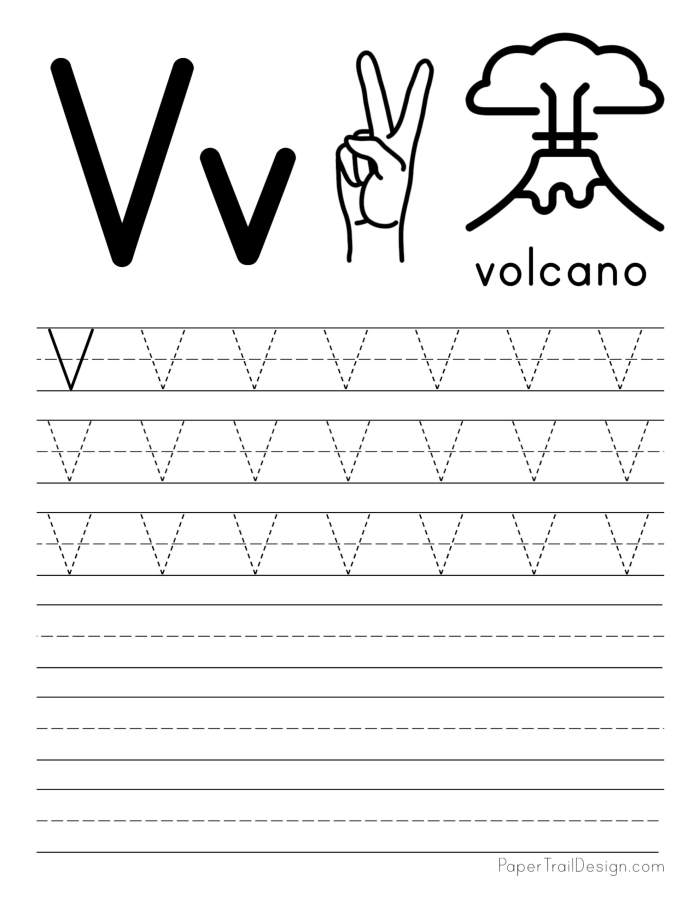
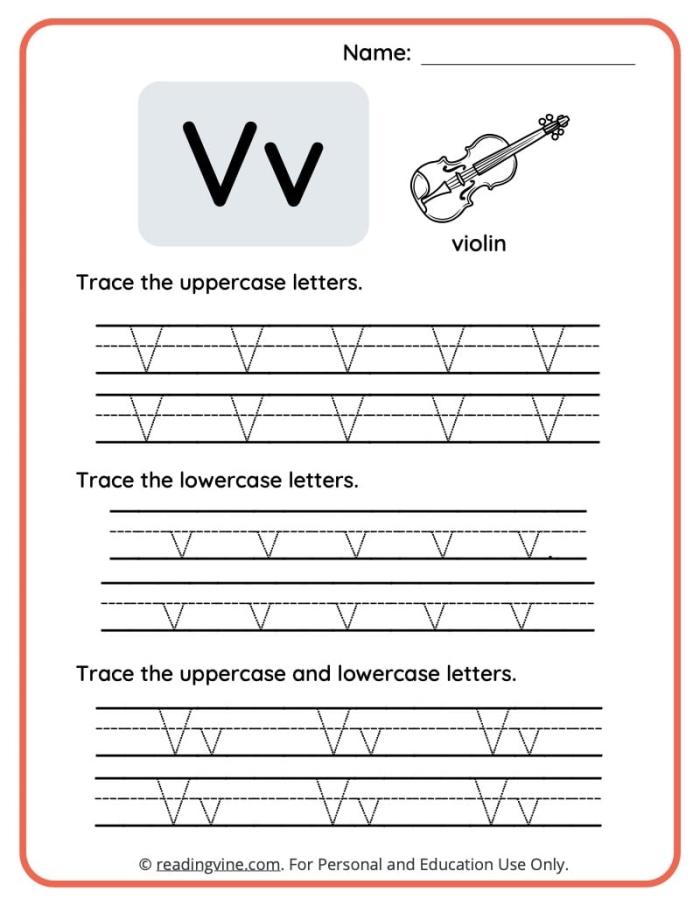
After completing the line-tracing section, students move to the main event: tracing the letter V itself. By this point, their hands have already warmed up and practiced the necessary movements. The letter feels less foreign and more like a natural continuation of what they’ve been doing. This progression from abstract lines to concrete letters is particularly effective in geometry and spatial awareness activities that are common in Pre-K curricula.
The beauty of this approach is that it removes frustration from early writing instruction. Kids experience success at every stage, which builds confidence. You can also incorporate this type of practice into other geometry Pre-K worksheets to reinforce spatial skills alongside letter formation.
Start Practicing with These Worksheets