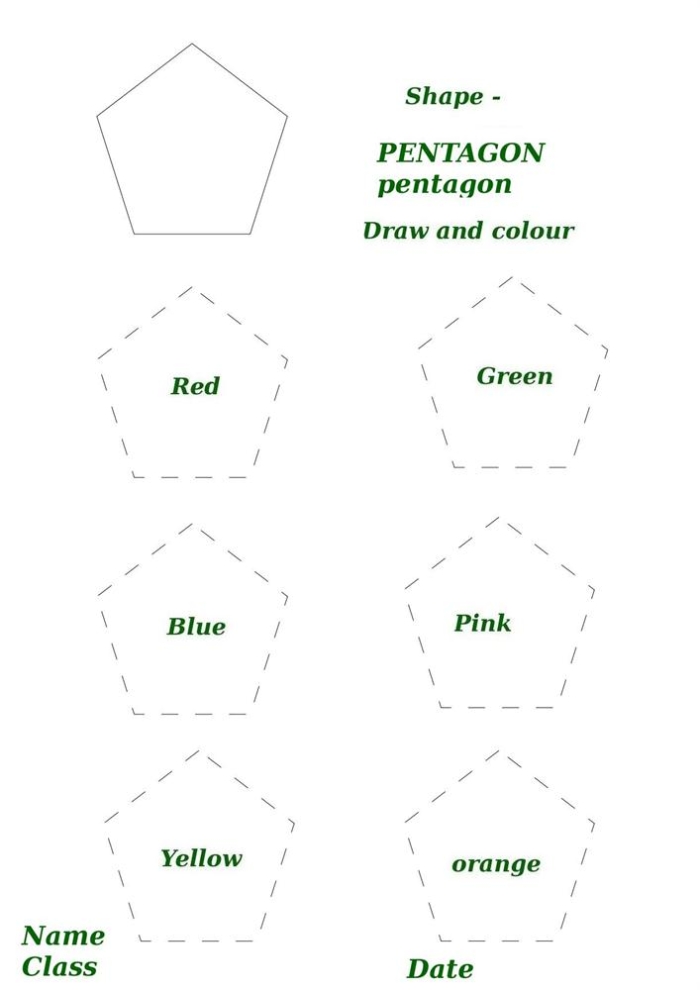
Finding the perimeter of a pentagon can be an engaging challenge for fourth-grade students. As they work through various problems involving this five-sided figure, they not only sharpen their math skills but also gain a deeper understanding of geometry. By integrating pentagon perimeter practice into your lessons, you encourage students to think critically and apply their knowledge in a fun way.
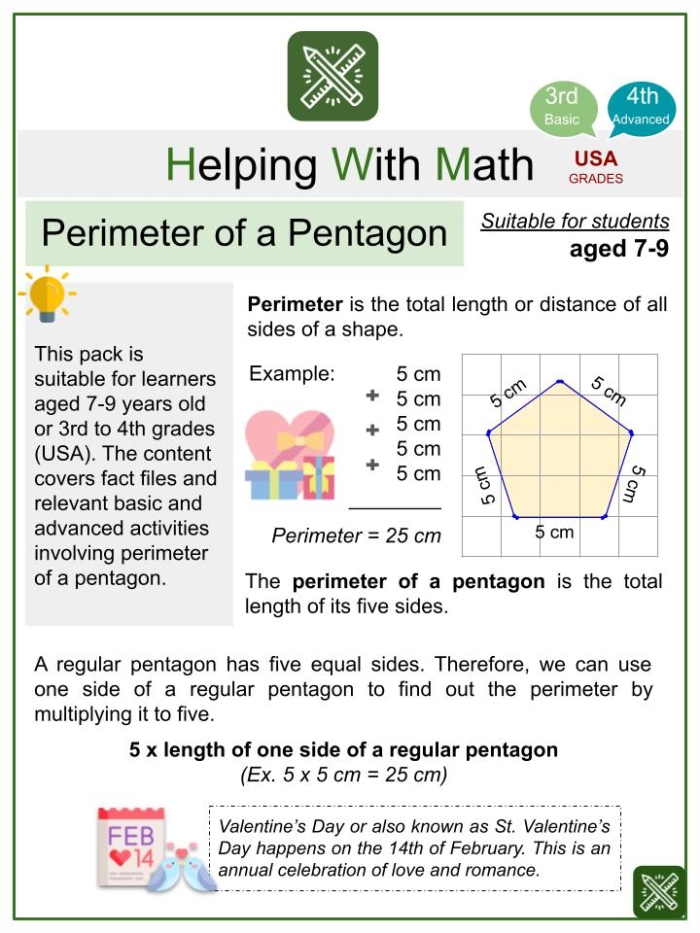
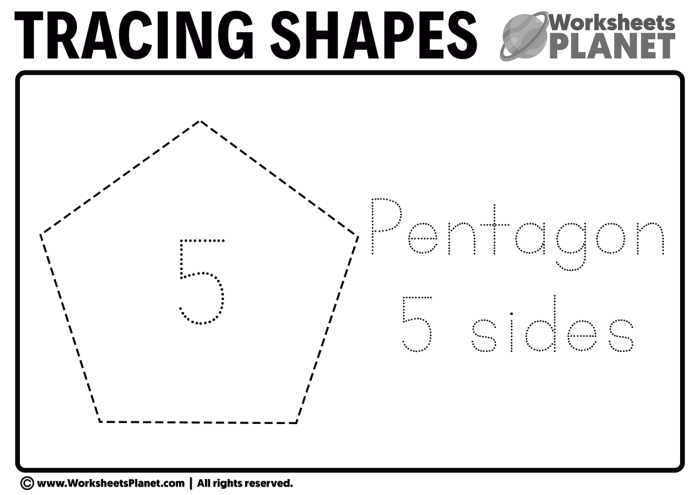
Start by introducing the concept of a pentagon. Explain that a pentagon has five sides, and the perimeter is the total distance around this shape. To find the perimeter, students simply need to add the lengths of all five sides together. For instance, if a pentagon has side lengths of 3 cm, 5 cm, 4 cm, 6 cm, and 2 cm, the perimeter would be 3 + 5 + 4 + 6 + 2, resulting in 20 cm. Providing clear examples like this helps students visualize the process.
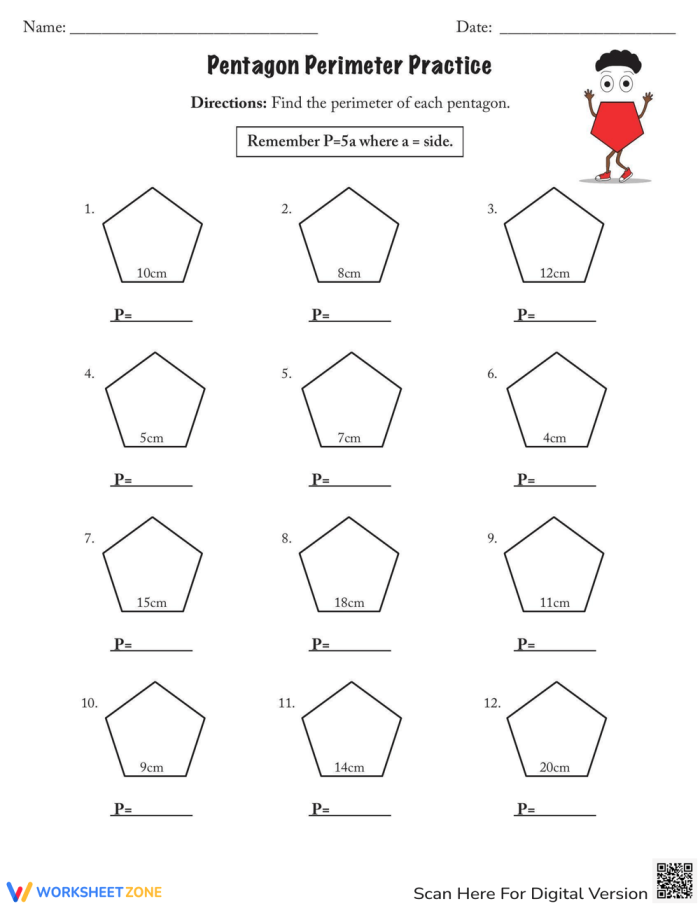
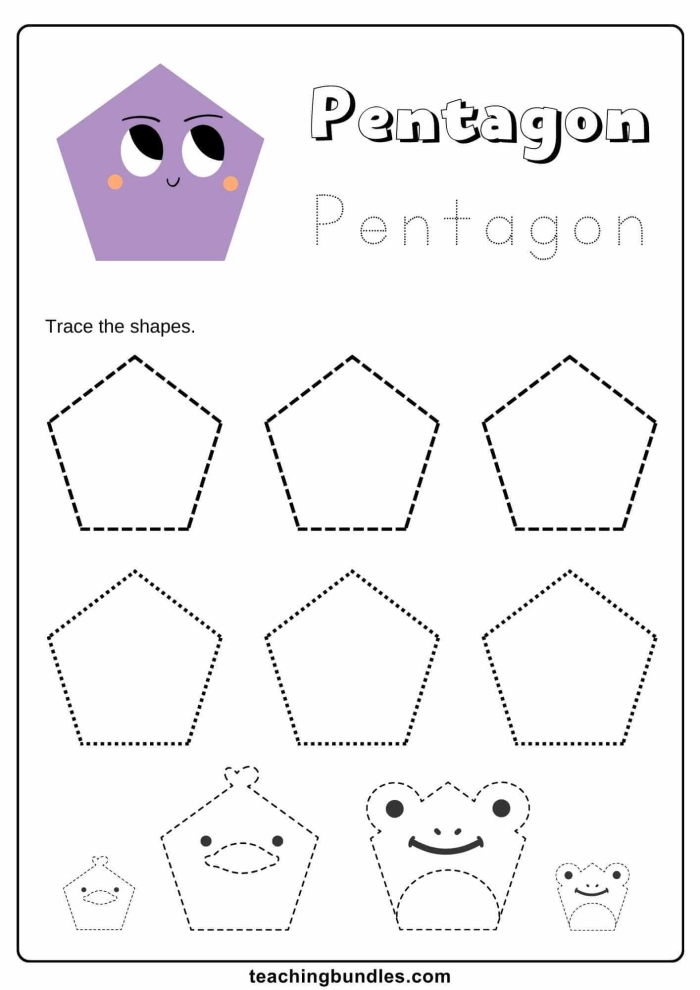
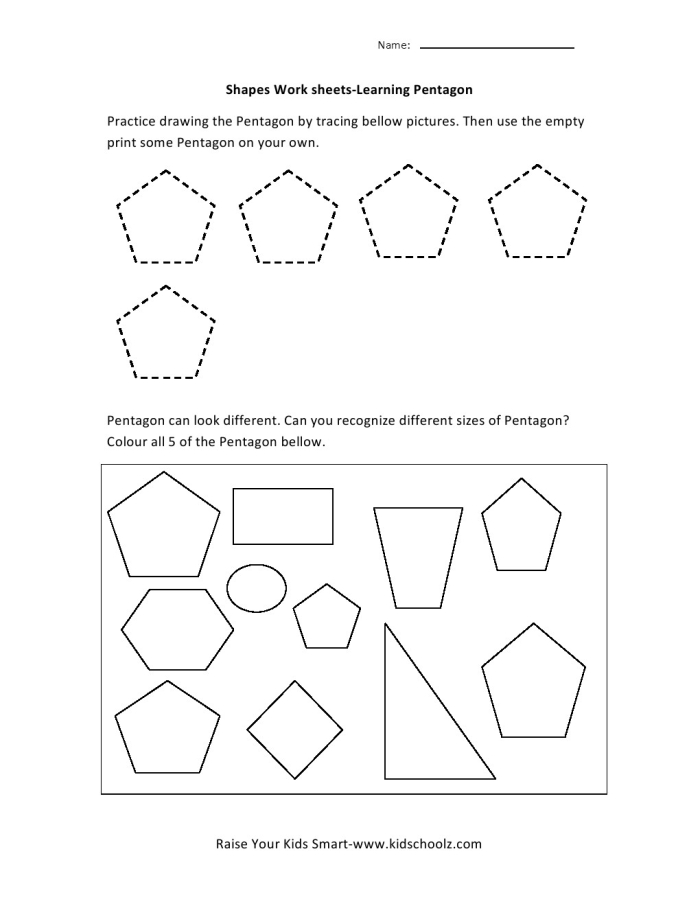
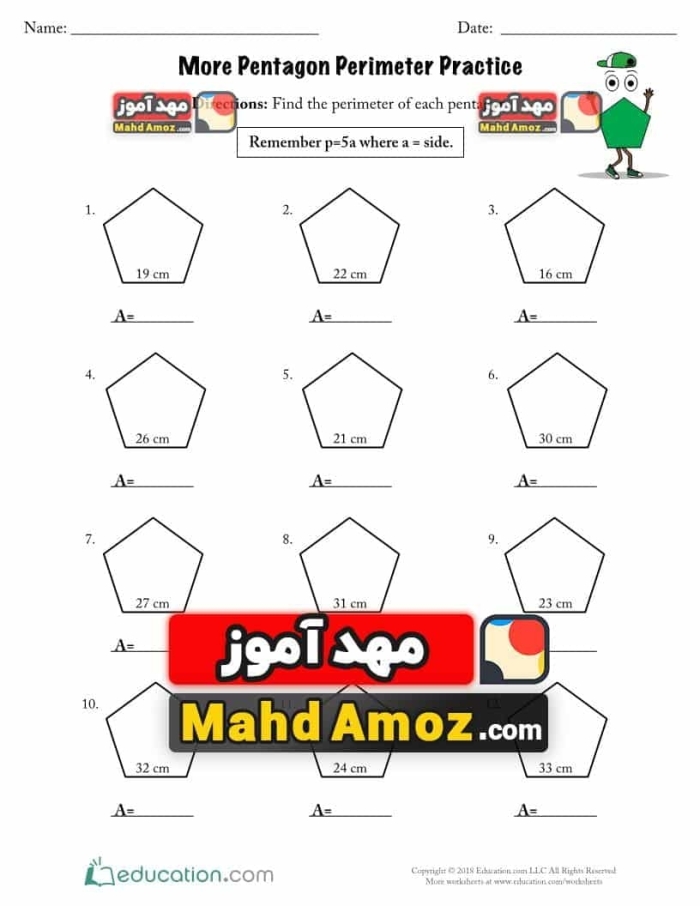
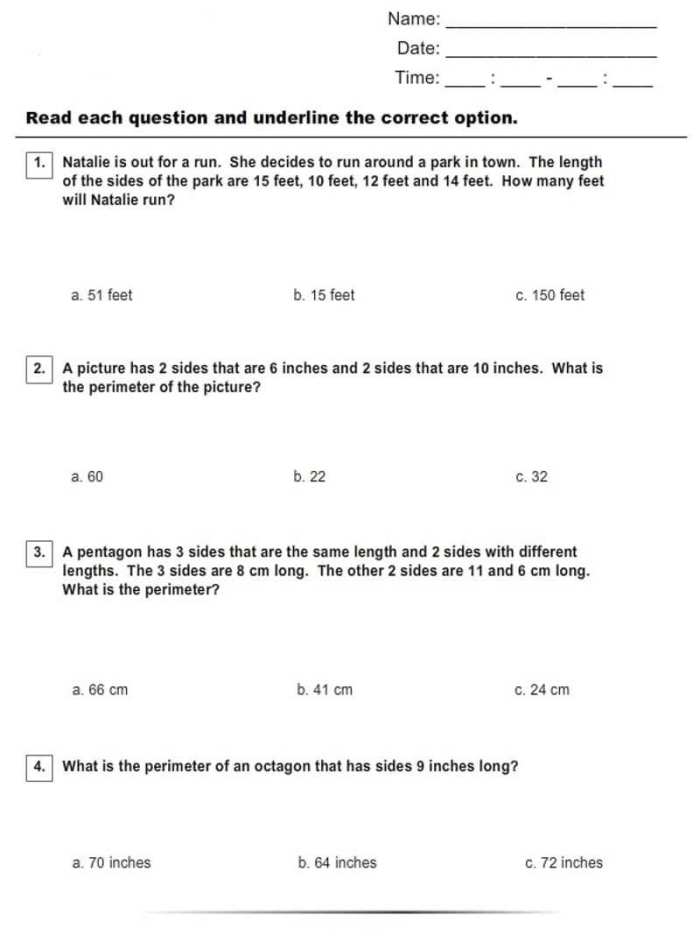
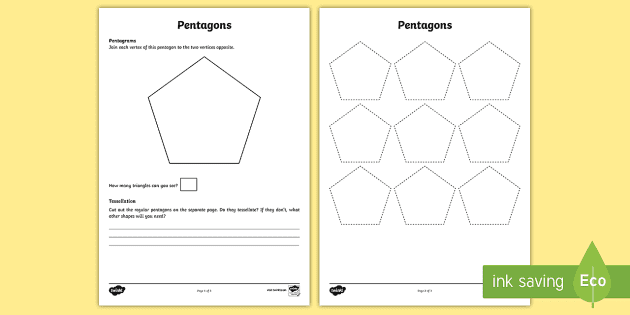
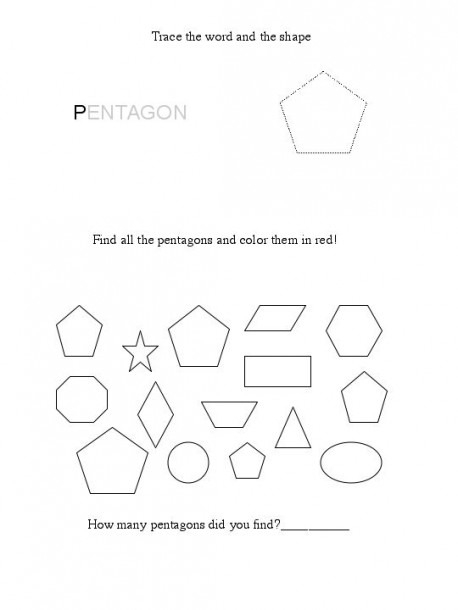
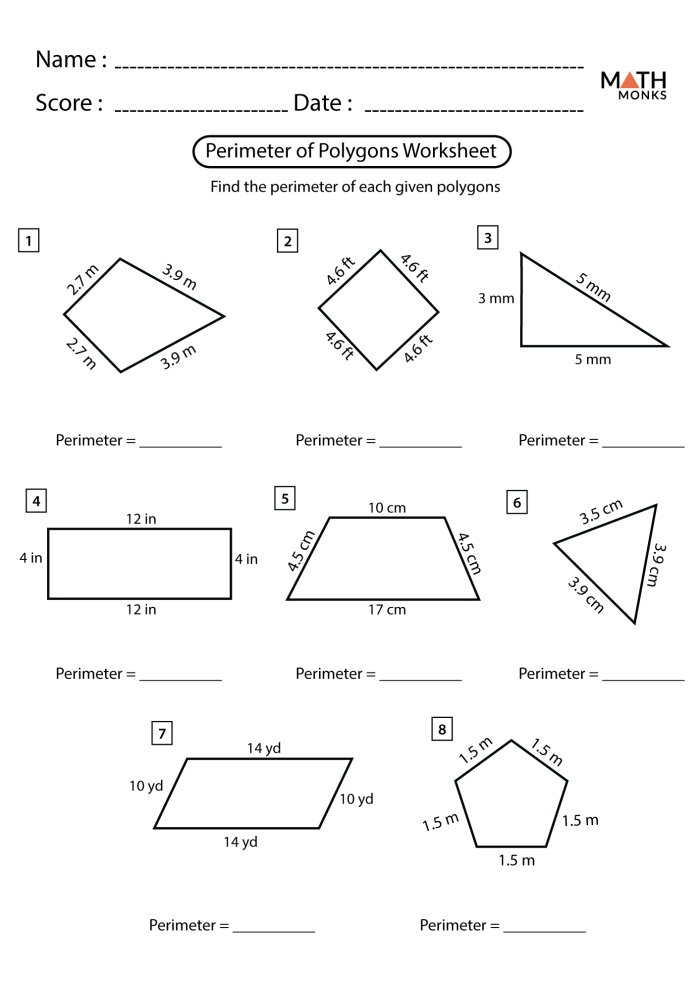
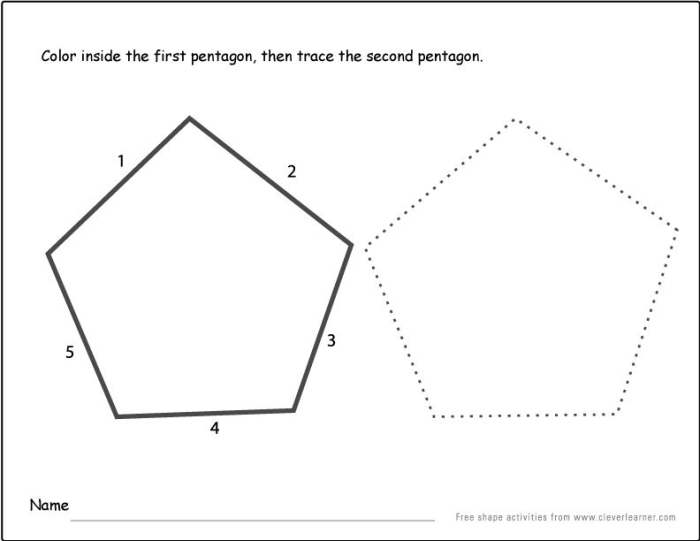
To reinforce their learning, consider using printable Pentagon perimeter practice worksheets. These worksheets can include various pentagon shapes with marked side lengths, allowing students to calculate the perimeter step by step. Additionally, incorporating diagrams can enhance their understanding and keep them engaged.
Group activities can also foster collaboration and communication among students. Assign them to work in pairs to create their own pentagons using string or sticks and then measure the sides to calculate the perimeter. This hands-on approach makes learning more interactive and enjoyable.
Ultimately, practicing perimeter calculations with pentagons not only meets curriculum standards but also makes math feel relevant and approachable. As students refine their skills, they build confidence in their mathematical abilities, laying the groundwork for future success in geometry and beyond. By incorporating these activities into your teaching, you support their growth as learners while making math a more enjoyable subject.
Worksheet Practice Section