Fourth grade is when fractions stop being abstract ideas and become something students actually use. By this point in the year, kids have moved past the basics and are ready to show what they really know about splitting things into equal parts, comparing different fractions, and understanding how they work in real situations.
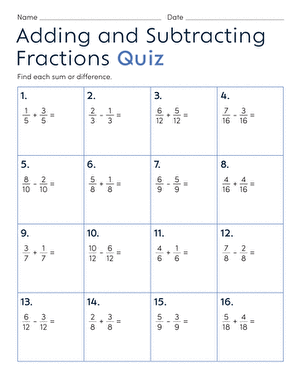
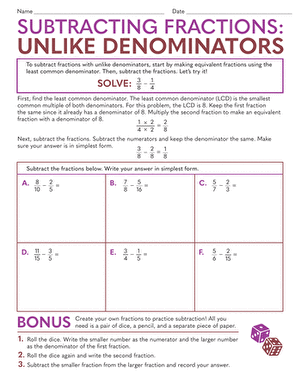
When fourth graders tackle fraction problems, they’re demonstrating skills that go beyond just memorizing rules. They’re learning to visualize how 1/4 differs from 1/2, to add fractions with the same denominator, and to recognize equivalent fractions. These aren’t trivial accomplishments. A student who can confidently work with fractions has built a foundation for everything from cooking measurements to understanding probability later on.
The real test of understanding happens when students encounter fractions in context. When they solve problems involving pizza slices, recipe ingredients, or distance measurements, they’re proving they can apply what they’ve learned rather than just following a formula. This is where fraction skills become meaningful.
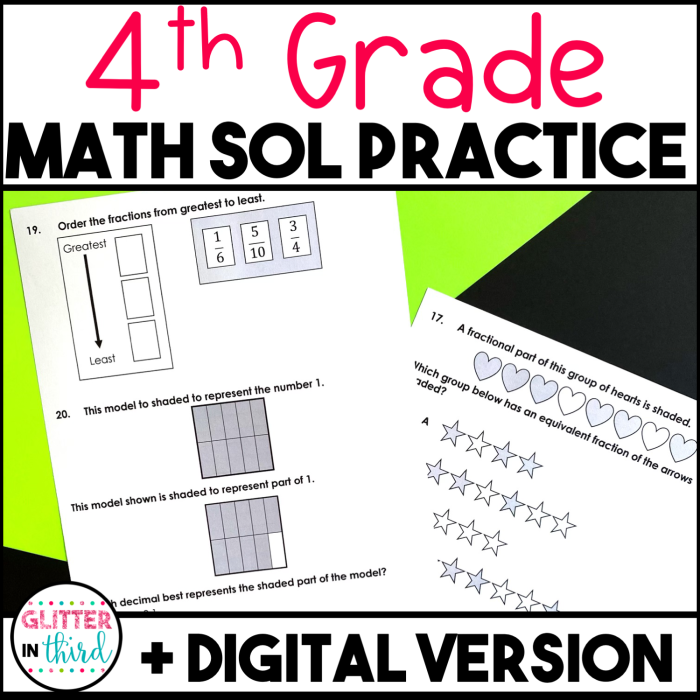
Many fourth grade teachers use a combination of hands-on activities and structured practice to help students develop these skills. Visual models like fraction bars and pie charts make the concept concrete. Then, as students grow more confident, they move toward working with fractions more abstractly. Practice materials that include real-world fraction scenarios with food and everyday items help bridge that gap between understanding and application.
When students demonstrate their fraction knowledge on assessments or assignments, they’re showing readiness for more complex mathematical thinking. They’re proving they can handle the reasoning that fifth grade and beyond will demand. That confidence matters just as much as the correct answers.
Grab These Worksheets Now