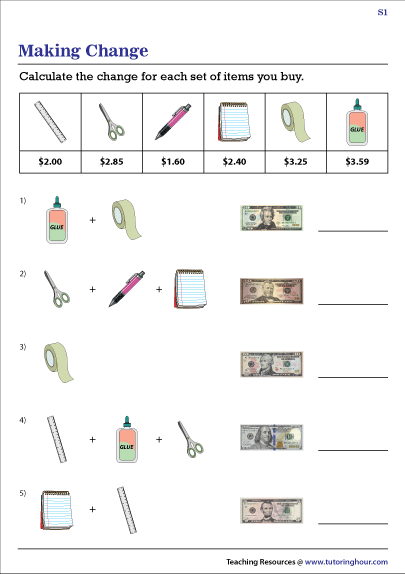
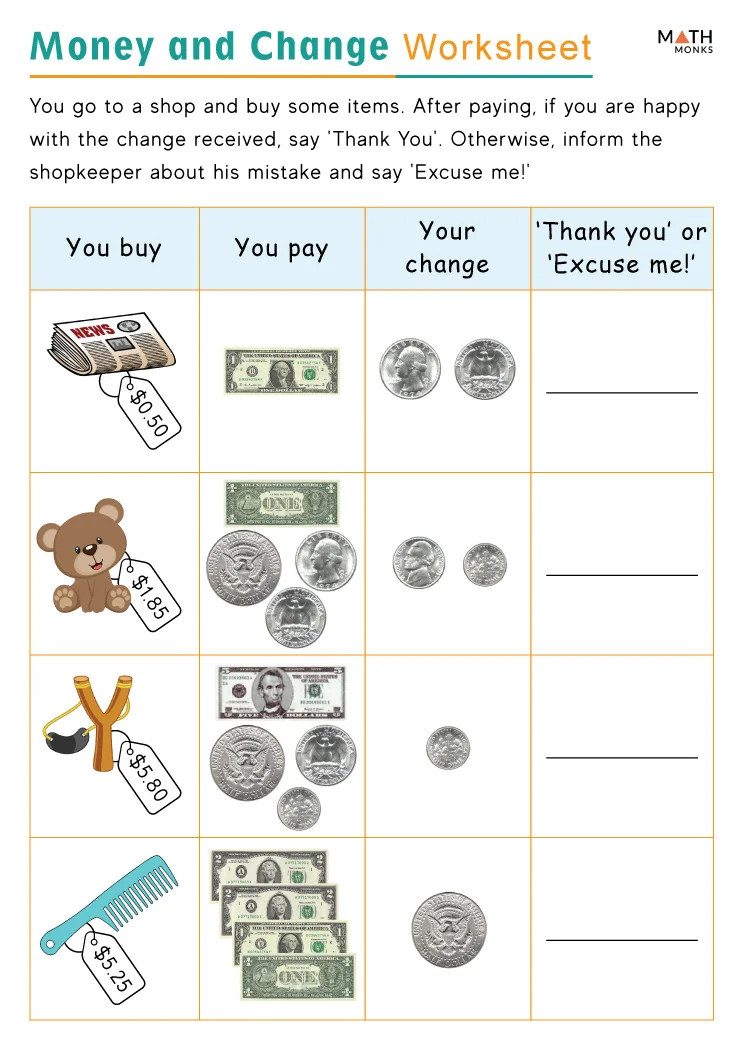
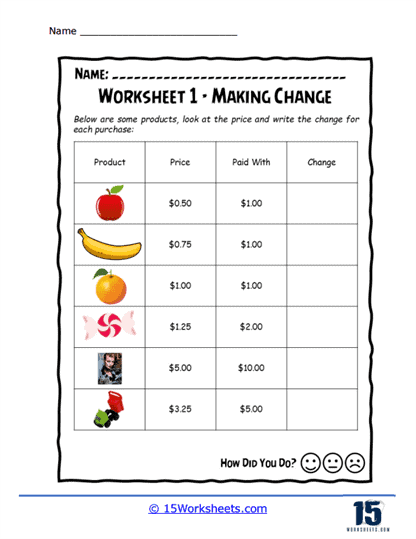
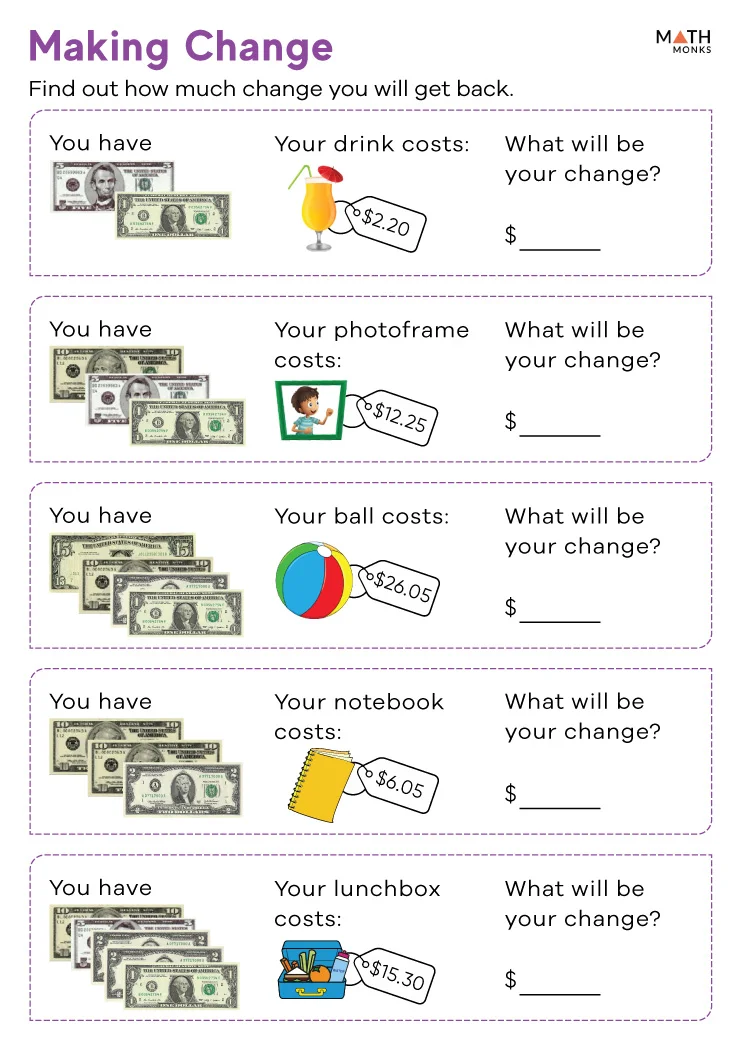
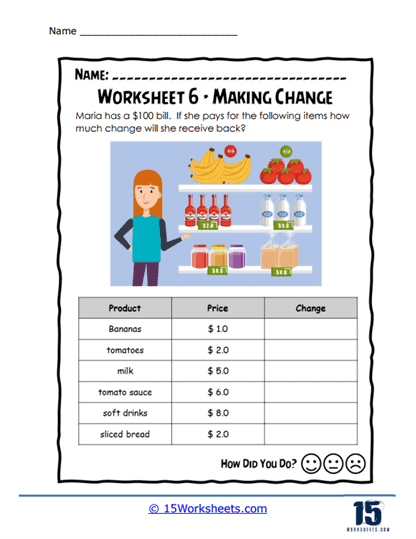
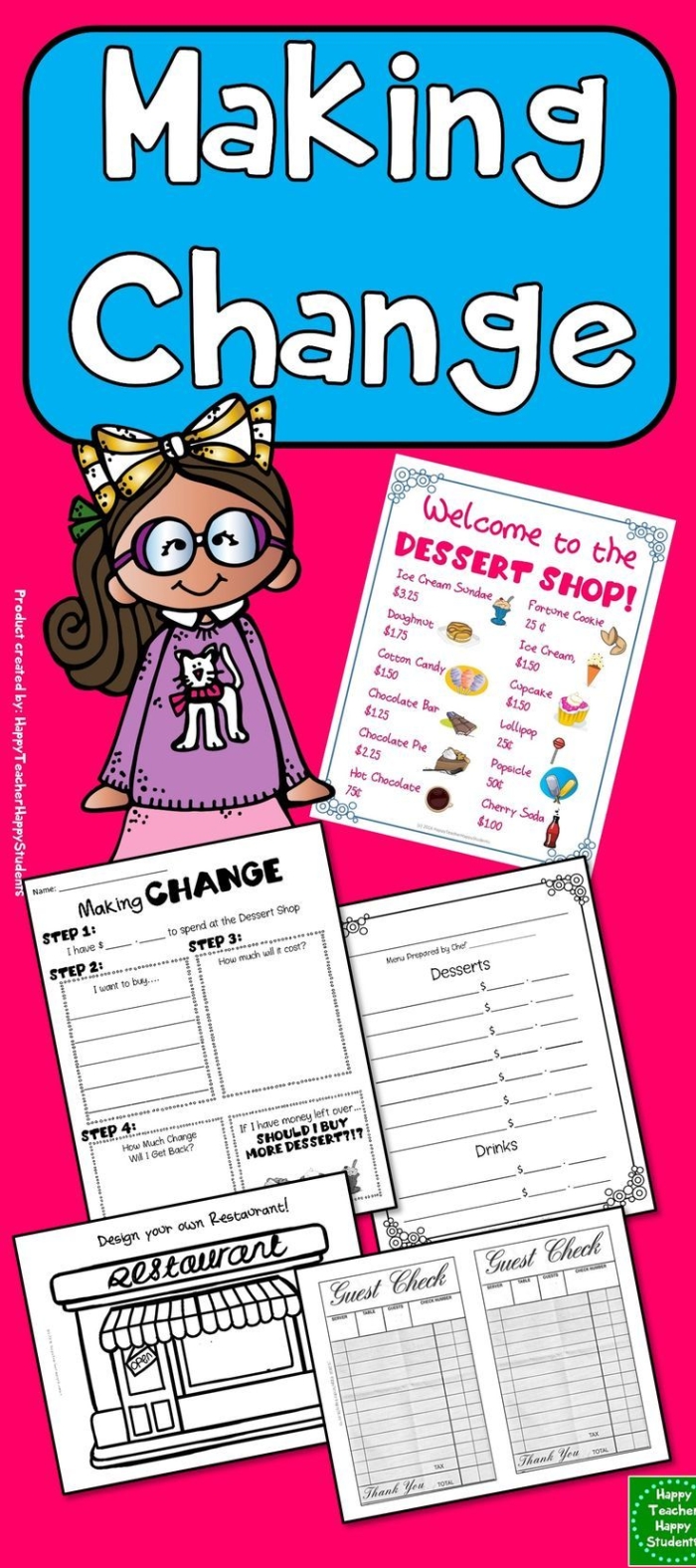
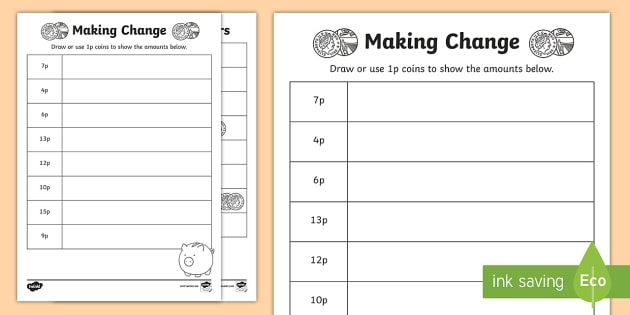
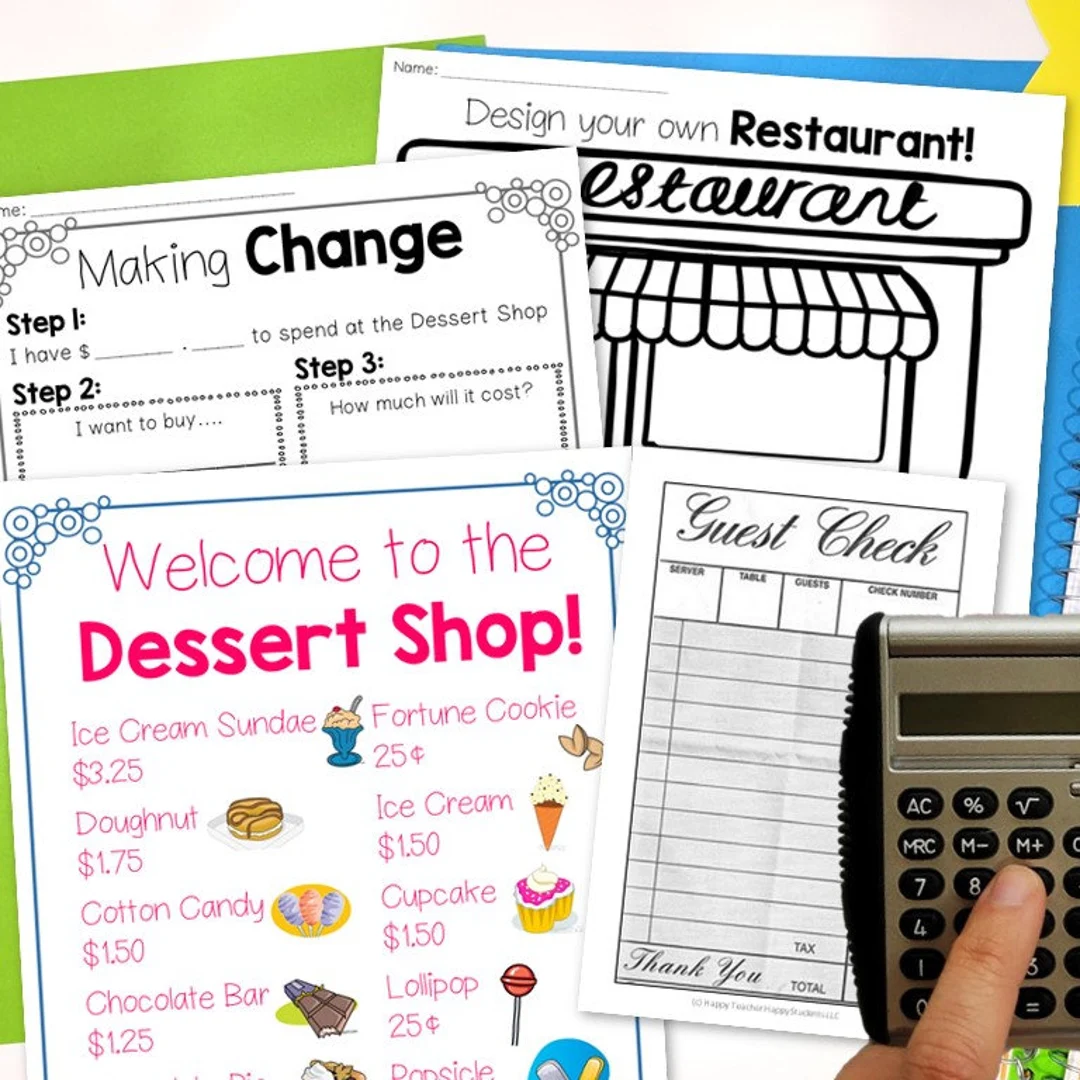
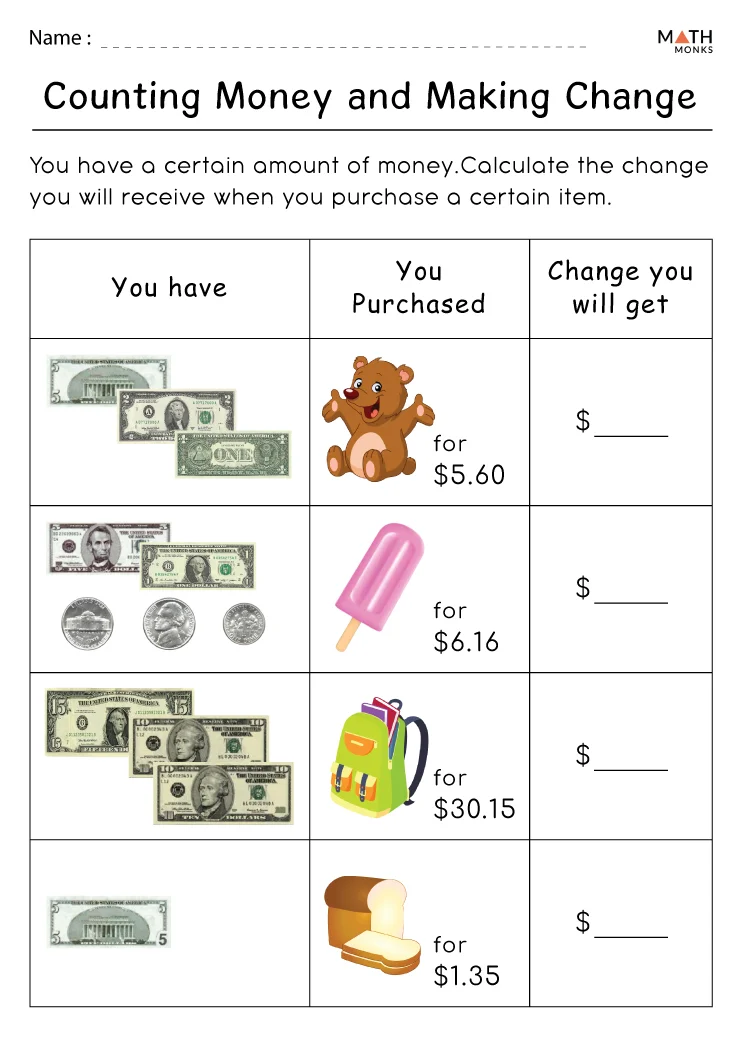
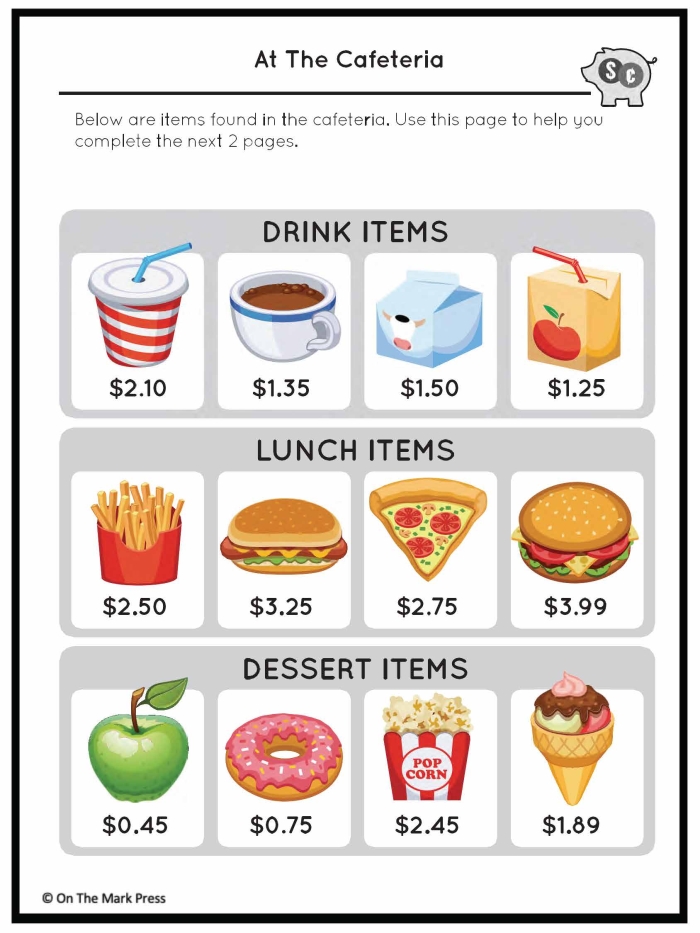
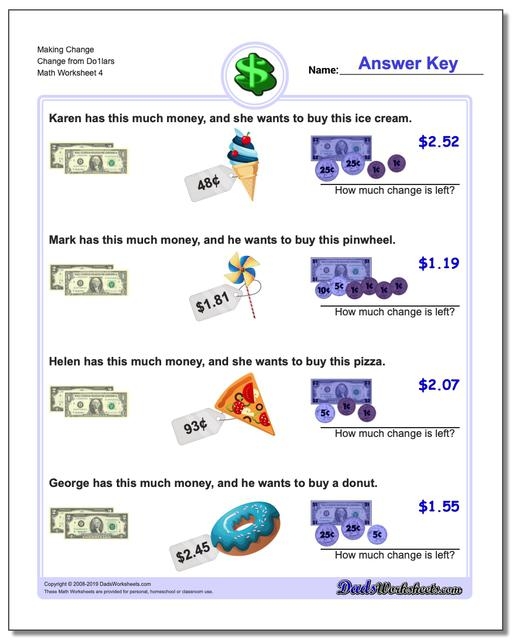
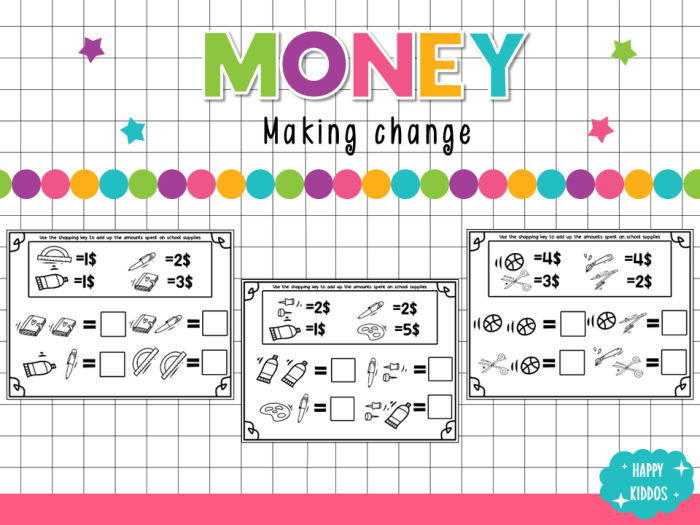
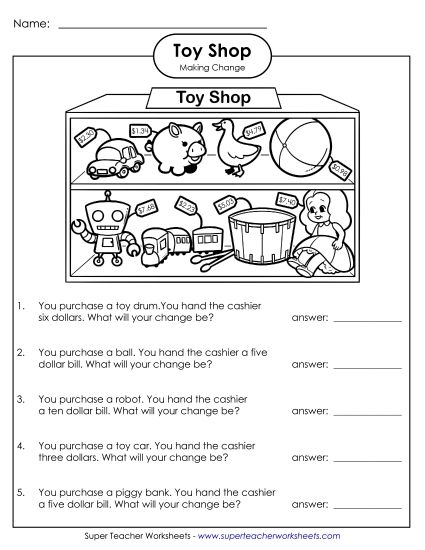
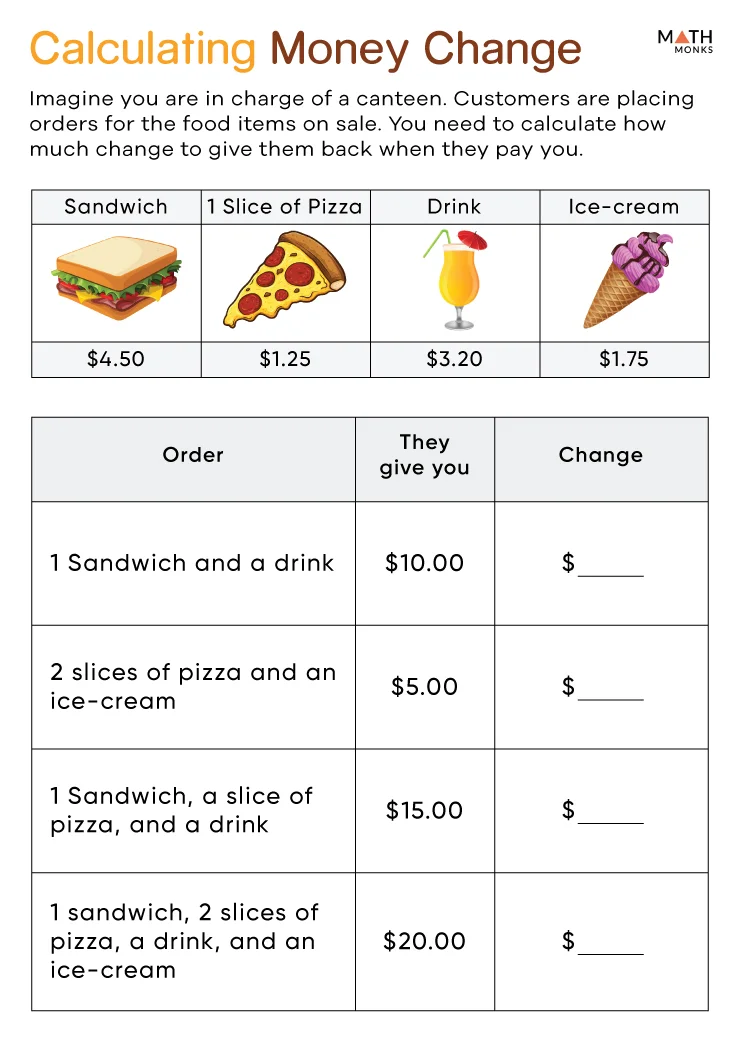
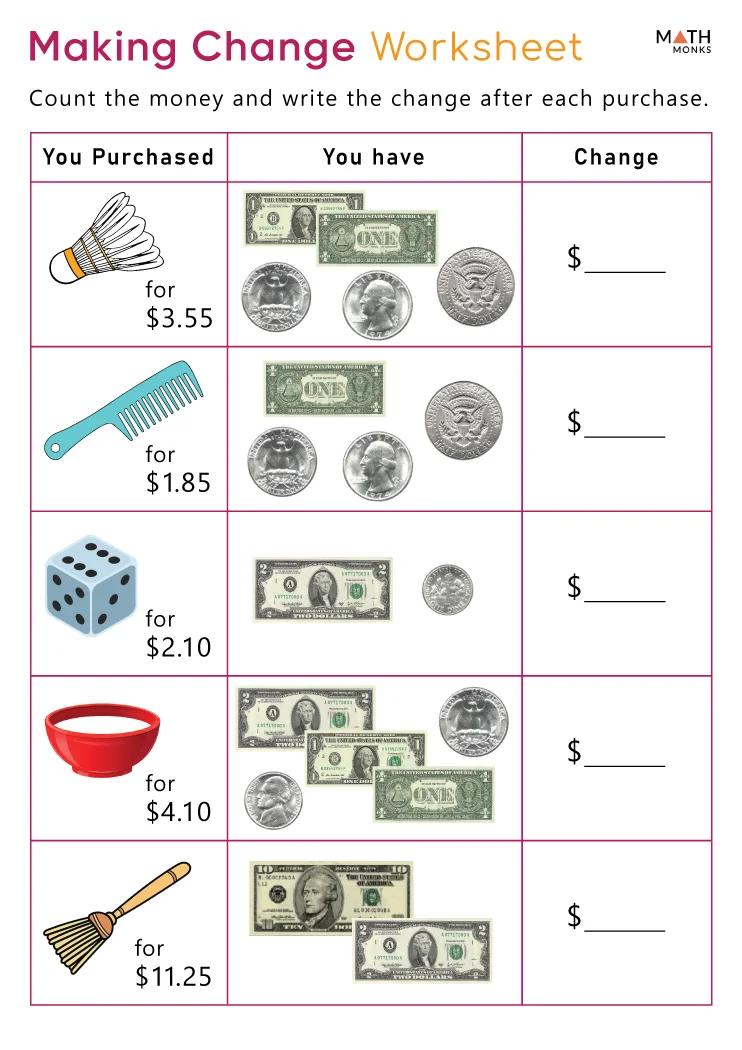
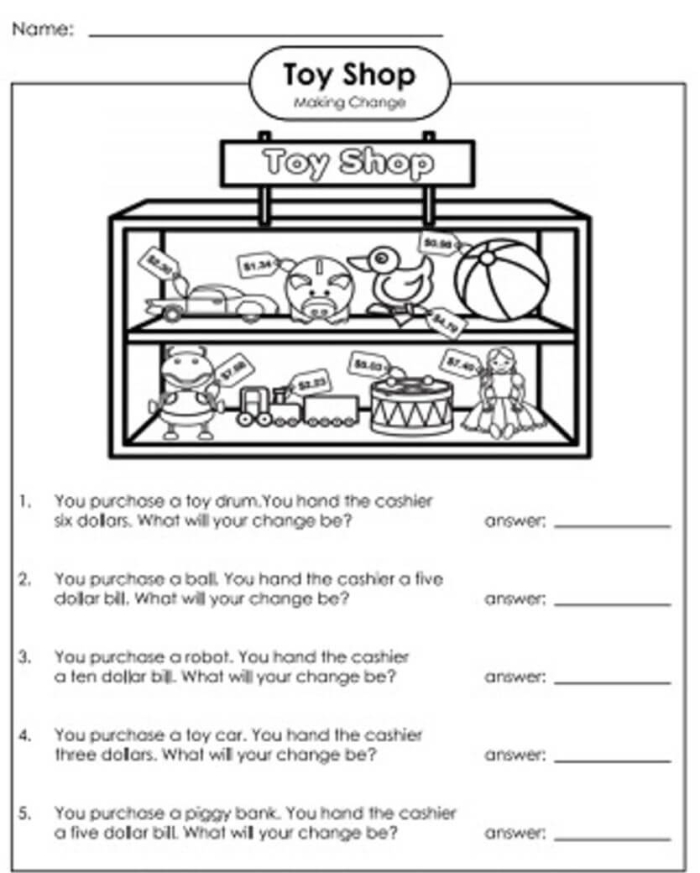
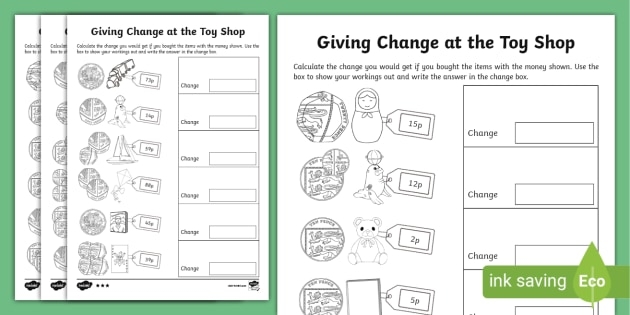
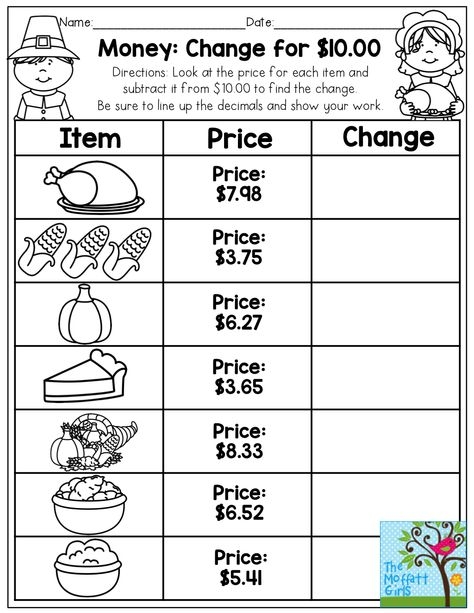
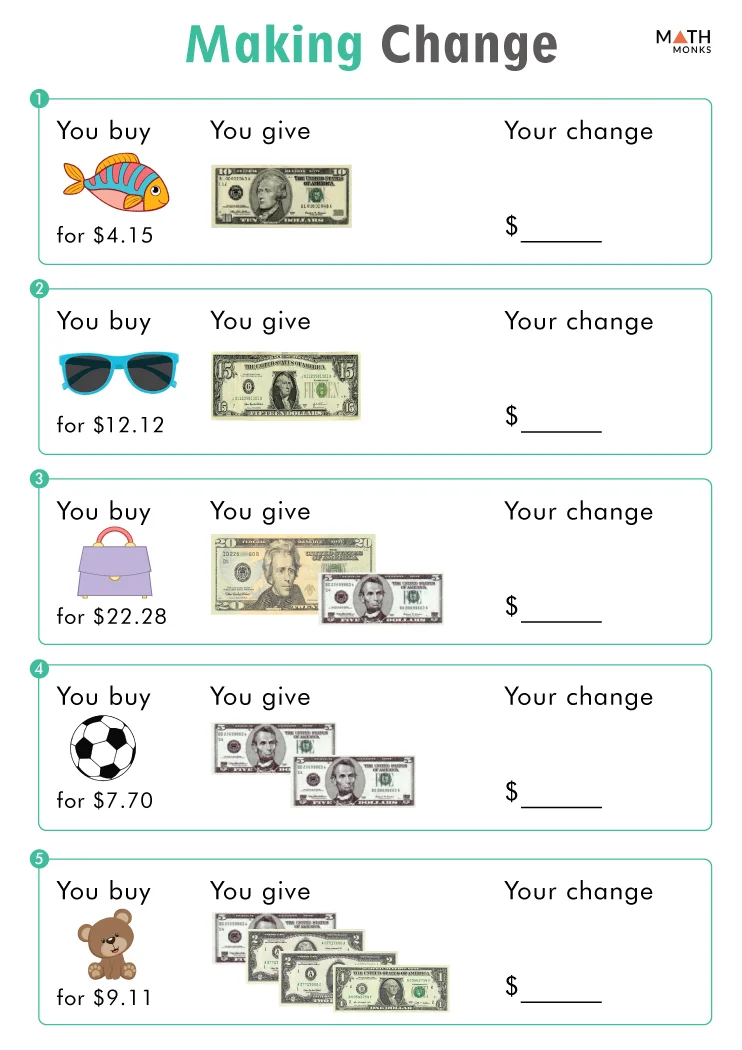
Money word problems come alive when second graders imagine themselves shopping at a toy store with real coins in their pockets. This worksheet taps into that natural excitement by combining practical math skills with a scenario kids actually care about. Instead of abstract number problems, children work through authentic situations: figuring out how much change they get back after buying a toy car, determining if they have enough coins for two items, or calculating the total cost of their purchases.
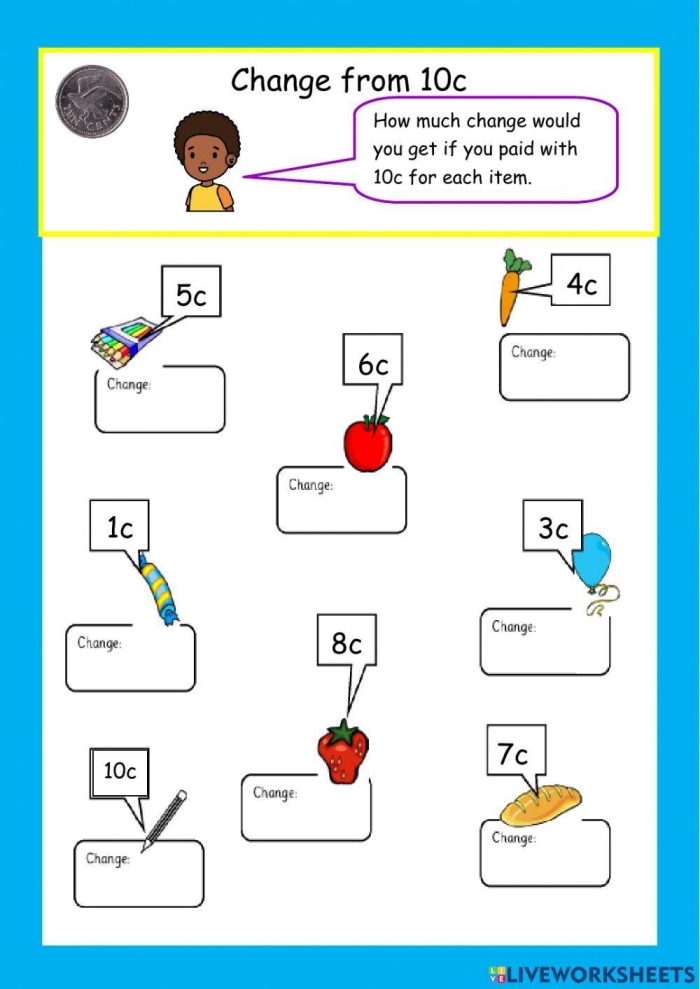
The beauty of this approach lies in how it forces students to engage with numbers and counting in context. When a child reads that they have a dollar bill and want to buy a toy that costs 67 cents, the math suddenly matters. They need to subtract, understand coin values, and visualize the exchange. This concrete connection helps second graders move beyond memorization into actual mathematical thinking.
These worksheets typically present 5 to 8 word problems per page, each with slightly different difficulty levels. Some problems ask students to count coins directly, while others require them to work backward from the total amount spent. A few might ask comparison questions: “Who spent more money, Sarah or James?” This variety keeps the practice engaging without overwhelming young learners.
Working through making change problems also builds confidence with money handling. Second graders learn that math isn’t just for worksheets—it’s a tool they’ll use when they actually visit stores. This practical foundation makes later work with subtraction word problems feel more natural, since students already understand why subtraction matters in real situations.
Teachers often find that pairing these worksheets with hands-on coin manipulatives makes the learning stick faster. When students can physically move coins around while solving problems, the abstract becomes tangible.
Worksheet Practice Section