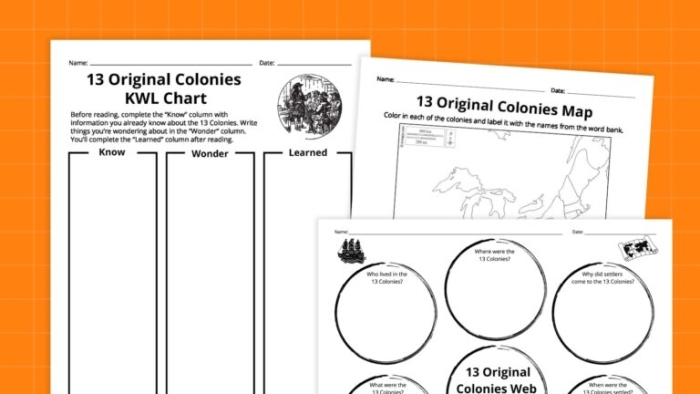
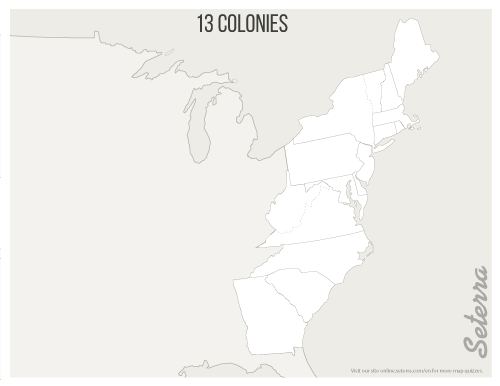
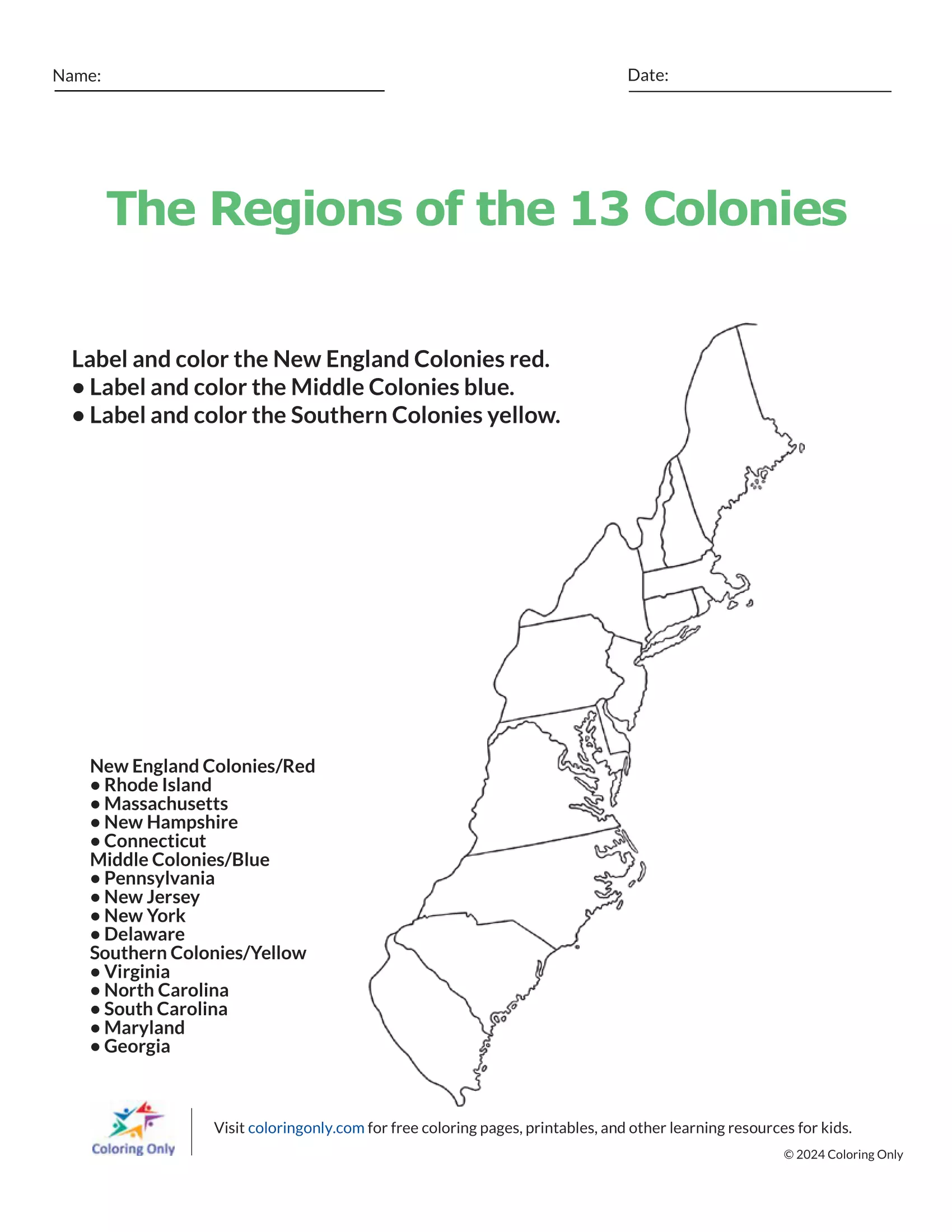
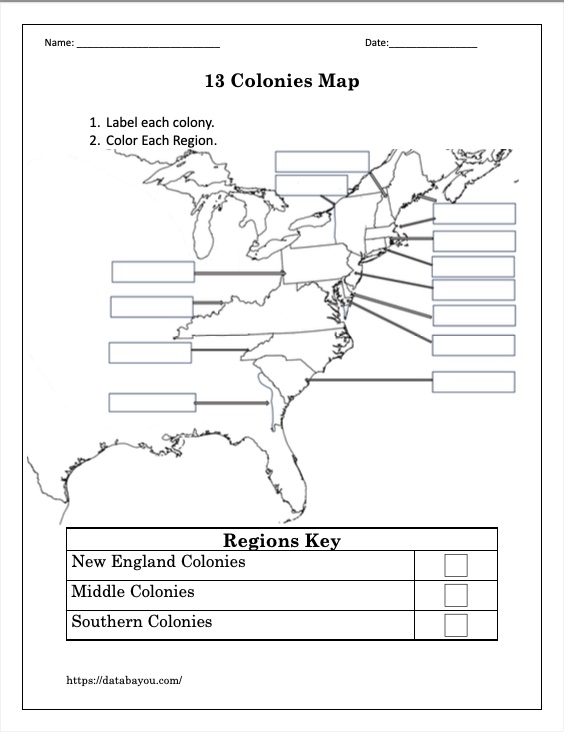
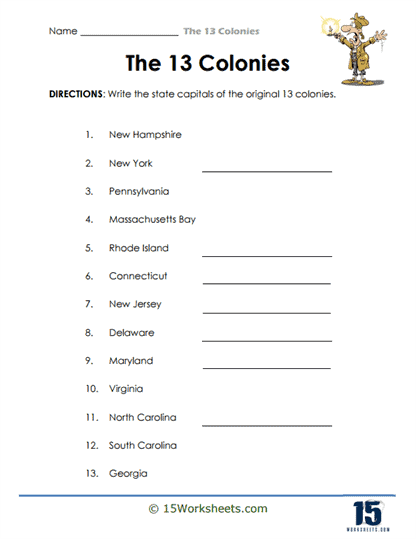
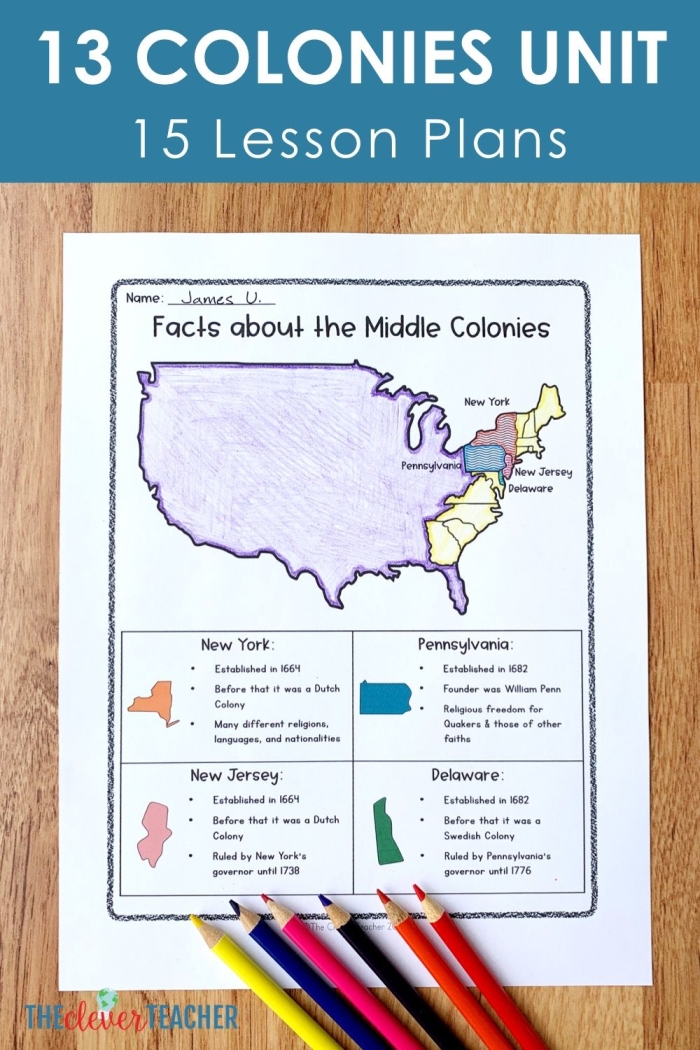
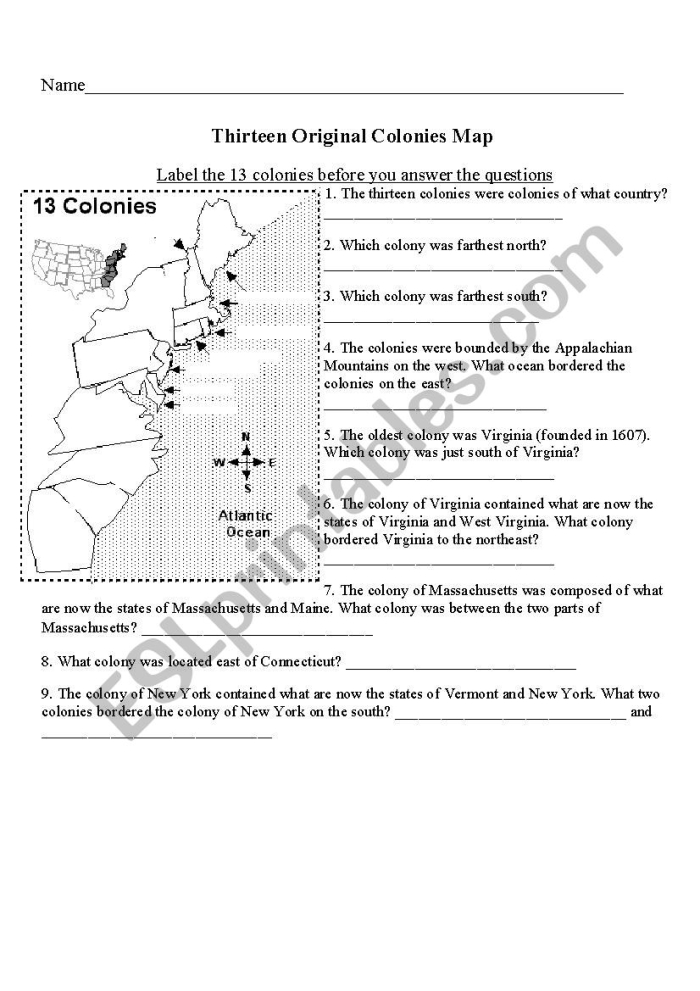
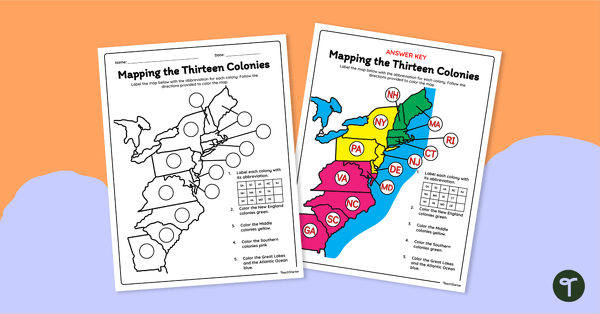
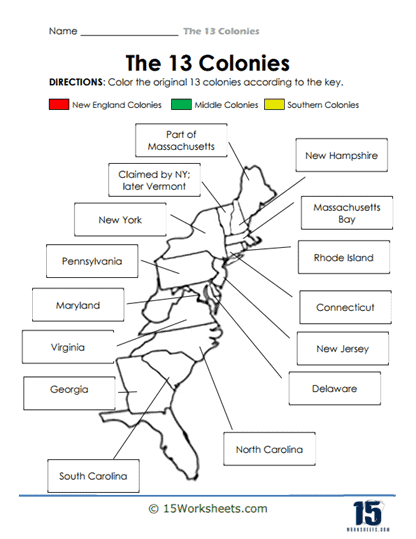
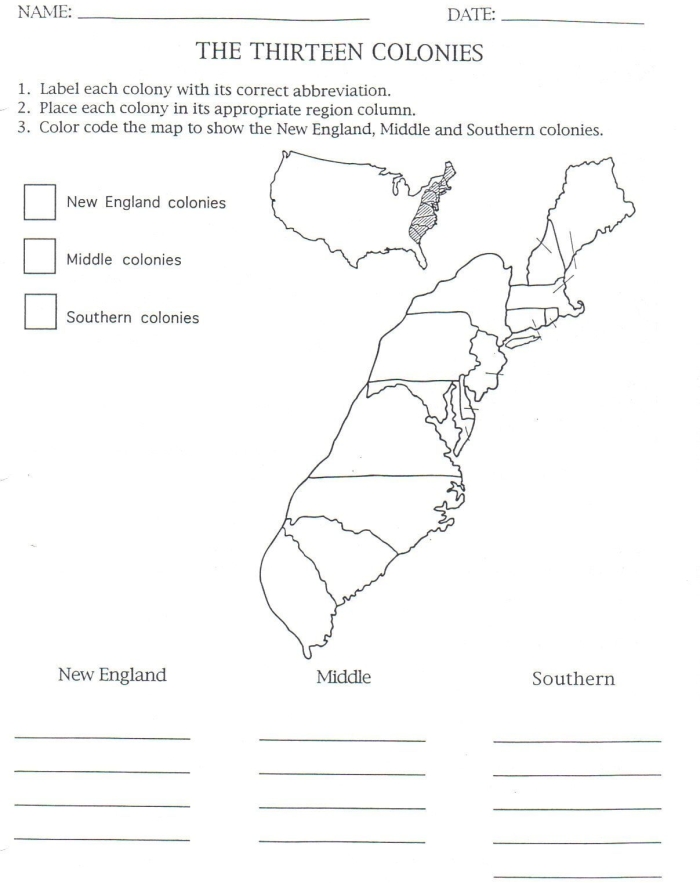
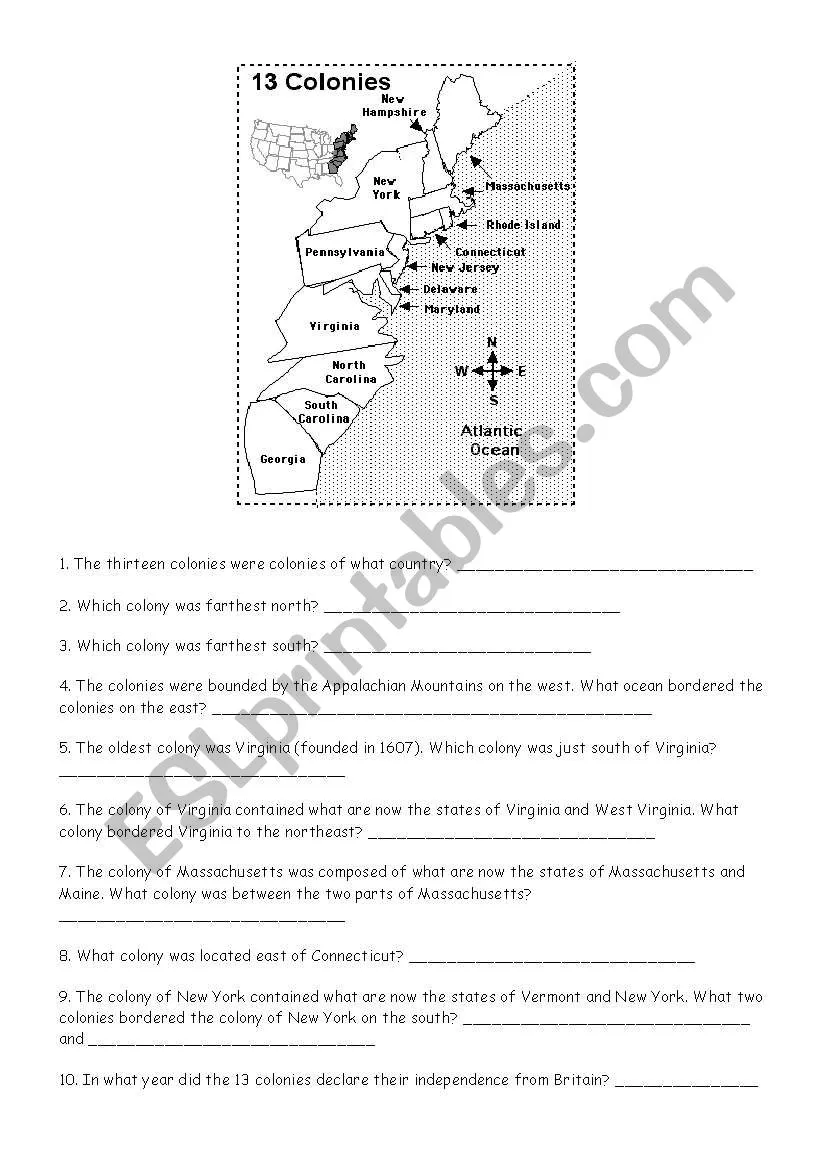
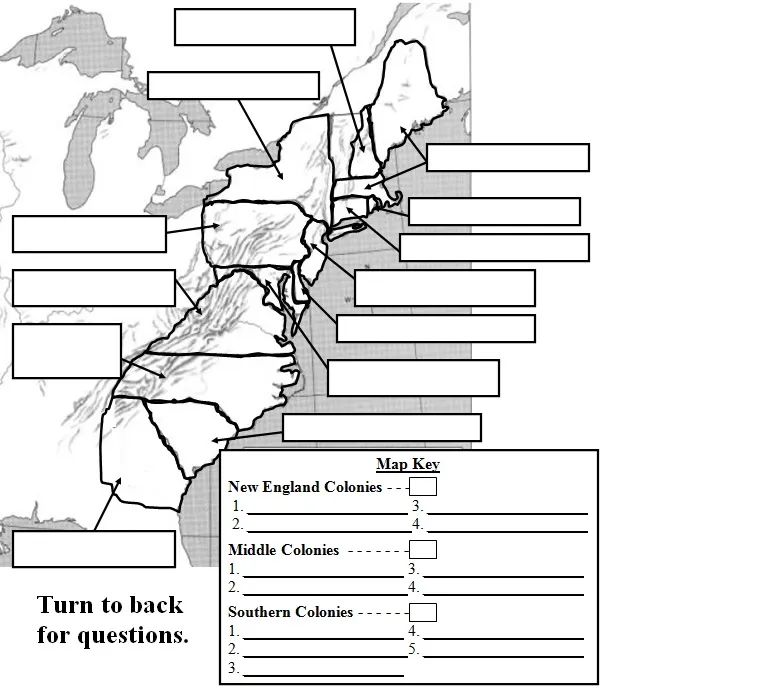
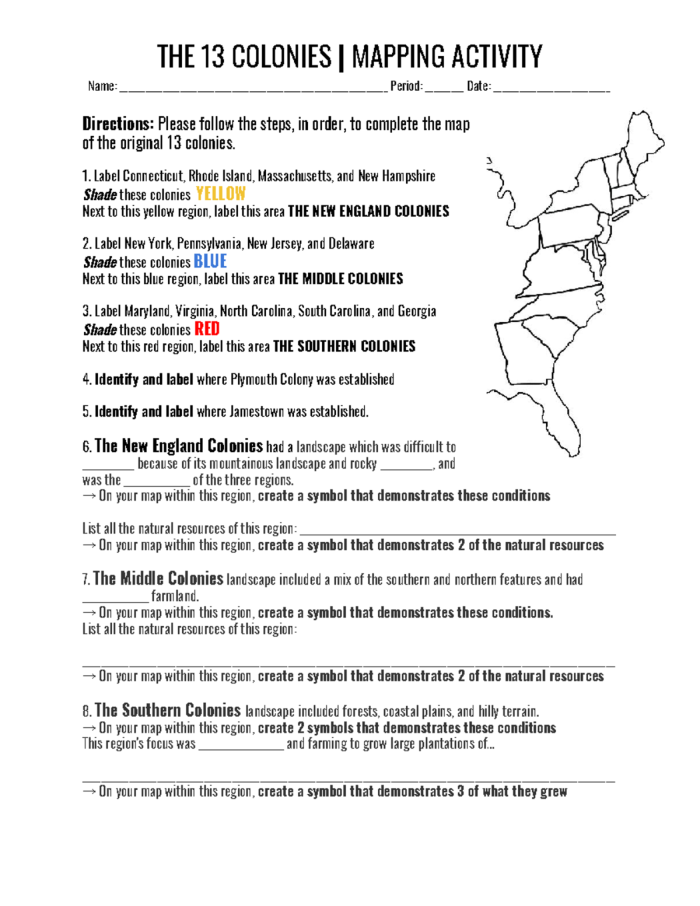
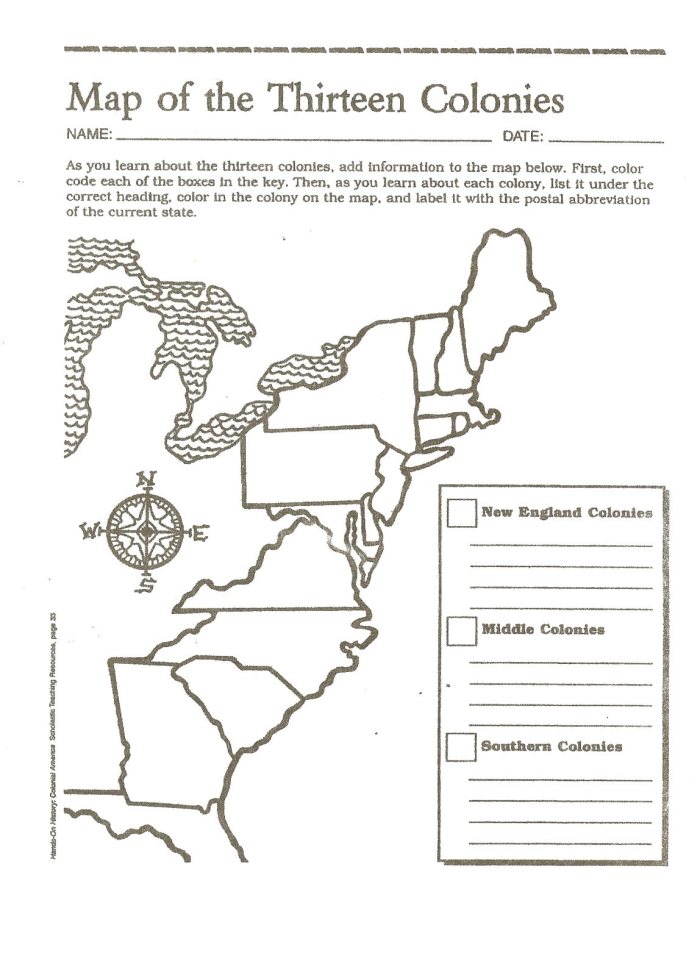
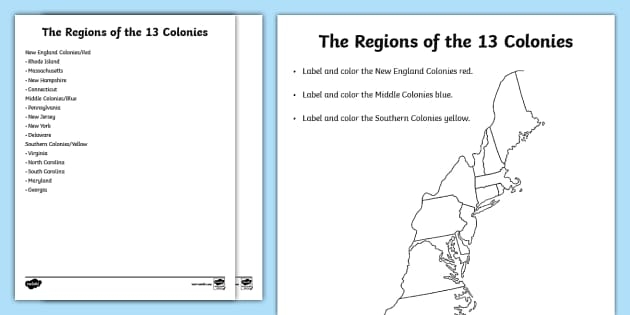
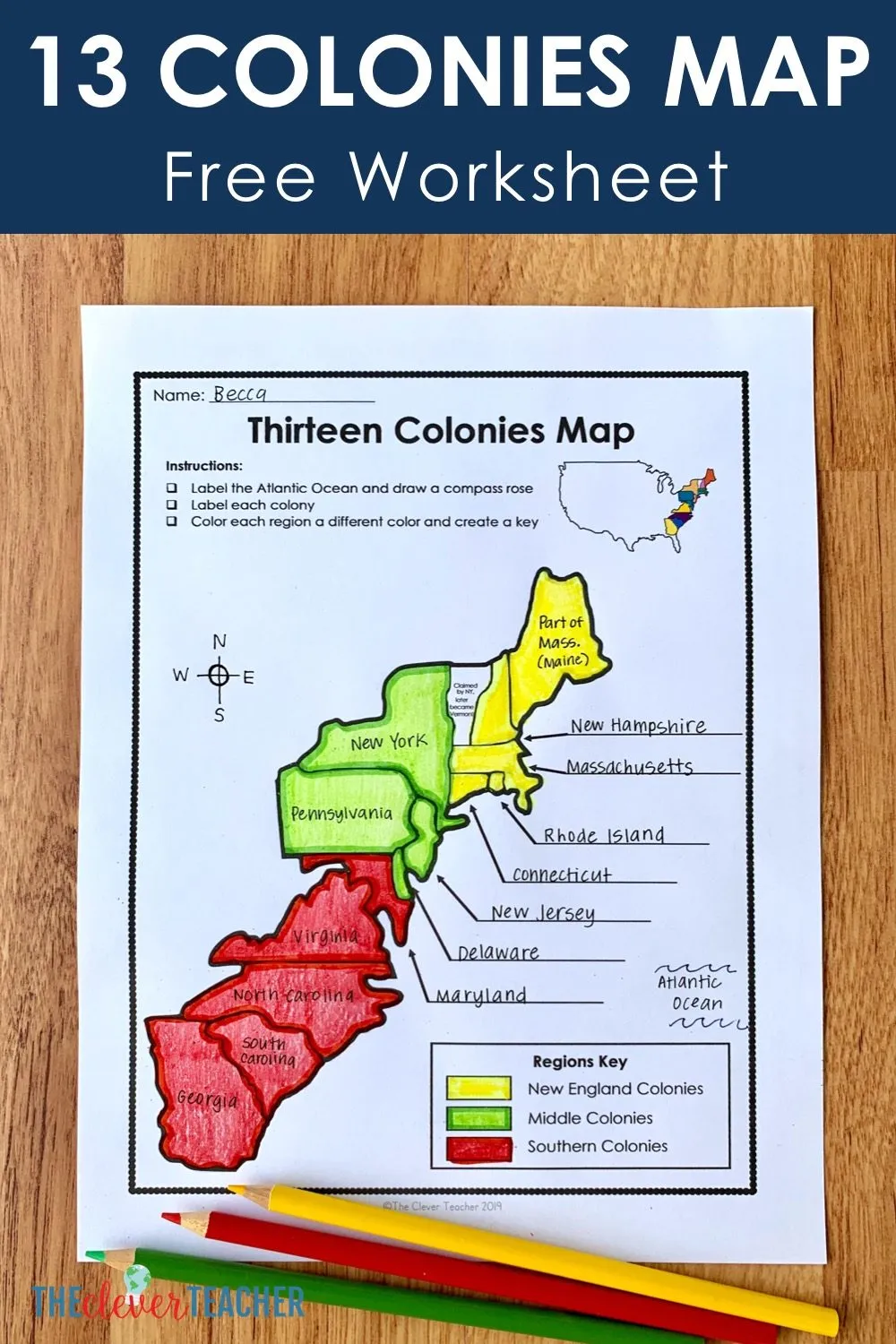
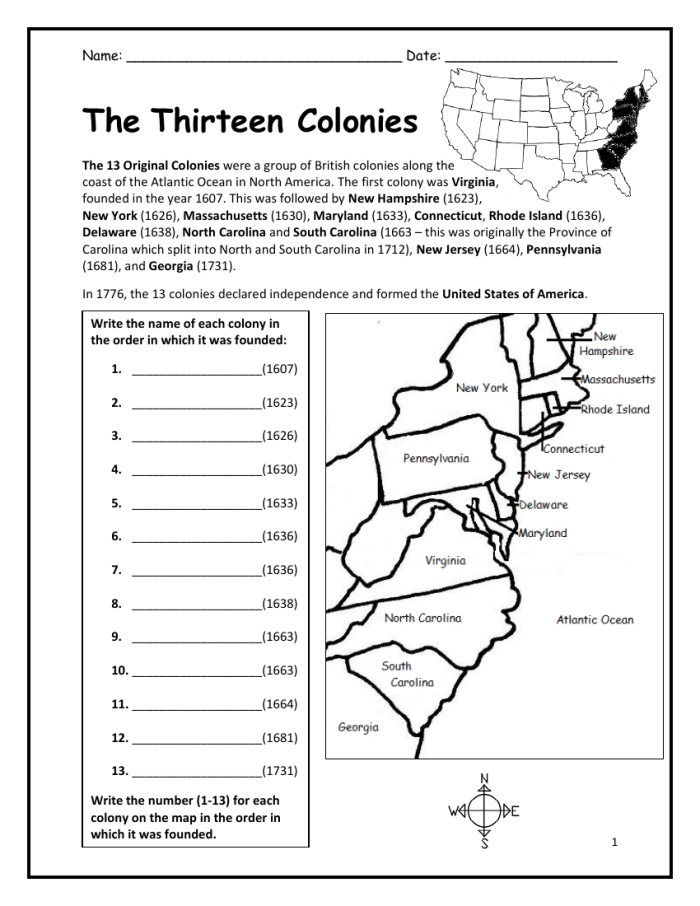
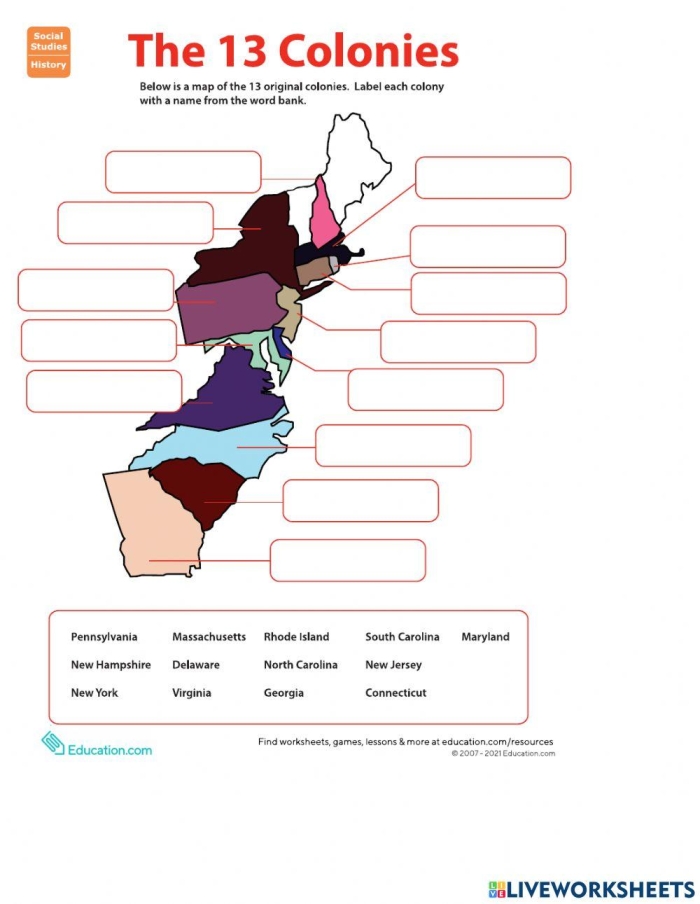
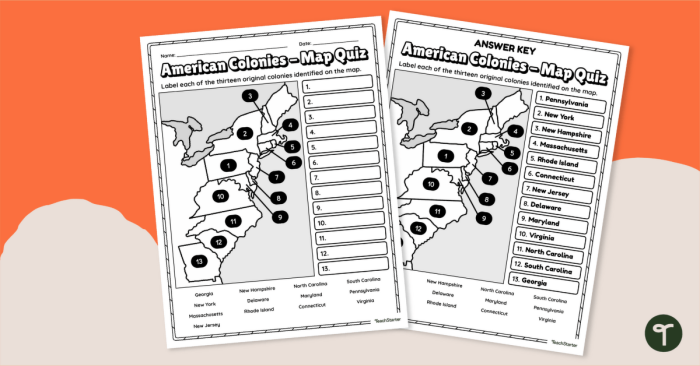
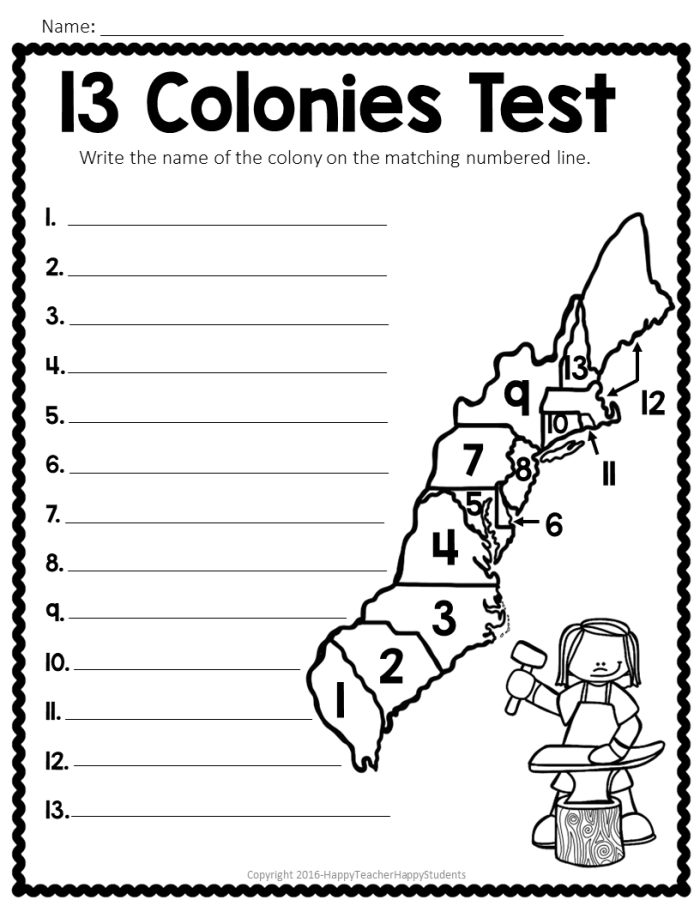
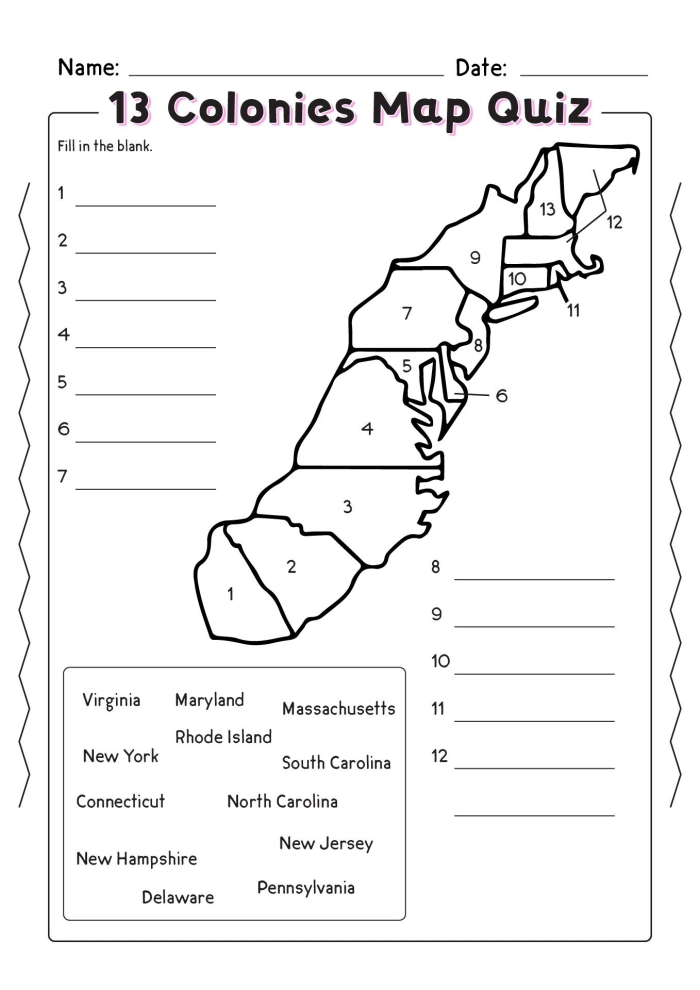
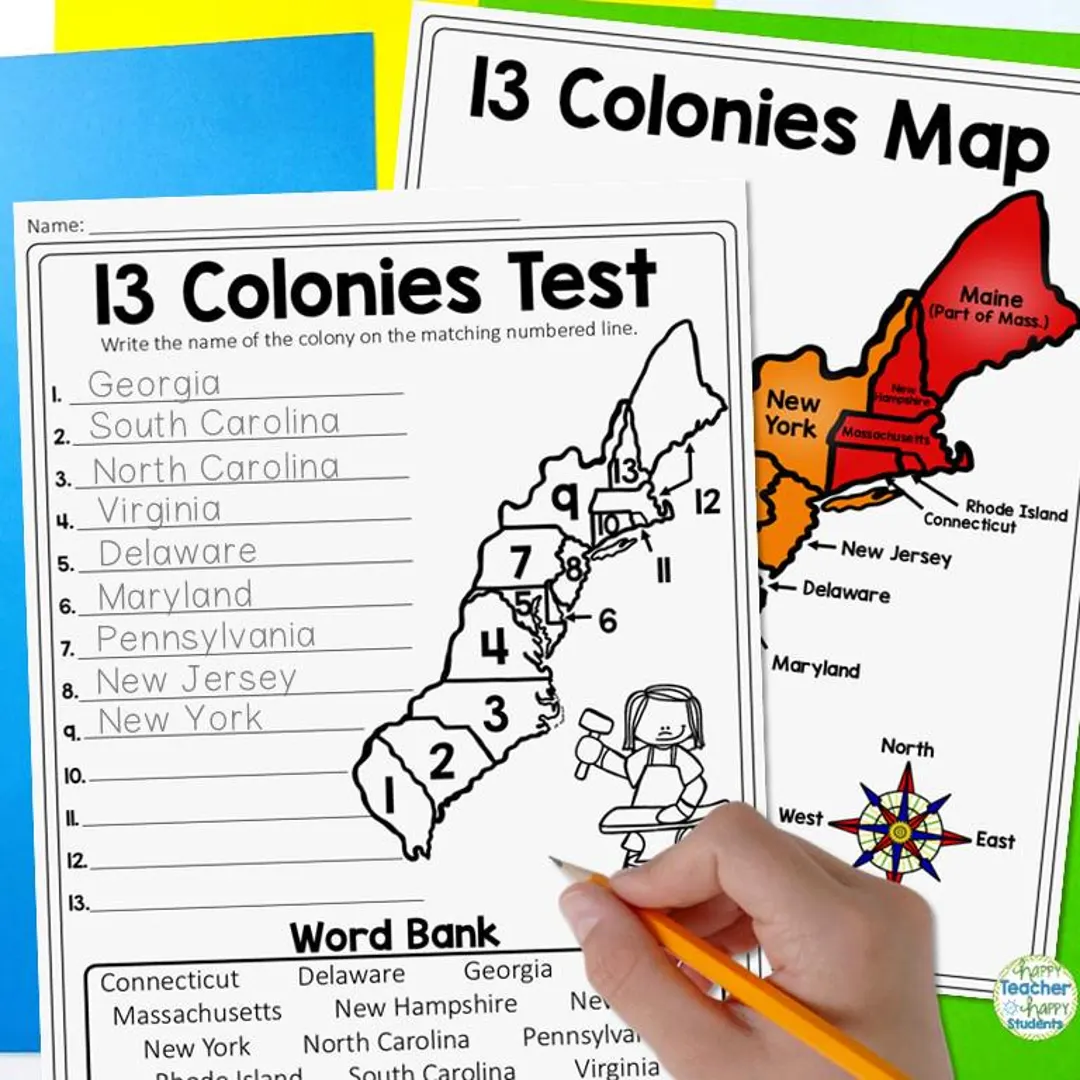
Fifth grade students often struggle to visualize the original American colonies because they exist only in history books and maps. This worksheet gives them a concrete way to engage with that geography by requiring them to identify and label all 13 colonies on an actual map. The exercise transforms abstract names like Massachusetts, Virginia, and Georgia into real locations that students can see and understand spatially.
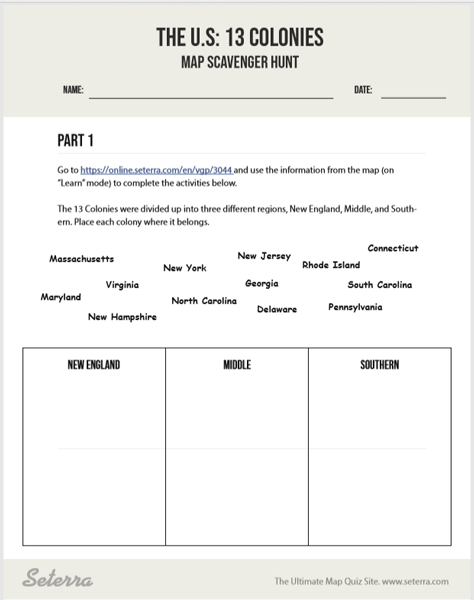
The task asks students to place each colony in its correct position along the eastern seaboard of what is now the United States. This isn’t just busy work. Labeling a map forces students to think about colonial geography in ways that reading about it never could. They begin to notice which colonies cluster together in New England, which ones stretch down the middle Atlantic coast, and which southern colonies occupy the lower portion of the map. These spatial relationships stick in memory far better than memorized lists.
For fifth graders tackling early American history, this worksheet pairs well with other period-specific activities. Students who complete this geography exercise might follow up with Revolutionary War trivia to deepen their understanding of how these colonies eventually united. The combination of map work and historical knowledge creates a more complete picture of the colonial period.
The worksheet also serves as a foundation for understanding how geography shaped colonial development. The northern colonies had different climates, resources, and economic structures than the southern ones. By physically placing each colony on the map, students begin to grasp why these differences mattered. New England’s rocky terrain and shorter growing season created different settlement patterns than the fertile Chesapeake region.
Teachers appreciate this activity because it’s straightforward to implement and requires minimal preparation. Students need only a map, the colony names, and their geography knowledge. The results give clear feedback about whether students can identify colonial locations, making it easy to spot gaps in understanding before moving forward with more complex colonial history lessons.
Printable Worksheets for Practice