Interpreting Slopes and y-Intercepts Worksheets

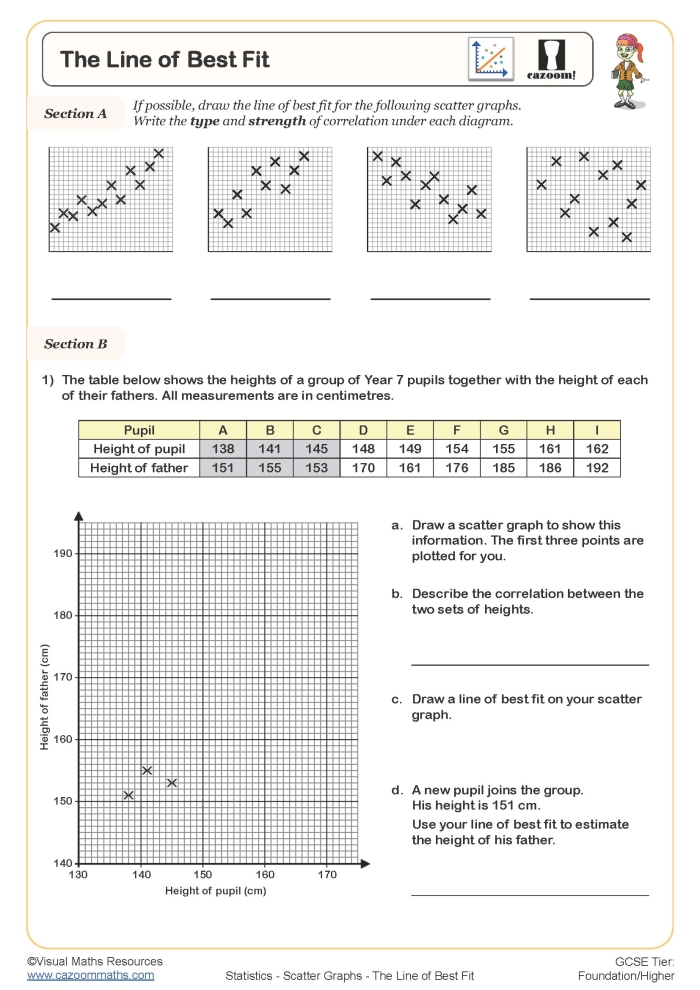
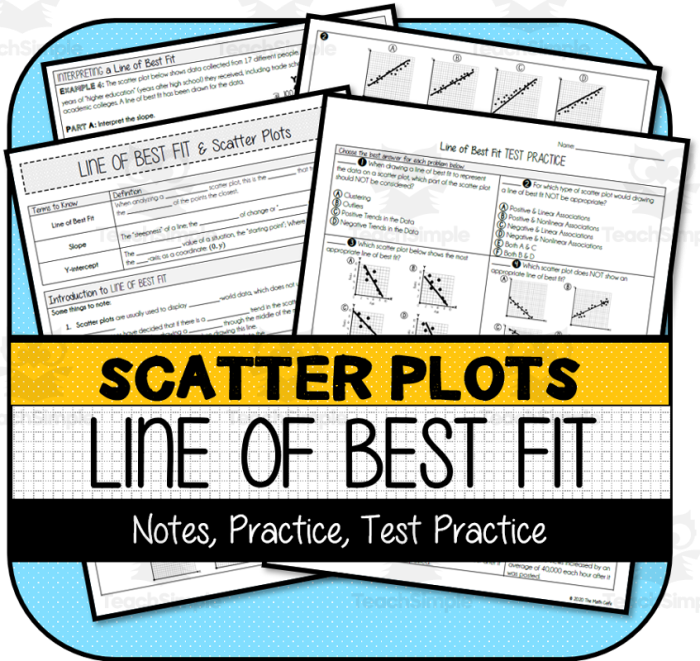
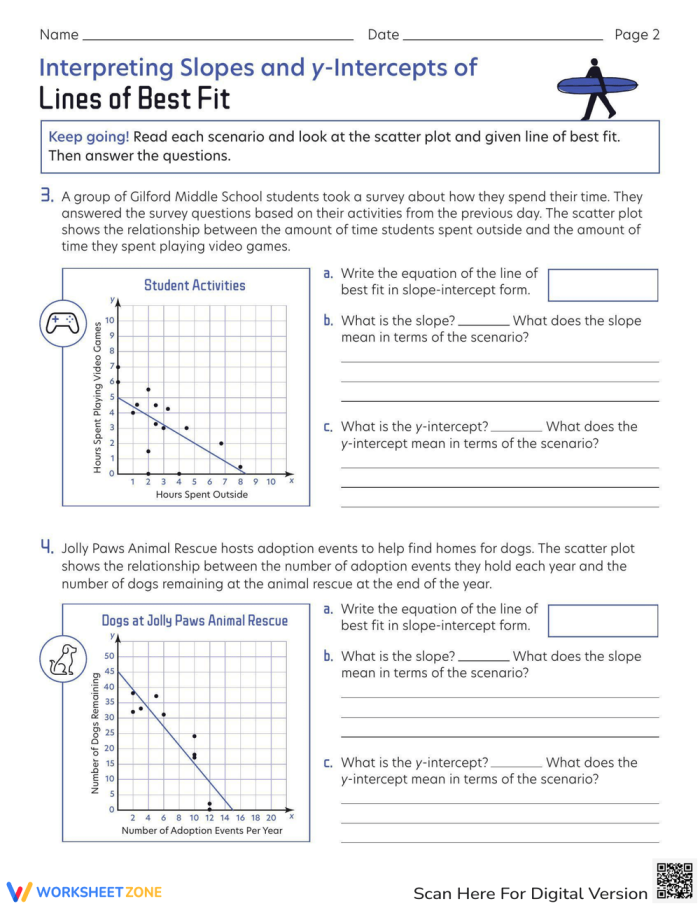
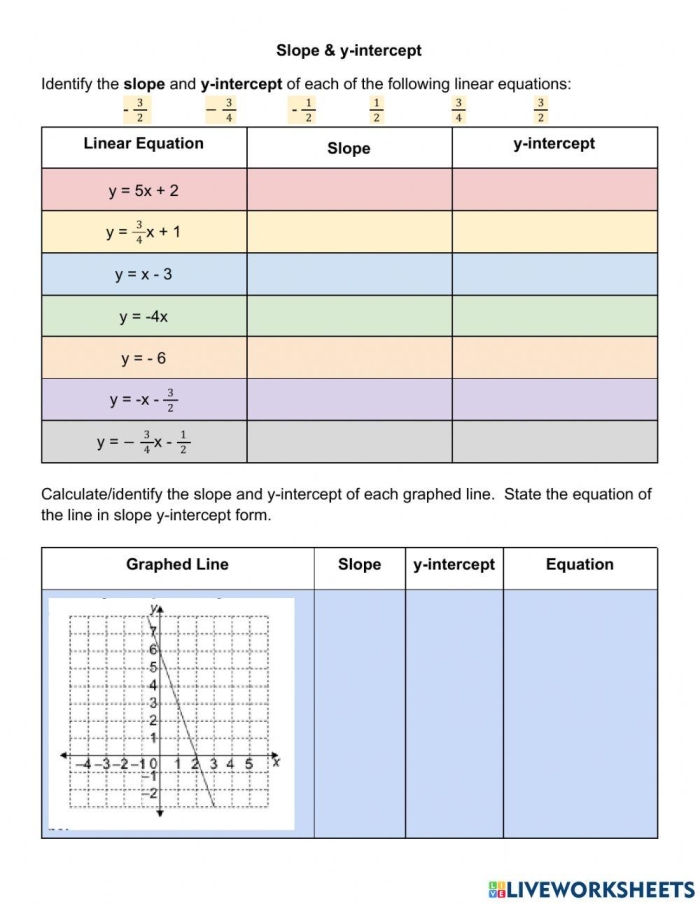
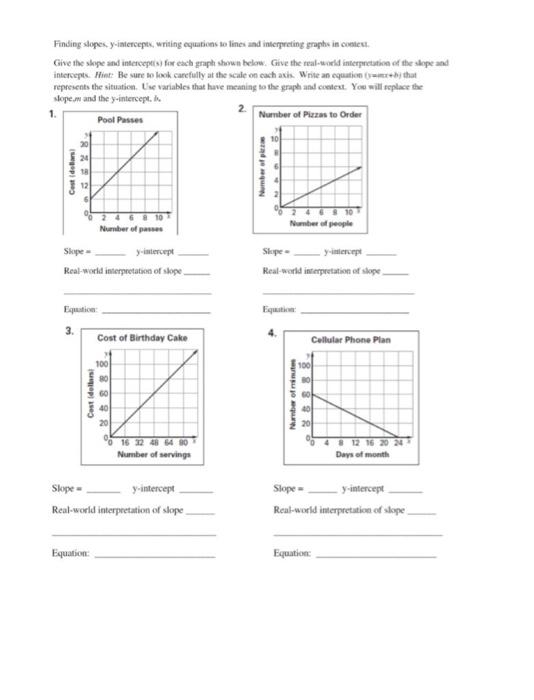
Eighth-grade worksheet on interpreting slopes and y-intercepts of lines of best fit in real-world contexts
Worksheet for understanding slopes and y-intercepts of lines of best fit for eighth graders
Category: Numbers and Counting | Grade: Eighth Grade

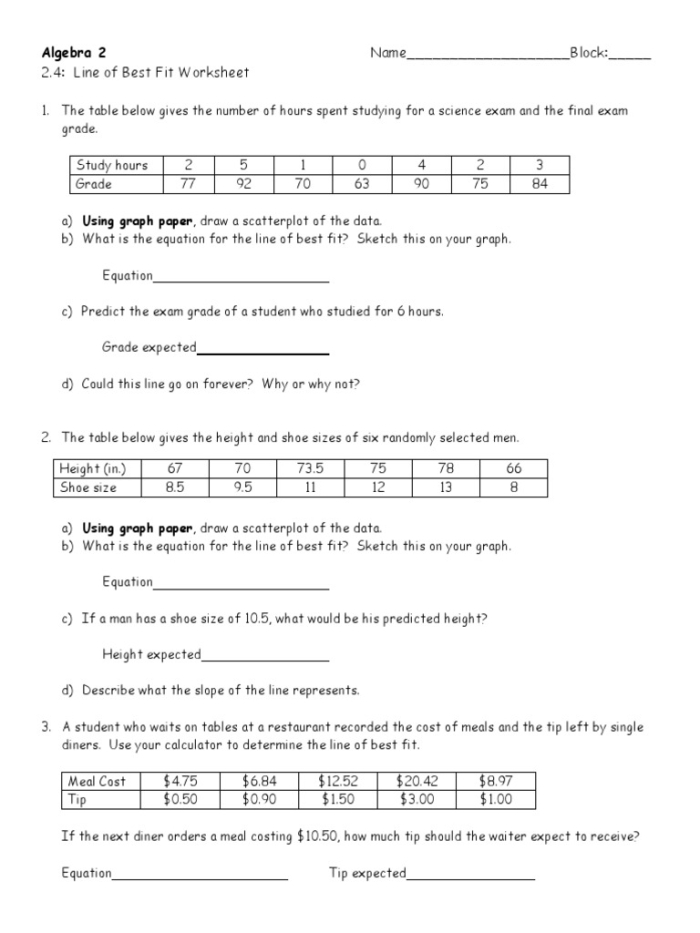
One of the trickiest moments in eighth-grade math comes when students first encounter lines of best fit. They can draw the line, plot the points, and calculate the equation, but then comes the real challenge: what does any of it actually mean? This is where interpreting slopes and y-intercepts moves from abstract number-crunching into something that connects to the world around them.

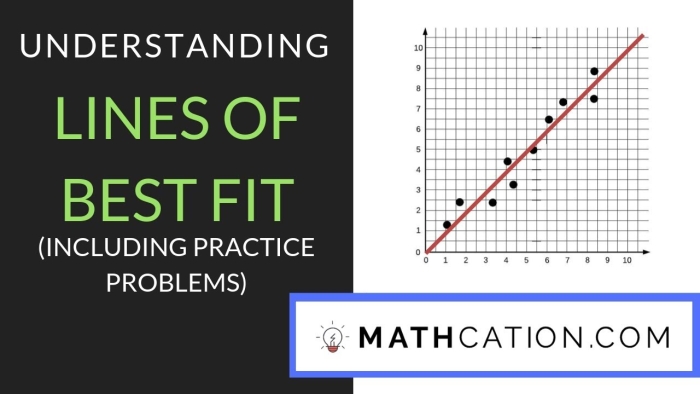
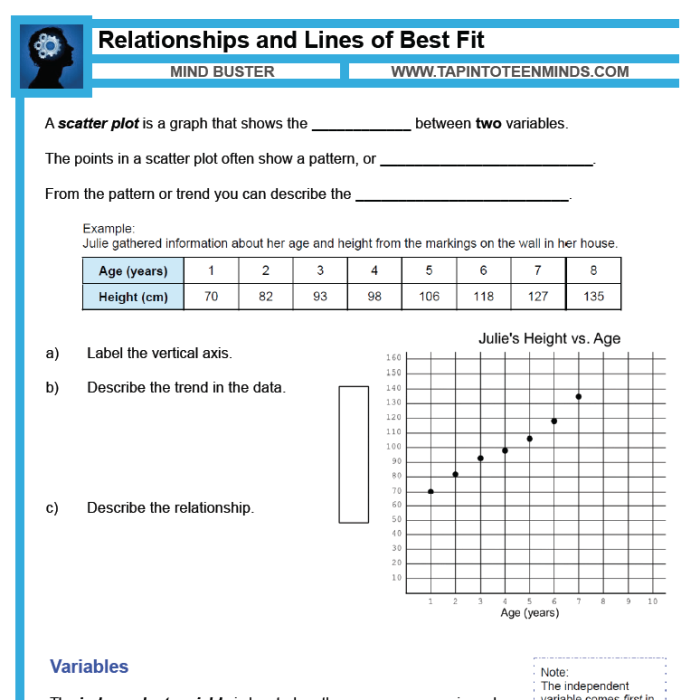
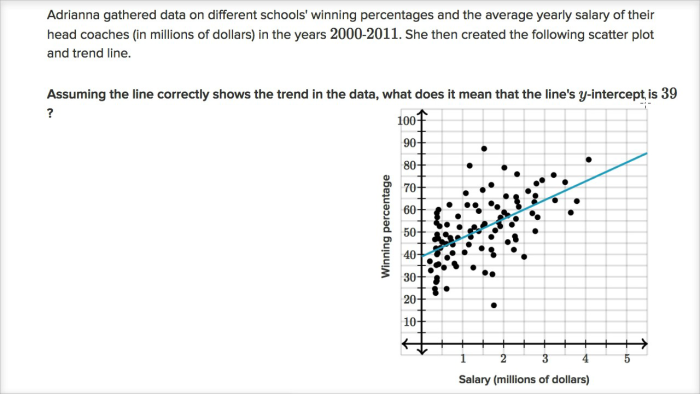
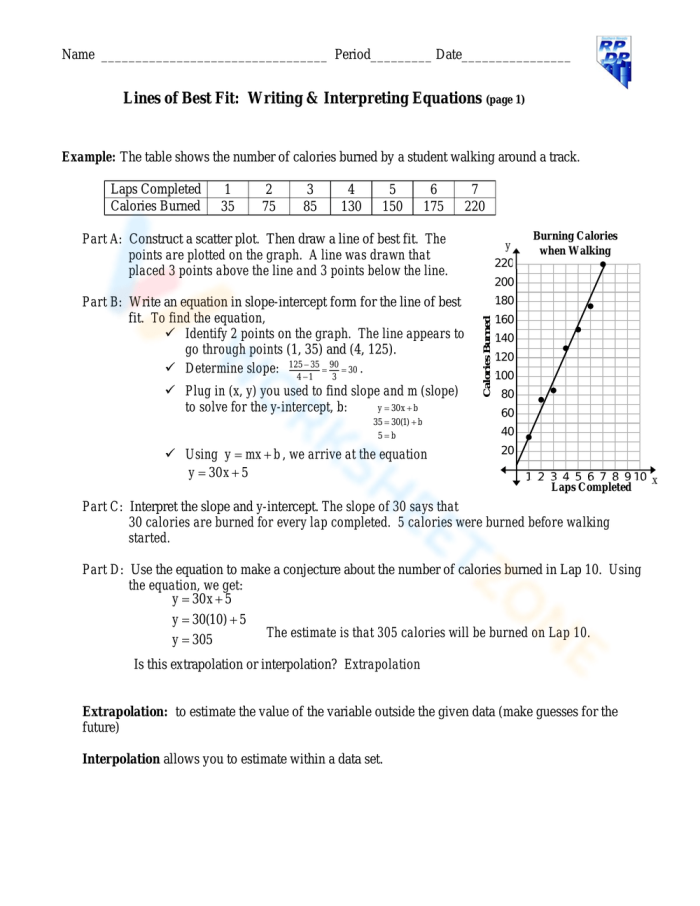
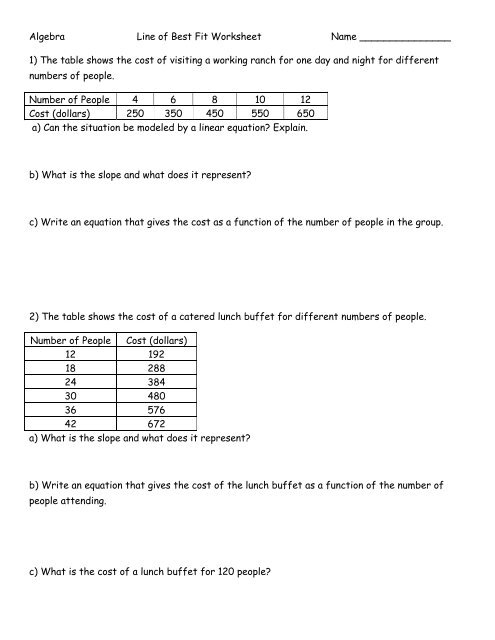
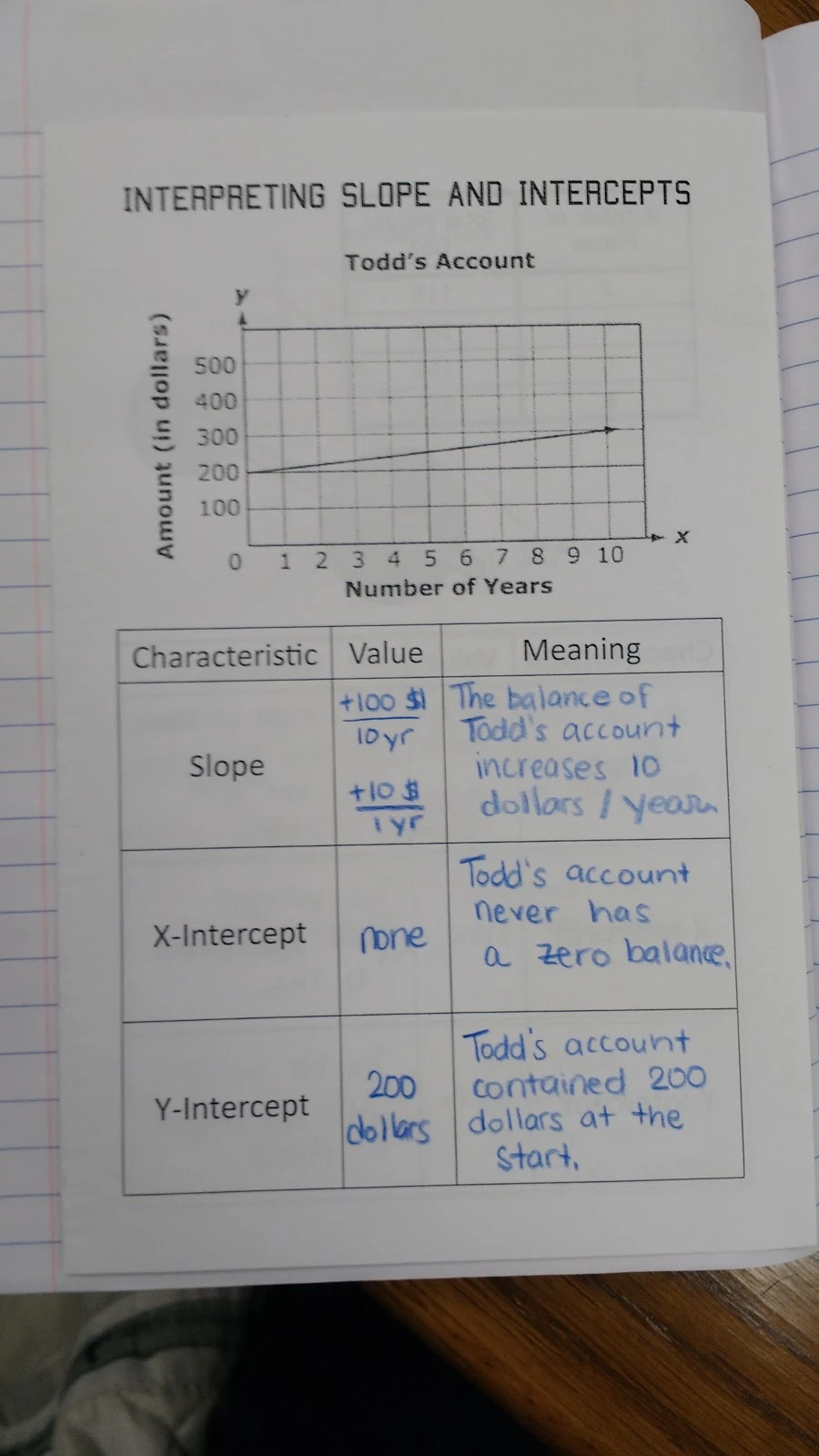
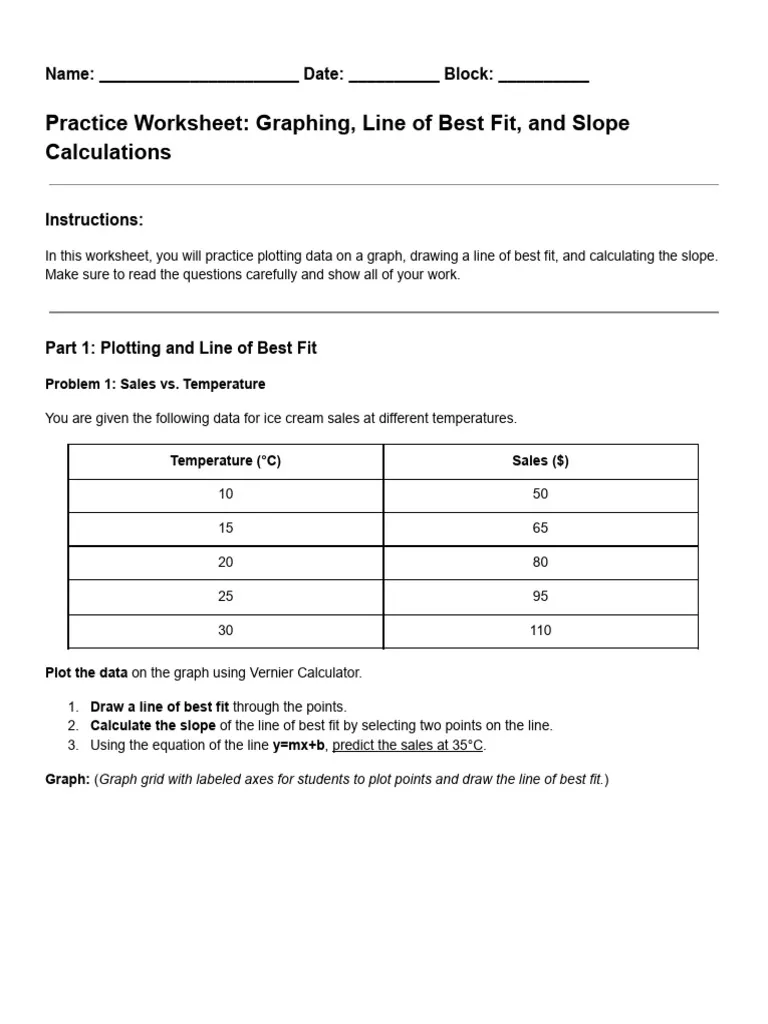
A line of best fit represents the general trend in a scatter plot of data. The slope tells you how fast something is changing, while the y-intercept shows where that trend would start if you traced it back to zero. When you ground these concepts in real situations, eighth graders suddenly understand why they matter. If a student sees a graph showing the relationship between hours studied and test scores, the slope becomes “how many points you gain per hour of study.” The y-intercept becomes “what score you’d expect with zero hours of preparation.”

Working through these scenarios helps students build intuition that carries forward. They learn to ask whether a slope makes sense in context. A negative slope for “time spent exercising versus resting heart rate” is reasonable. A negative slope for “years of experience versus job salary” would raise red flags. This critical thinking strengthens their grasp of the Numbers and Counting content that forms the foundation of eighth-grade mathematics.

Worksheets that emphasize real-world interpretation also connect naturally to other coordinate plane work. Once students understand how slopes behave in a line of best fit, they’re better prepared for tasks like transformations on the coordinate plane involving dilations or translations on the coordinate plane. They can also tackle systems of equations using substitution with greater confidence since they’ve already internalized how lines behave.

The real power of this approach is that it transforms slopes and y-intercepts from isolated formulas into tools for understanding patterns. Students leave these worksheets knowing not just how to find these values, but why anyone would want to find them in the first place.


Worksheet Practice Section
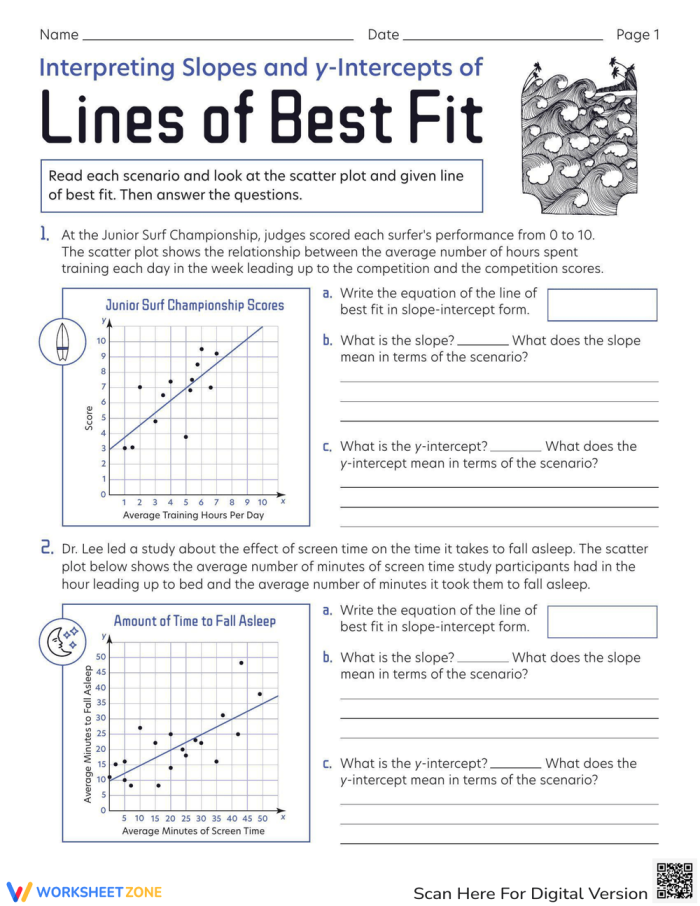
Eighth-grade worksheet on interpreting slopes and y-intercepts of lines of best fit in real-world contexts
Eighth grade math worksheet focusing on analyzing the slopes and y-intercepts of trend lines for real-world data sets
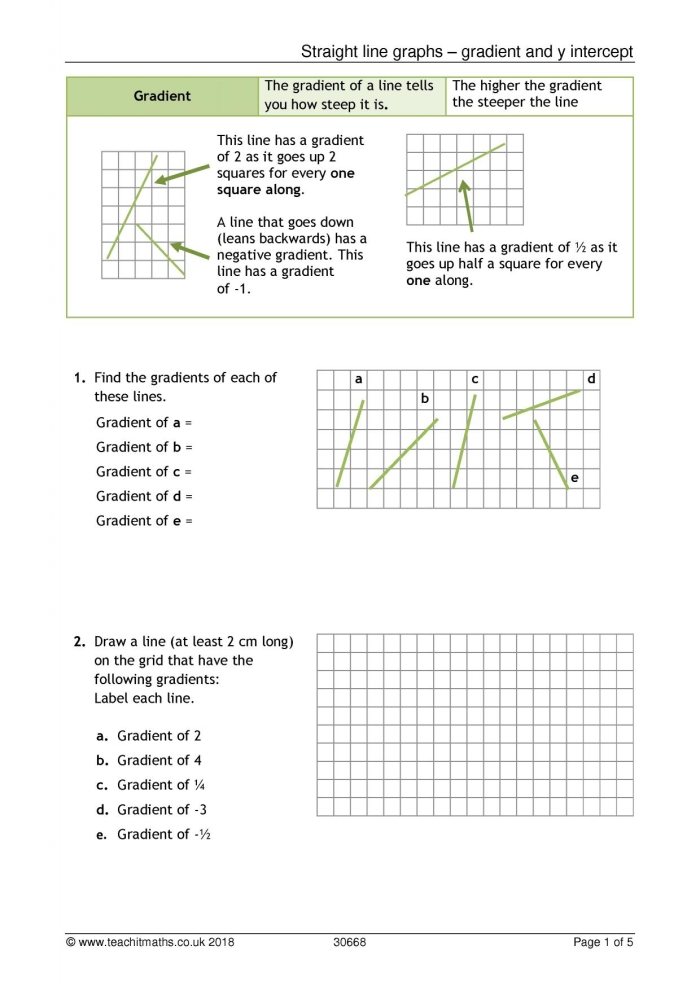
Eighth-grade students analyzing slopes and y-intercepts on a lines of best fit worksheet
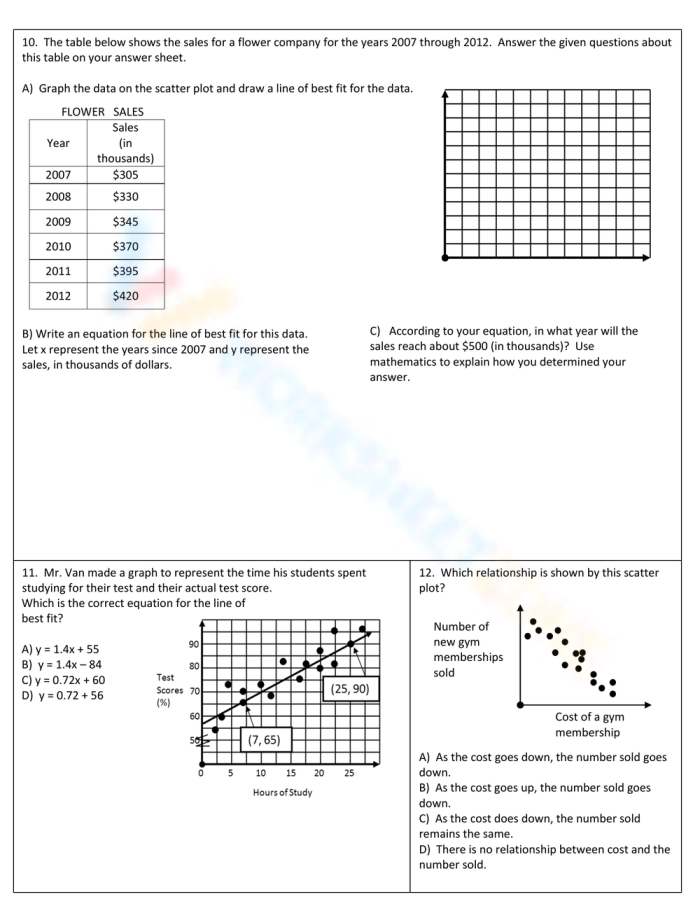
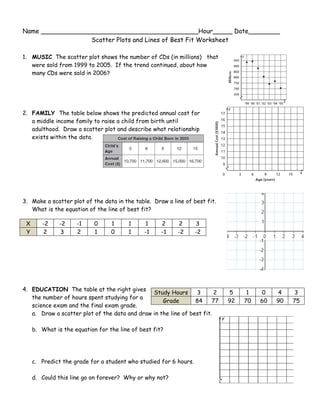
Eighth grade math worksheet focusing on analyzing lines of best fit through real-world data interpretation
Eighth-grade students analyzing slopes and y-intercepts in a real-world context on a worksheet
Eighth grade worksheet focused on calculating and interpreting lines of best fit slope and y-intercept values
Eighth-grade students analyzing slopes and y-intercepts in a lines of best fit worksheet
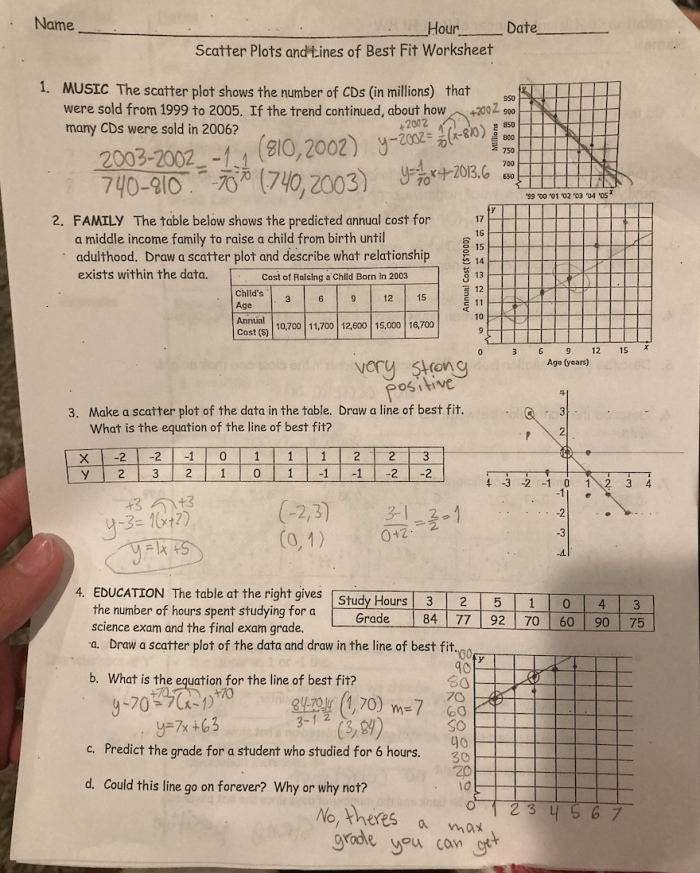
Eighth grade math worksheet focusing on analyzing slopes and y-intercepts of lines of best fit from real-world data
Worksheet for eighth graders on interpreting slopes and y-intercepts from lines of best fit
Eighth-grade students working on a worksheet about interpreting slopes and y-intercepts of lines of best fit
Students analyzing a worksheet on interpreting slopes and y-intercepts from real-world examples
Eighth grade math worksheet focusing on analyzing slopes and y-intercepts of lines of best fit from real-world data 12
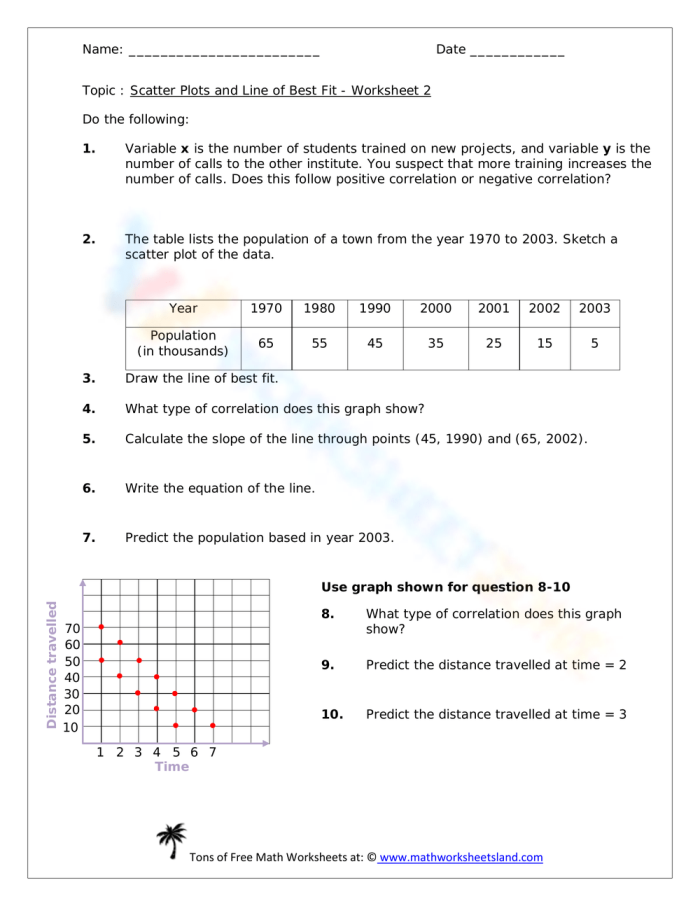
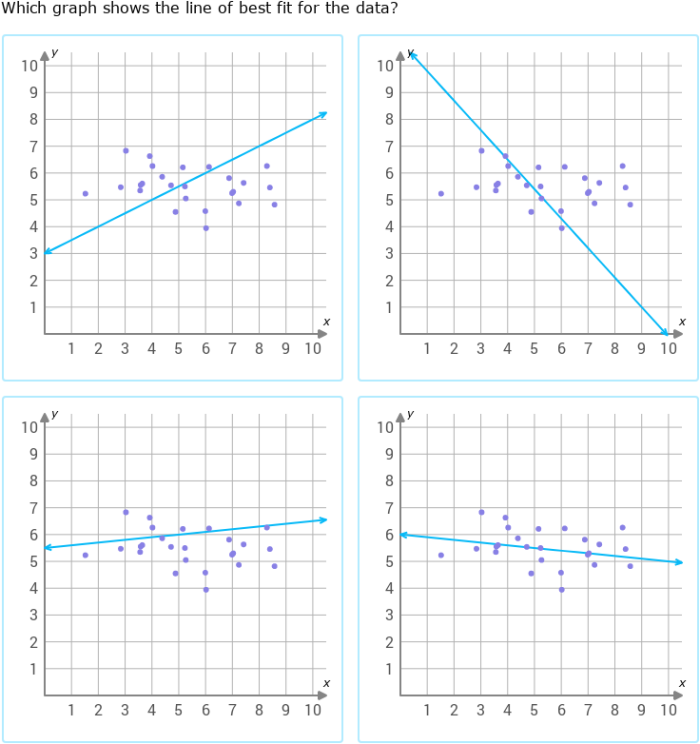
Eighth grade math worksheet showing a scatter plot graph for interpreting slopes and y-intercepts of lines of best fit 13
Eighth grade students analyzing linear trends and interpreting real-world data points on a worksheet
Worksheet for eighth graders interpreting slopes and y-intercepts from lines of best fit in real-world contexts. Interpreting Slopes and y-Intercepts of Lines of Best Fit Worksheet - Image 15.
Eighth-grade students analyzing slopes and y-intercepts from a lines of best fit worksheet
Eighth grade math worksheet showing a scatter plot graph for interpreting slopes and y-intercepts of lines of best fit
Eighth grade math worksheet focusing on analyzing lines of best fit through real-world data and slope interpretation
Eighth grade students analyzing real-world data points and lines of best fit to determine slope and y-intercept values
Eighth-grade worksheet focused on interpreting slopes and y-intercepts of lines of best fit in real-world contexts
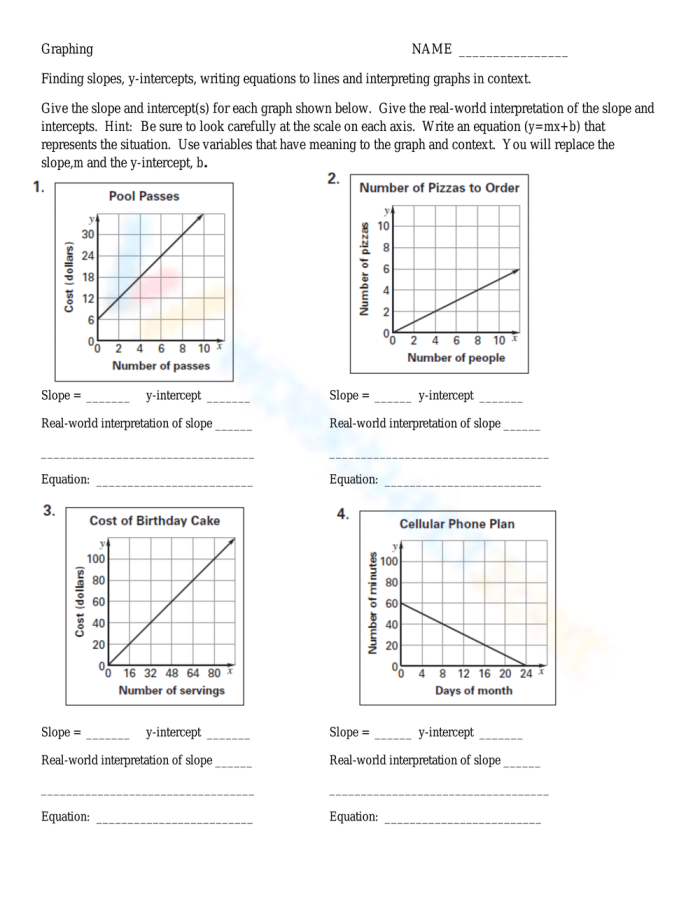
Eighth grade math worksheet showing problems on interpreting slope and y-intercept values for lines of best fit
Worksheet for eighth graders focusing on interpreting slopes and y-intercepts of lines of best fit in real-world contexts. Interpreting Slopes and y-Intercepts of Lines of Best Fit Worksheet Image 22
Eighth grade math worksheet featuring problems on interpreting slopes and y-intercepts of lines of best fit for real-world data
Eighth grade worksheet for interpreting slopes and y-intercepts of lines of best fit in real-world contexts
Students analyzing a worksheet on interpreting slopes and y-intercepts of lines of best fit

Leave a Reply

Your email address will not be published. Required fields are marked *