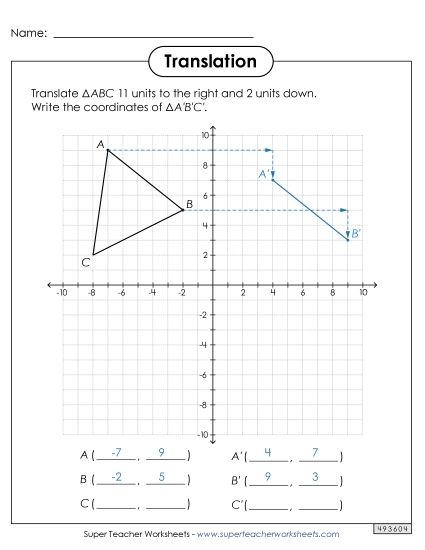
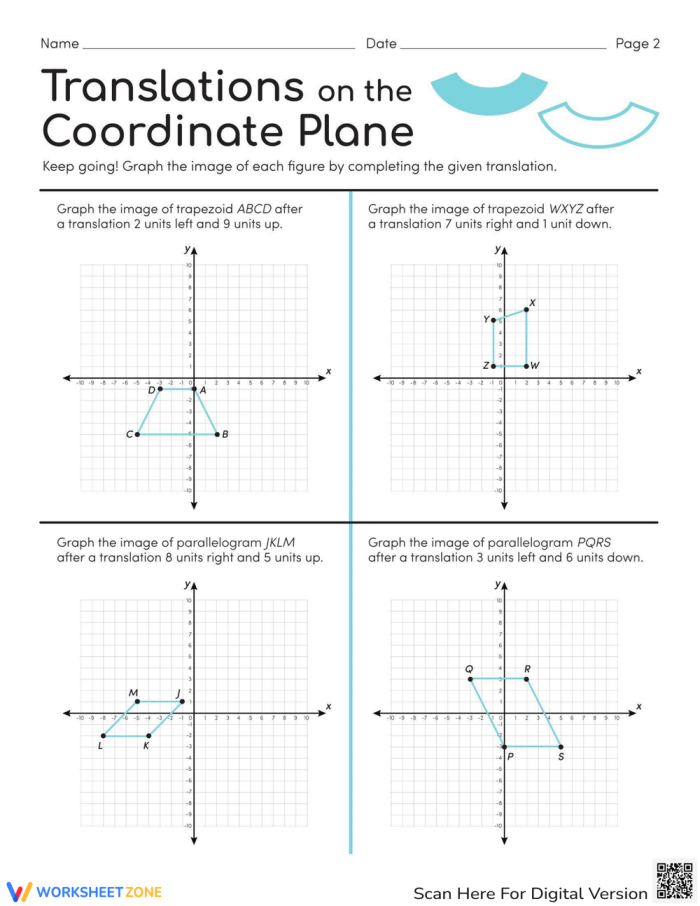
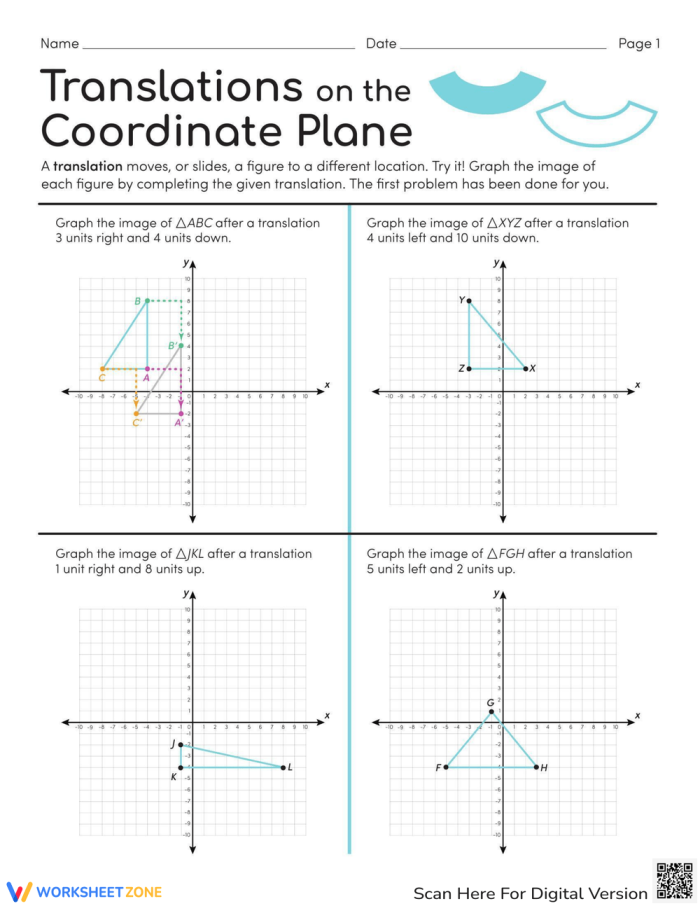
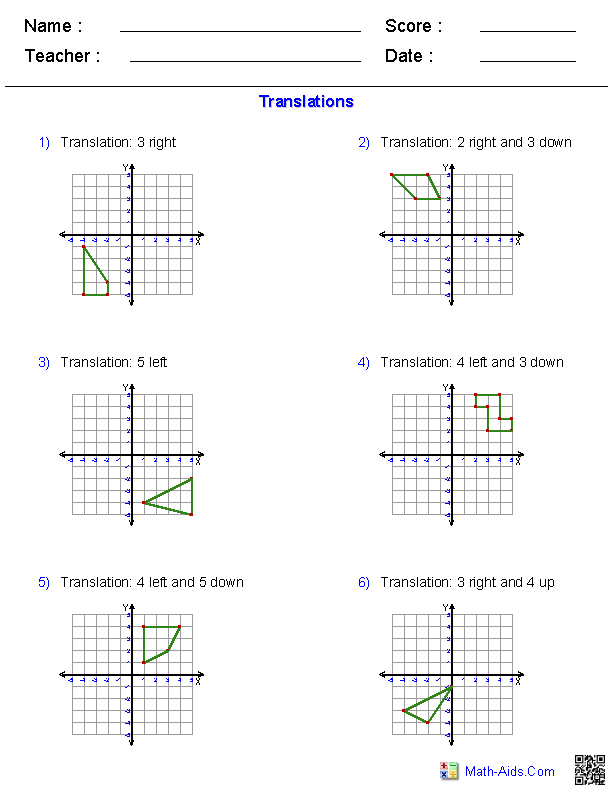
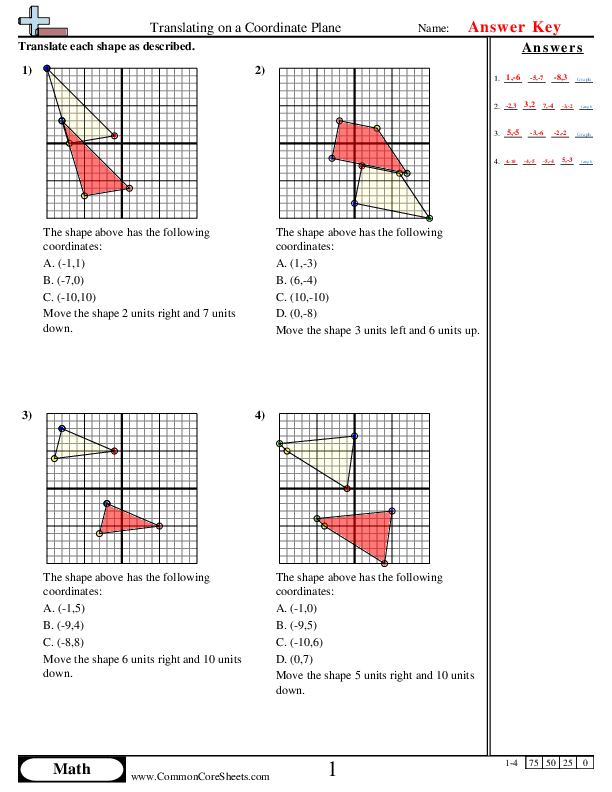
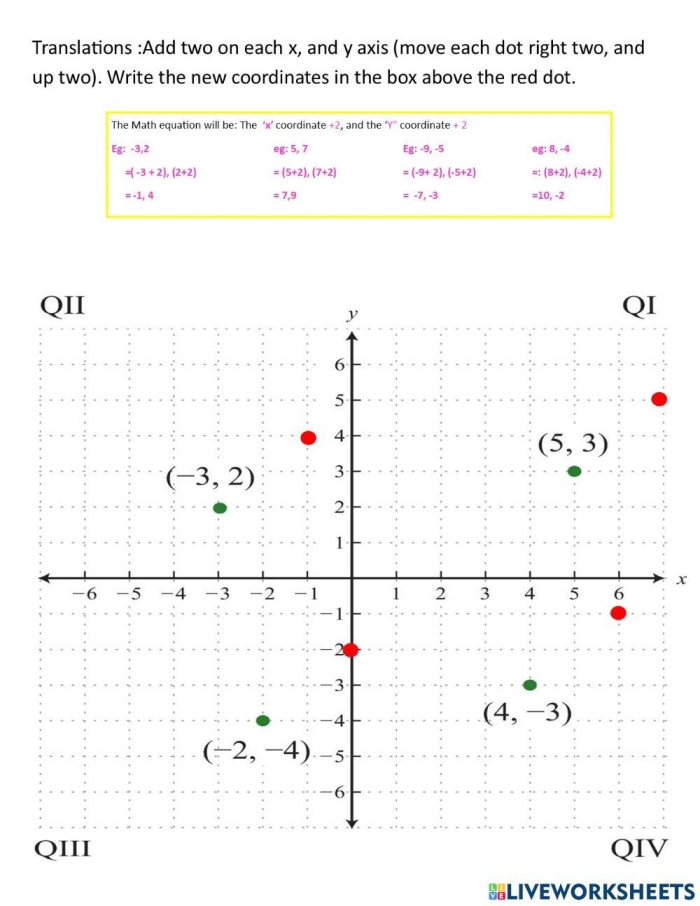
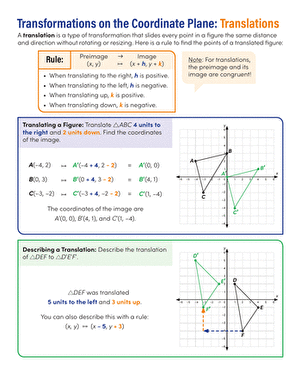
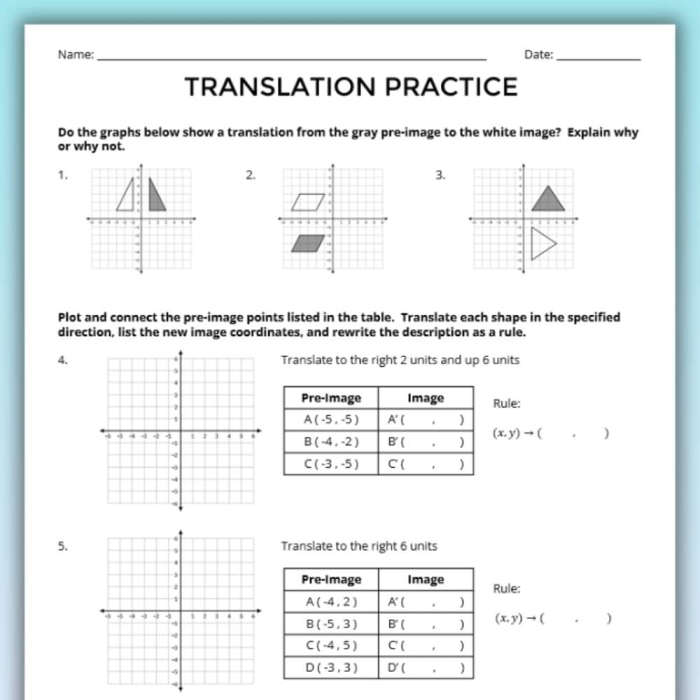
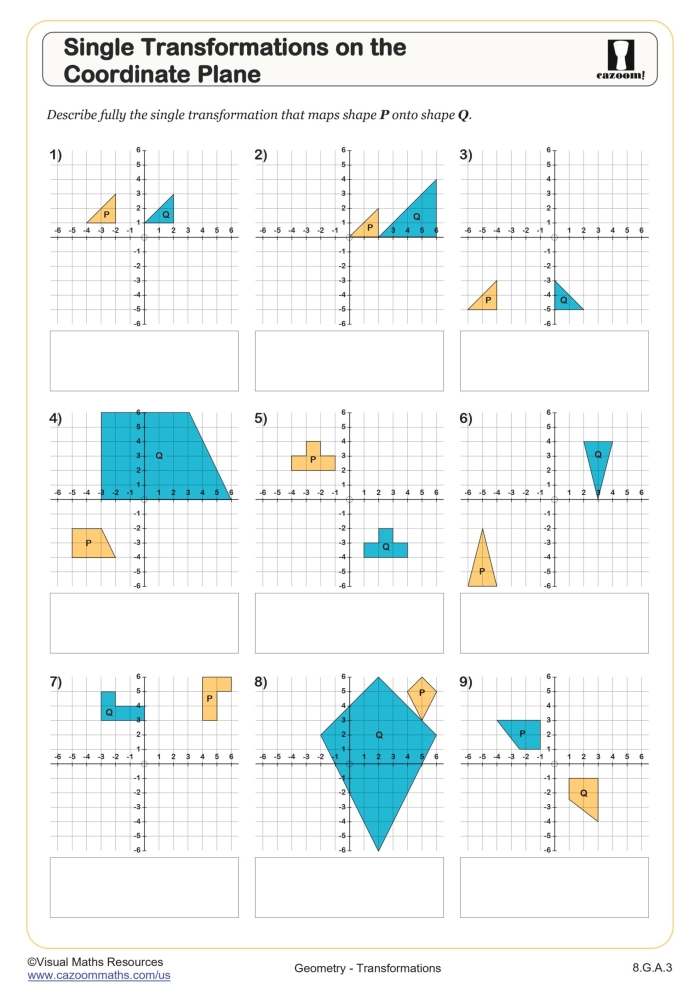
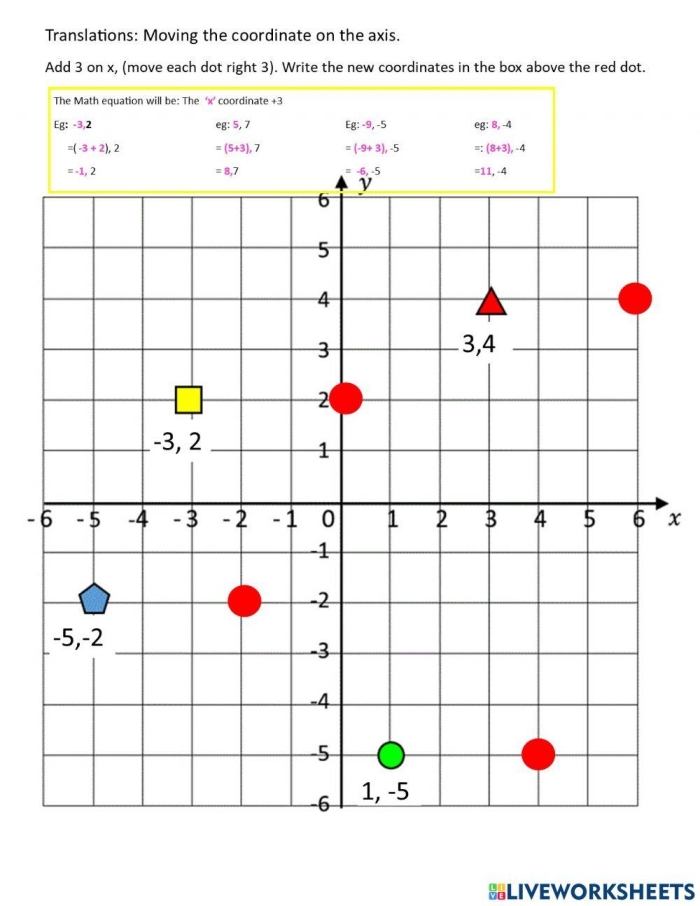
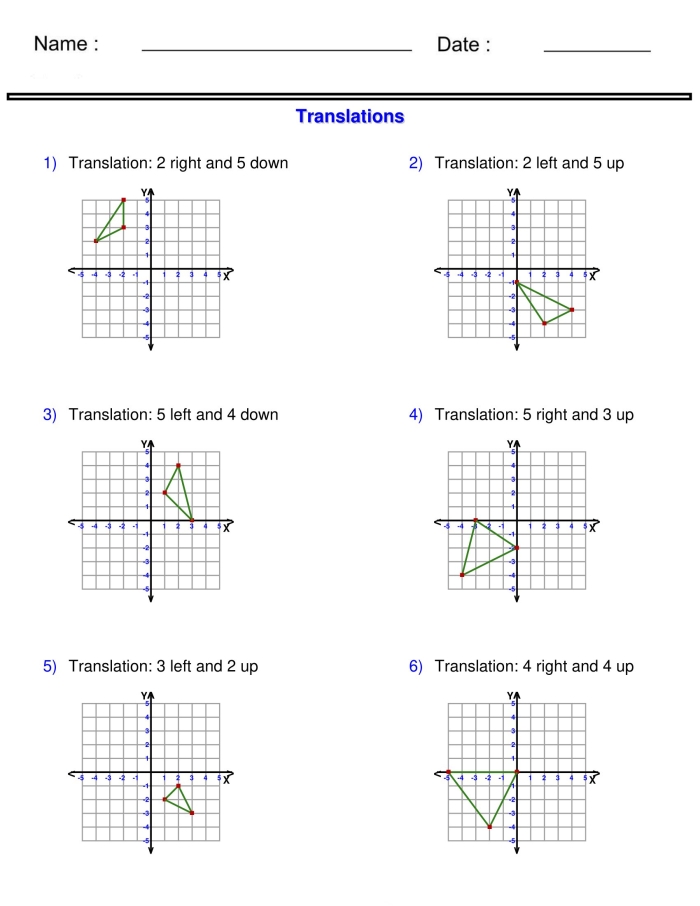
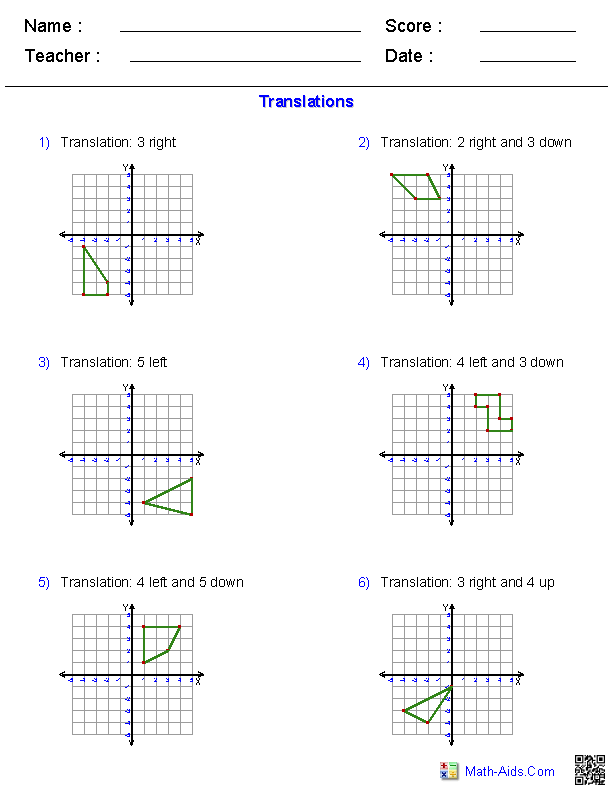
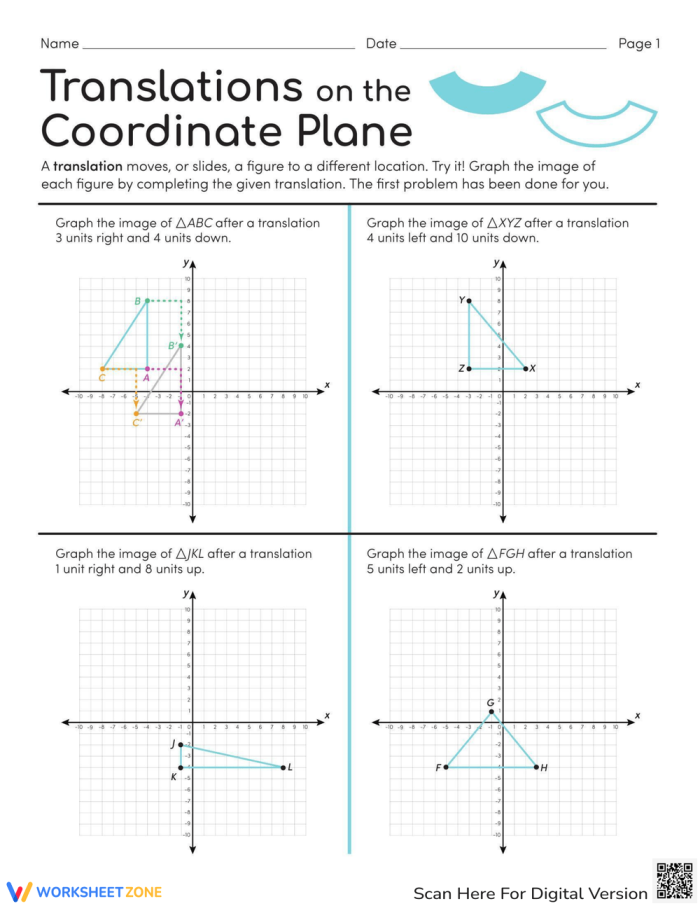
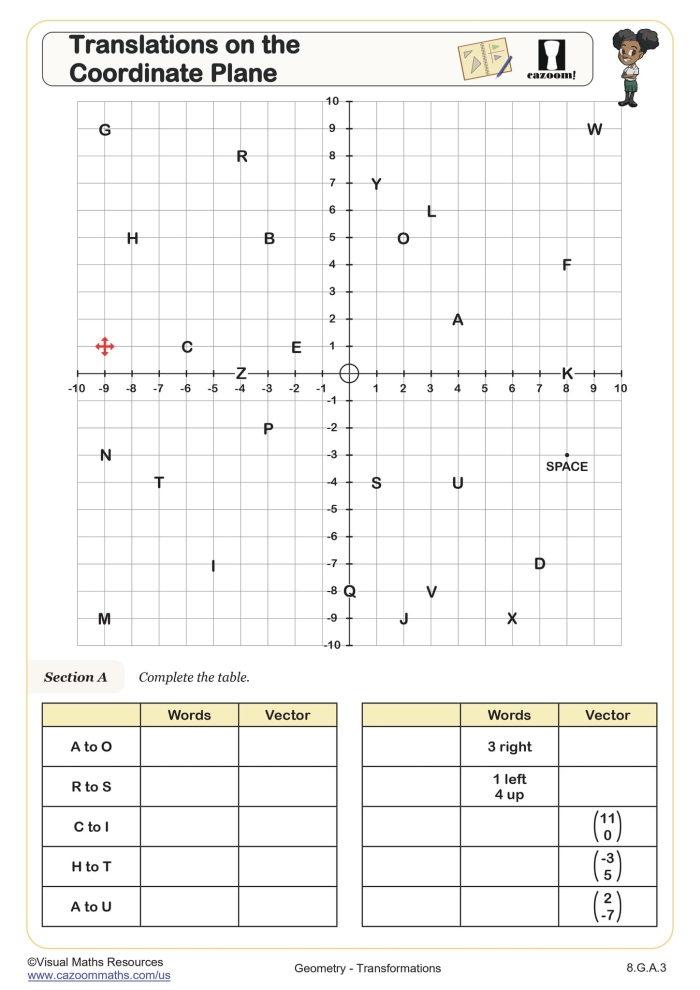
When eighth-grade students first encounter translations on the coordinate plane, many struggle to visualize how a shape moves without rotating or changing size. This worksheet addresses that challenge by having students practice graphing the images of figures after they’ve completed translations, building confidence through repetition and visual reinforcement.
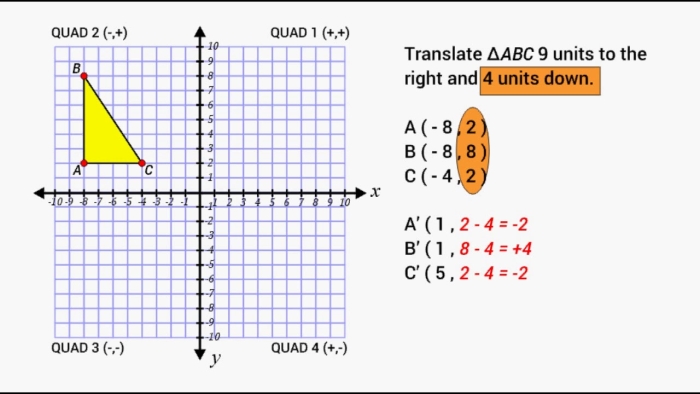
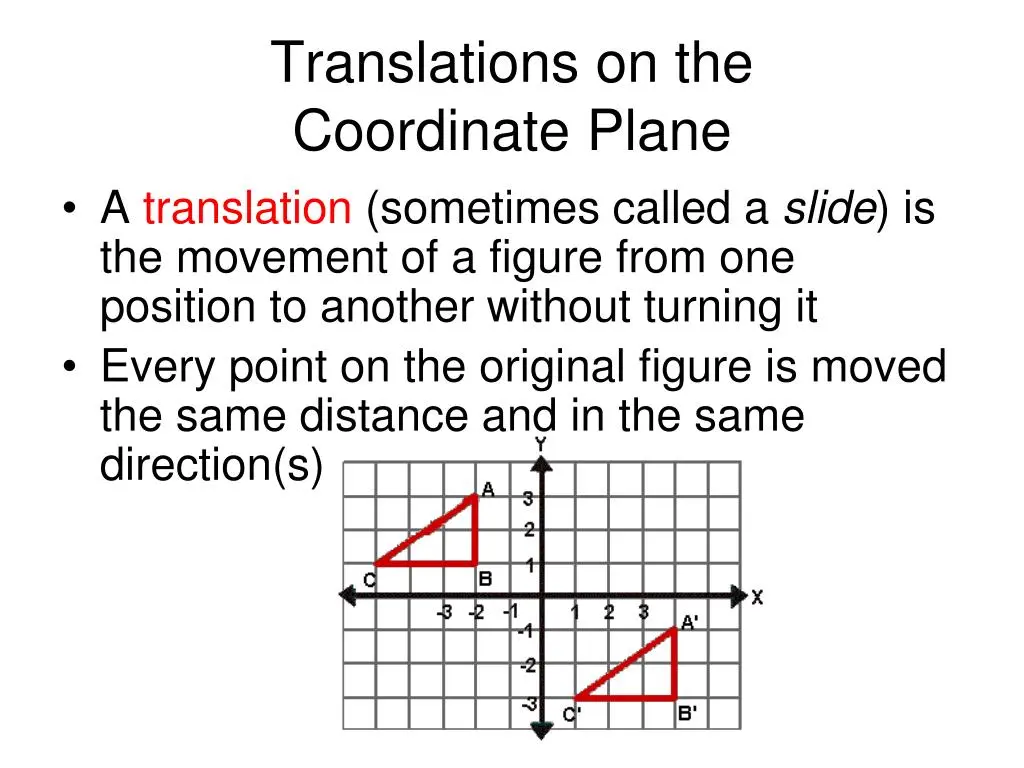
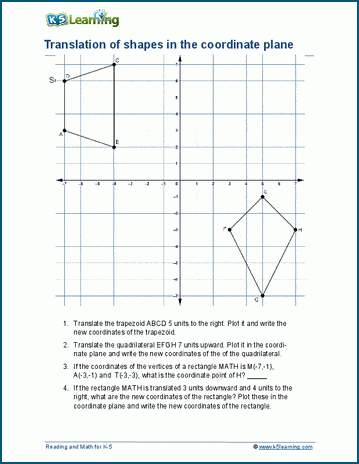
A translation slides a figure from one location to another using horizontal and vertical shifts. If you move a triangle 3 units right and 2 units up, every single point on that triangle travels the same distance in the same direction. Students need to track these movements carefully, marking where each vertex lands on the grid. The worksheet structure reinforces this skill by requiring students to plot the translated image after calculating the new coordinates.
Working through translations on the coordinate plane problems helps students develop spatial reasoning that extends beyond geometry. They learn to think about movement and position systematically, skills that apply to computer graphics, architecture, and engineering. The repetitive practice embedded in these worksheets creates muscle memory for coordinate notation and calculation.
Eighth-grade geometry introduces several related concepts worth exploring alongside translations. Students often benefit from connecting this material to other coordinate plane work, such as solving systems of equations using substitution or identifying patterns with irrational numbers. These different worksheet types help students see how coordinate planes function as a universal tool across multiple mathematical domains.
The graphing component makes abstract movement concrete. Students see the before and after positions side by side, which builds understanding faster than verbal explanation alone. By the end of the worksheet, most students can independently translate figures and accurately plot their new positions without hesitation.
Try These Printable Worksheets