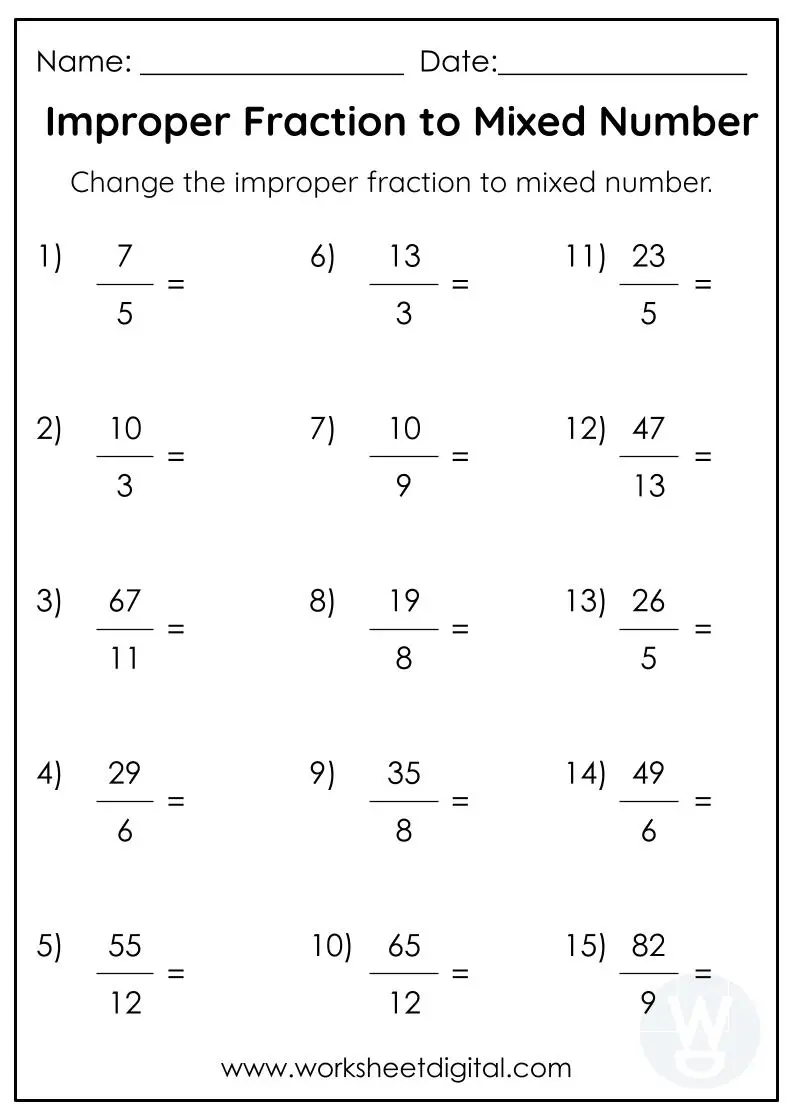
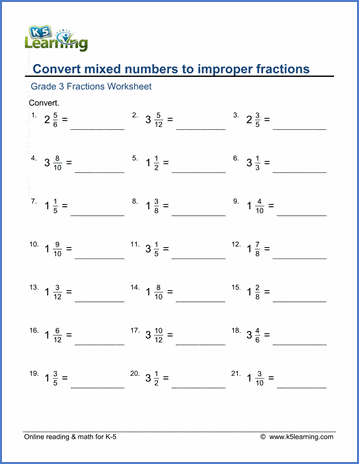
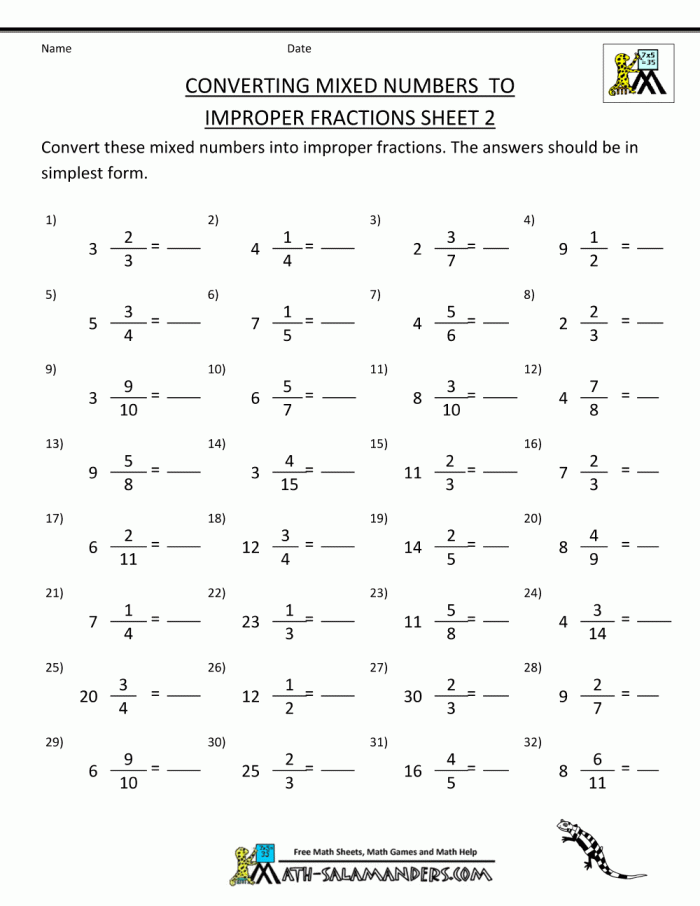
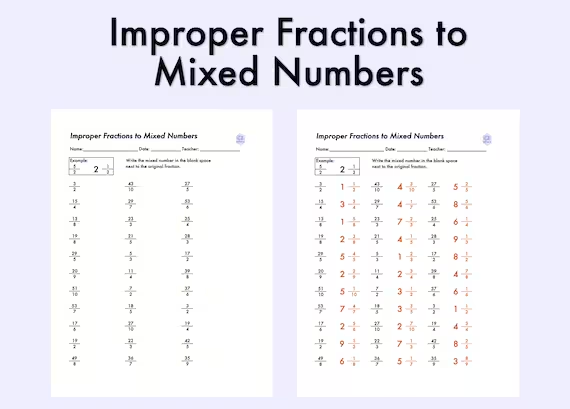
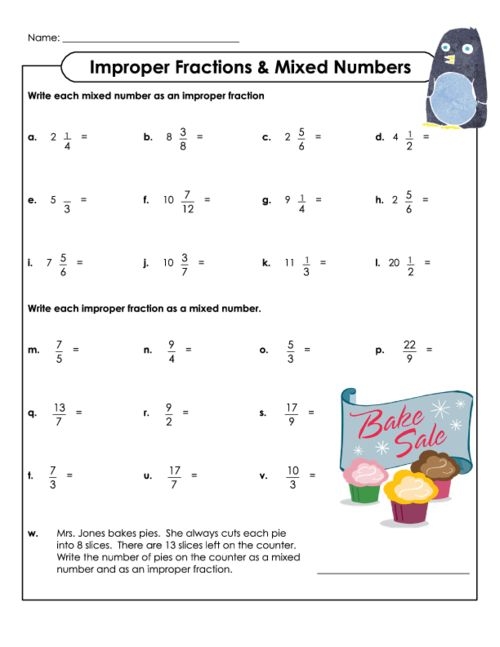
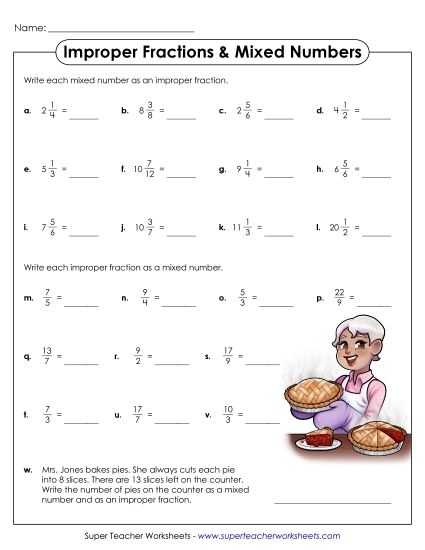
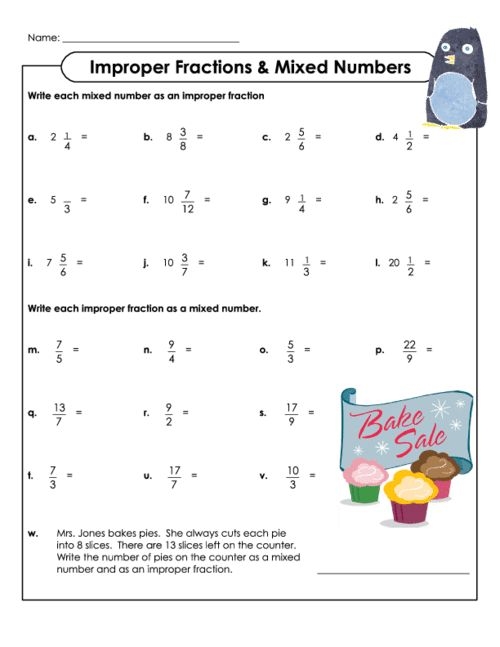
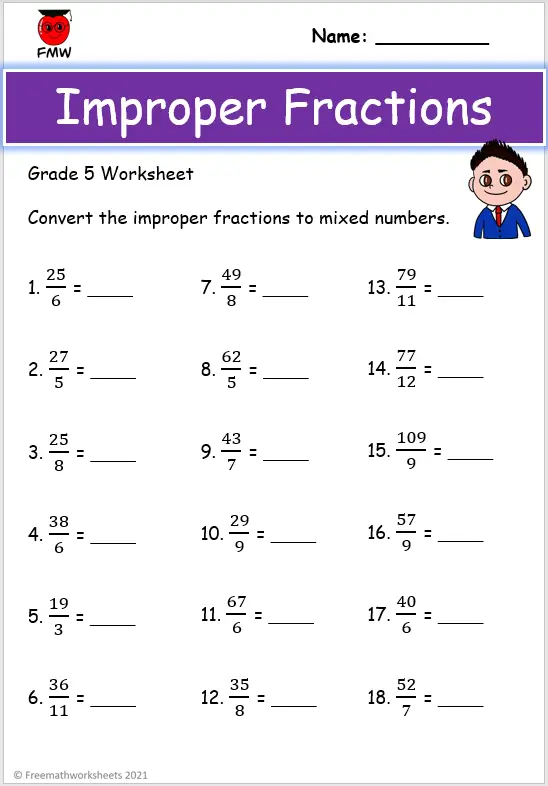
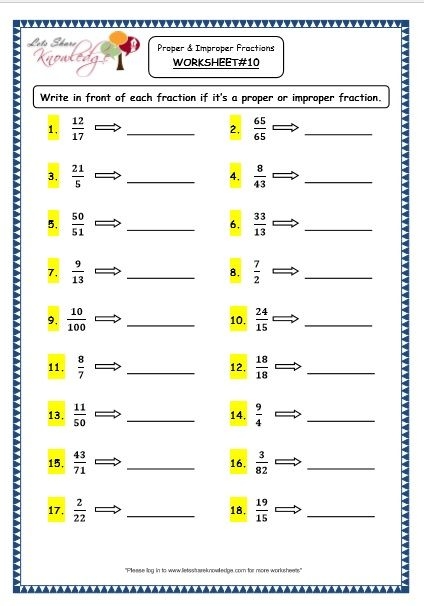
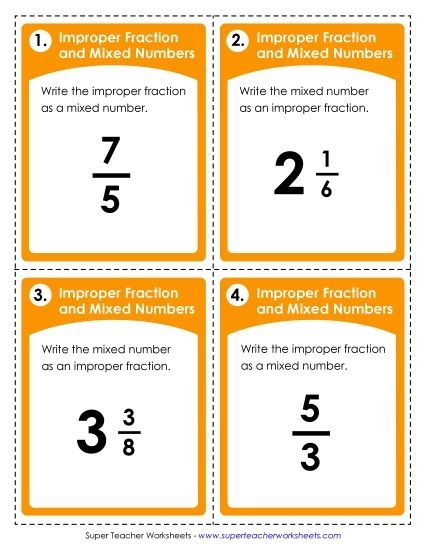
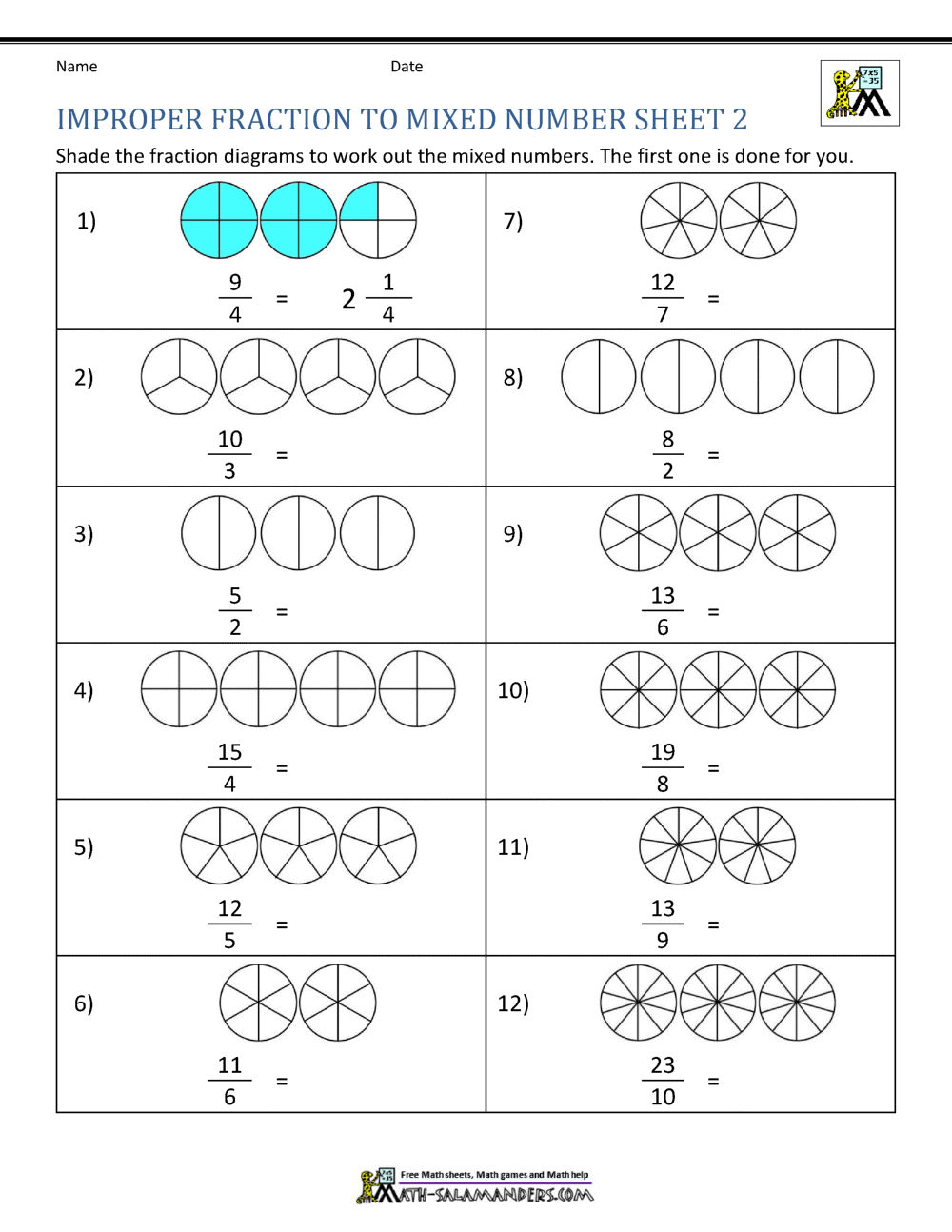
Converting improper fractions to mixed numbers is one of those skills that clicks once students see the pattern. An improper fraction, like 7/3, has a numerator larger than or equal to its denominator. A mixed number expresses the same value differently, combining a whole number with a proper fraction. For fourth grade students learning multiplication and division concepts, understanding this conversion builds essential number sense that connects directly to how fractions work in real calculations.
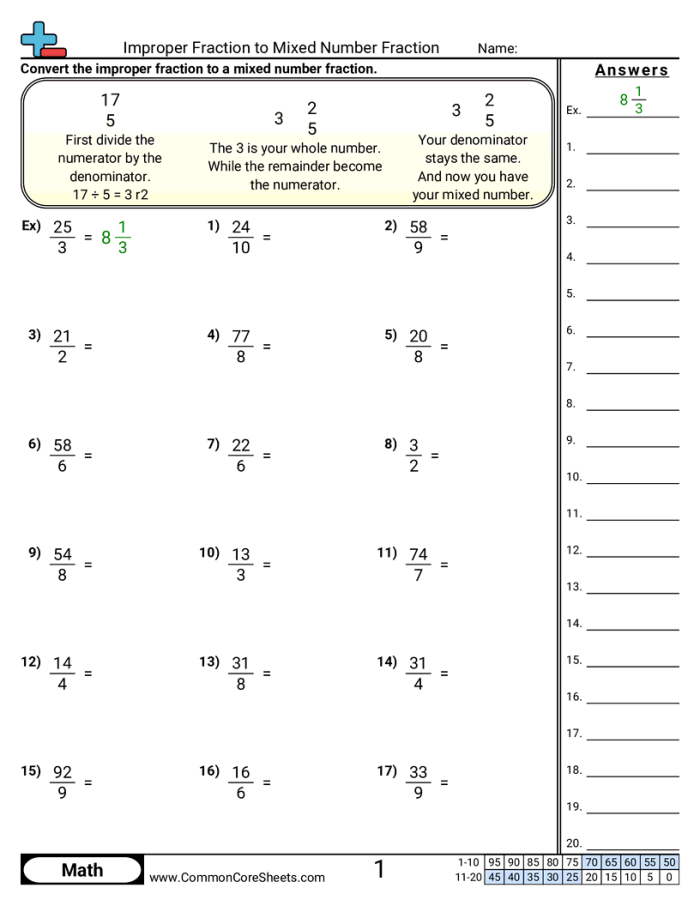
The process itself is straightforward. To convert 7/3 to a mixed number, you divide the numerator by the denominator. Seven divided by three gives you two whole groups with one left over, so the answer is 2 1/3. That remainder becomes the numerator of the fractional part, while the denominator stays the same. Once students grasp this division-based approach, they can apply it to any improper fraction they encounter.
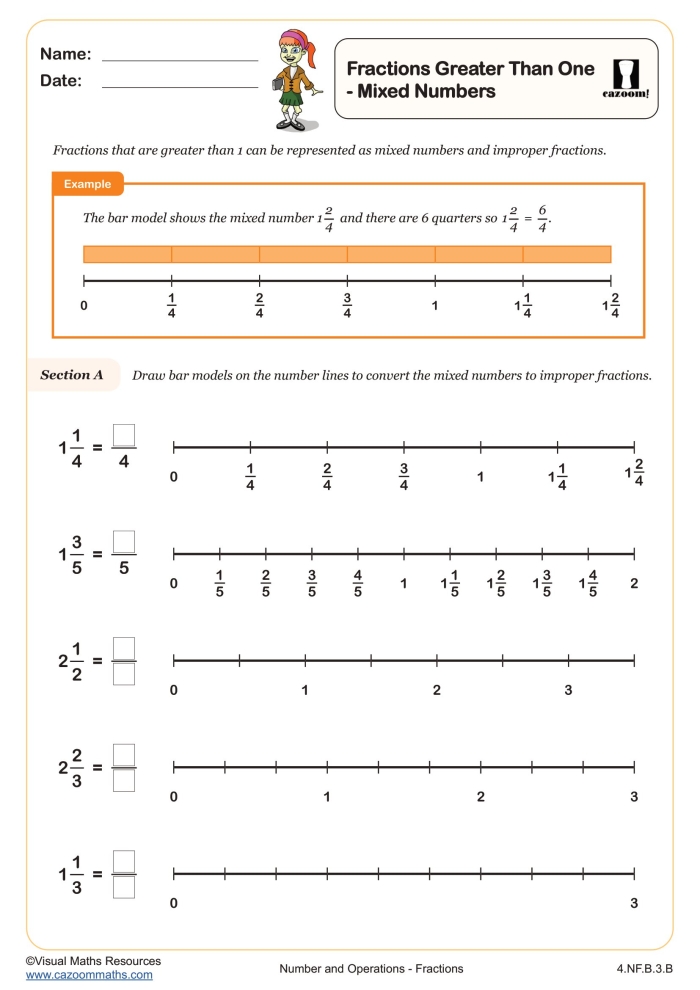
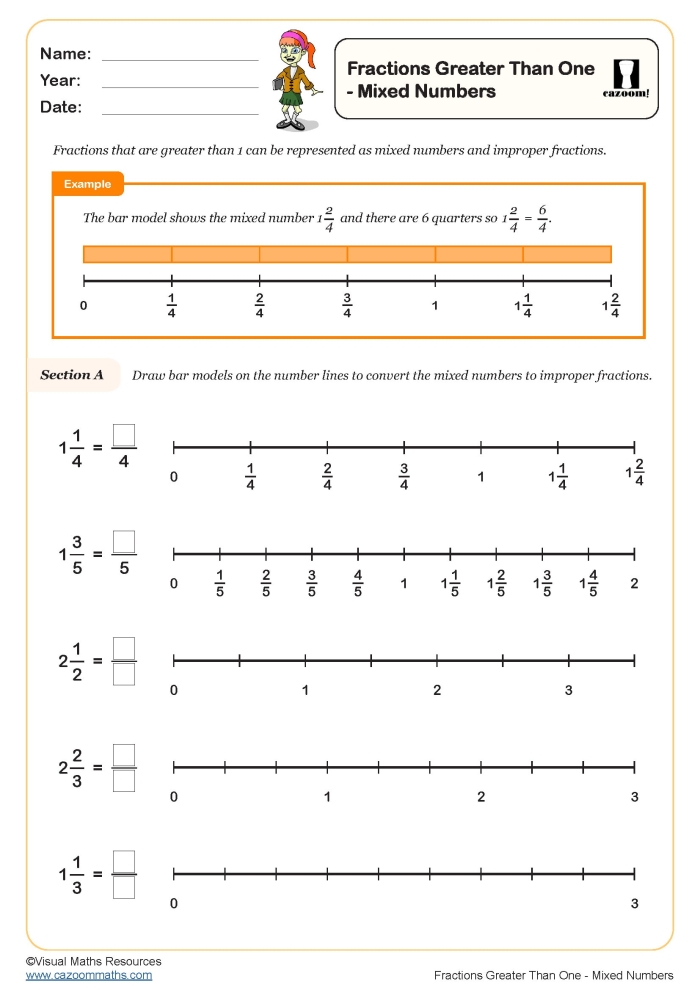
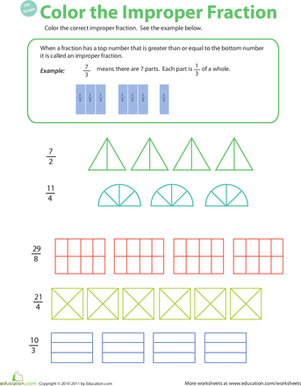
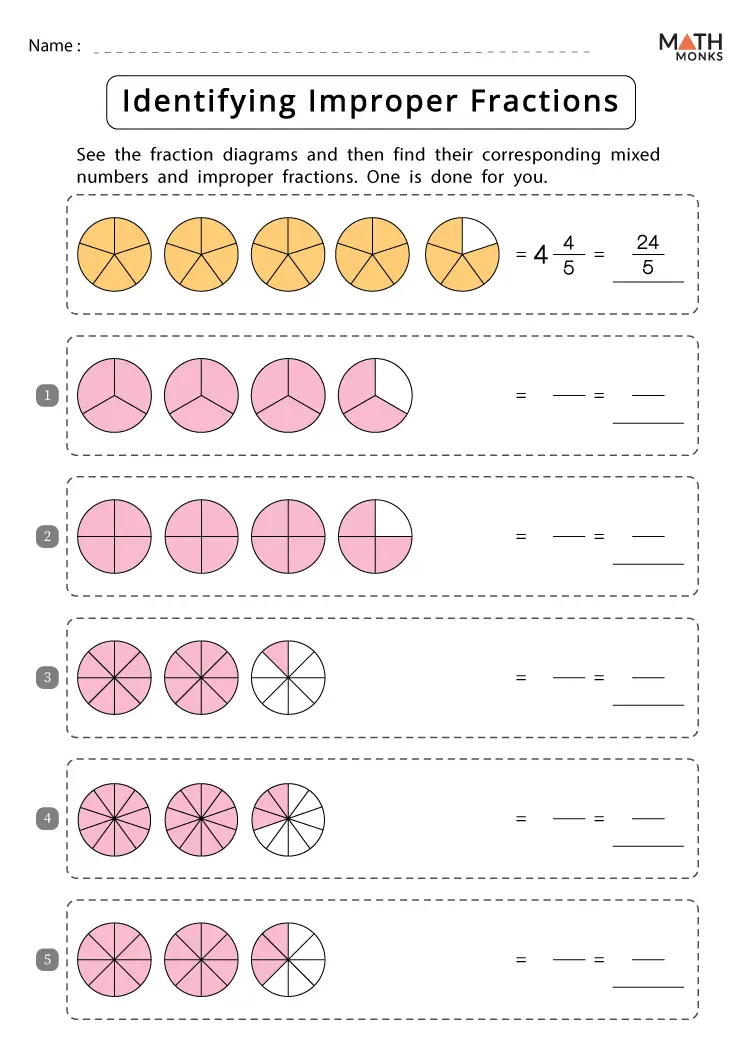
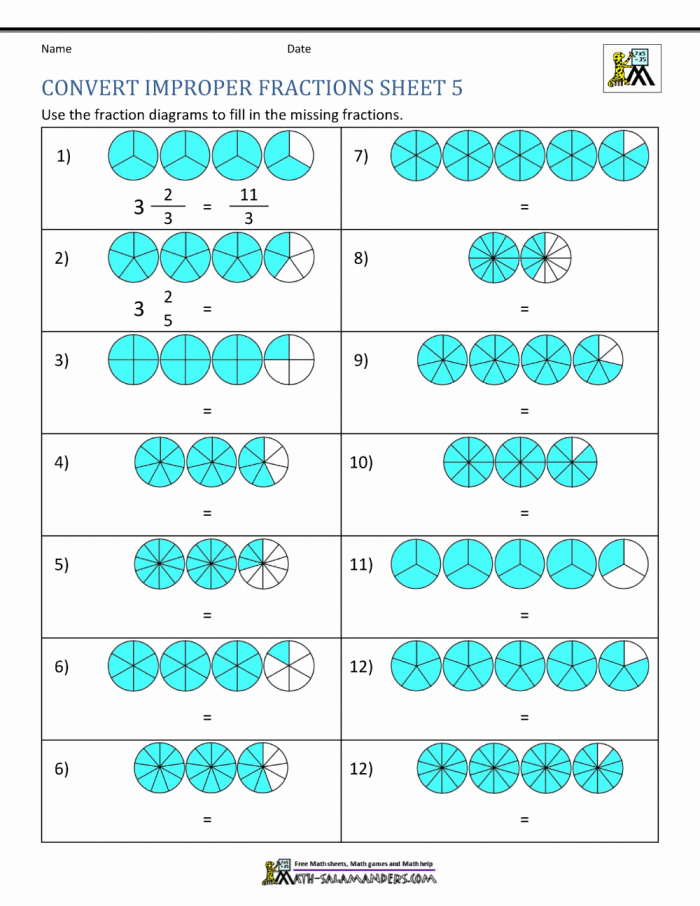
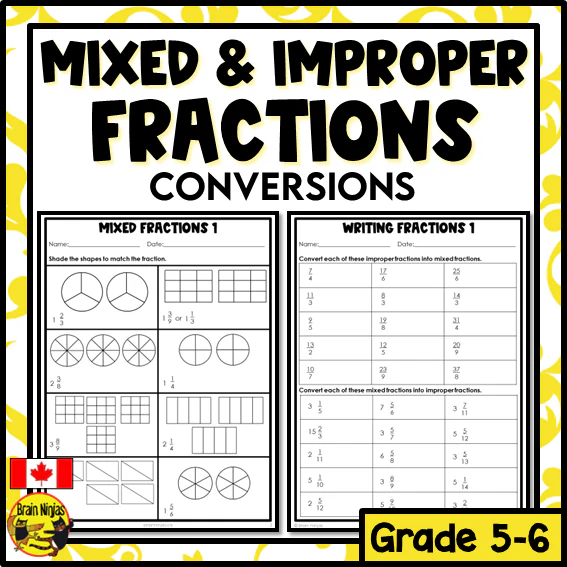
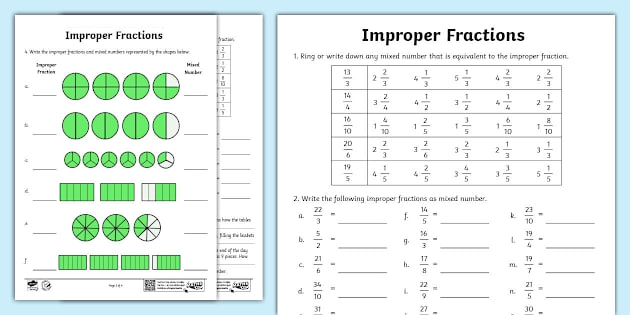
A well-designed worksheet takes children through this step by step. The first section typically introduces the concept with visual representations, showing circles or rectangles divided into sections. Seeing the improper fraction 5/2 displayed as two full shapes plus half of another shape makes the mixed number 2 1/2 obvious. This visual foundation matters because it prevents the conversion from feeling like a meaningless procedural trick.
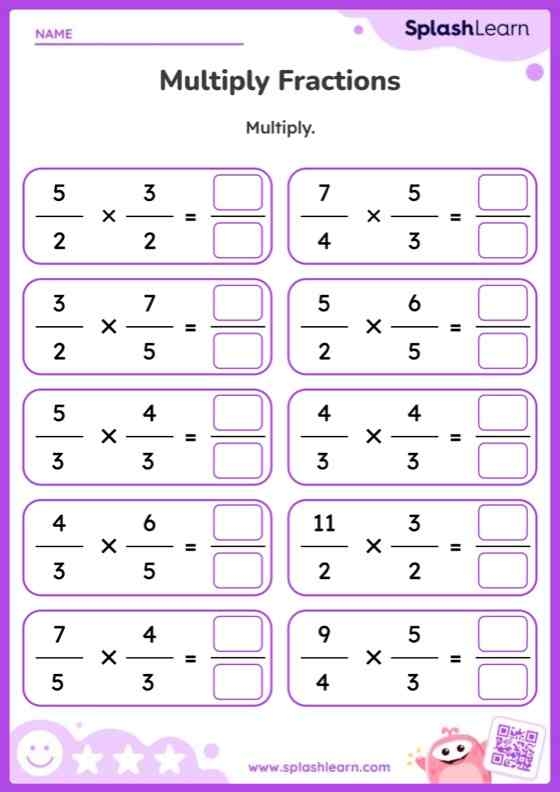
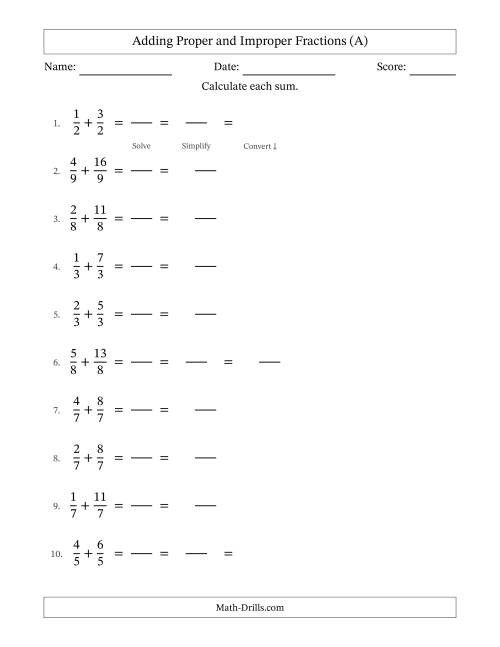
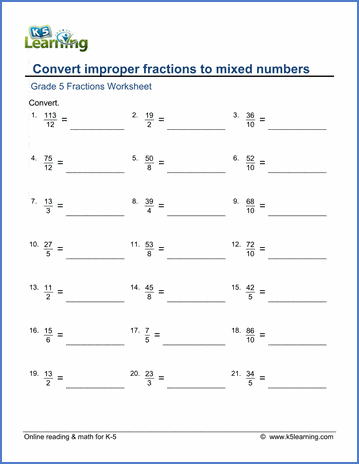
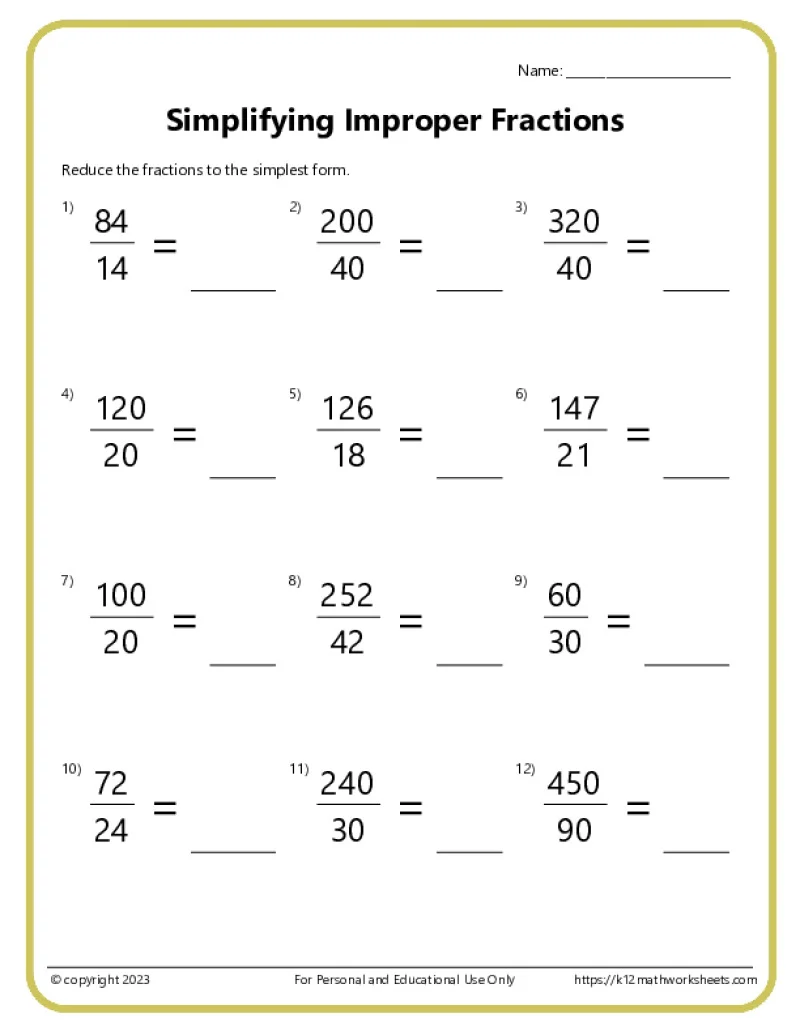
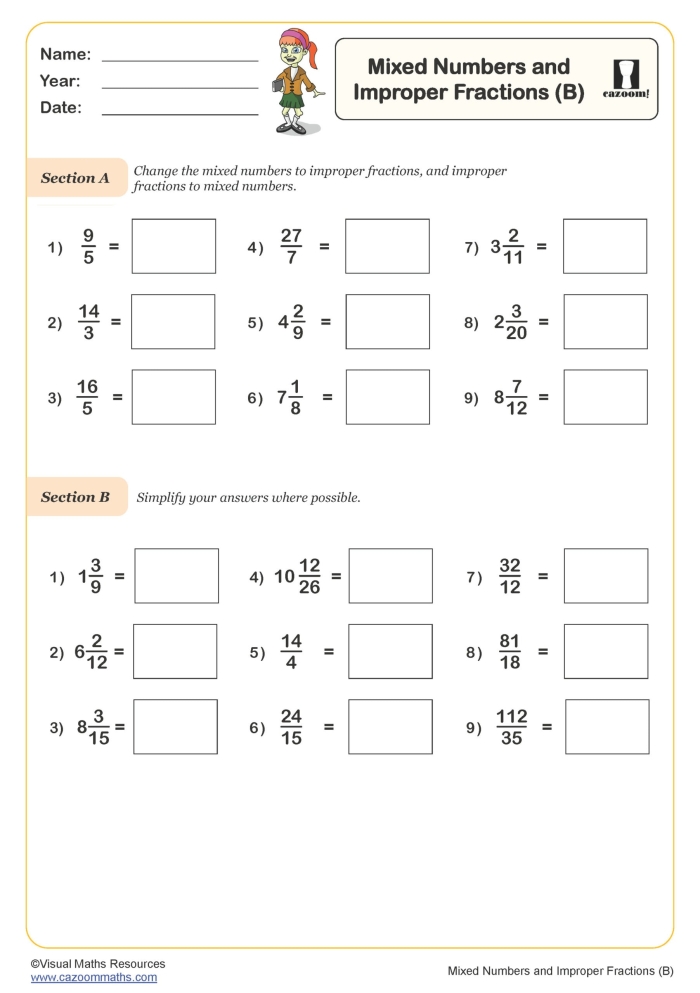
The practice section reinforces the skill through repetition. Students work through ten to fifteen problems of increasing complexity, converting improper fractions with different denominators. This hands-on practice cements the division method into their working memory. When combined with other fourth grade multiplication worksheets, such as simplifying fractions, students develop a more complete understanding of fraction operations.
For teachers looking to build comprehensive math units, pairing improper fraction worksheets with related activities strengthens student learning. Resources like multiplication practice worksheets help students see how these concepts interconnect across different mathematical areas.
Hands-On Worksheet Activities