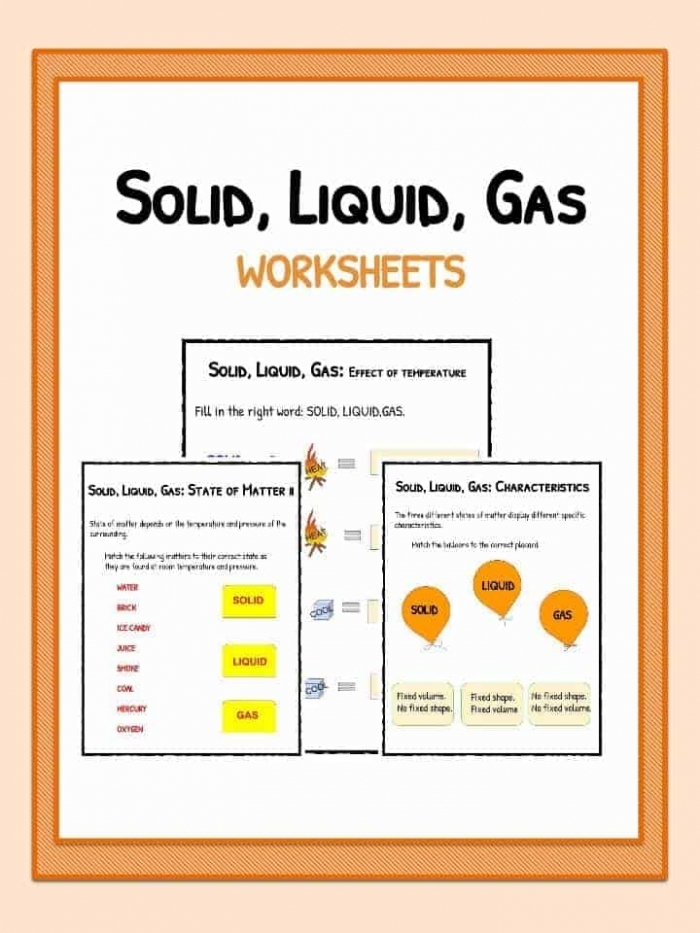
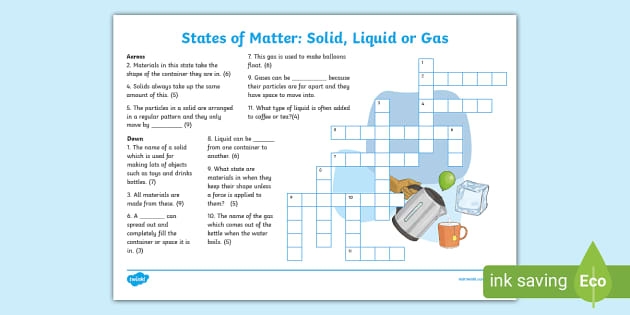
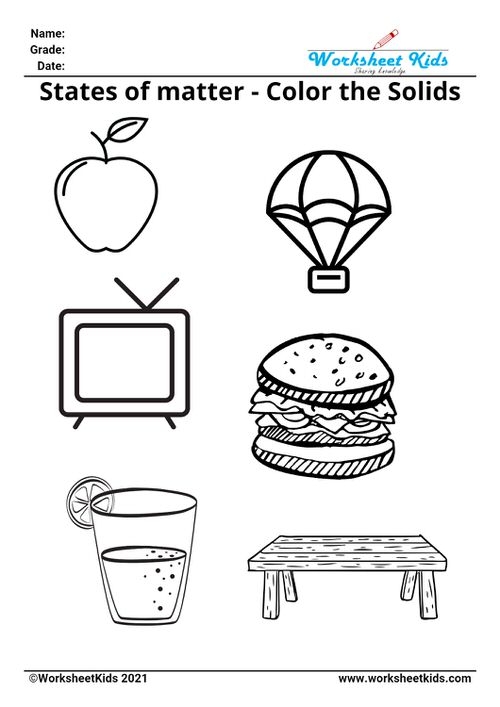
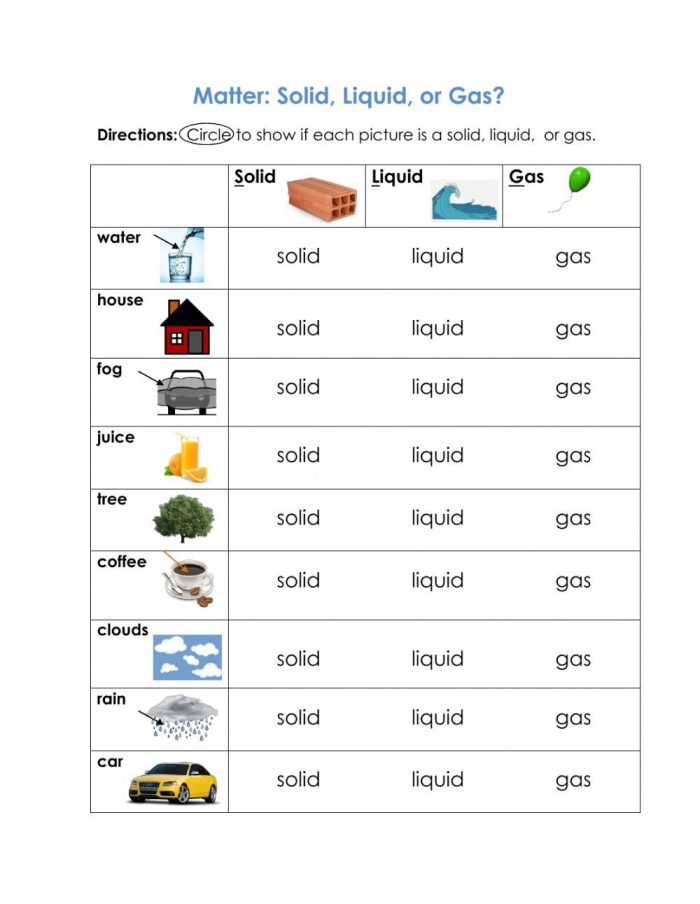
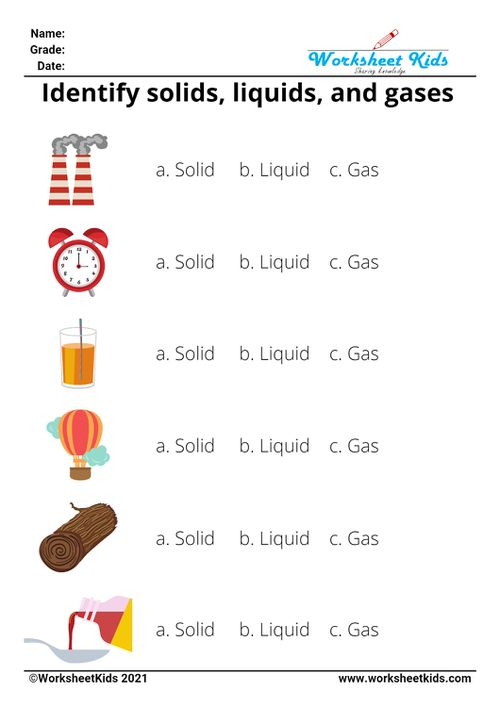
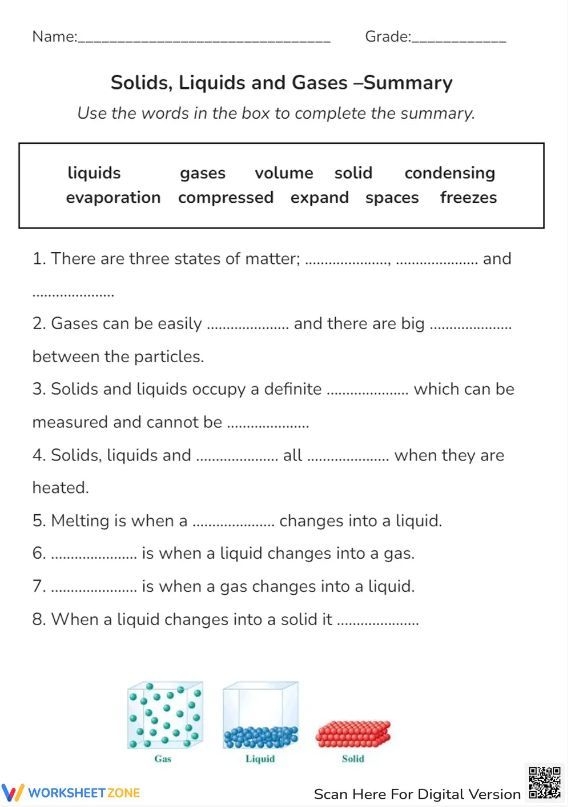
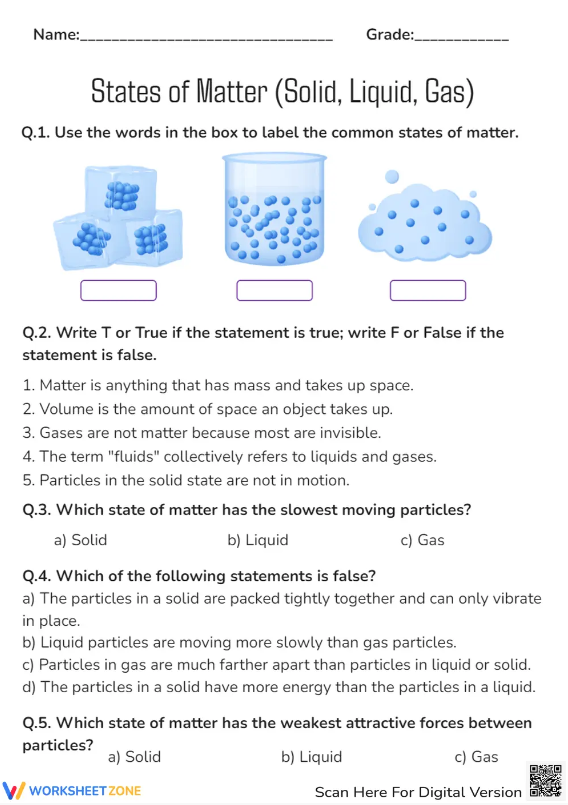
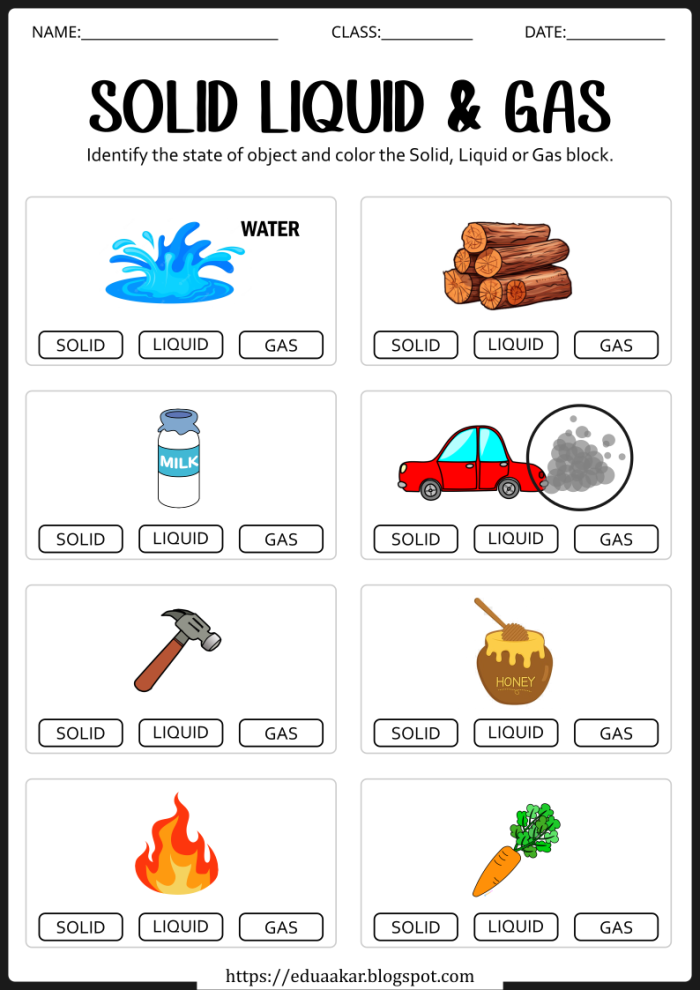
Teaching your second grader to recognize the three states of matter is one of those science fundamentals that sticks with them for years. A well-designed worksheet can make the difference between a concept that clicks immediately and one that requires repeated explanation. This printable worksheet focuses specifically on helping children identify solids, liquids, and gases through visual examples and straightforward questions.
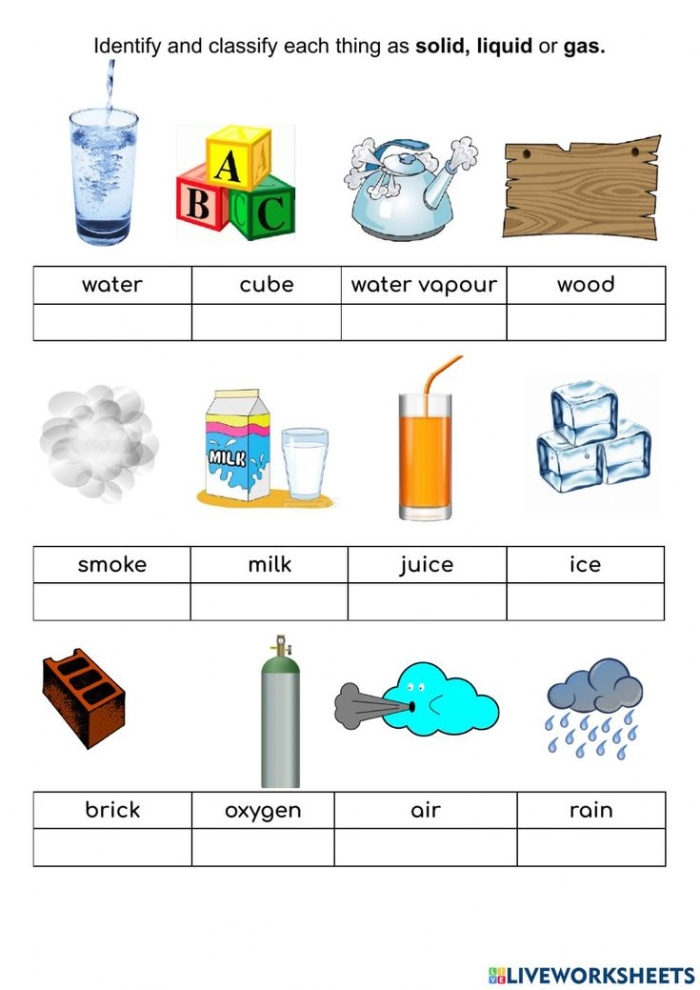
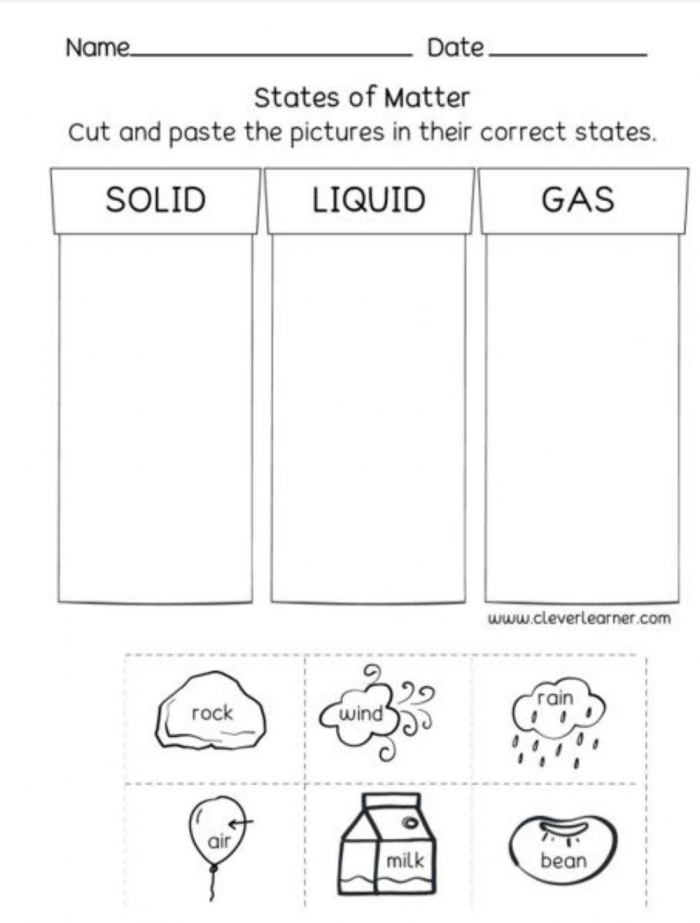
The beauty of this approach lies in its simplicity. Rather than overwhelming kids with definitions, the worksheet presents real-world objects they encounter daily. A child sees a rock and labels it solid. Water in a cup becomes liquid. Air around them becomes gas. These tangible connections make abstract concepts concrete, which is exactly how second graders learn best.
What makes this worksheet particularly effective is that it doesn’t exist in isolation. When your child completes identifying states of matter through patterns in second grade worksheets, they’re building foundational science literacy. This same pattern-based approach appears in other second grade materials, like when students work on place value and money concepts, reinforcing how patterns help organize information across subjects.
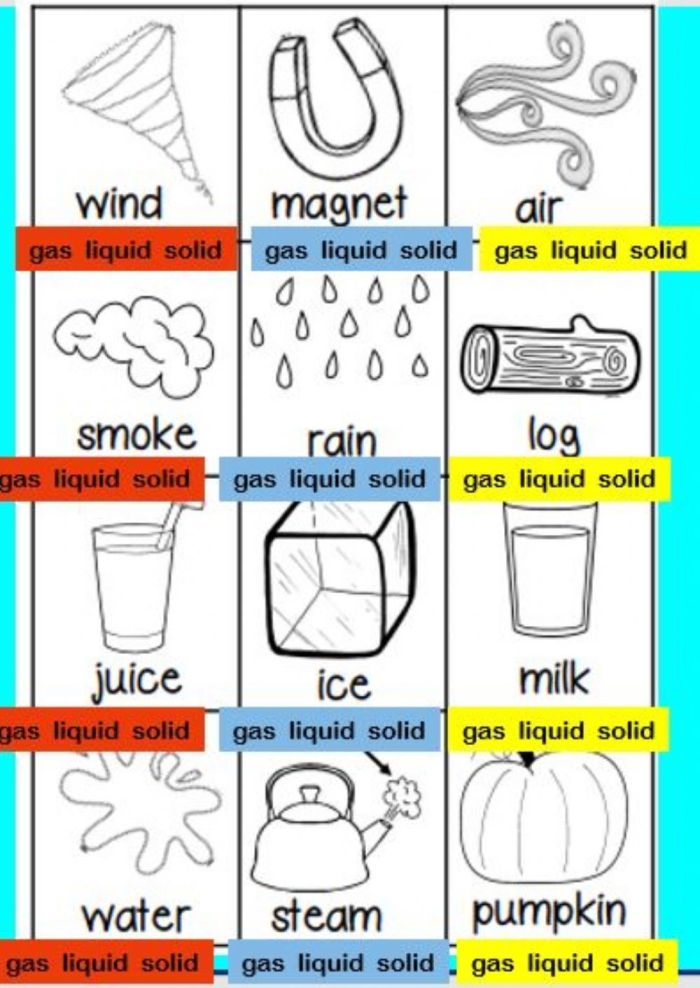
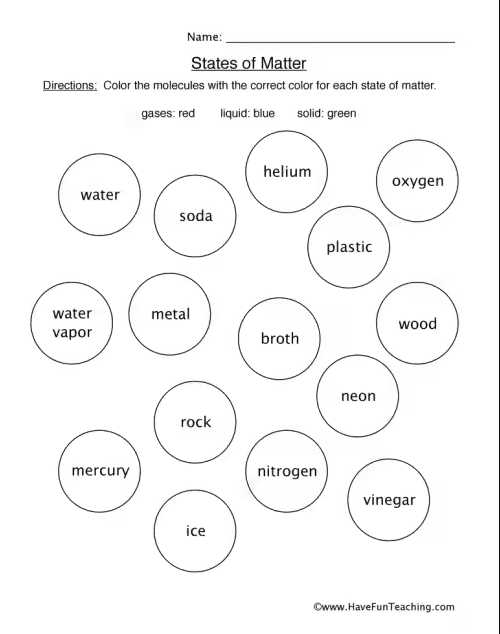
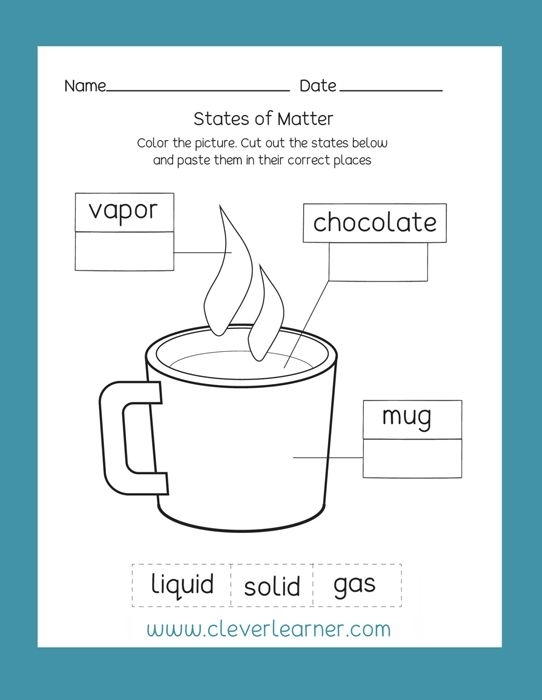
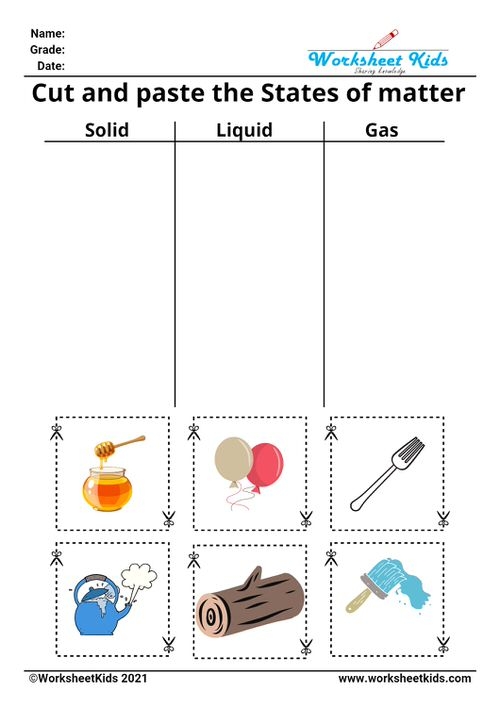
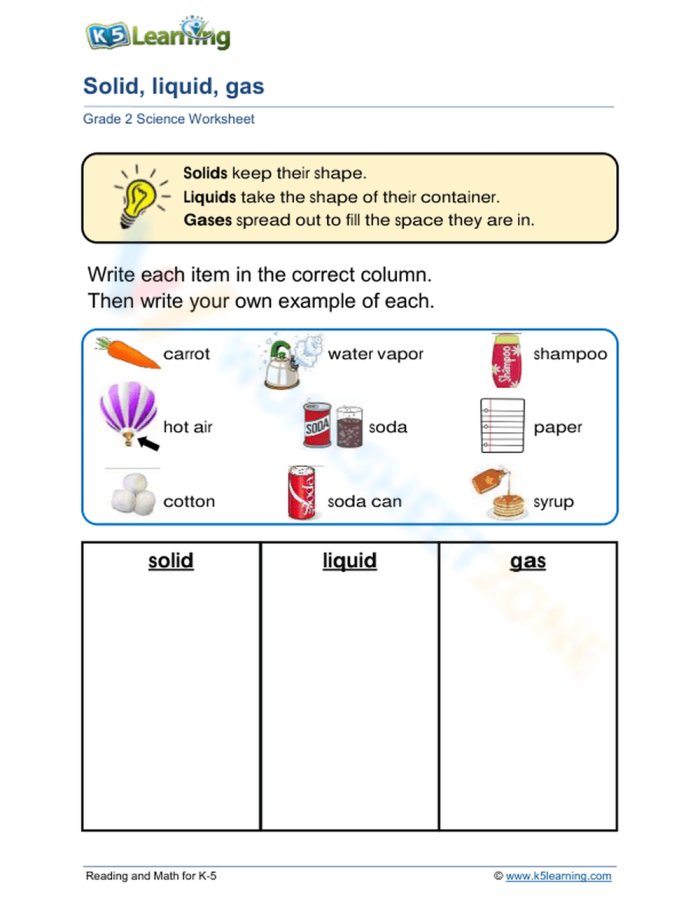
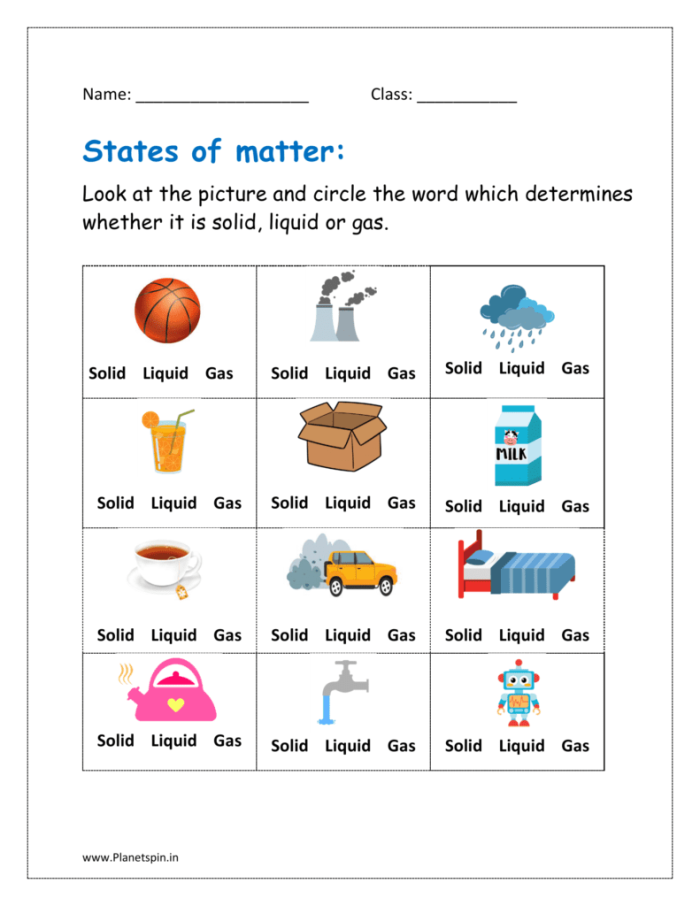
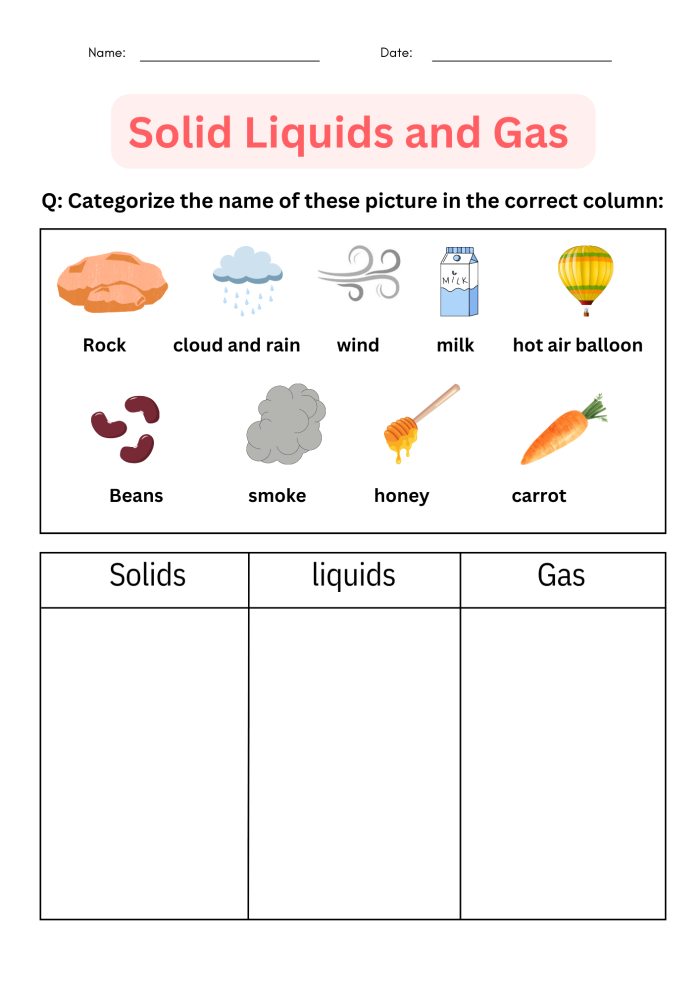
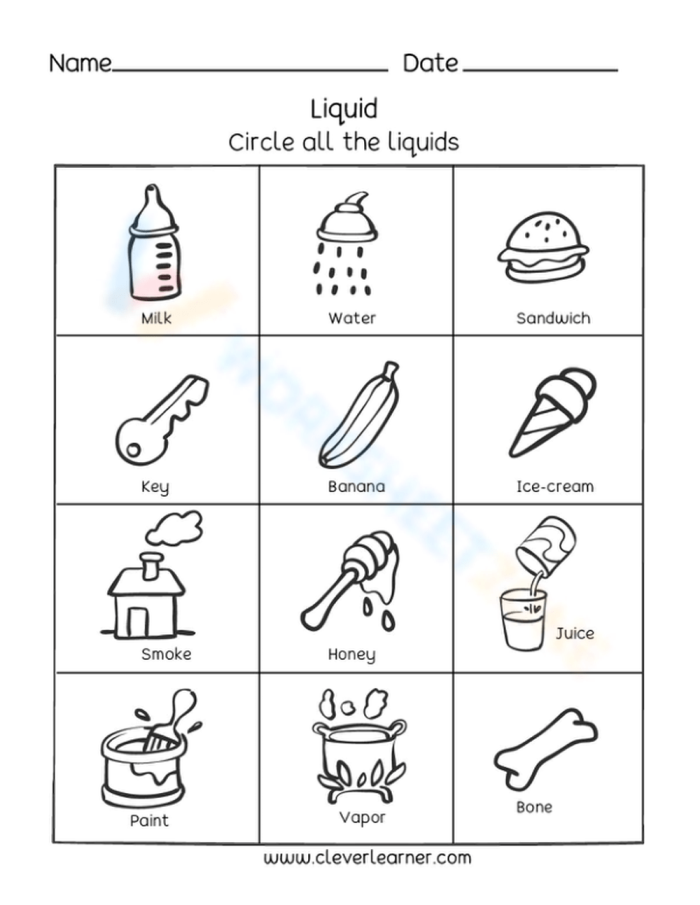
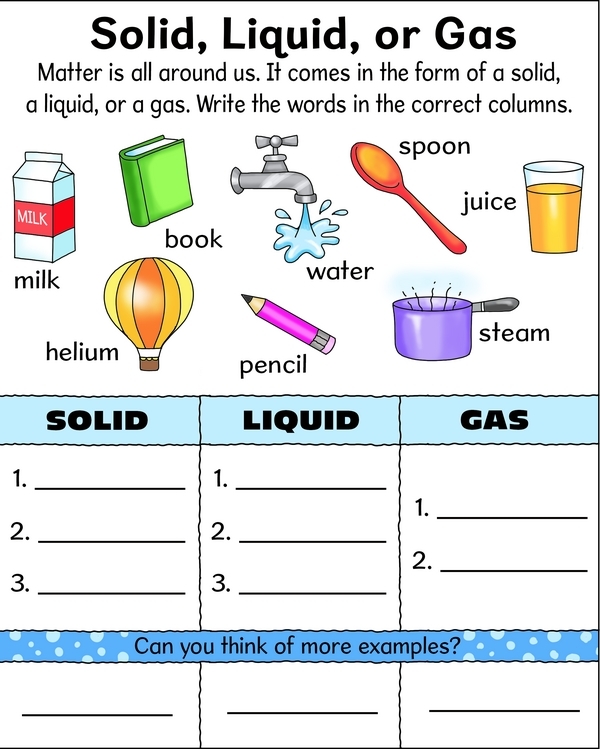
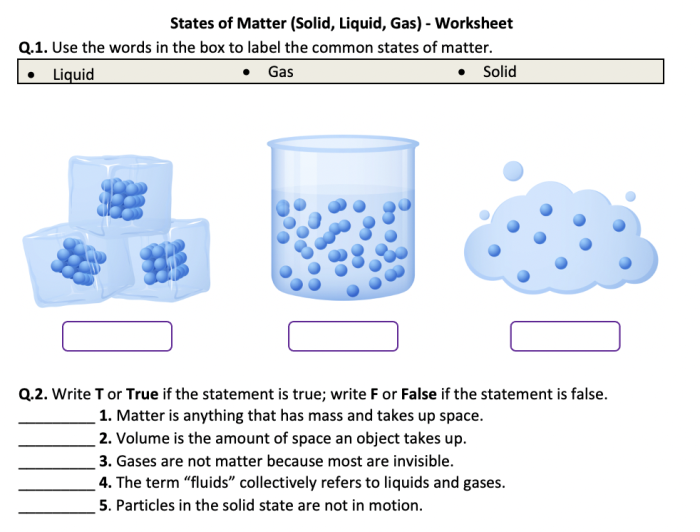
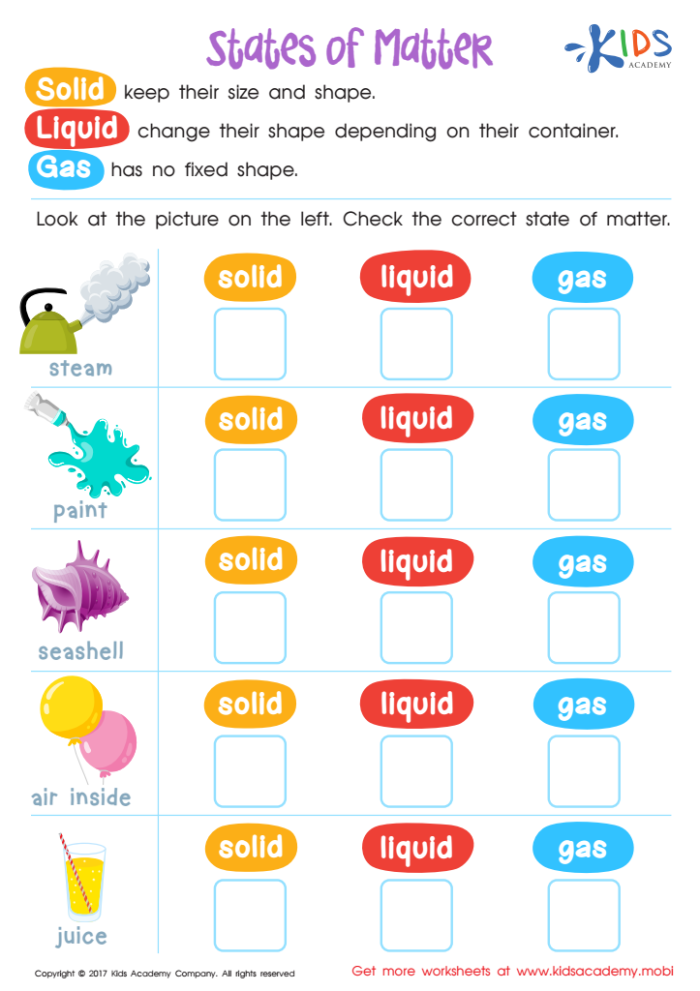
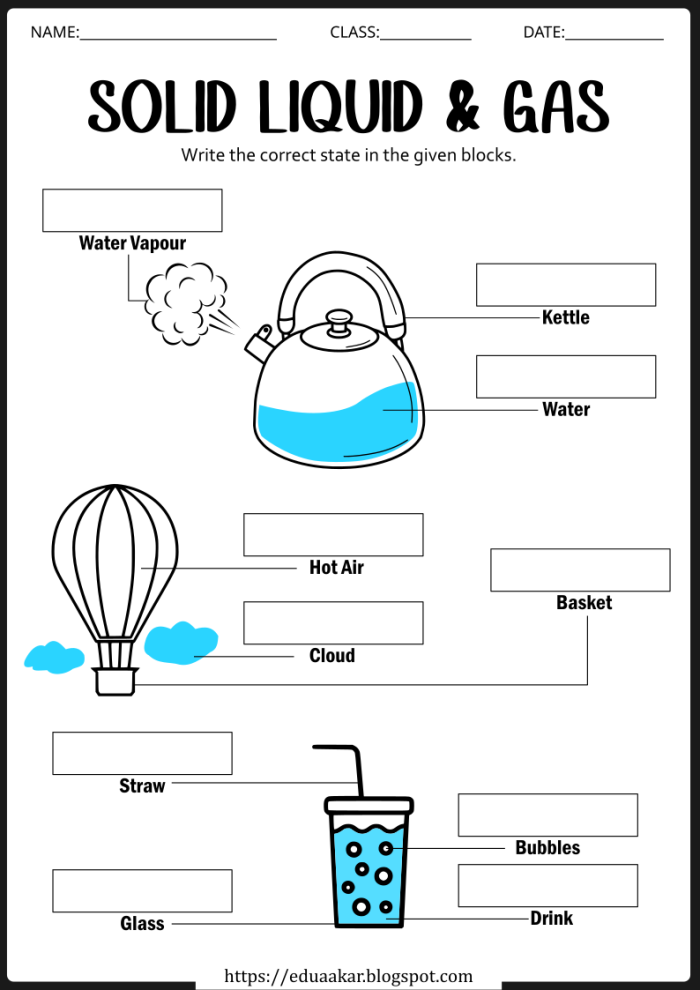
The worksheet typically includes illustrations of common items: ice cubes, juice, steam, toys, and more. Your child circles or writes the correct state of matter for each picture. Some versions ask children to sort items into categories, strengthening their classification skills. This type of practice prepares them for more complex science thinking later on.
Beyond the immediate learning goal, completing this worksheet helps children develop confidence in identifying patterns and making observations. These are skills that transfer to reading comprehension, math problem-solving, and everyday reasoning. Your second grader will start noticing states of matter everywhere, asking questions about why puddles disappear or how ice melts, turning everyday moments into learning opportunities.
Start Practicing with These Worksheets