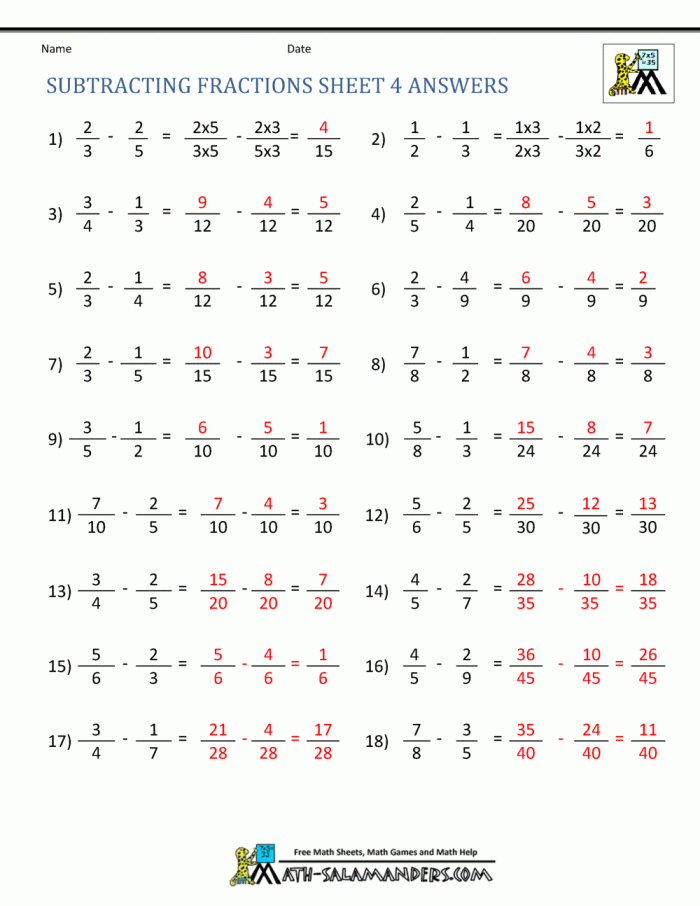
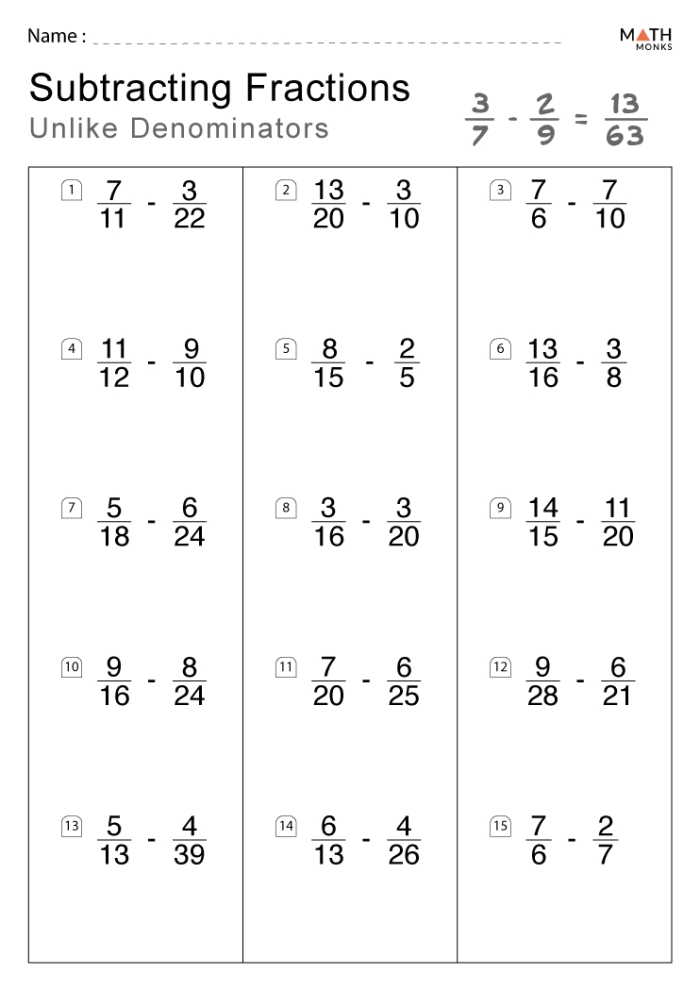
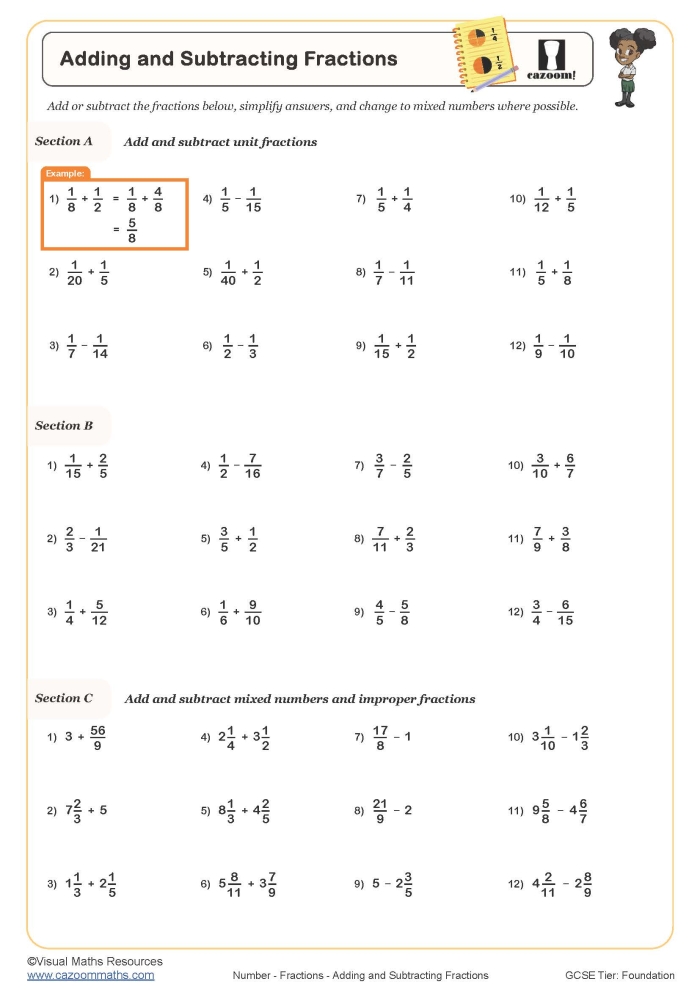
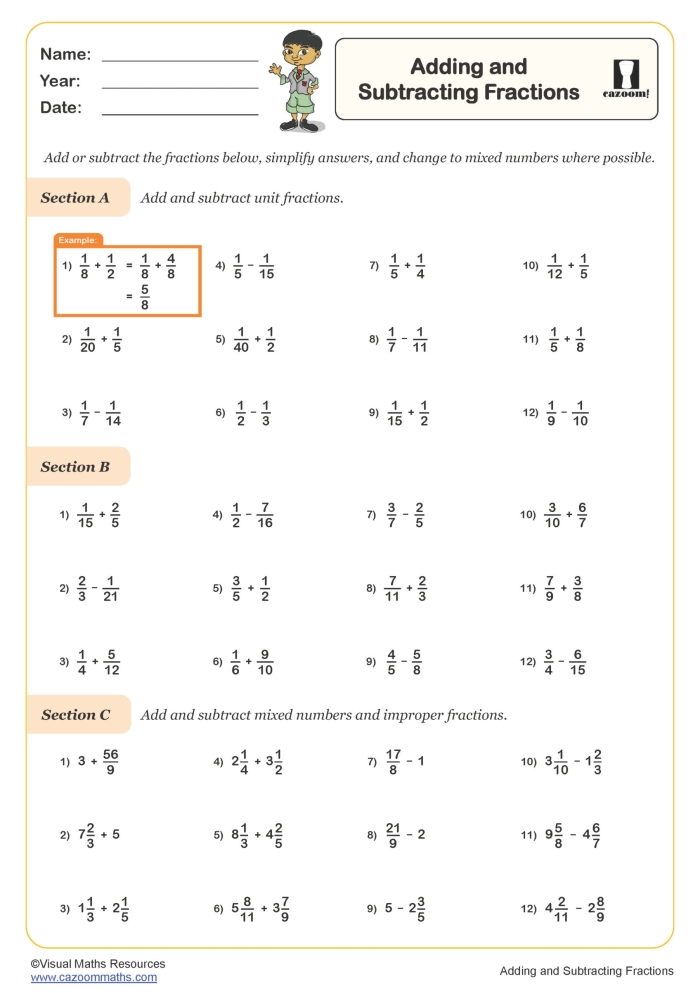
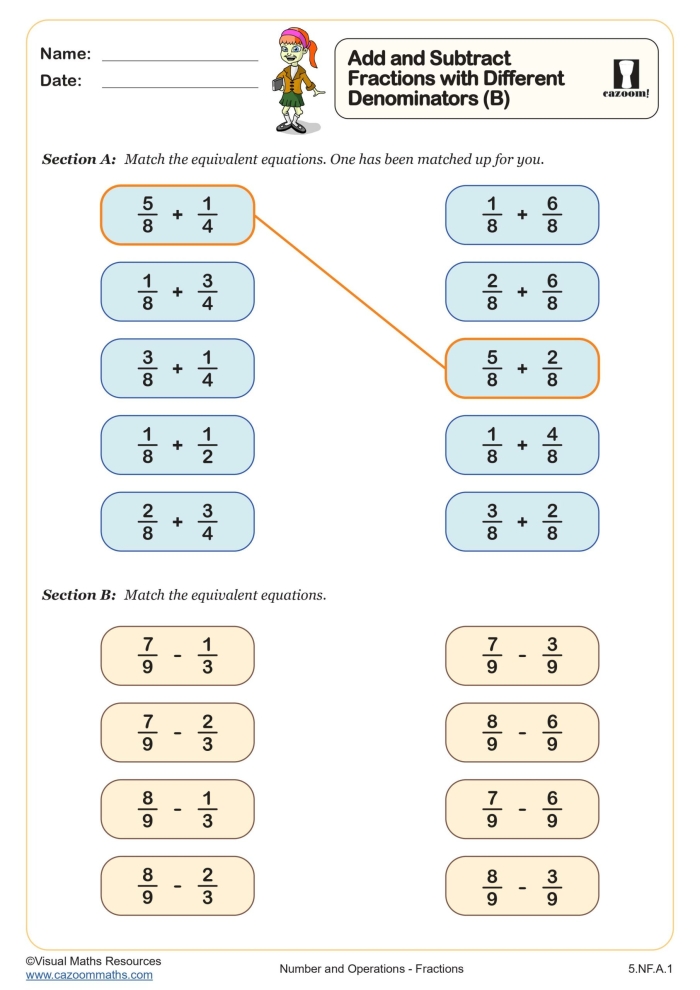
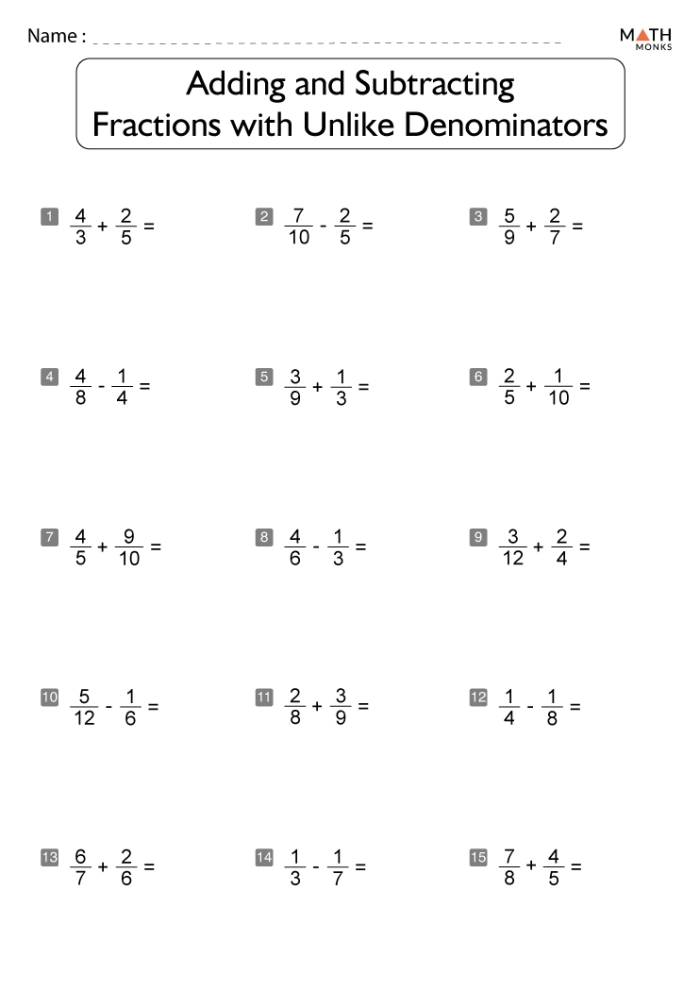
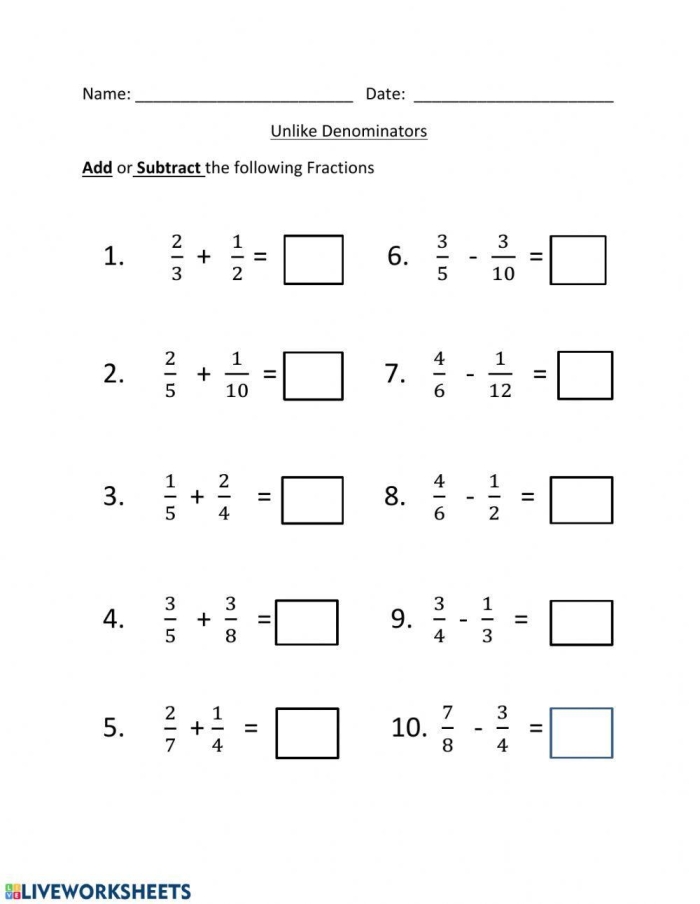
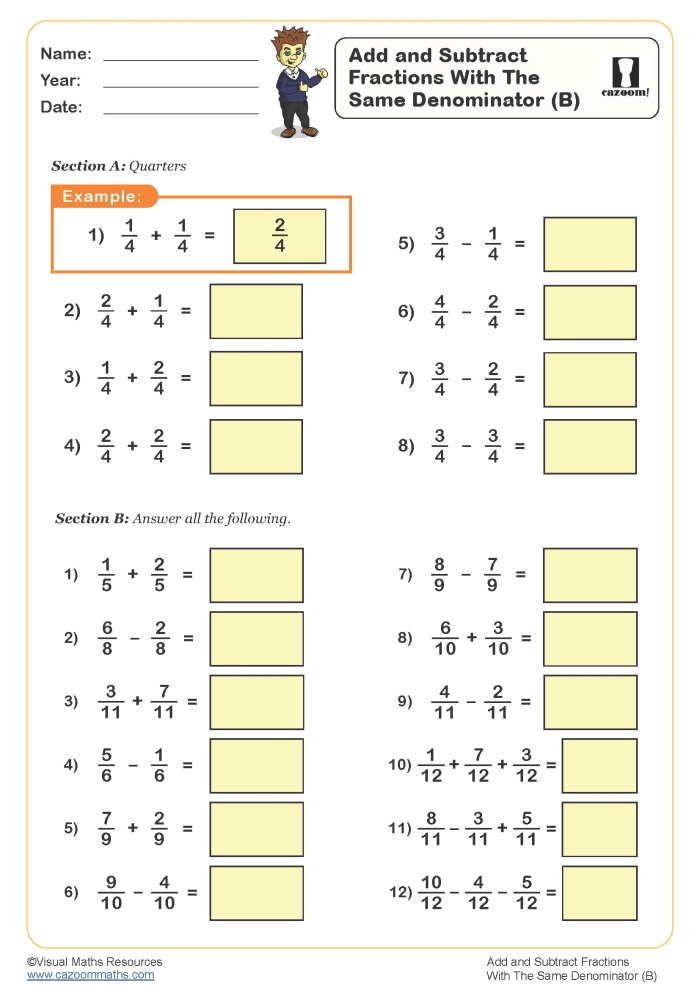
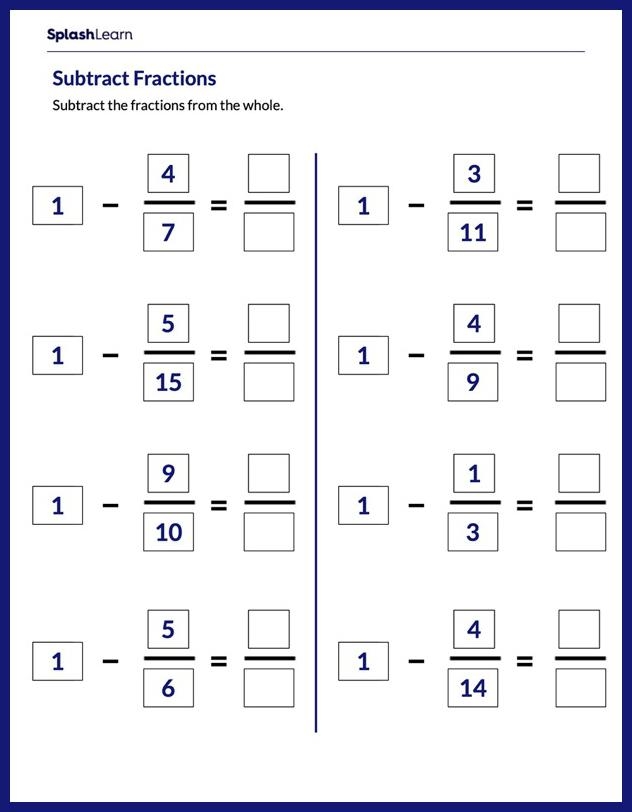
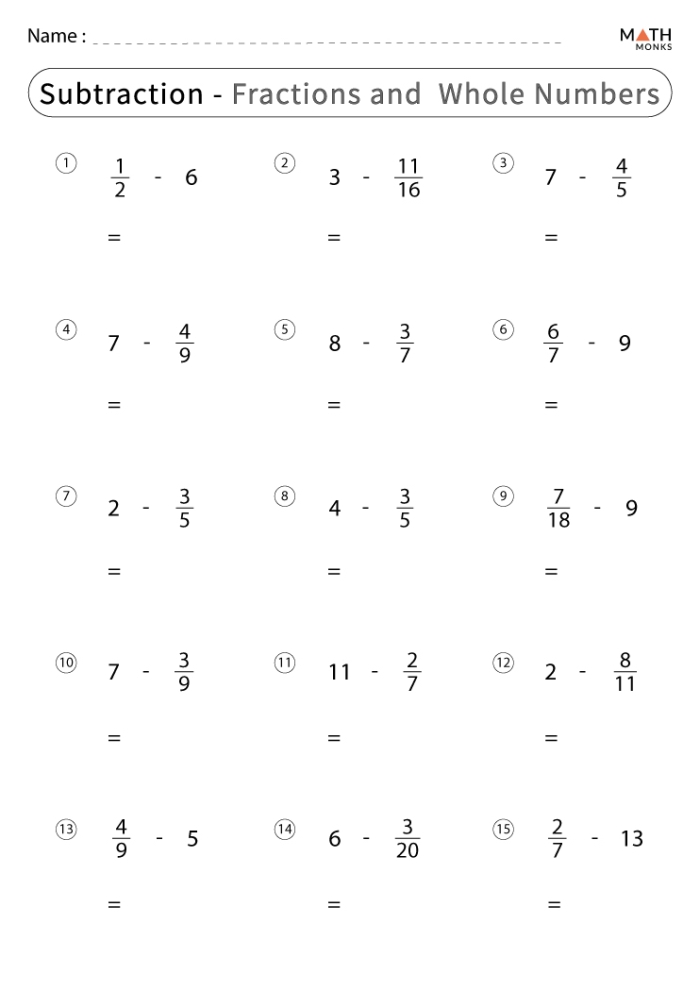
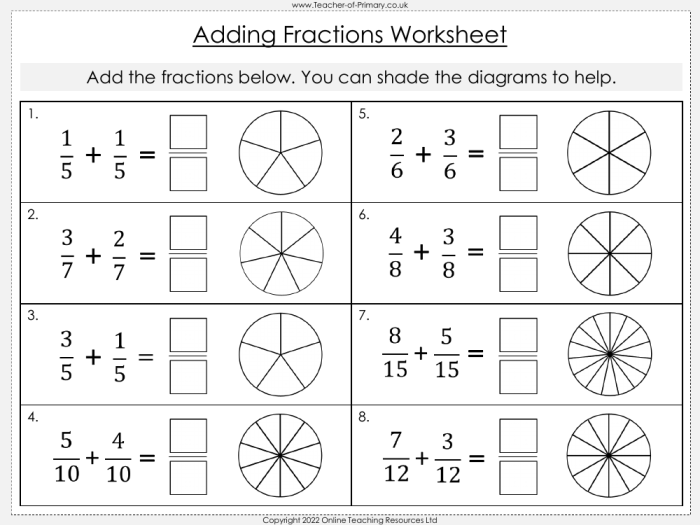
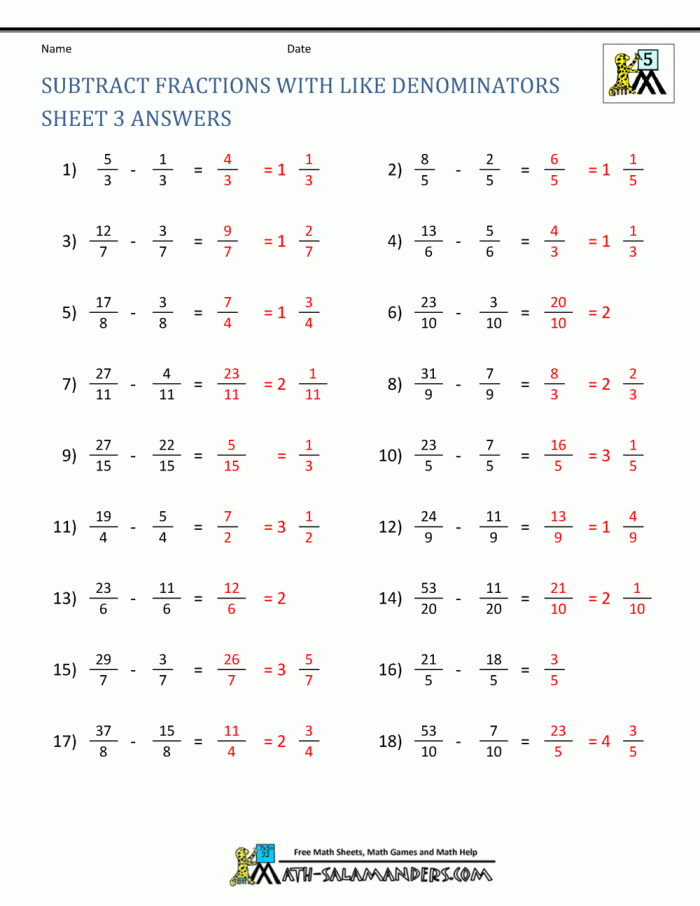
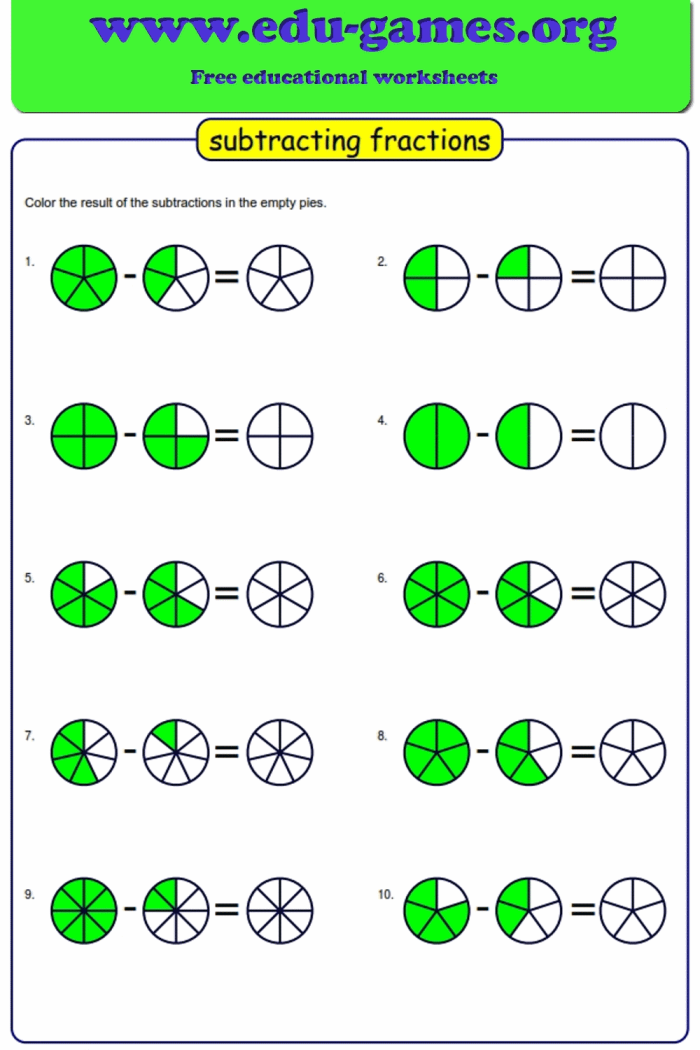
Subtracting fractions can seem tricky at first, especially when the denominators don’t match. This worksheet offers a clear, step-by-step guide to help fifth grade students master the process, whether the fractions share a common denominator or not. Starting with fractions that have the same bottom number helps build a solid foundation before moving on to the more challenging task of subtracting fractions with different denominators.
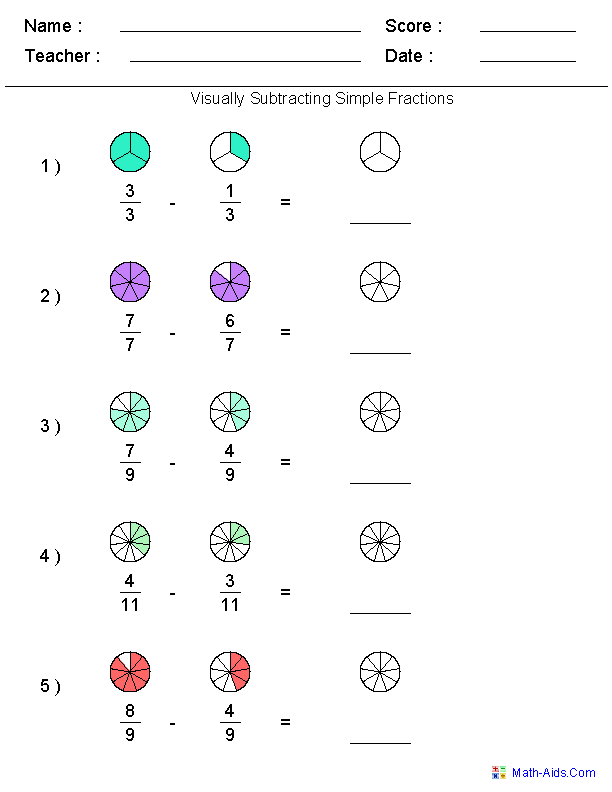
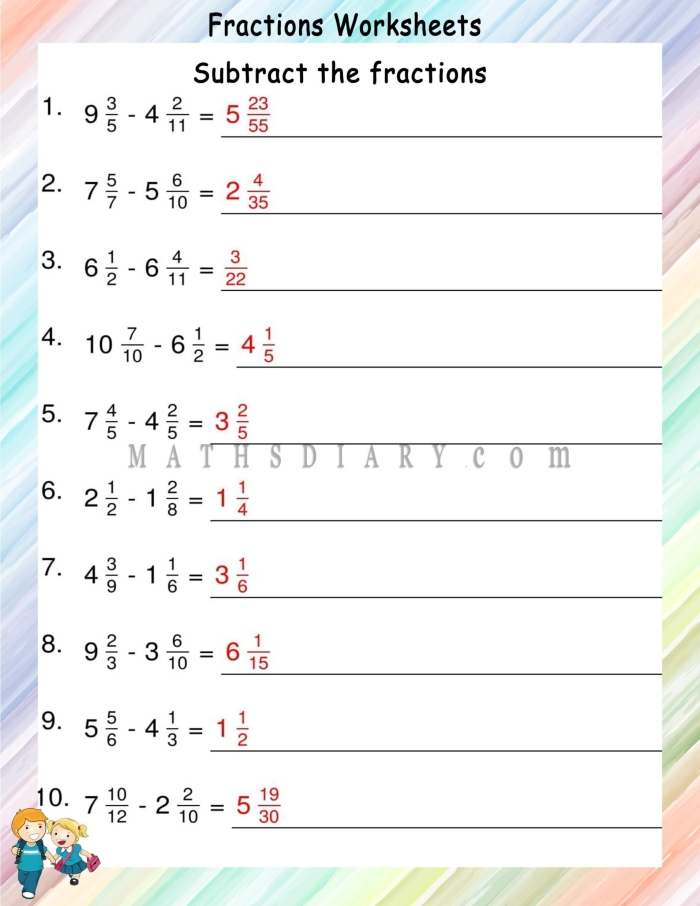
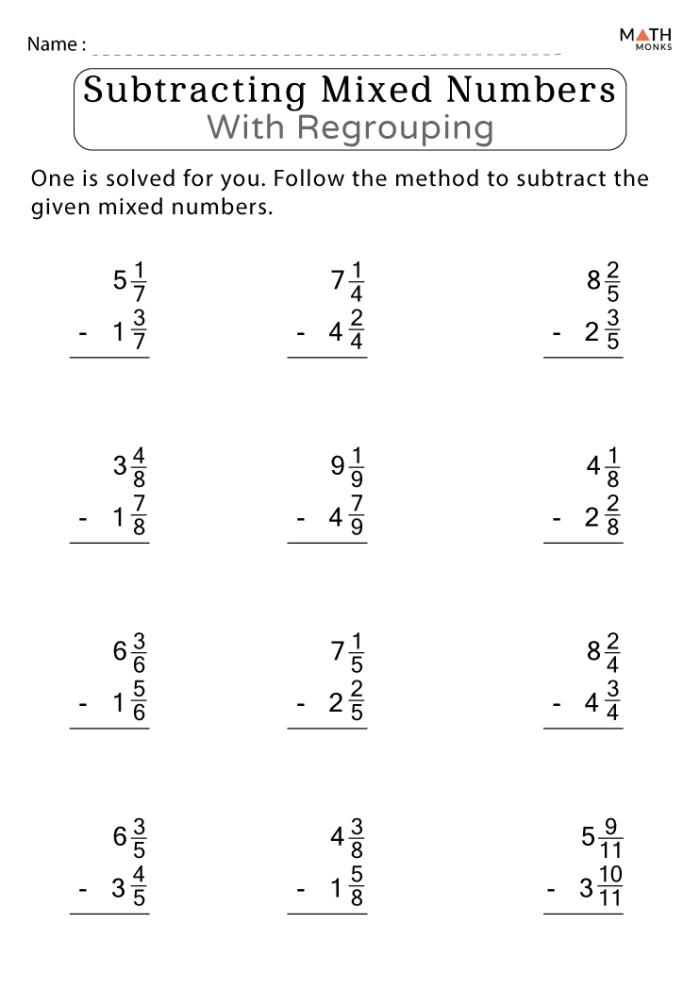
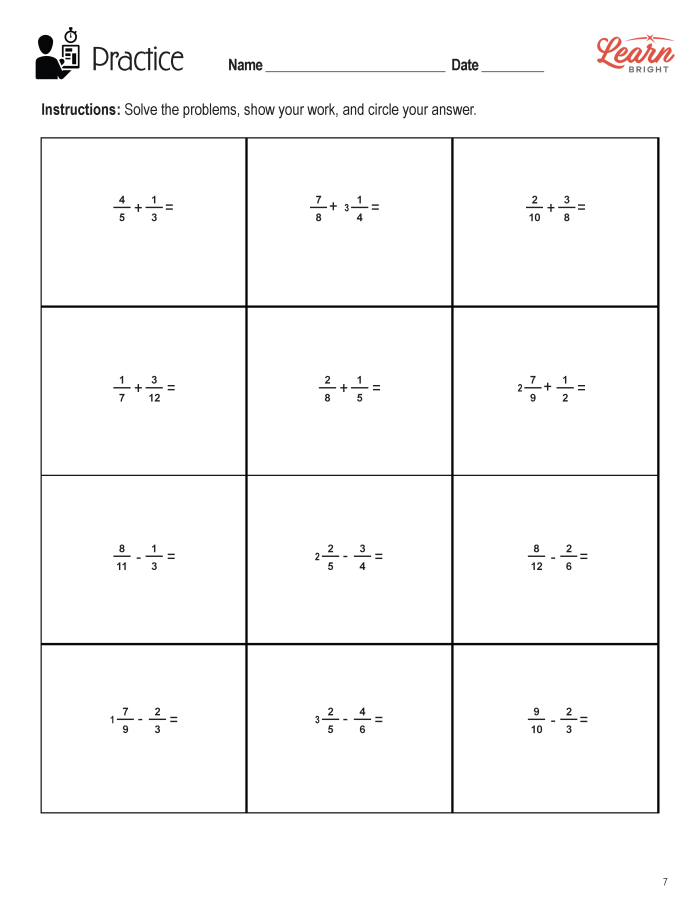
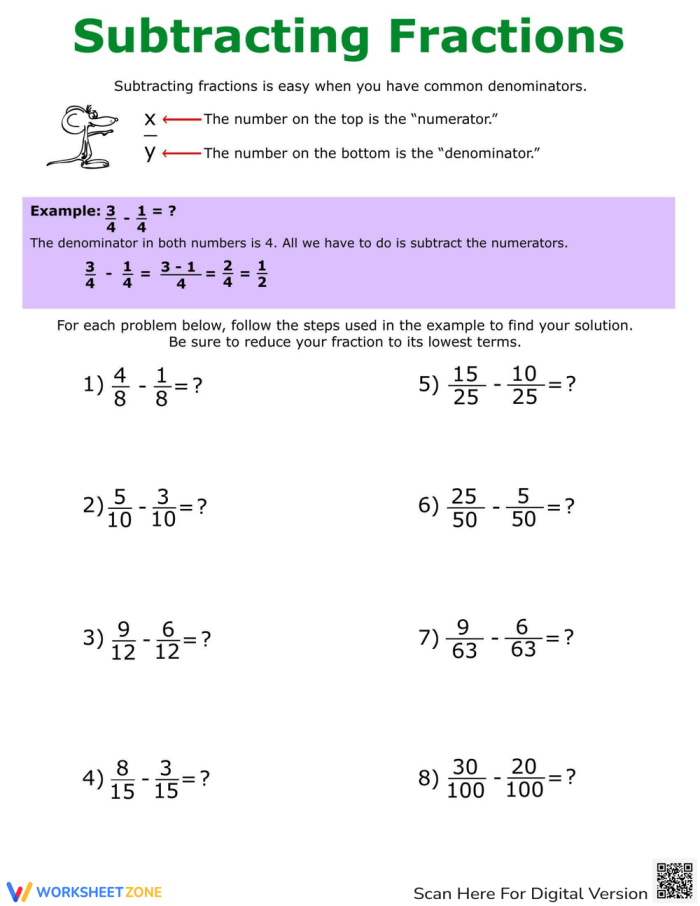
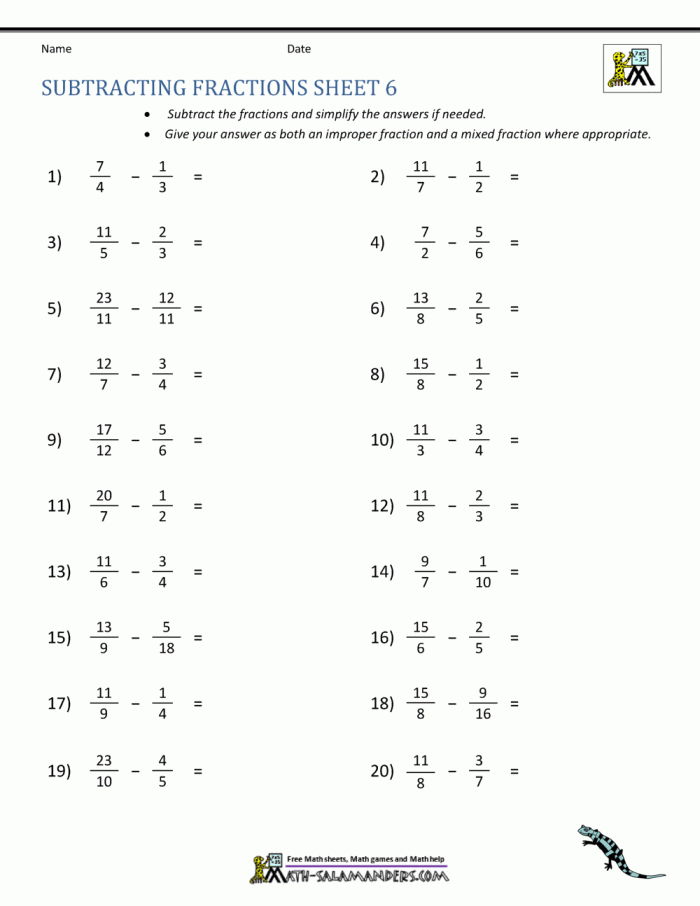
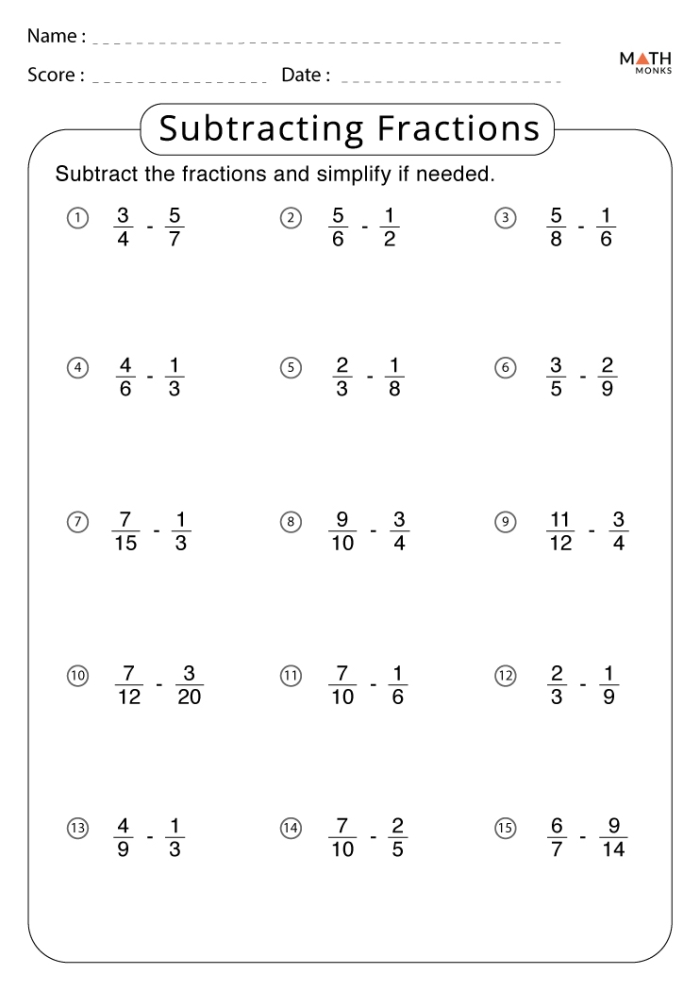
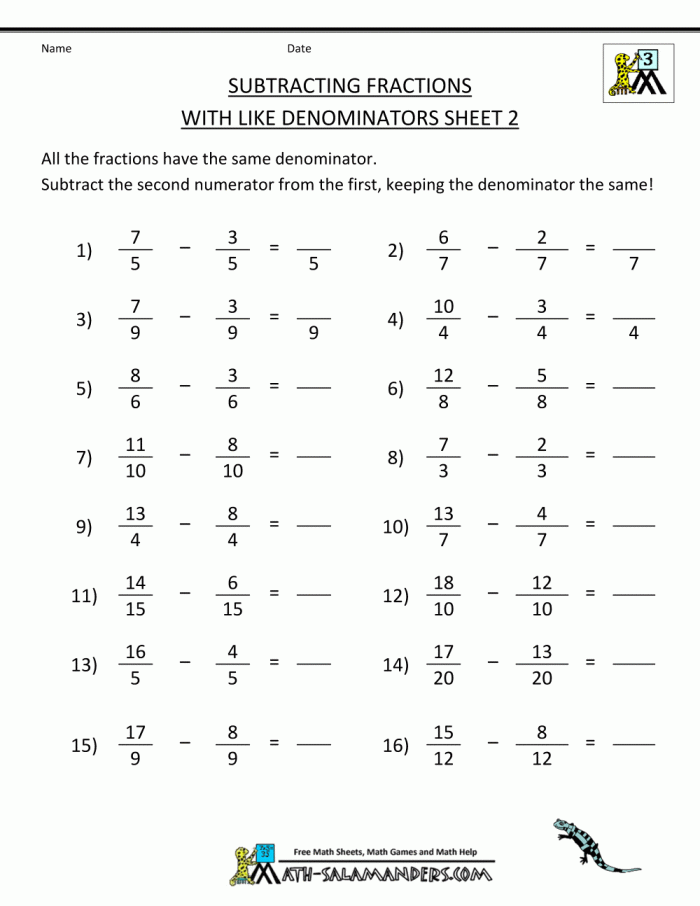
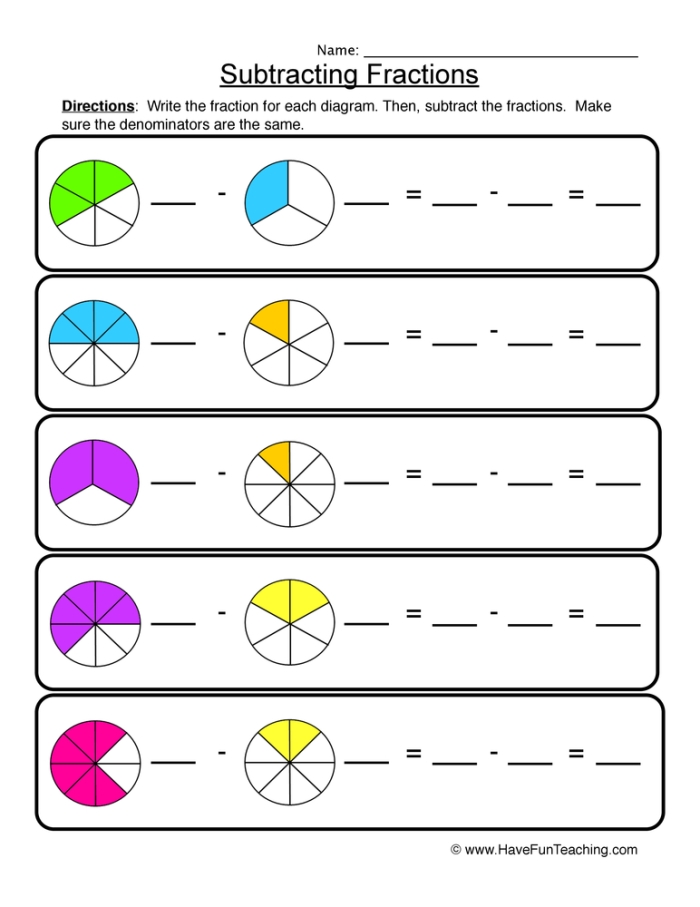
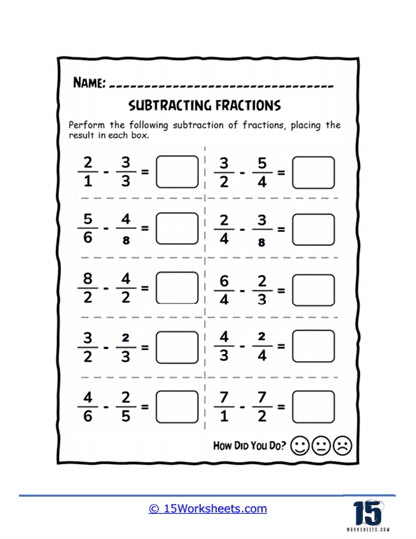
When denominators are the same, subtraction is straightforward: you simply subtract the numerators and keep the denominator unchanged. For example, subtracting 3/8 from 5/8 results in 2/8. However, when denominators differ—say, 3/4 minus 1/6—the worksheet guides students through finding a common denominator, often by identifying the least common multiple of the two denominators, which in this case would be 12. Then, fractions are converted to equivalent fractions with that common denominator before subtraction can occur.
This approach not only improves fraction skills but also reinforces important concepts like multiplication and division, which are essential in life science problems. For instance, understanding fractions helps students calculate proportions in experiments or analyze data on gene distribution, linking math directly with scientific learning. Teachers and parents looking for resources can find printable how to subtract fractions worksheets tailored for fifth graders, designed to build confidence step by step.
One detail often overlooked is the importance of simplifying the answer after subtraction. The worksheet emphasizes this, encouraging students to reduce fractions to their simplest form, which is a key skill in math and science classes alike. If you are helping a child or student, pairing this fraction worksheet with other engaging resources, like questions about genes or ocean animals, can create a well-rounded learning experience that ties math into life science topics.
For more practice, consider exploring materials that include both math and science concepts, such as those that explain what a gene is or puzzles related to ocean animals. These connections make math feel more relevant and help students see how subtracting fractions fits into their broader studies.
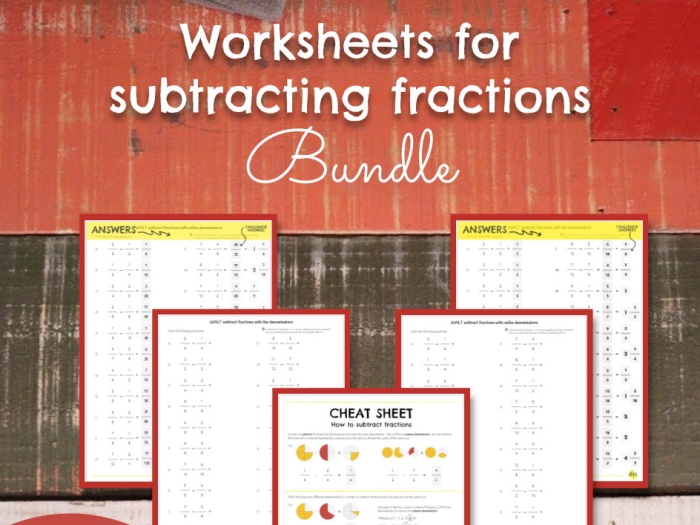
Try These Printable Worksheets